Hockey. The name says it all, doesn’t it? From the smell of sweet success to the low points of almost winning. As a reader, you have read about the highs and lows of the game – many times. But could hockey save a soul? Could hockey offer salvation?
A lot has been written about the Indian Residential Schools in Canada. First Nation Children were taken away from their parents and homes to have their culture spanked out of them. They learned English instead of their native language. They were also physically and sexually abused – over many years and many kids were involved. These kids lived a hard, uncaring, and fearful life while they were in residential schools.
Hockey was also played as part of the curriculum.
The year was around 1945 and the residential schools were in their prime. Priests and others taught the boys the game of hockey. Road games were played, practice was held every day and the kids played on frozen ponds or fields. They even got to play with Non-Aboriginal kids.
Could hockey elicit such a positive experience that it could keep in check some of the negative harsh realities from life in a boarding school? Can hockey save people?
Some say it can. Former students have said that hockey was the bright spot of the day. All around life was hell, but when they got onto the ice, these students just flew. Maybe to these kids, hockey meant freedom from their schools – on the ice and far from the teachers. I could see the game becoming much more than just a sport. I can see freedom in the cold wind and on the ice. No wonder the students wanted to play.
Reuters
Some former students have said that hockey helped them after the schools were closed down. These small kids grew up in horrible schools. They came in as children and left sometimes 14 years later as young adults. Battered physically and beaten mentally, young adults came out of residential schools lost and broken. Some turned to drugs and drink to fill the gap or ease the pain, others decided to make something out of their lives. Some acknowledge that instead of drinking the pain away, they played hockey.
One residential school, at which lots of abuse happened, was called Ermineskin. Hockey was even a part of the schedule here. Willie Littlechild was a student and played hockey at Ermineskin. Hockey continued to play a huge role in his life as he went on to play in University. He explained that he had two choices: one was to play hockey, survive, and finish school – and the other was to drink.
Can hockey influence a person? Can it influence a generation of people? Maybe. I believe that hockey did play a huge role in how people lived after the residential schools. I also think that a lot of these students used hockey as therapy. I just hope it worked.
We all know there’s very little difference between “Under Pressure” and “Ice, Ice Baby.”
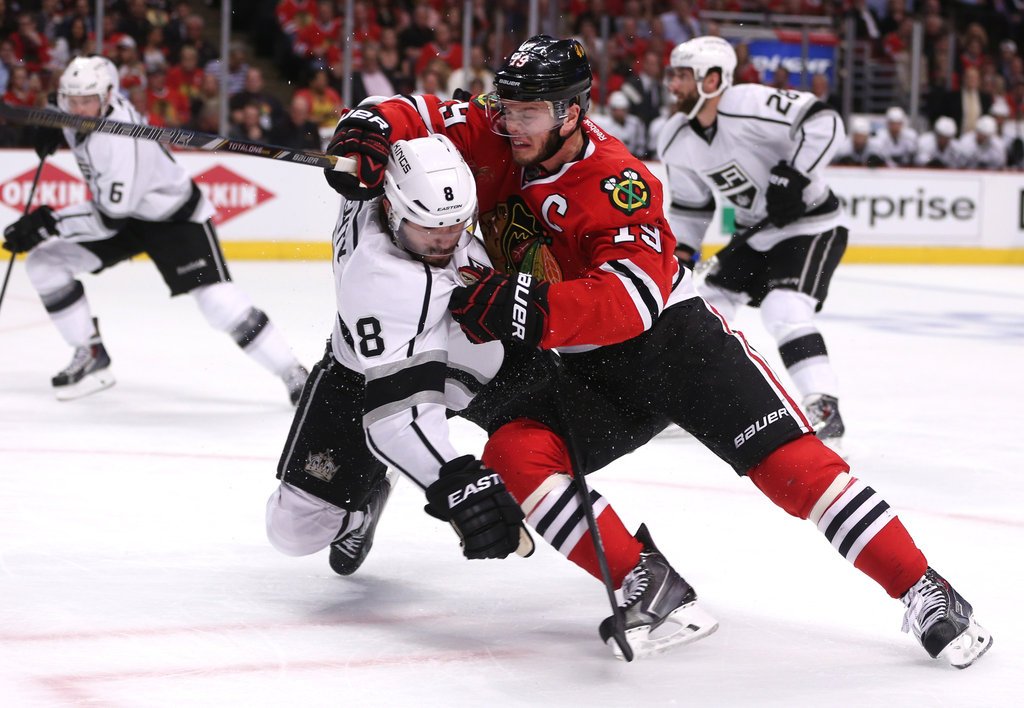
Pressure doesn’t get much higher than on the ice of the Western Conference Final’s Game 7. The Chicago Blackhawks have come back from a 3-1 deficit in the best-of-seven series and the winner of tonight’s game will advance to the Stanley Cup Final.
The 2000 New Jersey Devils are the only other team in NHL history to overcome such a deficit and advance to the Stanley Cup Final.
The Blackhawks are 13-0 in Games 5,6,7 over the past two postseasons, including a 5-0 record when facing elimination.
How do the two match up in the postseason this year?
Against each other, Game 1 was 3-1 Chicago. Game 2 was 6-2 Los Angeles. The Kings took Game 3 4-3 and Game 4 5-2. Chicago countered, winning Game 5 5-4 in second overtime and Game 6 4-3.
The Kings have held Chicago close when the Blackhawks managed to win, but were able to take a couple big leads with their victories.
In the postseason overalls, the Blackhawks’ record this year is 11-7. The Kings are at 11-9.
The Kings are averaging 3.4 goals per game, while the Blackhawks only have 3.o; however, in goals-against, the Hawks have the advantage, with 2.78 to the Kings’ 2.80. The Kings have, on average, gotten in more shots per game, 30.6, versus 27.2. The Hawks have seen more shots from their opponents, as well–31.2 to 29.8.
And then there’s special teams. The Blackhawks’ Power Play is drastically impacted by its abysmal road performance, finally broken with a Power Play goal in Game 6, but is only at 19.2 percent to the Kings’ 26.2 percent. Fortunately for Chicago, this is a home game. As for the Penalty Kill, Chicago has a narrow edge: 84.1 percent versus 82.7 percent.
What about the Kings and Those Lucky Number 7s?
The Kings are the third team, since the NHL started using best-of-seven series’ in 1987, to play all 21 games through the first three playoff rounds. The only other two teams, according to the NHL, were the 1993 Toronto Maple Leafs and the 2002 Colorado Avalanche. Neither of those team advanced to the Final.
The notable difference is that the Kings are the first team to play all each Game 7 on the road, winning the two previous this year to advance to the WCF.
“I think Game 7 is what hockey’s all about,” Kings defenseman Willie Mitchell said. “As a hockey player, that’s the game you want to play, is Game 7 with everything on the line. It’s kind of the essence of the game.
“We’ve had some success in that and we look to continue that. We feel if we do the things we’re capable of doing, the style of play we need against the Blackhawks, we’re going to get the result we want.”
Jonathan Quick has three career Game 7 wins, zero losses, a 1.33 Goals Against Average, and a .957 Save Percentage. On the other side of the ice, Crawford is 1-1 with a 1.4 Goals Against Average and a .954 Save Percentage.
Game 7 Fast-Stats (Courtesy of the NHL)
In all-time Game Sevens, home teams are 91-64. But, in the 2014 postseason, they are 1-5.
The team to score first has won 115 games to 40 all-time, including 4-2 this year.
Overtime has been needed for 38 of 155 Game Sevens. The home and road teams are 19-19 in those 38.
But we all know the stats don’t make a difference. We have ourselves some exciting hockey here tonight.
“It’s almost like it’s an overtime game right from the start,” Patrick Sharp said. “From the first shift of the first period. We’re excited to get going, and we’re glad we’re in Chicago.”
The winner will play the New York Rangers on the winner’s home ice Wednesday. The loser is done.
“We’re looking to play every shift, every period, like it’s our last,” Brandon Saad said. “Because it could be.”
Every kid that plays hockey dreams one day that he will get to lace them up in an NHL game. It’s a dream that most will never realize. Even fewer still find themselves drafted by the team they grew up idolizing. But that is exactly what has happened to Alex Broadhurst.
Alex Broadhurst was born and raised in Illinois, where he grew up as a Blackhawks fan. When he was 18, and had finished his second season in the USHL playing for the Green Bay Gamblers, the Chicago Blackhawks took a chance on the local kid. They selected him in the 7th round of the 2011 draft and it was an amazing feeling for him. This is definitely a player that Blackhawks fans should keep an eye on.
“It was unbelievable, a dream come true. We grew up Blackhawks fans and grew up our whole lives around Chicago. We stuck by the Blackhawks, even when they had some dark days there,” Broadhurst remembered. “I just didn’t have any idea I was going to get drafted. I played in the USHL and had a pretty decent year. I didn’t really expect much. But they took a chance on me and I’m so grateful for it.”
He was coming off a season where he had scored 26 goals and 47 assists for 73 points in 53 games. That was good enough for the team lead in assists and points. After getting drafted, he had a decision to make. There were two options in front of him: college or a season in the OHL.
“I got drafted and I was contemplating going to college. I had committed to going to University of Nebraska-Omaha, where my brother went. But I had a sit down with my family and we talked it out. I didn’t think that college was the right path for me,” he said. “I just wanted to pursue my career in pro hockey and take a chance. It worked out for the best with playing in London for the Knights. They took me in and taught me a lot. It’s like a big family. I had a great time here and it’s a great city. It was really good for my career.”
It was a different path than his older brother, Terry, had taken but his family was supportive of his decision to follow this path. He ended up with the London Knights, who were coached by Dale Hunter. Hunter had over 1,400 NHL regular season games with over 1,000 points. He turned out to be just the coach that Broadhurst felt he needed. He felt that he learned a lot and it was the right decision for his career.
After just one year in the OHL, Broadhurst made the transition from juniors to the AHL and realized that there was a big learning curve. He went to the Rockford IceHogs, affiliate of the Blackhawks.
“It was huge playing in both those leagues, they’re both top leagues. I think the USHL was a good place for me to start. The guys there are more focused on playing college hockey. Then I felt like the OHL was a little different, a little more focused on going right to the pros,” he said. “You were playing against top talent that you’ll probably see in the NHL some day. The AHL is no comparison to either league, though. When I was there, I thought the OHL was tough but it’s like night and day.”
Bigger, faster, stronger. That’s something a lot of players say when they make the jump into professional leagues. In the juniors, players get used to playing against opponents 16-20 years old. In the AHL, players range anywhere from 20 to mid-30s. They have much more experience and have a better grasp on the game. In Rockford, Broadhurst benefitted from a good core of veterans that helped show him the way. One such example was Jared Nightingale, who served as the team’s captain.
How does Broadhurst think his first season went?
“It was kind of an eye opener from me coming from juniors. I thought I was going to come in and tear it up and score every night, but it’s not like that,” he said. “Pro hockey is a totally different game. It’s stronger, tougher, and faster and it took me awhile to adjust to it. But, I think I adjusted pretty well and next year I’ll have an even better year.”
That was the hardest part for Broadhurst to deal with adjusting to the AHL: the speed and physicality of the game. Although the OHL is a highly competitive league, you have to turn on an extra gear to play in the AHL. “How much time you have with the puck is also a lot different,” he said. “You have to make plays within a split second and you don’t really have time to think through a plan. I think that’s the hardest thing guys have to adjust to.”
But with all that’s hard, there were also some parts about his rookie season that were easier to adjust to. One thing that seems to be common from one hockey team to the next is that it’s like a brotherhood. Bonds form fast and the more experienced players are always willing to help the younger guys.
“I think the easiest part was getting to know everyone and fitting in on the team,” he said. “We had a great group of guys, so nobody ever felt left out or had trouble fitting in during their first year.”
On top of the veteran leadership that Rockford had this past season, the IceHogs also had Alex Broadhurst’s older brother, Terry. With Terry being four and a half years older than Alex, the two did not have many chances to play on the same team before this season. It really helped both of them to play together.
Photo: Alex Broadhurst
“My brother was on the team so that was kind of huge for me. It was nice to have them there to help with problems or answer questions,” he said. “But the guys were really all great. Sometimes you’re sitting in the locker room and you don’t really know what’s going on or what you’re doing. We had a good group of veterans on the team so you can look to them.”
Not only did Alex Broadhurst get to play his first professional season with his older brother, but they did so close to home. The Broadhurst family grew up as Blackhawks fans. Chicago’s AHL affiliate is located in Rockford, Illinois and that meant it was still close to home. That can be a huge help in your first year pro. Most players are used to having to move around the US and Canada to follow their dreams, but not a lot get the chance to play close to home.
“It was incredible. For our family, they loved it. We were close, only about an hour and a half from where we grew up. My parents loved getting to see us both play on the same team. It was a lot of fun,” he said. “You know, sometimes you get sick of your brother or you fight but it was good to have him there. We force each other to be better. I want to be better than him and he wants to be better than me. It works out better for both our careers.”
For most players, family means everything. They’re the ones who have stood by through all the years and they are the ones who have rearranged schedules to make it to practices and games. So, it meant a lot to Broadhurst that his family was not only close by but also that they were able to support him and his brother throughout the season.
“Our parents were at pretty much every home game and we had a lot of friends come up. It was kind of the best part about it. You could still see your friends and family. It was especially good for me being in my first year as a pro to have that support,” he said.
Broadhurst finished his first season with 45 points in 75 games in Rockford. That was one point more than his older brother. That was a fact that he was aware of and joked about. It was a good-natured competition between brothers that only made the two of them better.
Unfortunately, Rockford finished 9th in the conference again where the top 8 teams make the playoffs. Although they would have liked to see postseason action, the team has a lot to be proud of from 2013-2014.
Since the IceHogs are in the offseason, Broadhurst has acknowledged that he needs to keep working to improve his game. When you stop working, that’s when you fall behind. The players that succeed are the ones that never give up.
“You can’t really stop working on anything. You have to work on everything, like your shooting and skating. You can always get better. For me, my off ice workouts are going to be important this summer,” he said. “I’m going to be working out at the United Center with the Blackhawks trainer. I’m just looking to get bigger and stronger and work on everything. It’ll be good to be in Chicago and whatever they want to see from me, I’ll be doing that.”
Broadhurst will keep working towards his dream, the same dream that every player has: to play in the NHL. For him it means a little bit more because dressing for an NHL game would mean dressing for a team he’s followed his whole life. It’s hard for him to imagine.
“To be honest, I don’t really know how it would feel. I would be speechless. I would be so nervous getting out on the ice and excited at the same time,” he said. “Obviously, that’s the goal and if I ever get that chance I’ll have to let see how it feels then. I can’t imagine.”
Broadhurst still has two years left on his Entry Level Contract with the Chicago Blackhawks. He will likely be back in Rockford again next season and looks to keep building on his success. Through juniors, he established himself as a scorer and he wants to establish himself that way now in the AHL.
Hard work does not seem to be something that he is afraid of and it seems clear that he is willing to work as hard as he needs to in order to make his dream of playing in the NHL happen. This is definitely a player that could do big things going forward.
It’s down to the final two teams: East meets West for the ECHL Kelly Cup Finals. The Brabham Cup winning Alaska Aces will meet the fifth-seeded Cincinnati Cyclones in a best-of-seven series for the 2014 Kelly Cup Title. It is the first time the two teams will meet in the Finals. For the Aces, they have captured an ECHL record five Brabham Cup Titles and this year marks their fourth appearance in the Finals, also an ECHL record. Alaska last won the Kelly Cup in 2011 when they defeated the Kalamazoo Wings. The Cyclones last took the Cup in 2010, defeating the Idaho Steelheads.
On the road to the Finals, the Aces swept the Las Vegas Wranglers in the first round in the West and met the Steelheads in the second round. They defeated Idaho in five games in several hard fought contests. After being shutout by Steelheads netminder Josh Robinson in the first game, Alaska cracked his code, getting pucks behind him for the win over the next four games. The Bakersfield Condors were their last roadblock to the Kelly Cup Finals. The Condors gave the Aces a run for their money in stellar goaltending (Laurent Brossoit) and offensive skill (Broda, Schaber, Knackstedt) but Alaska gained the momentum and never let up, much like they have done all year.
The Cincinnati Cyclones met the Orlando Solar Bears in the first round in the East, conquering the Bears in six games before taking out the Fort Wayne Komets in another six games during the semifinal round. The Cyclones took on the Greenville Road Warriors in the Eastern Conference Final, needing the magic number six games to solve Greenville on their way to the Kelly Cup Finals.
Goaltending has been a solid tandem for the Aces in Gerald Coleman and Olivier Roy, with Coleman leading the league with a 1.35 goals-against-average. The Cyclones, in turn have looked to Rob Madore as the man between the pipes, the netminder logging over 1100 minutes during the playoffs, and posting a 2.21 gaa. Both teams seem content to continue with what works, so expect to see the Aces trade off the goaltending duties and the Cyclones to answer with the one man in front of the net who has gotten them to the Finals.
The Aces have deadly offense once the momentum swings their way and they learn the opposing teams goaltending secrets. Captain Nick Mazzolini has had his best season yet, and his post-season play leads the league with 9 goals and 18 assists for 27 points in the playoffs. He is coming off his third multi-point game of the playoffs. Forwards Jordan Morrison and Brett Findlay continue to contribute and Turner Elson has turned up the heat, both in getting down the ice and putting the puck on net. Once the team is up, the defense led by Kane Lafranchise, Sean Curry, and John Ramage tighten down the hatches and limit the shots on their goaltender. In the Western Conference Finals the Aces held the Condors to just 3 shots on goal during the final period of Game 6, shutting down the top scoring forwards.
The Cincinnati Cyclones are a driven team and have been led offensively by Wade Megan, Josh Shalla and Byron Froese. Shalla has lit up the playoffs registering 10 goals and 5 assists over 18 games played, while Megan has kept the pace with 9 goals and 2 assists for 11 points over 18 games played. The team knows how to play under pressure with goals coming in shorthanded situations, last minute heroics and overtime series clinchers. The blueline has been held down by Brett Wysopal (2g-7a) and Josh McFadden (0g-9a), who are tied for third among defensemen in the playoffs with nine points each.
The Cyclones have excelled at road wins while the Aces have the best home record in the league. The action starts Friday with Game 1 at Sullivan Arena in Anchorage, Alaska. The Series will be a 3-3-1 format. Games 2 and 3 will be held Saturday May 31st and Monday June 2nd before turning to Cincinnati for 3 games beginning June 6th. See the full schedule below for times. All games will be broadcast on AmericaOne Sports
KELLY CUP FINALS – ALASKA VS. CINCINNATI (all times ADT)
GAME 1 – Cincinnati at Alaska (Sullivan Arena) – Fri. 5/30, 7:15 pm
GAME 2 – Cincinnati at Alaska (Sullivan Arena) – Sat. 5/31, 7:15 pm
GAME 3 – Cincinnati at Alaska (Sullivan Arena) – Mon. 6/2, 7:15 pm
GAME 4 – Alaska at Cincinnati (U.S. Bank Arena) – Fri. 6/6, 3:35 pm
GAME 5 – Alaska at Cincinnati (U.S. Bank Arena) – Sat. 6/7, 3:35 pm *
GAME 6 – Alaska at Cincinnati (U.S. Bank Arena) – Mon. 6/9, 3:35 pm *
GAME 7 – Cincinnati at Alaska (Sullivan Arena) – Wed. 6/11, 7:15 pm *
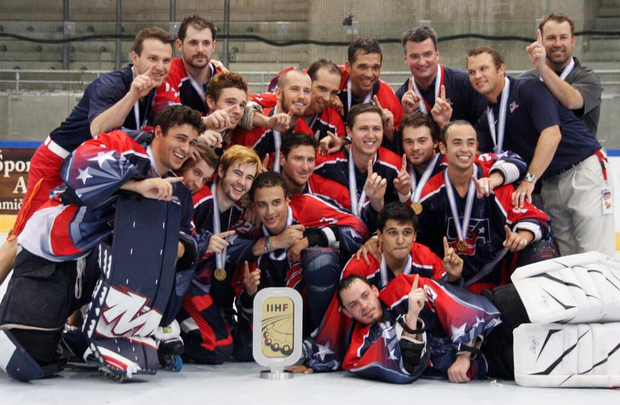
We don’t often cover roller hockey here at The Pink Puck, but the U.S. National Inline Team is worth paying attention to. The United States took home gold at last year’s tournament, and has vied for the ultimate prize in the gold-medal game in four of the last five world championships.
Team USA expects things to be no different this year at the 2014 International Ice Hockey Federation Inline Hockey World Championship. USA Hockey announced the 14-player U.S. National Inline Team roster who will go for gold at the championship, held June 1-7, in Pardubice, Czech Republic.
“We’ve compiled an extremely talented and deep group of players for this year’s world championship,” said Dan Brennan, general manager of the U.S. National Inline Team. “We’re very excited to try and defend our gold medal next month in the Czech Republic against the best inline teams in the world.”
The team features no less than eight players who were a part of last year’s winning roster, including goaltender Jerry Kuhn; defensemen Cody Kettler, Raf Rodriguez, and Greg Thompson; and forwards Junior Cadiz, Travis Noe, Kyle Novak, and Matt White.
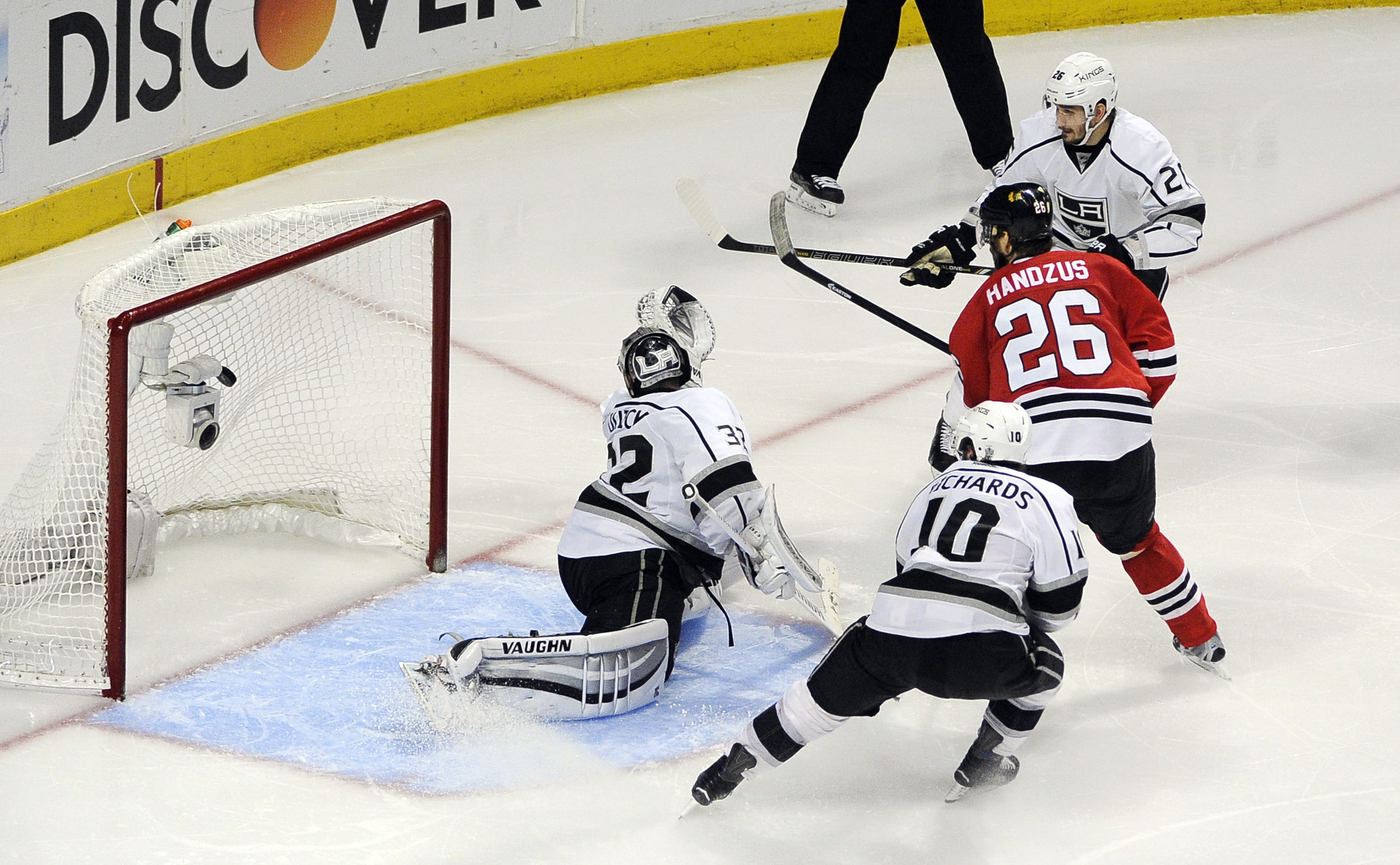
Facing elimination at 3-1 in the Western Conference Final series, the Blackhawks were hanging on by a thread in second overtime when NHL veteran Michal Handzustook a pass off his skate and backhanded it past goalie Jonathan Quick, allowing the Windy City to exhale (maybe *that* is where the nickname comes from) after 82 heart-pounding minutes of hockey.
The game-winning play was made possible by a dish from Brandon Saad and the moves of Patrick Kane, who tallied four helpers in the game. “Kane made a nice soft pass and saw a two on two. ‘Zus had some speed going through the middle there and making the 3 on 2,” Saad said. “I threw it to him and he handled it off his skate and he made a great move.”
Perhaps the Kings’ defense assumed Saad would pass to Kane for the game-winning shot. After all, Kane is the clutch guy. And, Handzus, 37, has been better known for moving around the roster and taking a scapegoat role in stride.
@JamesNeveau Patrick Kane was 6 years old when Michal Handzus was drafted.
“You still have to have a lot of confidence in yourself,” Handzus said. “I’m not real happy how [I have] played, but [I’ve] just got to be confident. It’s a lot of fun to be playing in the playoffs. It’s conference finals. You cannot just look at yourself all the time, be down [and] be disappointed. You just got to be positive. If you don’t want to be positive, then probably you won’t get out of the slump or anything. I stay positive. I’m [a] better player than [I’ve] showed. [I’ll] try to show it next game again.”
The first five minutes of the game gave Blackhawks fans a chance to breathe easily. Kings defenseman Drew Doughty was called for tripping 30 seconds after the puck drop and Brent Seabrook was able to slap a shot past Quick from the blue line (assisting: Toews, 7, and Kane, 6,) with 1:17 left on the Power Play. It was Seabrook’s third postseason goal. Johnny Oduya struck next, tapping in a shot from Kane (7), at 3:40 into the first. Andrew Shaw was also credited with an assist on the play.
But, much like the rest of the series (or, well, the season), the time for comfort was limited.
The Kings would carry that momentum into the second period, when Brown would score his fourth goal of the playoffs with a wrist shot as he dove over Crawford, knotting the score at 3-3. Gaborik was credited with his seventh postseason assist.
The remaining nearly six minutes of the second went back and forth, with the Blackhawks trying to fight there way back to at least an even score, which they would earn early in the third.
From there through regulation and a first overtime, the Blackhawks tried desperately to score and had plenty of quality opportunities, all stopped by Quick. Crawford, too, put on a Cirque du Soleil act of his own, to hold back the Kings’ powerful effort.
No penalties were called in either overtime, and a whistle wasn’t blown for nearly half of the first OT. In the first 20 minutes post-regulation, Quick made 10 saves and Crawford made eight. That doesn’t account for the shots blocked by players on either team.
There was no time to blink or breathe as a spectator, but both teams excelled at pulling off line changes.
“I’ve seen a lot of games, been involved in a lot of games,” Quenneville said. “That might have been the greatest overtime I’ve seen.”
Part of that credit, at least for the Blackhawks, goes to the other heroes of the game, Handzus aside. Saad has five goals and eight assists in the playoffs–one goal and two assists came Wednesday. He, Kane, and Shaw had nine points together. The trio pelted one-third (15/45) of the Hawks’ shots; and more than 62 percent of the shot attempts occurred while they were on the ice.
“It was a fun game playing with them,” Kane said. “They’re extremely hard workers. Personally, I thought [Saad] was the best player on the ice tonight. He was bringing so much speed and puck protection. He was awesome.”
In the game, the Kings blocked 24 shots and the Hawks blocked 18, they also led in hits 51-40, and faceoff wins 40-34. The Blackhawks successfully killed three penalties, an issue that troubled them greatly the previous two games. Shots barely favored Chicago 45-44.
“We know what we’re capable of doing,” Oduya said. “The last couple of games we haven’t played up to our standards. Today was a step in the right direction and this is what it’s going to look like. We’re going to have to play like this every night to win. The next one will be the toughest game of the year.”
Game 6 Fri, May 30 8:00 p.m. CT Staples Center NBCSN Game 7 Sun, June 1 7:00 p.m. CT United Center NBCSN (if necessary)
The winner of the series will go on to play the New York Rangers, who took Game 6 with a 1-0 victory to finish off the series 4-2.
For me, and for other Blackhawks fans, I pray to Lord Stanley and our new god, ‘Zus, for a Chicago victory in the City of Angels… Because it’s the Cup.
That’s it. That’s the answer. Yes, the Montreal Canadienscan win the Eastern Conference Final.
Of course, that doesn’t necessarily mean they will. If the New York Rangers have shown anything this playoff series, it’s that they’re comfortable making a comeback. Tuesday’s insane 7-4 loss says more about Montreal than it does about New York, even taking into consideration the substitution of Cam Talbot for Henrik Lundqvist in the second period.
But the Habs have played well throughout the series; they absolutely outplayed the Rangers in Game 2, though the Rangers found a way to win regardless. It’s been the character of all the Rangers’ playoff games this year: finding a way to win, no matter what the competition is doing.
But I’ll say it again: the Habs can win this series. They are not outmatched in any way but one, and as long as they can find a way to play without Carey Price, there’s no reason why they can’t find themselves headed to the Stanley Cup Final.
But for that to happen, there are four things we’ll have to see in tonight’s showdown.
1. Dustin Tokarski stars in the NHL goalie remake of 2006’s Stick It!
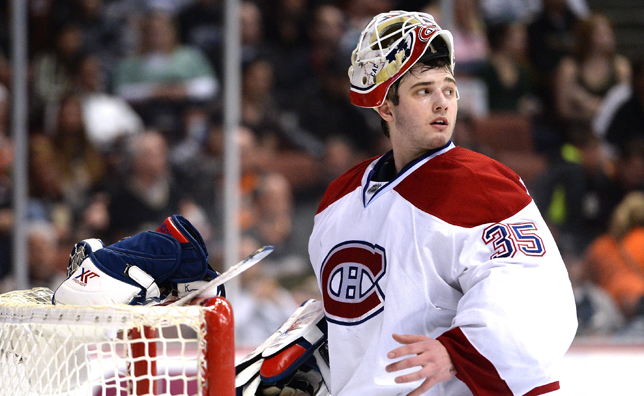
Montreal’s players, staff, and fans have taken every opportunity to bring up the whole “Chris Kreider Broke Carey Price” thing, and they should. But Tokarski has proven himself a worthy follow-up to Price’s legacy. He’s certainly not the goalie that Montreal wanted to push through this series with, but he’s played a huge role in keeping the Habs in this series.
There’s no way Tokarski can magically develop into an Olympic gold-medal winning goalie overnight, but I really believe that he can meet the Habs halfway. If Tokarski can play the absolute best games of his life—and if the Canadien players can play like hell in front of him—then there’s no reason why Montreal can’t, at the very least, force a Game 7.
2. Brendan Gallagher Embodies the Canadiens’ Scrappy, Can-Do Attitude
How is it possible that Montreal—Montreal—is a Cinderella story? They’re a wealthy team with one of the winningest histories of any team in the NHL. They won round 1 in a sweep. I mean, they’re the Habs.
The Habs!
And yet, somehow, they’ve managed to turn themselves into the underdogs this playoff run, first against Boston and now against New York. With their prize goalie down for the count as they face down the King, guys like Brendan Gallagher keep reminding us why hockey is fun to watch.
Gallagher in particular has been a stand-out player this series, playing with the kind of heart that, honestly, it sometimes hurts a little to watch. Having a guy like that on the ice makes a difference. It raises everybody’s level of play. Like Milan Lucic for the Bruins or Evgeni Malkin for the Penguins, guys who wear their heart on their sleeve can cause a chain reaction in their teammates—and nobody’s got heart like Gallagher.
3. Therrien Out Passive-Aggressives Vigneault
Just kidding, this won’t help anybody win games, it’s just hilarious. On the one hand, the Habs just shouting “CAREY PRICE” is a pretty fair response to any calls of foul play; on the other hand, they’ve absolutely been giving as good as they’ve gotten with regard to hits. When both coaches are holding up the “it was almost definitely an accident” card during their media availability, you know it’s gotten real:
Q. Did you feel that Prust hit was clean? THERRIEN: You know what? His intention was not to hurt anyone. Like Kreider, his intention, even if he was going hard to the net and then laying on Carey Price, I’m sure his intention was not to hurt Carey Price. Brandon Prust, he tried to finish his check. His intention, honestly, was not to hurt Stepan.
And of course:
Q. How is Dale Weise today? And Alain was saying he thought he was admiring his pass, and the penalty was good enough and there wouldn’t be more? THERRIEN: What Alain is saying it’s normal. He’s there to protect his players with his comments, and any coach is going to say those types of things. But we all saw the hit. It’s in the league’s hands and I’m sure they’re going to take the good decision, so that’s the way we see it.
Beautiful.
In all seriousness, though, I don’t think the importance of good coaching can be overstated here. Montreal has a team that can beat the Rangers; the desperation they’ve showed when it counts is one of their greatest assets. But desperation can also lead to sloppiness and penalty minutes. Therrien’s job, right now, is to channel that desperation into intense play, not panicked play.
4. PK Subban Continues To Be PK Subban
Love him or hate him (and, just so we’re clear, you should absolutely love him), PK Subban has proven himself to be an absolute superstar in the Canadiens playoff run this year. From Tampa to New York, he’s been consistent, intense, and smart.
Of course, Subban is also the type of player that takes risks, which had a vastly different risk/reward ratio when he was skating in front of Price. The key in tonight’s game will be finding the balance between allowing him to take those risks and playing it safe in front of a rookie goaltender.
Hockey Canada launched their 95th Annual General Meeting Thursday in Calgary, AB. The 2014 AGM runs Thursday May 29 through to Sunday June 1 – the latter date is surely embedded in the mind’s of Canadian hockey fans everywhere, as it marks the day Bob Nicholson is set to end his 16-year tenure as CEO of the organization. This will be the last Hockey Canada AGM Nicholson attends.
A number of initiatives are on the agenda for the annual gathering including the safety, growth and development of the game throughout Canada. The organization will delve deeper, dissecting issues such as player recruitment/retention, technology, national championship hosting and regulation changes. More than 250 hockey thought leaders are slated to attend, representing regional and provincial hockey associations throughout the country, as well as councils responsible for overseeing hockey at the minor, junior and senior levels. Women’s hockey will also be represented, the Canadian women remaining a notable powerhouse on the international stage.
What remains to be seen is whether Team Canada’s early exit from the IIHF World Championships, in Minsk, Belarus, will be discussed. The team made it to the quarter finals after a shaky start in a surprise 3-2 loss to France in the opening game of the preliminary rounds. Team Canada then finished first in Group A, ahead of Sweden and Czech Republic, and went on to the quarter finals where the Canadian men’s team fell 3-2 to Finland. Sweden and Czech Republic went on to face each other in the latter stages of the competition, where Sweden claimed bronze. In the final, Finland scooped silver and Team Russia secured the coveted gold medal. Team Canada walked away from the tournament without earning any hardware, a long way from Sochi 2014 when the team won gold against the Swedes.
There is one item that is certain – eight recipients will be recognized at Hockey Canada’s 2014 awards banquet at the end of the AGM’s first day. It is an evening dedicated to recognizing the contributions of those who have furthered hockey in a country that loves the game with a patriotic passion.
Hockey Canada’s 95th AGM will also launch the organization’s 100th year celebrations. Founded on December 4, 1914 and then-known as the Canadian Amateur Hockey Association, the 2014-15 season marks the organization’s centennial year. Further details on the celebration will be released publicly at a news conference in Toronto on June 16, 2014.
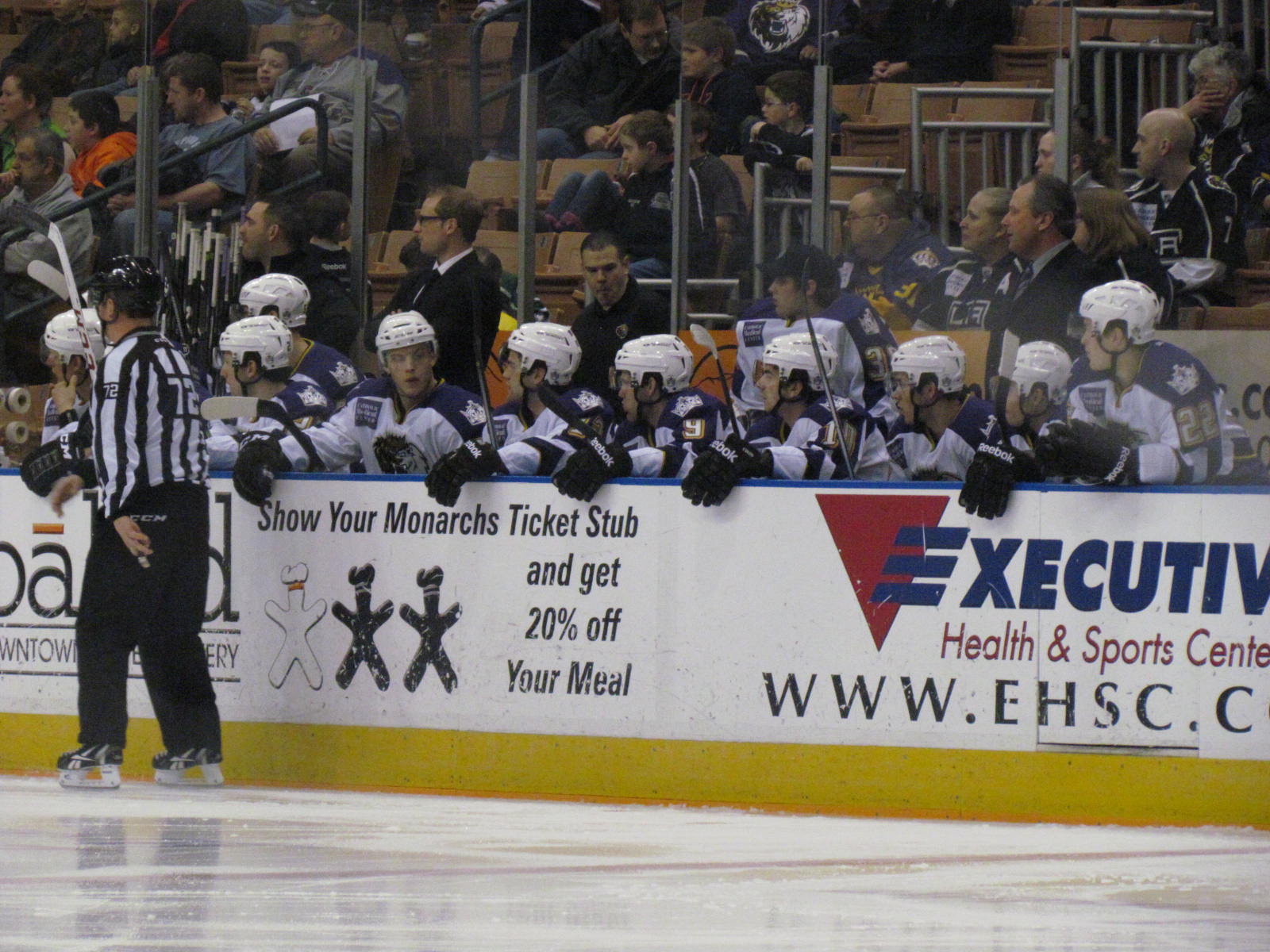
This past season was the thirteenth for the Manchester Monarchs, AHL affiliate of the LA Kings, and it seemed like 13 might prove a lucky number. Throughout the season, they managed to stay atop not only the division but the conference as well. Despite the injuries and NHL call-ups that they had to contend with, their players found a way to step up in unexpected ways.
With the top seed in the East, they faced off against the 8th seeded Norfolk Admirals. They did so without young talents Tanner Pearson and Tyler Toffoli who both logged some frequent flyer miles this past season as they traveled between Manchester and LA. They also headed into the post season without their leading scorer, Brian O’Neill, who ended the regular season in a cast. The 8th seeded Admirals proved too tough a team to beat in the 5 game first round series and the Monarchs made an exit much earlier than expected.
With the success Manchester managed to find through everything they faced during the regular season, many expected them to make it past the first round. However, it was not in the cards for them this post season. Although Brian O’Neill is just one player, it’s hard to look at his absence and say it didn’t make a noticeable impact. Without him, Sean Backman and Jordan Weal needed to find a new linemate. They found it in ATO signing Michael Mersch out of University of Wisconsin. Mersch certainly impressed and he did a lot of things right. But there was no replacing the chemistry of Weal, O’Neill, and Backman.
Through the first, and only, four games that the Monarchs played in the post season, something just seemed to be missing for the skaters. There was something off about the chemistry that had been so clear all season. There were also some players who had been impressive during the regular season that did not seem to live up to the pressure of post season.
Beyond the lack of chemistry and losing Brian O’Neill, veteran Jeff Schultz was only in the line-up for two of the four games. Although his impact on the team might have been overlooked, he provided an important steadying force. He was one of the few players on the team that had measurable postseason experience in the AHL or NHL. Many players had never seen the postseason and of the one who had, there were barely any that had made it out of the first round. One thing that it seems teams making a deep run in the playoffs usually have is at least a small core of veteran players with experience.
Despite the early exit, the Monarchs have a lot of things and players to be proud of. One player that definitely made an impact was rookie goaltender JF Berube. He came into training camp fighting for a position as the back-up to Martin Jones in Manchester. But when Jonathan Quick got hurt and Jones got the call to LA, Berube had to step up. And he did step up in a big way. After Jones’ impressive play in LA, he earned the back-up spot permanently and Berube became the permanent starter in Manchester. Sometimes he even started all three games of a 3-in-3 and he helped to keep his team atop the division and the conference. Although he had moments where he was not at the top of his games, the moments he came through for his team outnumbered those.
This season, the Monarchs also saw forward Brian O’Neill have his best season of his professional career. He went from 3 goals and 15 assists in 49 games during the 2012-2013 season to 26 goals and 21 assists in 60 games this season. This earned him a two year extension to stay within the organization. Although he’ll be 26 shortly, this is only his third professional season coming up in 2014-2015 and he is still very much a prospect. Prior to joining the Monarchs at the end of the 2011-2012 season, O’Neill spent four seasons playing at Yale.
Aside from Berube, a handful of other prospects made their professional debuts with the Monarchs this season. That included Nick Shore, who contributed 38 points in 68 games. This was despite him missing some time with an injury. It also included Zach O’Brien. O’Brien started the year in Ontario of the ECHL but worked his way onto the Monarchs roster. By the end of the season, he was a noticeable presence on the ice.
There are some definite changes coming to the look of the team for next season. The first being that there will be a new coaching staff. The LA Kings made the decision not to renew Head Coach Mark Morris’ contract for next season. Assistant coach Freddy Meyer will also not return. No new coach has been named and that is likely a decision that will come after the Kings finish their postseason run.
Mark Morris made an incredible impact in Manchester during his time there. He was the longest tenured coach in Monarchs history and the players loved playing for him. Throughout the season, his team routinely said what a big impact he had on them. He would never single out a player after a loss and instead focused on what the team needed to do. He was critical while still being there to support and educate.
Although Tyler Toffoli and Tanner Pearson each have a year left on their contracts, it seems incredibly unlikely that they’ll spend any more time in Manchester. Along with Jeff Carter, they had made for an incredible second line in the postseason for the LA Kings. JF Berube, forwards Andy Andreoff and Linden Vey, as well as defenseman Brayden McNabb, acquired in a trade from Buffalo, are all restricted free agents. Defenseman Andrew Campbell, who served as the team’s captain, is an unrestricted free agent. All five of these players made significant impacts during their time in Manchester. It will be interesting to see what happens for the King in the offseason and how those decisions trickle down to Manchester.
Being a sports fan in the playoffs is sort of like being in a hurry stuck in traffic. You can only go as fast as the slowest car in front of you.
And, as a fan, you’re stuck…cheering, swearing, pouting, cheering, hoping, and, sometimes wallowing. You are passionate about them, but hindered by the team’s performance.
You have no control over it–even if you try. And, try I do. I follow traditions. I wear my team’s gear on game days. If they’re winning, I wear the same thing multiple games, unwashed. If they’re losing, I change.
I don’t speak ahead of any given moment. I don’t talk about the C-U-P. I try to avoid insulting the other team.
I would never chant the opposing goalie’s name, for example.
No jinxes. No bad juju.
Sure, it doesn’t make a difference in the grand scheme of things; but it does help to feel like you have a little control over something.
Tonight, the Blackhawks take on the Kings again, in a make-it-or break-it game. If they lose, the season is over for them and those of us who follow them closely, planning our weeks and meals around their schedules.
It’s exhilarating. It’s terrifying. I coin it “fanxiety.” I can only watch, yell instructions at the screen about shooting the puck instead of passing and avoiding irresponsible penalties, and hope the team I’ve seen overcome serious competition decides to show up on the ice.
“You accept it. It’s another challenge. These are some of the (most) fun moments and moments you look forward to your whole life, to try to get up for these games and play in these situations,” Patrick Kane said. “I think the biggest thing with our team is we like to have fun. No better situation than where we’re in right now to get ourselves out of it, play in front of our home crowd, Game 5 and it’s a must-win game. I think we welcome that challenge.”
The defending champions could be packing up their hopes and dreams tonight, along with ours. And so, I grasp at the 3-1 comeback in the second round last year against the Detroit Redwings for a little comfort.
“You can reach for what you’ve been through, you can look back to what happened to last year’s (second-round series vs. Detroit) — which was a much different animal, the L.A. Kings from the Detroit Red Wings of last year,” announcer and former Blackhawk Eddie Olczyk said. “But this team has been able to handle adversity. This is the biggest adversity they’ve faced in a long, long time and an opportunity… to extend the series.”
Coach Joel Quenneville reflects on last year’s Game 5 against the Redwings as well.
“We came in here excited about being at home, taking advantage of the home crowd,” he said. “I don’t want to say be loose, but let’s be excited about the opportunity. Let’s go. We got to win one game here.”
So they’ll focus on one thing at a time. They’ll play shift-to-shift.
“Win the first period, go from there,” Quenneville said. “You look back over this series, we lost three games with three one-period stretches where we uncharacteristically gave up quantity and preventable goals. We have a to make sure that’s the area we shore up. Let’s focus on winning our battles in those one-shift areas.”
Brandon Saad practiced with Andrew Shaw and Kane this morning. Captain Jonathan Toews, Bryan Bickell, and Kane started together Monday despite a different line combination practicing. Quenneville is known to change lines early and often.
“The thing that separates the Blackhawks from most teams in this league is the offensive difference-makers. You go back to the series against St. Louis, you go back to the series against the Minnesota Wild. We saw periods in those series, in those rounds that we saw in Game 2 (of Western Conference Final) in period three, we saw in period three in Game 3 in L.A. We saw those type of periods where the Blackhawks really struggled and had a tough time. The difference is the offensive difference-makers on L.A. They’re a good team,” Olczyk said. “Sometimes you’ve got to acknowledge and tip your helmet. These guys are big, they’ve got guys that can score.
“That to me is the difference in this series to this point is that when the Hawks have struggled, the Kings have capitalized, and there’s something to that. They’ve been to the conference final three years in a row. There’s something for that.”
The Kings have depth with capability for scoring, and they’re hot.
In order to pull through tonight and even think of advancing, they’ll need to clean up several areas–particularly with special teams, goaltending, and offensive star power.
Patrick Sharp, who led the teams in goals during the regular season, has had three goals and four assists in the entire postseason. Kane has had one assist and no goals against the Kings.
Goaltender Corey Crawford‘s save percentage has dropped from .971 before this series to .800.
They’ve allowed five goals during 10 penalty kills–50 percent. Before the Western Conference Final, the Hawks led the league in Kills, at 91.3 percent.
One way to avoid that is to stay out of the penalty box, avoiding unnecessary penalties.
Monday, the Hawks were unable to score during three power play opportunities. They last scored a Power Play goal away during Game 1 in St. Louis when Shaw provided a screen for Brent Seabrook.
“It’s always nice to start with the puck, especially on special teams,” Quenneville said. “I think that’s the area where our power play last game didn’t really start with the puck, slowed it down.”
Everyone needs a big contribution for any sort of comeback, though. It starts with one thing.
“Um … shots,” Seabrook said. “You know, we’ve got to get stuff at the net and I think that’s the biggest key. We haven’t had a lot of shots in the series on our power play, especially on the road. We’ve got to come in with better possession and if we’re not being able to cross the line, we’ve got to do different things to be able to get possession and try to get good looks.”
That doesn’t end with the Power Play. This team has to shoot and shoot often. The more time they spend in the offensive zone, the fewer opportunities that leaves for the depth of the Kings’ team to take over. Fancy passing plays, while impressive, don’t score goals.
“Sometimes trying to make that extra play or the pretty play isn’t going to work against these guys,” Seabrook said. “We’ve got to find a way to get pucks to the net, get guys in front and bang it in, ugly goals. We start doing that and things might start changing.”
Hmm… maybe all of that yelling at the TV does pay off.
The rest of the series is scheduled, tentatively (and if necessary) as follows:
Game 5 Wed, May 28 7:00 p.m. CT United Center NBCSN Game 6 Fri, May 30 8:00 p.m. CT Staples Center NBCSN (if necessary) Game 7 Sun, June 1 7:00 p.m. CT United Center NBCSN (if necessary)
The winner of the series will go on to play the winner of the New York Rangers-Montreal Canadiens series, which the Rangers now lead 3-2.
For me, and for other Blackhawks fans, I pray to Lord Stanley for a Chicago win tonight, Because it’s the Cup.








 Prev
Prev