As of May 1926, the NHL reigned supreme as it bought out its biggest competitor, the Western Hockey League (WHL). Despite the best efforts of the Patrick brothers, Lester and Frank, the WHL just wasn’t able to compete financially with the eastern teams in the NHL. They went shopping for the best deal for their players on May 2 and came to an agreement May 4. The news of the deal broke in the western provinces and states on May 5, 1926. When the NHL held their annual meeting that September, they worked to finalize which of their teams would have which players.
Although the sport of hockey was slower to reach the west, the coast and the prairie still have deep hockey histories. The Patrick brothers founded the Pacific Coast Hockey Association (PCHA) in 1911 with franchises in Victoria and Vancouver, that despite changing names held fast until 1926. Ten years later, the amateur Big Four League collapsed to become the professional Western Canada Hockey League (WCHL). The Edmonton Eskimos and the Calgary Tigers of the former were joined by two new franchises, the Saskatoon Sheiks and the Regina Capitals. The PCHA and the WCHL played each other to determine the Stanley Cup challenger until 1924, when the PCHA folded leaving its Victoria and Vancouver clubs to join the WCHL. The following season, the Regina franchise moved to Portland, Oregon (and became the Rosebuds), which caused the league to drop the word “Canada” from its name.
Though newly christened, the WHL only lasted that one season. The prairies didn’t have the population to sufficiently increase gate revenue, and the teams on the coast had to pay high prices to maintain indoor rinks. Basically, the local news explained, the WHL “expended more than the volume of returning traffic demanded.” Meanwhile, by expanding into the U.S. the NHL was attracting wealthy franchise owners and began paying players higher salaries. The new teams all hunted for skilled skaters to fill their rosters. Soon, the western teams had trouble competing for and keeping the best players. They tried expanding down the Pacific Coast (to San Francisco, Oakland, and Los Angeles), but negotiations unexpectedly fell through.
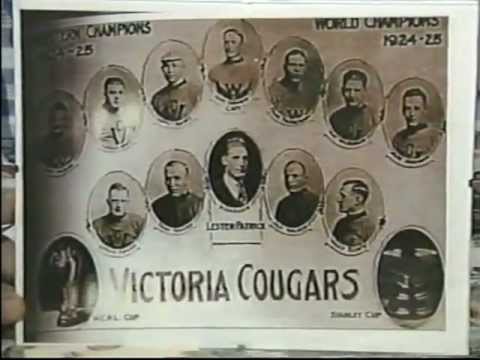
At the end of the 1925-26 season, the Victoria Cougars lost the Stanley Cup to the Montreal Maroons of the NHL. Still, the Cougars held the distinction of being the last non-NHL team to hold the Cup (having defeated the Montreal Canadiens for it in 1925.
After losing the Cup, the WHL began selling off players in earnest. Representing the league, Frank Patrick first approached the brothers’ friend, Art Ross of the Boston Bruins. He got Bruins owner Charles Adams to offer $300,000 in return for every player in the WHL, which he would then sell to the other NHL clubs. Realizing this would give Boston the advantage in player selection, the NHL board of governors took over the purchase of all the contracts. In what was called the “biggest sale in hockey history”, the money would be used to compensate the owners of five WHL franchises (because apparently the Saskatoon club had already been sold).
The key parts of the deal involved the two newest NHL franchises. Chicago bought the contracts of the Portland Rosebuds for $100,000 and became the Black Hawks. Detroit bought the Victoria Cougars players (for the same price) and became the Detroit Cougars. Unfortunately, without having an arena ready in Detroit, they played their entire first season in Windsor, Ontario. They gave up two players to steal Art Duncan (formerly of the Calgary Tigers) as a player-coach but fired him before even making it to Detroit. After a few seasons, the Cougars became the Falcons and then the Red Wings.
At the time of the sale, it was rumored that the Saskatoon Sheiks had been purchased by the other recent addition, the New York Rangers. Col. J.S. Hammond had just announced (without disclosing names) the purchase of ten players. While the entire team did not go directly into the Rangers, two of the most famous players (brothers Bill and Bun Cook) did. Another Sheiks star, Newsy Lalonde (as a coach), went to the New York Americans instead. Toronto separately also bought many Saskatoon players.
The other three WHL teams (the Vancouver Maroons, Edmonton Eskimos, and Calgary Tigers) would be divided (via a committee) amongst the NHL teams. Many Eskimos (including Eddie Shore and Duke Keats) went to the Bruins for $50,000. The Rangers got Vancouver’s Frank Boucher. The Canadiens focused on defense to take Herb Gardiner from Calgary and paid Saskatoon extra for goalie George Hainsworth.
In addition to players, as predicted, the Patrick brothers also went east to lead NHL teams. The Vancouver Sun said of the brothers, “In the last analysis they are clean-cut, honest figures in the world of men and affairs, who stand four-square as reputable citizens and super-strategists in the industry that is hockey.”
With all its players sent east, what was the fate of the west? Vancouver press pointed out that as “one of the best hockey towns on the continent,” they suffered the “fate of smaller sisters because of geographical isolation.” Some out west bemoaned, “It is the passing from the Western country of major-league hockey probably for all time, at all events for an uncertain term of years.”
However, Calgary claimed that they (and Saskatoon and Edmonton) “have been prepared for this news for several weeks and it is known that a movement has been started to reorganize the old Western Canada League.” E.L. Richardson, former WHL president, felt that the “west cannot do without hockey” and “some steps will be taken to prepare for another league, maybe of a different standard for next season.” Already, they were predicting a drop to a lower level of play, perhaps as farm teams for the NHL (like the arrangement in baseball).
By September, the NHL negotiated with the newly reorganized three minor-league branches, which included the Prairie League. The Prairie Hockey League (PHL) formed with three of the WHL teams (Calgary, Edmonton, and Saskatoon), a returned Regina team, and the Moose Jaw Warriors. The league couldn’t get enough fans and these teams pretty much folded. The PHL essentially became a local Saskatchewan league for its second year and then disbanded.
That left the NHL as the only pro league in the running for the Stanley Cup as of the 1926-27 season, even though the competition didn’t officially switch from challenges to playoffs until 1947.
Additional Sources:
Mike Commito, Hockey 365: Daily Stories from the Ice (Toronto: Dundurn, 2018), kindle edition.
Stephen Laroche, Changing the Game: A History of NHL Expansion (Toronto: ECW Press, 2014), 35-58.
John Chi-Kit Wong, Lords of the Rinks: The Emergence of the National Hockey League, 1875-1936 (University of Toronto Press, 2005), kindle version.
“Confirms Sale of the Victoria Cougars,” Victoria Times Colonist, 5 May 1926, p. 10.
“Tigers Will Go to the N.H.L.,” Calgary Herald, 5 May 1926, p. 20.
“Report Says All Western Pro Hockey Clubs Sold,” Edmonton Journal, 5 May 1926, p. 22.
“Coast and Western Clubs Pass Out Of Major Hockey in Huge Merger,” Vancouver Evening Sun, 5 May 1926, p. 16.
“Big Merger of Western Hockey Teams is Planned,” Saskatoon Daily Star, 5 May 1926, p. 11.
“Western Clubs Absorbed by N.H.L.,” Saskatoon Star-Phoenix, 6 May 1926, p. 9.
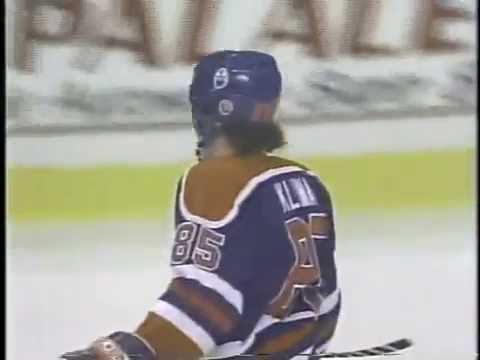
Although Petr Klima didn’t seem too happy when he was traded by the Detroit Red Wings to the Edmonton Oilers (on November 2, 1989), he soon had two of his biggest playoff moments there. On May 15, 1990, he scored in triple overtime to end the longest Stanley Cup Final game. Having taken Game 1 this way, the Oilers went on to win the championship in five games. The following season, Edmonton made it back to the conference finals. In Game 2 on May 4, 1991, Klima set a franchise record for the quickest natural hat trick.
When the 1990-91 regular season ended, Edmonton finished eleventh overall (with 80 points). Surprisingly, by the time they had eliminated the Calgary Flames and the Los Angeles Kings, for the conference finals, the Oilers faced Minnesota. The North Stars had finished in sixteenth-place (with 68 points) but had managed to defeat the Chicago Blackhawks and the St. Louis Blues, which had finished the season first and second in the league (with 106 and 105 points, respectively).
Even though the conference finals began at Edmonton’s Northlands Coliseum, the visitors continued their conquests. The North Stars won Game 1 on May 2 with a score of 3-1. Going into Game 2, Edmonton’s Charlie Huddy explained, “There’s no doubt that we were a bit scared going into this game. We knew going into Minnesota down two games would have been tough.”
Whether or not that was the motivation, the Oilers dominated the game right from the first period. After allowing Minnesota a power-play goal in under two minutes, Edmonton answered with four goals before the first intermission. They would only allow one more goal (a shortie) from the Stars about halfway into the next period before using the rest of the game to score thrice more. The final score was 7-2. According to Coach John Muckler, “We definitely tried to play at a high tempo all the way through the game. We turned it up.”
Of course, the first three Edmonton goals were all by Klima, giving him the tying score and the game-winner. “The first game, I missed a breakaway and other chances,” admitted Klima. “I’ve got to do my job. My job is to put the puck in the net. I had my legs tonight. I felt great before the game.” He sure started great, taking the second shot on net of the night forcing goalie Jon Casey to dive “to stop the puck as it was about to bounce over the line.” That was the only time Klima missed.
For his first goal, at 6:14, Klima “sent a 20-footer past Casey after a good rush by Charlie Huddy.” The follow-up came at 8:23 when Klima “raced past Shawn Chambers after a terrific pass from Joe Murphy on the next shift and sent a shot over Casey’s arm.” To complete the hat trick, at 11:27 he “took Esa Tikkanen’s feed of the period and deked Casey.” Center Ken Linseman (who was credited with an assist on the third goal) commented, “I thought he was going to get six the way he was going. He told me in the morning he was going to show who the best Czech was, too. He told me he was going to get three goals.”
It only took Klima a span of 5:13 to make the hat trick, the quickest in Oilers history. That beat the former Edmonton record of 10:41 that Wayne Gretzky needed to score a hat trick back on April 17, 1983. “He beat Gretz’ record by five minutes? Unreal,” exclaimed teammate Huddy. “I don’t know if guys realize he’s as fast as he is, the way he changes direction. He catches a lot of guys standing still. He so smooth with the puck, too.”
Klima was the 21st NHLer to score a hat trick in one period. Eight players managed the feat that season alone. Although not all in the same period, Klima had three other hat tricks earlier that season and two other playoff hat tricks (with Detroit in 1988). During the regular season, he had led his team in goals (40) and was just one point shy of leading its scoring. “Petr had a great season. He’s been our game-breaker,” Coach Muckler complimented. “He’s got exceptional speed. His defensive game has improved a great deal. He’s sticking to the team concept. He’s done everything we’ve asked him to do and it hasn’t hurt his offense.”
Just two days after the big victory, the series moved to Minnesota, where the home team got its revenge with a score of 7-3. The North Stars did not let the Oilers win another game, ending the series 4-1. Despite their near sweep, Minnesota lost 4-2 against the Pittsburgh Penguins in the Stanley Cup Final.
As for Klima, he played another two seasons in Edmonton before being traded to Tampa Bay on June 16, 1993. After a few more years, he returned to Edmonton briefly during the 1996-97 season and then finished his NHL playing career where it started, Detroit.
Additional Sources:
Jim Matheson, “Klima KO punch floors North Stars,” Edmonton Journal, 5 May 1991, p. C1.
Cam Cole, “Klima come full circle as Oiler,” Edmonton Journal, 5 May 1991, p. C1.
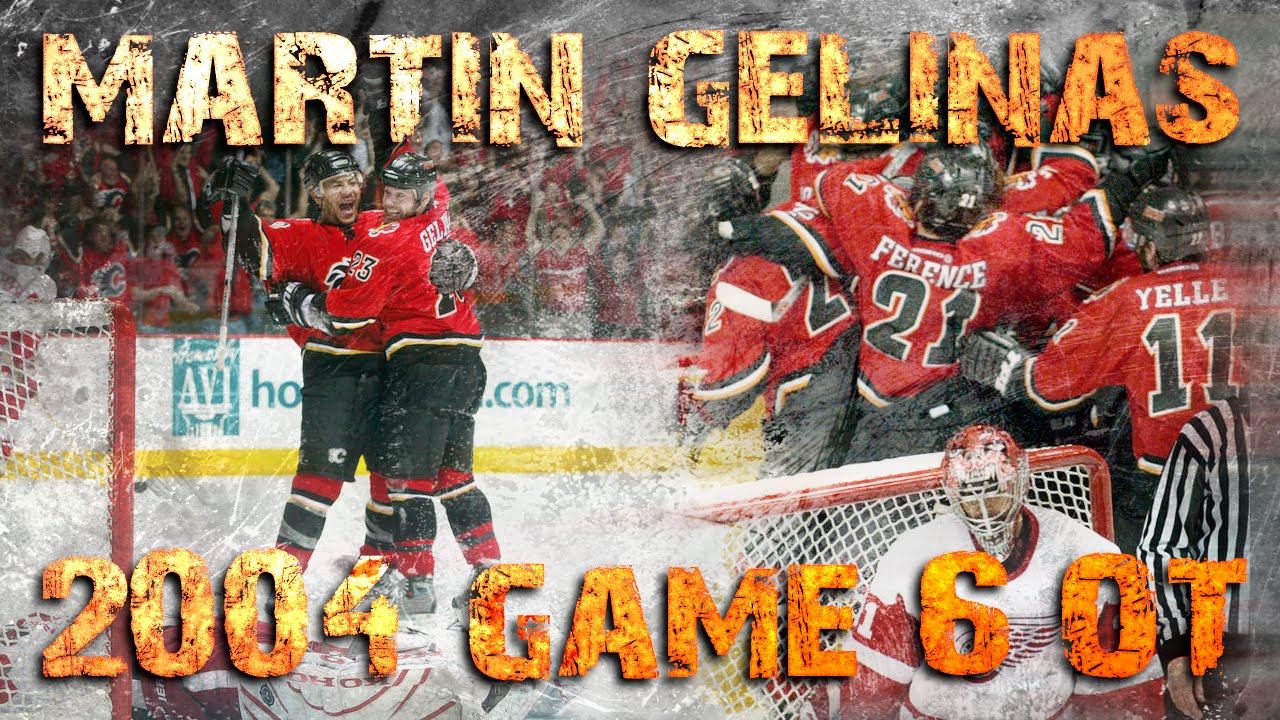
How does a player earn a cool nickname? For Martin Gelinas, all he had to do was score three postseason overtime game-winners that each sent his opponents off to summer vacation. His third such goal was scored on May 3, 2004, when his Calgary Flames booted the first-place Detroit Red Wings in the Western Conference semi-final. Not only did he set a record for most overtime game-winners during playoffs, but he also began to be called “The Eliminator” or “The Closer.”
Gelinas gained some recognition even before playing in an NHL game. In 1988, no sooner had he been drafted then he was traded by the Los Angeles Kings to the Edmonton Oilers as part of the package for Wayne Gretzky. It was to Gelinas’s advantage as the Oilers won the Stanley Cup at the end of the following season. He was then traded to Quebec in June 1993 only to be claimed on waivers in January 1994 to join the Vancouver Canucks in a failed attempt on the Cup.
The Carolina Hurricanes picked up Gelinas in a trade at the beginning of 1998. Their first ever run at the Stanley Cup was helped by Gelinas’s first overtime series-winner. In Game 6 of the Eastern Conference Final, on May 28, 2002, Gelinas’s goal brought the score to 2-1 as the Hurricanes eliminated the Toronto Maple Leafs. Having made it to the Stanley Cup Final, Carolina was nearly swept by Detroit. Rather than renewing his contract as a free agent, on July 2, 2002 Gelinas signed with the Flames.
The Calgary Flames failed to make the playoffs in his first two seasons with them, just as they had the five seasons before that. Finally, at the end of the 2003-04 season, Calgary finished twelfth (with 94 points) and found themselves in a postseason facing teams that had placed in the top ten.
For the Western Conference quarter-final, Calgary needed all seven games and a bit of overtime to overcome the eighth-place Canucks. On April 19, their captain, Jarome Iginla, scored twice in regulation, only for Vancouver’s Matt Cooke to answer. Just 1:25 into overtime, Iginla assisted as Gelinas scored his second overtime series-ender. It had been 15 years since the Flames had won a playoff series.
Advancing to the semi-final, Calgary was predicted to lose to the first-place Detroit Red Wings. Surprisingly, the Flames led the series by winning all the odd-numbered games, including Game 5 with just one goal. It came down to Game 6, played at Calgary’s Saddledome on May 3rd for 19,289 fans. By the end of regulation, no one had scored despite 38 shots by the Wings and 44 by the Flames. Miikka Kiprusoff earned his second consecutive shutout for 148:33 total. According to Captain Iginla, “He’s been the best goaltender in the league all year. And he proved why again tonight.”
Overtime ticked by until 19:13, when the Flames decided they were not going to miss out on the opportunity to end the series at home. Iginla took a shot on net, but the puck “was stopped in a scramble.” Then Craig Conroy tried, resulting in a loose rebound. Gelinas, “drifting lonely as a cloud at the left of the net, had a whole acre of hemp to shoot at.” As he himself explained, “It was a wide-open net and I wanted to make sure I didn’t miss it. I whacked at it pretty hard to make sure it went in.” He did indeed succeed in sending the puck by goalie Curtis Joseph. Humbly, Gelinas commented, “It was a great team game. I’m just happy to be in the right place. They had more skill, but we worked extremely hard and it paid off.”
Gelinas was the first NHL player to complete three playoff series by scoring in overtime. Teammate right winger Chris Clark complimented, “It’s unbelievable what he’s done – in the past, tonight, a couple of weeks ago. He’s our closer. We bring in the lefty.” As the center on the ice at the time of the winning goal, Conroy mused, “I don’t know what we’re going to call Gelly now. The Closer. The Eliminator. But we’ve got to find a new nickname for him.” After all, he pointed out, “He’s eliminated two teams, he’s closed them out.”
But Gelinas and the Flames weren’t finished yet. Advancing to the Western Conference Final, their opponents were the third-ranked San Jose Sharks. This time, Calgary started with an overtime victory and held the lead by winning every road game. Again, it ended in Game 6 (on May 19), and again Gelinas pulled out the win. After Iginla scored a power-play goal in the first period, Gelinas only needed to score in the second period to ensure the 3-1 victory. A decade later Gelinas said, “You just have to get there. But I had that burning desire. I mean, I bleed red for this city. … I wanted to show what I was capable of doing.” He certainly did as he became the second NHL player to clinch three series during one playoff year.
Thanks to Gelinas’s three series-winners, the Flames made it to the Stanley Cup Final. It looked as though Gelinas had repeated his Game-6 knock-out special when a puck deflected off his skate and seemed to cross the goal line before being kicked out. This would have broken the tie to give the Flames the victory in both the game and the series. Unfortunately for them, the referees failed to signal goal or review the tapes (which later seemed to show that the entire puck did not conclusively cross the line). The Tampa Bay Lightning won in double overtime and proceeded to win Game 7 and the Cup.
At the end of the postseason, Gelinas had eight goals of the 23 total he scored during the postseason throughout his career. Of these 23, six were game-winners and half of those the series-winners during overtime.
Additional Sources:
Mike Commito, Hockey 365: Daily Stories from the Ice (Toronto: Dundurn, 2018), kindle edition.
The Buffalo Sabres and the Boston Bruins met each other in
the quarterfinals of the 1992 Stanley Cup Playoffs. The start of this season’s
playoffs came shortly after a ten-day player strike, that began on April 1, and
it affected the attendance at all the games.
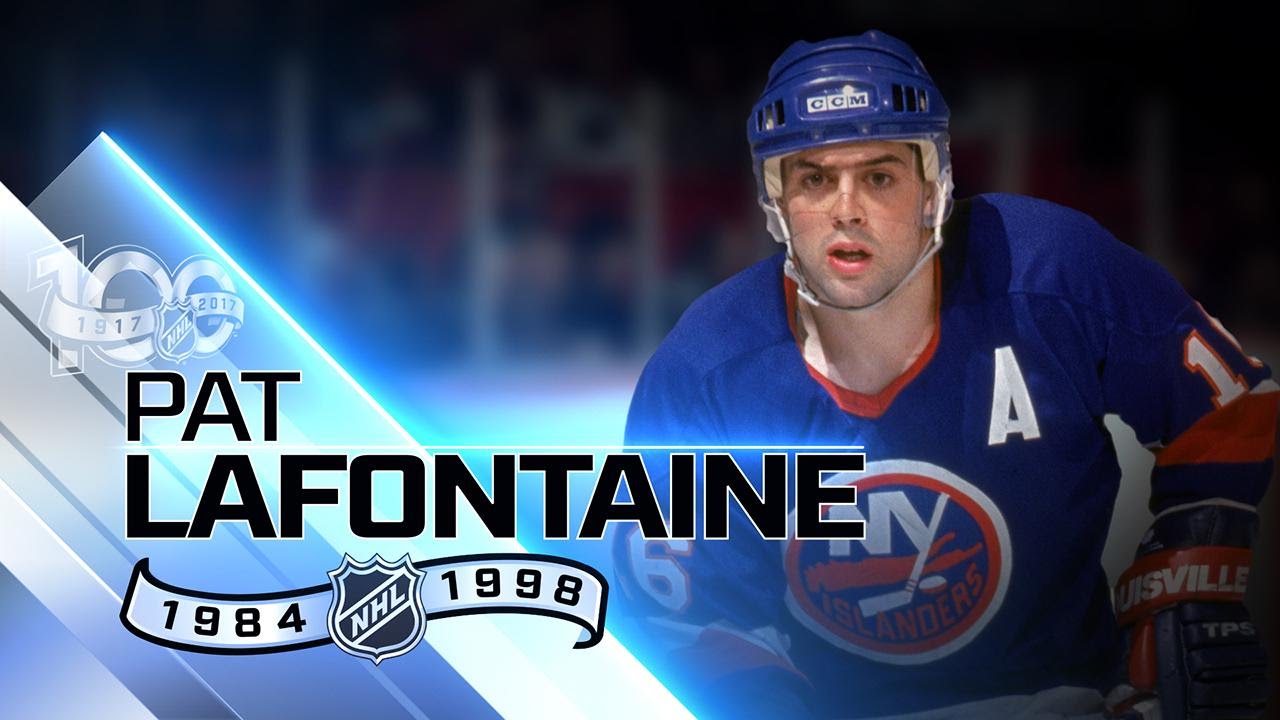
When Sabre Pat LaFontaine notched a goal in Game 7 on May 1, 1992, he became the first player in the NHL to score a goal in each of his team’s first seven playoff games in one year.
During Game 1, that took place on April 19, in Boston, the Sabres were leading 1-0 after the first period and LaFontaine notched his first goal of the series at 2:28 of the second period, while on the power play, assisted by linemates Dave Andreychuk and Alexander Mogilny.
“Mogilny and LaFontaine are great skaters who are always in
motion. They both have tremendous anticipation,” said Bruins coach Rick Bowness
of Buffalo’s top line after the game.
The Sabres lead 3-0 at the end of the second period, but Boston came back within one before running out of regulation time in that first game.
The second game took place in Boston on April 21. This time it was Boston who was leading 2-0 after the first period. Once again LaFontaine found twine in the second period, and again while on the power play. This time he was assisted by Dale Hawerchuk and Petr Svoboda.
“Both teams began the second period in a defensive mode
before LaFontaine, standing to the right of the crease, tipped in Hawerchuk’s
long shot for his second goal of the series,” reported The Gazette. “
Buffalo managed to tie things up in the third period where
the score stood at the end of regulation, forcing them to play overtime. Adam
Oates gave the Bruins the win, unassisted, at 11:14 of the overtime period.
Things moved to Buffalo for the next two games, where Boston
got both wins—both games with a one-goal differential.
On April 23, the Bruins had the two-goal lead going into the second period and once again the Sabres were able to come back and tie things up in the second period. Randy Wood got Buffalo’s first goal of the game at 3:05 of the second while LaFontaine notched his third of the series, once again on the power play, at 15:00 of the second. With 39 seconds remaining in the middle frame, Oates gave the Bruins the go-ahead goal on the power play and the win.
Two nights later, on April 25, those in attendance got to see a few more goals for both teams, as once again the game couldn’t be decided during regulation.
“Glen Wesley, Adam Oates, Gord Murphy and Joe Juneau …
scored for Boston, while the Sabres got goals from Pat LaFontaine, Dave
Andreychuk, Dale Hawerchuk and Wayne Presley,” printed The Burlington Free
Press.
This time the tie was ended when Ted Donato put the Bruins up 5-4 at 2:08 in the extra inning and gave the Boston the 3-1 lead in the games played.
As the teams returned to Boston on April 27, the Sabres were on the edge of elimination.
“Rookie Tom Draper, rebounding from his worst game of the
playoffs, stopped 28 shots for the visiting Sabres. Draper, in goal for the
entire series, stopped only 14 shots in a 5-4 overtime loss Saturday night. The
Sabres got goals from Dave Hannan and Waterford Township’s Pat LaFontaine. Petr
Svoboda assisted on both goals,” reported the Detroit Free Press of Buffalo’s
shutout in Game 5.
Back in Buffalo, and still fighting for their lives, the Sabres pummeled the Bruins 9-3 in Game 6 on April 29th.
“Pat LaFontaine scored two second-period goals, his sixth and seventh of the National Hockey League Playoffs and the Buffalo Sabres set a club playoff scoring record with a 9-3 thumping of the Boston Bruins,” reported the Times Colonist. “LaFontaine made it 3-0 at 3:39 of the second on a breakaway… Boston’s Bob Sweeney took a roughing penalty… and LaFontaine scored.”
The Sabres had forced a Game 7, which was played in Boston on May 1. At this point it was up for grabs by either team. And for the fourth time, the score would end up 3-2. Playing from behind, down by a goal, LaFontaine tied things up at 2:07 of the second with a short-handed goal. And despite having five shots on Bruins goalie Andy Moog, he wasn’t able to put another one by him even when he had an empty net looming. And in the end the Sabres fell short by one goal.
“I just looked up at the ceiling and thought we still had a chance because we were carrying the momentum,” LaFontaine said. “But maybe it wasn’t meant to be.”
“Throughout the series, LaFontaine was shadowed by Dave
Poulin or Jeff Lazaro. But he finished with a series-high 11 points, five of
them coming on the power play. He also had a shorthanded goal, at 2:07 into
last night’s second period when, while standing along the right post, he
converted a cross-crease pass from Tony Tanti,” wrote Jim Greenidge.
Though the Sabres were eliminated, LaFontaine made history—scoring
at least one goal in each of the seven play-off games in a single year.
Additional Sources:
Kevin Paul Dupont, “Empty feeling pervades the Garden,” The Boston Globe, Monday, April 20, 1992, p. 46.
“Oates’s overtime goal evens series for Bruins,” The Gazette (Montreal, Quebec), Wednesday, April 22, 1992, p. B4.
“Whalers pull even with Habs,” The Burlington Free Press (Burlington, Vermont), Sunday, April 26, 1992, p. 2C.
“Penguins alive; Habs, Sabres, Rangers win,” Detroit Free Press (Detroit, Michigan), Tuesday, April 28, 1992, p. 7C.
“Sabres set club mark I scoring,” Times-Colonist (Victoria, British Columbia), Thursday, April 30, 1992, p. B2.
Jim Greenidge, “Something was amiss,” The Boston Globe (Boston, Massachusetts), Saturday, May 2, 1992, p. 70.
The St. Louis Blues were part of the 1967 expansion which also brought the Minnesota North Stars, Los Angeles Kings, Philadelphia Flyers, Pittsburgh Penguins and the California Seals. It was the last of the expansion teams, predominantly because no one had actually made a formal bid for a team in St. Louis at that point. However, the Chicago Black Hawks’ owners, James D. Norris and Arthur Wirtz, owned the St. Louis Arena, which was not in great shape and they were hoping to unload it.
In February 1966 when the expansion cities were announced,
the Pittsburgh Post-Gazette had this to say about St. Louis’ entry, “St.
Louis was not represented, nor did the city make a bid for a franchise at the
New York meetings. President Clarence M. Campbell of the NHL said that ‘we want
a team in St. Louis because of the city’s geographical location and the fact
that it has an adequate building.’ The St. Louis Arena, currently used by the
Braves of the Central Hockey League, seats 14,000. The franchise was ‘awarded’
subject to application by a ‘satisfactory’ group prior to April 5.”
That “adequate building”—the St. Louis Arena—would require
several million dollars’ worth of renovations before the St. Louis Blues would
take to the ice in 1967.
Perhaps it should have been expected given that their bench boss
was Scotty Bowman, but the St. Louis Blues made it to the Stanley Cup Final in
their first and second years in the league before being eliminated by the
Montreal Canadiens both years.
Their third season, they found themselves on the cusp of going back to the Stanley Cup Final for the third consecutive year, as they took on the Pittsburgh Penguins on April 30, 1970 at the Civic Arena in Pittsburgh for Game 6 of their semifinal series.
“The St. Louis Blues can clinch a third straight trip to the Stanley Cup finals tonight, but coach Scotty Bowman won’t be dismayed if they don’t. There’s always Sunday,” reported the Petoskey News-Review.
The Blues had been great on home ice during the series but
had struggled to pull out a win in Pittsburgh.
“I don’t care how we do as long as we win the last game. We
don’t have to win a game in here. They have to win a game on our ice,” stated
Bowman before the game.
Duane Rupp had given the Penguins a first period lead when he scored at 13:42 of the opener assisted by Jean Pronovost and Keith McCreary. Ron Shock extended that lead less than five minutes into the second period before the Blues were able to response.
“Red Berenson started the Blues’ comeback with a quick shot after taking a pass from the corner by Bill McCreary. Pittsburgh goalie Al Smith was screened on the drive,” reported the Victoria Daily Times.
The Penguins continued to try and expand their lead, but
Glenn Hall’s posts did what they do best for their goaltenders. Meanwhile Bill
McCreary—and yes, his brother Keith was on the Penguins—tied things up for the
Blues at 5:26 of the third period. However, Michel Briere put the Penguins
right back on top just 51 seconds later.
The Blues didn’t let the Penguins celebrate their lead for very long, once again knotting up the score. This time it was Tim Ecclestone, with his third of the playoffs, just 50 seconds after Briere’s marker.
“That set the stage for Larry Keenan’s winner with a little
more than five minutes left in the game. Smith stopped a hard shot by McCreary
and the puck fell near his feet. Keenan, always the opportunist, was there to
flip it in,” described the Victoria Daily Times.
For the third consecutive time the Blues were on their way
to the Stanley Cup Final. Three years in the NHL and three years in the Stanley
Cup Final.
This time they would find themselves taking on the Boston Bruins. And just as had happened the two previous years, the Blues would be swept, despite having home ice advantage for Games 1 and 2. For the Bruins, it was their first Cup since 1941. And for Bobby Orr, it would result in the most iconic image, today represented by a statue in front of TD Garden’s Hub on Causeway, of him appearing to fly through the air.
For the St. Louis Blues, it would be their last appearance
in the Stanley Cup Final until 2019, when once again they found themselves up
against the Boston Bruins. Though it had been 49 years since last meeting in
the Final, the animosity was definitely still there and this time the Blues
were neither swept nor did they lose the chalice. They hoisted the Cup on “Garden
Ice” in Boston after taking the Final all the way to Game 7.
Additional Sources
“City Gets Major League Hockey Franchise; Pittsburgh, Five Others Will Join Loop in 1967-68,” Pittsburgh Post-Gazette (Pittsburgh, Pennsylvania), Thursday, February 10, 1966, p. 24.
“Blues Seek Hockey Clincher,” Petoskey News-Review (Petoskey, Michigan), Thursday, April 30, 1970, p. 16.
“Blues Reach Final,” Victoria Daily Times (Victoria, British Columbia), Friday, May 1, 1970, p. 14.
The Boston Bruins, who were eliminated from the playoffs after the first round, and the New York Rangers, who missed the 1959 playoffs altogether, found themselves getting to play some bonus hockey anyway. April 29, 1959 found the two of them playing their first of 23 games in 26 days on a true whirlwind tour of Europe. The first stop? London, England. In addition to spreading some NHL hockey love on the continent, they were also trying a new puck.
“The two National Hockey League teams have taken along two
gross of a new type of puck designed by Clair F. Kinney of Toronto. After using
the disks the team will report to league president Clarence Campbell of Montreal
whether they consider them an improvement over the pucks now in regular play,”
reported The Windsor Star.
Kinney’s puck, instead
of being all black, had a bright orange side. This was to make it more visible
for the goaltenders, but also for the fans. In addition to the color change, it
was also made out of a something that was supposed to slide better and not
require freezing to cut down on bounce.
As for the first
game between the Bruins and the Rangers? Well, midway through the game, which
was played at Wembley, saw the Bruins trailing 5-1. However, the second half of
the game saw the Bruins pile on six more goals to take the win in the first
game. Among the Rangers, both Les Colwill and Dean Prentice netted two each,
and Bobby Hull—who was on loan from the Chicago Blackhawks for the tour—notched
one. Meanwhile the Bruins got goals from seven different players: Bronco
Horvath, Johnny Bucyk, Jim Morrison, Earl Reibel, Leo Labine, Guy Gendron, and
Larry Leach.
The teams took on
each other the following night once again at Wembley, and this time the Rangers
beat the Bruins 4-2.
From London, the
teams headed to Geneva, Switzerland where they played two games on May 2nd and
3rd before heading on to Paris. After losing the third game 4-3, the Bruins
came back to pummel the Rangers during the third period of the fourth game ultimately
outscoring the Rangers 12-4 to knot the games at two each. Bucyk had a
hat-trick to help his Bruins with those 12 goals.
The Bruins lost 6-2
in Paris on May 4th but once again tied up the series when they took the 6-4
win in Paris on May 6. Bucyk accounted for three of those six goals, his hat
trick coming in the third period.
In the first eight
days of the tour, they had played six games in four countries, with reports
abroad of capacity crowds wherever they went.
From Paris the
teams traveled to Antwerp, Belgium; Zurich, Switzerland; Dortmund, Essen,
Krefeld, and Berlin, West Germany; and finished things off with three games in
Vienna, Austria May 22nd through May 24th.
The Rangers took the series 11-9-3 but for two teams who were out of the playoffs it was a chance to keep playing while sharing their skill across Europe.
“The Russians would
be chased out of the rink by these ice hockey players. As concerns speed, lightning-fast
reaction, body control and sheer physical power, the North American
professionals have no equals,” wrote Walter Schwarz. “I did not have the impression
watching an exhibition game like that between New Rangers and Boston Bruins
that it was a friendly ball-juggling stint like the Harlem Globetrotters in
basketball here some time ago. The ice hockey we saw was a real battle and no
quarter was given.”
Schwarz was a sports editor for Austria’s largest circulating daily, and while he had seen and covered a number of amateur hockey tournaments, his first glimpse at an NHL professional game came when he saw the Bruins and Rangers play their first game in Austria on May 22. The game resulted in a 2-2 tie. His thoughts were written up for the Associated Press and shared back in North America.
While some of the venues saw capacity crowds, that wasn’t true of all of the games. Lack of publicity was attributed by Lynn Patrick to some of the smaller crowds, while Bruins coach Milt Schmidt felt the high-priced tickets kept people away. Although the players admitted to having a “wonderful experience” the Bruins came home from Europe a bit hungry, portions being a bit smaller over in Europe.
“We’re used to big
breakfasts,” shared Larry Hillman in comment to the continental breakfasts they
were fed, consisting of juice, rolls and some other beverage.
Not surprisingly a
few of the players extended their stays in Europe or elected to travel home by
boat. Jerry Toppazzini and Rangers’ Lou
Fontinato visited the birthplaces of their parents in Italy.
As for the
experimental pucks? Nothing was reported about them in the newspapers, so
perhaps the players weren’t too impressed with them.
Additional Sources:
“Bruins, Rangers to Experiment,” The Windsor Star (Windsor, Ontario), Wednesday, April 29, 1959, p. 43.
“Boston Bruins Win on Tour,” The Tennessean (Nashville, Tennessee), Thursday, April 30, 1959, p. 29.
“Bruins, Rangers Resume Series At Geneva,” The Berkshire Eagle (Pittsfield, Massachusetts), Saturday, 2 May 1959, p. 17.
“Rangers, Bruins Split In Geneva,” Calgary Herald (Calgary, Alberta), Monday, May 4, 1959, p. 17.
“Rangers Top Bruins,” The Gazette and Daily (York, Pennsylvania), Tuesday, May 5, 1959, p. 22.
“Boston, New York Tied in Europe,” The Herald-News (Passaic, New Jersey), Wednesday, May 6, 1959, p. 28.
Walter Schwarz, “Pros Too Strong For Reds,” The Ottawa Citizen (Ottawa, Canada), Monday, May 25, 1959, p. 13.
Herb Ralby, “Hungry Bruins Squad Home From Europe,” The Boston Daily Globe (Boston, Massachusetts), Thursday, May 28, 1959, p. 36.
There are games where it seems everyone scores, and then there are games where no one scores—the goaltenders seemingly involved in their own private duel 200 feet apart from each other. It was just such a game where neither goalie had allowed a puck past him in Game 6 of the Eastern Conference Quarterfinal between the Buffalo Sabres and the New Jersey Devils in 1994.
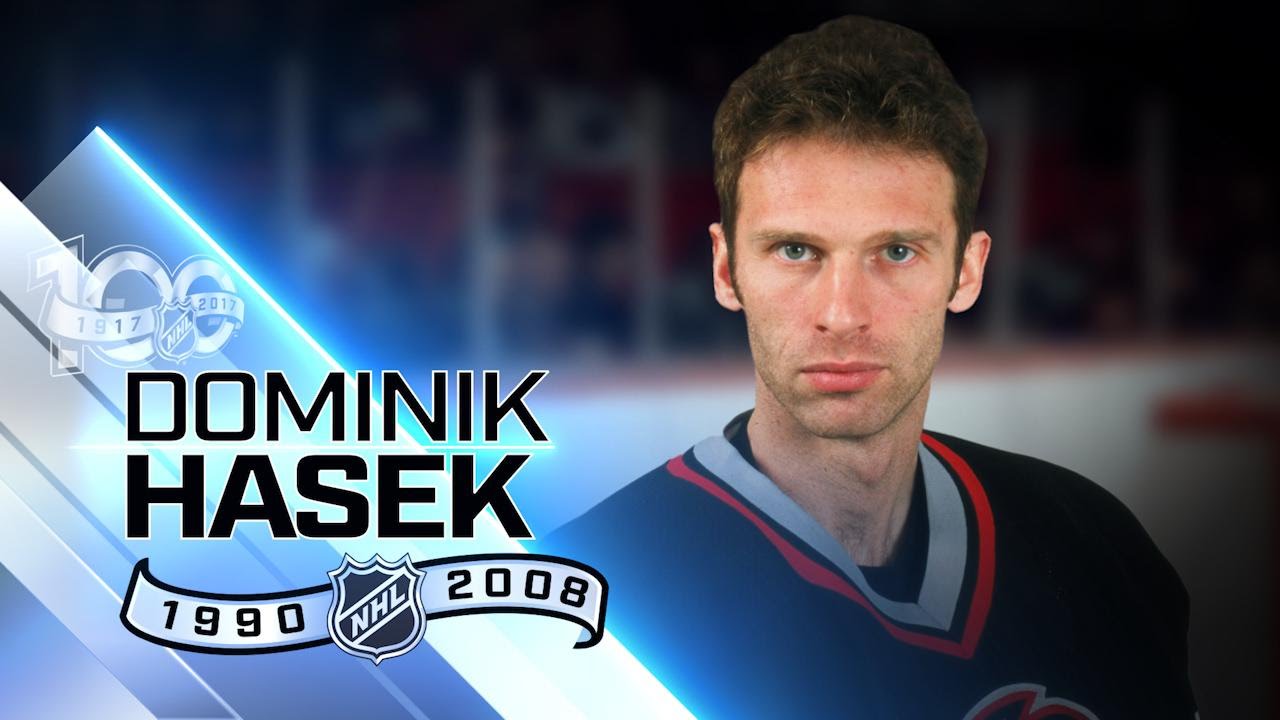
Going into the game, which took place at the Buffalo Auditorium on April 27, 1994, the New Jersey Devils carried a slim 3-2 game advantage, and were looking to send the Sabres packing while they moved on to the semifinal. That may have been the plan, but it didn’t quite go that way that night—in large part because apparently the Sabres netminder, Dominik Hasek, didn’t get the memo that he was supposed to want to have his season end.
Hasek already had one shutout in the series in Game 1 which
took place at the Brendan Byrne Arena in East Rutherford, New Jersey.
“Hasek, whose 1.95 goals-against average this past season
was the best in the NHL since Bernie Parent had a 1.89 in the mid-1970s, was
the difference, particularly in the second period when the Devils outshot the
Buffalo 13-5,” reported The Monitor.
In total that first game, Hasek denied 30 shots put on net
by the Devils, and those in front of him got a four-on-three power play goal
late in the first and an empty-netter late in the third for a 2-0 victory in
that game.
As regulation came to an end in Game 6, those in attendance had yet to see a goal scored. Both Hasek and Martin Brodeur seemed to be nothing but big brick walls, with Hasek having stopped 31 shots, while Brodeur had denied 29.
“Both goaltenders — Dominic <sic> Hasek for the Sabres
and rookie Martin Brodeur for the Devils — turned in brilliant performances,” reported
the Times Colonist.
In true Stanley Cup Playoffs action, the two teams began
sudden death full 20-minute periods until someone found a missing brick in one
of the goaltending walls. The teams continued
to play through three full overtime periods—in essence a complete game within
the overtime—and were into the fourth overtime period as the game continued.
Those at Buffalo Auditorium were certainly getting their money’s worth at least
in length of game if not in goals scored.
A chink in the brick was finally discovered when Sabre Dave
Hannan managed to score at 5:43 of the fourth overtime. By that time the Devils
had outshot the Sabres 39-20 throughout the extra innings, including having
taken the first four shots on Hasek in the fourth overtime.
“The Sabres’ first overtime win of the season after four
losses came at a most opportune time, tying the Eastern Conference quarterfinal
series 3-3,” reported the Tucson Citizen.
As described on NHL.com, “Hannan [took] a pass from Jason Dawe and [lifted] a backhander through traffic that [went] past Brodeur’s glove.”
“Buffalo goaltender Dominik Hasek prolonged the game with 70
saves and New Jersey’s Martin Brodeur got the loss despite stopping 49 shots,” stated
the Tucson Citizen.
Game 6 between the Buffalo Sabres and the New Jersey Devils, at a total of 125:43 total playing time, remains 11th in the list of longest overtimes in playoffs.
Unfortunately, the Sabres only bought themselves one more
game. They were eliminated in Game 7, 2-1, by the Devils on April 29.
Hasek’s career-long save percentage of .922 remains the best
among retired goaltenders, and from 1993 through 1999 he led the NHL in highest
save percentage. The Czech native won the first of his six Vezina trophies in
June of 1974.
In 2002 he became only the second goaltender to have both a Stanley Cup (which he won with the Red Wings in 2002) and an Olympic gold medal (winning with the Czech Republic at the 1998 Nagano Olympics). His dueling partner on that six-hour marathon Game 6, Brodeur, was the other goaltender to have such honors, having just won gold with Team Canada in February of 2002 at the Salt Lake City Olympics (already with two Stanley Cup wins with the Devils at that time in 1995 and 2000).
Hasek was inducted into the Hockey Hall of Fame in 2014.
Additional Sources
“Dallas, New York open with success,” The Monitor (McAllen, Texas), Monday, April 18, 1994, p. 2B.
“Bruins force series showdown,” Times Colonist (Victoria, British Columbia), Thursday, April 28, 1994, p. B4.
“Capitals advance; Sabres win a doozy,” Tucson Citizen (Tucson, Arizona), Thursday, April 28, 1994, p. 4D.
When it comes to the Stanley Cup Playoffs, no team ever
wants to be down by three games in a best-of-seven series. It usually means
that the team who has lost those three games is just one game from heading to
the golf courses.
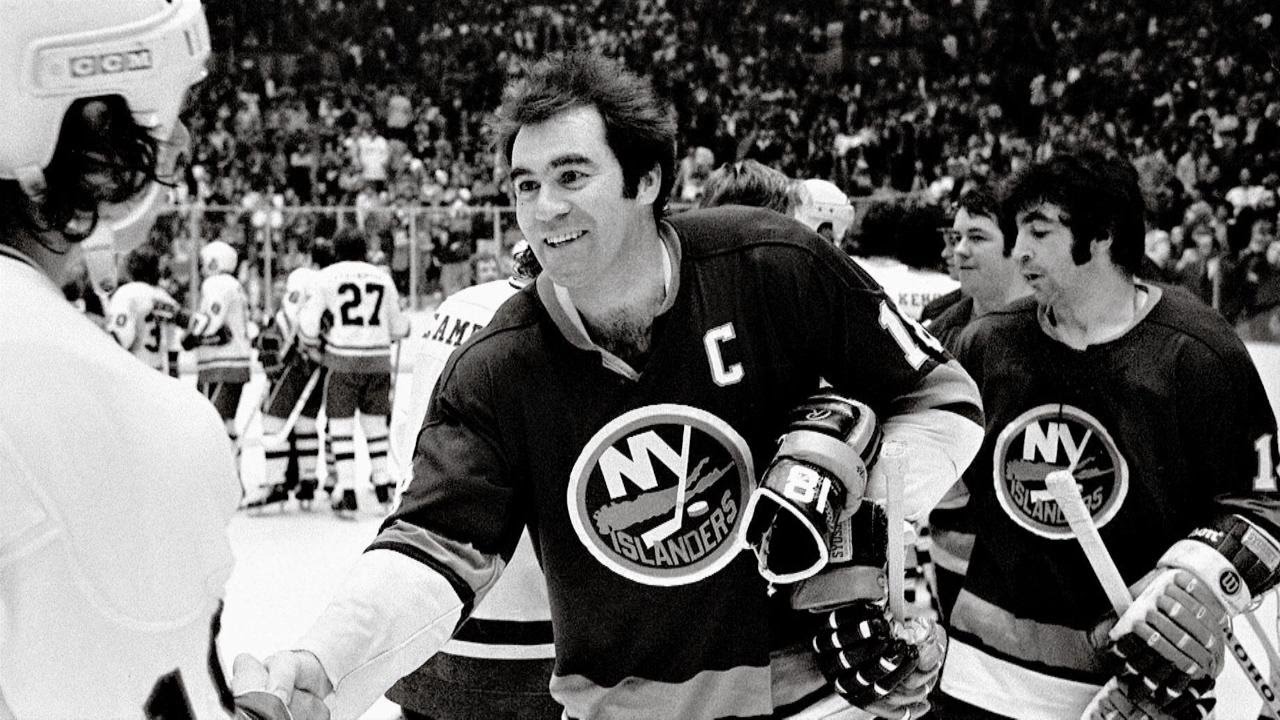
The New York Islanders found themselves in just such a situation
during their quarterfinal series against the Pittsburgh Penguins in 1975.
The Penguins had won Game 1 (5-4) and Game 2 (3-1) on home
ice before going to the Islanders Nassau County Coliseum for Game 3 where they
won 6-4).
“In each of the three Penguin victories so far, the
Islanders have fallen behind 3-0, only to resist the final stake through the
heart until the final minutes of the game,” wrote Dan Donovan of The
Pittsburgh Press after the Islanders lost Game 3.
Of Game 3, Penguin Lowell MacDonald said “I thought we had the game won when the score was 4-2 [which was midway through the third period], and then I thought we had the game won when it was 5-3. But I didn’t know we had it won until the score was 6-4.”
MacDonald had scored the empty net goal to make it 6-4 with
just 12 seconds remaining in Game 3.
“Once again [the Islanders] watched Pittsburgh dig a hole, then push the Islanders into it when it flooded. The Penguins did it with a dousing of three first-period goals, withstood three Islander attempts to reach dry land, then watched them gurgle to a 6-4 defeat before 14,865 imploring Nassau Coliseum fans,” described Wes Gaffer of the Daily News.
To say that most of the hockey fans on Long Island were
expecting the final blow to come on Sunday, April 20, with Game 4 would not be
too hard to understand.
However, despite Donovan’s comments that the Penguins were remaining cautious, apparently they felt that Game 4 was in the net, so to speak.
“Never underestimate the value of overconfidence. The Islanders
didn’t yesterday. The Penguins did, and dropped a 3-1 decision in what could have
been a total playoff wipeout in New York,” wrote Gaffer about the Islanders
first win in Game 4. “Of all times, leading 3-0 in games won, the Penguins
became not cautious but cocksure, so cocksure that they found themselves
trailing for the first time since the series began eight days ago in
Pittsburgh.”
Unlike the first three games, the Islanders managed to be the ones to score first, forcing the Penguins to play from behind. The Islanders would continue to get the first goal in both Game 5 (going up 2-0 before Pittsburgh scored) and Game 6 (getting the first goal). Likewise they limited the Penguins to just one goal in Game 4, two goals in Game 5, and 1 goal in Game 6, while they scored three goals, four goals, and four goals respectively.
The Islanders went from being almost out to forcing a Game 7, which took place on April 26, 1975 at the Civic Arena in Pittsburgh.
“The New York Islanders, with momentum on their side, try
tonight to become the first National Hockey League team in 33 years to lose the
first three games of a playoff series and come back to win,” reported the Fairbanks
Daily News-Miner. “After the Islanders went through three games knowing
that one more loss would mean the end of their season, the Penguins now find
themselves in the same boat.”
The last time such a feat had been accomplished was in 1942
when the Toronto Maple Leafs found themselves down three games against the
Detroit Red Wings during the Stanley Cup Final. They came back from that deficit
and hoisted the chalice on April 18, 1942.
“History was made here in Pittsburgh tonight by the three-year-old Islanders. They blanked the Penguins, 1-0, to win the last four games of the seven-game quarterfinal of the Stanley Cup playoffs to become the first team ever to do it in a preliminary round,” wrote Gaffer after Game 7.
Glenn Resch, who had replaced Billy Smith between the pipes for the Islanders beginning with Game 4, notched his only shutout of the series. Meanwhile Ed Westfall gave the Islanders their only goal of the game at 14:42 of the third period.
“It was Westfall, after 54 minutes and 42 seconds of play,
who sent the Islanders into the semi-finals against Philadelphia, beginning Tuesday
night. Eddie tallied because Bert Marshall, a pillar of strength, made a brilliant
move, faking a slapshot, then passing off smooth as silk to Eddie alone out
front of Gary Inness’ goal.”
“Cinderella broke the Penguins’ hearts last night. Hockey’s surprise team, the New York Islanders defeated the Penguins, 1-0, before a crowd of 13, 404 at the Civic Arena to win the Stanley Cup quarterfinal series,” wrote Donovan.
“We got overconfident… definitely. Sunday afternoon, we were terrible. We were a little better Tuesday. All they did was work for seven games,” said Pittsburgh’s coach Marc Boileau.
The Islanders would force the Philadelphia Flyers to play all seven games in the semifinals. Once again, they found themselves down three games, only to come back and compel a Game 7. Unfortunately, this time they just couldn’t force lightning to strike twice. The Flyers would go on to beat the Buffalo Sabres in six games to win the 1975 Stanley Cup Final.
Additional Sources:
Dan Donovan, “Penguins Go 3 Up, Remain Cautious,” The Pittsburgh Press (Pittsburgh, Pennsylvania), Friday, April 18, 1975, p. 38.
Wes Gaffer, “Isles Lose Again, 6-4; Pitt Can Clinch Sunday,” Daily News (New York, New York), Friday, April 18, 1975, p. 81.
Wes Gaffer, “Islanders Alive! Rally to Rip Penguins, 3-1,” Daily News (New York, New York), Monday, April 21, 1975, p. 55
“Islanders: can then perform THE feat?” Fairbanks Daily News-Miner (Fairbanks, Alaska), Saturday, April 26, 1975, p. 8.
Wes Gaffer, “Resch Stars Again; Flyers Next,” Daily News (New York, New York), Sunday, April 27, 1975, p. 119.
Jarmo Kekalainen, the General Manager of the Columbus Blue Jackets, has been a busy man in the past 10 days. He found a way to sign both of the current goaltenders to new cap friendly deals. Joonas Korpisalo and Elvis Merzlikins signed new two-year contract extensions. The goalies would have been restricted free agents after the season, so this checks one thing off of Kekalainen’s offseason to-do list.
Korpisalo started the season for the Blue Jackets as the clear cut number one goaltender after Sergei Bobrovsky went to the Florida Panthers in the offseason. Merzlikins was the backup until Korpisalo got hurt and then the starter’s crease was his. He quickly got national attention after playing well, and kept the Blue Jackets in the postseason race until Korpisalo got back. With the way the two goalies were playing, it was an easy decision to lock both up on bridge deals now. There are pros and cons to each goalie, but the biggest question is who emerges once the dust clears and becomes the Blue Jackets’ goaltender of the future?
The Case for Joonas Korpisalo…
Korpisalo has been with the Blue Jackets organization full-time since the 2015-16 season. He spent parts of his first few seasons alternating between the AHL and NHL before he was the full-time Blue Jackets’ back up goalie during the 2018-19 season. Korpisalo has worked his was through the system even winning a Calder Cup in 2016 so he knows the tendencies of some of the shooters better. The goalie knows the North American style of play, and has adapted his game. Korpisalo was in the middle of a breakout season before he got hurt at the end of December, but he did come back before the NHL paused its season due to the Coronavirus pandemic.
Korpisalo can make the difficult save look routine and this is due to his work ethic and athleticism. The goalie can steal games for his team and earn valuable points in the standings for his team. He is calm in the net and that has a positive effect on the guys playing in front of him because they know that they can make a mistake, and Korpisalo will clean it up. Korpisalo only has 127 games of NHL hockey under his belt, but that’s 94 more games of experience than Merzlikins. He has shown improvement as he has continued to develop for the Blue Jackets.
The Case Against Joonas Korpisalo…
There are three big factors that are working against Korpisalo as the Blue Jackets starting goalie in the next two years. The first one is that he is coming off of a major knee injury so there is the question of does that knee hold up over the next two years? Does it give him problems in the future or was it a one-time thing that he has recovered from? The goaltender missed 25 games to the previously mentioned knee injury, but played a few games before the season was paused.
Can Korpisalo handle the pressure of being the number one goaltender? He had the net all to himself until the injury and emergence of Merzlikins. He still is the number one goalie, but he needs to be careful if he slips up because there is someone on the bench who would easily take his spot. The soon-to-be 26-year-old is in his prime now and needs to prove that he can take the pressure of being the number one, if he is looking to continue his career with the Blue Jackets.
The Case for Elvis Merzlikins…
Merzlikins was far from a known NHL player, especially on the national level. The goalie managed to get national attention when he had five shutouts in a span of eight games. Yes, you read that right. The Blue Jackets were in the middle of a postseason race and its number one goalie got hurt, but Merzlikins didn’t let the pressure get to him. He proved that he can play well under pressure while staying composed and making saves to keep his team in the game. Another advantage that Merzlikins has is that the opposition may not know his game.
Merzlikins leads rookie goaltenders in shutouts, goals against average and save percentage so it’s clear the kid can keep the puck out of his own net. The 26-year-old proved that he can come off the bench cold and play well. He doesn’t seem to let anything bother him and bounces back pretty well from a tough goal. Merzlikins can handle the puck so he can help move the offense up the ice or stop the puck behind the net for his defenseman.
The Case Against Elvis Merzlikins…
The biggest factor working against Merzlikins is the uncertainty of what the future holds. The Blue Jackets have no way of knowing if he has the ability of improving from season-to-season because this is his first season in the NHL. He is in his prime now just like Korpisalo, so does he get better or decline in the next two seasons?
Another big factor working against him is the lack of experience with the North American game. He will need to learn the tendencies of the game and the players in the NHL, and that will come with time, but how fast does he grasp it? The goalie will also need to rein it in just a bit. Merzlikins tends to be a bit too aggressive when playing the shooter and it has burned him more than a few times this season.
The Blue Jackets’ Future Starting Goalie Is….
Elvis Merzlikins. If the kid is this good now without knowing the shooters’ tendencies, imagine how good he will be once he studies some tape and learns them. He will also learn the North American game better over the next few seasons too. I’m sure that he will go into a slump, at some point in the next two years, but he has the mentality to bounce right back. Merzlikins doesn’t have the pressure on him like Korpisalo does to keep the starter’s crease and to perform.
The 26-year-old is calm, cool and collected while in net and he seems to thrive in big games. He will need to work on how early he goes into the butterfly, but that will come as he gets more experience. The biggest thing that he needs to work on is how aggressive he is with the shooter. He tends to be super aggressive, coming out to the top of the crease and backing in as the offensive players gets closer to his net. If Merzlikins can be a little more patient with the shooter and learn the player’s tendencies then he has a chance to be a very good goalie for the Blue Jackets.
Overtime goals made all the difference in the 1992-93 playoffs for the Prince of Wales Conference. On April 24, Ray Ferraro scored his third overtime goal in three games to give the New York Islanders a 3-1 lead over the Washington Capitals in the Patrick Division semi-finals. That same day, Brad May’s overtime goal allowed the Buffalo Sabres to sweep the Boston Bruins in the Adams Division.
Both series saw the underdogs overcome. At the end of the regular season, the Bruins led the Adams Division and were in second place overall with 109 points. The Sabres (with 86 points) trailed to finish fourth in the division and fifteenth in the NHL. While Boston had won 18 of its final 21 games, the Sabres had lost all of their final seven. Meanwhile the Capitals came in second in the Patrick Division with 93 points, which dropped them to tenth overall. The Islanders had just one point more than Buffalo, which tied them with the Devils just below the Caps.
Having suffered a break and torn ligaments in his ankle, Ferraro only played about half the season. While he only had 14 goals in his 46 games, he went on to lead his team in points during playoffs with 13 goals. May played the entire season but only had 13 goals at the end, and even though he was only in his second NHL season at the time, he never was a high goal scorer.
During these division semi-finals, both of these series had three overtime games within the first four played. After Washington won the first game in regulation, the Islanders won the next three in overtime, and Ferraro played a key role in each game-winner. In Game 1 (on April 18), Ferraro launched the whole series with the first goal at 5:56 of the first period. To win Game 2 (on April 20), Ferraro assisted Brian Mullen in scoring the game-winner at 14:50 of the second overtime session. The series then moved to New York, where in Game 3 (on April 22) the Islanders came from behind to tie in the final 45 seconds. Ferraro netted the overtime goal after 4:46.
Game 4 was played at Nassau Veterans Memorial Coliseum on April 24. Although Washington took a 3-0 lead, they allowed the Islanders to catch up. Pat Flatley, with an assist from Ferraro, scored at 14:14 of the third for the tie. Then it was a slog as no one scored for the rest of regulation, all of the first overtime session, and over five minutes of the second.
Ferraro and his coach spoke of the stress waiting for each overtime period to begin. “When you have a chance to think, you tend to slap yourself around a little bit,” explained Ferraro. After all, he pointed out, “If you’re a nervous type of guy, overtime is not going to make you more relaxed. … Make a mistake in the 65th minute, you pack your bag and go home for the day.” Coach Al Arbour said of his role for his players, “Overtime is much harder on them. They’re doing all the work. You’re just sending them out there.”
Fortunately for the Isles, the odds were in their favor. Arbour’s team had never lost in the seven times they’d gone into overtime. They hadn’t lost during overtime in the playoffs since 1985 and had a 28-7 record for playoff games that went into overtime. Considering how this game would prove no different, they had gone 176:20 minutes in overtime without giving up a single goal.
Continuing his streak, at 5:40 of the second overtime (and after 85 minutes of playing time), Ferraro “accepted a pass from Claude Loiselle in the slot and wristed a 15-foot shot between Rick Tabaracci’s legs.” Loiselle said after, “Ray kind of scared me when he screamed at me. I was thinking of shooting the puck.” Ferraro remarked, “There are some times you probably should be panicking, but it never seems to be that time with us.”
Of his overtime success, he said, “I’m having the time of my life right now. … I’ve dreamt about this stuff all my life, and it doesn’t happen.” It had been 54 years since anyone had had such an impact during overtime games. Back in 1939, Boston’s Mel Hill had the overtime game-winner for Games 1, 3, and 7.
Meanwhile, the 1992-93 Bruins were not having the same success. While they were able to keep coming back from behind in Game 1 (on April 18) and Game 3 (on April 22), they were shut out 4-0 in Game 2 (on April 20). The Sabres won in overtime thanks first to Bob Sweeney’s goal at 11:03 and then to Yuri Khmylev’s at just 1:05 into overtime.
Having played the first two games at Boston, Game 4 was the second played at Buffalo Memorial Auditorium. For the first time the entire series, the Bruins took the lead, when Cam Neely “went diving headlong into the crease and popped in a loose puck” during a power play at 2:19 of the first period. However, the Bruins gave up their lead by allowing Buffalo to bring the score to 5-5 in the third period.
Unlike the Isles, the Sabres had no past successes to bolster themselves going into overtime. They hadn’t won a seven-game series in 13 years and had not managed to beat Boston in any of the previous five series when they’d been matched up. Meanwhile, the Bruins hadn’t been kicked out of playoffs so quickly since 1987.
Still, it hadn’t quite been five minutes when Pat LaFontaine tripped and as he fell onto his side was able to send a pass to May. By himself, May skated into the zone, ducked around the two Boston defensemen (including Ray Bourque), and “snapped a short wrist shot by Andy Moog.”
Moog was pretty morose saying, “I didn’t come up with the big save when the club needed it to keep the pressure off.” And further, “It’s a pretty empty feeling to know that we’re underachievers but we have to face facts.” The Bruins had been swept in the semi-finals the season before, so this was their eighth consecutive playoff loss. Even worse, they became the first NHL team to win 50 regular-season games only to be swept out of the playoffs. To add salt to the wound, the Boston Globe pointed out that on the same day, the Providence Bruins had been eliminated from the AHL’s first round (by the Springfield Indians in a 4-2 series).
However, all of Buffalo celebrated. The game is best remembered for Rick Jeanneret’s famous play-by-play: “Here’s May going in on goal. He shoots, he scores! May Day! May Day! May Day! May Day! May Day! Brad May, wins it in overtime!” Having been with the Sabres almost from their beginnings, this was his most iconic moment.
After April 24th, although the Caps came back to win Game 5, the Islanders took the series by winning Game 6. This was the first playoff series they had won since they defeated the Capitals back in 1987. The Isles needed seven games to defeat the Pittsburgh Penguins in the division finals. Meanwhile, the Montreal Canadiens swept the Sabres and then went on to eliminate the Islanders as well before advancing to win the Stanley Cup Final. The 1992-93 playoffs had a total of 28 overtime games, the most of any playoff season in NHL history.
Additional Sources:
Mike Commito, Hockey 365: Daily Stories from the Ice (Toronto: Dundurn, 2018), kindle edition.
Frank Brown, “For Islanders, overtime’s again right time,” New York Daily News, 25 April 1993, pp. 40-41.
Colin Stephenson, “It’s Isles time after time,” New York Daily News, 25 April 1993, p. 41.
Kevin Paul Dupont, “Sabres Send Bruins Packing” and “Time called to think it over,” Boston Globe, 25 April 1993, pp. 49 and 58.
“Sabres sweep Bruins,” Rochester Democrat and Chronicle, 25 April 1993, pp. 1E and 5E.




 Prev
Prev