Torey Krug is the prime example of the undrafted NCAA player who makes it to the NHL and shows that he was meant to be there. The diminutive defenseman proved that it wasn’t size that mattered but determination and pluckiness when it came to dealing with bigger players.
Though he spent the 2012-13 season with the Providence Bruins, he was on everyone’s radar after the Boston Bruins took on the New York Rangers in the Eastern Conference Semifinals in which Torey scored his first playoff goal in his first playoff game – scoring that goal against the “King” Henrik Lundqvist. After eliminating the Rangers in five games, Krug had contributed four goals and an assist. From there he was a staple on the Boston Bruins back end for the next seven seasons showing his strong offensive talent in many ways, including as quarterback of the first power play unit.
As the 2019-20 season was forced to pause in March due to
the COVID-19 pandemic, there were many questions as to where things stood with
Krug and the Bruins in regard to reaching an agreement to an extension that
would keep him in a black and gold sweater. The lack of information was concerning,
and it began to look like Krug might not return to Boston when the 2020-21
season got underway.
Those concerns were confirmed on Saturday, October 10, 2020, when announcements were made on Twitter and other social media outlets. The St. Louis Blues and some of its players were welcoming their new teammate—previous foe—to the team. Perhaps the best being the comment from new teammate Robert Thomas.
However, the actual agreement was reached in the late hours
of day one of free agency, Friday, October 9, 2020.
“We only actually called three people today, that we felt could make an impression on our team and Torey was one, so it started right at about 11:15 [12:15 ET]. The calls went out. Then I went and had a conversation with him just to introduce myself, talk about the organization, asked him and his agent if we were in serious consideration and I’d like him to talk to the coach. That call [to the coach] then happened and then it just started to pick up steam after that. He felt that we were a good fit for him and then we went to work on the contract,” shared Blues General Manager Doug Armstrong.
“A match made in heaven.” — Torey Krug
On Krug’s side, he was apparently not actively seeking out the St. Louis Blues. He referred to the contact from the Blues and the results “kind of not expected.” However, the more communication he had with them, the better the opportunity looked to him, calling it a “perfect fit” and “a match made in heaven.”
“Yes, I was surprised, for sure. We talked all along that in this process, during it, that there would be a team that comes out of left field that surprises you and you might have to take a longer look at, so that’s what happened. I had a good talk with Doug [Armstrong], a good talk with coach and we just looked at the roster and we really sat down analyzed what we wanted –the opportunity to win year in, year out was something we just couldn’t pass up,” Krug said.
And where were the Boston Bruins during all of this? How
close was Krug to staying with the Bruins? His short answer was not close.
“There was just no communication. Nothing happened. So, once the opportunity presented itself to be a Blue, I had to take the chance and jump on it,” Krug expounded.
The Blues have locked up Krug with a hefty seven-year, $45.5
million contract which apparently was longer in term than that offered by the
Boston Bruins. Meanwhile Krug’s contract currently puts the Blues over the $81.5
million cap with restricted free agent Vince Dunn yet to be signed. The team is
allowed to be 10% above the cap during the offseason, but they will have to do
something in a short amount of time with the new season slated to begin January
1, 2021.
Originally published earlier this week on Kate Formica’s personal blog here.
The Philadelphia Flyers offseason went from what should have been a dull one to being a potentially intriguing one in the drop of a hat.
Pierre LeBrun broke the news of Flyers veteran defenseman Matt Niskanen possibly retiring. Normally, a veteran defenseman retiring wouldn’t be a big deal in the NHL, but this is 2020. Niskanen decided to retire even though he still had one year left on his current contract at a $5.75 million cap hit. Sure, with Niskanen retiring it frees up that cap space that almost every team will be looking for with a flat cap for the next few years. The Flyers have also re-signed veteran defenseman Justin Braun. Braun was an unrestricted free agent, the Flyers would have had to let go, but with Niskanen retiring, the team didn’t want to lose another piece of the penalty kill. Braun signed a new two-year contract worth $3.6 million to go with a $1.8 million cap hit. Niskanen’s leadership and experience will also be missed on the back end.
Niskanen’s retirement may have a bigger impact in the long run than fans may think. The team was in a much better position for the expansion draft, but now that could change. If the team does acquire or sign a free agent to a longer term deal, it may force them to have to make a tough decision as to which blue liners to protect come the expansion draft. The biggest question in all of this is who will be Ivan Provorov’s partner in the 2020-21 season? Can Provorov have the same success he did in the coming season without Niskanen as his partner?
Who is Ivan Provorov’s Defense Partner Next Season?
This is one of the longer term and bigger questions that Niskanen’s retirement brings to the table. Do Chuck Fletcher and the Flyers go out and sign someone like Alex Pietrangelo, who will definitely not be returning to the Blues now that they have signed Torey Krug, or maybe try to acquire someone like Matt Dumba? This blue line will be young next season, but there is experience there. I feel like if the Flyers do anything at all, it will be to acquire a top pairing veteran defenseman. This can either be done via trade or free agency. The team should go after someone who is a decent defender so Provorov doesn’t have to worry about defending all the time, and can maybe pick up some points in the offensive zone.
Sure, the Flyers very well could stand pat and go with who they have on the current roster. The defensemen on the current roster are: Provorov, Braun, Shayne Gostisbehere, Robert Hagg, Travis Sanheim and Phil Myers. They could bring up a guy like Mark Friedman, who could rotate in and out as the seventh defenseman, but I’d rather have Friedman getting some ice time with their AHL club, the Lehigh Valley Phantoms, than being the seventh for the Flyers. If everything stands pat, who moves up to play with Provorov? Sanheim played with him for a bit during the 2018-19 season, but that breaks up the Sanheim-Myers pairing. I don’t even think Gostisbehere would be an option to play top pairing minutes at this point since he’s been so inconsistent and injury prone the past few seasons.
Can the Flyers still package Shayne Gostisbehere in a Deal?
Another impact of Niskanen’s retirement is can the Flyers afford to trade Shayne Gostisbehere or is he too valuable to the team? The Flyers definitely have some defensive prospects in the system like Egor Zamula and Cam York, but those guys likely won’t see the NHL for another few years. With this being the case and Niskanen no longer a place holder, should the Flyers still see if there are any takers out there for Gostisbehere? My answer to this is yes because they still need some kind of scorer, and it wouldn’t hurt to see what a package with Gostisbehere could bring the team in return.
Gostisbehere has had one good NHL season and that was his rookie one. Granted, the injuries have started to pile up the last few years. It seems like even when he is healthy, he is a risk on the ice. And yes, I get that those fakes and moves he makes at the offensive blue line are something that most defensemen can’t do, but he is unreliable in his own zone. He takes chances with the puck, when he should just clear it or get it to a teammate to clear.
What Impact Could This Have on the Expansion Draft?
If Niskanen decided to play out the season and not retire, the Flyers would have been in good shape going into the NHL Expansion Draft for the Seattle Kraken. The decision on which defensemen to protect would have been an easy one with Provorov, Sanheim and Myers. But now, if the Flyers have to sign or acquire a defenseman with some term to his contract, this will make it more difficult for the team. Yes, they could protect four defensemen, but then that would only leave four forwards to protect.
Two of those forwards, Claude Giroux and Kevin Hayes, have no movement clauses, which means the Flyers are required to protect them. That leaves two forwards to protect and they would likely be Sean Couturier and Travis Konecncy. If the Flyers had to go this way then they risk losing Oskar Lindblom. Another option would be for the Flyers to make a deal with the Kraken to take James van Riemsdyk off its hands, but at what cost? It still may cost them either some draft picks or a young prospect or player that is NHL ready.
Niskanen’s retirement doesn’t just have short-term affects, but results in some longer term ones, but I’m sure Fletcher and the Flyers will figure it out. And if they don’t, well the fans will have some younger players to look forward to seeing in the future.
If it has seemed like the Dallas Stars’ defensemen have played an important part in the offense since the team returned to play, you aren’t imagining things. The defense has at least one point on 46 of the 62 goals that the team has scored this postseason. In 21 postseason games, the blue liners have 13 goals, 40 assists and 53 points.
Anton Khudobin before he was a “Star”!
Even if the defenders aren’t getting points on the score sheet, they are starting the play up ice helping to keep pucks in the zone for extended offensive zone time. You know things are going good for the team when even goalie Anton Khudobin has an assist in the playoffs after making a save and kicking the rebound to the corner.
Sure, it helps to have guys like Miro Heiskanen and John Klingberg skating and moving pucks up ice. The whole defensive core has gotten into the scoring act this postseason, and that needs to continue in the Stanley Cup Final for the Stars to have any kind of further success.
STARS DEFENSE LEADING THE WAY
Heiskanen is leading the way for the Stars defensemen. In 21 games, he has five goals, 17 assists and 22 points in 21 games. His 22 points are tops on the Stars through the Western Conference Final. Klingberg is fourth on the team with 16 points. He has three goals and 13 assists so far this postseason. These two defensemen not only can skate and move the puck, but they will also either join or lead a rush going into the offensive zone.
There has been one big surprise this postseason on the blue line and that has been Jamie Oleksiak.
Oleksiak is known more for his defensive and physical style of play, not for point production. However, in 21 games, he has four goals, three assists and seven points. Those seven points may not seem like a lot, but they come at some clutch moments in the postseason.
Esa Lindell has one goal, five assists, and six points in 21 games, but more importantly he has been a major factor in blocking shots on the penalty kill. Andrej Sekera only has one assist through 21 games, while Joel Hanley also has one assist in six games played. Taylor Fedun is currently “unfit to play” for the Stars, and he had zero points in the 11 games he played.
ROUND ROBIN RECAP
The Stars were one of the four teams who got a bye in the Western Conference when the NHL returned to play. Since they were able to skip the qualifying round, the team participated in round robin games with regular season rules, which helped determine the seeding. The Stars didn’t fare too well in the round robin games, finishing with the third seed.
In the three round robin games, the Stars were shutout once by the Colorado Avalanche. They scored three goals against the Vegas Golden Knights, and one regulation goal against the St. Louis Blue came via the shootout. The defense had one goal, five assists and six points on the four goals that the Stars scored. Heiskanen and Klingberg had the assists on Joe Pavelski’s game tying goal late in regulation against the Blues.
RED HOT AGAINST THE FLAMES IN ROUND ONE
In the first round of the Stanley Cup Playoffs, the Stars were matched up against the Calgary Flames. The defense did some serious damage in this series. The defensemen combined for five goals, 14 assists and 19 points in six games. The group recorded at least one point on 17 of the 21 Stars’ goals.
The defense pairs were jumping into the play on the offensive side of the puck. They seemed to know when to take a risk at pinching along the board and when to stop. The defense has been active and aggressive all postseason long. The Stars defensemen just seemed to figure out a way to put out the Flames. They were finding open guys and again, it all started with Heiskanen and the rest of the group followed.
CAUSING AN AVALANCHE IN ROUND 2
In the second round of the Stanley Cup Playoffs, the Stars were up against the Western Conference favorite, Colorado Avalanche. The defense didn’t seem as active in this series, but still managed to find ways to get on the score sheet. Yes, the Avalanche weren’t at full strength but the Stars just managed to outscore them while also getting some timely goaltending.
The Stars defensemen continued contributing to the offense in the second round. They had five goals, 15 assists and 20 points. The group had at least one point on 18 of the 28 goals scored by the Stars in the series. The forwards managed to pick up the scoring pace a bit in this series, which was needed to win and advance. In seven games against the Avalanche, Heiskanen had two goals, seven assists and nine points. Meanwhile Klingberg contributed a goal, four assists and five points from the blue line.
TO THE STANLEY CUP FINAL THE STARS GO
The Stars moved on to face the Vegas Golden Knights in the Western Conference Final. The Stars only needed five games to eliminate the Golden Knights, but the defense again managed to put up some points. They had two goals, six assists and eight points. The defense had at least one point on seven of the nine goals scored by the Stars. Klingberg had two goals, two assists and four points in the series.
DEFENSE WITH CLUTCH PERFORMANCES
In three series-clinching games, the Stars defense has shown up on the offensive score sheet. In game six against the Flames, the group had one goal, four assist and five points. The defensemen have points on five of the seven goals scored in that series clincher. In game seven against the Avalanche, the group had zero goals, five assists and five points. They had at least one point on all five of the goals scored.
In game five against the Golden Knights, the defenseman had zero goals, three assists and three points. They had at least one point on all three goals scored, including the overtime winning goal. If the Stars plan to win the Stanley Cup then they will continue to need the aggressiveness of their defensemen.
Let’s face it, as the day started no one imagined the surprise announcement that would come from the Boston Bruins organization about their Vezina-nominated starting goaltender Tuukka Rask opting out of the Playoffs. For those on the outside looking in this looked like a last-minute decision that left the Bruins high and dry. While the official announcement was released approximately two hours before puck drop, it sounded like there had been some ongoing communication between Rask and the upper management of Don Sweeney and Cam Neely. Many uninformed comments flew around the internet with everyone who was not inside the bubble, and certainly not part of the team, offering their take.
When game time rolled around at noon, it was Jaroslav Halak in net for Boston, backstopping a team he knows well. And in front of him were veteran players who always seem to rise to the challenge regardless of what it may be.
While the game didn’t quite start out the way they drew it up—Brad Marchand was whistled for a tripping on Sebastian Aho just 12 seconds in—Halak showed he was prepared. He kept the Carolina Hurricanes from grabbing an early power play goal, allowing his team to right their ship and begin to play Bruins hockey.
Certainly, having such an early man advantage gave the Canes
a bit of momentum. And they were also coming off the win on Thursday night
which undoubtedly added to their confidence. While there was nothing to show on
the scoreboard after the first, from the shots on goal it appeared that
Carolina had been out-muscling Boston.
“I didn’t think we were poor in the first 20, we just, you know, we weren’t on top of our game, hands were a little behind, whether that’s a 12:00 o’clock start or just Carolina coming out with a little more zip. Listen, we addressed it before the game that we needed to be solid away from the puck, so I think our guys were thinking defense to let Jaro get his feet under him. It didn’t work out exactly that way, there was a lot of shots, luckily from the outside, but then we got going,” shared Bruins Head Coach Bruce Cassidy.
The pace with which the Bruins were playing showed a determination, even if they saw nothing from it in the opening period. However, that intensity carried forward through the first intermission and came out on the ice at the start of the second period. Just 14 seconds into the middle frame, Charlie Coyle put the Bruins on the scoreboard as the Bruins were finishing a power play that carried over from the first. Coyle had been slotted into the first power play unit along with Patrice Bergeron, Marchand, David Krejci, and Torey Krug. The added responsibility appeared to suit the forward who was acquired during the trade from the Minnesota Wild in February 2019 for Ryan Donato and a 2019 conditional 5th Round Draft pick.
And Coyle wasn’t finished. At the top of the third period, the Bruins found themselves on the other side of a carryover power play. Par Lindholm was whistled for a cross-check in the final 29 seconds of the second period. Coyle found himself on a penalty killing unit with Sean Kuraly, Charlie McAvoy and Connor Clifton. With 15 seconds still remaining on the man-advantage for the Hurricanes, Coyle got the puck on his stick at Boston’s blue line and he and Kuraly were soon on their horses racing through the neutral zone and into the offensive zone with an odd-man rush. He slapped the shot on Canes’ goalie Petr Mrazek and Kuraly got his stick in place to deflect the puck past Mrazek giving Boston a little breathing room as the Hurricanes were looking to instill their game on the Bruins.
Charlie Coyle
“Well we need Charlie Coyle to be an effective player for us, an impact player. He doesn’t have to dominate every night, I don’t think anybody does on our team, but you know we still need secondary scoring. He went on the first unit, we’ve moved him and Jake around there with Pasta out, we’ve got a new look with Marchy in front. We’ll have to look at it and see how much we generated. I know we got a big goal out of it, that to me is timely scoring on the power play, not always the percentage, and today it mattered. Shorthanded goal I think I understand they gave it to [Sean] Kuraly but by the same token Charlie was a big part of that. He’s added to our penalty kill. When he first got here, we didn’t give him as much responsibility there, we had other guys in the lineup, but he’s kind of pushed his way into that conversation so good for him,” said Coach Cassidy.
The extra marker would become essential at 6:30 of the third when the Bruins found themselves once again down a man. For the third time in the game Anders Bjork, who had been playing on the top line with Bergeron and Marchand, found himself back in the box. He’d been whistled for slashings in both of the earlier periods and was now sitting for a trip.
With 34 seconds remaining on the penalty kill, Halak played
the puck from behind his net. With his head down, he was unaware that Nino Niederreiter
was just to the right of the net. Niederreiter was able to glove the puck down,
settle it on his stick and put it in Halak’s net before Halak knew what was
happening. And just like that the Bruins had a slim one-goal lead and Bjork was
benched.
“Mistakes, they happen. We try to make the right play out
there and I saw an opening, I tried to shoot it out and you know, the guy
caught it. It ended up in the net, but you know, we just – we were still up,”
said Halak.
Boston was able to hold on even after Carolina’s coach Rod
Brind’Amour pulled Mrazek with 2:07 remaining on the clock.
After icing the puck eight seconds later, Carolina’s Vincent Trochek won a face-off battle against Bergeron back in the Bruins’ end. Eventually the puck made its way to Dougie Hamilton’s stick. Hamilton had the game-winning bomb of a goal in Game 2. Halak denied this attempt. Bergeron put a hit on Jordan Stall. Everyone was playing for keeps.
A minute after Bergeron’s hit, Krejci stole the puck from Carolina and rushed off with Marchand in the opposite direction. With 31 seconds left in regulation, Krejci spooned it to Marchand who put it in the empty net to once again give the Bruins the two-goal lead.
The final horn sounded, and the Bruins congratulated Halak
before leaving the ice. Coach Cassidy, Zdeno Chara, Coyle, Bergeron, and Halak
took questions from the media after the game. Sadly, most of those questions
had to do with Rask and his decision which overshadowed Coyle’s, Halak’s and
the team’s accomplishments.
The Bruins had an amazing game, outshooting Carolina in the second (20-8) and third (12-7). Certainly there are still things the players can improve on, but this was the first game of the playoffs that saw the Bruins bring a strong effort in the second period.
The teams will regroup and take to the ice again on Monday for Game 4. This is not the Hurricanes of 2019 who were swept by the Bruins in the Eastern Conference Finals. Game 3 showed though that the Bruins can still control the play for solid chunks of time. They will continue to play to their strengths. Of course, Carolina will also be working hard to force the Bruins to bend to their will. But then, this is the Playoffs, so it wouldn’t be any other way.
The New York Rangers have an important decision to make about its starting goaltender for the Qualifying Round of the National Hockey League postseason. The teams can carry as many goalies as they would like to the hub cities, but only two can be on the bench when the games start. It is good to have some options in case one of the goaltenders gets hurt or starts to crack under the pressure.
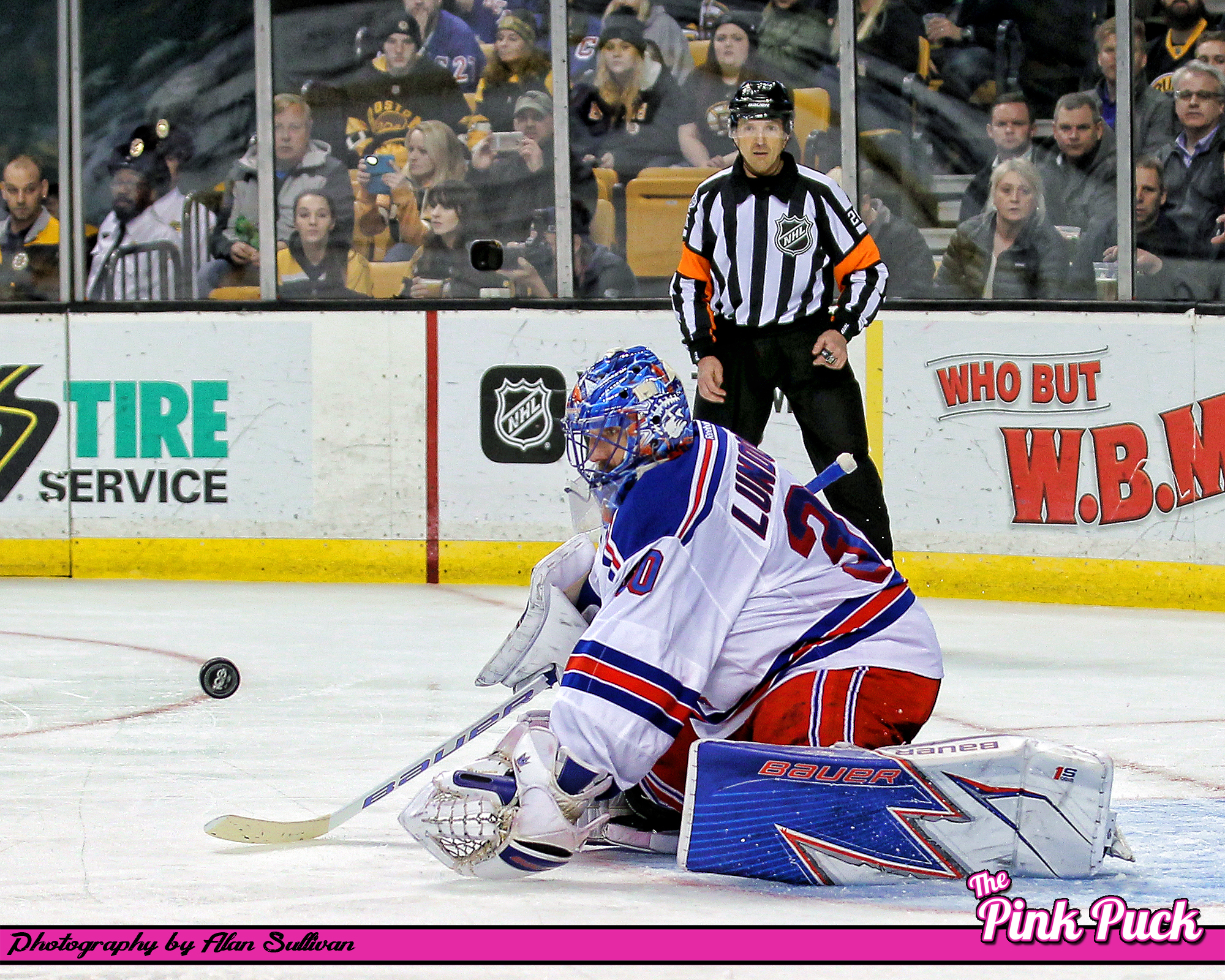
The competition should be good for the three goalies since it will get the competitive juices flowing. The three goaltenders battling it out are Alexandar Georgiev, Igor Shesterkin, and Henrik Lundqvist. Yes, two young kids and a wily vet. One would think that the veteran has the inside edge to getting the crease, but that isn’t necessarily true in this case. There are pros and cons of letting each goaltender get the starter’s net in Toronto against the Carolina Hurricanes in the Qualifying Round of the Stanley Cup Playoffs.
The Arguments For and Against Alexandar Georgiev
The 24-year-old helped the Rangers to grab some wins early in the season when Lundqvist was struggling. He posted two shutouts in the regular season, and was 6-0-0 when allowing one or zero goals. It seemed as though the team scored some goals for him while he was in the starter’s crease. Georgiev surely helped the team to keep its head above water in the early months when they needed it.
The young goaltender doesn’t have much experience in the regular season, yet alone in postseason play. Georgiev allowed four or more goals in 10 games that he started in the regular season. If the Rangers have any chance of beating the Hurricanes in the Qualifying Round then the goals against needs to come down drastically. The youngster gives up too many rebound chances and goes into his butterfly too quick, which makes the 6’1” tender look even smaller in net. In the four games against the Hurricanes this season, Georgiev wasn’t the starting goaltender for any of them, while Lundqvist started three of the four games.
Henrik Lundqvist’s Case
The 38-year-old veteran goalie managed to play great in his three starts against the Hurricanes this season. In three games played, he was 3-0-0 with a .947 save percentage and 2.33 goals against average. Lundqvist only allowed seven goals against in those three games. The veteran has played in high stakes games and has plenty of postseason experience, which is something that the other two goalies lack.
Lundqvist’s play was not great overall in the regular season. The goalie had some bad luck with pucks deflecting off his own players and into his net, but his play declined overall. When looking at some of the goals against in the regular season, I noticed that a lot were either glove side or five-hole. It just seemed like he didn’t have great rebound control this season, and teams were getting easy goals because of it. He’ll need to be sharper all around and use training camp as a restart to have any shot at even having a seat on the Rangers’ bench come playoff time.
The Reasons For and Against Igor Shesterkin
The 24-year-old goalie may have only 12 games of experience under his belt, but he was the Rangers’ most consistent goaltender on the season. Yes, 12 games is a small sample, but he only allowed four or more goals in one of those twelve games. Shesterkin also played well in his one start against the Hurricanes this season, only allowed two goals against. The young goalie has also gotten some goal support from the team in front of him.
When moving or scrambling around, he didn’t seem to be able to recover in a timely manner, and looked like a fish out of water, at times. As with all young goalies, he has some things that he needs to work on including getting better on his glove side. The kid will allow some soft goals in games, but what goalie doesn’t allow that soft goal? He will also let in some low shots.
Shesterkin Starts Game 1 for Rangers
Yes, you read that right, I’m predicting that Shesterkin impresses enough in training camp 2.0 that he gets the call to be the starting goalie for Game 1 of the Qualifying Round. He has zero postseason experience and has only played 12 games in the NHL, but the kid was solid coming down the stretch. Shesterkin seemed to keep his cool while under pressure. He may have gotten the lighter load, but he still had to come in and make the saves to get the wins.
The NHL continued to announce finalists for the 2019-20 awards. On July 15, 2020, the League announced the Jack Adams Trophy Finalists. The Jack Adams award goes to the NHL’s best coach and is voted on by the members of the NHL Broadcasters’ Association. The winner will be announced during the conference finals.
The three finalists came from the Eastern Conference. One finalist from the Atlantic Division, while the other two finalists came from a tough Metropolitan Division. All three finalists are veteran coaches, but one was in his first season with the team. Each finalist had to overcome some kind of adversity during the season, but managed to led his team to the postseason. The finalists all have a compelling case to win the award, but only one will take home the hardware.
Bruce Cassidy and the Presidents Trophy
Cassidy helped the Boston Bruins to a 44-14-12 record, and the team took home the President’s Trophy, as the best regular season team. The Bruins were eight points ahead of the Lightning when the season was paused on March 12, due to the COVID-19 pandemic. It was the largest lead any division leader had at the time. Cassidy managed to lead his team to its seventh straight 40-win season. Sure, he had a veteran team to help him out and make sure that the team bounced back after some rough patches, but he still was a big reason the team finished where they did.
Cassidy didn’t have to deal with as many injuries of the adversity the other coaches had to deal with, but I’m sure he faced some music being the bench man in a sports town like Boston. The Bruins had the second best power play and third best penalty kill in the league, which was another reason for its success. The goaltending duo of Tuukka Rask and Jaroslav Halak won the Jennings Award for allowing the least amount of goals in the regular season.
John Tortorella and Overcoming Injuries
John Tortorella had to deal with some major question marks before the season even started after losing his top goaltending and scorer in free agency. Would Joonas Korpisalo excel or fail at being the starting goalie? Who is picking up the slack for the loss of Artemi Panarin and Matt Duchene? Then the season began and key players started dropping like flies to injury. Josh Anderson, Oliver Bjorkstrand, Cam Atkinson, Zach Werenski, Seth Jones and Korpisalo all missed extended periods of time during the regular season.
The Columbus Blue Jackets should have been dead in the water, but the goaltending of Elvis Merzlikins helped to save the season. The teams in front of the Blue Jackets in the standings also were not finishing down the stretch, which was helping their case. The players that didn’t get hurt were having lackluster offensive years, but the team was still managing to play solid defense. The regular season was a roller coaster for the team, but somehow the coach managed to keep players focused and have two separate 10 game point streaks.
Alain Vigneault and His First Year Magic
Alain Vigneault didn’t have as many injuries to key players as the Blue Jackets, but his team went through some adversity. Early in the season, the team couldn’t seem to buy a road win and Carter Hart was struggling on the road. Then the news that Oskar Lindblom would miss the rest of the season due to cancer treatments came out. The team and coach did a good job rallying around Oskar and pulled itself together. Vigneault also dealt with the loss of Scott Laughton and James van Riemsdyk for an extended period of time.
He managed to finish the regular season winning nine of ten games before the pause, and finished second in the Metropolitan Division. The Philadelphia Flyers were one of the hottest teams before the season was paused and managed to get 78 points from November 1, 2019 to March 10, 2020, which was second to only the Boston Bruins. Vigneault helped the team to a seven point increase in just 69 games played from last season when they played a full 82-game schedule. The team also had four winning streaks of at least four games.
Jack Adams Trophy Winner Prediction
As much as this pains me as a Flyers fan, John Tortarella will be taking home the Jack Adams award as the League’s best coach. Sure, Vigneault did a great job with the Flyers in his first regular season, but Tortarella just had so many injuries to overcome this season. A lot of Blue Jackets players also underperformed. Cassidy did a great job with the Bruins, but again the adversity and injuries that the Blue Jackets had to deal with this season makes its head coach the winner for this award.
The NHL announced its finalists for the Calder Trophy Award for the 2019-20 season. The Calder Trophy goes to the best rookie in the NHL. It is voted on by the Professional Hockey Writers’ Association, and the winner of the award will be announced during the conference finals.
These three finalists were the standouts among the rookie class this season. There are two defenseman and a left wing who all happen to play in the Western Conference. The two defensemen are Quinn Hughes, of the Vancouver Canucks, and Cale Makar, of the Colorado Avalanche. The lone forward finalist is Dominik Kubalik of the Chicago Blackhawks.
Quinn Hughes
The Canucks defenseman is the youngest finalist at just 20 years old. In 68 games, he had eight goals, 45 assists, 53 points and averaged 21:53 of ice time per game. Hughes played in five games with the Canucks last season where he had three assists. His 53 points were tied for third best on the team with Bo Horvat, while he tied for first on the team with 45 assists and 25 power play points. Hughes was the Canucks top scoring defenseman and he was consistent throughout the season with his play.
He is the first defenseman to lead all rookies outright in scoring in a season since Brian Leetch did it during the 1988-89 season. Hughes is a smooth skater, who can contribute on the offensive side of the puck. He ranked first among rookies in the following categories: assists (45), points (53), and power play points (25). The 20-year-old made an impact on his team in his rookie season and now the team has work left to do in the qualifying round of the postseason.
Dominik Kubalik
The Blackhawks’ forward is a bit older than the other finalists at 24, but he made an impact in his first NHL season. In 68 games, he had 30 goals, 16 assists, 46 points and averaged 14:22 of ice time per game. Kubalik’s 46 points were third on the Blackhawks and his 30 goals were good enough for second on the team behind Patrick Kane. The 24-year-old played at even strength and on the power play for a Blackhawks team that struggled at times this season.
He ranked first among rookies in goals (30), even strength points (38), even strength goals (26), and shots (157). His 46 points were third best among rookies. He started out slow, but really came on in the second half of the season, and managed 19 goals in 29 games played from January 1, 2020 to the end of the NHL shortened season. I don’t think he’ll get as many votes as Hughes or Makar because Chicago was not in the postseason until the field was expanded to 24 teams.
Cale Makar
Makar made his splash in the postseason last year with big time goals and creative plays. In 57 games this season, he had 12 goals, 38 assists, 50 points and averaged 21:01 of ice time per game. The 21-year-old played both at even strength and on the power play for the Avalanche. He is a smooth skating defenseman that can lead the rush or join the rush in the offensive zone. Makar ranked second on the Avalanche in assists (38), points (50), and power play points (19). He was tied for third on the team with four game-winning goals.
The defenseman was second to Quinn Hughes in assists (38), points (50), and power play points (19). The 21-year-old set the Avalanche/Quebec Nordiques record for points by a rookie defenseman in a season with 50. He led all rookies in goals (12), power play goals (four) and even strength goals (eight).
Predicting the Calder Trophy Winner
The three finalists all had good seasons in their own right, but Quinn Hughes will win this award. He had a big impact on his team, and helped get them into the postseason. Hughes had the best rookie season out of the three candidates, and really stood out. The 20-year-old was consistent in his play and even had some highlight reel-type plays. Hughes will be the second straight Canucks player to win the award, with Elias Pettersson winning it last season. The last time teammates won the Calder Trophy in back-to-back years was in 1966-67 and 1967-86 seasons, when Boston Bruins teammates, Bobby Orr and Derek Sanderson won.
The NHL announced the finalists for the Ted Lindsay Award and they come as no surprise. The award is given to the most outstanding player in the NHL and is voted on by the National Hockey League Players Association. The NHL Awards were originally scheduled for June, but with the season paused, no new date has been announced yet. The plan is to announce the winner of the award either during the Conference Finals or before the Stanley Cup Final starts.
The finalists include some familiar faces, who did some damage throughout the shortened season. The finalists will all participate in the NHL postseason, whether the qualifying round or round robins games to determine seeding. The three finalists are Leon Draisaitl of the Edmonton Oilers, Nathan MacKinnon of the Colorado Avalanche and Artemi Panarin of the New York Rangers.
The Case for Leon Draisaitl
In 71 games, Draisaitl had 43 goals, 67 assists, 110 points and 10 game-winning goals. He already has some hardware to his name this season as he won the Art Ross Trophy as the League’s leading scorer with 110 points. The center won 52.1 percent of his face-offs taken and was a big contributor at even strength, on the power play, and saw a decent amount of time while the team was short-handed this season. The 24-year-old led the League in points (110), points per game (1.55), assists (67), power play points (44), and time on ice (22:37).
The kid was tied for second in the NHL with 66 even strength pointS and 16 power play goals. He has 33 multipoint games and managed to put up one point in 56 of 71 games. He even had two five point outings this season and they came against the Colorado Avalanche and Nashville Predators. Draisaitl was tied with David Pastrnak for game-winning goals (10). The Oilers were 24-5-2 when he scored, and 13-20-7 when he didn’t score. Yes, he played with Connor McDavid some this season, but go watch an Oilers game because this kid can flat out play.
The Case for Nathan MacKinnon
In 69 games this season, MacKinnon had 35 goals, 58 assists, 93 points and four game-winning goals in 21:13 of ice time per game. His 93 points, were tops on the Avalanche, and his next closest teammate only had 50 points. He did most of the heavy lifting for the Avalanche, who saw Gabriel Landeskog and Mikko Rantanen miss significant time due to injuries. The 24-year-old led the Avalanche in goals (35), assists (58), points (93), and power play points (31).
He had 29 multipoint games and managed to get at least one point in 53 of 69 games played. MacKinnon’s 93 points were fifth-best in the NHL, while his 62 even strength points were good for third in the league. The center played a significant role in keeping the injury-ladened Avalanche above water and into the qualifying round bye. The Avalanche had the second best record in the Western Conference at 42-20-8.
The Case for Artemi Panarin
The left wing exceeded all expectations in New York this season, and helped the Rangers clinch a spot in the qualifying round of the playoffs this season. In his first full season, Panarin set career highs in a lot of categories including goals, assists and points. In 69 games, he had 32 goals, 63 assists, 95 points and was a plus-36. The left wing led the Rangers in points and assists, but came in second in goals behind Mika Zibanejad.
Panarin played at even strength and on the power play in the regular season for the Rangers. His 95 points were tied for third with David Pastrnak in the league. His 71 even strength points were right at the top of the league. Panarin managed to have 28 multipoint games and had at least one point in 54 of the 69 games he played in this past season. Panarin had a major impact on a team that was supposed to be rebuilding on the fly.
Predicting the Winner
Leon Draisaitl is going to win the Ted Lindsay Award. The kid can flat out produce, with or without McDavid in the lineup. He has stepped up when the team needed him, and played in all situations for the team. I know that MacKinnon had to do a lot for his team because of the injuries and played with a variety of players, but overall Draisaitl was the most outstanding player in the NHL this season.
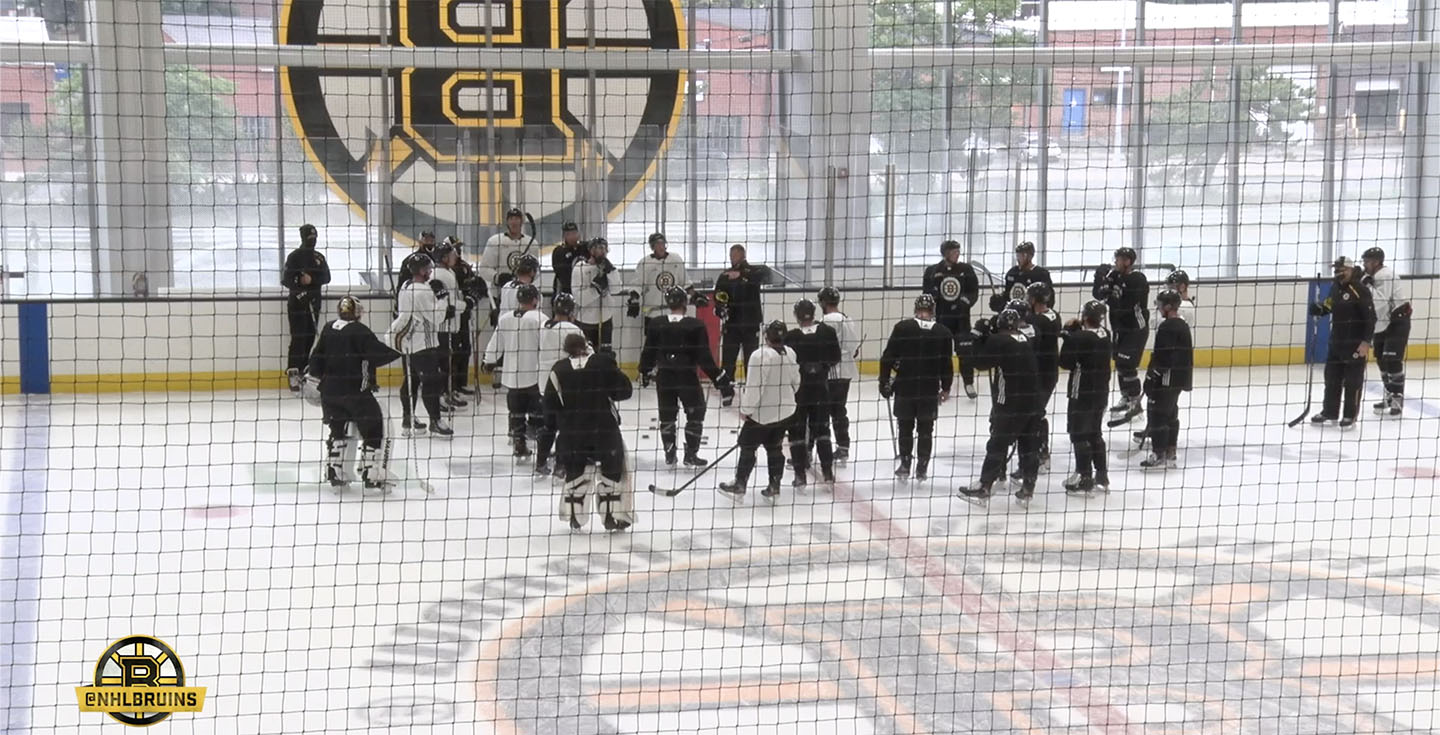
After almost four months of being off the ice and with their families, the Boston Bruins were back at Warrior as a team—albeit a slightly smaller group—for the first day of the NHL’s Return to Play training camp. The other 23 teams who will be participating in the 2020 playoffs were all doing likewise. Of course, the experience isn’t quite the same as a traditional practice.
For instance, a few faces were still missing including David
Pastrnak, Daniel Vladar and Urho Vaakanainen. All are expected soon, as they
are still going through international quarantine measures.
And perhaps it is the off-ice preparations that remind the
players most that this is still uncharted territory that they have entered.
Patrice Bergeron (Photo: Michael Penhollow, Bruins, used with permission)
“Yeah, so for me, you know, I was a little bit more used to it because I was here for phase two. So, some of the things that we did today you know, obviously all the protocols and precautions that were taken is met at all times until you get to the ice. Or if you’re working out, workouts are only in small groups of 12 guys. Otherwise, it’s, yeah, you’re wearing your mask, you’re good at, you know, wash your hands often and try to keep distance as much as possible when you can,” shared Patrice Bergeron.
Once the players were on the ice though, it is their home,
their sanctuary, and a place where their body knows just what needs to happen.
“I was very interested to see what the response would be getting back and trying to get into the swing of things with all the protocols we had to go through off the ice,” said Torey Krug. “But once we were on the ice it was like a normal day. It felt like we didn’t miss a beat.”
While they have been separated for the bulk of the previous
four months, the Boston Bruins finished their last 2019-20 regular season game
as a cohesive unit. They are not only a team but a tight knit family. Many of
them have played together now for a number of years. They know where their line
mates will be during any given play. When left to muscle memory, and not
overthinking, they connect on passes and make things happen.
Oh sure, they are all experiencing some rust. Throughout the
NHL pause whenever interviewed they have all stated that while they could
continue to work out, there was no way to simulate being on the ice. They have
now been able to get back onto the ice during Phase 2, in small groups, getting
their feet back under them. Most of them have been skating since they were old
enough to walk almost. For them moving about the ice in skates is akin to
walking and something that doesn’t require thought.
What is needed now is the experience of making tight turns, battling in the corners, protecting the puck and all the little things that mean the difference between a win and a loss for a team. The more they practice they better their bodies will respond to such conditions, but for a first day, thing seemed to go well from all accounts.
“I thought the willingness to work was excellent. Guys were in a good mood. It reminded me a lot of our practices during the year where guys are, you know, working hard, taking care of business, but enjoying themselves, having fun and chirping each other so it’s like kind of where we left off in terms of the mood and I thought the overall I guess rating of it,” state head coach Bruce Cassidy.
The NHL season was postponed on March 12, 2020, due to the COVID-19 pandemic sweeping across the world. The pandemic is still going strong in the United States but has been tamed in other parts of North America and the world. The NHL and NHLPA ratified a Return to Play Plan for Phase 3 and 4, and training camps will open on Monday, July 13, 2020.
Training Camps and Opting Out
If a player wishes to opt-out of the Return to Play Plan then he has until Monday, July 13, 2020, to do so. The players can opt-out without any repercussions. There have been seven players to opt-out so far, whether due to personal reasons or team holding the player out.
There will be some tough choices for players who have underlying health concerns like Max Domi, who has Type 1 Diabetes. Will he decide to opt-out, or will the team deem him “unfit to play” and make him stay home?
Hub Cities and CoVid-19 Testing
If all goes well in training camps, then the teams will be set to go to their assigned hub cities at the end of July with games beginning on August 1. The Eastern Conference will be heading to Toronto, while the Western Conference games are in Edmonton. The Conference Finals and Stanley Cup Final will be in Edmonton.
Each team will be allowed a maximum of 52 people per team, with 31 of them being players. The staff, players, and hotel staff will be tested daily. If there is a positive test, then the person will need to be quarantined immediately and contact tracing to be done, so others who were around him or her can get tested themselves.
Qualifying Rounds
The NHL postseason will look a bit different this season because of the postponement of the season and how each team didn’t have the same exact number of games played. The postseason will consist of 24 teams, determined by winning percentage in each Conference. There will be 16 teams competing in the qualifying rounds, with the top four seeds in each Conference getting a bye in this round. The qualifying round will be a best-of-five series and will follow playoff-style rules.
The Eastern Conference Qualifying Round matchups are:
The NHL will reseed teams after the qualifying round to make it fair for all involved in the first round of the NHL playoffs. The statistics from the qualifying round are considered 2020 postseason stats, per the NHL. All qualifying round teams are to have made the postseason and participated in a postseason series.
Round Robin Games
The perk of being in the top four of a team’s respective conference was that they got a bye in the qualifying rounds, and instead will play three round-robin games. The round-robin games will be played like regular-season games with overtime and shootouts, if necessary. A win is worth two points, and overtime or shootout loss is worth one point, and a regulation loss means zero points. The League will seed the round-robin teams according to point totals, going from highest to lowest.
The four Eastern Conference teams include the (in order they sat at the start of the NHL pause):
The NHL already held Phase 1 of the Lottery Draft to determine the number one overall pick. A placeholder team, which is one that has yet to be eliminated from the postseason, holds the number one pick. The tentative date for Phase 2 of the Lottery Draft is August 10, 2020.
Each eliminated team from the qualifying round will have a 12.5% chance of winning the overall number one pick in the 2020 NHL Entry Draft, which is tentatively set for October 9 & October 10.








 Prev
Prev