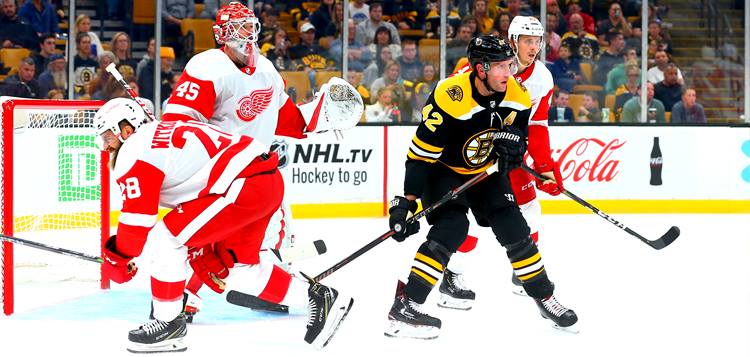
With the opening of the 2018-19 NHL Regular season a week away, and the deadline for starting rosters looming on October 2, 2018, the Boston Bruins played their next to last preseason game on Wednesday night against the Detroit Red Wings. The two teams played each other in Detroit five days prior, Saturday, September 22, 2018, and saw the Bruins served with an overtime loss 1:42 into the three-on-three extra frame at Little Ceasar’s Arena. Going into Wednesday night’s game the Bruins were 5-0-1 and hoped to end the Red Wings’ five-game winning streak.
The first period was a lot of circling with little else taking place. Neither team capitalized on their man-advantages of which the Bruins had two and the Red Wings had two and the first few seconds of a third. The shots were relatively even, with Detroit edging out Boston 11-10.
Going into the second period, after killing off the 1:50 remaining of defenseman Steven Kampfer’s hooking penalty, Boston got on the scoreboard first with David Pastrnak’s redirection of Kampfer’s slapshot from the right point. Less than four minutes later, and just five seconds into their third power play, Boston’s Lee Stempniak gave his team their second goal of the game. Unfortunately for Boston, being up two goals would not be enough as the Red Wings would capitalize on their next two power plays to tie the game.
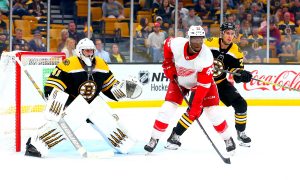
Jaroslav Halak, Givani Smith & John Moore
Some questioned Jaroslav Halak’s efforts in net for the Bruins, especially on the second goal, but by that point the Bruins were becoming sloppier as the game went on. During a good thirty seconds of that second penalty kill, the Bruins just couldn’t seem to get the puck to stop bouncing around and stay on their sticks so that they could clear it two hundred feet. Coupling the somewhat Keystone Cop-like approach to the penalty kill was the solid screen by Detroit’s Tyler Bertuzzi in front of Halak, and it was just a matter of when the puck would find the back of the net.
The sloppiness of the Bruins showed, not only in their inability to clear the zone on the penalty kill, but also in the increasing number of giveaways. During the first period they had seven (Detroit had three). Boston’s best period in this area was the second in which they only had four additional giveaways (though Detroit added just two more). The third period saw Boston tallying ten further giveaways, compared to Detroit’s additional three. It was these giveaways and the amount of time that Detroit hemmed Boston in their own end during the final frame, outshooting Boston 16-6 in the third that showed how strong Halak actually was. If not for Halak, it could have been a regulation loss for the Bruins rather than an overtime loss.
“A lot of it is some of the guys tonight haven’t played a lot, so I think they’re still a little bit in circling mode and not detail mode, so we’ll have to address that. So that was certainly part of it. I thought the ice conditions were soft, so the puck was bouncing, so the guys were getting frustrated. It’s the same for both teams, right, so the onus is on us then to get it to the net, go for some second chances. But I think we tried to be too cute. We all saw that,” Bruins Head Coach Bruce Cassidy answered honestly after the game. “Our breakdowns were just our puck management was not where it needed to be. We just did not manage the puck as well as you need to, to be hard to play against.”
In truth both Torey Krug and Noel Acciari were in their first game of the preseason, having finally finished the rehab from their injuries. Patrice Bergeron continued to be absent from the lineup as he continues to rehab from his groin surgery during the summer. David Backes found himself as the pivot of the top line with Brad Marchand and Pastrnak.
Both Krug and Acciari were pleased with how they felt overall but recognize that they still have a way to go, so it is fortunate that they have one more preseason game before the wins and losses really start to matter.

Torey Krug
“You can never prepare for the physicality and pushing off guys in the corner, getting hit, and going back for pucks—you can’t prepare for that, just because you don’t have the same competitiveness in practice,” Krug explained. “Your teammates don’t want to blow you up or anything, so I felt okay. A lot of times, the read and reaction part of it’s got to come back, and hopefully I get another shot at it on Saturday to get going.”
Yes, the good news is that the results of the game don’t matter, but the sloppiness of the play and the number of penalties the Bruins took speak to things that will undoubtedly be addressed in the next few days by the coaching staff. And really that is part of what preseason is about. There is the testing of the young players to see how they are developing. There are those players who may not have had the opportunity to train in the summer, the result of recovering from injury or surgery and rehabbing. And as those young players are put on lines, it is to be expected that there will be a lack of chemistry and some missed communications.
Ideally Coach Cassidy is hoping that he will have Bergeron and Sean Kuraly back for Saturday’s game against the Philadelphia Flyers so that he can see if what he envisions as his centers and their line mates will work. However, no one on the staff wants to rush the recovery of any player, so it is possible that tinkering will continue right up until Boston must submit their starting roster.
The Boston Bruins will play host to the Detroit Red Wings on Wednesday in their next to last preseason game. And as they come closer to having to finalize their roster on October 2, 2018, they have made some additional training camp transactions as well as trying out some of their players in different spots—in part the result of the current recovery of Patrice Bergeron’s off-season groin surgery and the recent injury to Sean Kuraly.
Monday, Boston returned Axel Andersson to Djurgaden IF (SEL) and assigned Cameron Hughes, Emil Johansson, Joona Koppanen and Zach Senyshyn to Providence. Tanner Pond was also scheduled to report to Providence, though he ended up playing in Monday’s game against the Flyers. On Tuesday, the Bruins organization announced that they were putting Anton Blidh, Colby Cave, Cody Goloubef, Mark McNeill and Jordan Szwarz on waivers, all of whom cleared on Wednesday. Additionally Connor Clifton, Karson Kuhlman and Jeremy Lauzon were to report to the Providence Bruins. Wednesday afternoon the team announced that they were returning Jack Studnicka to the Oshawa Generals (OHL) and that Blidh, Cave Goloubef, McNeill and Dan Vladar were assigned to Providence.
At present the roster stands at 39 individuals, but there are a couple of injured that will remain in Boston until they are healthy, including Martin Bakos and Jakub Lauko.
For Wednesday night a couple of fan favorites—Noel Acciari and Torey Krug—will return to the lineup. Krug has certainly been eager to get back into the swing of things, though reminding himself that he has been recovering.
“Just being patient, the mindset and realizing that you’re not going to feel exactly how you felt the last time you played,” Krug shared. “But like I said, it will come pretty quick and I’m not too worried about it at all. We’re right on the cusp for sure.”
And both he and Acciari will get a chance to begin getting back into the full game experience while still in the preseason, which should certainly make it easier for them to be closer to their peak production when the season starts on Wednesday, October 3rd.

David Backes
In the mean time, David Backes is going back to a position he knows well, though his line mates are new for him, as he slots into the center position on the first line with Brad Marchand and David Pastrnak.
“We’ll give it a whirl. See if a little lighter, a little more mobile makes me effective there. Obviously playing with some pretty good players. We’ll get the puck and try to make some space and let them do what they do so well and we’ll see what works out,” Backes chuckled. “Obviously I’m not replacing [Bergeron], but hopefully he’s healthy for game one.”
Last season, Backes spent a lot of time playing with Danton Heinen and Jake DeBrusk, and they developed some chemistry. At present, permanent line mates for Backes are still an unknown, but in the meantime, the ten-pound lighter forward is happy with how he is progressing.
“Pretty good, I think. Yeah. I think, for me, the line mate situation of who I’m going to play with to try to start developing some of that chemistry because, from the looks of it Heinen and [DeBrusk] might play with [David Krejci], so I may have two completely new line mates. And whether it’s a young kid or a couple old guys, whoever it is, just try to get a little bit of that chemistry under our belt, whether it’s practice or the last preseason game. Trying to sort that out is probably at the front of my mind on what needs to be done before the season, but personal, you know, feeling well on the ice, I think that’s there. It’s just, now it’s assimilating in with the group and being structured and getting the job done on the ice,” Backes shared.
Going into Wednesday night’s preseason home game, the Bruins stand 5-0-1 with two remaining preseason games—both played on home ice. The regular season is just around the corner and those trying to make the starting roster will be showing everything they have to offer.
The Boston Bruins went back to China to help expand the sport abroad. While they did their usual camp for kids earlier this summer, this year during the beginning of the preseason, half of the Bruins headed back over to China to play the Calgary Flames in two exhibition games in Shenzhen and Beijing. The time difference plays havoc with anyone’s body, but imagine going over there for ten days and then returning to the states, having two days off and then jumping right back into training camp, while your body was still adjusting to the 12-hour time difference.
Those of the Bruins who got to experience China spoke highly of the overall trip.
“It was unique, it was something special. I think, well for me anyways, it was obviously something I never thought I’d be able to do, especially from hockey—go to China—and the on-ice experience itself was interesting as well. The fans are pretty crazy. It was a great atmosphere.,” shared Jake DeBrusk. “There was beautiful rinks. Had no complaints at all about that except obviously the last game, but… and seeing how we won both games, that helps as well.”
However, it’s clear that those who made the trip are still finding their bodies reacting in some strange ways, as they readjust to Eastern time zone.
“Uh, yeah, it’s uh, I think I’m pretty close to back. Actually going there, my sleep schedule was way tougher than coming back so, but I think my body’s coming around finally,” Chris Wagner described.
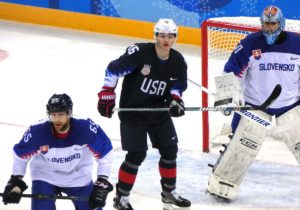
Ryan Donato
“I think I’m still readjusting a little bit, just sleepwise. I woke up at six o’clock this morning and was staring at the ceiling. I think there’s days where you feel great and you feel like you’re back to normal and then you wake up the next day and you feel like you woke up in the middle of the night,” Ryan Donato said. “So I think it’s back and forth, but I think in the next week and a half or so, I’ll feel completely back to normal.”
Of course, this was Donato’s second trip to the Orient, as he was part of Team USA who participated in the 2018 Olympics in February in PyeongChang, Korea—which is a 14-hour time difference. He took notes from that trip to help him reacclimate.
“Well I think one of the things for me is like proper hydration and the type of things that they teach you when you’re getting ready for the Olympics to make sure you’re hydrated and you’re sleeping at certain times of the day. You’re not receptive to the light during the day,” explained Donato. “These are some things that are kind of the nerdy stuff that I picked up on when I was there, that I kind of brought back for myself and used here so that I can kind of adjust as fast as I possible could to be ready for games.”
Elite athletes, especially hockey players appreciate their routines. During the regular season, even a matinee game can affect their overall performance because they didn’t get to take their nap or do other things they normally do to prepare for an evening game. Even a change in the size of the rink can affect a player’s game.
“China was a good experience, but it was definitely tough on the body. Also, the big ice. I don’t know if I’m quite made for it, uh, for my kind of play,” chuckled Wagner. “But I definitely felt way better last night [Monday against Flyers] and think I’m coming along in practice, kind of getting the systems down and, you know, the way [Coach Cassidy] wants us to play. So, definitely a process, but it’s coming along.”
And due to a couple of hiccups with their equipment those who were in China found they had a little less time on the ice, especially practice time. Of course, being professionals, they just rolled with it, but having returned and rejoined those who were practicing in the states, they can see some differences.

Brad Marchand and Tuukka Rask
“There’s a lot of differences. You know, camp is much different this year. It didn’t feel like training camp the first ten days, so it’s a lot nicer to be back here and with the group trying to get back into things before the season starts,” Brad Marchand stated.
Marchand was part of Team Canada two seasons ago, playing in the 2016 World Cup of Hockey which actually delayed the start of the NHL season, and precluded him from participating in part of the Bruins training camp that year. However, the lack of ice time in China seems to have been a bigger issue this year.
“Yeah, for sure, especially with how things kind of played out over there. We were probably on the ice half the amount of the guys over here. Some say we’re a little bit behind, just skating-wise, you know, than maybe we would be in past seasons, but there’s enough time,” Marchand described. “I’m starting to feel good and I think we’re getting there. The practices have been really good, high tempo, so it all helps.”
Routine, up-tempo practices with players you have spent a season or more with, coupled with the amazing trainers and the familiarity of home help right along with readjusting to the time zone. It is all playing into and helping those who traveled to China get back to their elite level in time for the opening of the NHL season.
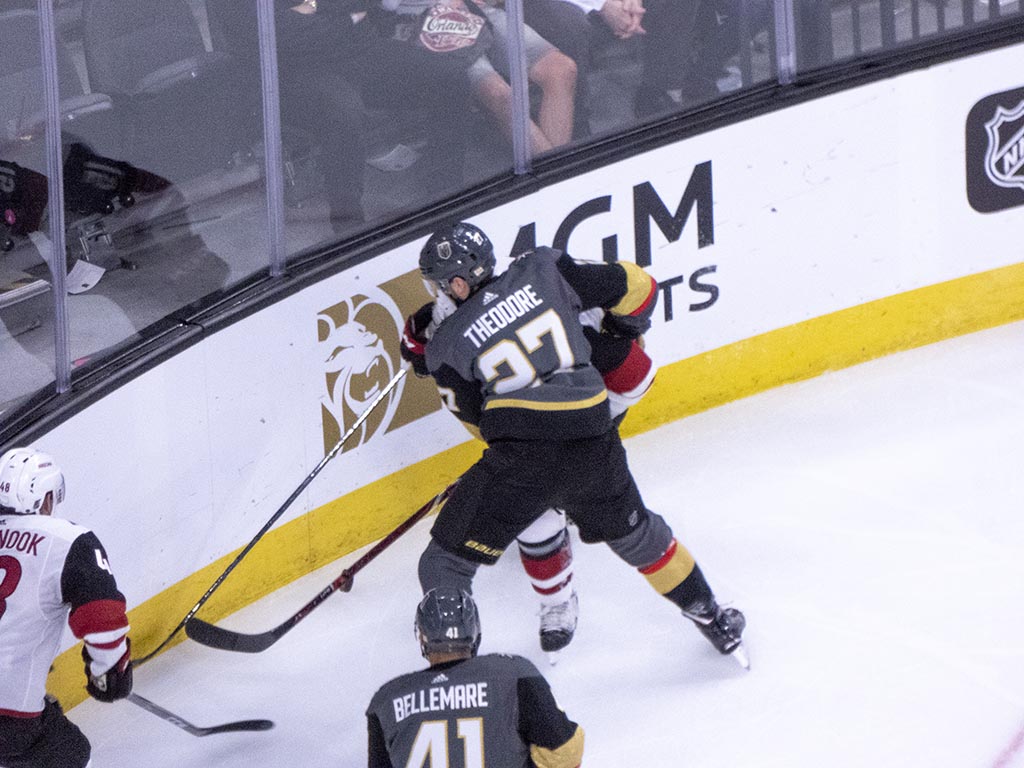
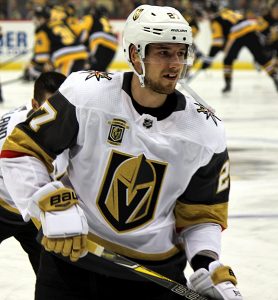
On Monday, September 24, 2018, George McPhee, General Manager for the Vegas Golden Knights, announced the signing of defenseman Shea Theodore to a seven-year contract worth $5,200,000 average annual value through the 2024-25 season.
Theodore was traded to the Golden Knights by the Anaheim Ducks during the NHL Expansion held June 21, 2017. The 2017-18 season was the last of a three-year contract which saw him making $863,333 against the cap. The 23-year-old Langley, British Columbia native came up through Canada’s major juniors, playing five years with the WHL’s Seattle Thunderbirds. He was drafted by the Anaheim Ducks in the first round (26th overall) of the 2013 NHL Draft and made his NHL debut on December 29, 2015 in a Ducks game against the Calgary Flames. During the 2017-18 season with Vegas, the left-shooting defenseman played in 61 games during the regular season, notching 29 points (six G, 23 A) and played in 20 games of the Stanley Cup Playoffs, including the Stanley Cup Final, amassing 10 points (three G, seven A).
The negotiations between the Vegas Golden Knights organization and Theodore’s agent did take a little longer than anticipated with discussions centering on the number of years of the contract.
“We’re happy to have everybody done now and sometimes it takes a little longer than anticipated. Basically, the issues were they wanted to go shorter term, we wanted to go longer term and you just have to get the numbers right on those deals,” shared McPhee after Vegas’ preseason game Monday night. “And then we got to a place today where we had a couple of options—a six-year deal, a seven-year deal—and we thought we were pretty close and then we got it done just after the first period.”
How far apart had the two sides been? Theodore’s camp was looking more for a two-year deal, while McPhee was looking for what he got in terms of the seven-year deal. And for McPhee it was about managing the future of the team.
“If we manage the cap better, our chances of winning are better and he bought in,” McPhee outlined. “We’re pretty confident about what we are going to have now, and in the future, and so we were prepared to go longer. He’s a good young player and we got some unrestricted years and now he can just play.”
Unlike some contracts that are elaborate in how they are structured, McPhee’s approach is toward consistency, so that all the players know what they are getting. This includes how the salary is spelled out and also includes limitations on no trade clauses. There is no frontend or backend loading to Theodore’s salary, just the straight annual $5,200,000. Additionally, there is a five-team no trade clause that goes into effect in years six and seven of the contract.
As for how the two camps found that middle ground to get the contract done?
“I think when you explain what we are trying to accomplish and why and how we think it helps us build a better team because we’re managing the cap better and you don’t have a bunch of players every summer that you have to deal with. When you don’t have uncertainty, because you can lock some guys up, then you can project ahead and see ‘okay, we’ve got a couple of guys to do next summer and we have a pretty good idea of where they are going to be’ and it’s much easier to manage than doing guys on short term deals and you’ve got that every summer and you’re not sure which way it is going to go. But what you do have to do is, if you’re going to do a long-term deal—you need to do it in short-term deals but more importantly with long-term deals—to get the right numbers and you really have to trust your instincts and trust your experience, trust the scouting reports from your pro staff, trust the analytics data, and make a good decision. And you rely on all those resources to make a good decision and we think we made one here and time will tell,” McPhee explained.
Only time will tell, but for now the Golden Knights have all their contracts done going into the 2018-19 season and hope to make as impressive a run to the playoffs as they did in their inaugural season.
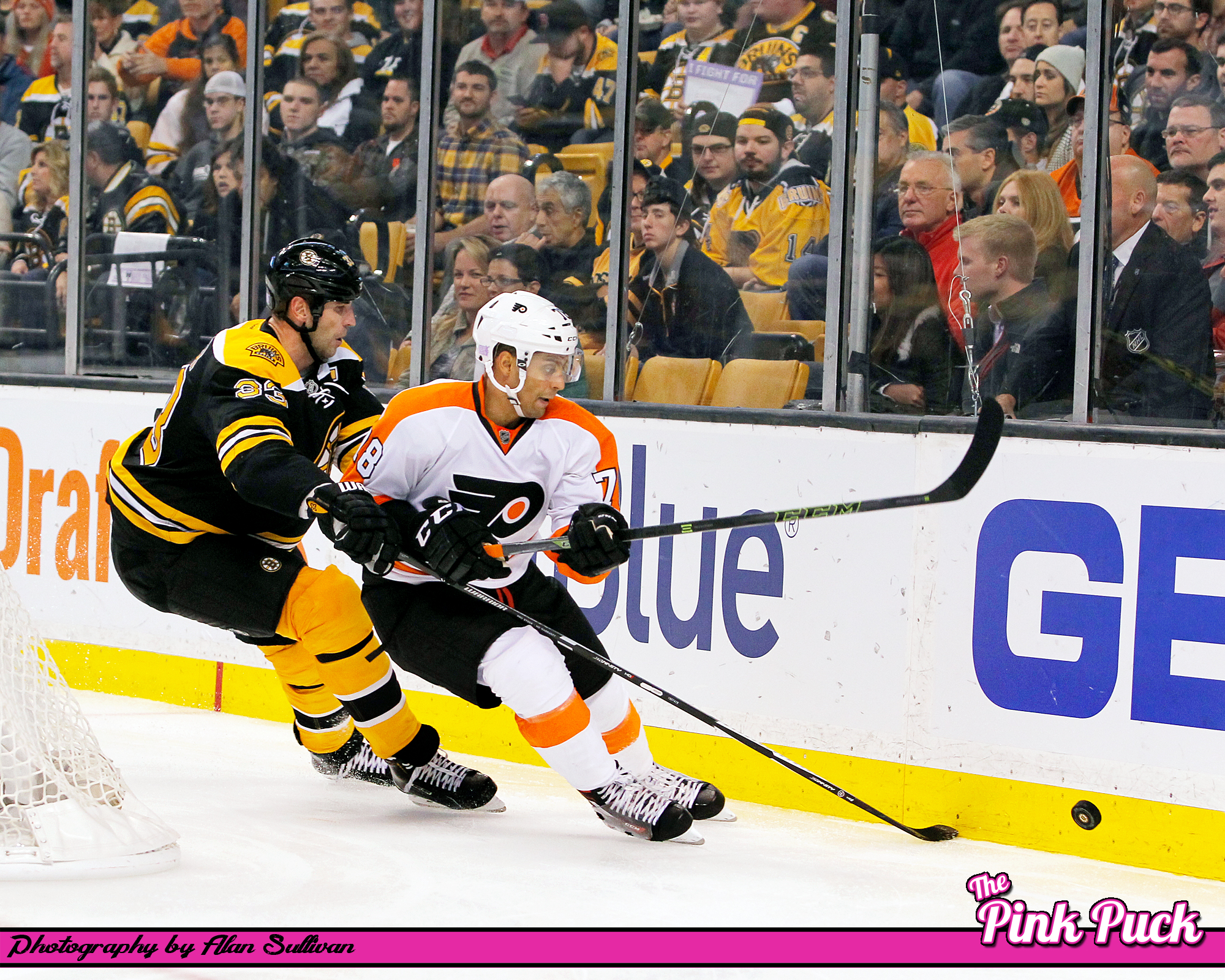
The Boston Bruins announced on Monday, September 24, 2018, the roster they would be sending to Philadelphia for their preseason game against the Philadelphia Flyers. The Bruins are currently 4-1 with three preseason games yet to be played including Monday night’s.
While they released a number of players from training camp this past week, there are still a number of players that need to be decided on. The beginning roster sat at 63 and with the releases last week, they are now down to 51 players.
For their game against the Flyers, the following are expected to play:
Forwards: Anton Blidh, Colby Cave, Peter Cehalrik, Ryan Donato, Jakob Forsbacka-Karlsson, Trent Frederic, Karson Kuhlman, Mark McNeill, Lee Stempniak, Jack Studnicka, Jordan Szwarz, Chris Wagner and Daniel Winnick
Defensemen: Brandon Carlo, Connor Clifton, Cody Goloubef, Matt Grzelcyk, Steven Kampfer, Jerem Lauzon, and Urho Vaakanainen
Goaltenders: Zane McIntyre and Dan Vladar
“I’m just excited. It will be different playing on a regular size sheet for a game, but I’m really looking forward to it,” shared Donato about his first preseason game in the U.S. “Hopefully I’ll get a lot of chances and hopefully I’ll do well with those chances.”
For some of the players, such as Donato, who were over in China for the beginning of the preseason, this is their first opportunity to get a feel for what’s been going on back in the U.S. with all the players still on the roster.
Obviously they are each hoping to make an impression on Head Coach Bruce Cassidy and the rest of the Bruins organization.
The puck will drop at 7:00 pm at the Wells Fargo Center.
As exciting as training camp and the pre-season are for many teams, players and their corresponding fan bases, it is accompanied by the unpleasant nature of having to send players back to one of the junior leagues or to the American Hockey League (AHL). Many players will have worked hard all summer to make their dream of playing in the NHL come true, only to have it turned away and delayed at least for a few months.
The Arizona Coyotes did just that on Wednesday, September 19, 2018, as they reduced their pre-season roster by sending 14 players to their respective junior teams or the Tucson Roadrunners (AHL). The team announced Liam Kirk, Nate Schnarr, Noel Hoefenmayer, Dennis Busby, Kevin Bahl, David Tendeck and Ivan Prosvetov would be returned to their respective teams in the CHL. Whilst, Jan Jenik was returned to Bili Tygri Liberec of the Czech Extraliga. Additionally, defensemen Jordan Gross, Jacob Graves, Jalen Smereck and Kevin Ekman-Larsson along with forwards Tyler Steenbergen and Kelly Klima were sent to the Roadrunners.
The most notable player sent down with four pre-season games remaining was WHL standout, Tyler Steenbergen. After tallying 102 points in 56 games last season for the Swift Current Broncos and being named to Team Canada for the World Junior Championships, Steenbergen hoped to make a more immediate impact with the Coyotes. However, much like the Coyotes have done with past forward prospects such as the recently traded Max Domi and current center Dylan Strome, they tend to invest an extra year in their development to ensure the players are truly ready and that the organization has groomed all aspects of their games for the NHL.
This was only a fraction of the players the Coyotes will have to send back in the next two weeks, as teams must have their opening night rosters set and be waiver and salary compliant by October 2nd.
With so many new faces in the organization and a glut of youthful talent coming up through the system, Coyotes management will have tough decisions looming in the weeks ahead. Decisions that will leave many players disappointed. However, when speaking with the media earlier this week, Head Coach Rick Tocchett described the process of cutting young players as, “just feedback and it’s a fun thing where you can tell they want to learn. I don’t see disappointment. I see guys that want to learn and keep going with it.“
After starting training camp with 63 players, the Coyotes are now down to 49 players. This will allow the coaching staff to begin working on special teams, specific line combinations and practicing their systems to determine which players fit into the team’s vision for the upcoming season.
Following a successful offseason which caught the eyes of executives and media around the league, the Coyotes are looking to improve upon a series of disappointing seasons. In order to make the offseason work worthwhile you have to “embrace the process” as Tocchett explained.
The new look Arizona Coyotes will open up the regular season in Dallas on October 4th, only time will tell how successful this team can be and if the changes General Manager John Chaykamade in the offseason were enough.
The Boston Bruins have now played a total of four preseason games; two in a China, where they took on the Calgary Flames, and two in the United States against the Washington Capitals. They are 4-0 in the preseason and the teammates who were in China have traveled home. With all that, it is not surprising that the team’s General Manager Don Sweeney announced on Wednesday, September 19, 2018, that they were trimming the training camp roster.
Defenseman Mark Fayne, who last season played for both the Bakersfield Condors and the Springfield Thunderbirds in the AHL, and forward Marcel Noebels who played for the Eisbären Berlin A of the DEL league last season, were released from their player tryout agreements.
Daniel Bukac, a 19-year-old defenseman the Bruins took in round seven of the 2017 NHL Draft (no. 204 overall), has been returned to the Brandon Wheat Kings of the WHL. Likewise, Cédric Paré, the 19-year-old forward from Lévis, Québec, who was drafted by Boston in 2017 in round six (no. 173 overall), was returned to Rimouski Océanic of the QMJHL.
The undrafted goaltender from Coral Springs, Florida, Kyle Keyser, has been assigned to the Oshawa Generals of the OHL. He signed an entry-level contract with the Bruins on October 3, 2017. Though he was undrafted, he is still not allowed to play in the AHL at his age, which is one of the reasons he has gone to major juniors team.
Harvard University graduate, Wiley Sherman was drafted by the Boston Bruins in the 2013 NHL Draft’s fifth round (no. 150 overall). The 6’7” defenseman has been assigned to the Providence Bruins.
In addition to Sherman, the following other players will report to the Providence Bruins for the start of their training camp: Austin Fyten (27-year-old forward), Olivier Galipeau (21-year-old defenseman who was expected to sign with the Montréal Canadiens but on June 26, 2018 he signed with the Bruins instead), Brett McKenzie (21-year-old forward), Joel Messner (24-year-old defensive alum of the University of Nebraska-Omaha), Tanner Pond (24-year-old forward who called Boston home as he played for the Northeastern University Huskies, 2013-2017), and Alex Sakellaropoulos (24-year-old goalie who played for the Worcester Raiders of the ECHL last season).
As training camp is more than halfway through, the competition will only get tougher for those who are still in Boston.
Thursday, September 13, 2018 marked the opening of the Boston Bruins training camp in Brighton at the Warrior Ice Arena. For the Bruins this was actually the second camp to open this preseason. Their first set of campers met earlier in the week and then hopped on a plane to head for China, where they will play against the Calgary Flames during part of the preseason.
A couple of years ago, the main training camps for many of the NHL teams were slightly altered because some of their players were representing their countries in the World Cup of Hockey. For the Bruins, this meant they did not have some of their core players until the preseason was almost over. This year the NHL is working to expand its brand in China and Europe, sending some of the teams to either play each other, such as with the Bruins and Flames, or to play against some teams in Europe.
The training camp squad for the Bruins has been split, with Head Coach Bruce Cassidy traveling to China with a mix of veterans, AHL players and rookies. Joe Sacco is working with those players who have remained in Boston.
Many have questioned how this affects the players, and if going to China meant that the players had a better or worse opportunity of making the team. What was said to the players?
“Well, what happened was before the team, the group that left for China, [Don Sweeney] and [Cassidy] had their opportunity to speak with that group here the other day and [Sweeney] and myself had a chance to speak with the group this morning that’s here,” shared Assistant Coach Sacco. “So, obviously it’s no secret because it’s a split squad. We have the group in China and the group here, but the message to the group was pretty simple, that there’s really not a big difference here. You know, we kept some players behind here. We sent some guys over there. Both groups, there’s guys in both groups that are competing for jobs. And that’s really the message that was sent to both teams. Regardless of if you’re here or regardless of if you’re overseas, there’s an opportunity for you and again just like every training camp, go out and make the most of it. So that was pretty much the simple message that was delivered.”
When talking to some of the players on Thursday after they completed their off-ice testing, it was clear that they knew they needed to bring their game as soon as on-ice practices begin. For those still in Boston that will begin on Friday. They have two practices before they will meet in their first preseason game on Sunday, taking on the 2018 Stanley Cup Champions—the Washington Capitals at TD Garden. A second game will take place on Tuesday in Washington, D.C.
The players in China had a little delay in their opportunity to get on the ice and begin to practice as some of their equipment didn’t arrive on time. However, with their seasoned veterans they will rally and hit the ice on Friday for practice before playing against the Flames on Saturday.
Those who have the NHL Network will be able to watch the China games along with many of the other preseason games. This includes the Bruins and Flames first game which will air at 2:30am on Saturday morning. In all the NHL Network will televise 27 preseason games in 19 days.
For the Bruins, all of whom are excited to get going playing hockey, the minimal practice time means little to them. They have all talked about their long summer and how thrilled they are to get back on the ice and back to playing the game they love.
On Tuesday, September 11, 2018, the Boston Bruins announced the trade of defenseman Adam McQuaid to the New York Rangers in return for Steven Kampfer, a 4th round pick in the 2019 NHL Draft and a conditional 7th round pick in 2019.
McQuaid was acquired in 2007 from the Columbus Blue Jackets in exchange for a 5th round pick. His 11 years with the Boston Bruins sum up his professional career to date, having not skated with any other NHL team.
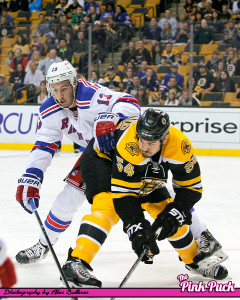
Adam McQuaid
The 6’4” native from Prince Edward Island was on the Bruins team that brought the Stanley Cup back to Boston in 2011. McQuaid was not afraid to throw himself in the direct path of a puck regardless of the speed with which it was hurtling toward his team’s goal. Many have commented that he wore his heart on his sleeve. His quiet demeanor off the ice was unexpected given his fierce competitive nature on the ice; including his willingness to drop the gloves to protect his teammates.
“Very difficult day for me personally and for the organization as well,” said Bruins General Manager Don Sweeney. “We want to thank Adam. He was a tremendous Bruin, a tremendous teammate—very difficult decision. I was there every step of the way. And as I said, it was a difficult decision because of what he meant to the Boston Bruins and will always mean to the Boston Bruins.”
McQuaid was willing to help the up and coming prospects. Though he often deferred questions about his leadership abilities, it was clear that the young players admired McQuaid and appreciated all that he shared.
“I’m so happy, I’m so thankful, blessed to call him a teammate and to have been able to play with him and become friends with him. I learned a lot from him,” shared Charlie McAvoy. “He’s just so selfless, it’s insane. It’s so refreshing—he’ll do anything for you, literally anything. You can lean on [McQuaid] and you know that and he makes that pretty obvious.”
It is these intangibles that may not be replaceable. There is no way to know until the 2018-19 roster is in place and the Bruins take to the ice. Hopefully there are those on the team who will step up and take on the qualities that McQuaid brought to the bench, the ice, and the locker room.
If the player who is coming the other way sounds familiar, that is because he was once a Bruin. Kampfer played his first game for the Boston Bruins on December 9, 2010 against the New York Islanders. He played four years with the University of Michigan until 2010, and after that he went on to play with the Providence Bruins in the spring of his senior year. Though he was originally drafted by the Anaheim Ducks in 2007, he was traded to the Bruin in March, 2010.
Since turning pro, the Ann Arbor, Michigan native has played eight years including 249 AHL games—where he amassed 27 goals and 81 assists for 108 points—and 166 NHL games—notching 10 goals and 26 assists for 36 points. After his first stint with the Bruins, he was traded to the Minnesota Wild at the trade deadling in 2012, and played with them and their AHL affiliated Houston Aeros and then the Iowa Wild. He spent almost three seasons with the Florida Panthers organization, playing both at the NHL and with their AHL San Antonio Rampage. He was traded to the New York Rangers in November, 2016 and has played with them and their AHL affiliated Hartford Wolf Pack since.
One of the biggest questions heard after the announcement was—why this trade? It would appear that the business side of the game forced the move—a salary dump of McQuaid’s $2.4 million contract for the much more modest $650,000 for Kampfer. Whether or not the 5’11” defenseman will play in Boston or Providence remains to be seen. Throughout his career he has played for both levels, seldom sticking at the NHL level.
Kampfer does have a connection to the Bruins run for the Stanley Cup in 2011, as he was one of the Black Aces brought up from Providence. And while he was seen skating around the rink in Vancouver with the Cup, his name is not inscribed on the most cherished of trophies.
 Prev1...737475...412Next
  Page 74 of 412