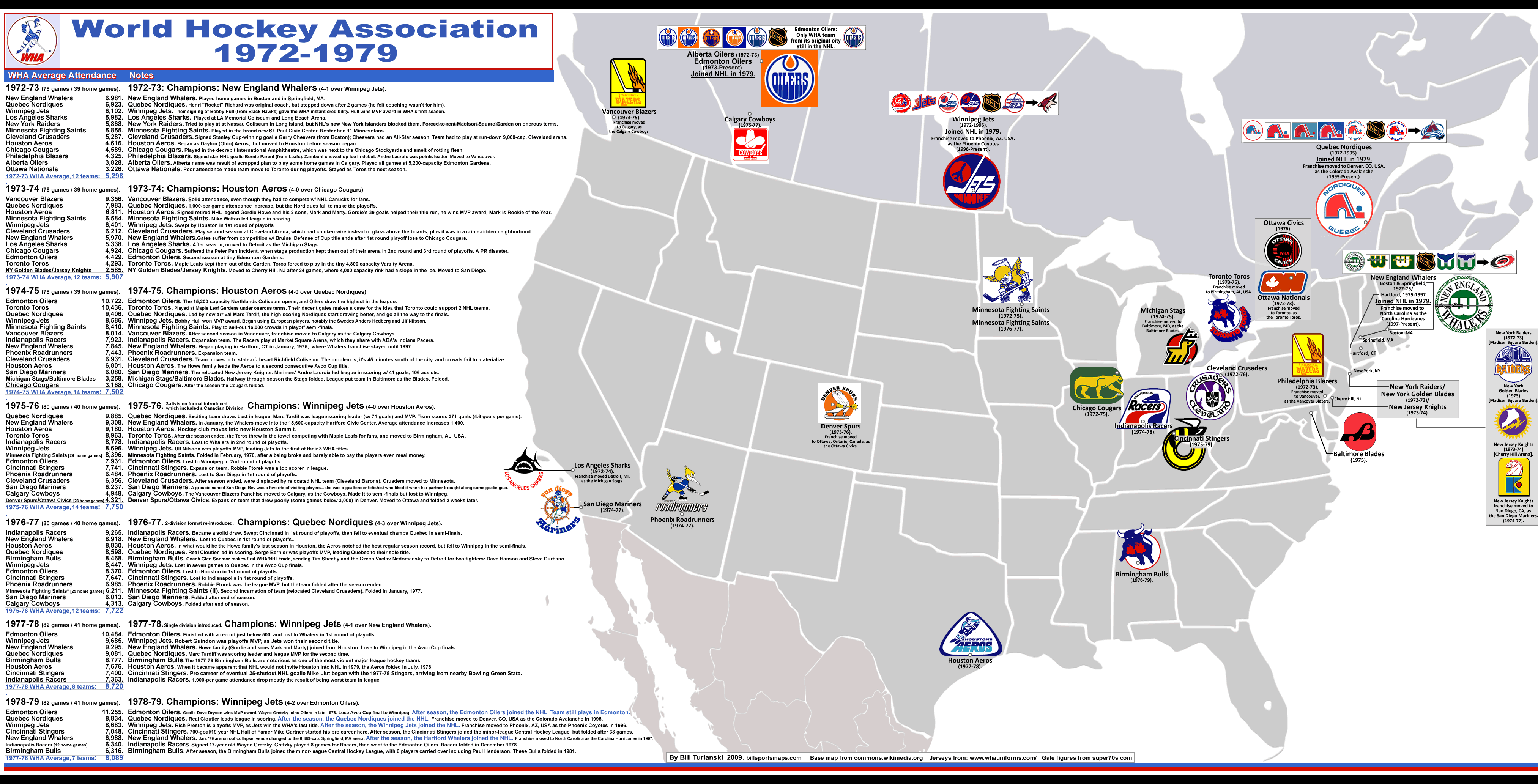
Following basketball’s example, promoters decided that North American hockey needed a new league to prevent the NHL’s professional monopoly. Thus, the World Hockey Association (WHA) officially began its first season on October 11, 1972. While the WHA geared up for legal battles with the NHL (especially over releasing players from contracts), the league hoped to overcome their ever-present financial troubles and instability. Instead, the WHA just lasted until 1979, at which time four of the WHA teams merged into the NHL.
On opening night in 1972, four of the WHA’s twelve teams took to the ice. The Alberta Oilers visited the Ottawa Civic Centre, where they defeated the Ottawa Nationals 7-4. Meanwhile, the Cleveland Crusaders hosted the Quebec Nordiques at a sold out Cleveland Arena. Gerry Cheevers (formerly of the Boston Bruins) earned the WHA’s first shutout with the 2-0 Crusaders’ win. The Nordiques’ coach, famous Maurice Richard (of the Montreal Canadiens), quit after only one more game.
Within ten days, each of these four teams played against each of the other three. Despite the Oilers’ initial success, the Nordiques crushed them 6-0 and the Crusaders defeated them 3-2. The Nationals lost to the Crusaders 7-5 but defeated the Nordiques 3-2. All told, the Crusaders fared the best when facing these three teams throughout the season. The Oilers tied both the Nationals and Nordiques, winning and losing three games of six. The Nordiques mostly lost to these teams.
For the 1972-73 season, the Crusaders ranked second in the East Division and third overall with their record 43-32-3. This was the only season they would make the division finals (where they lost to the New England Whalers, who went on to win the Avco Cup). For the franchise’s final season, 1976-77, they played as the resurrected Minnesota Fighting Saints.
The Nationals (35-39-4) ranked fourth in the East Division and ninth overall. They lost to the New England Whalers in the division semi-finals. Due to rental disagreements with their Ottawa rink, the next season saw them playing as the Toronto Toros (out of the Maple Leaf Gardens). That was their best season, finishing second but losing in the division finals. In 1976, due to dropping attendance and more lease issues, the franchise moved much farther south, becoming the Birmingham Bulls. Though they survive the 1970s, they were not invited to merge into the NHL since that league already had struggled with and ultimately had to relocate the Atlanta Flames. Instead, the Bulls played two final seasons as members of the Central Hockey League.
For the 1972-73 season, the Oilers (38-37-3) placed fifth in the West Division and sixth overall. Their playoff season was brief when they lost to the Minnesota Fighting Saints in the preliminary round. From the next season on, the franchise became known as the Edmonton Oilers. In their final WHA season, the Oilers finished first but lost in the Avco Cup finals. They merged into the NHL with the 1979-80 season and went on to win five Stanley Cup championships between 1983 and 1990.
Like the Oilers, the Nordiques (33-40-5) placed fifth in their division but tenth overall. Although they fared the worst in their first season, the Nordiques was the only one of these four teams to win the Avco Cup (in 1976-77). They also were one of the four teams invited into the NHL for the 1979-80 season. Maurice Filion, the Nordiques’ general manager and director of hockey personnel said, “With the World Hockey Association, it was not just survival on a year to year basis. We did not even know if we were going to exist for the next 24 hours. But, with the NHL, we know that 20 years from now, 40 years from now, the Nordiques of Quebec will still be young and thriving and though personally, we won’t be there, our work today will determine the framework of the years to come.” He nearly proved prophetic since the Nordiques lasted until 1995. The very season they moved to Colorado to become the Avalanche, they won the Stanley Cup. The Colorado Avalanche won again in 2001.
The WHA has been relegated to hockey history along with most of its teams (including the Crusaders and the Nationals). However, the Oilers and the Nordiques’ legacy continue to thrill fans.
Additional Sources:
Brian McFarlane, Brian McFarlane’s History of Hockey (Champaign, Ill.: Sports Publishing Inc., c1997), 133-134.
Stephen Laroche, Changing the Game: A History of NHL Expansion (Toronto: ECW Press, 2014), 1-3, 200-203, 263-268, 301-306.
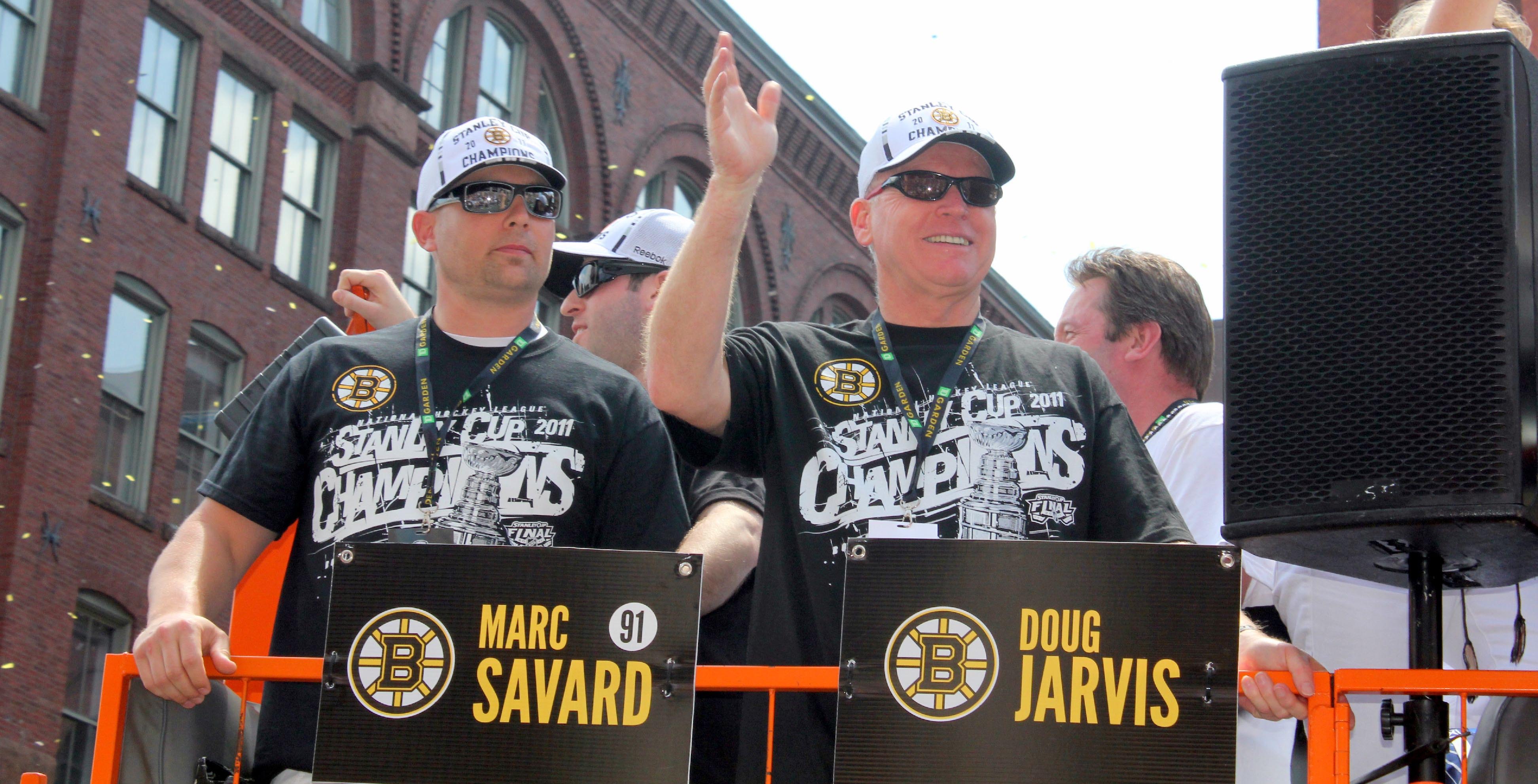
No sick days or recovery time or absences of any kind. Doug Jarvis showed up to work on October 8, 1975 and kept working every game of every season until October 10, 1987. His 964-game streak remains the longest string of consecutive games played in the NHL. Second place, Garry Unger, trails by 50 games. Only 24 NHL players have even surpassed the 500 consecutive regular-season games needed for an iron man streak.
Having been drafted by the Toronto Maple Leafs, his almost-immediate trade meant that Jarvis began his streak with the Montreal Canadiens. During his seven seasons (of 560 consecutive games) as a Canadien, the defensive center became known for checking and for winning faceoffs. With him on the team, the Canadiens won the Stanley Cup four times in a row (between 1976 and 1979).
On September 9, 1982, the Canadiens traded Jarvis to the Washington Capitals. A month earlier, his cousin, Wes Jarvis, was traded by the Capitals to Minnesota. During his four years with the Capitals, Doug Jarvis played 265 more games and, in 1983-84, received the Frank J. Selke Trophy as the top two-way player.
Washington traded Jarvis to the Hartford Whalers on December 6, 1985. The second of his three seasons with the Whalers produced another award, the Bill Masterson Memorial Trophy, for perseverance and dedication. After 138 games, on October 11, 1987, Jarvis played his 964th and final NHL game, in which the Whalers lost 6-2 to the New York Rangers. An injury caused him to miss the next game, against the Boston Bruins, and instead, he became a player-coach for the AHL Binghamton Whalers for his final 24 games in professional hockey.
Jarvis then applied his perseverance and dedication to coaching. Beginning in 1989, he worked as the assistant coach of the Minnesota North Stars and then, with their move in 1993, of the Dallas Stars. The Stars won the Stanley Cup in 1999. His 14 years with the franchise made him the assistant coach who has remained with the same franchise the longest. From 2003 until 2009, Jarvis coached in Montreal, first as head coach of the AHL Hamilton Bulldogs and then as associate coach of the Canadiens. For the six years between 2010 and 2016, Jarvis served as assistant coach of the Boston Bruins, who won the Stanley Cup in 2011. (Bruins center Patrice Bergeron earned three of his four Selke awards during the time Jarvis was with the Bruins.) In July 2016, Jarvis began working as the assistant coach for the Vancouver Canucks, the team that lost the championship final to the Bruins. All told, Jarvis’s coaching career has spanned over twice as long as his record streak as a NHL player.
Sons want to make their fathers proud, and fathers wish to see their sons surpass them. October 9, 2000 stood as just one day of many that Brett Hull made his father Bobby Hull proud. At Air Canada Centre that night, Brett helped the Dallas Stars defeat the Toronto Maple Leafs (3-1) by scoring one goal and two assists. The goal, his 611th with the NHL, surpassed Bobby’s 610 career NHL goals.
By this point, Brett had already matched or surpassed Bobby’s record in numerous ways. Between the seasons of 1989-90 and 1993-94, Brett scored 50 plus goals in each of five seasons with the St. Louis Blues – matching Bobby’s five 50-plus seasons between his 1961-62 and 1971-72 seasons with the Chicago Blackhawks. Although Bobby had four consecutive 50-plus seasons, Brett had three 70-plus seasons (including a high of 86 goals during the 1990-91 season). In 1990-91 and 1991-92, Brett scored 50 or more goals within 50 games – besting Bobby’s 50 goals in 52 games in 1965-66. Two weeks shy of 28 years after Bobby became the 4th NHL player to reach 1,000 points, on November 14, 1998, Brett became the 53rd to pass the milestone. The following year, Brett scored his 600th goal. The Hulls have been the only father and son to achieve these tallies.
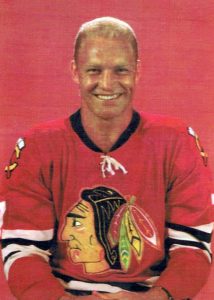
Bobby Hull (By Ralston-Purina Company, makers of Chex cereals [Public domain], via Wikimedia Commons)
After 19 NHL seasons, Brett had scored 741 goals and 650 assists for 1,391 points in 1,296 games. Bobby’s 16 seasons with the NHL tallied 610 goals and 560 assists for 1,170 points in 1,063 games. However, his 7 seasons (411 games) with the World Hockey Association (WHA) added an additional 303 goals and 335 assists for 638 points. These stats place Brett as the 4th-highest goal-scorer in the NHL, and although Bobby has dropped to 17th place in the NHL, he holds 2nd place in WHA goal scoring.
How did the Hull father and son amass so many points? Both have been credited for having a mean slapshot and powerful frame. Bobby, playing left wing, had a shot once timed at about 120 miles per hour. Having developed a curved hockey stick, he gained velocity and could move the puck differently. Brett, playing right wing, came to be known for his big shot and big mouth/personality. According to NBC Sports broadcaster Ed Olczyk, Brett’s unique shot “would accelerate and ascend and the goalie would have no chance.” Another NBC Sports broadcaster, Mike “Doc” Emrick, said, “He knew he could score goals and he knew he could shoot your lights out.” However, Brett “said often during his career that he would frequently wake up worried that he would never score another goal.” In getting into position to shoot, Bobby bull-rushed the net using his physicality to make space. Meanwhile, Brett seemed to disappear and magically reappear in open ice. Jim Johannson, USA Hockey’s general manager until his death in January, once said, “He was unbelievable at finding areas that no one was guarding.” Ron Hextall, goalie for the Philadelphia Flyers, commented, “When he comes in on the wing, he’s got an awful lot of speed. If you give him a hole, he hits it.” Their methods clearly worked.
Both Hulls earned their places on the Stanley Cup and in the Hockey Hall of Fame. Bobby won with the Blackhawks in 1961 and with the Winnipeg Jets in 1976 and 1978. Brett’s championships came with the Dallas Stars in 2000 (thanks to his goal in triple overtime) and with the Detroit Red Wings in 2002. As for the Hockey Hall of Fame, Bobby was inducted in 1983 and Brett in 2009.
As the Boston Bruins training camp got underway, it was learned that Patrice Bergeron had hit a snag in his recovery from his offseason groin surgery in the form of some back spasms. As a result, the four-time Selke Trophy winner hit the ice in a game situation for the first time when the Bruins lost to the Stanley Cup Champion Washington Capitals at the Capitals home opener on Wednesday, October 3, 2018. The Bruins responded to that 7-0 loss by beating the Buffalo Sabres the following night in Buffalo, by shutting the Sabres out 4-0, in which Bergeron got a goal and assist.
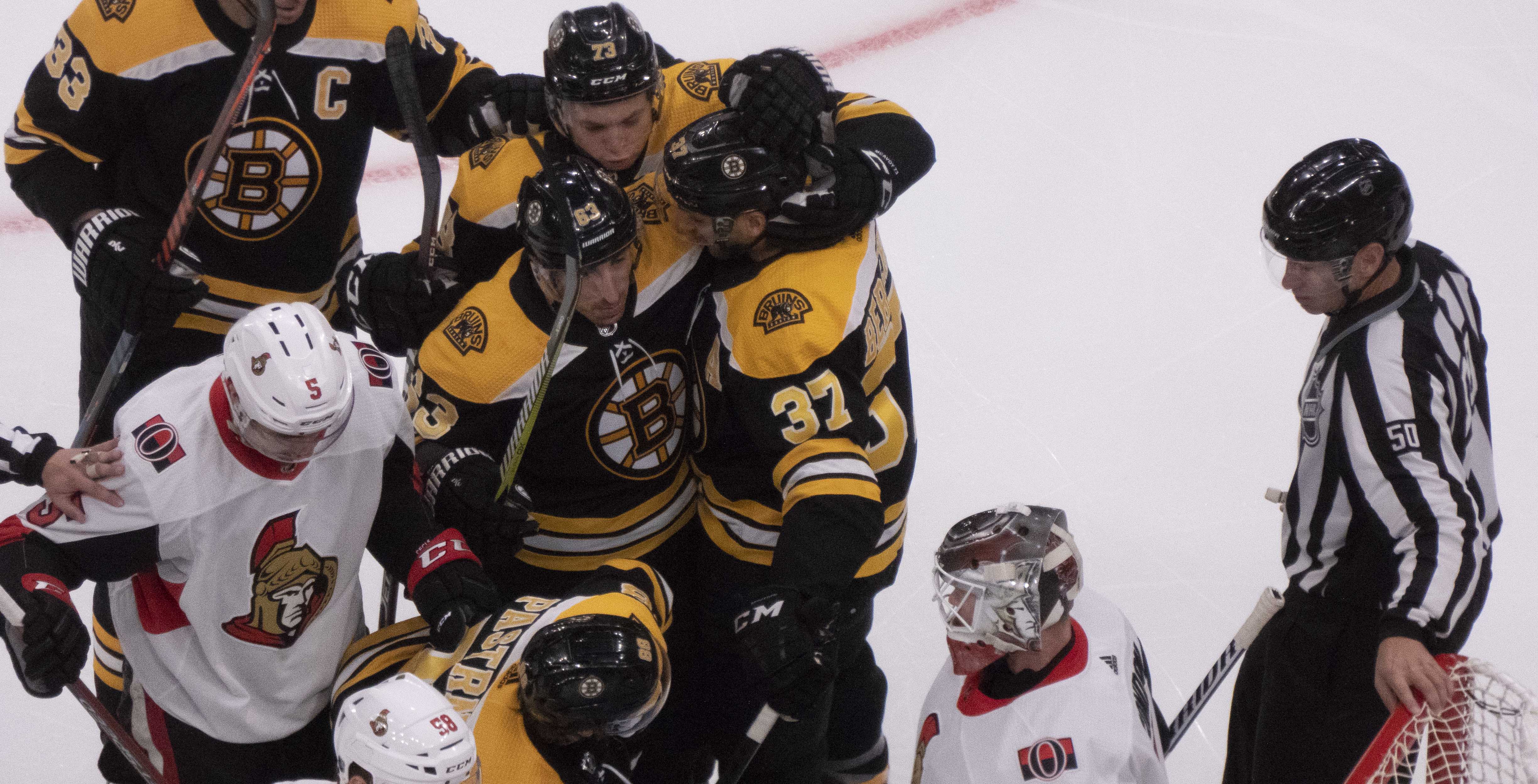
For the Bruins, their own home opener came Monday, October 8, 2018, amidst all the pageantry of announcing the Boston Bruins roster followed by a ceremonial puck drop by Special Olympics before taking on the Ottawa Senators. Sometimes those emotional starts can result in a deflation with the Bruins, but thirty seconds in and the Bruins were on the scoreboard off the stick of Bergeron. Bergeron wasn’t done there. As the teams left the ice for the first intermission the Bruins were up 2-0, and Bergeron had his second of the game, a power play goal at 17:12.
The second period wasn’t the Bruins strongest to be certain, as they were outshot 12-6 in the middle frame. Ryan Dzingel got Ottawa on the board 2:21 into the period, cutting the Bruins lead in half. But Walpole native, Chris Wagner, with a deflection off a Charlie McAvoy shot from the point, at 7:08, gave the Bruins a little room. It was the first goal for Wagner wearing the black and gold—something he called surreal. Dzingel was doing his best to keep his team in the game, as he notched his second of the game approximately five minutes later. As the buzzer ended the period, the Bruins were still ahead 3-2, but the shots on goal were now even at 21 through two periods.
Patrice Bergeron
Before the clock had ticked down five minutes of the final period, Bergeron had his third goal—the fourth hat trick of his career and the third of the 2018 calendar year—and the hats were flying. And the two-way center wasn’t done yet. With 3:29 remaining in regulation, he helped Pastrnak put one in the back of the net to put the team up 5-2, which earned Bergeron a four point night. While the Senators struck back thirty seconds later, to make it 5-3, Pastrnak’s second of the night into the empty net at 18:22 sealed the win for the Bruins.
Bergeron, who turned 33 in July, hadn’t played all summer long. He hadn’t been able to get into any of the preseason games, and just three games into the season, he has four goals and two assists for six points. Imagine what he’d be doing if he did have his offseason opportunities?
“I’ve been impressed with everything [Bergeron] does to be honest with you,” Bruins Head Coach Bruce Cassidy said after the game. “He plays at both ends. We use him in every situation, so good for him to get us going on time tonight.”
Bergeron’s focus and drive on the ice to be the best he can game in and game out truly does resonate with his teammates. They recognize what they have in him and are thankful that he plays with them instead of against them.
“You know, it’s crazy. He can take time off and always show up and be one of the best players on the ice. Even though he says he feels off, he’s always really good. He’s a big player for us and it was another big night for him,” Pastrnak offered.
“Yeah, he’s just impressive. He’s a competitor. He takes a lot of pride in his game. For him to miss the amount of time he missed this summer, and missing preseason, it’s incredible what he’s able to do. Another reason why he’s such a great leader… He wants to be the best player on the ice every night and he puts a lot of pressure on himself to be really good. He doesn’t give himself excuses,” Brad Marchand shared.
Bergeron is good. If anyone doubted that all they need do is look at his statistics and the number of Selke trophies he has. Monday’s game saw three of his four shots on goal end up in the back of the net. He was 58% in the faceoff dot, winning 14 of 24 draws. He didn’t have a single give away. He also wasn’t happy with the delay of game penalty he took that offered the Senators a lengthy five-on-three opportunity, but his team had his back.
So, hats off to the hat trick and to that third goal of his being the game-winning goal.
The Bruins return to TD Garden on Thursday night, October 11, 2018, when they will take on the visiting Edmonton Oilers.
Hockey truly proved to be the Patrick family business on October 8, 1971, when Craig Patrick became the first third-generation player to take the ice for the NHL. Having signed with the California Golden Seals (as a free agent) two days earlier, Craig played opening night in the 4-4 tie with the Los Angeles Kings. He remained with the Seals into a fourth season, at which time, he played two games with his brother Glenn, a defenseman.
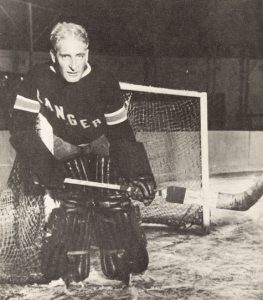
Lester Patrick (By Credit: Hockey Hall of Fame – Frank Lennon. [Public domain], via Wikimedia Commons)
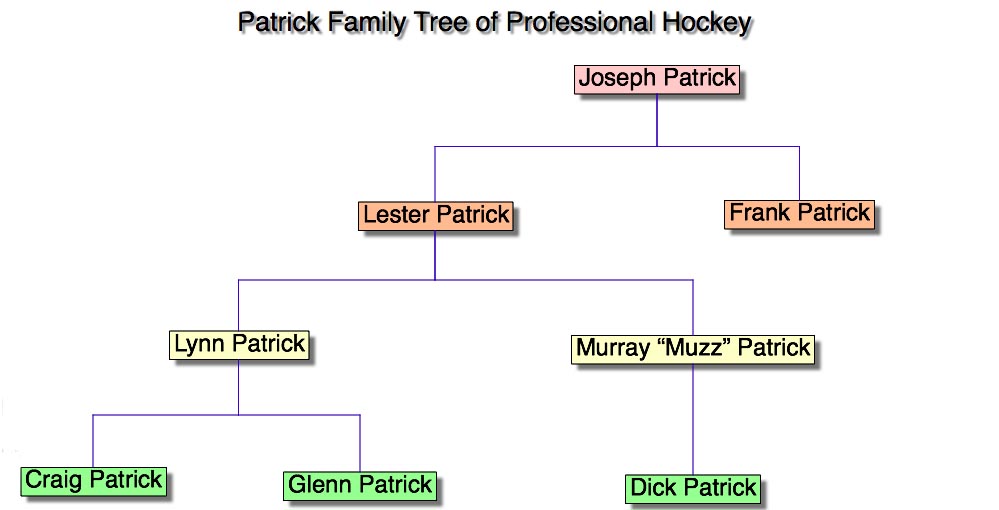
The Seals teammates were the third set of Patrick brothers to play professional hockey. Craig, a right wing, played nine seasons with the NHL and one with the WHA for a total of 401 games (72G, 91A, 163P). His father, Joseph Lynn Patrick, a center, skated ten seasons with the New York Rangers (between 1934 and 1946) for a total of 455 games (145G, 191A, 336P). Lynn’s brother, Murray “Muzz” Patrick, defenseman, skated with him most of those years. These second-generation brothers shared in the Stanley Cup win in 1940, and then in 1945-46, they returned to the Rangers for their father’s final year as general manager. That father, Lester Patrick, defenseman, played with various non-NHL leagues that added up to 18 professional seasons and about 228 games (152G, 65A,
217P). He successfully challenged for the Stanley Cup with the Montreal Wanderers in 1906 and 1907. Bracketing those years, Lester played on teams with his brother Frank. Lester’s only NHL game as a player came during the 1926-27 season, when the Rangers’ goalie was injured needing Coach Patrick to man the crease.
Not only did the three generations of Patricks skate in the NHL, they all coached and worked as general managers for the Rangers and other teams.
In 1911, Lester and his brother Frank organized the Pacific Coast Hockey Association (PCHA), for which Lester played for the Victoria Aristocrats and then coached their replacement, the Victoria Cougars (to a Stanley Cup win). When the Western Hockey League (WHL) replaced the PCHA and then folded 1926, Lester replaced Conn Smythe as coach and general manager of the newly formed New York Rangers. He coached the Rangers until 1939 (through two Stanley Cup wins) but stayed on as general manager until 1946 (adding another Stanley Cup championship).
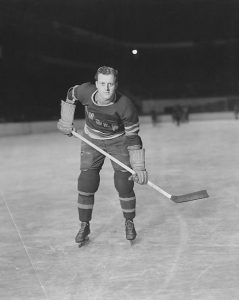
Lynn Patrick (By Wide World Studios, New York (eBayfrontback) [Public domain], via Wikimedia Commons)
Lynn briefly coached the Rangers for two seasons that included losing the Stanley Cup finals, ending the 1949-50 season. His brother Muzz led the Rangers through some tough years without reaching the playoffs. Meanwhile, Lynn followed his uncle Frank, who had coached the Boston Bruins for two seasons in the mid-1930s. Lynn coached the Bruins for the first five seasons of the 1950s and then stayed on as general manager until 1965. Two years later, like his father before him, Lynn set out as the first coach and general manager of a brand new team – the St. Louis Blues. After the first sixteen games, Lynn appointed Scotty Bowman as coach and focused on managing. Lynn returned to coaching for the 1974-75 and 1975-76 seasons, the first of which would see Craig playing for him.
Craig’s coaching career started off with a miracle. As assistant coach and assistant general manager, he helped lead the U.S. team to gold in the 1980 Winter Olympics. He then spent the first half of that decade as coach and general manager of the Rangers. In 1989, he coached the Pittsburgh Penguins for a season before switching to general manager. In that role, he led the Penguins to two Stanley Cup championships (in 1991 and 1992) and became the longest-serving general manager (lasting until 2006).
All three Patrick generations are represented in the Hockey Hall of Fame. Lester was inducted in 1947, and Lynn’s induction came in 1980. Craig was first inducted to the United States Hockey Hall of Fame in 1996 and then as a Builder to the Hockey Hall of Fame in 2001.
Further, since 1966, the NHL and USA Hockey have presented the Lester Patrick Trophy for “outstanding service to hockey in the United States.” Lynn posthumously received the award in 1989, and Craig was rewarded in 2000. Thus, the Patrick legacy lives on.
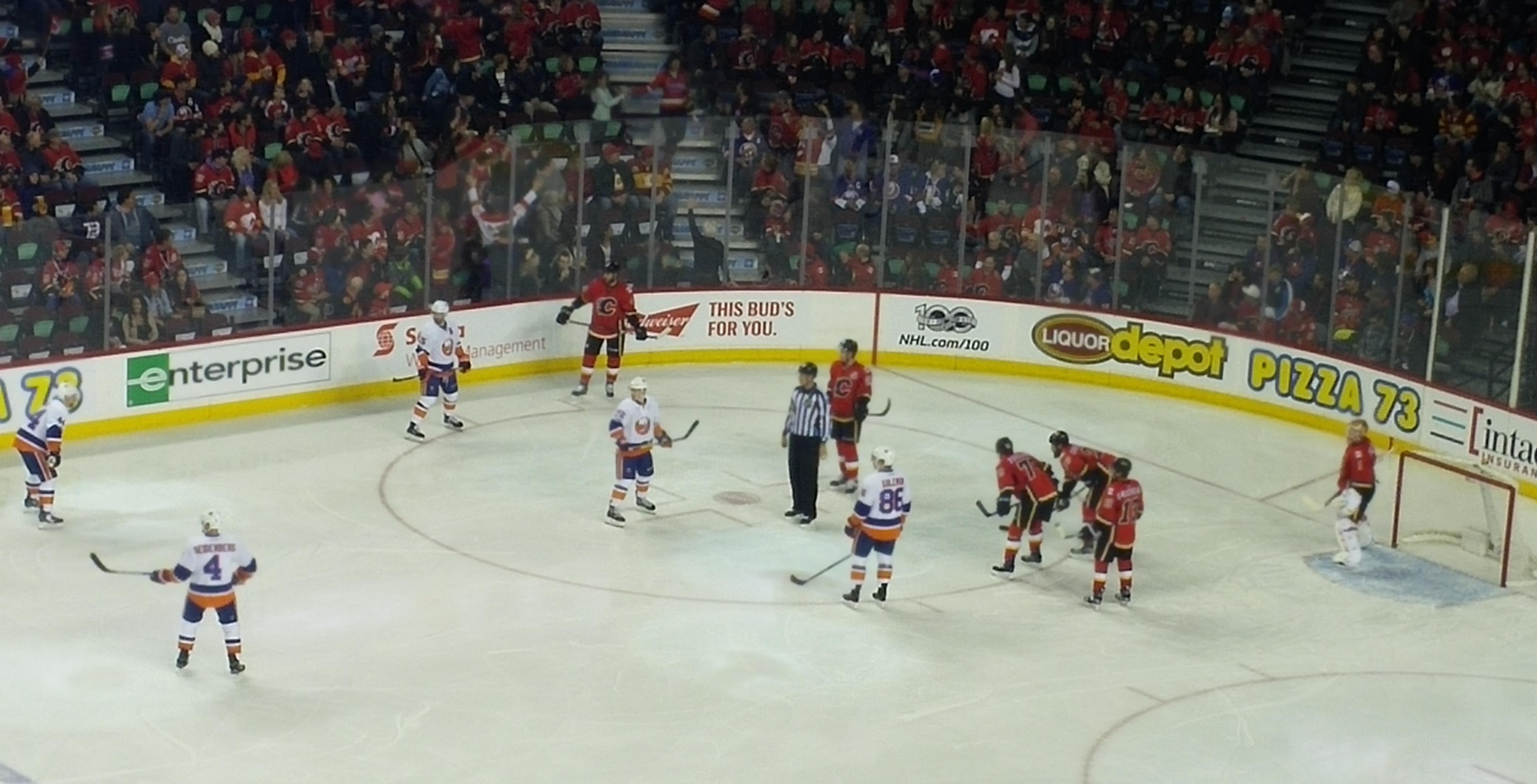
To combat the rise of the World Hockey Association (WHA), in 1972 the NHL added two expansion teams. The NHL aimed to prevent the WHA from moving into the newly-built Nassau Veterans Memorial Coliseum in Uniondale, New York and the Omni Coliseum in Atlanta, Georgia. Thus, the New York metropolitan area received a second NHL team in the New York Islanders and the Atlanta Flames (relocated to become the Calgary Flames in 1980) became the first NHL team in the South.
As someone who has covered the Islanders since the beginning, Stan Fischler said the media then wondered about how the new teams would find enough high-level players considering the raiding by the WHA and having to compete against each other at the draft. Islanders manager Bill Torrey told Fischler, “The difference between Atlanta and Long Island was that in Atlanta they were going to have to sell hockey. On Long Island, they already knew about it. That gave us an edge.”
On October 7, 1972, the two newest teams played their first ever NHL regular-season game – against each other. Although the game drew 12,221 spectators, the Nassau Veterans Memorial Coliseum did not sell out. Still, NHL President Clarence Campbell found the venue “a magnificent place to watch hockey.” At 12:48 of the first period, Morris Stefaniw scored the first goal for the Flames franchise. The Islanders’ first goal came at 19:29 of the second period when Ed Westfall potted to tie. The third period saw three more goals with two of them being for the Flames and the final by the Islanders. The home team lost 3-2.
In their inaugural season, the Islanders continued to struggle more than the Flames. Torrey found that all the newspapers seemed to describe his team as “hapless.” “One story would say, ‘The Rangers play the hapless Islanders tonight.’ Or this one: ‘The Bruins get a breather against the hapless Isles.’ Even in Canada. ‘Les Canadiens rout hapless Islanders.'” In light of their 12-60-6 season, he said, “Cripes, I thought that ‘hapless’ was the only word in the English language!” Torrey stuck with the Islanders for twenty years before moving on to build another new expansion team, the Florida Panthers (with coach Roger Neilson). His efforts with these new franchises landed him in the Hockey Hall of Fame as a Builder. Meanwhile, the Flames ended their first season 25-38-15.
Since then, the Islanders have won the Stanley Cup four times in a row, from the 1979-80 to 1982-83 seasons. The Flames moved from Atlanta to Calgary in 1980 but closed out that decade with their only Stanley Cup win, in the 1988-89 season.
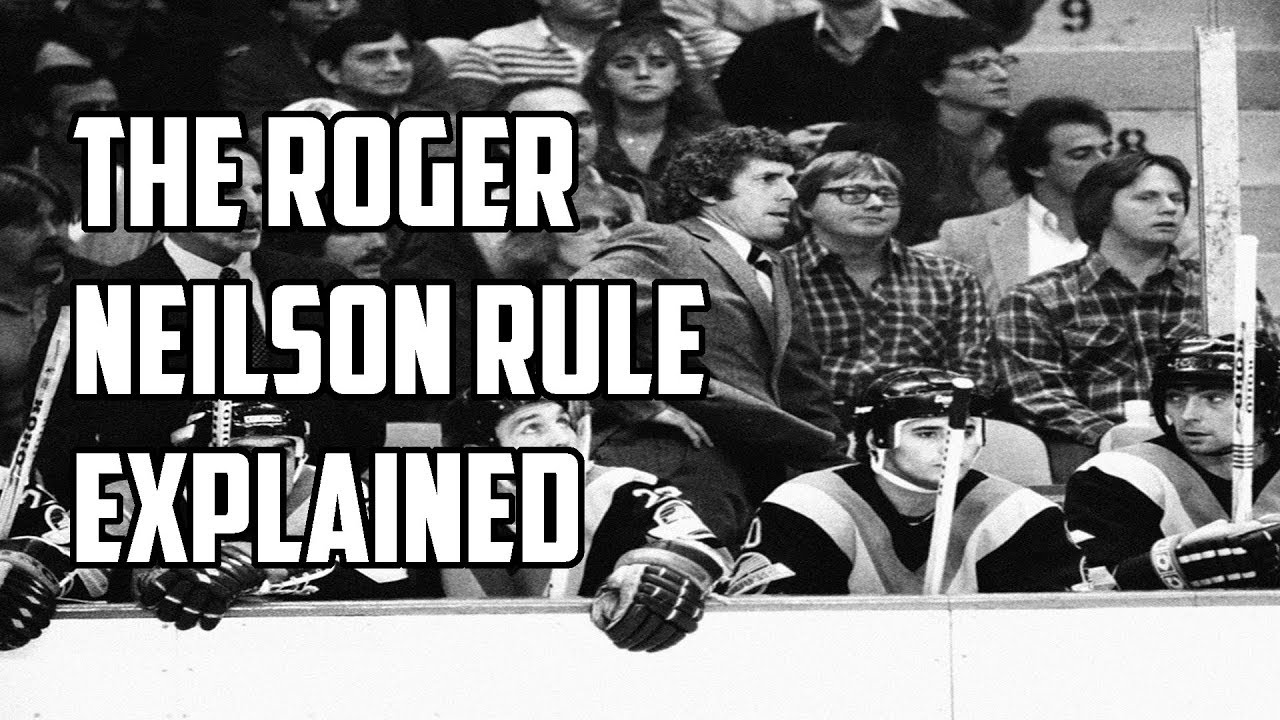
In the last quarter century of his life, Roger Neilson coached ten NHL teams, and remains the only coach to have been a head coach of eight. For all that Neilson’s methods (analyzing game videos, finding playbook loopholes, and emphasizing conditioning) continue to receive praise, he had some of the worst luck with timing.
After ten seasons coaching the Peterborough Petes, a Major Junior hockey team of the OHL, Neilson began his NHL career in 1977 with the Toronto Maple Leafs. Two seasons in Toronto and two seasons with the Buffalo Sabres led to three seasons with the Vancouver Canucks. During the 1981-82 season, Neilson led the Canucks through the playoffs until their defeat in the finals by the New York Islanders (in the midst of their four-time winning streak). Neilson finished out the 1983-84 season coaching the Los Angeles Kings. After spending the playoffs helping the Edmonton Oilers win their first Stanley Cup, Neilson assisted the Chicago Blackhawks’ head coach for three seasons.
Then October 6th became Neilson’s record-breaking day with the start of two specific seasons. In 1989, he became the first in NHL history to have coached five different teams when he led the New York Rangers to a 4-1 win over the Winnipeg Jets. During Neilson’s tenure, the Rangers won the Patrick Division title in 1989-90 and the Presidents’ Trophy in 1991-92, when he nearly was named NHL’s coach of the year. Although the Rangers retained Neilson the longest – 280 games over four seasons, they fired him (in part due to tensions with captain Mark Messier) after failing to reach the playoffs in the 1992-93 season. The Rangers would go on the next season to win the Stanley Cup without him.
That meant that on October 6, 1993, Neilson became the first to coach six different NHL teams when he debuted with the brand new Florida Panthers. They tied the Blackhawks 4-4 that night but went on to set an expansion-team record with a 33-34-17 regular season and only missed the playoffs by one point. Looking back, Neilson said, “Of all the places I’ve coached, [Florida] was probably my most enjoyable two years. There was a special bond there between us all and they all felt it and I did, too.” Understandably, he was shocked at being let go. “I’ve been fired pretty much every way there is. The ones that hurt the most are the ones where you don’t figure it should happen, or out of the blue, like in Florida.” As par for the course, the Panthers made it to the Stanley Cup finals the very next season.
Neilson closed out the 1990s as associate coach for the St. Louis Blues and then head coach of the Philadelphia Flyers. At the turn of the millennium, the Flyers finished first in their Atlantic Division and advanced to the conference finals but lost the seventh game (to the New Jersey Devils who then won the Stanley Cup). Partly due to his declining health, Neilson again was let loose. For his final coaching job, the Ottawa Senators hired him as assistant coach. Head coach Jacques Martin allowed Neilson to take over for the last two games of the 2001-02 season in order to reach 1,000 regular season NHL games. With the win against the Boston Bruins and the loss against the Toronto Maple Leafs (his first team), Neilson became the ninth to coach that many games. Of those, he had 460 wins, 381 losses and 159 ties.
In tribute to his innovative coaching, the Hockey Hall of Fame inducted Neilson as a builder in November 2002, and he received the Order of Canada in May 2003. Earlier that year, Peterborough renamed part of it’s main street Neilson Drive.
(Photo: Compilation of photos by Tony McCune & Rick Dikeman via Wikimedia Commons)
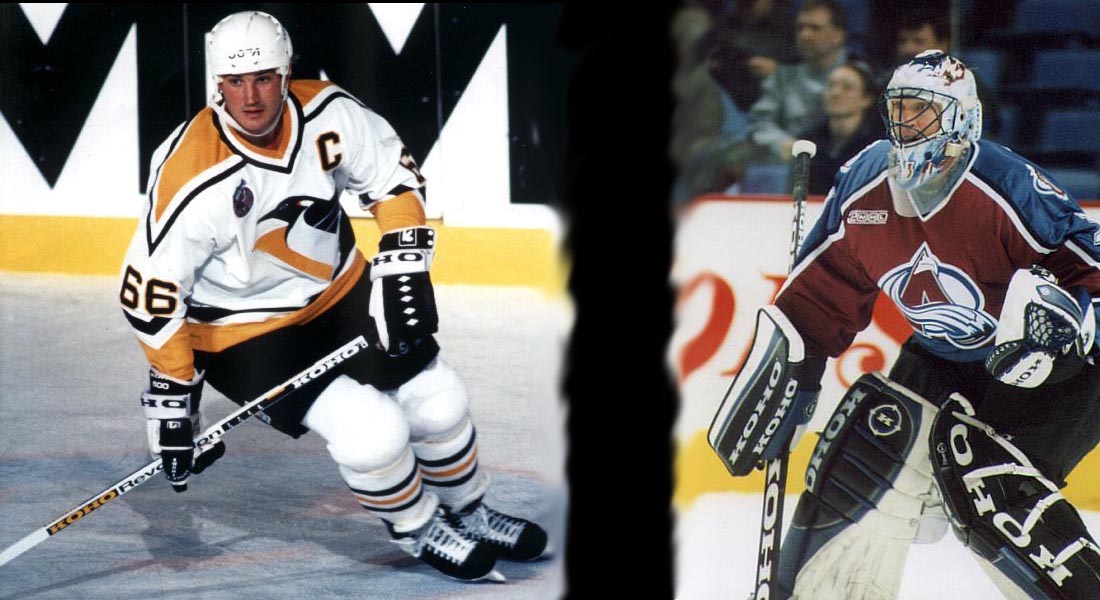
Double, double toil and trouble. Goalie Patrick Roy, No. 33, and center Mario Lemieux, No. 66, share the same birthday, 5 October 1965. Both were born in Quebec, Canada – Roy in Quebec City and Lemieux in Montreal.
Naturally, being the same age, both were drafted in 1984 – Roy by the Montreal Canadiens (as 51st pick) and Lemieux by the Pittsburg Penguins (as 1st pick). Roy stayed with the Canadiens for 12 seasons until moving on to the Colorado Avalanche in 1995 and playing another 8 seasons. Lemieux stuck with the Penguins until his temporary retirement (due to health reasons) in 1996 before rejoining in 2000 to play out his final five seasons there.
Both players went on to win numerous awards with their teams, often alternating years. Roy manned the net for four Stanley Cup wins – two with each of his teams – while Lemieux led the Penguins to two championship wins as a player and three as the owner. Although Lemieux received the Conn Smythe Trophy as playoff MVP for both championship years, Roy broke the record winning the trophy three times and being the youngest winner for the first. Roy five times earned the William M. Jennings Trophy for goalie with the fewest goals recorded against him, sometimes in the same years as Lemieux six times earned the Art Ross Trophy as top scorer. The two matched three times earning the Vezina Trophy as top goaltender (for Roy) and the Hart Trophy as League MVP (for Lemieux).
Their numbers demonstrate their dominance. Lemieux finished 10 (of 17) seasons with more than 100 points and totaled 1723 points (in 915 games). Meanwhile, Roy’s career entailed 1029 games – the most by any goalie. He also racked up records for the most regular-season victories (551), playoff victories (151), and playoff shutouts (23).
Outside of their usual NHL duties, Roy played in 11 All-Star games to Lemieux’s 10. They played more than half of them together. Although Roy served on Canada’s 1998 Olympic team, it was Lemieux who helped Canada win gold in 2002.
All three teams retired the two numbers. After his retirement in 2003, the Avalanche retired No. 33 with the Canadiens following suit in 2008. The Penguins temporarily retired No. 66 before officially retiring the number after Lemieux’s second retirement in 2006. Due to the earlier retirement, Lemieux was inducted into the Hall of Fame in 1997 while Roy had to wait until 2006, Lemieux’s true final year.
Netminder Corey Crawford remains on the long-term injured reserve following concussion symptoms that sidelined him in January (he was medically-cleared to practice this week) and backup goalie Anton Forsberg was injured during the morning skate.
Cam Ward, with a 2.70 goals-against average and .909 save percentage in 668 NHL games (and a Conn Smythe trophy and 2006 Stanley Cup with the Carolina Hurricanes) is expected in net.
AHL Rockford IceHogs goalie Collin Delia has been recalled as backup. Delia has a 3.96 goals-against average and .889 save percentage in two NHL games, but a 2.72 goals-against average and .900 save percentage in 28 AHL regular season games and a 2.34 goals-against average and .924 save percentage in the team’s playoffs.
Ward is 18-8-3 in 29 games against the Senators.
The Blackhawks as a whole are 22-9-2-1 in 34 all-time matchups against Ottawa. They won 5-2 Sept. 21 against the Senators, but fell 2-1 Sept. 27 in the preseason.
Toews told media he is optimistic about the new lineup:
“We’ve had a lot of turnover these last number of years. But I think we got a lot of young guys that have shown a lot in training camp, and guys that are excited to take part [in] a team that’s looking to bounce back.”
Toews, who had 20 goals last season and has hit 20 or more goals all of his 11 NHL seasons, has been working on his net-front presence.
Seabrook complimented Jokiharju during the preseason:
“I think he’s good, I think he’s smooth. His skating, it’s a lot different than mine. I’ve got to play a little more positionally. He can get himself in trouble a little bit and make up for it. So it’s impressive to see a kid come in at an age like that and play as well as he has in training camp.”
Kane, who led the team in points last year, shared optimism for the new team:
“I like it. It’s a young group, but you look around the room [and] a lot of the younger guys have a lot to prove, [and so do] the older guys. You kind of embrace the underdog role.”
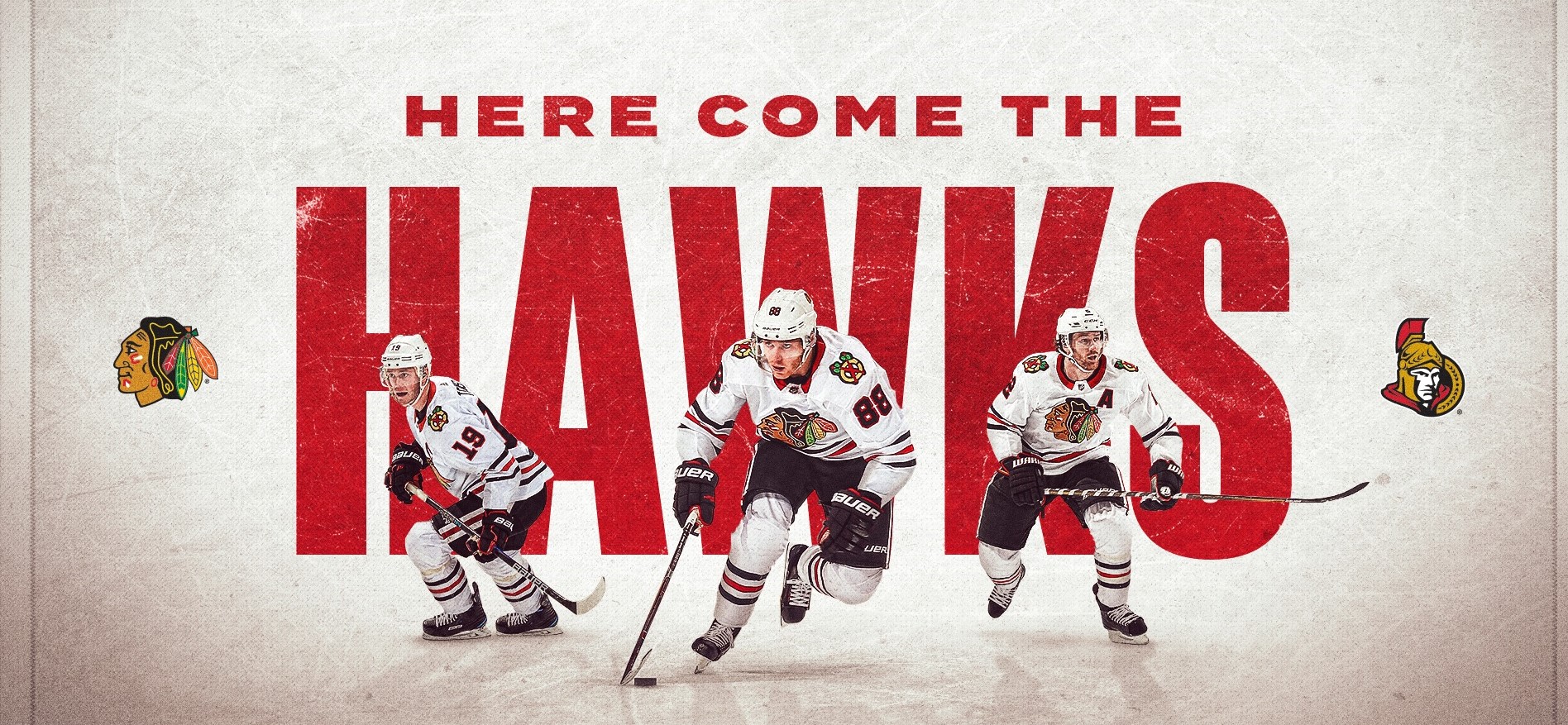
Matt Duchene (23 goals and 26 assists in 68 games for the Senators last season), Colin White, and Mark Stone are the, according to the Blackhawks, the Senators’ players to watch in this season opener.
The teams face off at 6:30 p.m. CT Thursday. The Blackhawks face the Blues at 7:00 p.m. Saturday and host the Maple Leafs at 6:00 p.m. Sunday for their home opener.



 Prev
Prev