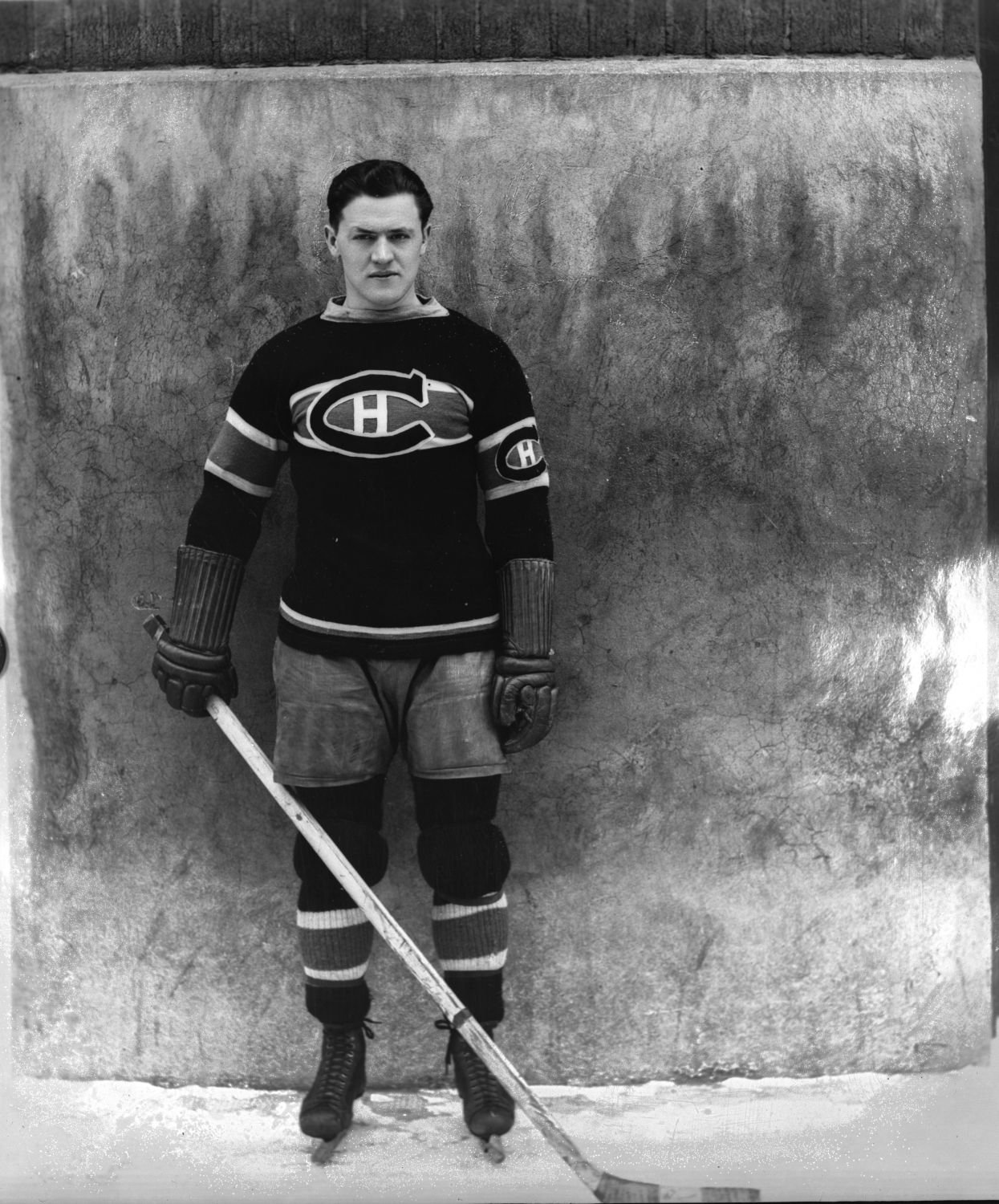
Two goalies, both alike in shutouts, in fair Boston, where we lay our scene, from ancient grudge back-to-back shutouts, where uncivil teams make uncivil games clean. In other words, on October 22 and November 13, 1955, the Detroit Red Wings and Boston Bruins had 0-0 ties thanks to the rivalry of their goalies, Glenn Hall and Terry Sawchuk.
Sawchuk had been playing full time with the Red Wings since 1950-51, the year he won the Calder Trophy as best rookie. His work, leading the team to the Stanley Cup three times over the next four seasons, earned him just as many Vezina Trophies. The Red Wings had just won the Stanley Cup in spring 1955, but they traded Sawchuk to the Bruins to make room for up-and-coming goalie, Glenn Hall. Along with Sawchuk, Vic Stasiuk and Marcel Bonin played for the Bruins and faced their former team for first time. Stasiuk said, “Sawchuk will make the Bruins a winner and will make it all the tougher for Detroit to repeat. I hope to help him both ways.” Going into these matchups, the Bruins had not been able to beat the Red Wings for two years, 13 games that Sawchuk played for Detroit. Naturally then, Sawchuk bore some bitterness and Hall had something to prove.
On October 22, 12,771 fans filled Olympia Stadium in Detroit. The game had barely begun, only 18 seconds in, when referee Jack Melhenbacher kicked out four players. After that, he only called seven more penalties for a total of 11 minutes for the Red Wings and 12 minutes for the Bruins. Even with power play opportunities, neither team could score. Sawchuk made 28 saves and Hall 19 saves to tie the game at 0-0, Olympia Stadium’s first scoreless game in two years. Boston’s unbeaten streak continued with five games, and the Red Wings’ unbeaten streak stood at four allowing them to move into a tie for third place in the league standings.
For the rematch, on November 13, Boston Garden hosted 11,333 fans. While the Bruins managed to maintain their previous 12 minutes in penalties, the Red Wings earned 26 minutes. Primarily, this stemmed from Hall – both from incurring his own penalty and from his teammate’s response to said call. In catching a shot by Leo Boivin, Hall held onto the puck longer than three seconds and received a minor penalty from referee Frank Udvari. However, that set off his captain, Ted Lindsay, whose reaction first result in a 10-minute misconduct and then a game misconduct. He had to leave and pay $75 in fines. Rookie Norm Ullman served Hall’s penalty. Meanwhile, Sawchuk “improved as the game wore on although he was sharp in the early stages, too.” He earned the first star of the game and his fourth shutout of the season. The saves were close in number though, with Sawchuk nabbing 31 and Hall 29. After the game, Detroit coach Jim Skinner said of Hall, “He’s had some games as good as Terry. It’s just a matter of experience. A couple of times around the league and he’ll be very good.” This second 0-0 tie bumped the Bruins out of second in the league standings. As the Boston Globe reported, the two teams had again “engaged in mutual frustration.”
Throughout the 1955-56 season, Detroit and Boston played 14 games against each other. They tied three times (having tied again December 8th). Then, the Red Wings got the better of the Bruins by winning eight games and losing only three. Detroit made it to the Stanley Cup finals but lost to the Montreal Canadiens. As for the goalies, Hall had the most shutouts (12) and earned the Calder Trophy as top rookie. Sawchuk had had the most shutouts (12) in 1954-55. However, the Calder Trophy must have been cursed for Detroit goalies. Like they had with Sawchuk, in 1957 Detroit then sent Hall packing (back to the Blackhawks). The Red Wings paid a high price – trading Johnny Bucyk to Boston – to bring Sawchuk home to Detroit. Considering the careers to follow, the Blackhawks and the Bruins probably thanked the Red Wings heartily.
Additional Sources:
Herb Ralby, “Sawchuk Faces Former Teammates for First Time Tonight in Detroit,” Boston Globe, 22 Oct. 1955, p. 6.
“Wings, Bruins Play Scoreless Tie at Detroit,” Boston Globe, 23 Oct. 1955, p. 48.
Tom Fitzgerald, “Bruins, Detroit Play Second Straight Scoreless Tie,” Boston Globe, 14 Nov. 1955, p. 6.
Dan Diamond and Eric Zweig, Hockey’s Glory Days: The 1950s and ’60s (Kansas City: Andrews McMeel Publishing, 2013), 47, 56, 166.
Greg Oliver and Richard Kamchen, The Goaltenders’ Union (Toronto: ECW Press, 2014), 45-49.
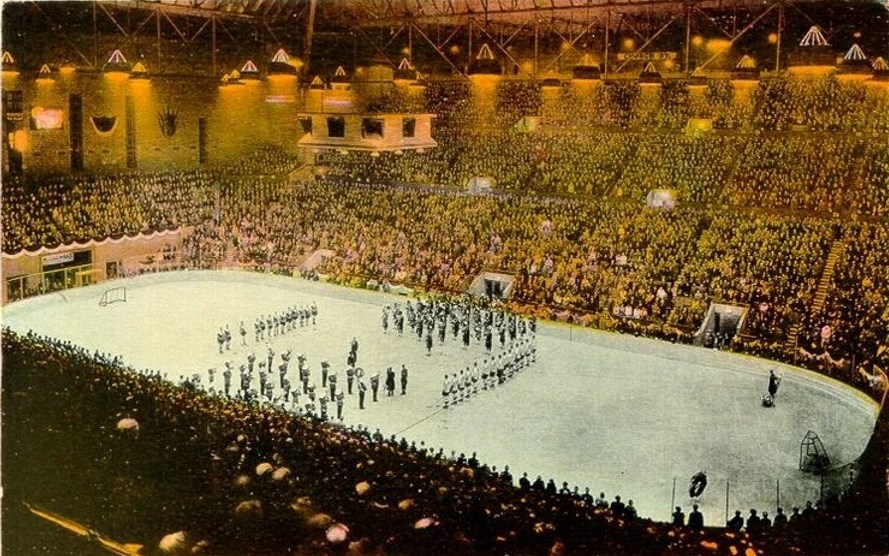
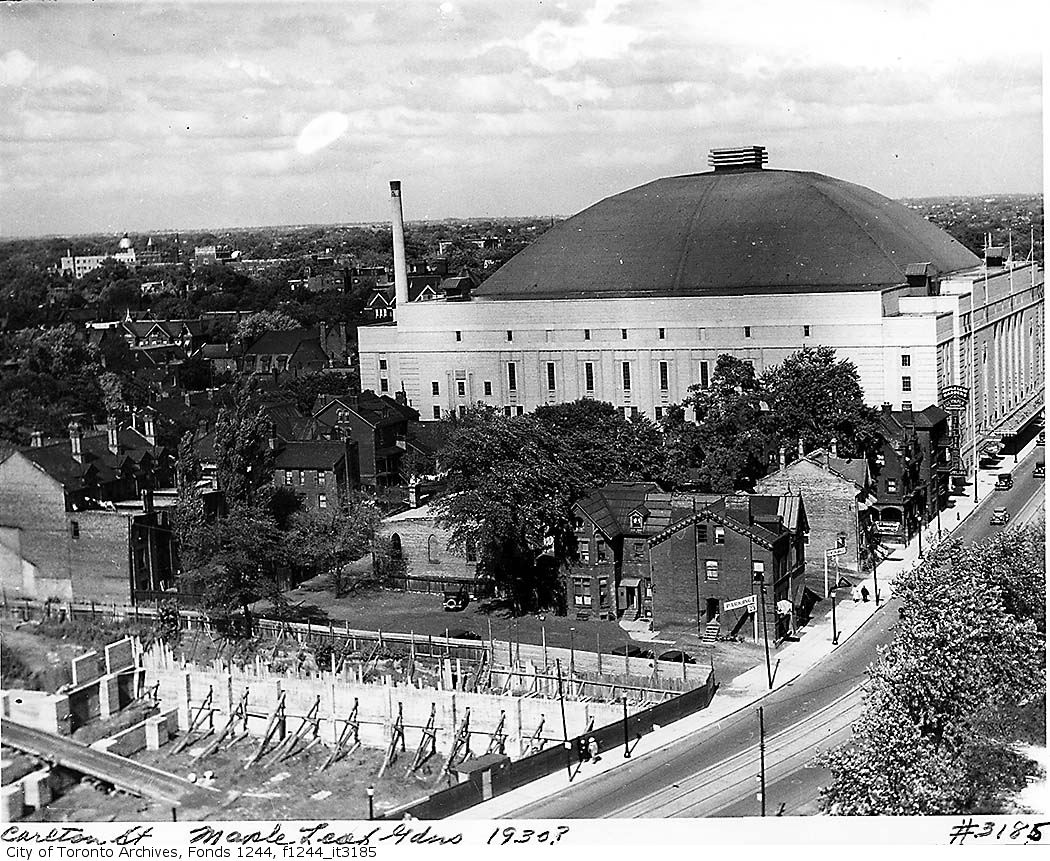
Hockey teams and their fans grow out of their arenas. This happened to the Toronto Maple Leafs, so they moved into their new Maple Leaf Gardens on November 12, 1931. There they stayed for almost 70 years before again needing an upgrade.
Toronto NHL teams skated at Arena Gardens on Mutual Street from 1917 to 1931. However, it only had the capacity for 8,000 seats and lacked modern amenities. With these drawbacks, Conn Smythe explained, “As a place to go all dressed up, we don’t compete with the comfort of theatres and other places where people can spend their money. . . . We need at least twelve thousand seats, everything new and clean, a place that people can be proud to take their wives or girlfriends to.” As the 1920s ended, Smythe also pushed for a reliable heating/cooling system, a public address system, and broadcast capabilities.
To build a new rink during the Great Depression, Smythe needed to find about $1.5 million in funds and a site appealing to paying fans. Smythe and fellow executives (of Maple Leaf Gardens Limited) convinced local business leaders to invest amid questions of “Don’t you know there’s a depression on?” When that still left them $25,000 short of the lowest construction bid, business manager Frank Selke made an offer to local labor unions. Those who worked on the Gardens would receive 20% of their paycheck in stocks, and as it turns out, those workers (about 700 men) would have profited when the stock prices jumped from 50 cents to 100 dollars by the mid-1940s. With the finances coming together, Smythe was able to convince Eaton’s department store to sell their land on the corner of Carlton and Church Streets, right by the streetcar that would bring in the fans.
Constructing the new arena only took about five months. They began on June 1, and Ontario Lieutenant-Governor W.D. Ross laid the cornerstone on September 21. Ross called Toronto a sports center and the “logical location for a building worthy of our record, of current need and of our ambition.” The architectural firm of Ross & Macdonald designed with Art Deco and Art Moderne styles that did not require columns throughout the interior that would have obstructed some views. Thomson Brothers of Toronto used three steam shovels, two concrete mixing plants, 77,500 bags of concrete, 1.5 million bricks, 13,000 tonnes of steel, and over 1,200 laborers to build the Gardens.
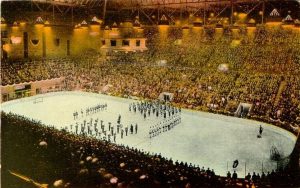
The opening was scheduled for November 12. About a month prior, season tickets went on sale for those who waited in the long lines that formed. On opening night, Smythe mingled with the entering crowds to the point of raising the suspicions of the tight security, who escorted him away until he could prove his identity. Those who made it in the building numbered 13,233 (at the time a record hockey audience), and they paid 95 cents to $2.75. They were given extra time to find their seats before the 48th Highlanders of Canada Pipes and Drums struck up “Happy Days are Here Again” to begin promptly at 8:30. To the displeasure of the excited crowds, they impatiently suffered through speeches by J.P. Bickell, Ontario Premier George Henry, and Toronto Mayor William J. Stewart (who presented the team with floral horseshoes). Finally, they heard from the team captains. Chicago Black Hawks captain Cy Wentworth wished them well, and Maple Leafs captain Hap Day predicted that they would win the Stanley Cup.
The mayor performed the ceremonial puck drop, and the players, Red Horner and Mush March, reenacted the face-off in 1999, at the last game played at Maple Leaf Gardens. Overall, Smythe found the opening “pretty much as I had imagined it in my rosiest dreams.”
The game itself did not turn out perfectly rosy. March scored for the Black Hawks early on before Charlie Conacher scored the first Maple Leafs’ goal in the new arena. The home team outshot their visitors, but even an arm injury (causing a 15 minute delay) did not stop opposing goalie Chuck Gardiner from blocking all other shots. Vic Ripley scored the final goal of the game for the Black Hawks, so the Maple Leafs lost 2-1. All in all, the building received rave reviews, and at the end of the season, the captain’s prediction proved true when the Maple Leafs brought home the Stanley Cup.
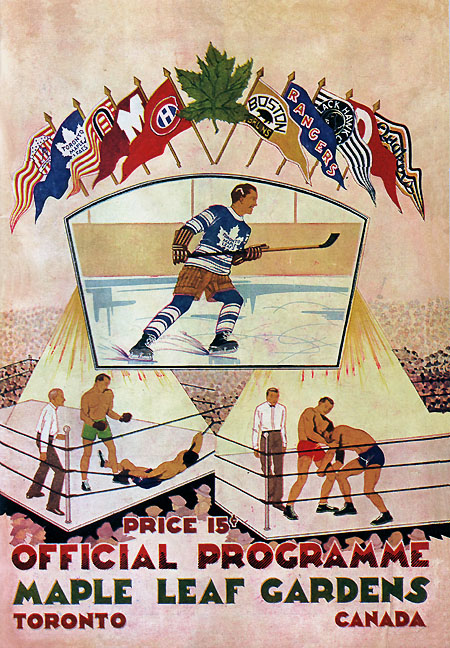
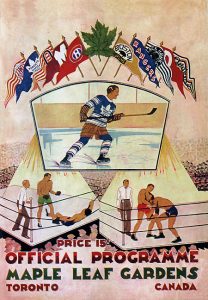
In addition to hockey (of all levels), the Gardens hosted boxing and wrestling matches and various concerts and performances. After their last game, February 13, 1999 (fittingly against Chicago), the Maple Leafs moved into Air Canada Centre. The following November, the Gardens closed to the public, but a complete revitalization was completed in 2012. The arena was awarded the Heritage Toronto Award of Merit and named a National Historic Site of Canada. Heritage Toronto presented a plaque on November 13, 2013 so that future generations will understand the vital place Maple Leaf Gardens has held in Toronto.
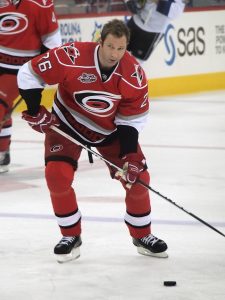
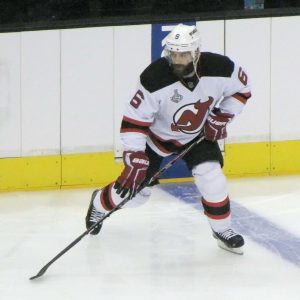
Seven events involving the NHL penalty shot took place within six days spread across 82 years. On November 11, 1998, New Jersey Devils defenseman Scott Niedermayer scored on a penalty shot, and exactly 18 years later, in 2016, another Devils defenseman, Andy Greene, scored on one in overtime. These were just the latest in a long line of November penalty shots. The first penalty shot and the first successful penalty shot occurred on November 10 and November 13, 1934. Almost 25 years later, on November 8, 1959, the referee mistakenly let the opposing goalie choose the player shooting against him. On November 9 and 11 in 2005, Carolina Hurricanes left wing Erik Cole became the first player awarded two penalty shots in the same game and then became the second to be awarded penalty shots in consecutive games. Clearly, the week of Veterans Day, the NHL calls the shots.
In 1934, the NHL began allowing penalty shots, hoping to increase excitement during the Great Depression. They had been invented by Lester and Frank Patrick for the Pacific Coast Hockey Association before it folded. The rules governing the shot started out as quite restrictive with players only able to shoot from within a ten-foot-wide circle 38 feet from the net. At the season opener at Maple Leafs Gardens on November 10, Montreal Canadiens forward Georges Mantha had his breakaway interrupted by Bill Thoms. The announcer proclaimed, “Oh my, looks like that’s going to be a penalty shot.” Indeed, Mantha was awarded the first NHL penalty shot, however the victim did not need to take the shot. Instead, Coach Newsy Lalonde chose Armand Mondou, who chose to shoot from a stationary position, allowing Maple Leafs goaltender George Hainsworth to easily catch the puck. Three days later, on November 13, St. Louis Eagles defenseman Ralph “Scotty” Bowman made the first successful penalty shot. While taking a shot, his teammate Syd Howe was tripped by Montreal Maroons defenseman Stew Evans. Eagles coach Eddie Girard chose Bowman to face Maroons goaltender Alex Connell. Unlike Mondou, Bowman decided to skate the puck, and his shot “found the left corner of the mesh, just past Connell’s right shin.” He had tied the game, but the Eagles then lost in overtime.
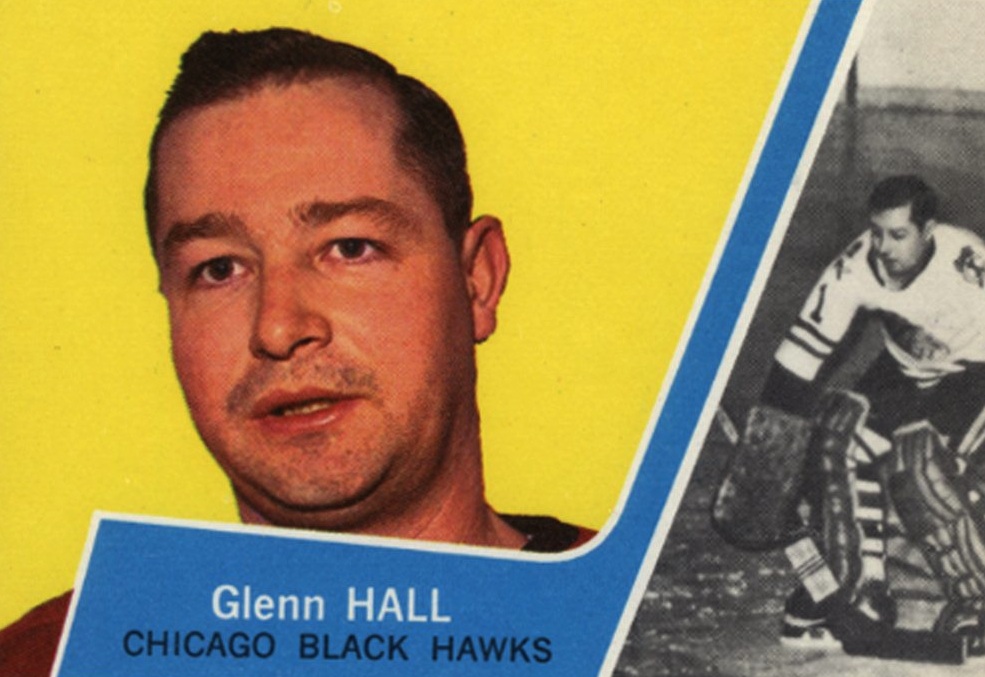
In 1959, referee Dalton McArthur made a big mistake during the November 8 matchup between the Boston Bruins and the visiting Chicago Blackhawks. After Blackhawks Al Arbour threw his stick at Bruins Bronco Horvath, McArthur rightfully called for a penalty shot, but he then went to the wrong bench to select the shooter. To him, the non-offending party was the one defending, as the Blackhawks were at the time. In the end, goalie Glenn Hall (with Coach Rudy Pilous) chose Larry Leach as his opponent. Meanwhile, Horvath had planned to take the shot himself but was turned back as his manager (Lynn Patrick) and coach (Milt Schmidt) wildly objected McArthur’s actions. As the Blackhawks had intended, Hall easily stopped Leach, but the Bruins still won 5-3. However, Horvath then lost the scoring championship by one point (to Blackhawks Bobby Hull), that could have been his with the penalty shot. McArthur later commented that “if he never had to call another penalty shot it would be too soon for him.” It has been ranked seventh in the top ten blown calls. Perhaps this debacle led to the rule made the following year that only the victim could take the penalty shot.
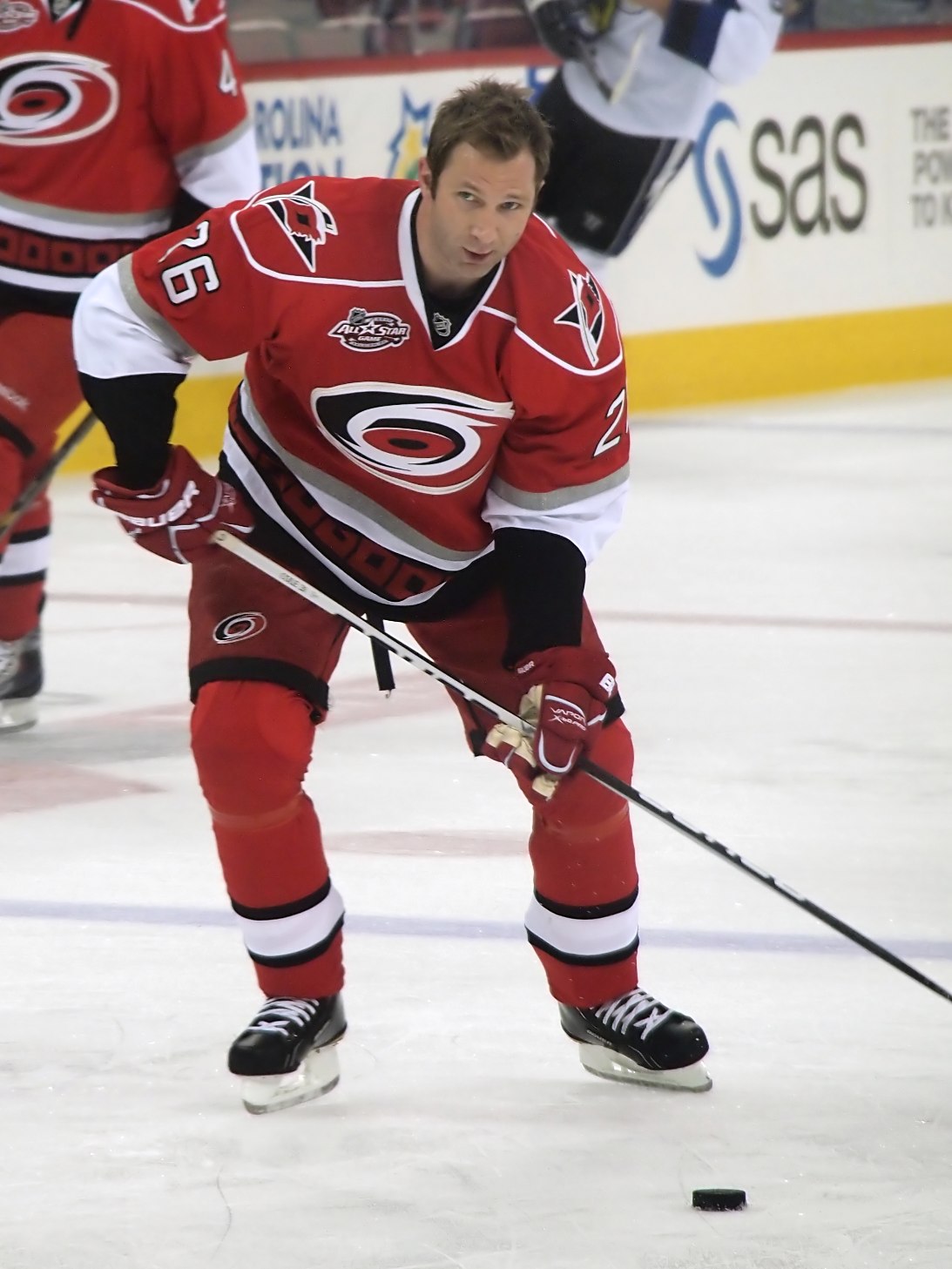
In 2005, Erik Cole of the Caroline Hurricanes had three penalty shots in two consecutive games. On November 9, he made one and missed one against goalie Martin Biron, but having two shots made him a trail blazer. Better still, the shot he made, while the team was shorthanded, turned out to be the game-winning goal. The Hurricanes defeated the Buffalo Sabres 5-3, which continued their winning streak to eight games (a franchise record). At the next game, on November 11, Cole was awarded another penalty shot after being pulled down during a breakaway. He was only the second (after Los Angeles Kings center Esa Pirnes in 2003) to be awarded in consecutive games. Although Florida Panthers goalie Roberto Luongo blocked the shot, Cole went on to assist the only goal of the game. The Hurricanes’ streak extended to nine games. By the time he retired, Cole had seven penalty shots, putting him in a three-way tie for most penalty shots by any Hurricanes player.
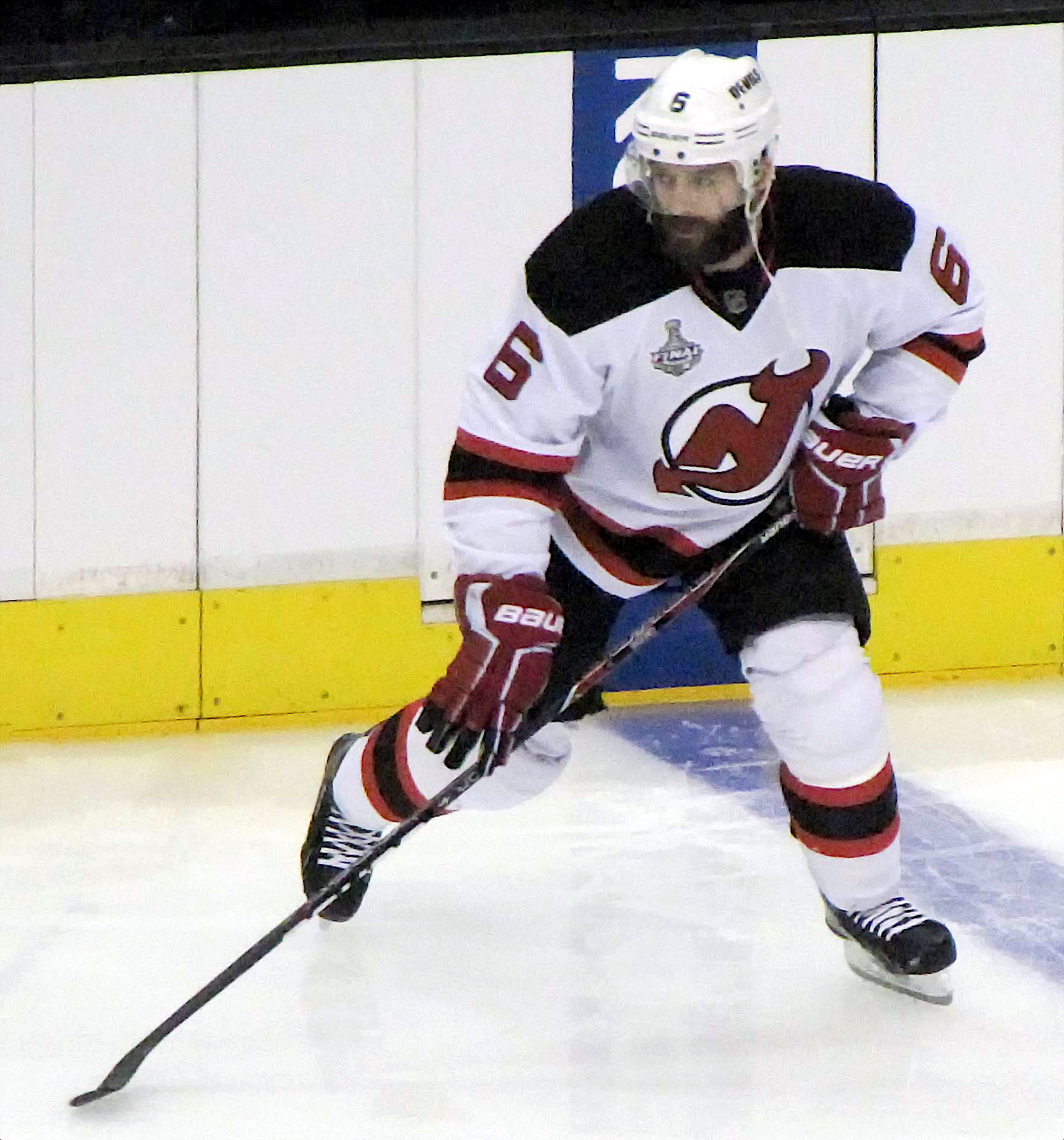
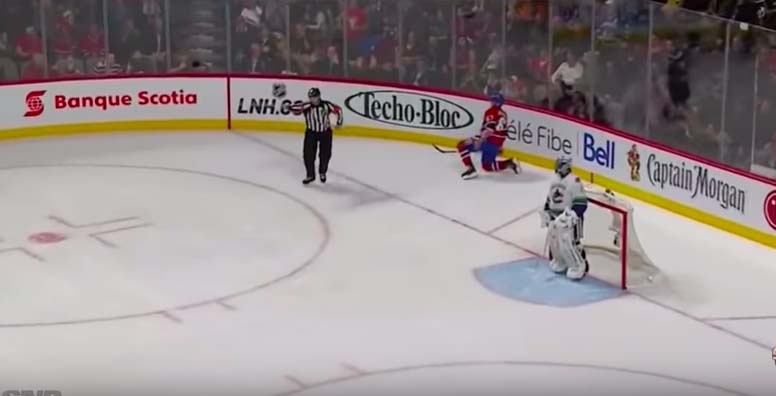
November 11 has twice been a date for Devils’ penalty shots. In 1998, Scott Niedermayer was tripped by a Montreal Canadiens defenseman during a break away and took the 13th penalty shot awarded to a Devils player. He had also taken the 11th, but this time he zig zagged and made the shot, the 8th Devils goal from a penalty shot. The Devils won the game 3-0 at Continental Arena. It took another 18 years before a Devils’ defenseman converted on a penalty shot. In 2016, the Devils played the Buffalo Sabres into overtime, and 29 seconds in, their captain, Andy Greene, had his breakaway interrupted by Evander Kane. Greene worried about embarrassing himself saying, “I didn’t want to become the next YouTube sensation.” He wished “they would let someone else take it on the ice.” Instead, Greene “slipped a forehand between the pads of Sabres goaltender Anders Nilsson,” becoming the first on the Devils team to make a penalty-shot goal in overtime. The Devils earned their third straight victory winning 2-1 there at the KeyBank Arena.
Between 1934 and the end of the 2017-18 season, the NHL awarded 1,748 regular-season penalty shots. Of them, about one third, 580, were successful goals.
Could you imagine working over 500 days before needing a sick day? That’s just what goalie Glenn Hall managed before a back injury forced him to pause. He had to leave his 503rd game on November 7, 1962 and then could not start what would have been his 504th straight game on November 10. His streak of 502 consecutive completed games stands as the longest for goaltenders (although just over half of Doug Jarvis’s 964-game streak).
Glenn Hall got his NHL start with the Detroit Red Wings (as backup goalie for the playoffs) during the 1952-53 season and began his streak with the first game of the 1955-56 season, when he succeeded Terry Sawchuk. He did not just play every game, he played them so well he won the Calder Trophy as best rookie (for his 2.10 goals-against average). Detroit traded him to the Chicago Blackhawks in 1957, a time when he considered Chicago “hockey Siberia.” Apparently, his new teammates called him “Mr. Goulie” for how pale he looked after throwing up before the games. Of that, Hall said, “I did get nervous. I loved to win, but goaltending was hell.” For someone who thought that, hated to practice, and didn’t wear a mask (until 1968) to last 502 regular-season games and 50 playoff games without stopping is pretty impressive.
In 1962, when reaching to fasten his leg pads, Hall pulled a muscle in his lower back and was unable to bend correctly. Nevertheless, he headed out to the net in the November 7th game against the visiting Boston Bruins. He made two saves before 10:21 in the first period, when he let in an easy shot and immediately left the game. Hall later explained, “I didn’t want to give up the net,” he said. “In those days, there was always that fear of losing your job. And, yes, I was aware of the streak.” Denis DeJordy finished out the game in net and kept the score to a 3-3 tie. On November 10, DeJordy started, putting the nail in the coffin of Hall’s streak. DeJordy made 30-odd saves in each of the three games he played, and the Blackhawks defeated the Montreal Canadiens 3-1, lost to the Toronto Maple Leafs 5-3, and defeated the Red Wings 4-2. Hall returned to the net on November 17 at Madison Square Gardens to defeat the Rangers 4-3. He only missed one other game that season, but he never quite managed to play a full season again.
Around the time of the 1967 NHL expansion, Hall thought about retiring. Consequently, with the Blackhawks only able to protect one goalie, Hall was left vulnerable to the expansion draft. When the St. Louis Blues offered almost double his salary, Hall “put them on the map.” Coach Scotty Bowman enthused, “Glenn was a breed apart. Not only for what he did on the ice, but for how he was in the locker room and with fans. In a class by himself.” Hall attempted to retire after two years “to paint his barn back on the farm near Edmonton,” but he did not officially retire until 1971, after his 18th season. He had played 906 games (407-326-164), 84 of them shutouts, a goals against average of 2.50, and a save percentage of .918. He had his name on the Stanley Cup twice (in 1952 and 1961) and was inducted into the Hockey Hall of Fame (in 1975).
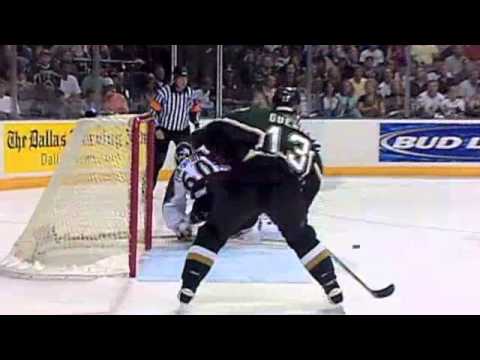
In Worcester, Massachusetts, November 9, 1970, an Irish-American father named Bill and Nicaraguan mother named Ligia had a boy named Bill Guerin. The boy grew up in western Massachusetts, and his mother thought he should play hockey to burn off energy. Guerin later said, “My mother and I learned hockey together. She didn’t know anything about the game, but wanted me to skate to have something to do in the winter. And now she’s a huge fan.” His father built him a rink in the backyard, bought him a net, and taught him to “stay humble.” As the boy grew into a man, he skated with the Springfield Olympics (of the New England Junior Hockey League) during the late 1980s, and, after he was drafted fifth overall by the New Jersey Devils, played for the Boston College Eagles from 1989 to 1991.
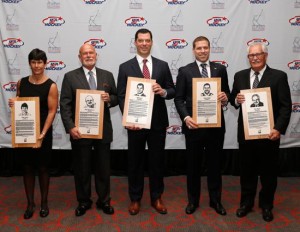
2013 USA Hockey Hall of Fame
In 1991, Bill Guerin began his 18-year career as an NHL hockey player. He may have been the first Latino in the NHL, and his father considered him the “first player of Latin American heritage to make an impact in the NHL.” During his career, he played for the New Jersey Devils, Edmonton Oilers, Boston Bruins, Dallas Stars, St. Louis Blues, San Jose Sharks, New York Islanders, and Pittsburgh Penguins. Guerin earned his first Stanley Cup championship in 1995, when the Devils swept the Detroit Red Wings. In 1998, when Hurricane Mitch devastated Nicaragua, Guerin “leveraged his celebrity and helped the Red Cross raise a quarter-million dollars in Edmonton for the Hurricane Mitch relief efforts.” A highlight of Guerin’s NHL career was when he was able to fulfill a dream by playing for the Bruins from 2000 to 2002. He told NHL Live! “I had so much fun playing with the ‘B’ on my chest.” He earned a career-high of 41 goals and 63 points in 64 games during the 2001-02 season there. After much moving around, in March 2009 he was traded to the Penguins, and that June he again hoisted the Cup. He retired in 2010 after one additional season with the Penguins. Overall, he had played 1,263 games (429G, 427A, 856P).
Internationally, Guerin represented the U.S. in two IIHF World Junior Championships (1989, 1990), two World Cups of Hockey (1996, 2004), and three Olympic Winter Games (1998, 2002, 2006). The U.S. won gold at the 1996 World Cup and silver at the 2002 Olympics at Salt Lake City, Utah. Guerin scored four goals in six games for that silver medal. When he was inducted into the U.S. Hockey Hall of Fame in 2013, he said, “Ever since 1980, the Miracle on Ice, I had to play for U.S. I had to represent my country. I wanted to put on that U.S.A. jersey.” He considered it the highest honor and loved representing his country every time.
After his playing career, Guerin joined the Penguins as a player development coach and then, as of 2014, as the assistant general manager. The team won back-to-back championships in 2016 and 2017, so he was made general manager of the AHL affiliate, the Wilkes-Barre/Scranton Penguins.
Two franchises had to relocate but folded after one season in the new location leaving those two cities without an NHL team until the 1967 expansion. The first game for each franchise in the new cities occurred just three days shy of four years apart. Philadelphia had its first NHL home game on November 11, 1930, and St. Louis had its first on November 8, 1934. After the Philadelphia Quakers and St. Louis Eagles folded, these would be the homes of the Philadelphia Flyers and the St. Louis Blues as of 1967.
Pennsylvania joined the NHL in 1925 as the Pittsburgh Pirates. Their mediocre play could not hold up against the memory of the Pittsburgh Yellow Jackets, who won the U.S. Amateur Hockey Association championship in 1924 and 1925. Fans rarely ever filled the mere 5,000 seats of Duquesne Garden, resulting in the lowest home attendance (40,000 in the season) in the NHL.
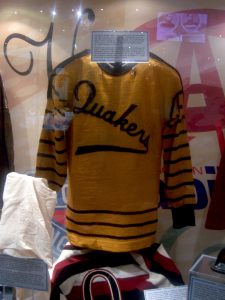
With the purchase of the team in 1928, the team’s record only worsened until the 1929-30 season ended 5-36-3. The team moved across the state to become the Philadelphia Quakers, still wearing orange and black. However, the rink at 45th and Market Streets only seated 6,000 and had poor sightlines. Still, the Quakers debuted there on November 11, 1930 and lost not only the game (3-0 to the New York Rangers) but their audience members. After many left that first game, only about 2,000 showed up for the next. The Quakers finally won in their third game but then lost 15 straight games, setting a NHL record not beaten until the 1974-75 Washington Capitals lost 17 in a row. At the end of the season, the Quakers only had a .136 winning percentage (4-36-4), the worst but for that same Capitals’ season. With the owners having lost over $100,000, they were permitted a suspension. Although meant for only one season, the team never actually returned, and the NHL formally closed the franchise in 1936. Philadelphia finally returned to the NHL 31 years later, in 1967.
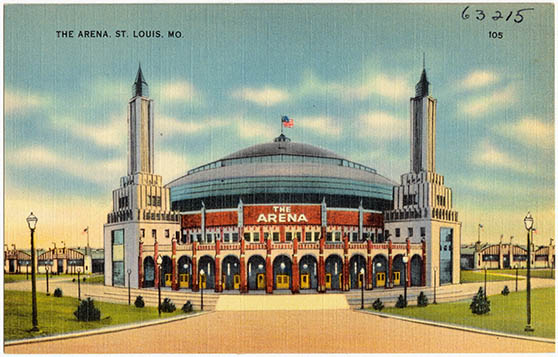
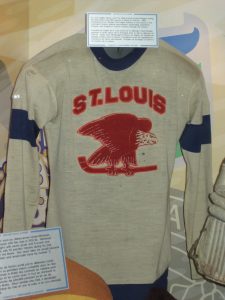
St. Louis’s team hailed from Canada’s capital. Although the Ottawa Senators had been a charter member of the NHL and had since won four Stanley Cup championships, they faced dwindling attendance and rising debts. They tried suspending operations for a season to raise money, but they finished in last for the two seasons following their return. The franchise looked for a bigger market elsewhere and decided on St. Louis, then the seventh-largest U.S. city with nearly 900,000 inhabitants. In St. Louis, the team kept most of its players but changed its name to the Eagles, after the Anheuser-Busch logo. St. Louis Arena, built in 1929 and converted to a hockey rink in 1931, had the unfortunate “distinction of being the only NHL stadium with racially segregated seating.” With a crowd of 12,622 at the first home game, on November 8, 1934, the Eagles lost 3-1 to the Chicago Blackhawks. Although they won their next game, they lost the next eight. The Eagles finished last with a record of 11-31-6.
For the Eagles, it wasn’t so much that St. Louis could not support a team, but that travelling to play in other cities cost too much. The franchise lost $70,000 that season primarily due to train travel to Canadian cities and northeastern U.S. cities. Apparently, the NHL was right in denying St. Louis a franchise back in 1932 based on prohibitive travel costs. At first, the Eagles tried selling players to dig themselves out of debt, and then they tried asking for a suspension like the one they had in Ottawa. Instead, the NHL put the team up for sale, then bought back the franchise, and finally held a dispersal draft to reallocate the players. The NHL would play with just eight teams. The same issue of travel costs prevented the Montreal Maroons from moving to St. Louis in 1938. Finally, the St. Louis Blues set up shop in 1967.
The Minnesota Wild, coming off a 7-1 record in the previous eight games, gave the Sharks a wild ride in San Jose Tuesday night, but it was the Sharks who came away with the “W” in a hard-fought 4-3 victory.
Bursting with energy, the first period began with the Wild swarming in front of Martin Jones, then the Sharks got their time in the offensive zone. Much of the game was this north-south hockey by both teams, which kept it exciting for fans. Less than five minutes into the game, the Sharks scored first on their first shot of the game. Brent Burns’ pass to Marcus Sorenson made it into wide-open Devan Dubnyk’s net. Wild tried to respond but Erik Karlsson recovered the stopped puck in front of Jones. Joe Pavelski is called on tripping and it was the first glimpse of the Wild special team and Sharks’ penalty kill. Although the Wild got two shots on Jones, they were unable to convert. Barclay Goodrow almost scored short-handed, once again showing the north-south nature of the game momentum. It was a physically packed first period, the Wild outshooting the Sharks, but the Sharks made it count on only two shots to the Wild’s eight shots.
The energy spilled into the second period and the Sharks got two good looks. Their persistence paid off as Sorenson’s redirected shot from Goodrow went upstairs and put the Sharks at 2-0. The goal was given to Sorenson at first but further video review revealed that it was in fact deflected off of Joe Thornton, who scored his first goal of the season in Saturday’s game, now on a 2-game scoring streak. Timo Meier, the hero from Saturday’s game with 11 goals in only 14 games (franchise leader in goals per games played), got called on a tripping penalty. The Wild made it count this time as Zach Parise scooted one in underneath Jones’ left pad. The 2-1 score was short-lived as the Sharks responded five minutes later, a center drive by Antti Suomela, making it 3-1 Sharks. They kept the heat on, getting a second chance on the very same shift. By the end of the second, the Sharks closed the gap on shots on goal with 14 total shots to Wild’s 19 shots.
The goal-scoring momentum continued with three goals scored in the third period. Meier got the first shot on the first shift of the third period, but it was Wild’s Jared Spurgeon, one of the league’s hot defensemen, who made it 3-2 early on. Less than two minutes later, the Wild tied the game with a top left shot by Matt Dumba. With three forwards high and clean passing, the Wild showed their resiliency to catch up. Sharks responded with Evander Kane trying to sneak one in after his north-south run up the ice and deke play, but as fast as Kane was, Dubnyk was faster in laying his pad down.
A blast from Burns at the point was tipped in by Goodrow who already had a secondary assist in the game. His screen in front of Dubnyk made it hard for him to see the puck, making it 4-3, and giving the Sharks the go-ahead goal. Unsportsmanlike conduct was called on Marc-Edouard Vlasic, which was followed by a “Ref You Suck!” chant in the building from the amped up fans. The Sharks have a history of letting up in the final minutes of the game when they’re ahead, but with faster, shorter shifts in the final four minutes, they were able to keep their lead to end the game. This victory tied them for first place in Pacific Division with northern neighbors Calgary Flames.
(Photo: Spalding’s official hockey guide 1913 archive.org, via Wikimedia Commons)
New York played a big part in three events November 7th, approximately 40 years apart. First, in 1896, the second rink in New York City opened. Second, in 1936, the New York Americans’ game was the first broadcast coast-to-coast on Canadian radio. Third, in 1975, the New York Rangers participated in a legendary trade.
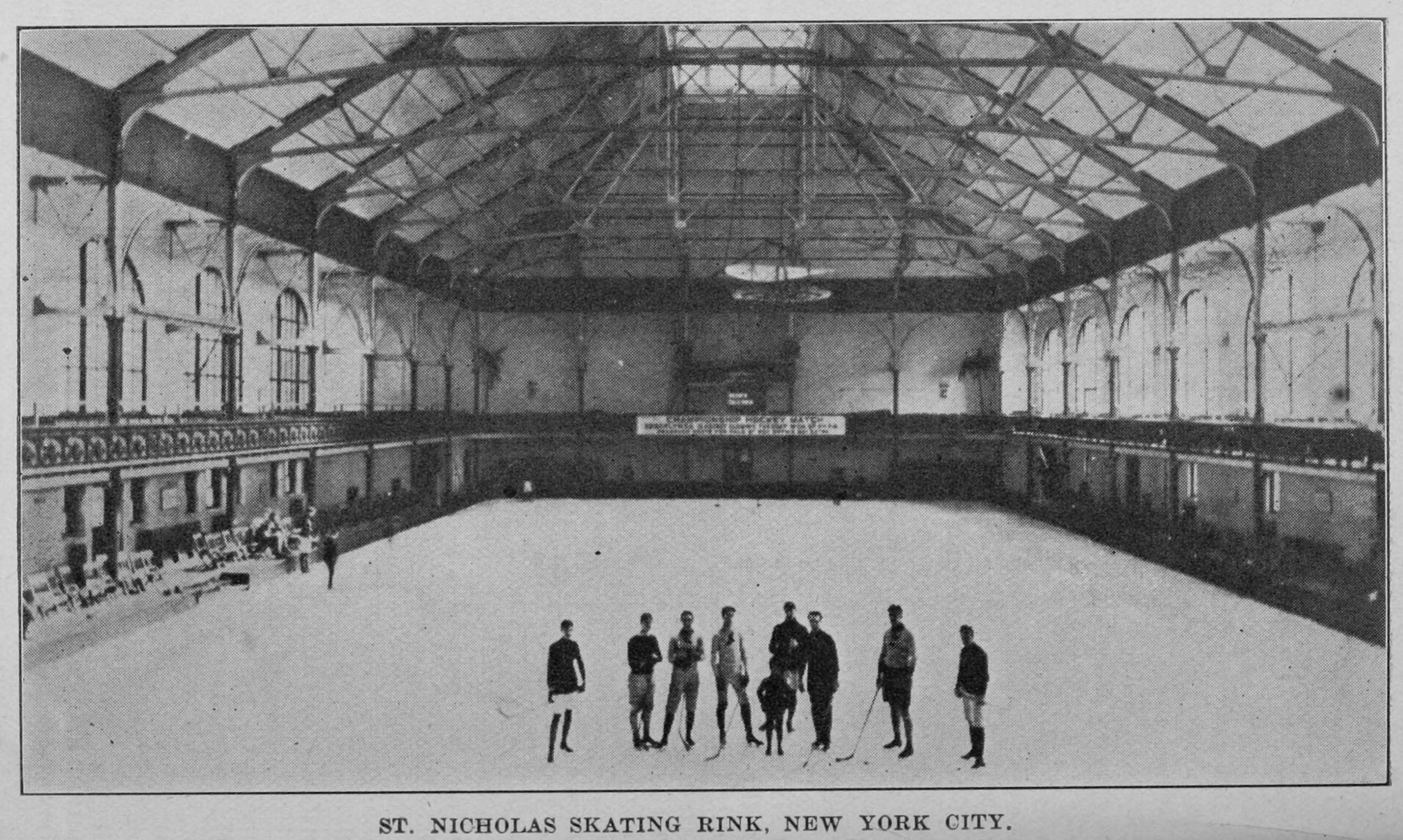
In 1896, Americans were still very new to the sport of hockey. Shortly after the Ice Palace opened in New York City, the St. Nicholas Rink opened at 69 West 55th Street. The skating club had used an outdoor flooded lot until architects Flagg and Chambers (best known for the Singer Building) designed an indoor rink with mechanically frozen (artificial) ice. According to an article written the following January, “The St. Nicholas rink is said to be one of the finest, if not the best in the country, and hockey matches are played there two or three evenings of every week.” The St. Nicholas Hockey Club of the American Amateur Hockey League began their first season with the opening of the new rink. The article gushed, “Great enthusiasm has been shown over the many matches played there this winter. The club has a crack hockey team, which is undoubtedly one of the strongest on this side of the Canadian border-line.”
The second event took place exactly 40 years later in Toronto, when the Maple Leafs played the visiting New York Americans. In 1936, the Canadian Broadcasting Company (CBC) replaced the Canadian Radio Broadcasting Commission (CRBC) and Imperial Oil had already become the sponsors in place of General Motors. As an Imperial Oil promotion, the NHL began naming the three stars of the game. The Saturday night radio broadcast of hockey games was called Hockey Night in Canada. Foster Hewitt announced the play-by-play in Toronto. The first home game took place on a Thursday, November 5, 1936, so only the local station broadcast the 3-1 loss against the Detroit Red Wings. The Saturday game against New York was the first transmitted on the “Coast-to-Coast Canadian Network,” and the Americans won 3-2.
For the third November 7th event, the New York Rangers and their 1970s archrival, the Boston Bruins, conducted a crazy-seeming trade. Each team traded one of their most-beloved members to the team that most reviled him. The Rangers traded defenseman Brad Park, who eventually became a Bruins’ fan favorite. The Bruins gave the Rangers the lead scorer in all of the NHL, center Phil Esposito, who within twelve hours of the trade scored two goals and an assist. “It took me probably a year to accept that I wasn’t part of the Boston Bruins anymore,” Esposito said. When he finally learned New York City, he found it “the greatest city and the greatest fans, and we had some good years.” To replace Park (and minor league defenseman Joe Zanussi), the Rangers gained defenseman Carol Vadnais, but he could not fulfill Park’s role. To replace Esposito, the Bruins obtained center Jean Ratelle. With Park and Ratelle, the Bruins made it to the Stanley Cup finals in 1977 and 1978 (but lost both to the Montreal Canadiens). Though the Rangers missed the playoffs in 1976 and 1977, they made it to the finals in 1979 (but lost to the Canadiens). For the rest of the 1970s, the Bruins earned more points than the Rangers and defeated the Rangers 14 games to 4 with one tie.
Additional Sources:
J. Parmly Paret, “Ice Hockey, Our Imported Winter Sport,” The Sportsman’s Magazine 1, no. 4 (Jan. 1897):382-389.
With a reputation as the “Big Bad Bruins,” it may not surprise hockey fans that it took over 20 years for the Boston Bruins to play a penalty-free game but rather that they could at all. Still, on November 6, 1946, they visited the Detroit Red Wings at Olympia Stadium, and the referees did not call a single penalty. The Boston Globe printed a one-sentence summary, “Strangely enough, there was not one penalty during the entire game.” After 22 years as a franchise, the Bruins finally had played a penalty-free game.
The Bruins had been on the road ten days without time for training and had a record of 2-1-4. With their record of 2-5-1, the Red Wings sat at last place in the standings, and consequently, they played in front of the “smallest crowd of the year, 11,368.” However, the Red Wings led the scoring, and “Boston spent most of the night catching up.” The Bruins came from behind twice to even the score at 3-3, their fifth stalemate of the season. This was enough to tie with the Toronto Maple Leafs to lead the standings.
The first penalty-free game for the Detroit franchise occurred in its very first season (as the Detroit Cougars). On March 10, 1927, Detroit crushed the visiting Pittsburgh Pirates 7-1. The Red Wings participated in at least two other penalty-free games. They defeated the visiting New York Rangers (2-1) on January 14, 1962, and goalie Terry Sawchuk became the first to win 300 games with their franchise. Then, on April 9, 2000, during the first penalty-free game in the NHL in 20 years, the Colorado Avalanche beat the visiting rival Red Wings 3-2. On the whole, the Red Wings seemed unbeaten when playing penalty-free games at home.
As for the Bruins, more recently, they seemed to play clean games even against their arch-rivals. In early 1966, the Bruins lost to the Montreal Canadiens (3-1) without any penalties, and at their next matchup, the Bruins shutout the Canadiens (2-0) with only one 2-minute penalty called on the Canadiens. The Bruins shutout (3-0) two different teams in two different penalty-free games held in March – the Maple Leafs at Toronto in 2001 and the Washington Capitals at Boston in 2014. Most recently, on January 21, 2016, the Bruins lost to the visiting Vancouver Canucks (4-2). Perhaps the most highlighted penalty-free game in the Bruins’ history was the only one that occurred during playoffs. On May 27, 2011, The Bruins defeated the Tampa Bay Lightning (1-0) to advance into the Stanley Cup finals, which they won.
Bonus: One day and seventeen years after the Bruins’ first clean game, November 7, 1963, marked the first usage of a partitioned penalty box. Until that point, the home and visiting team shared the same penalty box, which could allow on-ice altercations to continue in the box. After Toronto’s Bob Pulford beat on Montreal’s Terry Harper during their penalties, Maple Leafs president Stafford Smythe said, “It’s ridiculous to ask two guys who’ve been trying to knock each other’s heads off to sit quietly side by side.” The Montreal Forum used steel piping to divide their box, and Maple Leaf Gardens followed their example two nights later.
Additional Sources:
“Bruins Tie Wings, 3-3; Split Lead With Leafs,” Boston Globe, 7 Nov. 1946, p. 18.
Herb Ralby, “B’s Play Into Shape While Climbing,” Boston Globe, 7 Nov. 1946, p. 27.
(Photo: Danny Goshtigian, Boston Globe, as found on Newspapers.com)
For the Boston Bruins, 1970 was a big year. It seemed that the St. Louis Blues were stuck playing second fiddle. But for one night, November 5, 1970, the Blues got one over on the Bruins.
The game would be the first matchup between the two teams since the Bruins had swept the Blues to win the Stanley Cup earlier that year. The Bruins had not won the Cup since 1941. To go out on a high note, their coach, Harry Sinden, retired, and Tom Johnson replaced him. Then, Al Arbour switched from playing to coaching the Blues, replacing Scotty Bowman. Both teams had a decent record going into the game with the Bruins at 7-1-1 and the Blues at 5-2-3. Most importantly though, the Bruins had not lost a home game since January 17, 1970, so their unbeaten streak stood at 29 games (24-0-5).
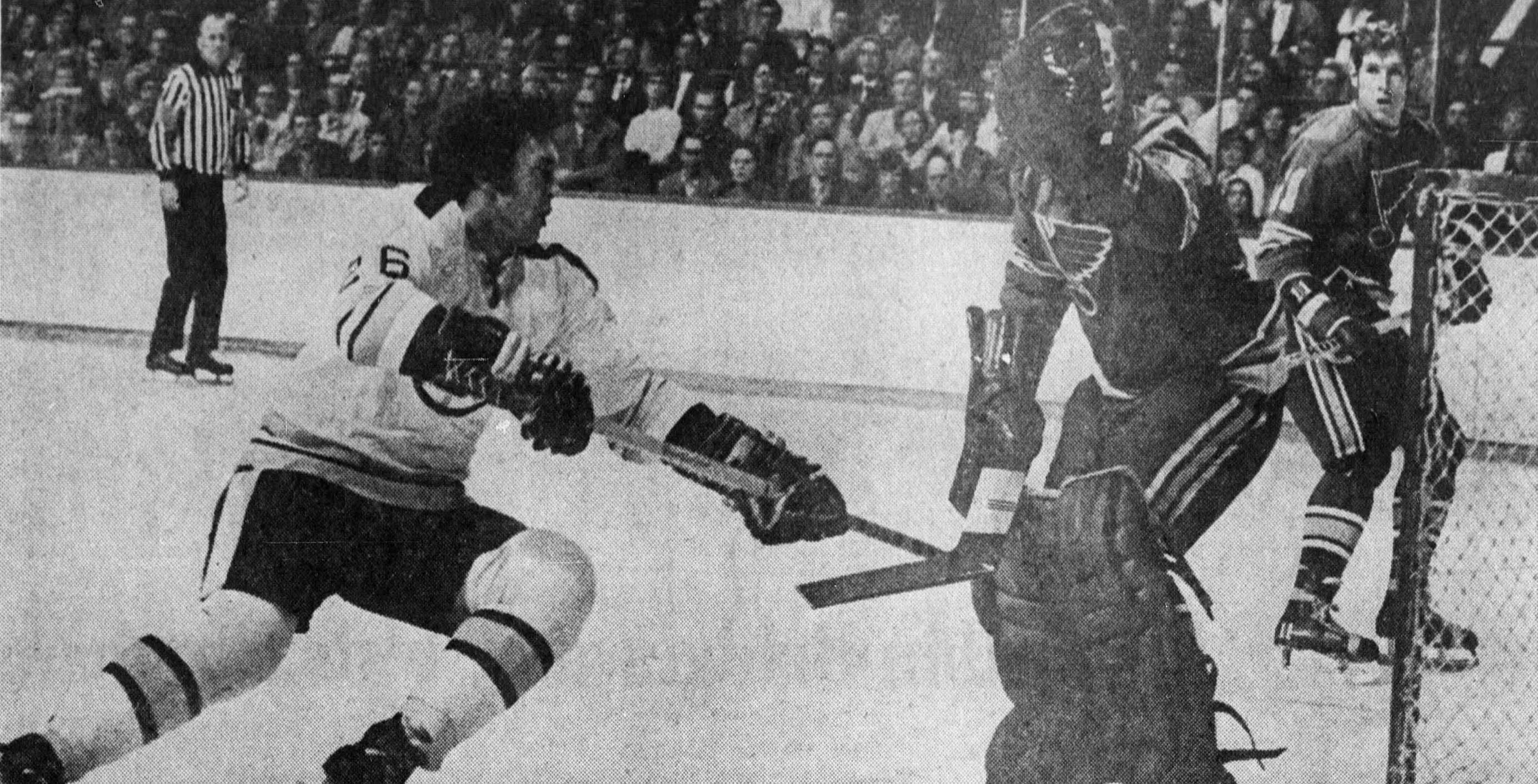
For a sold-out crowd of 14,994, Eddie Johnston started in the Bruins net while Glenn Hall started in the Blues’. The game began as a “close-checking contest” without a single score until Blues center Frank St. Marseille “took a drop pass from Jimmy Roberts and blasted a half-slap shot to Eddie Johnston’s left side at 16:57 of the second period.” One humorous highlight of the game occurred when Blues defenseman Noel Picard mistakenly ended a shift at the Bruins bench. On the ice, Hall “continued nimble and sure-handed in the St. Louis net during the power play” and even managed to hold off a “three-on-none rush, with Orr, Stanfield and Bucyk going in unopposed.” In a remarkable turn of events, the Blues switched their goalies, and Ernie Wakely took over at the start of the third period. His trainer announced that “Hall was suffering from heat exhaustion.” He had shutout the Bruins by blocking 25 shots, and Wakely upheld his standards by blocking all 13 further shots. Meanwhile, Johnston had made 23 saves when the Bruins pulled their goalie. Jimmy Roberts scored on the empty net with two seconds to spare. With a score of 2-0, the Blues had shutout the Bruins and won their first ever game at Boston Garden.
The Bruins did not stay down for long. As of November 22, they began another unbeaten streak that lasted for 27 home games (26-0-1). The Blues managed to tie the Bruins, at St. Louis on November 24, but lost the other four match-ups between them. Unsurprisingly, the Bruins won the East Division, but to everyone’s surprise, they lost the first round of playoffs (to the Montreal Canadiens). St. Louis placed second in the West Division, but they too lost their first round (to the Minnesota North Stars). The following season, the Bruins won another Stanley Cup, while the Blues have not yet returned to the finals.
Additional Sources:
Tom Fitzgerald, “Blues stop Bruins’ Garden Streak,” Boston Globe, 6 Nov. 1970, p. 29-30.
Brian McFarlane, Brian McFarlane’s History of Hockey (Champaign, Ill.: Sports Publishing Inc., c1997), 110-113.


 Prev
Prev