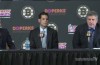
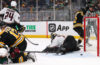
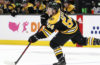
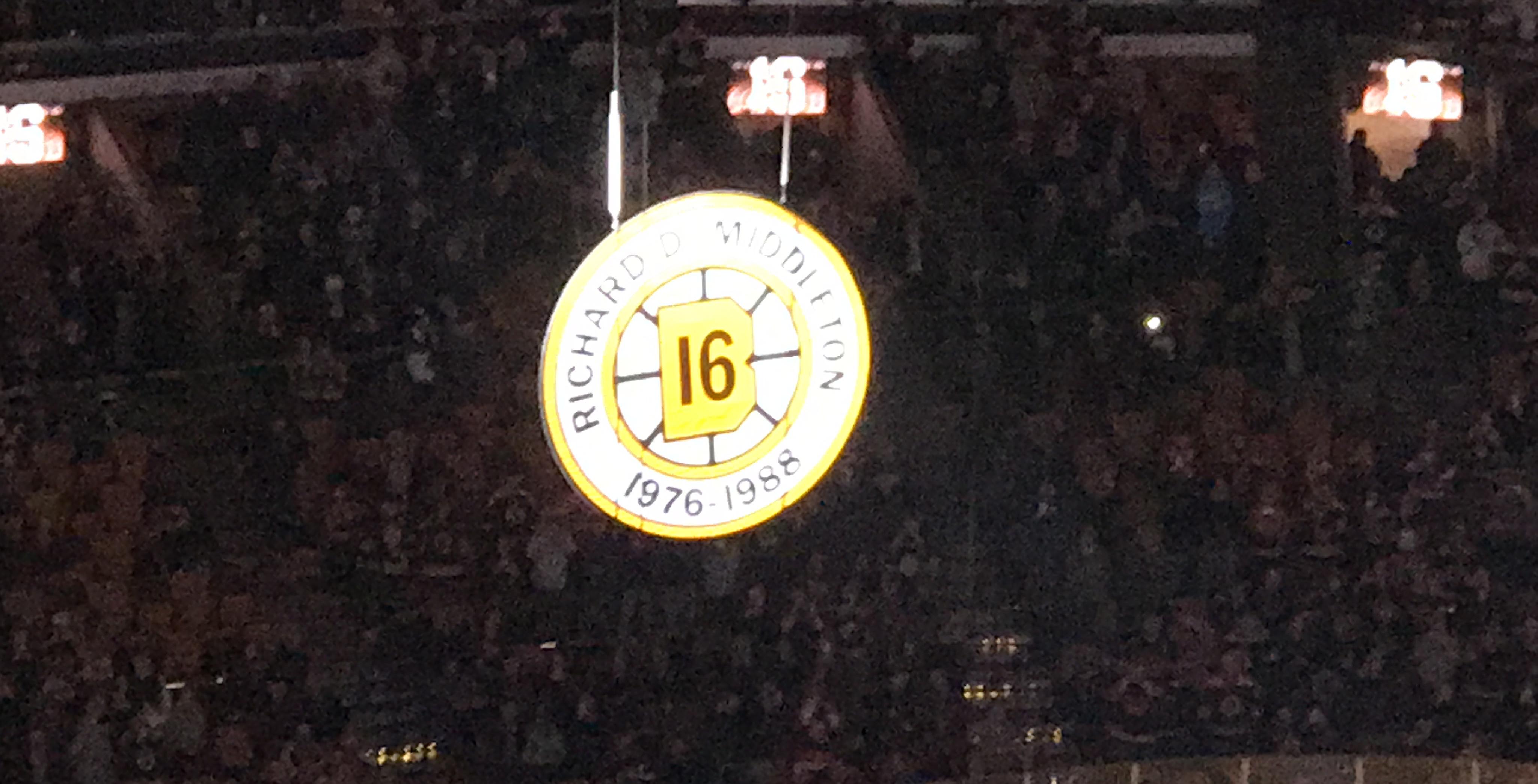
On Thursday evening before the Boston Bruins played host to the New York Islanders, the Bruins organization held a very special and emotional event as they retired their 11th jersey number, raising the number 16 that Rick “Nifty” Middleton wore while playing for Boston from 1976 to 1988.
To begin the evening, a highlight montage was played, but one has to wonder how difficult it was in choosing what made the montage given the many accomplishments Middleton had during his time in a Bruins jersey.
The Toronto, Ontario native had played just two years with the New York Rangers—who had drafted him 14th overall in 1973—before being traded to Boston in exchange for Ken Hodge, a man ten years his senior, on May 26, 1976. The speedy winger was known for his scoring, but as Don Cherry reminded him Thursday night, he was not as developed defensively. Cherry was determined to aid him with that development and Boston ultimately got a well-rounded, two-way forward, who on his opening night in a black and gold jersey scored a hat trick on a line with Barry Pederson. Middleton would spend twelve years with a Spoked B on the front of his jersey, eventually sharing co-captain duties with Ray Bourque—whose no. 77 also hangs in the rafters at TD Garden—throughout his final three years in Boston.
The 5’ 11” right winger played a total of 881 games for the Bruins. Over those games he would compile 402 goals and 496 assists for an impressive 898 points. His total goals puts him in third behind only John Bucyk (545) and Phil Esposito (459) in most goals scored, while his 496 assists are good enough for sixth most earned behind Bourque (1,111), Bucyk (794), Bobby Orr (624), Esposito (553), and Wayne Cashman (516). With his 898 points, he sits in fourth place on Boston’s all-time scoring list once again behind Bourque (1,506), Bucyk (1,339), and Esposito (1,012).
A few years ago, it was made known to Middleton that the number 16 jersey had been “put away” and was no longer available as a choice for new players joining the team. The last player to wear it for the Bruins was Kaspars Daugavins in 2013. However, as Middleton shared during his eloquent speech, he didn’t know if that day would actually ever come when it would be permanently unavailable.
“It really is hard to put into words. I’ve had four months to think about it, and I hate repeating myself, but honestly, I believe it is the biggest honor that certainly a retired athlete can get in his career, and the fact that, in the last six or seven years, I’ve been seeing that it’s not out there; nobody’s wearing it. All of a sudden, it happened. In July, a phone call in July; I never thought it would ever happen that way, but I just have to thank Cam [Neely] so much for doing it. He started it six or seven years ago. It culminated tonight,” Middleton said before the event.
"It really is hard to put into words…I honestly believe this is the biggest honor that a retired athlete can get in his career."
?Bruins legend Rick Middleton discusses the honor of becoming the 11th #NHLBruins player to have their jersey number retired: pic.twitter.com/ACfuyQ5wLL
Despite the solemnness of the event, there was still lots of laughter. Middleton even got a little poke at Cherry when he said he didn’t invite any more of his former teammates because there would be “too many men on the ice.” Middleton’s jab was in reference to that terrible night of May 10, 1979, when the Bruins who were leading the Montreal Canadiens 4-3, playing at the Forum in Game 7 of the Stanley Cup semifinal with 2:34 left in regulation, were whistled for having too many men on the ice. The Canadiens tied it while on the power play and then got the win during overtime. This remains one of the most difficult moments in the Bruins’ history. But time has given those who played in that game some perspective and the ability to joke about it now.
Watching as Middleton’s family were joined by a few former Bruins players, some players and coaches involved in the 2002 Olympic Team USA gold medal-winning sled hockey team, which Middleton coached, and the two coaches Middleton credits with his success–Frank Miller (his bantam and midget coach) and Don Cherry, it was impossible not to notice the love, support and recognition. But perhaps the best takeaway was seeing the Bruins present team, all sitting on their bench throughout the ceremony wearing smiles. More importantly, it was the obvious respect that each of them had in their eyes as they watched first Middleton talk about his career and then he and his family raise his number to the rafters.
"To have your number retired, your legacy lives on forever."
“You know, in my speech, I just talk about you don’t do it alone. I played on some great teams with a lot of great guys. Even though we didn’t win the Cup, it was very close. In two different eras, I was lucky to play at the end of the old-time hockey era without helmets, and then everything changed in 79-80. Then I got a chance to play at the beginning of the new era, and the team was totally different. The teammates were different, but the one thing that remained as a Bruin is that the dedication to winning. It didn’t matter who the coach was – maybe because Terry [O’Reilly] was still on the team, and then he became a coach. He always raised the bar for the guys. Nobody ever wanted to let each other down; that’s why we were successful,” Middleton shared.
The Bruins team hasn’t changed as much as the equipment or the rules since the time of Middleton. They still don’t want to let down their teammates. And perhaps that should be the legacy of those numbers that hang above with names like Eddie Shore, Dit Clapper, Lionel Hitchman, Milt Schmidt, Orr, Bucyk, Esposito, Bourque, O’Reilly and Neely. Those on the ice not only don’t want to let down each other, but they also don’t want to let down those who paved the way and who showed what the word team really means.
Val Fonteyne earned the titles of “Mr. Clean” and the “most gentlemanly player” in NHL history. On November 30, 1968, he played his 185th straight game without any penalties. After his minor two-minute penalty on December 1, Fonteyne went another 157 consecutive games without a penalty. His only other penalty during his NHL career was on February 4, 1970. These streaks made up the “longest stretches of fair play in NHL history.”
During his 823 regular-season NHL games, Fonteyne only had 13 penalties totaling 26 minutes. He was never assessed a major penalty in all 14 seasons with the NHL and 2 seasons with the WHA. Playing with the Detroit Red Wings from 1959 to 1963, Fonteyne served five of those penalties. He was then claimed by the New York Rangers in the Intra-League Draft and had three penalties in a season and a half. Detroit reclaimed him on waivers on February 8, 1965, and Fonteyne earned two penalties in the same month. However, he then became the only NHL player to have three consecutive seasons without a single penalty. During that time, in 1967, the Pittsburgh Penguins selected Fonteyne during the Expansion Draft. Fonteyne only had two minor penalties during his time with the Penguins, and then he had another two penalty-free season to end his NHL career. He went on to play two seasons in the WHA after being drafted by Alberta, and he only had one minor penalty each season.
Since Fonteyne was such a gentlemanly player, it’s surprising that he never received the Lady Byng Memorial Trophy. This annual award is meant for “the player adjudged to have exhibited the best type of sportsmanship and gentlemanly conduct combined with a high standard of playing ability.” While Fonteyne had the first qualification in spades, he lacked the latter. His play focused on power play and penalty kill strategy, so in his entire career, he only scored 75 goals and 154 assists for 229 points. Still, in recognition of his efforts on behalf of his teams and his clean play, Fonteyne was inducted into the Alberta Sports Hall of Fame & Museum in 2011.
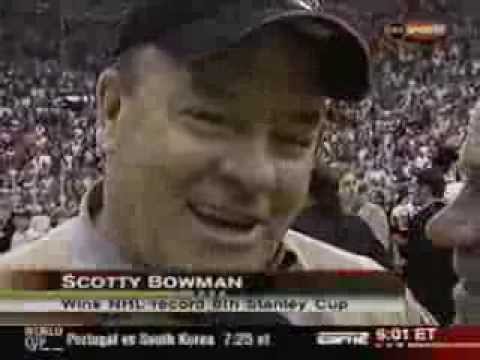
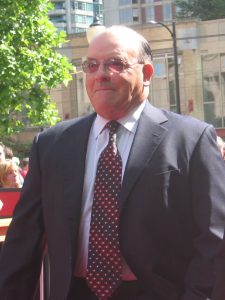
Often described as the “winningest coach,” Scotty Bowman had to get his NHL start at some point. On November 29, 1967, he coached his first NHL team to his first win.
In 1967, the Montreal minor club let Bowman out of his contract a year early so that he could assist Lynn Patrick in coaching the expansion team the St. Louis Blues. Patrick said, “After 16 games I found that the general manager’s job is a full-time position, so I decided to appoint Bowman immediately.” This made 32-year-old Bowman the youngest NHL coach. It took three games before Bowman saw a victory, when the Blues defeated the visiting Los Angeles Kings 3-2. Bowman took the Blues to the Stanley Cup finals three times in his four seasons there before handing the reigns to Al Arbour.
Bowman then went on to coach the Montreal Canadiens throughout the 1970s, leading them to five Stanley Cup championships. Although he spent most of the next decade with the Buffalo Sabres, they did not have the same kind of talent as the Canadiens. When Bowman retired in 1987, he worked as an analyst on Hockey Night in Canada. Although he was admitted to the Hockey Hall of Fame as a Builder in 1991, he soon returned to coaching, working with the Pittsburgh Penguins. He led them to a repeat Stanley Cup victory in 1992.
For his final decade as coach, Bowman coached the Detroit Red Wings. There, he introduced the Russian Five and broke the team’s 42-year drought of Stanley Cup wins in 1997 and 1998. Right after winning the Stanley Cup championship again in 2002, Bowman hoisted the Cup and officially announced his retirement.
Bowman had 9 Stanley Cup wins, 1,244 regular-season wins, 223 playoff wins, and a .654 winning percentage. He tops the list for coaches in every category.
Additional Sources:
Stephen Laroche, Changing the Game: A History of NHL Expansion (Toronto: ECW Press, 2014), 146-151.
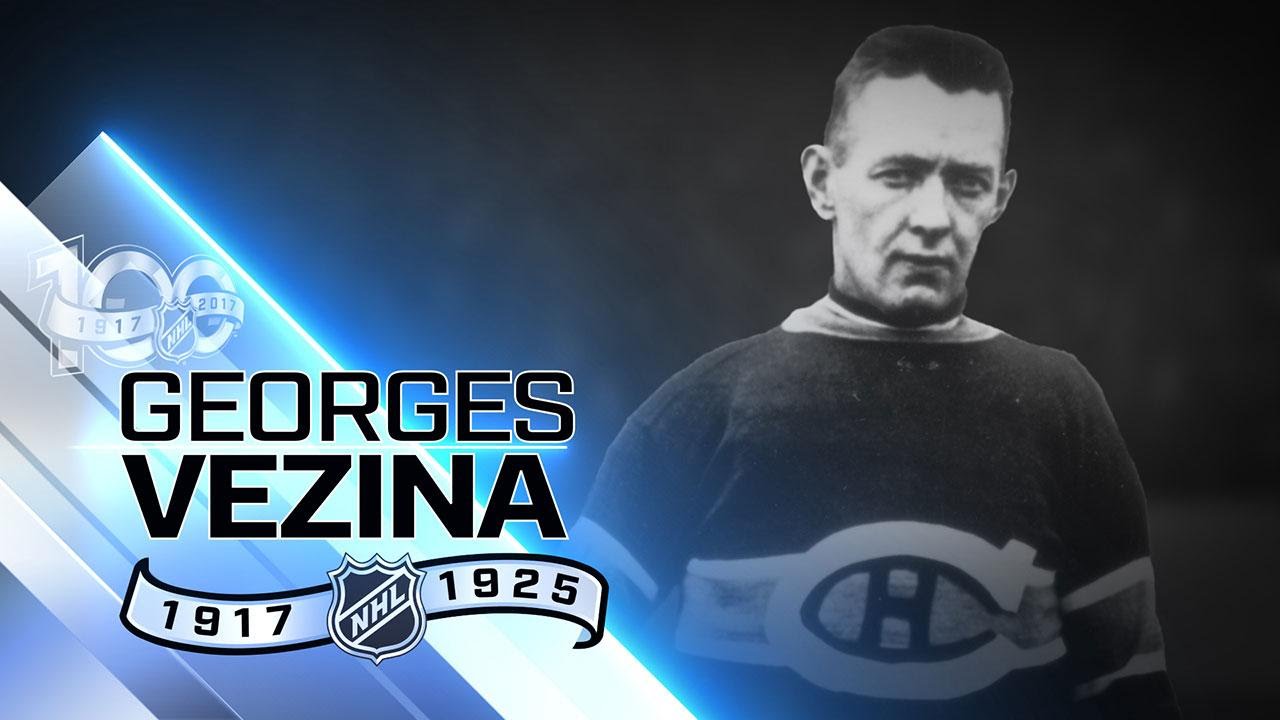
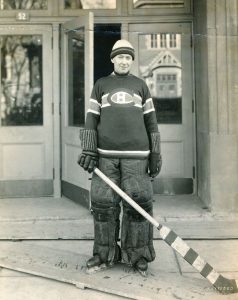
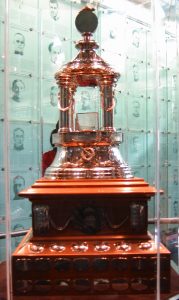
Top goalies in the NHL earn the Vezina Trophy. The man honored by the naming of the trophy came to a sad end following his final moments in net on November 28, 1925.
The Montreal Canadiens pre-dated the NHL, and so did their goalie, Georges Vezina. In early 1910, when the new Canadiens, of the National Hockey Association (NHA), played an exhibition game against le Club de Hockey Chicoutimi, their goalie/coach attempted to recruit Chicoutimi’s goalie, the game’s top star. Vezina waited, auditioned, made a gentlemen’s agreement instead of a formal contract, and skated with the Canadiens as of the last day of 1910. He played goal for the Canadiens without a break for 328 regular-season and 39 postseason games.
Vezina had a reputation for being stoic and cool under pressure. His “calmness not of this world” gave him the nickname “Chicoutimi Cucumber.” His quiet nature led to the nicknames “l’Habitant silencieux” (the Silent Habitant) and “le Chevreuil” (the Deer). Philosophically, he admired “fair play,” writing “Quebec and its English-speaking sister provinces cannot have too many sports flags flying, because those flags always teach respect for rules and adversaries.” However, he still celebrated with his teammates and gave them plenty to celebrate as a top notch goaltender.
When the 1925-26 season began, Vezina looked “pale and haggard” but refused to complain. He had a high fever but still started in the opening game against the Pittsburgh Pirates, on November 28. After 20 minutes, just as the second period began, purportedly Vezina collapsed with “blood seeping from his mouth.” According to the Montreal Gazette, Vezina did not come out of the locker room for the second period and for the first time in his 18-year career was “forced to drop out of play.” Although he hoped to rejoin the game, the Canadiens played Lacroix, “former United States Olympic goalkeeper,” who let in the only goal of the game. It turned out that Vezina had tuberculosis. He spent the last four months of his life back home in Chicoutimi before his death on March 27, 1926.
The following season, the Canadiens owners (Leo Dandurand, Louis Letourneau, and Joe Cattarinich) donated a memorial trophy in his honor, making him the first NHL player to have a trophy named for him. The Georges Vezina Memorial Trophy originally was awarded to the goalie with the lowest goals against average. From 1947 to 1981, the Vezina Trophy was awarded to the goalie allowing the lowest number of goals. Currently, the NHL general managers vote for “the goalkeeper adjudged to be the best at this position.”
Billy Smith, of the New York Islanders, received the first Vezina Trophy chosen by the modern method. He received the award for the 1981-82 season. Just two seasons earlier, on November 28, 1979, Smith became the first NHL goalie credited for scoring a goal. According to Smith, Colorado Rockies defenseman Rob Ramage shot on Smith who then picked up the bounce before trying to pass. No one caught the pass, so the puck went into the empty net. “Who was the last guy on the other team to touch the puck? It was me, so I got credit for the goal.”
Additional Sources:
“Another Surprise When Pittsburgh Beat Canadiens,” Montreal Gazette, 30 Nov. 1925, p. 22.
“Georges Vezina, Veteran Hockey Goalkeeper, Dead,” Montreal Gazette, 27 March 1926, p. 22.
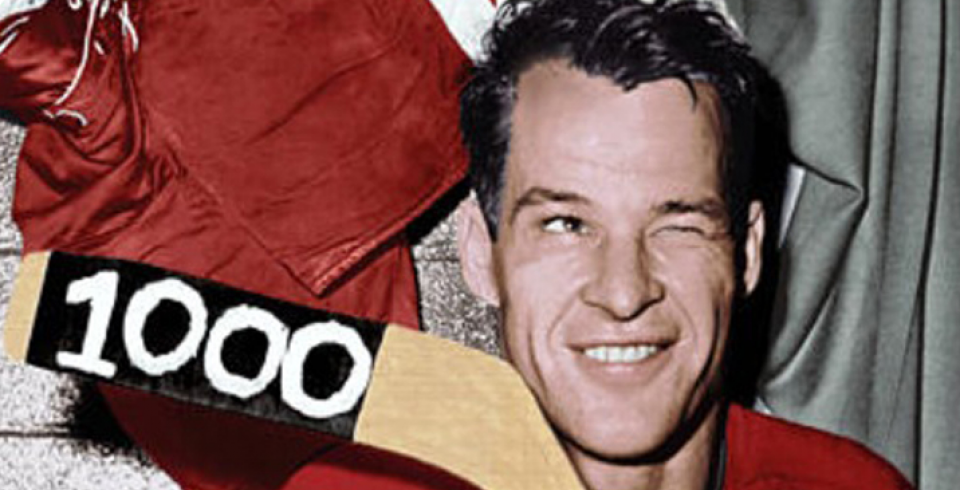
No one is surprised that Gordie “Mr. Hockey” Howe broke through numerous milestones. More interesting is that he set multiple records – for points, assists, and goals – on the same date, November 27, while playing for the Detroit Red Wings during the 1960s.
In 1960, during a home game against the Toronto Maple Leafs, Howe became the first to reach 1,000 regular-season points and tied Maurice “Rocket” Richard’s record 1,091 total points. He reached the first milestone at 6:36 into the first period when he passed to Warren Godfrey who passed to Howie Glover who scored the goal. He had already received a souvenir puck from the game in Toronto the night before when one of his assists was erroneously announced as his 1,000th. Howe tied Richard with his second assist, having received a pass from his goalie, Terry Sawchuk, and skated it to the other end for Norm Ullman to score. According to the Detroit Free Press, “Howe drew rousing ovations for both assists.” He had assisted the only two goals of the game as the Red Wings shut out the Maple Leafs 2-0 for their sixth straight victory, the “longest Olympia winning streak since 1956-57.” Howe took fewer games (1,033) and seasons (15) to earn his 1,091 points (488G, 603A) than Richard had played (1,111 games) before retiring (after 18 seasons) with the same number of points (626G, 465A).
In 1965, Howe became the first in the NHL to score 600 regular-season goals. (Richard had only scored 544 during regular season.) The Red Wings arrived in Montreal “shaken up and bruised” after their bus was in an accident on the way to the hotel. That did not slow down Howe, who at 16:10 of the third period, sent in “a short jab from Worsley’s right for his 600th breaking a five-game scoring drought for the 37-year-old superstar, now in his 20th season.” As the Detroit Free Press claimed, “Gordie Howe brought down the house Saturday night but the Montreal Canadiens put the Red Wings in the basement.” Howe’s goal was an attempt to catch up, but the game ended with a 3-2 loss.
In 1969, Howe became the first NHL player to earn 1,700 points and then 1,701. For Howe’s 1,567th regular-season game, the Red Wings were playing their sixth and final straight away game in Los Angeles. His left wrist was giving him trouble due to arthritis, but he assisted on two goals to reach and surpass the milestone. At 6:05 in the second period, Howe came out of the penalty box in time to get the puck to Pete Stemkowski, who “scored on his own rebound.” Almost seven minutes later, Howe assisted Frank Mahovlich on his second goal of the night, “a 25-foot slap.” The Detroit Free Press crowed, “The Wings knocked the stuffing out of the Los Angeles Kings, 5-1, Thanksgiving night.” That was during Howe’s 24th season, and after another year in the NHL, he went on to play six seasons in the WHA and then a final season in the NHL.
Additional Sources:
Jack Berry, “Howe Ties Record – But Terry’s Hero,” Detroit Free Press, 28 Nov. 1960, p. 41.
“Gordie Scores 600th Goal – Wings Lose,” Detroit Free Press, 28 Nov. 1965, p. 1E and 3E.
Jack Berry, “Wings Blast Out of Slump, Wallop Kings,” Detroit Free Press, 28 Nov. 1969, p. 1D and 3D.
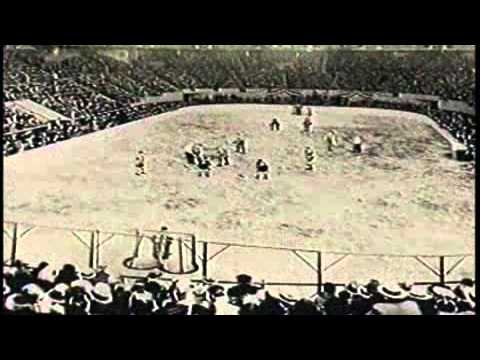
This marks the 101st anniversary of the formation of the National Hockey League (NHL). During World War I, from November 24 to 26, 1917, NHA directors held a summit at the Windsor Hotel in Montreal. According to the anniversary article posted by the NHL, the minutes from that meeting indicated that its purpose was “to ascertain if some steps could not be taken to perpetuate the game of hockey.”
Since 1909, teams in Ontario and Quebec, Canada had been playing in the National Hockey Association (NHA). However, the Great War soon took its toll shipping out hockey players, especially large numbers from Toronto teams. After a new Compulsory Service Act came into effect in August 1917, the NHA suspended operations.
Attendees of the meetings in November included George Kendall/Kennedy (of the Montreal Canadiens), Sam Lichtenhein (of the Montreal Wanderers), Tom Gorman (of Ottawa), M.J. Quinn (of Quebec), and NHA secretary-treasurer Frank Calder. Gorman’s proposal, “that the Canadiens, Wanderers, Ottawa [Senators] and Quebec [Bulldogs] Hockey Clubs unite to comprise the National Hockey League,” passed on November 26. The other charter member would be the new Toronto Arenas. Calder was voted in as the first president and kept his role as secretary-treasurer. The minutes indicated that he took the role “on the understanding that there could be no appeal from his decisions.” When they all left the room, Calder blithely told the only reporter, Elmer Ferguson of the Montreal Herald, “Nothing much [happened], Fergie.” Perhaps what he meant was that the new NHL would continue following the NHA’s playing rules and constitution. The NHL season would feature 24 games and playoffs leading to a challenge with the Pacific Coast Hockey Association (PCHA) for the Stanley Cup. With that, the NHL was born.
To mark the NHL’s 100th anniversary, on November 26, 2017, leaders of the NHL gathered at Montreal’s Le Windsor ballrooms, the site of the meetings at the Windsor Hotel. Attendees included commissioner Gary Bettman, 31 general managers, and six Hockey Hall of Fame representatives of the “Original Six” teams. The Historic Sites and Monuments Board of Canada had provided a bronze plaque unveiled for the occasion.
The Chicago Blackhawks and the Detroit Red Wings played back-to-back games the weekend of November 24 and 25, 1951. The Red Wings were the Stanley Cup defending champs, and the two teams had recently traded many players between each other. In just short of three weeks, Blackhawks assistant trainer Moe Roberts would turn 46. He became the oldest to man in an NHL net when he took the place of Harry Lumley, about half his age, during the final period of the second matchup.
Roberts had only played in ten NHL games up to that point. His first appearance was five days before his 20th birthday, when he replaced Boston Bruins goalie Doc Stewart. This made him the youngest NHL goalie to that point. Although he won that game, he lost his only other Bruins game and went back to the minors. During the early 1930s, Roberts played for the New York Americans in seven games. He won two, lost four, and did not complete the other. His final game took place on December 5, 1933, just over a week before his 28th birthday. After serving three years during World War II, Roberts played for the Washington Lions of the Eastern Amateur Hockey League until he retired in 1946. About five years later, he began his post as assistant trainer and practice goalie for Chicago.
After the visiting Blackhawks had defeated the Red Wings 6-2 on Saturday, the visiting Red Wings hit back hard on Sunday. The largest Chicago crowd of the season, 12,208, “beheld one of the most interesting games of recent recollection.” Three minutes into the first period came the first fight followed quickly by the first goal for the Blackhawks. The first goal by the Red Wings came later in the first period. During the second period, the Blackhawks scored again, but that was followed in quick succession by goals from Red Kelly, Glen Skov, Ted Lindsay, and Gordie Howe for the Red Wings. At that point, Chicago pulled Lumley, who had suffered a bruised knee after being hit with a puck during the first period.
To replace the injured Lumley, the Blackhawks sent in Roberts to play the third period. The Chicago Tribune called this “the greatest novelty” of the game while the Detroit Free Press claimed, “The Wings treated him kindly and added no further goals to their total.” Although, as the Free Press reported, “Roberts parried a half dozen shots as the third period opened peacefully.” The Blackhawks could not score again. The game ended 5-2.
Additional Sources:
Edward Burns, “Fists Fly as Wings Beat Hawks, 5-2,” Chicago Tribune, 26 Nov. 1951, p. 1F.
“Wings Even Score with Chicago, 5-2,” Detroit Free Press, 26 Nov. 1951, p. 26.
Mike Commito, Hockey 365: Daily Stories from the Ice (Toronto: Dundurn, 2018), 369.
Two of the NHL’s top 100 players retired on the same date, November 24, 50 years apart. King Clancy and Gilbert Perreault retired as players in 1936 (after 16 seasons) and 1986 (after 17 seasons), respectively.
King Clancy began his pro career in 1921 at 18, as the first teenager in the NHL. He played with the Ottawa Senators for the first nine seasons. They won the Stanley Cup finals in 1923 and 1927. Then, Clancy was traded for $35,000 (and Art Smith and Eric Pettinger). He skated with the Toronto Maple Leafs from 1930 until his retirement. Owner Conn Smythe credited Clancy with bringing in the ticket sales helping keep Maple Leaf Gardens going, and Clancy helped them win the Cup in 1932. Clancy was only 5-foot-7 and about 155 pounds and would physically and verbally take on just about anyone as needed. In fact, one of his favorite targets was his rival defenseman, Eddie Shore. When Clancy retired, his 283 points (137G, 150A) in 592 games put him in first in points and goals among defensemen. Clancy played hockey as “a joyous kind of game.”
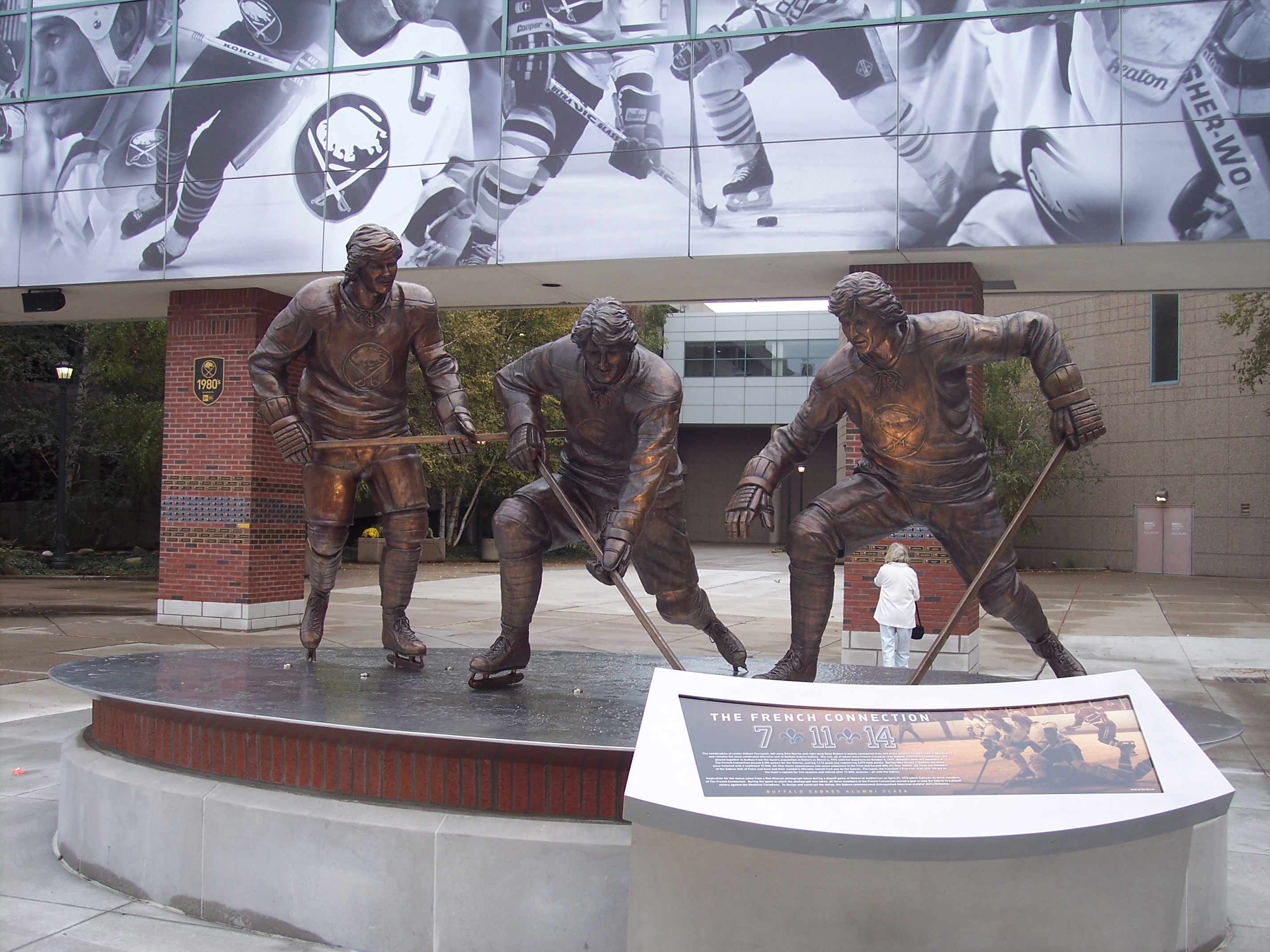
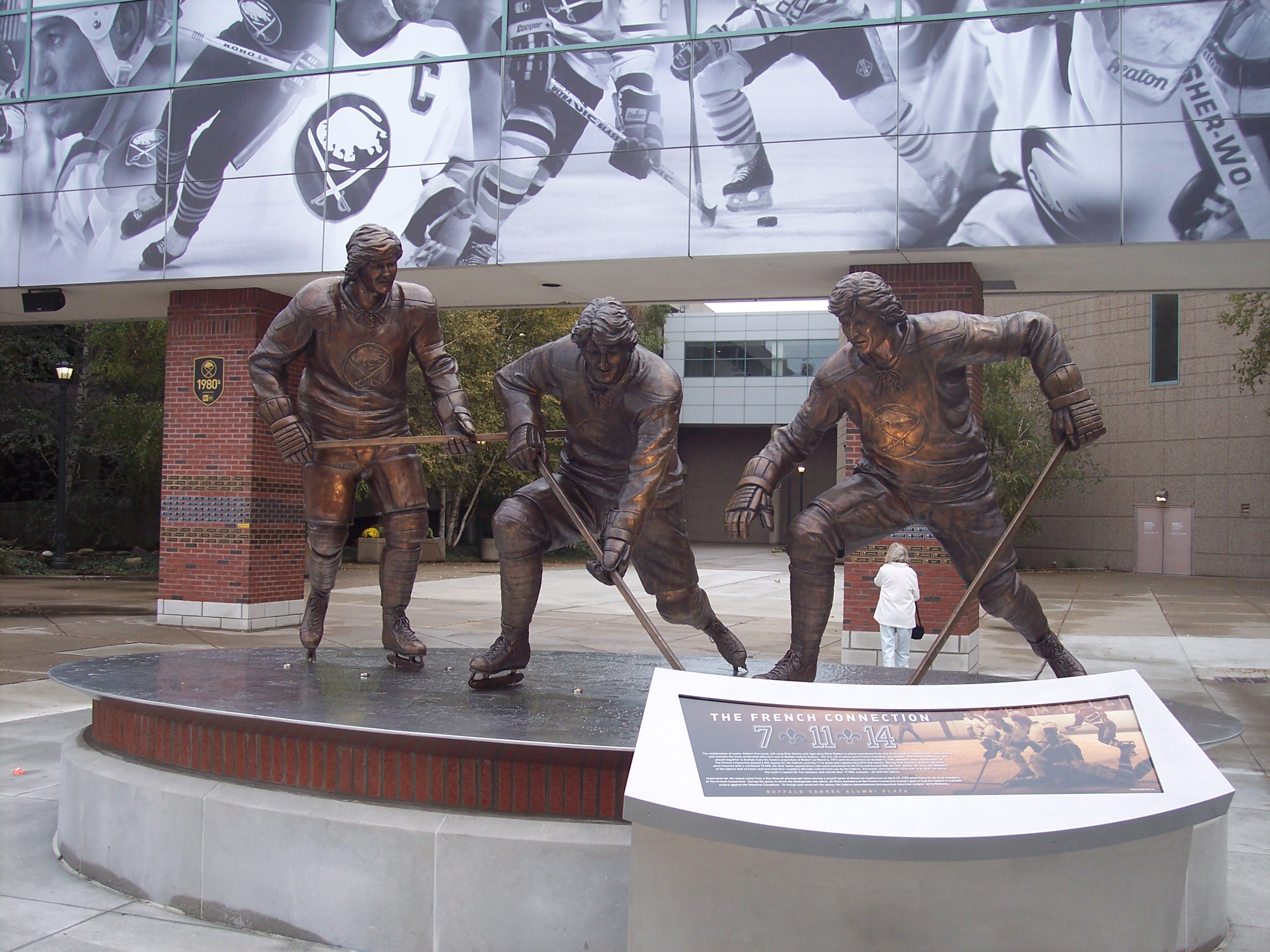
Gilbert Perreault began his NHL career as the No. 1 draft pick for the Buffalo Sabres, who, in 1970, received first pick as one of two new expansion teams. In his rookie season, Perreault set a rookie record (38 goals and 72 points) and received the Calder Memorial Trophy. Two seasons later, he was awarded the Lady Byng Memorial Trophy. Perreault commented, “I loved the thrill of beating everyone on the ice, deking through the opposition. When I got the puck, I’d dare them to try to get it away from me.” The Sabres coach, Joe Crozier, put Perreault on a line with Richard Martin and Rene Robert, and they became known as the “French Connection.” They used their speed to lead the NHL in scoring, and they helped the Sabres make the playoffs for five of the six seasons they skated together – only missing the year Perreault broke his leg. In 1975, they made it to the Stanley Cup finals but lost the Cup to the Philadelphia Flyers in six games. Perreault lamented, “We had a lot of good years in Buffalo, but every hockey player wants to win the Stanley Cup.” Despite lacking a Cup, Perreault served the Sabres as captain beginning in 1981 and became the 16th to reach 1,000 points in 1982. He planned to retire at the end of the 1985-86 season, reconsidered, slumped, and officially retired towards the beginning of the following season. He had played 1,191 games (512G, 814A, 1326P). On “Greatest Hockey Legends,” Perreault said, “I had a good career. . . My love of the game has never changed. It’s inside me.”
The Hockey Hall of Fame inducted Clancy in 1958 and Perreault in 1990.
For one particular individual associated with the Belfast Giants, who offered up their home arena for the fourth annual Friendship Four tournament, it was no secret that he was hoping that the Terriers would advance.
Steve Thornton
“I can’t believe that we actually have BU on the ice in Belfast. I’m very proud of them. My fondest memories of playing hockey really were my time at BU winning a national championship [in 1995]. So, not only having BU here but having my coach Jack Parker, you know coming, as part of the trip and seeing all the BU jerseys in the stands, it’s kind of a surreal experience, to be honest with you. It brings back a lot of good memories,” said Steve Thornton, Head of Hockey Operations for the Belfast Giants.
As the play got underway, the teams were both playing solid hockey, albeit a bit penalty riddled. A total of five penalties was called during the opening twenty minutes—three on Boston University and two on the University of Connecticut. This could have been a recipe for disaster, given that the Huskies capitalized on their first power play opportunity off a rebound given up by BU. Karl El-Mir got his Huskies on the board first 51 seconds into their first man advantage when Chad Krys was whistled for a tripping at 4:29. Krys must have missed the penalty box, because he would end up right back in it at 7:43, this time for a hooking call. Fortunately, the Terriers made the kill, as they would on their third penalty when Ryan Cloonan was called for a roughing at 15:08.
For the Terriers, they would manage to get the equalizer while on their second power play of the period. The Huskies had managed to keep them off the board during the hooking call on Jachym Kondelik at 11:24, but 1:17 into the goaltender interference call on Benjamin Freeman, BU’s Patrick Curry notched his fourth goal of the season.
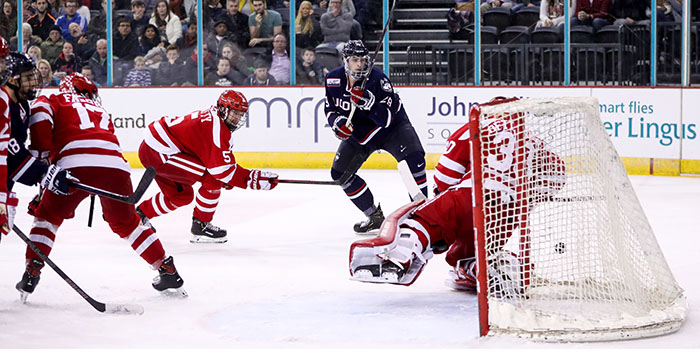
The Huskies were determined not to go away, and with two minutes left in the opening period, Konderlik got an even strength goal to put UConn up 2-1 where they would remain going into the first intermission.
When the puck dropped on the second period, it was clear that the Terriers were not happy with the way things were left in the first. They showed up playing harder and made sure not to offer the Huskies any gaps in coverage in which they could have scored. And as penalty ridden as the first period was, the second period so no man advantages for either team. That didn’t stop the determined Terriers from getting their second equalizer of the night. This time it came from Logan Cockerill at 8:15 of the period.
Jachym Kondelik scores on Jake Oettinger (Photo: William Cherry/Presseye)
“Yeah, they scored two rebound goals and we needed to tighten up a little bit and I thought that we did a really good job. I think we outplayed them in the first period, but it didn’t show. And if we just stick to what we’re doing and not trying to play too risky or take chances or what not, just stay playing the right way and have all four of our lines going like they were tonight, we’re going to end up scoring goals. And that’s what happened,” shared BU’s goaltender Jake Oettinger about their change of play in the second.
The game continued to be tight, as the teams were now tied again half way through the second period and the game. As the buzzer signaled the end of the middle frame, the shots on goal for the period were representative of how closely the two teams were, as each had tallied 13 shots on the opposing goaltender.
The third period would be one of many shots on net—predominantly Oettinger’s. However, it would be Boston University who would get the go-ahead goal 2:39 into the final period, from Ty Amonte.
The Huskies weren’t going anywhere though, and they continued to do their best to pummel Oettinger with pucks. Once again, a slip in discipline for BU would afford UConn two power players – including an extended 1:07 of five-on-three for the Huskies. It began when Matthew Quercia was sent off for a roughing call at 12:53. While the Huskies were controlling the play in the offensive end on the man advantage, Bobo Carpenter slashed one of the University of Connecticut players before the penalty was even half over at 13:50.
Jake Oettinger (Photo: William Cherry/Presseye)
“I think you just have to weather the storm at that point and Kotsy [Kasper Kotkansalo] made a huge block. You know, in situations like that, that’s the difference between winning and losing, in a tight game, is guys blocking shots and, you know, when we need them to, and guys were stepping up big time so, just the little things like that are going to help us down the stretch. And guys get a feel for what it’s like to play in a playoff hockey game,” Oettinger expressed postgame.
The Terriers’ ability to make that crucial five-on-three kill and then go on to kill the remainder of Carpenter’s penalty were probably the deciding factors in the game.
“Yeah, well, the goalie was pretty good during the special teams,” chuckled BU’s head coach Albie O’Connell. “We had a couple key blocks and our players were okay. When you’re down five on three, you’re just hoping to survive it and get through it and hopefully get a couple key blocks and clear or win the faceoff. But they managed it well. We skated hard and I know some of the D were gassed at the end. They played a lot of minutes.”
Ty Amonte on Adam Huska (Photo: William Cherry/Presseye)
As the clock ticked under the two-minute mark, the Huskies pulled their goaltender, Adam Huska, with 1:41 remaining. They stepped up their onslaught on the Terriers who continued to weather the storm—a storm of 16 shots in the period—only to run out of time before they could get things tied up. In the end the Huskies outshot the Terriers 41-30 and Oettinger denied 39 of those shots, basically shutting the door after the first period.
“I thought we played pretty well throughout the game. You know, they ended up with a couple of goals in the first. They had two rebounds kind of high in there and we didn’t have good coverage. And I thought the three goals we scored were scrappy. You know, we were at the net. I thought we did a good job throughout the second and third of playing a little more simple, getting some offensive zone time, creating chances. The simpler we play, the better. Then there were stretches in the third where we played some pond hockey. We took a dumb penalty. And then we put ourselves five on three by chopping a guy. So that wasn’t very intelligent, but we survived it and our goalie was huge in the third,” head coach O’Connell said of his Terriers after the game.
While the 39 saves that Oettinger had were not a career high for him as a Terrier—that was 56 in a game against North Dakota on March 24, 2017—it was still much higher than an average game. It is clear why he was drafted by the Dallas Stars in the first round (number 26 overall) of the 2017 NHL Entry Draft.
“Yeah, I thought [our defense] did great. Obviously, it’s hard playing on a big sheet like that, but I thought we adjusted well and especially down the stretch there, we were a couple men short and, yeah, tons of guys stepped up and were blocking shots to make my life easy,” the modest Oettinger said after the game.
For the Boston University Terriers, they will want to get back to playing a disciplined, simple game as they take on the Union College Dutchmen in the championship game to see who gets to ring the bell.
The University of Connecticut Huskies will play in the matinee game on Saturday against the Yale University Bulldogs. And neither of those teams wants to lose that game either.
The fourth annual Friendship Four Tournament got underway Friday, November 23, 2018, at the SSE Arena in Belfast as Union College and Yale University took to the ice to play in a game that counts for points in their standings in the ECAC division back in the states. School children from around the area — many of whom the various visiting teams had visited at some point during the week — were in full voice bringing their enthusiasm and energy.
As the game got underway, the school children were especially keen to show their appreciation for each and every hit they saw on the ice.
“It’s just a different atmosphere. And the atmosphere was phenomenal and sometimes it was so darn loud that you think a lot is going on, but a lot of stuff sometimes isn’t,” described Union’s head coach Rick Bennett after the game. “And I thought at times, you can always tell by your bench and how they’re reacting, and I thought tonight we were a little jumpy and I just think tomorrow, going through that experience once hopefully helps us for tomorrow. But it was just a super atmosphere.”
Jack Adams (Photo: William Cherry/Presseye)
The school children, and all the spectators, were quickly rewarded with a goal. A giveaway by Yale allowed Union’s Sam Morton to get the puck on the stick of his fellow winger Jack Adams who took off on a breakaway and put the puck behind Yale’s Corbin Kaczperski giving Union a 1-0 lead just 1:48 into the game.
“Yeah, they scored on their very first shot of the game and it was a goal that came off of us having the puck in the offensive zone trying to get over it and they scored in transition, but I thought our kids fought hard all the way to the end,” said Yale’s head coach Keith Allain.
Yale’s freshman centerman Curtis Hall, a Boston Bruins draft prospect, showed his impressive hockey IQ as the first period continued. He was strong on the puck in the corners, but he also showed his abilities to make space for himself and his line mates which gave them a couple of good opportunities on Union’s Darion Hanson.
Union had two power plays during the first period. The first opportunity came at 7:46 when Yale’s defenseman Phil Kemp was whistled for tripping. The second opportunity came at 17:27 as right winger Kevin O’Neil was called for hooking. During the second power play especially, Union showed good cycling and solid zone time, though the team was unable to capitalize either time.
Just as the teams were re-entering the ice to start the second, a man who flew over to support the Union College Dutchmen was down in front of some of the school children who themselves were cheering for Union. He was helping them to make lots of noise. And it’s these simple situations in the game that continue to make it such a popular event for both the colleges participating as well as those from Belfast who attend.
Kevin O’Neil on Darion Hanson (Photo: William Cherry/Presseye)
The second period saw Yale come out with motivation to do their best to solve Union’s goaltender Hanson, so they could get the equalizer. Yale would outshoot Union 12 to 5 during the middle frame, giving Hanson a workout. An additional five shots off Yale sticks would be blocked by Union’s players.
Each team would have an opportunity on the man advantage, with Yale’s Joe Snively sent off at 4:33 of the second for a slashing, and then Union’s Greg Campbell sat for two at 16:25 himself for the same. Neither team was able to capitalize on the power play, something undoubtedly their coaches will address.
As the horn signaled the end of the second, the score was still 1-0 in favor of Union, but it was in large part due to the hard work of Hanson between the pipes for the Dutchmen.
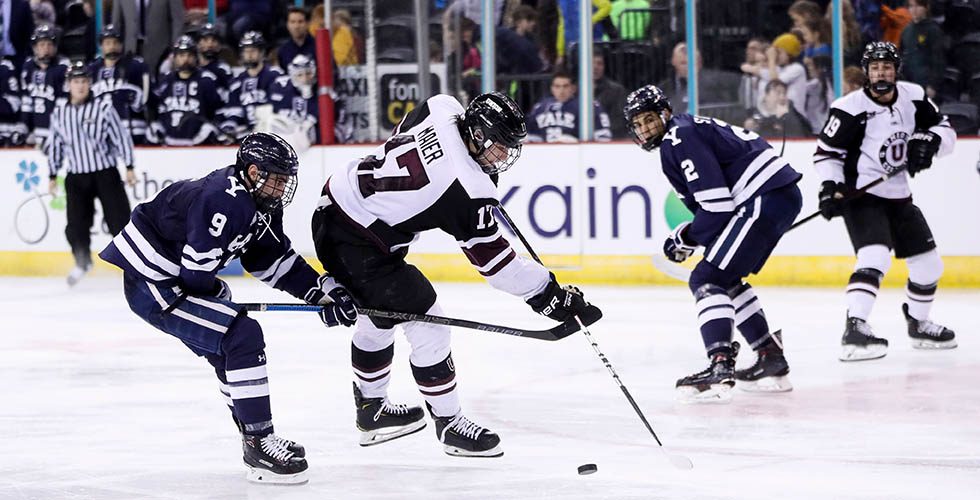
The third period saw Yale come out hard once again, determined to put as many shots on Hanson as possible. They would find themselves on the power play 4:34 into the third when Cole Maier was whistled for interference. Their power play showed some strong cycling, but they were again unable to capitalize.
Four minutes later Maier was sent to the sin bin once again, this time for hooking and Union’s penalty killers would have to step up for the third time of the game. And then with 11 seconds remaining on Maier’s penalty that Dutchmen Vas Kolias would join him in the box. Kolias with a hooking call. The Dutchmen worked hard to continue to deny the Bulldogs, but Yale finally got their equalizer at 11:32 of the third period while still on the power play. And that’s where things would remain knotted throughout the remainder of regulation.
The overtime period was unable to crown a victor, which for the teams meant that they each took a point from the game. However, since this was a tournament, an actual winner was needed. The teams went to the shootout to get that decision.
Jack St. Ivany’s shootout on Darion Hanson (Photo: William Cherry/Presseye)
Round One saw both Union’s Brendan Taylor and Yale’s Evan Smith find the back of the net. Round Two both Brett Supinski for the Dutchmen and Jack St. Ivany for the Bulldogs would be denied. As the third round began, Union’s goal scorer was put out and he once again got it past Kaczperski. For the teams not to have to go to another round, it was up to netminder Hanson to deny Snively who was out for Yale in the third round. Hanson did just that and Union College would take the win, ensuring their position in Saturday’s Championship game.
“You know, I thought we played well. Union’s a good team, like a lot of the teams in our league, so, you get a tie, you get a tie.,” Yale’s head coach Allain said postgame. “I guess the one area I think we can do a better job of is executing offensively. We had a number of odd man rushes that we didn’t even get a scoring chance on, never mind a shot on net. So, if we can clean that up, we’ll be a better hockey team.”
Union College is aware of what they need to do before they take on the Boston University Terriers Saturday night.
“I thought Yale put us in some pretty tough spots and that’s just the sign of a good team in Yale. Again, I thought it was a very fast college hockey game, so I guess from a spectator point of view it’s always nice to see a fast game. Obviously, you want more scoring but, sometimes it’s going to happen. And, you know, as far as our team, I thought we buckled down defensively, but tomorrow night we really need to pick it up offensively,” head coach Bennett said.
For Yale, they will take on the University of Connecticut Huskies in the matinee consolation game. And points in this game are just as important back in the states, as they go toward their conference totals.




 Prev
Prev