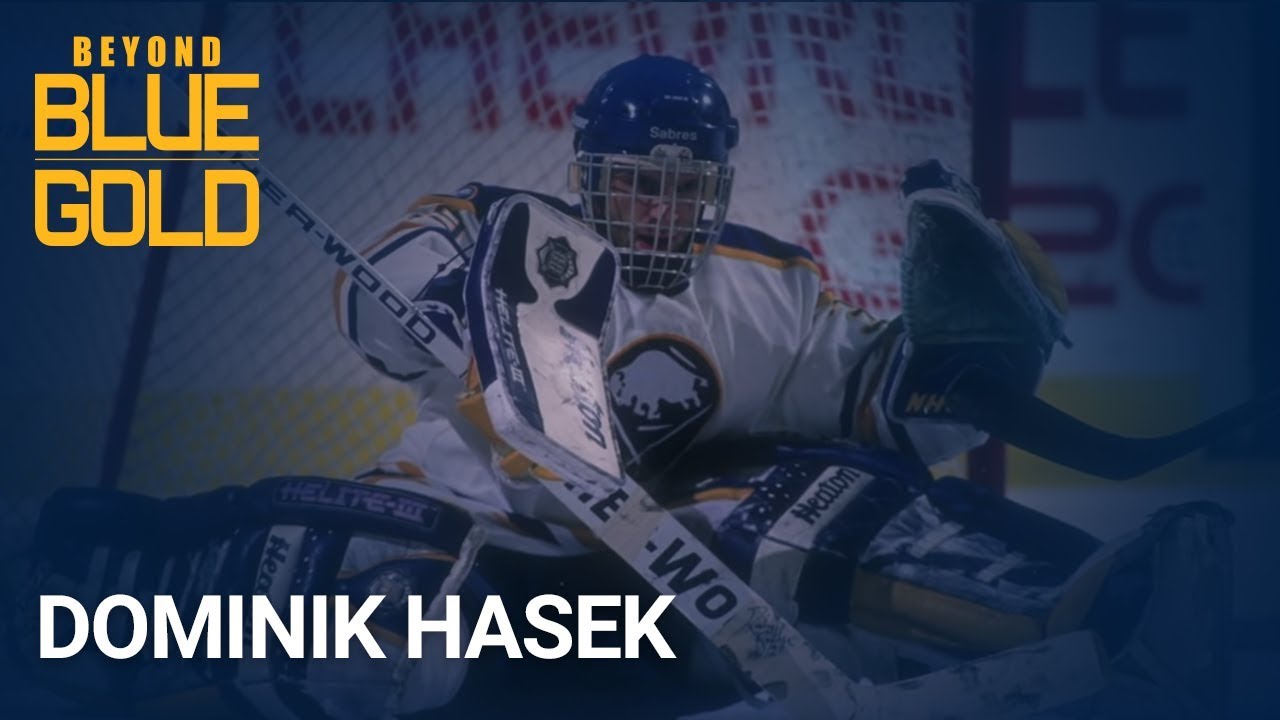
Czech goalie Dominik “The Dominator” Hasek closed out 1997 with six shutouts during the month of December. The only other goaltender to achieve that many shuts in a month was George Hainsworth, with the Montreal Canadiens during the 1928-29 season. Prior to this the closest a goaltender had come was getting five in one month, which was accomplished by Tony Esposito in February 1974 and Jim Carey in March 1996.
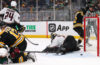
On December 31, 1997, the Buffalo Sabres played the Ottawa Senators at Marine Midland Arena. The Sabres took the lead midway through the first period when Randy Burridge scored a power-play goal. Then Michael Peca scored two shorthanded goals (during the first and third periods). While the Sabres managed 29 shots on goal, Hasek blocked all 36 from the Senators. This was his fourth shutout in his last six starts. During December, his only non-shutout win was the 3-2 overtime game against the Carolina Hurricanes on December 12, 1997. He allowed just 22 goals during the entire month of December. His record for the season to that point was 13-15-4. This was during the time when he “faced more shots per 60 minutes than any other goalie.” By the end of the December, he had seen 409 shots, stopped 388 of them for a .948 save percentage and had a record of 7-6-1 for that month’s games.
Although Hasek had been drafted by the Chicago Blackhawks back in 1983, he remained in Czechoslovakia—which was still under Communist rule until 1989—where he was named Extraliga’s Goaltender of the Year from 1986 through 1990 and thrice named the league’s top player. Hasek was finally able to join the NHL in 1990, but he did not have much opportunity in Chicago until the 1992 Stanley Cup Final. The Sabres traded for him two months later, and when their starter (Grant Fuhr) was injured in 1993, Hasek took over. In that first month, December 1993, Hasek had five shutouts and a 1.95 average (the first lower than 2.00 since 1973-74). Four years later, Hasek beat that with the six shutouts, and two months after that (in 1998), as Nagano Olympics’ top goalie, he earned gold for the Czech Republic. In 2001, Hasek was traded to the Detroit Red Wings, and they won the Stanley Cup that season. Hasek played for Detroit off-and-on until the 2007-08 season, when they again won the Cup. When Hasek then retired from the NHL, he had a record of 389-223-82-13, a goals against average of only 2.20, and a save percentage of .922. He continued to play in Europe until he was 46 (2011).
Hasek’s improvisational style clearly worked for him. He led the NHL in save percentage for six straight seasons (1993-99). He also earned the Vezina Trophy six times (in eight seasons). In back-to-back years, 1997 and 1998, he received the Hart Trophy as the league MVP, and he is the only goaltender to receive that honor more than once. Hasek was inducted into the Hockey Hall of Fame in 2014.
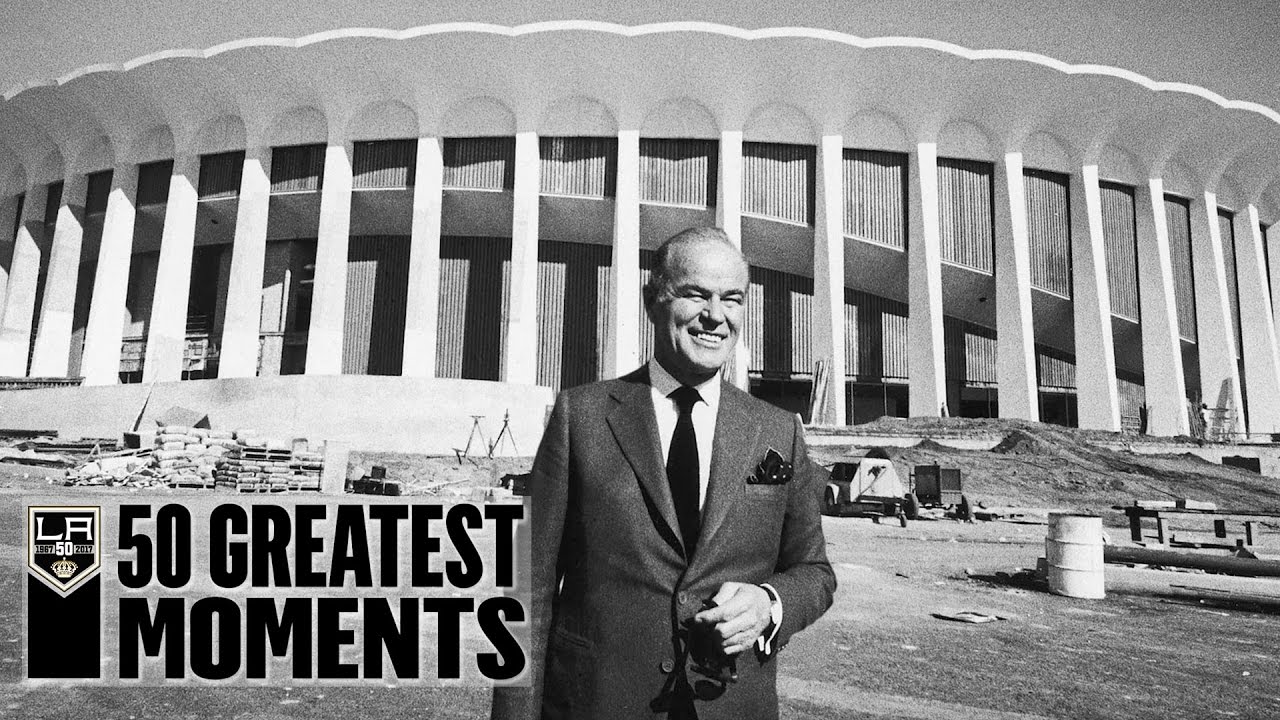
In 1967, the NHL doubled in size from six to twelve franchises. With the new teams came new arenas. The Los Angeles franchise was granted to Jack Kent Cooke “on the promise he would build his own arena” after he was denied a 10-year lease at the Los Angeles Memorial Sports Arena on the Coliseum grounds. Cooke promised, “I will build my own place. It will be the finest in the world.” In only 23 months (with 15 months between breaking ground and opening), the Forum opened in Inglewood, California on December 30, 1967.
The goal was to open the Forum by the end of the year, and in the meantime, the new Los Angeles Kings played their home games at the Long Beach Arena. According to Paul Zimmerman’s piece in the Los Angeles Times, to stay on target, “Cooke directed a costly, crash construction program.” For the same paper, Chuck Garrity wrote that it took $16 million and only “15 months of nursing The Forum from nothingness to the gleaming white monument it is today.” The architect, Charles Luckman, had already designed LAX and its Theme Building as well as the Johnson Space Center in Houston. He used classical motifs (of New Formalism) to design a structure that looked more like the Coliseum but that he claimed was inspired by the Roman Forum. The best feature was the tension ring suspended roof which bypassed internal support columns giving “unparalleled views of the action” from no more than 170 feet. Garrity referred to the Forum as “sports’ answer to the Taj Mahal,” writing that it was “every bit as beautiful, as functional and as magnificent as Cooke had claimed.” At the opening, NHL President Clarence Campbell commented, “It’s just beautiful. This is definitely a classic place to present hockey. . . . This will be a showplace of America. . . . There’s not likely to be any place quite like this. They went first class all the way in everything they did.”
For the opening, about 14,366 (an LA record) came for the festivities and received First Night certificates. Those outside the Los Angeles area could watch the game on TV, as it was the first broadcast nationally (in color) that season. The pre-game festivities began at 11:30 with Lorne Greene (star of Bonanza) as emcee and “civic and business leaders joining members of the social set and movie and television stars.” The crowd applauded Cooke and his wife Jean when they were introduced. He told the crowd, “This is the happiest day of my life,” and she cut the ribbon. Broadway star Harve Presnell sang the anthem “with such verve that he sent a shiver down many a spine.”
The game began after its scheduled 1 pm and ended about 4 pm. In addition to being the first game the Kings played at the Forum, they played for first place in the Western Division. They were tied at 35 points with their opponents, the also-new Philadelphia Flyers. The game pitted the west’s best offense (in the Kings) against the best defense (in the Flyers). Although the Kings had won their first game (4-2) against the Flyers, Philadelphia won the next two matchups (7-2 and 3-0). At the brand new Forum, a new trend was set in using a fire truck flasher to indicate goals. The fire horn would also have been used in the case of a Kings’ goal, but that afternoon, they could not score. Flyers goalie Doug Favell stopped 25 shots to earn a 2-0 shutout. “Oh, it was a big win for me. Last week I was going home because I didn’t feel I was playing enough,” Favell commented. “I had about four really tough saves. And one that was just lucky. But the rest of the time, it wasn’t really a hard game. I didn’t have anything to do in the third period, our defense played so well.” The lucky save was off of Favell’s stick, which was behind the goal line, but was not allowed as a goal. With the loss, the Kings dropped into second in the standings. Cooke confided, “This is one of the most disappointing days of my life.” He said that winning would have made the opening perfect, “But you never reach perfection in this life.” As soon as this game ended, both teams were on their way back to Philadelphia for a rematch the very next night. The Flyers crushed the Kings 9-1.
Although the loss marred the Forum’s opening celebration, it was just the fourth of five arena openings played by the Flyers. The Flyers’ first game was the opening of the Oakland Seals on October 11. Then, the Flyers lost to the Kings at the home opener at the temporary Long Beach Arena on October 14. On October 19, the Flyers opened their own Spectrum with a shutout against the Pittsburgh Penguins. After opening the Forum with another shutout, the Flyers opened the new Madison Square Gardens with the New York Rangers on February 18, 1968.
As for the Forum, on December 31, Cooke’s pro basketball team, the Los Angeles Lakers, held their opening game. Between the Kings and the Lakers, Cooke had 78 dates booked at the Forum for the season, and had already reserved over 100 other entertainment attractions for the coming year. He sold all three (the Forum, the Kings, and the Lakers) in 1979 for $67.5 million, and the arena was sold again in 1988 to become the Great Western Forum. The Kings and the Lakers remained in the Forum until 1999, when they moved into the Staples Center in downtown Los Angeles. The Forum still hosted events and underwent a major renovation in 2014 and was added to the National Register of Historic Places.
Additional Sources:
Stephen Laroche, Changing the Game: A History of NHL Expansion (Toronto: ECW Press, 2014).
As a 38-year-old “portly gent wearing the red jacket” at the Detroit Red Wings’ bench, assistant trainer Ross “Lefty” Wilson was still prepared to don his goalie pads. Back when the teams did not supply their own backup goalies, it was the home team’s responsibility to “provide a spare netminder” in cases of emergencies. On December 29, 1957, he had his third and final opportunity to fill in during an NHL game and the only time he was credited with a decision.
Interestingly, Wilson was not called to fill in for Detroit’s goalie, Terry Sawchuk, but instead for the Boston Bruins goaltender, Don Simmons. The last time the Bruins had needed a replacement was three years prior, when Sawchuk had been injured playing for them. Wilson himself had subbed for Sawchuk for about 16 minutes of the third period when the Red Wings played at Montreal on October 10, 1953. Then, on January 2, 1956, he manned the net for about 13 minutes for Harry Lumley of the Toronto Maple Leafs. For these games, he boasted of being “the only unscored upon goalie in NHL history.” He may also have been the “only trainer who ever was ‘suspended.’” The Boston Globe reported, “He was ordered by NHL president Clarence Campbell to remain away from the Detroit bench for a month for jockeying a referee.” However, he was a Detroit fan favorite, often playing the second period of Red Wings exhibition games against the University of Michigan.
Nearly at the end of 1957, at 8:20 in the first period, “Simmons was hurt in a scramble at the net for Marcel Pronovost’s rebound.” As described by the Detroit Free Press, “Rookie Billy McNeil fell into him and Simmons crashed awkwardly to the ice. After he had been helped to the dressing room, Wilson was waved from the Detroit bench to take over.” Simmons’ shoulder had been dislocated with a torn capsule, so he was sent to “Detroit Osteopathic Hospital where the shoulder was set by Red Wings physician, Dr. J.D. Sheets.” According to the Boston Globe, Simmons would be out for two to three weeks, so the Bruins planned to replace him with Al Millar of the Quebec Aces. Lynn Patrick was already scouting there and said, “I have a little confidence in Millar. He turned in a terrific game this afternoon.” The first trial for the temporary goalie would be a New Year’s Eve game against the Montreal Canadiens.
When Wilson got the call to mind the net, 11,644 fans watched him take the ice wearing a Boston jersey, Detroit pants, and his own pads. He joked, “It took up more of the net than usual and gave them less of an opening to shoot at. I weighed 195 when I started and five pounds less when I finished.” Wilson made seven saves before the Red Wings scored on him late in the first period. Then he made another 16 saves before the end of the game to end with a .958 save percentage. Marshall Dann of the Detroit Free Press summarized, “Aside from Wilson’s chirping and spry performance, it was an exceedingly poorly played hockey game.” Herb Ralby wrote for the Boston Globe that “Bruins players praised Wilson’s performance. . . . And between the periods he kept them relaxed in the dressing room with his keen sense of humor.” However, Wilson himself said, “Don’t you believe it. I was too tired to say too much.”
In the end, the Bruins were also able to score again in the second period to end the game tied with the Red Wings at 2-2. This point was enough to move the Bruins into third place in the NHL standings and could have cost the fifth-place Red Wings a playoffs berth. In response, Wilson said, “Those are the breaks of the game. You don’t think of that when you’re out there. All you think of is doing your best to stop the puck.” He may not have kept up the distinction of not having any goals scored on him, but Wilson only allowed one goal in his three NHL appearances and technically remained unbeaten.
Between December 28, 1975 and January 11, 1976, two Soviet teams played four games each against the eight best teams the NHL had to offer. The 1972 Summit Series between the Soviet National Team and Team Canada had been so popular, the NHL set up nine Super Series with the Soviet teams. The 1975-76 Super Series was the first time the two leagues met, and the Soviet teams fared better overall.
On Christmas Eve, the reigning Soviet champions, HC CSKA Moscow (“The Red Army Club”) and Krylya Sovetov Moscow (“Soviet Wings”) arrived at the Montreal Forum and gave interviews before the series began. As described by the New York Times, “The Soviet players made their first formal public appearance . . . Dressed with a bit more taste than the typical N.H.L. player and with less expense, the Soviet team members also comported themselves in conservative fashion at first, acknowledging greetings from the press and Canadian hockey dignitaries with nods and firm handshakes, but nary a smile. They all requested Coca Cola at the bar and then sat stoically at circular tables enduring the stares of their, hosts and the glare of television lights.” The Soviets were given new skates and sweaters, and a Madison Square Garden employee had to sew the names on the jerseys for the Red Army team prior to their first game.
Of the eight games in the Super Series, four stood out: the first game, the New Year’s Eve tie, and the only two games won by NHL teams.
For the first game, on December 28, the Soviet Red Army played the New York Rangers before a sold out crowd of at least 17,000. The Rangers scored first. As Phil Esposito said, “We came out in the first four minutes (flying) and they waited to see what was going to happen. We absolutely dazzled them.” Then, the Soviets scored three goals in the first period, another three in the second, and finally one more in the third. In writing about the game for the New York Daily News, Wes Gaffer praised, “The Russians aren’t coached. They’re choreographed, whirling in elaborate circular patterns that utterly confused the Rangers and made the annual ice show a superfluous offering at the Garden.” Although two members of the Jewish Defense League were caught and arrested for “throwing eggs on the ice” near him, Soviet Army goalie Vladislav Tretiak had “lightning quick reflexes and X-ray eyes.” He only let in two more Rangers’ goals late in the third, having made 38 saves (compared to John Davidson who only made 22). The Soviet Red Army won 7-3 in their opening game. The next day, the Soviet Wings defeated the Pittsburgh Penguins by nearly the same score, 7-4.
Many hockey fans consider the Soviet Red Army’s 3-3 tie with the Montreal Canadiens on December 31 as one of the greatest hockey games. Almost 19,000 spectators came in person and many more watched the televised game. Despite the tie score, the Canadiens had outshot Red Army 38-13. All of the Montreal Gazette writers put the end result down to the goalies. The first star of the game was goalie Vladislav Tretiak, who seemed “on the verge of tears, [as] he stood at centre ice to acknowledge a standing ovation,” the first “ever given a Russian hockey player by a Canadian crowd.” On the other hand, the Canadiens defense was so good that Ken Dryden was left too little to do. Coach Scotty Bowman estimated that his Canadiens “had the puck 60 to 70 per cent of the game,” and he may have been right considering the Red Army did not get their first shot on goal until 10:03 of the first period. Of his disappointing save percentage, Dryden said, “It’s very upsetting to me. Here we played as well as we could and we came out only with a tie.” By and large, though, all Canadiens interviewed seemed to be unimpressed with the Soviets and felt they had played the better game overall. For example, Steve Shutt (who scored the first goal) commented, “We had fun out there. We beat them. Maybe not on the score but we beat them. We outplayed them for 60 minutes.” Coach Bowman added, “I don’t think we learned anything from them but I think they learned something from us. . . . They were outclassed for 60 minutes except for the goaltending. . . . We outplayed them and that’s what’s important.” Red Army coach Konstantin Loktev admitted, “Most of our problems came as a result of Montreal’s style of play. Their checking was very effective, they played their positions well and they worked very hard. Montreal played a very fine hockey game.”
The next game in the Super Series took place on January 4 between the Soviet Wings and the Buffalo Sabres, who had lost the Stanley Cup finals in 1975. That night, the Sabres became the first NHL team to defeat a Soviet team and the only NHL team that series to defeat the Soviet Wings. As if that was not enough, it was the worst loss a Soviet team ever faced in international competition. The Sabres won 12-6. Punch Imlach, general manager of the Sabres, considered this the “all-time high point for the Sabres” and of his career. The pride in the victory was so great, Montreal gave the Sabres a standing ovation at their next game. The Soviet Wings did not let the defeat get them down as they went on to defeat the Chicago Blackhawks 4-2 on January 7 and the New York Islanders 2-1 on January 10.
Meanwhile, the Red Army had a break after their tie until January 8, when they defeated the Boston Bruins 5-2. Finally, on January 11, they played the Stanley Cup champion Philadelphia Flyers for the final game of the Super Series. Before the game, Flyer captain Bobby Clarke joked, “They’re always trying to play with our minds. But that won’t work with our club. We’ve got 20 guys with no brains.” The Flyers were known as the Broad Street Bullies for a reason, and they relied on checking to hold off the Soviets. After a particularly rough hit that the referees ruled legal, the Red Army team left the ice in protest. When they finally returned 16 minutes later, the referee called a delay of game penalty on them. The Flyers scored 17 seconds into the power play and then again before the first period had ended. In the second period, they turned a penalty kill to their advantage and scored a shorthanded goal. Although the Soviets scored mid-way through the period, the Flyers came back with a final goal in the third. The Flyers won 4-1 after outshooting Red Army 49-13. Dave Anderson wrote for the New York Times that “the Flyers’ victory was a triumph of terror over style.” Coach Fred Shero said, “We beat the hell out of a machine.”
Overall, the two Soviet teams fared better than the NHL teams. The Red Army team had a record of 2-1-1 while the Soviet Wings topped that with a 3-1-0 record. The former had been the U.S.S.R. national champion in 19 of 29 seasons, while the latter had been their runner-up in 1975. Despite their winning record, some North Americans pointed out that because the Flyers, Sabres, and Canadiens had played so well against the Soviets, it proved that the NHL’s top teams could hold their own. The Flyers had defeated the Sabres for the Stanley Cup in 1975 and then were the runner-up to the Canadiens in 1976. After the Super Series ended January 11, 1976, the NHL and the Soviet teams met in eight more Super Series.
Thursday night, December 27, 2018, the Boston Bruins played host to the New Jersey Devils. Based on their records, this should have been an easy game for the Bruins to win—well as easy as any game can be in the NHL. Add to that the return of Zdeno Chara, Kevan Miller and Jake DeBrusk to the lineup after each had been out for some time, and it seemed like Santa had wrapped up a gift for the team.
Of course, when a team finds itself down a goal just 25 seconds into the first period, it can affect the confidence of all of the players. And that is what happened to the Bruins, when Damon Severson put one past Jaroslav Halak, who was coming into the post-holiday break game riding a three-game winning streak.
Brandon Carlo and Jaroslav Halak (Photo: Alan Sullivan)
“When you’re not scoring, you know, you get behind a few, you all of sudden – doubt creeps into your mind – and we have to erase that. It’s our job as coaches to make sure the guys feel good about their game and know they can come back, but until we do it a few times it’s probably going to be a struggle until we get over that first hump,” said Bruins Head Coach Bruce Cassidy.
And just as there were adjustments in the lines when Patrice Bergeron returned last week, albeit returning in a big way with his two goals and two assists, it took a bit of that first period for him and his linemates to get back on the same page. In that game, Coach Cassidy eventually returned to the Marchand-Bergeron-Pastrnak combination as the game progressed.
When players have been away from the game for an extended period from injury, there are many aspects of training that they can get back before going on the ice in their first return game. One of the things they can’t practice is timing. Cassidy mentioned that about Bergeron’s return. And Chara brought it up when discussing how he felt in his first game back after missing 16 games due to an MCL injury back on November 19th.
“Not bad. One thing we can’t really practice is timing, that’s one thing you really miss the most. Conditioning-wise, strength was fine, everything was good. Just to be in the right spot that was kind of one thing that was kind of getting stuck in between. Other than that, I felt pretty good to be honest with you for the first game in a long time. I thought as the game went on, I started feeling better being in those spots,” Chara said.
The giveaways throughout the game, the Bruins had 17 through the first two periods, spoke to some of those timing issues. But it also spoke to them getting away from playing their game. As the doubt perhaps crept in, many of the Bruins seemed to begin to over-pass, looking for the perfect play, instead of simplifying and playing to their strengths. In addition, while the Bruins were giving the puck away, the New Jersey Devils were also excelling at taking it away from them. The Devils managed 21 takeaways throughout the game as opposed to the Bruins who only had eight.
Mackenzie Blackwood (Photo: Alan Sullivan)
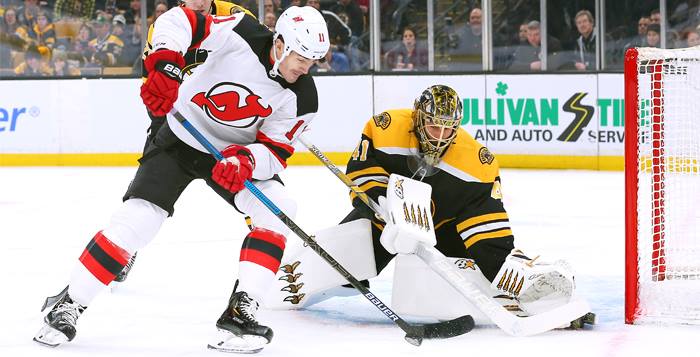
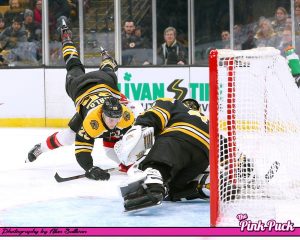
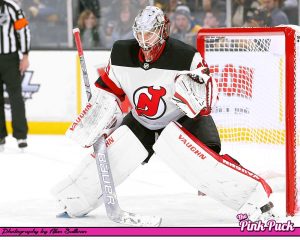
With all of that said though, Boston was getting shots on net—a total of 42 shots were put on Mackenzie Blackwood, who had only played in three games, and had a 0-1-0 record. The young goaltender, who was celebrating his first NHL win, was appreciative of his teammates, who blocked an additional 19 shots, but he may also want to thank the pipes because the Bruins did hit a few of those.
“You know, I’m happy to finally get the first win, and you know, the team played awesome for me. Really made my job a lot easier, and you know, it’s definitely one of those ones that you’re not going to forget,” Blackwood shared.
Was it an ugly game for the Boston Bruins? Yes. And given that the New Jersey Devils sit in last place in the Eastern Conference, the loss stings a little more. However, they do not have time to dwell on that loss. It happened. They need to correct things—which will be addressed in practice, and then move on. They take on the Buffalo Sabres in Buffalo on Saturday, December 29, before heading out to South Bend, Indiana to participate in their third Winter Classic—this one against the Chicago Blackhawks and being played at Notre Dame Stadium on New Year’s Day.
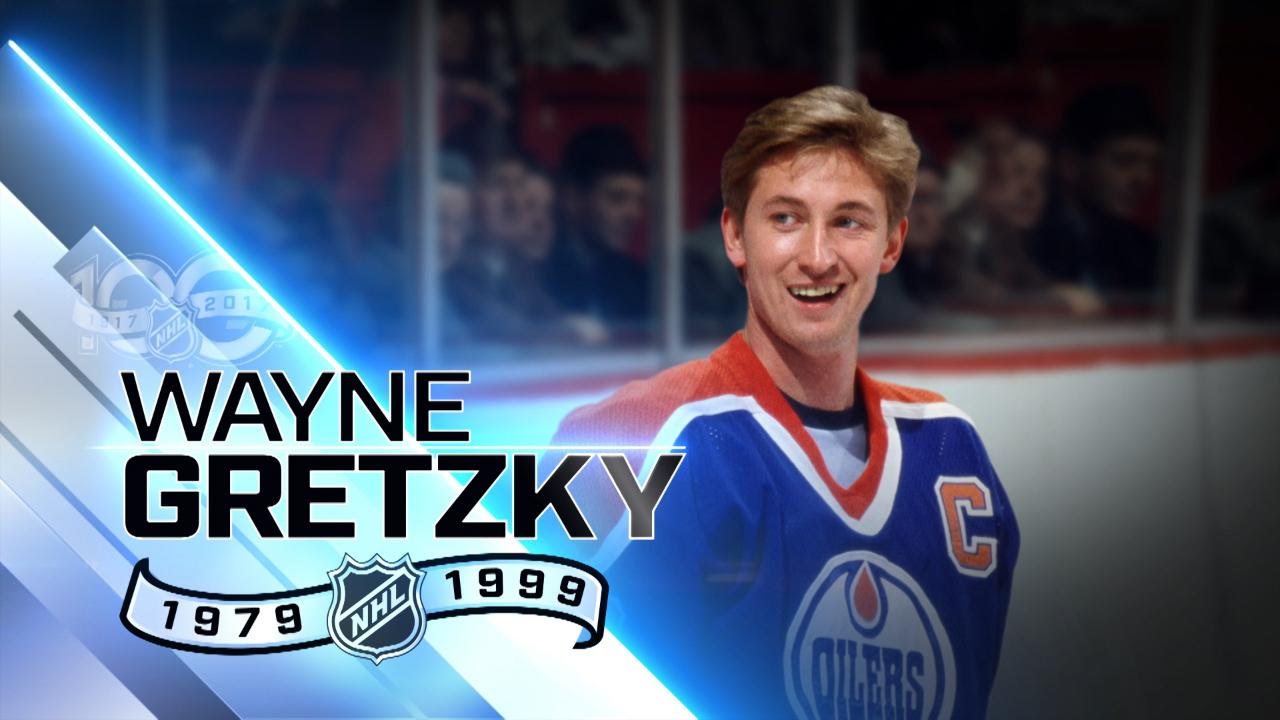
Even those who don’t know hockey usually recognize the name of Wayne Gretzky—the “Great One.” There really are no words that do justice to a player who made such an impact on the game that every team in the NHL elected to “retire” his sweater number of 99. However, on December 27, 1981, Gretzky garnered his 100th point in just the 38th game of the season—with his four goals and an assist in the Edmonton Oilers game against the LA Kings, the team Gretzky would be traded to seven years later.
“Wayne Gretzky scored four goals, two of them shorthanded, to give him 45 in 38 games as the Edmonton Oilers blasted the Kings 10-3 in National Hockey League action Sunday night.”
Gretzky got his Oilers on the board 1:39 into the first period, assisted by Doug Hicks and Mark Messier. Paul Coffey would get a power play goal at 16:13. With just 17 seconds remaining in the opening frame, Gretzky would get his second of the game, giving the Oilers a 3-0 lead to take into the first intermission.
As the second period got underway, the Kings got close to tying the game when Steve Bozek scored two of his three goals of the game; the first at 9:25 and the second at 13:08. Gretzky would give the Oilers an important cushion, shorthanded, just two minutes later. And Jari Kurri would make it 5-2 going into the second intermission.
Glenn Anderson, who had assisted on Gretzky’s first goal as well as Coffey’s during the first, would get his 15th of the season 21 seconds into the final period. Ken Berry would earn his first NHL career goal at 3:52. Gretzky got his second shorthanded goal, unassisted, at 7:26 and four minutes later would be the secondary assist on Hick’s goal at 11:27. Bozek notched his third of the game just 13 seconds later for the LA Kings. And Kurri would put the Oilers into double digits with his second, and the Oilers 10th, of the game.
With his four goals he brought himself to 45 goals in 38 games and his assist gave him his 100th point in just 38 games—averaging 2.6 points per game.
“Gretzky, who set NHL records for points (164) and assists (109) last season, also had two <sic> assists and now has 102 <sic> points. It was the third time this season Gretzky has put in four goals in one game and the second time he’s done so against the Kings.”
In the very next game three days later, December 30, 1981, at home against the Philadelphia Flyers, Gretzky would add five goals and an assist, giving him 50 goals in 39 games, achieving the 50 goal mark in 11 games fewer than Maurice “Rocket” Richard did during the 1944-45 season, and which had been equaled by Mike Bossy of the New York Islanders during the 1980-81 season.
Averaging 203.2 points per season between 1981-82 and 1986-7 impelled E.M. Swift of Sports Illustrated to write “What was he doing? Bowling?”
By the time he retired, Gretzky played in 1,487 regular season games, in which he amassed 894 goals, 1,963 assists for 2,857 points and an astounding +520. In the 208 playoff games he played, he scored 122 goals, added 260 assists for 382 points and was a +67.
“No player is bigger than the game,” Gretzky said at retirement. Of course that was anything but true in his case. His skill, hockey IQ and ability to see plays before they happened, earned him that nickname, “The Great One,” and not surprisingly finds him compared not to hockey players but those in other sports who did the impossible: Muhammad Ali, Pelé, Jack Nicklaus, and Secretariat.
Usually when a team finds themselves on the road and losing 6-1 late in the first period, they just want to get through the game and move one. On December 26, 1991, the New York Rangers found themselves in just that place, while playing at Capital Centre in Landover, Maryland, against the Washington Capitals. To say the home crowd was thrilled with its Capitals and already smelling a victory, would be an understatement after the Capitals had score five unanswered goals during the opening period. The Rangers “hadn’t given up six goals in a period since 1989.”
With just one second remaining in the first period, John Ogradnick grabbed one more for the Rangers, such that as they went into the first intermission they were riding a motivational wave. And there is definitely something psychological on such a late goal—for both sides. During the second period Joe Kocur would notch the only goal of the period, giving the Rangers their third of the game. Much as there was lots of scoring in the first period, the same would be true of the third, only this time it would be in favor of the Rangers. New York would get five goals during the third period, with Mike Gartner garnering the go-ahead goal with just under eight minutes remaining to put his Blue Shirts up 7-6. Sergei Nemchinov would seal the deal with an empty net goal and the Rangers would achieve one of the biggest comebacks in the history of their team.
As Frank Brown described it in the New York Daily News, “then with a stunning binge of offensive power, the Rangers outshot the Capitals, 34-7, and score six straight goals for the triumph that gave them a share of the first in the Patrick Division.”
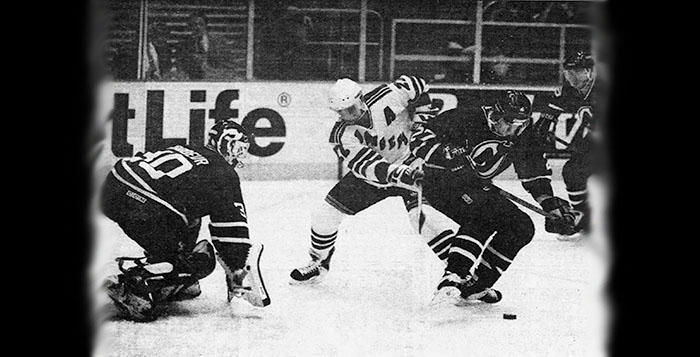
Two years later, to the day, Gartner would achieve a milestone when he garnered his 600th NHL goal, during a Rangers home game which saw them take an 8-3 win over the New Jersey Devils, scoring during the third and “just a few feet from the net, was the Garden noise that followed it at 6:16 of the third period…Shrill shrieking hurt your ears.”
As far as the game was concerned, the Rangers were going to win, but whenever a player is close to such a milestone, the team, the coaches, and the fans are all eager for it to happen, and ever happier when it happens on home ice. “Gartner saw the puck behind Chris Terreri, sitting in the Devils’ net, and instantly his hands went up toward the arena’s spoked ceiling – as did his gaze. It was the seventh Ranger goal in an 8-3 triumph, a who-cares goal, really, as far as the outcome was concerned. As far as Gartner and the Rangers were concerned though, it was the moment a threshold was crossed,” Frank Brown described in the New York Daily News the following day.
While there was some thought it might have been kicked in, a brief delay was experienced while a video review was undertaken, and then when the referee called it a good goal, “the Garden noise sounded again and the Ranger bench emptied.” The emptying of the bench before the end of the game should have resulted in a delay of game penalty, but the referee understood the importance of the event. It wasn’t the last goal of the night for Gartner though, as he would also score their last goal of the game, 67 seconds later at 7:23, while on a power play.
Additional Sources
Frank Brown, “A trip from dead to 1st,” New York Daily News, 27 Dec. 1991, p. 67.
Frank Brown, “600 Cheers for Gartner,” New York Daily News, 27 Dec. 1993, p. 54.
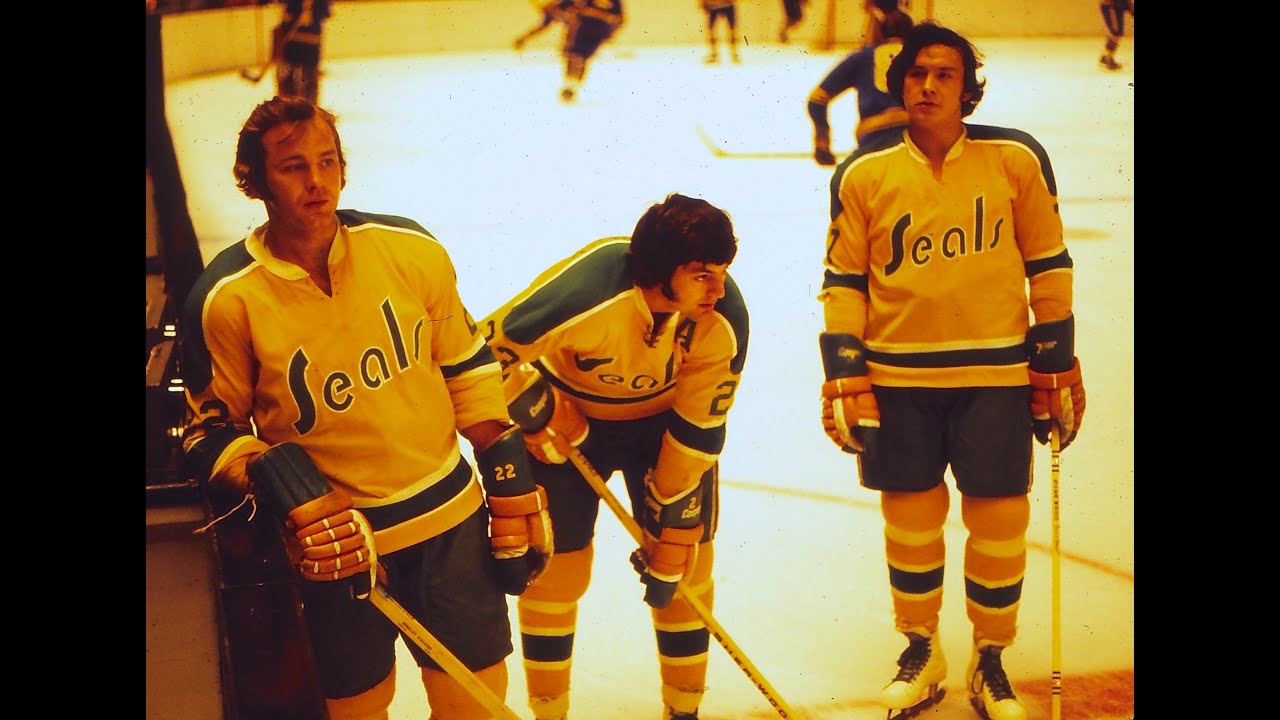
In back-to-back years and days, two California teams played each other for the final NHL game played on Christmas Day and then the final game ever played on Christmas Eve. On December 25, 1971, the California Golden Seals defeated the Los Angeles Kings, and on December 24, 1972, they traded places.
The teams played at the Forum (in Inglewood) in 1971 and at Oakland–Alameda County Coliseum Arena (in Oakland) in 1972. The former saw a “surprisingly large Christmas night crowd of 7,251, which braved the rain to cheer its hapless favorite.” The latter saw “one of the smallest crowds, 1796, ever to watch” an NHL game.
During both games, the crowd became displeased as the home team failed to even get many shots on goal during the first two periods. As the Los Angeles Times bemoaned in 1971, much of the Kings’ play was “pitiful” and “exceedingly dull” with only 14 shots on rookie goalie Gilles Meloche until the last 15 minutes of the game. The fans began to boo at the “height of futility” at the beginning of the third period when the Kings failed to take any shots during a power play. The Kings finally scored their only goal at 6:38 in the third. In 1972, the San Francisco Examiner groused, “Last night California’s Golden Seals seemed to be dreaming of a White Christmas for two periods of an alleged hockey game with the Los Angeles Kings.” The Seals only managed six shots on Grogatien Vachon in each of the first two periods until finally racking up 16 for the last. Only after a big fight in the third period did the Golden Seals finally start scoring.
In both cases, the home team lost to the visitors. In 1971, the Golden Seals won 3-1, and in 1972, the Kings won 5-3. The Golden Seals ended the last Christmas Day game with an empty net goal by Stan Gilbertson. This ended a seven-game losing streak at the Forum and put the Kings behind the Seals (by 12 points) in the standings. Although Juha Widing scored the last ever Christmas Eve goal (in the last five minutes of the game), all four of Los Angeles’ earlier goals were scored by Serge Bernier. He became the first Kings player to score four in one game and the second player in the NHL to score as many in that season. At that point, the Golden Seals had the second-to-worst record in the NHL.
Additional Sources:
“Seals Choke Off Kings’ Late Bid, 3-1,” Los Angeles Times, 26 Dec. 1971, p. 1C and 4C.
“Seals Stay In 2d, Top Kings, 3-0,” San Francisco Examiner, 26 Dec. 1971, p. 6C.
Nelson Cullenward, “Seals Win Fight But Lose Game,” San Francisco Examiner, 26 Dec. 1972, p. 77.
“Bernier Scores 4 as Kings Wins, 5-3,” Los Angeles Times, 25 Dec. 1972, part 3, p. 1-2.
“Giacomin Stops Wings for 40th Shutout, 5-0,” Los Angeles Times, 25 Dec. 1972, part 3, p. 2.
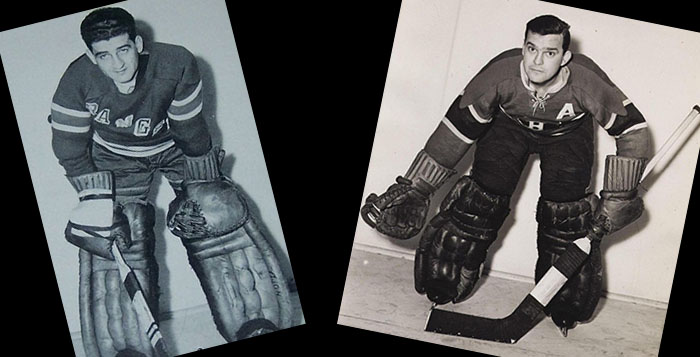
When the New York Rangers played the Montreal Canadiens on Christmas Eve in 1949, neither of their goaltenders let any coal in their stockings. The shutouts by Chuck Rayner and Bill Durnan made this NHL game the only 0-0 tie played on Christmas Eve or Christmas Day.
A crowd of 12,085 showed up at the Forum for the Christmas Eve matchup. The Montreal Gazette pointed out, “Lynn Patrick is having his trouble with the Rangers, and they are virtually the same troubles that Dick Irvin is having with Canadiens.” That is to say that both teams had the “best defensive records” but had trouble scoring. Patrick himself said before the game, “We can’t put the puck in the net. There’s nothing wrong with us defensively, but we can’t score goals and you need goals to win.”
True to form, neither team lit the lamp. Instead, ““close checking kept goal shots at a minimum.” The New York Daily News admitted, “The Canadiens held an edge on play, outshooting the Rangers, 30-15. They missed plenty of scoring opportunities.” The highlight of the night was that “Big Bill Durnan [of the Canadiens] and Bonnie Prince Charlie Rayner [of the Rangers], the two top net-minders in the game today, were in peak form as they turned aside every shot directed at them.” This shutout was Durnan’s fifth of the season and 31st of his career. For Rayner, this was his third shutout of the season and 17th of his career. Durnan was playing his last of seven seasons for the Canadiens, having earned the Vezina Trophy all but one of them. Meanwhile, Rayner (after two seasons with the Americans) played with the Rangers for eight and picked up the Hart Memorial Trophy in that 1949-50 season.
On the same night, the Toronto Maple Leafs hosted the Boston Bruins and experienced a very different game. Rather than being unable to score, the Leafs had trouble stopping the Bruins. When the first period ended with the Bruins leading 4-1, Toronto pulled its famed goaltender Turk Broda and replaced him with Al Rollins. Conn Smythe, as head of the Leafs, “told reporters he benched Broda because of the terrible support received from team-mates and not because of his playing, sat on the bench from the second period on and helped Coach Hap Day. Leafs responded with a hard-thumping, go-get-‘em display for about 15 minutes that almost sent the fans wild, but they couldn’t keep it up and Bruins bounced back to take command.” The game ended 8-4 in favor of the Bruins.
Additional Sources:
Dink Carroll, “Canadiens Tie Here but Lose at Detroit on Week-end” and “Smythe on Rampage, Broda Benched As Boston Bruins Wallop Leafs 8-4,” Montreal Gazette, 26 Dec. 1949, p. 14.
“Ranger, Canadien Sixes Play to a Scoreless Tie,” New York Daily News, 25 Dec. 1949, p. 25C.“A-Z: Aught for Rangers, Zero for Canadiens,” New York Daily News, 25 Dec. 1949, p. 45.
“A-Z: Aught for Rangers, Zero for Canadiens,” New York Daily News, 25 Dec. 1949, p. 45.
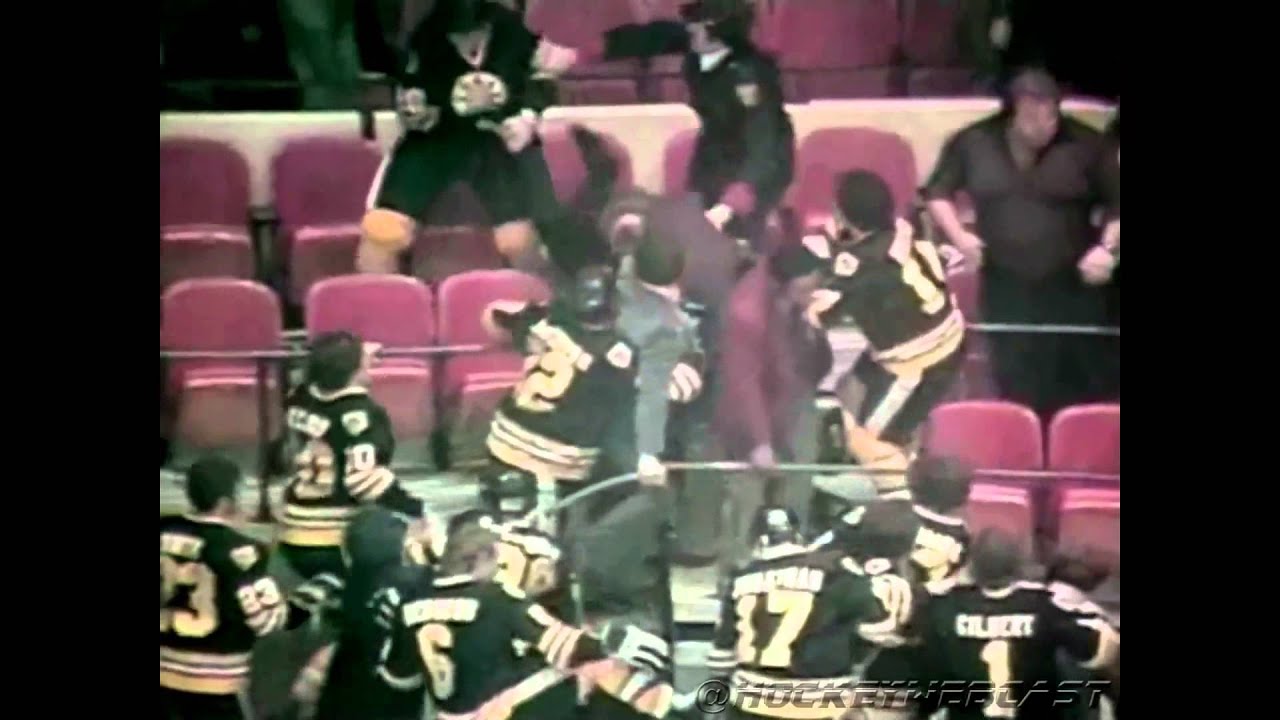
In the next issue after the events of December 23, 1979, both the Boston Globe and the New York Daily News featured the same photo on the front page. The Globe captioned it “Skater vs. Spectator,” while the Daily News exclaimed “A stick save – and a beauty!” The photo showed Bruins Terry O’Reilly diving into the stands at Madison Square Gardens to retrieve teammate Stan Jonathan’s stick from the spectator who stole it. In the articles that followed, the Boston and New York papers relayed the same story from quite different viewpoints. Amidst finger pointing and justifications, it was clear that the Boston Bruins and New York Rangers aired some on-ice tensions as the game between them ended. Then a spectator reached over the glass to hit Jonathan and took his stick, prompting Bruins skaters to jump over the glass into the stands. The melee took on the feel of a scene from Slap Shot as Bruins defenseman Mike Milbury took the shoe off the instigator and hit him with it. Even after the players were cleared from the stands and the ice, the departing crowd of about 300 swarmed the empty Bruins bus until eight mounted police officers dispersed them and security brought the bus inside.
Until near the end, the game on December 23, 1979 was fairly typical. The Rangers and their fans had their mood reversed as the Bruins came from behind in the third period to win 4-3 (after trailing 3-1). The final straw came during the last five seconds as former Bruins and current Rangers star Phil Esposito had a breakaway shot grabbed by Bruins goalie Gerry Cheevers. Esposito skated away, slammed his stick on the ice until it broke, and left for the locker room. After the buzzer sounded, Bruins wing Al Secord tripped and punched Ulf Nilsson of the Rangers. Secord explained, “I remembered the sucker punch he gave me earlier in the game, so I thought, an eye for an eye, and I suckered him.” Rangers goalie John Davidson had had enough, and he skated over to berate Secord. Afterwards Davidson stated, “Secord suckered him. Secord is a guy with no guts, no class, a cheap-shot artist. He goes after a guy with class, a guy who puts people into buildings.” The issue for Davidson was actually that the referees seemed to have an extreme bias against the European players and had let players get away with actions against Nilsson. While this was happening, the spectator took his own action.
The Bruins’ winning goal had been scored by Stan Jonathan in the last seven minutes of the game. As Jonathan skated along the boards towards the locker room, John Kaptain, a New Jersey businessman, reached over the glass and hit him with a rolled up program. With a cut on the left side of his nose, Jonathan relayed the incident. “It felt like a helluva good jolt and I didn’t know where it came from. I put my stick up as a reflex action and the guy grabbed it. Then the rest of the guys went up.” Kaptain justified himself stating, “I’m not saying I’m right in hitting him. I don’t even know if I hit the right player. But my brother got hit by one of them first.” Upon witnessing this, Bruins forward Terry O’Reilly (known for his fighting) climbed up over the glass towards Kaptain, who was swinging the stick around. According to O’Reilly, “There was no way he was going to strike one of my teammates and steal his stick, wield it like a weapon and then disappear into the crowd and go to a local bar with a souvenir and a great story. As soon as I got him into a bearhug, I felt like I was being pummeled by multiple people. All I could do was cover up.”
When they saw their teammate mobbed, the Bruins felt they had to protect him. Peter McNab, who Jonathan commented “was usually the guy who’d pick up our gloves for us after a fight,” was the second one into the stands. He explained, “So many guys jumped on Terry, the rest of us had to go up there. It’s not something you’re particularly proud of, with little kids at the game at Christmas time and all. They see their heroes up there swinging and swearing. But you couldn’t leave Terry there alone. The guy had a stick and was swinging it.” McNab was joined by Mike Milbury, who had already been celebrating in the locker room when Cheevers told him about “some sort of beef going on.” While Cheevers stayed out of it, Milbury said, “I went from happy and content, and ready to go home for Christmas, to full combat mode in about 20 seconds.” He later said, “I wanted to protect him, the team. It was the thing to do.” Once Kaptain broke away from O’Reilly, McNab and Milbury pinned him down over a seat. Milbury described the scene, “I grabbed his shoe, took a little tug on it, and then sort of double pumped. I don’t know if I hesitated for a minute because I thought I’d be vilified for the next 30 years, but I gave him a cuff across the leg, and then I did what I thought was probably the most egregious thing of all: I threw his shoe on the ice.” O’Reilly thinks that “under the same circumstances,” he would “jump over the glass and grab the guy again.” However, he said, “None of us wanted to be in the toothless Neanderthal grouping. In the greater public’s view, it re-emphasized stereotypes of hockey players.”
In all, 18 Bruins players ended up in the stands after the game. The television commentator noted, “Well, the Bruins are at a decided disadvantage with those skates, and somebody could get seriously hurt.” Their general manager, Harry Sinden, and their coach, Fred Creighton, assisted the security guards in clearing them out. Creighton said that he original thought Davidson was just going to congratulate Cheevers as part of “the goaltenders’ union thing,” but instead, “I went up into the stands to get people out of there and make sure it didn’t become a really bad situation.” Meanwhile, the Rangers players stood on the ice at the boards watching the melee. Finally, Kaptain and his party were arrested and charged with disorderly conduct. One of the witnesses from the press box, Larry Brooks (writer for the New York Post) later said, “It was just a wild night. The whole night was amped up. The atmosphere was so much different back then. It was never sanitized. It was a little bit coarse, I guess.”
A month after the game, NHL president John Ziegler sent down the punishments for the Bruins. As the first, O’Reilly received an eight-game suspension while McNab and Milbury each would miss six games. The three were fined $500 while all of the other Bruins (except Cheevers) were fined up to $500. Bruins president Paul Mooney gave a statement saying, “We do not accept his findings, and we are very proud of our players and the way they conducted themselves under very difficult circumstances.” They were not successful in overturning the suspensions. Even so, in their next 13 games, the Bruins won ten, and the “altercation did nothing to damage the career prospects of the players involved.” The one lasting result of the events of December 23, 1979 is that the height of the glass on the boards was raised “to prevent future brawls with fans.”
Sources:
Bill Madden, “Bruins trip Rangers, take on fans,” New York Daily News, 24 Dec. 1979, p. 1 and 41.
Francis Rosa, “Bruins take 4-3 win, then take on fans,” Boston Globe, 24 Dec. 1979, p. 1, 21, 23.

 Prev
Prev