(Photo: Jeff Cable, Jeff Cable’s Photography Blog)
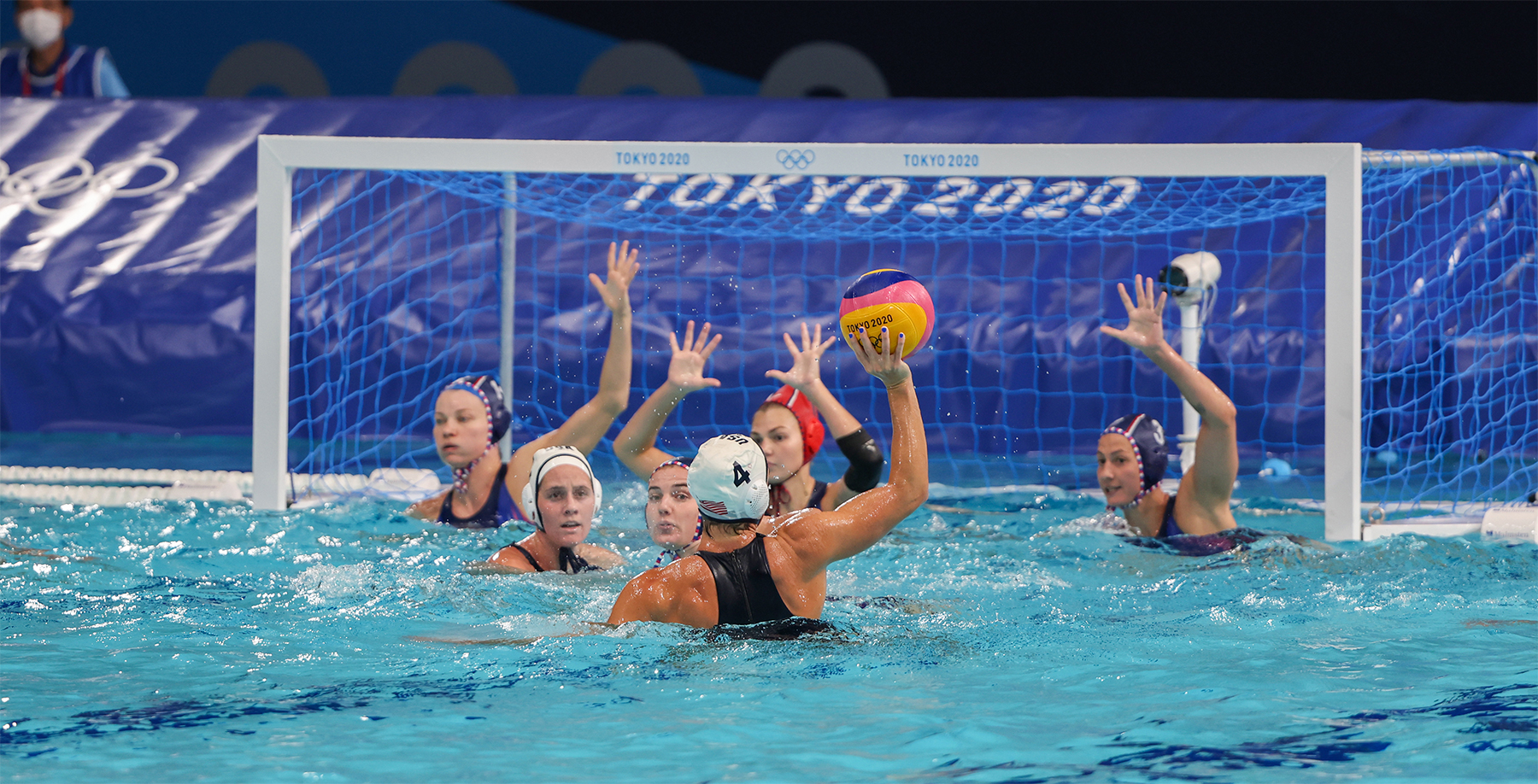
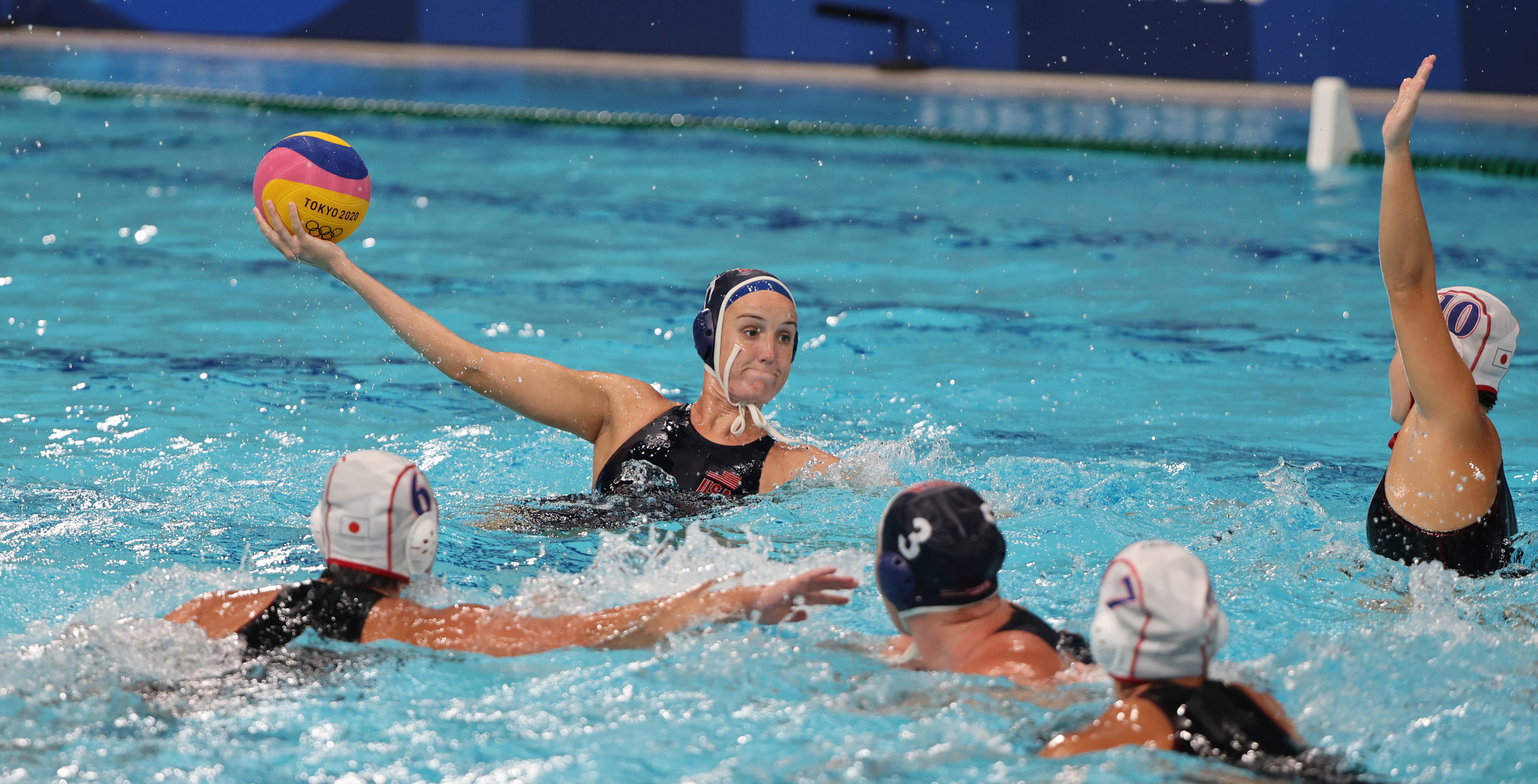
Friday, July 30, 2021, the USA Women’s Water Polo Team took on their final foe in the preliminary round to determine the teams that would move on to the quarter finals at the Tokyo 2020 Summer Olympics. The Americans were coming off a surprising loss to the Hungarians two days before, while the Russians had not played since July 26, when they tied the Hungarians.
The American women’s team had been through losses before and their veteran status as a team together, many of them having been playing together since the 2016 Summer Olympics in Rio where the team won the gold medal, was something that would undoubtedly keep them striving to win.
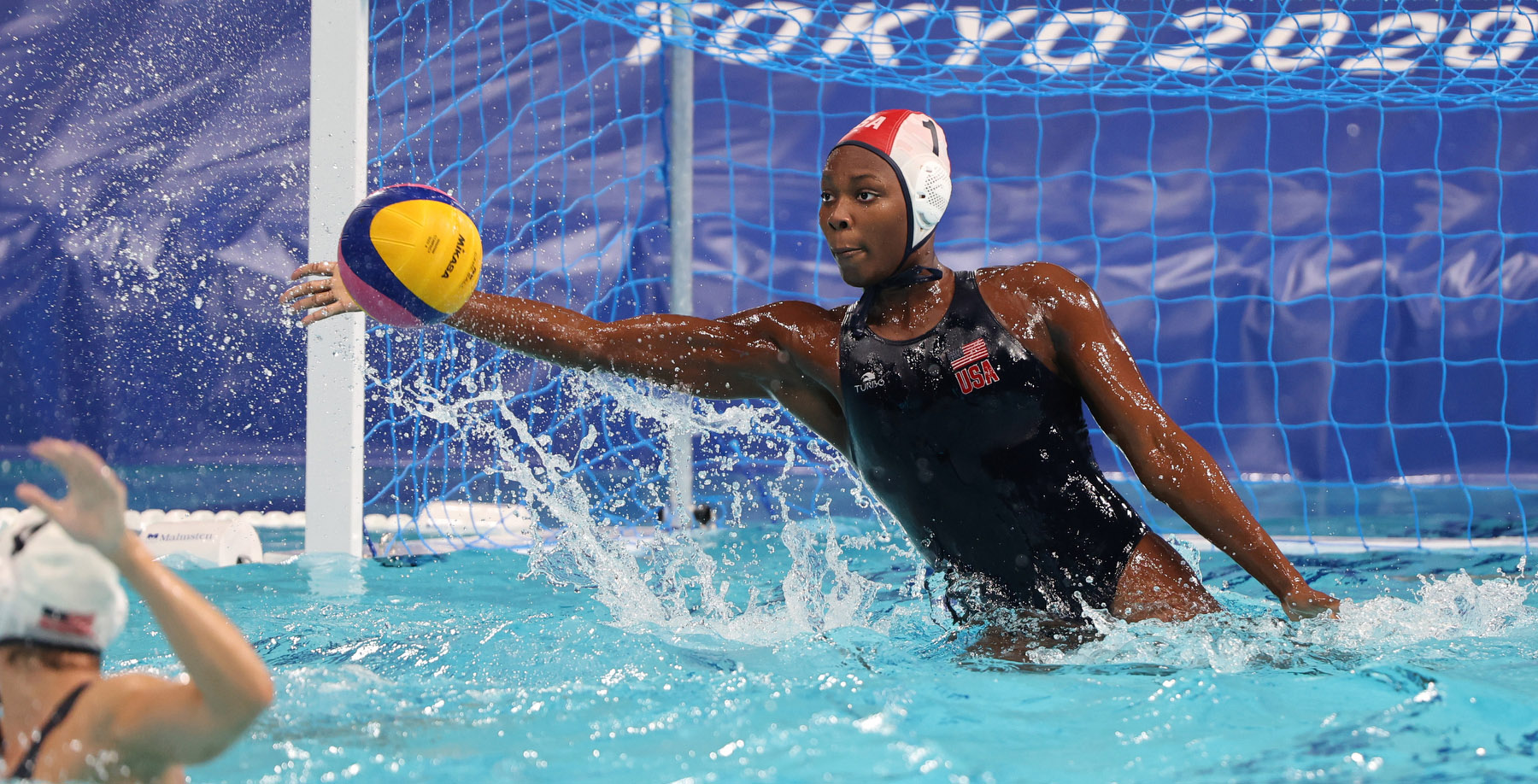
“I see a lot of potential for this team and all sorts of greatness. We’re going to take it game by game and we’re going to get better with every game. We just showed some resilience in this game that we can get a loss and come back stronger and we’re going to keep carrying that forward,” goalkeeper Ashleigh Johnson said after their 18-5 win over the Russian Olympic Committee (ROC).
Team USA came out fast putting up five goals in the first quarter and overall frustrating the Russian goalkeeper, Evgeniia Golovina, as they found way after way to put the ball behind her. In many ways, the team in front of her didn’t help her out much, unlike those in front of Johnson.
“I see my teammates funneling the ball to me and it’s just like we practice and it’s just like every game. There’s nothing new here, nothing new in this game that we haven’t seen, which is really good,” said Johnson.
In some ways it looked like to the Russians that a lot of the game was new or that they had perhaps not seen such a tight knit team as the Americans or play at their level. This was somewhat surprising considering that they had tied the Hungarians, the very team that handed USA their only loss in the preliminary round.
While the Americans scored 14 of their 18 goals at even strength, the Russians only managed one. The remainder of their five goals were while on the extra player.
For Team USA, Maggie Steffens and Stephania Haralabidis each contributed four goals to the win, while Paige Hauschild notched three herself. All but two of the players on the American team had at least one goal.
With their win on Friday, the women finished their competition in the preliminary round, though they will not know who their opponent will be in the quarter finals until the remainder of the teams finish their games on Sunday, August 1.
The quarter finals will take place on August 2, with the Group A and Group B teams playing in the following format:
- First place team in Group A plays last place team in Group B
- Third place team in Group A plays second place team in Group B
- Second place team in Group A plays third place team in Group B
- Fourth place team in Group A plays first place team in Group B
For a couple of the players, such as Steffens, they are hoping to garner their third gold in as many Olympics, having taken the gold medal in London in 2012 and in Rio in 2016.
Note: If you love the photo, be sure to check out more by visiting Jeff Cable’s Photography Blog here.
(Photo: Jeff Cable, Jeff Cable’s Photography Blog)
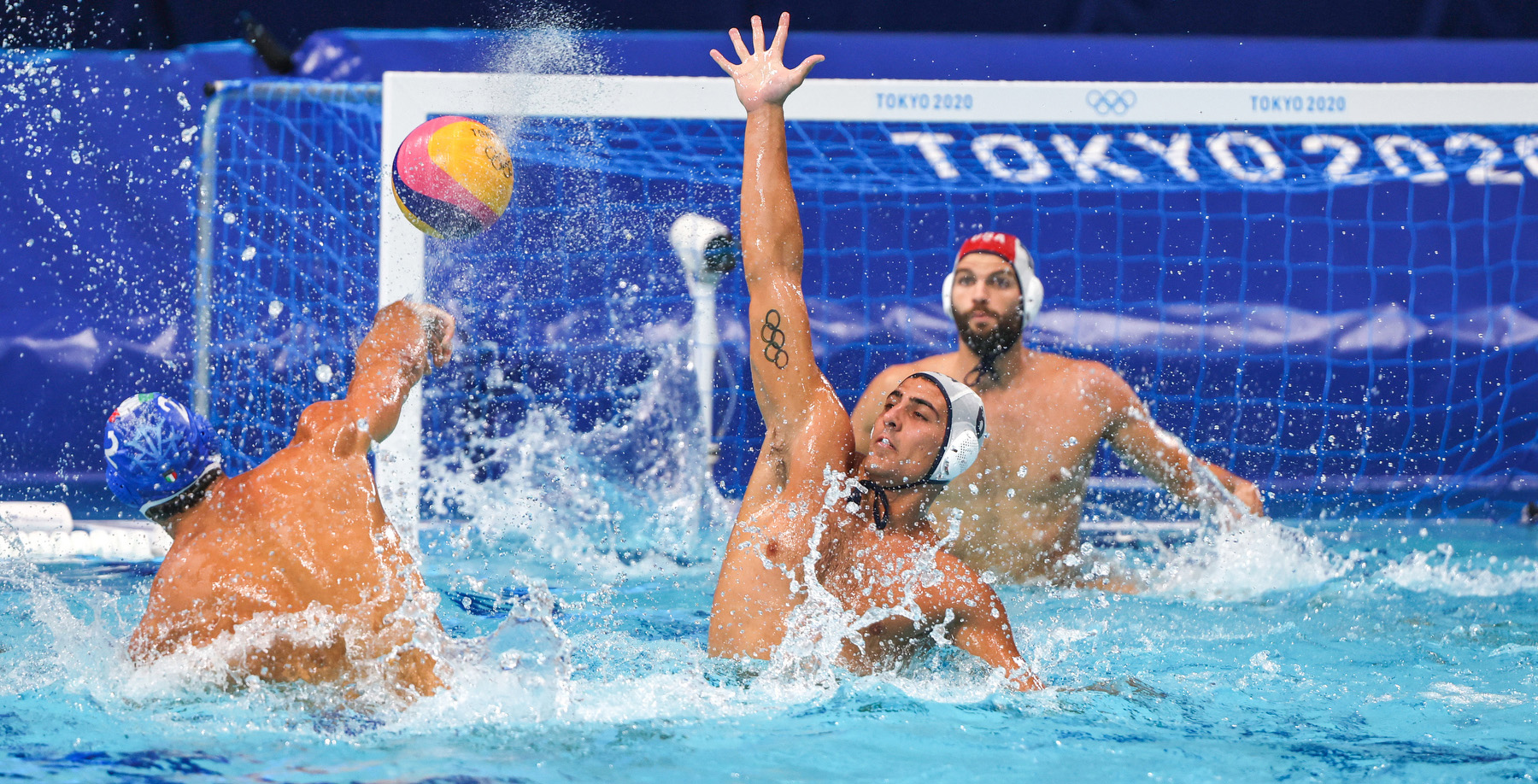
In the third of their preliminary games, the USA Men’s Water Polo Team faced off against Team Italy, the world champions. Drew Holland was in net for the Americans while Marco Del Lungo guarded the goal for the Italians.
Italy’s Stefano Luongo won the sprint to start the game, but USA’s Alex Obert stole the ball. Italy was soon whistled for a penalty and Hannes Daube hit a post on the first attempt with the extra player. Obert got the rebound and sent the ball in to put the Americans on the scoreboard first.
During the first quarter Italy attempted nine shots, with five of them finding their way to Holland. He was up to the challenge and saved all but an extra player shot and an action shot. Team USA on the other hand with their nine shots managed to get seven to Del Lungo who was only able to stop three. It looked good for the Americans.
The second quarter showed a slight tilt in the favor of the Italians, who once again won the sprint. A turnover foul early in this quarter by Daube gave the Italians an opportunity on the counter attack and they made it count. Nicholas Presciutti put Team Italy within one on that goal. Had they not taken two penalties almost simultaneously, they may have been able to continue their forward momentum. Vincenzo Dolce was whistled at 6:45 and six seconds later Matteo Aicardi was sent off. Del Lungo was strong during USA’s extra player time, but it did give the Americans some additional confidence. Daube’s direct shot on the free throw to put USA back up by two was followed a couple of minutes later with Luca Cupido’s extra player shot that first hit a post and then went in, giving the USA a 6-3 lead.
The Italians weren’t going to make this an easy game for the Americans, to be sure. A turnover foul by Johnny Hooper resulted in a a goal for Italy, made by Francesco di Fulvio and it was clear Holland wasn’t pleased with himself on that ball getting by him. Cupido capitalized with a nice top shelf shot while on the power play to regain the three-goal lead with 35 seconds remaining in the half, but with one second to go, while on a power play, Pietro Figlioli gave the Italians their fifth goal, trailing by only two goals going into the half break.
Hooper won the sprint to begin the third quarter and after Di Fulvo was whistled for an infraction, Hooper put the ball home. At the other end Obert was called for a penalty and the Italians likewise capitalized. The third quarter saw a lot of back and forth in goal scoring, with Team USA getting a little breathing room and Italy coming right back. Many of the goals were extra player goals for both teams, though Italy would notch one more than the USA on the power play throughout the game. As the third quarter came to a close, USA was leading 9-8 and Italy wasn’t backing down.
The final quarter saw Figlioli tie the game at 7:11. USA pushed ahead once again gaining a two-goal lead from an action shot and an extra player shot to lead with a little space, 11-9. Luongo’s power play goal at 4:35 crept Italy closer and Di Fulvio’s penalty shot tied the game at 2:22. There was still a lot of time in the game though and it could have gone any number of ways. However, Hooper was whistled for a penalty at 2:07 and as soon as the Italians had possession of the ball they used their timeout to discuss their man advantage situation. Luongo’s attempt hit a post, but Presciutti got the rebound and put it home. Italy was leading 12-11 with 1:40 remaining in the game.
A mirror opportunity came along for the Americans when Figlioli took a penalty. USA used their timeout, but Cupido just couldn’t put the ball behind Del Lungo to get the tie. And as the clock ticked down Team USA—despite having led until the last 1:40 of the game—just couldn’t pull it out.
Note: If you love the photo, be sure to check out more by visiting Jeff Cable’s Photography Blog here.
(Photo: Jeff Cable, Jeff Cable’s Photography Blog)
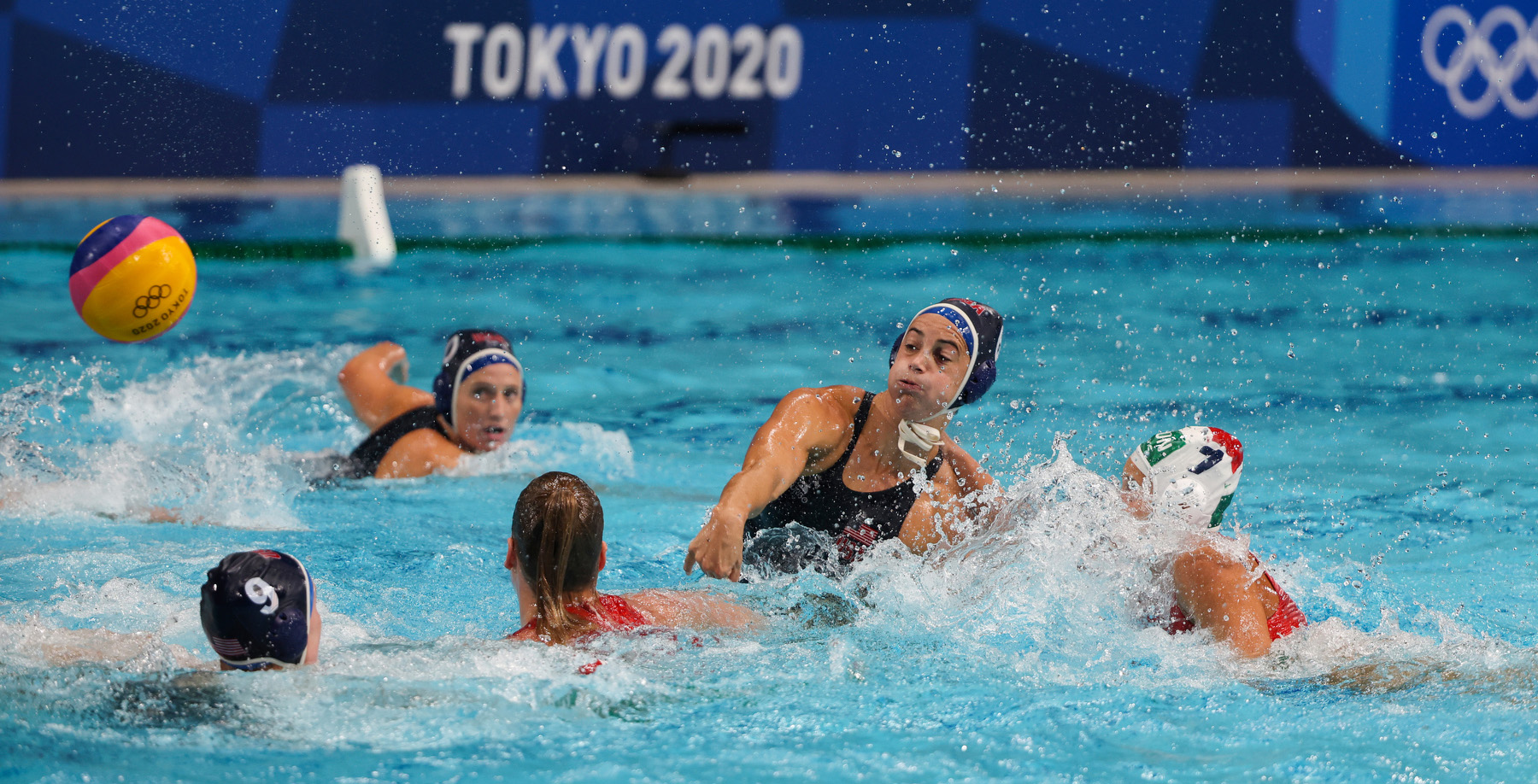
The Team USA Women’s Water Polo team saw their first defeat of the preliminary round on Wednesday, July 28 in a close game against Team Hungary. Throughout the four quarters the teams spent a lot of time swapping goals and the lead.
In the sprint at the top of each quarter, Hungary was the faster team, with Rachel Fattel only winning the third sprint. This is usually an area in which the American women excel.
Early in the first quarter after Hungary got on the scoreboard first, the Americans got a power play at the other end which saw Hungary’s goalkeeper Alda Magyari save Alys Williams attempt, Maddie Musselman hit a post. USA was lucky to remain in the offensive end of the water, the result of a turnover by Hungary but again Magyari was up to the challenge. A turnover foul called on Hungary gave the Americans one more chance, and Musselman finally got one past Hungary’s Magyari to tie the game. Maggie Steffens put Team USA up by a goal with 2:06 remaining. With one minute left on the clock, Stephania Haralabidis hit the post while on the power play then at the other end Stefffens was whistled for a centre forward position exclusion giving Hungary the extra player, which they capitalized on at 0:28. There was still time for USA to try and get the go ahead, which they tried. Paige Hauschild unfortunately missed the net with two seconds on the clock and the teams were tied at the end of the period.
One aspect of the game that appeared to be different from their earlier tilts was the aggressiveness of Ashleigh Johnson outside of the goal. In some situations her move worked but there were a couple of times in which it left a gaping net for Hungary to shoot at. Another deficit for the Americans was their inability to get a goal while on the extra player. They had three opportunities in the first quarter and were unable to finish on any of them.
The second quarter saw Hungary put up two goals in 51 seconds. The first was just a good active shot by Rita Keszthelyi at 7:18. Nine seconds later Makenzie Fischer took a turnover foul which allowed Hungary to swim right back unto the Americans’ end where Hauschild was whistled for an exclusion at 6:46. Thirteen seconds later Hungary was up by two goals. Team USA was able to tie it on a counter attack at 2:30 after having cut Hungary’s lead in half earlier with their first extra player goal of the game at 5:49. Two more goals were scored—one for each team—to go into the end of the half tied at five goals.
It looked like the USA was turning the game around in the third quarter. They converted three extra player opportunities for three goals while Hungary was only able to get a single goal in the period, itself during the power play. This put Team USA up 8-6 going into the fourth quarter.
Hungary wasn’t going away though. By 5:37 they had tied things up. Melissa Seidemann once again gave USA the lead with her first shot of the game. While Williams was out on an exclusion though, Hungary notched their ninth of the game to knot the score once more. Once again Team USA would be stymied by the post while on the extra player at 1:31. Hungary’s centre shot at 0:45 of the fourth turned out to seal the deal and handed Team USA their first loss of the games.
Note: If you love the photo, be sure to check out more by visiting Jeff Cable’s Photography Blog here.
(Photo: Jeff Cable, Jeff Cable’s Photography Blog)
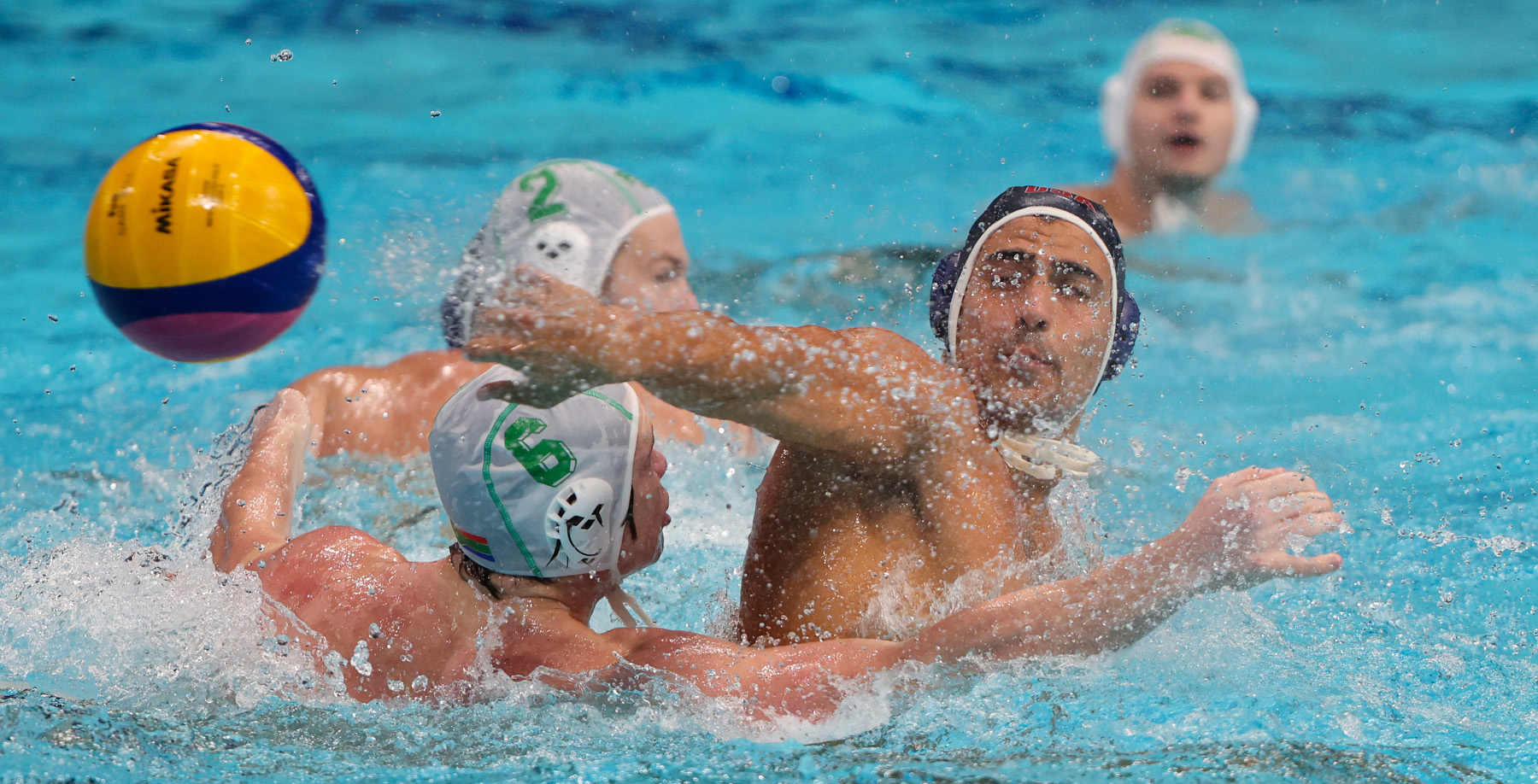
While the USA Women’s Water Polo Team had their impressive 25-4 win on Saturday, July 24 in their game against Team Japan, for the Men’s team, theirs came in the second game as they took on the South Africans on Tuesday, July 27.
Veteran players are important on any team, and it was clear that some of those returning from to Olympic play in Rio were intent on making sure that Team USA continued to strive for excellence. Alex Bowen, who had an impressive five goals in the first game against the Japanese, picked up where he left off by putting the Americans on the scoreboard first. Teammate Luca Cupido gave the men a 2-0 lead with 5:10 remaining in the opening quarter. Finally, with under a minute left in the first, Ben Hallock notched the team’s third goal of the game.
Overall Team USA had attempted ten shots but only six of them made it on target. South African goalkeeper Gareth May was able to deny three. Among those that had not counted was a shot by Johnny Hooper, when on the power play, that hit the post and then the ball literally rolled over the back of May before missing the net. Had May straightened up in any way, that likely would have been a goal as well.
At the other end of the pool, Alex Wolf was not technically challenged in the opening quarter. The South Africans managed only seven shots and of those only three got to Wolf who stopped them easily. In fact, it wasn’t until the second quarter when Jason Evezard’s active shot connected with the twine behind Wolf to get South Africa on the scoreboard with 6:28 remaining.
While South Africa got on the scoreboard in the second quarter, that was also the same frame in which Team USA began to control and dominate the game with gusto. By the time of Evezard’s goal, Ben Stevenson and Hooper had already added two more to the USA side. Stevenson would put in another two goals himself in that period – going three for three with his shots during the game – and Hooper would get his second. At the end of the half, the Americans were obliterating South Africa to the tune of 12-1. In net, Wolf was making sure that the South Africans would face a wall trying to score. He saw five of their eight shots in the second quarter and stopped all but the first one that made it to him.
By the end of the half, South Africa was playing down a player as Donn Stewart had received three fouls and would watch the remainder of the game from the sidelines. May’s save percentage was down to 20% showing that USA’s men were simply more than he and his teammates could handle—which was of course evident from the score as well.
Despite winning the sprint in the third, USA did not maintain possession for very long before South Africa stole it and 17 seconds later Yaseen Margro got it behind Wolf. The look on Wolf’s face spoke volumes to his unhappiness in himself for having allowed that goal.
USA’s 14th goal, an impressive shot by Hallock, went right through the wickets of the upstretched arms of May, who seemed a bit surprised when the ball went in. It was the result of Devon Card’s third penalty—his ticket to a seat for the remainder of the game—with 5:50 left in the third. It took Hallock a mere second to put in the net.
The frustrations of the score and their inability to get shots through on Wolf were taking a toll on the South African team. Stewart sat at the end of the first with three fouls. Card joined him at 5:50 of the third. Margro would be sent out of the game at 3:25 of the fourth and Cameron Bain Laurenson reached his limit with 16 seconds remaining in the game. These players didn’t do their team any favors. Except for when Margro got his third, the other three men’s final penalty’s saw Team USA score with the extra player.
In the end Team USA put 20 markers on the scoresheet while limiting South Africa to three.
Note: If you love the photo, be sure to check out more by visiting Jeff Cable’s Photography Blog here.
(Photo by Fred Kfoury III/Icon Sportswire)
The Buffalo Sabres are looking to make some moves after missing the postseason again last year. The Sabres signed interim head coach Don Granato to a new contract. The team seemed to play well under his supervision last season. The Sabres have a ton of work to do to get this team anywhere close to being a good one and a destination where players want to go.
The biggest story so far this offseason has been that the Sabres are actively trying to trade captain Jack Eichel. The Sabres will have money to spend since most of the roster from last season are either restricted or unrestricted free agents. There are too many concerns when it comes to the Sabres, but here are my five wishes for this offseason.
1) Sign Sam Reinhart
Well, my wish list took a hit right off the bat. The Sabres traded Reinhart to the Florida Panthers for a 2022 first-round draft pick and goalie prospect Devon Levi. Reinhart was one of the few Sabres that I would have liked to have seen return since he played well last season and put the puck in the net 25 times. In 54 games, he had 25 goals, 15 assists, and 40 points. The 25 goals tied a career-high that was set in the 2017-2018 season in 82 games.
The Sabres are going to have to find a new option as a goal scorer. Sure, Victor Olofsson might be able to pot some goals, but who else is scoring on this team? The Sabres traded a decent offensive player and got a goalie prospect in return. The fact that Reinhart is a restricted free agent, and is due for a pay raise likely played a factor in the decision to trade him, but the Sabres are one team with plenty of cap space.
2) Trade Jack Eichel
I know that Eichel is a generational talent, so why wouldn’t the Sabres want to keep him on the team? There is one big reason to make the trade and not have him on the team next season. The issue is that if he is still on the team, he could be a distraction. If he gets off to a slow start or isn’t playing up to speed, there might be speculation that he is dogging it because he doesn’t want to be on the team.
If the Sabres play it right, they could get some assets back despite the injury. There could be a mediocre team or a team that thinks it’s one piece away who would be willing to take a chance on Eichel. A team that isn’t at the cap floor may also take a chance on acquiring Eichel for the right price. I don’t see the Sabres lowering the price tag, so a trade likely won’t get done in the offseason. The Sabres can only hope that Eichel goes out, focuses on hockey, and does his job so teams can see he is healthy and not a potential distraction in the locker room.
3) Rasmus Ristolainen Decision
Ristolainen will not be on the Sabres next season, as the team fleeced the Philadelphia Flyers in a trade by acquiring a 2021 first-round pick, a 2023 second-round pick, and defenseman Robert Hagg. The two reasons that the 26-year-old defenseman brought back such a huge haul is that he fit the Flyers’ needs, and other teams were interested in acquiring him.
The Sabres will miss his grit and physicality, but that is likely it. Ristolainen did not play well in his zone for the Sabres, and fans seemed glad to see him go on social media. The trade should work out for the player and the team. Ristolainen won’t be relied on for top-pairing minutes and should have a steady partner for most of the season. He is also in a contract year, so he will have plenty to prove to the Flyers and other NHL teams that may be thinking of going after him during next season’s free-agent frenzy.
4) Sign a Couple of Goalies
The Sabres seem to have found not one, but two goalies with NHL experience. The team signed veterans Craig Anderson and Aaron Dell to one-year contracts. Anderson seems to be the starting goaltender, since the Dell contract is a two-way one, according to John Vogl via Twitter. The backup options include Dustin Tokarski, and prospect Ukko-Pekka Luukkonen along with Dell. I can see the Sabres giving up a ton of goals this season with whatever goalie duo starts the season. Although, if Luukkonen makes the roster, it would be interesting to see if he could play well enough to take the starter’s crease from Anderson.
Anderson just turned 40-years-old, and is on the decline. He played all of four games last season while with the Washington Capitals, where his numbers weren’t bad, but he had a solid defense in front of him. I don’t see him fairing well with the defense in front of him. Dell only played in seven games last season with the San Jose Sharks, and didn’t fair very well. The Sharks were also a mess defensively but I don’t see Dell being any better should he be the backup goalie. The wild card in this situation is Luukkonen. If he can play well to start the season on the roster then he may get some playing time since Anderson will need time off. If you are the Sabres, you might go with the veteran tandem, just to keep Luukkonen’s confidence from going down the toilet should he get some playing time and not do well.
5) Rasmus Dahlin Extension
The 21-year-old started his career well in 2018-19 under then-coach Phil Housley, with nine goals, 34 assists, and 43 points. His play seemed to decline under Ralph Kreuger but that was because of the coach and his system, not the player. Dahlin, like most Sabres players, seemed to respond to the coaching change to Don Granato late last season. Granato was more conducive to letting the player play his game but still had a system in place. The players had a green light to play to their strengths.
I would be okay with a bridge deal for Dahlin to give him more time to prove himself. The kid is too young, and has had three different coaches in three years in the NHL. However, he can quarterback the power play since he has offensive talent. Dahlin is a mobile defenseman who can move the puck and skate. Some stability, in his coach and system, could go a long way in helping him to further his development in the coming years.
(Photo by Gregory Fisher/Icon Sportswire)
Chuck Fletcher, the Philadelphia Flyers general manager, knows that change will be needed to the roster after a disappointing season last year. The Flyers continued their trend of not making the playoffs every other season. The team was frustrating to watch at times and looked like they had given up on a game. The roster needs some fresh faces and new blood because this core hasn’t done much since they’ve been together. Fletcher needs to be willing to part with his assets and make some moves.
The Flyers, like most NHL teams, will need to figure out a way to shed money to get more cap space. They should do this by trades or free agency. If Fletcher can manage to fill the team’s needs with solid players then they have a good shot at making the postseason this year. Here are my top wishes to improve the team this offseason.
1) Top Pair Defenseman
Fletcher already took care of the number one wish on my list by acquiring Ryan Ellis from the Nashville Predators in a three-team trade. Nolan Patrick and Philippe Myers went to the Predators, who then traded Patrick to the Vegas Golden Knights for Cody Glass. Yes, Patrick is a former number two draft pick, but he never panned out with the Flyers. He missed the 2019-2020 season due to migraines, and he returned in 2020-2021, and never looked like the player he could be. Myers is only 24-years-old and has plenty of upside to his game. The biggest problem was that he didn’t respond to being benched for making bad decisions in a game.
In Ellis, the Flyers get a defensive partner for Ivan Provorov, who missed Matt Niskanen last season. Sure, Ellis has a price tag of six years and $6.25 million per season, but Flyers took the risk. There were rumors in the offseason that Ellis had shoulder surgery, but he cleared that up today in his first press conference with his new team. Ellis broke a knuckle blocking a shot last season and said that’s why he missed time not because of shoulder surgery. Ellis could have a Kimmo Timonen type effect on this team, where he just goes on the ice and does whatever is needed to win a game. The deal still left the Flyers’ first-round draft pick in play, and higher-end prospects to possibly fill other needs on the roster.
2) Trade Big Contract to Create Cap Space
The Flyers shed a big cap hit contract when they traded Jakub Voracek to the Columbus Blue Jackets and acquired Cam Atkinson. Voracek’s cap hit is $8.25 million annually for the next three years; whereas, Atkinson has a $5.875 million cap hit for the next four years. The deal was done to save $2.375 million towards the cap for the current season.
Atkinson has more of a shoot-first mentality, while Voracek is a playmaker. Atkinson should help improve the penalty kill, which has been terrible the past two seasons. He is a threat to score while shorthanded and will likely play top-six minutes. Fletcher did shed one big contract, but there’s still another one on the books in James van Riemsdyk, but it looks like he will remain with the team for the future. I like the Atkinson pick-up since he thinks shot-first instead of pass-first, which was a problem with the Flyers last season. They were a team that overpassed last season instead of taking the shot.
3) An Elite Goal Scorer
There are a few names that fit the bill on the market like Jack Eichel and Vladimir Tarasenko. Well, Sam Reinhart was available at one point, but he was traded to the Florida Panthers so he can be scratched off the list. Yes, Eichel and Tarasenko have their injury issues, but both seem to be available via trade. Eichel had injury issues last season that cost him most of the year. Tarasenko has only played 34 games over the past two seasons, due to shoulder injuries.
Eichel would likely come at a high cost: a first-round pick, a top-end prospect, and maybe even someone who can play on the Sabres’ roster now. Tarasenko may not cost as much, but the shoulder injuries the past few years are worrying. They both also have high cap hits for the next several years and are question marks due to their injuries. I’m not sure I’d be willing to bet the farm on two players who could be injury-prone down the line.
4) Backup Goaltender
Even with his struggles last season, I believe that Carter Hart bounces back and plays like a number one goalie this season. I’d still like to have a solid backup on the bench for when he needs a game off or if he gets injured. The backup will see some time as the Flyers are back to regular travel this season, and have some back-to-back games. Plus, there will be times when Hart needs a game off after seeing a ton of rubber come his way.
Fletcher found his backup goalie, and his name is Martin Jones. Jones became a free agent after being bought out by the San Jose Sharks and had a few suitors on his radar. I do not like the move at all for the Flyers. Jones struggled the past few seasons to stop a puck, and I get that it was on a Sharks team that was bad defensively, but how is he supposed to mentor a young goalie when he has his struggles to correct? There are just too many question marks when it comes to Jones for me even though he was only signed a one-year, $2 million contract.
5) Top 4 Defenseman & Third Line Center
Well, Fletcher took care of this already by acquiring defenseman Rasmus Ristolainen from the Buffalo Sabres. Yes, he gave up a ton including, a 2021 first-round draft pick, a 2023 second-round pick, and defenseman Robert Hagg in the trade. There weren’t many options available, and Ristolainen gained interest from other teams, so Fletcher had to give to get. He is physical and gritty, two qualities that the blue line and the team in general needed to add. Ristolainen is in a contract year, so he will have to prove himself before the Flyers decide if they want to keep him in their plans.
Fletcher has not filled the third-line center role, but there are a few options. The most logical one would be to have Scott Laughton start the season there, and see how he does. The other option is prospect Morgan Frost, but he should start the season with the Lehigh Valley Phantoms, the Flyers AHL affiliate. I can’t see Frost stepping into the Flyers’ third-line center role after missing a considerable chunk of time due to a shoulder injury. Maybe Frost is 100%, has a good camp, and wins the job over Laughton, who can also play the wing. There are options, in the organization, to fill this role if Fletcher doesn’t have any cap space to do so in the offseason.
(Photo: Jeff Cable, Jeff Cable’s Photography Blog)
After Team USA Women’s blistering win against Japan in the opening game, scoring 25 goals, an Olympic record, their play against China was a more evenly matched game throughout much of play.
Unlike some sports where possession is critical to winning, water polo’s ever-changing possession means that a team that is perhaps down by a goal or two early in a game most certainly can come back. The most important aspect is to not lose focus or begin to take unnecessary fouls that will give the opposition the extra player advantage.
One of the areas that the USA women excel is at the start of each quarter. They usually win the sprints and such was the case for Rachel Fattel, who won all four in this game. The women are also extremely effective at good coverage when in the defensive end.
Fattel not only won each of the sprints, but she also put Team USA on the board first at 7:21 of the first period. From that point the goals would mostly alternate from team to team, though China did go up 4-2 at 2:39 of the first period. The veterans on Team USA continued to remain focused and by the end of the opening eight minutes they had tied the game.
China’s goalkeeper, Shen Yineng, was one of the strongest players for her team and had a huge save on Maddie Musselman just after China had gone up 4-2. She would end the game having saved 11 of the 23 shots she saw for a respectable 48%. At the other end, Ashleigh Johnson wasn’t nearly as busy, seeing only 14 shots in the game and denying seven.
The second quarter saw Team USA take the lead at 7:38 and they sustained that one-goal lead for 4:52 of the second before China’s Wang Huan put an active shot in. In the remaining 2:46, USA’s Maggie Steffens gave her team the lead with an extra player shot but then China’s Lu Yiwen knotted the game again and it would remain tied at 6-6 when the half ended.
The third quarter saw the Americans pick up the pace a bit and begin to pull away from China, but not until the last 1:46 of that period, when Paige Hauschild secured a counter attack shot. Aria Fischer followed, putting home a centre shot and then her sister Makenzie Fischer gave USA a comfortable lead at 0:07 of the third with an active shot. Team USA was up 9-6.
During the third, just after Aria Fischer scored the eighth goal, USA’s head coach, Adam Krikorian, was given a yellow card. He was quite upset at what he deemed had been poor officiating. It had been obvious that he wasn’t happy at various stages of the game.
The third quarter also saw blood. While water polo is definitely an intense game with opponents touching each other in an attempt to keep each other from scoring, you do not usually see blood. Steffens had taken an elbow to her nose in the heat of combat and had to get looked at out of the water and patched up. She didn’t let a little injury stop her though. She was right back in the water for the fourth quarter.
Makenzie Fischer would add another marker in the fourth quarter to put the Americans up 10-6. The Chinese weren’t giving up and Chen Xiao gave her team their seventh and final goal of the game. Meanwhile the American women were not quite done with their scoring. They added two more goals before the game was over to finish with a 12-7 win.
In the end, the American women earned their second win of the preliminary round and would turn their attention to their next game against Hungary.
Note: If you love the photo, be sure to check out more by visiting Jeff Cable’s Photography Blog here.
(Photo: Alan Sullivan)
The Philadelphia Flyers general manager, Chuck Fletcher, has been one busy bee so far this offseason. He has been one of the most active, if not the most active, general manager since right before the rosters were frozen for the NHL Expansion Draft.
He has given the Flyers blue line a makeover with three big trades, and a reported free-agent signing. The first move Fletcher made was acquiring Ryan Ellis, from the Nashville Predators, in a three-team trade for Nolan Patrick and Philippe Myers. The Predators then flipped Patrick to the Vegas Golden Knight for Cody Glass. Shayne Gostisbehere, a 2022 2nd round draft pick, and a 2022 7th round draft pick were traded to the Arizona Coyotes for cap space. Fletcher wasn’t quite finished with the blue line’s makeover with these two moves.
Fletcher acquired right-handed defenseman Rasmus Ristolainen from the Buffalo Sabres for a 2021 first-round draft pick, 2023 2nd round draft pick, and defenseman Robert Hagg. According to Kevin Weekes, of ESPN, veteran defenseman Keith Yandle will sign a one-year deal with the Flyers once free agency starts.
Ellis is the top pair defenseman that was sorely lacking on this team last season. The retirement of Matt Niskanen hurt the Flyers on the blue line, which lacked a veteran leader. Justin Braun was playing with Ivan Provorov on the top pairing at one point during last season. Ellis isn’t the biggest or most physical guy out there, but he’ll bring his leadership skills with him. Ellis will likely play on the top pair with Provorov, who should bounce back with the addition of Ellis and having a steady defensive partner.
The 30-year-old brings a hefty contract of six years and a $6.25 million cap hit per season with him, but if he can stay healthy, it’ll be worth it. Fletcher didn’t give up his first-round draft pick or high-end prospect in this deal, which looks like a steal for the Flyers on paper. Ellis will block shots and be an addition to the penalty kill, which needs improvement after the past few years. He should help the Flyers exit their zone since he can make a good initial pass to get the puck up ice. He can move the puck and is a solid defenseman who can play in any situation.
The Flyers didn’t receive anything back from the Coyotes in the Gostisbehere trade except for cap space. It cleared the $4.5 million per season that the defenseman is receiving over the next two seasons off the books. Sure, they had to sweeten the pot with the addition of a 2022 2nd and 7th round draft pick, but the cap space is needed. Gostisbehere was waived last season, and not one team tried picking him up off waivers. He was in-and-out of the Flyers’ defensive rotation the past two seasons. It was time for a change of scenery and a new team since he was no longer playing up to his abilities with the Flyers.
It was a high price to acquire Ristolainen, and the Flyers are hoping it pays off in a big way. There was some demand for the 26-year-old defenseman, which could have driven up the asking price. Ristolainen will likely be paired with Travis Sanheim on the Flyers’ second pair. He doesn’t have a problem throwing his weight around or clearing the crease. Ristolainen will bring some of the grit that was missing on the blue line last season, which had more finesse on it. He can skate and has one year and $5.4 million left on his current contract.
Ristolainen was a mess in his zone with the Sabres, but the Flyers are hoping a new system and better usage will lead to better defensive play. He should also have a consistent partner if the defense can stay healthy. Ristolainen gives the Flyers more options on the power play and the penalty kill, should they need him. He is in a contract year and has something to prove, so I think he’ll play with a chip on his shoulder and have a good season for the Flyers this year.
Kevin Weekes, of ESPN, reported via Twitter that the Flyers are expected to sign defenseman Keith Yandle to a one-year deal once free agency starts. Yandle’s contract was bought out by the Florida Panthers on July 15. He had two years and $12.7 million left and the Panthers decided to go in a different direction. Yandle is a veteran defenseman who brings an offensive touch to the blue line, and he can quarterback the power play.
Yandle struggles in his zone, but hopefully, his potential partner, Justin Braun, can pick up the slack on that side of the puck. Yandle is a cheaper version of what Gostisbehere was to this team the past two seasons. He should slot right in on the third pairing with either Braun or Samuel Morin. Either way, Yandle will bring another layer in the leadership core, and at a cheap price.
There is a method to Fletcher’s madness, and that is he knows that the Flyers got pushed around in their zone and lacked leadership in the room last season. The defensemen who were brought in this offseason had a leadership role previously in the NHL. All of the potential pairings will be balanced, which is something that Fletcher and head coach Alain Vigneault prefer to have.
On paper, the defense is vastly improved over last season, but only time will tell if all the moves will work out or not. There could be injuries or chemistry issues during the season, but the defense is something to keep an eye on since it went through a major makeover.
(Photo: Jeff Cable, Jeff Cable’s Photography Blog)
When a team makes it to the Olympic stage, you expect only the best out of the players. So it was a little surprising to see some of the rust on Team USA. Perhaps it was the result of their cancelled flight from Hawaii that resulted in a redeye back to California before heading to Tokyo. Or the unusual systems required of those not from Japan that often saw people in the Tokyo airports for four or more hours to get the result of the necessary COVID-19 testing to gain entry to the country. Whatever it was, the game against Team Japan was much closer than anyone anticipated.
Team USA was definitely the faster of the two teams in the sprint to start each quarter, easily gaining control of the ball. And Johnny Hooper, Hannes Daube, and Ben Hallock all did their best to get the first goal quickly, but Japan’s goalkeeper, Tanamura Katsuyuki, showed why he was representing Japan, as he stood tall at the beginning of the game.
One of the biggest differences between the Americans and the Japanese was the number of extra player shots the Americans made that were either blocked or hit posts. Of the 13 extra player shots they took, only eight actually made it to the intended target and of those two were saved by Tanamura. Meanwhile the Japanese, though they had fewer power plays, managed to sink 5 of their 7 into the net. One was saved by Drew Holland while another one was blocked. Penalties were also playing into the results of the Japanese as the first four goals they scored were the result of either penalties awarding a penalty shot or exclusions to Team USA.
After Alex Bowen put Team USA on the scoreboard first with a penalty shot at 5:43 of the first period, the Americans would spend the next 21:28 of the game playing from behind. They once again led the game at 0:15 of the third, when they went up 11-10.
The fourth quarter saw the American men add four more goals while the Japanese kept nipping at their heels adding three. At the end of the game Team USA did pull out the win with a 15-13 result, but it probably wasn’t what they expected.
When the game had finished it was Bowen who helped his team to victory the most perhaps, scoring five of the goals (having missed only one of his shots). Hallock contributed three goals and Luca Cupido had two. While Max Irving added a goal, it is likely that he wished that the extra player shot that hit a post had been more on point. As for Ben Stevenson, he simply couldn’t get around Tanamura and the Japanese defense when he was taking extra player shots.
In the end Team USA managed to close the three-goal hole they found themselves in at 3:29 of the second quarter and eventually they not only tied it but they surged ahead for the win.
Note: If you love the photo, be sure to check out more by visiting Jeff Cable’s Photography Blog here.
(Photo: Jeff Cable, Jeff Cable’s Photography Blog)
For those who follow water polo, in some ways the fact that USA’s Women’s team won their first game in the preliminary round in Tokyo 2020 Summer Olympics was not surprising. After all they are the top-ranked team in the world. What would end up surprising people would be the number of goals they scored and milestones they reached in their very first game.
The first quarter of the game saw USA garner the first point of the game and the preliminary round with a centre shot from Maggie Steffens 21 seconds in. Later came a costly turnover from Japan at 6:18 of the opener, giving Steffens the opportunity to put the USA women up by two 11 seconds later.
Japan managed to cut that lead in half while on the power play two seconds after Allys Williams was whistled out. Japan then tried to tie things up off a shot by Inaba Akari but Ashleigh Johnson was up to the task and USA capitalized on a counter attack to regain a two-goal lead from Olympic rookie Paige Hauschild.
Melissa Seidemann was sent off for an exclusion involving a situation in the 6-meter free throw area and once again Japan capitalized with the extra player, this time when Arima Yumi got the ball past Johnson and once again saw Team Japan within one to tie the game. Japan’s first even strength goal finally came about with 3:39 remaining in the first quarter.
Team USA took the tie in stride and doubled down, scoring an additional five goals before the clock ran out in the first quarter. The second period was all Team USA as the women added another six goals to their total, bringing their score to an Olympic record of 14 goals in a half.
The third quarter saw Team USA notch another three goals putting them up 17-3. Tokyo’s head coach, Motomiya Makihiro, used one of his timeouts and after that Koide Miku scored Japan’s fourth and last goal of the game.
In the remaining time of the third quarter, Team USA added another four goals to go up 21-4 and they would finish the game with a total of 25, marking another Olympic record.
Of the 25 goals, five (3, 1, 0, 1) were attributed to the team’s captain, Steffens. Adding another five goals (1, 2, 1, 1) in the game was Stephania Haralabidis, a newcomer to the Olympics. Aria Fisher (1,1, 2, 0) and Maddie Musselman (2, 2,0,0) each picked up four goals. Rounding out the top scorers were Hauschild (1, 0, 1, 0) and Kaleigh Gilchrist (0, 0, 1, 1) each with two. These six players combined for 22 of the goals scored by Team USA.
Meanwhile backing them up was Johnson, who made sure very few shots made it into the net for Japan. She stopped all ten active shots along with a centre shot, three extra player shots and a counter attack shot blocking 15 of the 19 shots she saw for a 79% save percentage. As ever, Johnson did it all while making it look easy, which of course is the mark of a great goalkeeper.
Note: If you love the photo, be sure to check out more by visiting Jeff Cable’s Photography Blog here.
 Prev1...456...412Next
  Page 5 of 412