The New York Islanders were one of the surprise teams in the NHL this season. In the summer, they hired Barry Trotz as head coach but lost John Tavares in free agency to the Toronto Maple Leafs. Tavares was a big loss, but it didn’t seem to bother the Islanders this season. The biggest offseason acquisition may have been the free agent signing of Robin Lehner, who has been great for them in goal this season.
The Pittsburgh Penguins core is attempting to win yet another Stanley Cup. They’ve added some pieces like Jared McCann and Nick Bjugstad. The offense has carried them once again this season but Matt Murray has been playing better of late. It’s the playoffs so that means the season starts anew, and you could very well see Playoff Matt Murray lead his team to another deep run this postseason.
The Regular Season Series Rundown
The Islanders and Penguins faced each other four times this season with the Islanders going 2-1-1 in the season series. The first meeting was on Oct. 30 and the Islanders easily won that game 6-3 with Robin Lehner getting the win. The second game was played on Nov.1 and the Islanders won that game 3-2 in a shootout. The third game was held on Dec. 6 and the Penguins easily won that game 6-2. The final game of the series was played on Dec. 10 with the Penguins pulling out a 2-1 win in a close game.
Special Teams Breakdown
The special teams of the New York Islanders have been a weak spot of the team this year. The power play ranked 29th in the NHL at 14.5% and the penalty kill was a mediocre 79.9% on the season. It is the playoffs so a new season is starting, but the Isles need to find a way to get the special teams straightened out and having an impact on the game. They scored 33 power play goals in 233 opportunities and only gave up on short-handed goal. On the penalty kill, they allowed 44 power play goals against while being a man down 219 times. The Islanders did score six short-handed goals of their own this year.
The Penguins power play has been excellent this season, as it should with the likes of Sidney Crosby, Evgeni Malkin, Phil Kessel and Jake Guentzel on the units. The had the fifth best power play in the League (24.6%), but allowed 15 short-handed goals against, which is way too high. The penalty kill has some work to do since they were in the middle-of-the-pack at 79.7%. They allowed 45 power play goals while short-handed, but scored 12 goals while a man down. The Islanders will have to be careful while on the power play.
Key Players
There is not just one key player in this series for the Islanders, but a group of players, and it is the defense. The Islanders play a tight-checking game and make you earn time and space. The Islanders blue line is composed of veterans and younger kids, but they managed to play well all season long. They had the occasional game where they were outworked by the opposition and didn’t look good at all, but this is where Barry Trotz has made the most difference with this team.
Matt Murray will be a key piece to the Penguins if they play on making it out of the first round. Murray has been known to step up his game and play spectacular in the playoffs. He has stolen quite a few games for his team, who can be sloppy defensively in front of him. Murray may have gotten off to a slow start, but he warmed up to the task and has helped to lead the Penguins back to the playoffs.
Series X-Factors
The biggest key to winning this series is going to be how the goaltenders play for the Islanders. The goaltending tandem of Robin Lehner and Thomas Greiss won the Williams Jennings Award for allowing the least amount of goals in the regular season. The playoffs are a different animal and are high pressure so it will be interesting to see how these two goalies respond to the challenge. Lehner should probably get to start game one, but it could also be Greiss. No matter which goalie is in net, they need to make saves and not get rattled.
The x-factor for the Penguins this series is going to be the experience that this team brings to the table. They need to not get rattled or involved too much after the whistle because that takes them off their game. The Pens have a ton of experience and they need to use that to their advantage and play a smart game and get the good matchups.
The Islanders Win the Series If….
The team can manage to keep the turnovers to a minimum and play solid team defense like they have been doing all season long. The defense went from worst to first in just one year under Barry Trotz. They’ll need to play a tight checking game against the Penguins, who will take advantage of turnovers. If there is a turnover then either Lehner or Greiss need to come up with the save to keep the Islanders in the game. If the team is loose with their defense and doesn’t get any goaltending then this series could be over pretty quick.
The Penguins Win the Series If….
They can get good goaltending from Matt Murray and get that depth scoring that they’ve had all season long. If the depth scoring disappears then it makes the matchup game pretty easy for Barry Trotz and the Isles’ coaching staff. They’ll need to play with some discipline and not get into it after the whistle. A key factor will also be the power play and converting on their chances.
Islanders-Penguins Series Prediction
The Islanders were the best defensive team in the NHL this season, but the Penguins have the experience and depth to win some games. The series will go the distance with the Penguins moving on to the next round. The Islanders goalies will not be as good in the postseason as they were during the regular season.
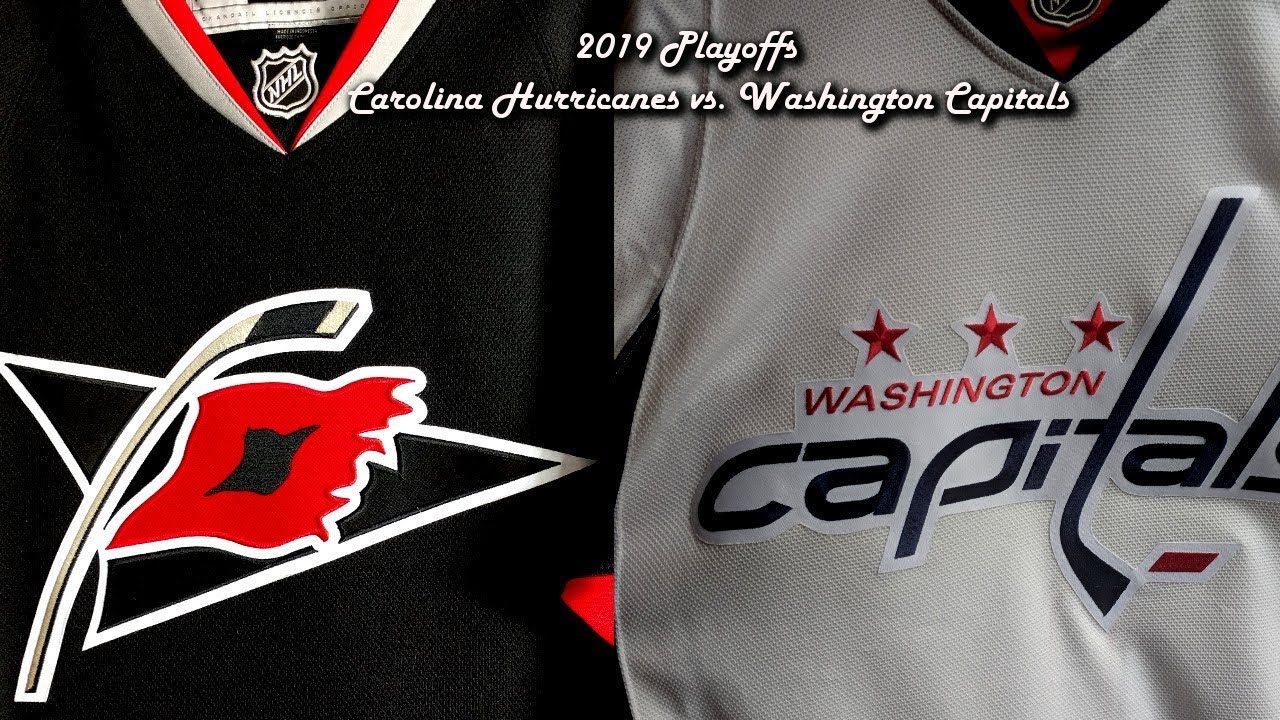
The Washington Capitals didn’t let all of the offseason partying stop them from returning to the postseason for the first time under new Head Coach Todd Reirden. The Capitals had their moments this season where they didn’t look like a team that could make it back to the postseason to defend its title. They got it together in the end to win the Metropolitan Division ahead of the New York Islanders.
The Carolina Hurricanes did some work in the offseason and Rod Brind’Amour got the team to buy into his system. The goaltending tandem of Petr Mrazek and Curtis McElhinney has worked well all season long. The Hurricanes are just one of a few surprise teams to make it to the postseason.
The Regular Season Series Rundown
The Washington Capitals were able to sweep the four game season series to go 4-0-0 against its first round opponent in the regular season. The first game on Dec.14 was a shootout, both literally and figuratively with the Capitals grabbing the 6-5 win in a shootout. The second meeting of the season happened on Dec. 27 and this time the Capitals took the game by a score of 3-1. The third game of the season series took place on Mar. 26 and the Capitals managed to win the game by a score of 4-1. The fourth and final game of the season series took place on Mar. 28 with the Capitals pulling out another close win by a final score of 3-2.
Special Teams Play
A common theme for a majority of the teams in the postseason this year is average to poor play on special teams, whether it be on the power play, penalty kill, or both. The Capitals penalty kill hasn’t been the best this season, and only killed off 78.9% of the penalties taken and allowed five short-handed goals. The Capitals power play finished 12th in the NHL(20.8%), which is low considering all the fire power they have on the two units. The team added five short-handed goals of their own.
The Hurricanes has one of the better penalty kills in the NHL, but lacked something on their power play. The penalty kill operated at 81.6% for the season and was ranked 8th overall. They had eight short-handed goals of their own on the season. The power play is another story and they only converted on 17.8% of their opportunities, while allowing eight short-handed goals against. The power play will need to be more successful if the Hurricanes want a shot at winning the series.
Key Players
Alex Ovechkin is always a key players for the Capitals and it will be no different in this series. If Ovechkin can get some points in this series then it will make it harder for the Hurricanes to go with the matchup that they want because the Capitals have four lines that can score. Ovechkin is the leader of this team and he should want to get off to a good start in the series and never look back.
Justin Williams, captain of the Hurricanes, is going to be the team’s most important player. He is a veteran player with playoff experience, which is something this team lacks overall. The players on this team are young, but have experience in the NHL, but that some playoff experience. He’ll need to keep this team grounded and not let them get down if they are down in a game or the series. Rod Brind’Amour will also be very important to this team in the postseason.
Series X-Factors
The biggest thing that separates these two teams is the depth and experience that the Capitals have. Most of the players who won the Stanley Cup last season are still with the team, but there are a few new pieces to the puzzle. This may be Todd Reirden’s first season as head coach of the Caps, but he was an assistant on the bench when they won the Stanley Cup last year.
The x-factor for the Hurricanes will be the goaltending and how it holds up throughout the postseason. Mrazek and McElhinney have been very good as a tandem all season long, but Mrazek has taken the starting role over as of late. Mrazek is frustratingly inconsistent, he can make a spectacular save one minute and then let in a soft goal the next. McElhinney has been a backup for most of his career. If the Hurricanes want to make a deep run then Mrazek has to make the easy saves and not allow soft goals.
The Capitals Win the Series if…
They can have the balanced scoring that they’ve had all season. They have four lines that can score and a couple of defensemen that can jump into the play. The Michal Kempny injury could be a big one for them, but they have defensemen that can jump in and take his spot. The power play needs to be better than it was in the regular season. The biggest reason the Capitals will win is because of all the experience and depth that they have through out the lineup.
The Hurricanes Win the Series If…
They can get amazing goaltending from Mrazek and play good clean defensive hockey. The ‘Canes are going to need to keep the turnovers to a minimum because the Caps have no problem turning garbage into gold. The team defense will need to be even better than it was in the regular season with all the talent the Capitals have on their roster. The biggest factor will be if the Hurricanes’ power play can cash in against a middle-of-the-pack Capitals’ penalty kill.
Capitals-Hurricanes Series Prediction
The Capitals will get decent goaltending from Braden Holtby and the depth will be something that the Hurricanes won’t be able to handle. The Capitals will do a decent job of keep Sebastian Aho and Teuvo Teravainen off the score sheet. The Capitals will take this series in six games.
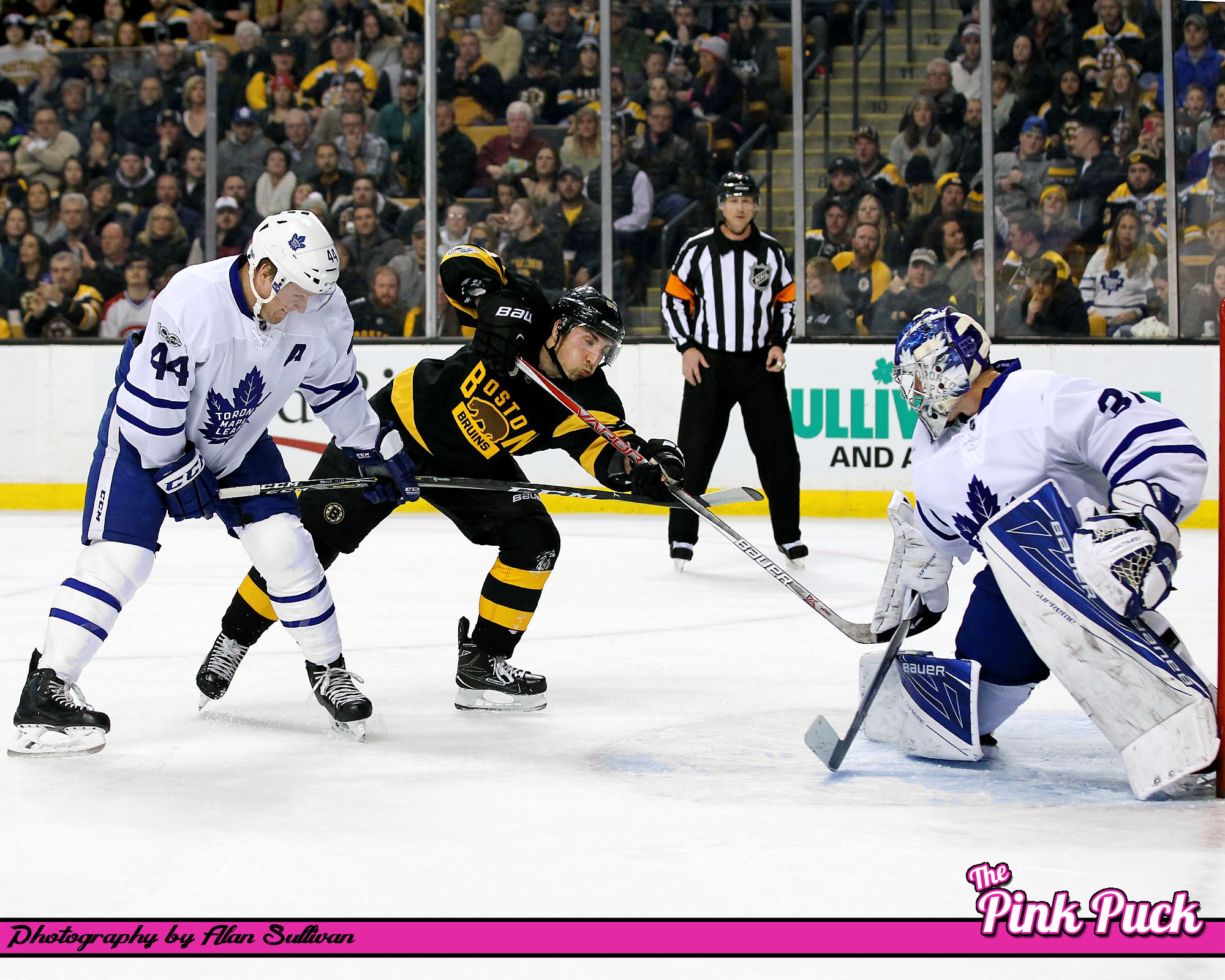
It seems as thought the Boston Bruins have the Toronto Maple Leafs number again this season, and they’ll look to continue that right into the postseason. It will be the second straight postseason that these two teams will meet in the first round. The Bruins won last year’s series in seven games before losing to the Tampa Bay Lightning in five games.
The Maple Leafs hope that its fate is different this postseason than it was last season. The biggest addition to the Leafs roster from last year is John Tavares, who was with the New York Islanders last season. The Bruins have added some more pieces themselves like Jaroslav Halak and Charlie Coyle, to name a few. The young kids for the Maple Leafs are a year older and will look to build off of last year’s experience.
The Regular Season Series Rundown
These two teams met four time in the regular season with the Boston Bruins taking three of four from the Maple Leafs. Two of the three wins by the Bruins came rather easily winning by a score of 5-1 and 6-3. The two teams had their series finished up by Jan. 2, which is a little early to be finished up with a division rival especially when one team is trying to gain points on the other for playoff positioning. Jaroslav Halak started three of the four games and Tuukka Rask started the final game of season series by picking up a 3-2 win.
The Maple Leafs managed to pick up a 4-2 win at home in the second game of the season series on Nov. 26, 2018. Brad Marchand managed to have seven assists for the Bruins in the season series, while Mitch Marner had one goal and four assists for five points. The Leafs need to find out a way to slow down the Bruins or they will be hitting the golf course after another first round exit.
Special Teams Breakdown
The Bruins had a lethal power play this season finishing third in the NHL (25.9%). They finished with 65 power play goals, which was good for third in the NHL. They also gave up 15 short-handed goals to the opposition while on the power play. The team could possibly have been better but David Pastrnak missed some time with an injury. The penalty kill was another story for the Bruins, who finished in the middle of the pack (79.9%). It could have been worse but the team added seven short-handed goals to their penalty kill resume.
The Maple Leafs overall special team play was just okay. The power play finished the season converting 21.8% of its opportunities and that was good enough for a top 10 finish even though they allowed nine short-handed goals against. The penalty kill was not so hot only killing 79.9% of the penalties they took. The Leafs only scored five short-handed goals on the season. The special teams will need to be vastly improved if they want a shot at being competitive in this series.
Key Players
The key player to this series for the Boston Bruins is goaltender, Tuukka Rask. Rask and Jaroslav Halak were splitting time after a slow start by Rask, who managed to make the starter’s net his own during the season. Rask should see some shots since the Leafs manage to average just over 33 shots per game. The goalie will need to step his game up and make the saves when called upon to keep his team in the game. Rask can’t afford to leave too many rebounds for second chances because the Leafs will clean those up and put them in the back of the net for some goals.
Mitch Marner is the Maple Leafs’ key player for the series. Some people would disagree and say John Tavares since he was the big offseason acquisition. If Marner is using his speed and playmaking ability then he find the guys that are wide open like Tavares for the easy goal. Tavares could benefit immensely from his linemate having a good series and playing to the best of his ability since it will make that line so much harder to play against. Marner needs to use his speed and vision when he is on the ice to find a teammate so they can get good chances towards Rask.
Series X-Factors
The Bruins’ top line needs to get hot again in the playoffs for this team to go far. The line of Brad Marchand, Patrice Bergeron and David Pastrnak combined for 260 points in the regular season. This is the same line that got hot last postseason and carried them to a series win over these Maple Leafs. This line can also go up against the Tavares line since they have Bergeron on the line who is one of the best two-way centers in the game right now.If this line can get hot, it takes the pressure off of the other lines to think that they need to score even time they are on the ice. It will also make the chess game of which line is covering which line a more difficult choice for the coaches to make.
Frederik Andersen is the x-factor for the Maple Leafs. The defense is not the best in the NHL and the Leafs will give up good chances and turn the puck over. Andersen was good at erasing those mistakes at times during this season, but at other times, he has allowed some soft goals. The soft goals can’t be allowed or happen as often because he needs to keep his team in each game to try to pull out a series win.
The Bruins Take the Series If…
They can manage to neutralize the speed and transition game of the Maple Leafs. The Leafs have some young kids that can skate so if the Bruins can slow them down then it should be easier to deal with the rest of the lineup. The Bruins will need to get some scoring depth even if the top line manages to go off because one line won’t be able to carry a team all postseason. Rask will need to make the easy saves and find a way to stay focused to track the puck and not allow any soft goals.
The Maple Leafs Take the Series If…
They use their speed and transition game to their advantage and not let the Bruins slow them down coming through the neutral zone. The Maple Leafs want to back the defenders into their own zone by using their speed and having their feet moving. The Leafs can’t get wrapped up in the after-the-whistle shenanigans, if there are any in the series, especially if Marchand is on the ice. The Leafs want to play a disciplined game and stay out of the penalty box. The biggest key to winning the series is playing solid team defense and getting timely saves from Andersen.
Bruins-Maple Leafs Series Prediction
This will not be an easy series for either team and it will go the distance of seven games so be ready for some action-packed playoff hockey. The Bruins will take the series and advance to the next round. The Bruins will get the better goaltending and play better team defense to remain red hot and be one of the remaining right teams in round two.
The Tampa Bay Lightning were the NHL’s best team almost all season long and didn’t have to deal with too much adversity. The Columbus Blue Jackets, on the other hand, had an inconsistent season, an active trade deadline and a goalie who managed to be clutch down the stretch to help his team clinch a playoff berth late in the regular season.
The regular season has come to an end and it’s time to start the NHL’s second season, also known as the NHL Stanley Cup Playoffs. Once the playoffs start, anything can happen like the Blue Jackets pulling out an improbable series win over the top-seeded team to win their first playoff series in team history, but let’s not get ahead of ourselves here.
The Series Rundown
The Bolts were the most consistent team in the NHL all season, which helped them to win the Presidents’ Trophy (team with the most points). The lineup is stacked with speed, skill and goal scoring ability and that makes them one of the harder teams to defend in the League. Their special teams were both ranked first overall and they got good goaltending from Andrei Vasilevskiy and Louis Domingue all season. They have the experience and depth on the roster that could help them make a long run in the postseason. If they have one weakness, it is that they can lose focus at times during a game especially when they have a big lead.
The Columbus Blue Jackets decided to go all in at the trade deadline to make a push to Imake the playoffs and make it past the first round this year. They acquired Matt Duchene, Ryan Dzingel, Adam McQuaid and Keith Kincaid. The Blue Jackets managed to score goals this season, but didn’t have the easiest time keeping them out of their own net due to poor goaltending, at times. The team is going to need to improve their power play since it was a dismal 15.4% in the regular season to go with the second ranked penalty kill at 85%, just behind the Lightning. Sergei Bobrovsky has struggled in the playoffs in previous years, but he is red-hot going into them this season, and the Blue Jackets will need him to have a shot at winning this series.
Special Teams Breakdown
The Lightning had the best power play and penalty kill in the regular season. The power play finished at 28.2% while the penalty kill operated at 85%. The Lightning vastly improved the penalty kill from just a season ago when they finished 28th overall (76.1%). The power play is a deadly one featuring Nikita Kucherov, Steven Stamkos and Brayden Point, just to name a few players. The player movement and puck movement is what makes the power play so successful with the puck being moved quick and the players hardly ever standing still. It can be poetry in motion at its best.
The Blue Jackets had one of the worst power plays in the League (15.4%), but finished just percentage points behind the Lightning for best penalty kill (85%). It’s no surprised on where the penalty kill finished considering the how good the defense and goaltending can be when they are on their game. The power play will need to be way better in the postseason or it could mean another first round loss for the team.
Key Players for Each Team
Nikita Kucherov has been the Bolts’ best player all season long and that will need to continue into the postseason. The more focus on Kucherov means the less focus on his own linemates and players on other lines. Kucherov brings a lot to the table offensively with his speed and skill, which has been on display on a nightly basis. If Kucherov’s line can produce then it will create matchup problems for John Tortorella and the Blue Jackets coaching staff.
Artemi Panarin is set to become a free agency this summer, and a good postseason run would help him get even more money than expected. Panarin has been the Blue Jackets’ best player all season long. He led the team in assists (41) and points (87). He should want to continue his regular season success into the postseason so he can help his team get their first ever playoff series win.
Series x-factors
The x-factor in this series for the Lightning is going to be the play of the special teams. The Blue Jackets may have a poor power play, but that doesn’t mean that they can’t score while on it. The Lightning will have to find a way to solve the Blue Jackets’ solid penalty kill, and that could be done with good zone entries and movement on the power play like they usually do.
The x-factor for the Blue Jackets will be goaltender Sergei Bobrovsky. Bobrovsky is an unrestricted free agent, who wants a good playoff showing to up his chances of getting a good long-term deal. He is also looking to lead the Blue Jackets past the Lighting and that will be a tough order to fill. Bobrovsky needs to find a way to continue to be the hot goalie that led the Blue Jackets to a playoff berth down the stretch. He had four shutouts and a .951 she percentage in the final nine games that he played in the regular season.
The Lightning Win the Series If…
The team plays the simple hockey that they’ve been playing all year. There’s no need to change the game plan that made you the best team in the NHL the past season. They will want to use their speed in transition and make the defenders back into their zone instead of being able to stand at the blue line. The Bolts will be forced to work for time and space so they can’t get frustrated and start turning the puck over because that is often disastrous. Vasilevskiy will need to make the routine saves and possibly some highlight reel saves.
The Blue Jackets Win the Series If…
They can manage to find a way to cash in on their chances early in games. The Blue Jackets will want to get off to fast starts in these games and not look back. Yes, the Lightning have blown some big leads at times, but they are not a team you want to have to mount a comeback against in every game of a potential seven game series. Bobrovsky will need to be huge because the Lightning are so deep and could cause potential matchup problems for the Blue Jackets. He will need t be able to hold his team in games so they have a chance each and every night.
Lightning-Blue Jackets Series Prediction
The Lightning take the series in five games. The Lightning won all three regular season matchups and fairly easily. The Bolts are just too deep and too talented for the Blue Jackets, who will be out in the first round again for the third straight year. The Blue Jackets also had to make a stretch run just to clinch a spot in the playoffs and that could cost them.
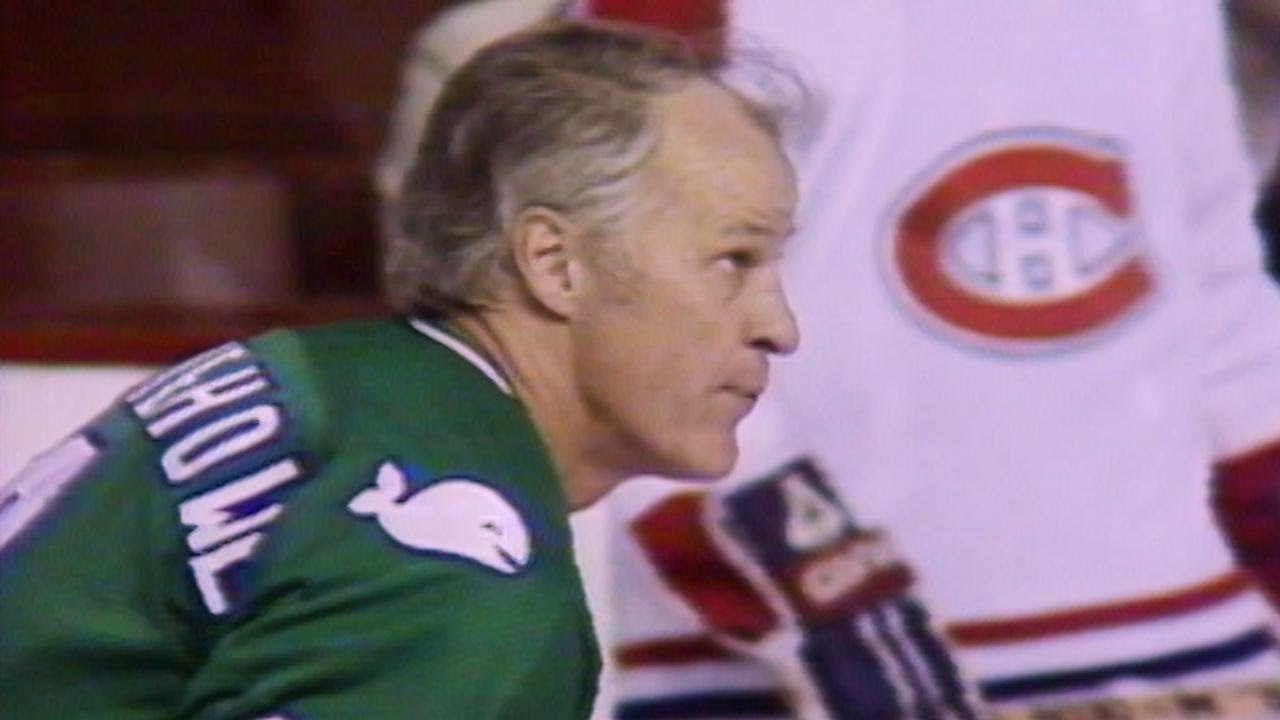
After a 32-season career that went into five decades, 52-year-old Gordie Howe ended his professional playing days. On April 6, the final day of the 1979-80 season, Gordie netted his final regular-season goal. During the Hartford Whalers’ preliminary round, on April 9, 1980, he scored his final playoff goal. That these would be his final contributions became known when he officially announced his retirement on June 4.
As the 1979-80 season drew to a close, Gordie’s ultimate team, the Hartford Whalers, played his original team, the Detroit Red Wings. As the Hartford Courant noted, he “scored his last regular season goal in his final regular season game – against the Red Wings, with whom he scored his first NHL goal in his first NHL game.” The Whalers’ 5-3 victory brought them to a total of 303 goals, which then was a record for an expansion team.
Still, going into the playoffs, Hartford had placed fourth in the Norris Division only to face the first-place Montreal Canadiens. Overall in the league, Montreal ranked third as opposed to Hartford at fourteenth. The teams had met each other four times during the regular season, tying three of them. However, the Canadiens had won the Stanley Cup the previous four seasons and had not lost a game since February 19. For the preliminary round, the first two games were held at Montreal’s Forum before relocating to Hartford’s Civic Center.
On Tuesday, April 8, the first game, Gordie established a record for having appeared in 20 postseasons. The previous record-holder, Red Kelly, had played in 19. Gordie had not been in the NHL playoffs since 1970, before his first retirement, but he played in six WHA playoffs in the meantime. Unfortunately, his team was crushed by the Canadiens, 6-1.
On Wednesday, April 9, about 700 fewer fans came to the Forum, which still drew 15,242. From the first moments, this game looked to be similar to the previous night. It only took the Canadiens 1:20 to score the first two goals. They had the score at 3-0 by the end of the first period and 4-0 shortly thereafter. Hartford rallied, scoring three goals in just over five minutes but having one of them disallowed. When the third period began, the score was 8-2. Although not enough to save the game, the Howe family – father Gordie and sons Marty and Mark – then ended on a strong note.
“The best thing the Whalers had going for them was their three-of-a-kind,” complimented Wayne Parrish of the Montreal Gazette. “Of course, it wasn’t much of a hand against the Canadiens’ full house.” At 5:55, the family defenseman, Marty, “whipped in a slap shot from the point with Pat Boutette screening Montreal goaltender Dennis Herron.” About eight minutes after Marty made his first NHL goal, his father made his last at 13:59. Gordie’s “pretty backhander from the top of the right faceoff circle that beat Herron low to the far corner of the net.” Gordie exclaimed, “Damn, I was proud to get a backhander that high in the air.” His 68th playoff goal was his first in ten years. Despite being a Montreal crowd, they honored Gordie with a standing ovation. The opposing team was not so gracious, despite winning 8-4. Goalie Herron was “visibly upset on the senior Howe’s goal” and “banged his stick on the ice in disgust.” On both goals, Mark Howe assisted, which made this the only NHL game in which all three Howe relatives earned points. Gordie commented, “I guess a little bit of pride showed up in the third, thank God.”
Mark was more pessimistic. “What really bothers me is that even if we do have three guys out, we’ve played five periods of bad hockey. We pretty well expected to lose those games, but we didn’t plan to give them away. We’ve got to go home and play like we can.” Hartford Coach Don Blackburn justified, “We were totally outclassed from start to finish. The only positive thing is we didn’t quit. This game showed up a lot of our inadequacies. It shows we have a long way to go to be a good hockey club like the Canadiens.” With those harsh realities to contemplate, the Whalers flew home to Hartford through a “near-tropical storm that raged through the northeast.” The newspaper reported the flight was a “white-bagger all the way” with Gordie and at least six other players becoming sick.
The third game of the best-of-five series took place on April 11. It was much closer, but the Whalers still lost 4-3 in overtime. With that, Hartford was eliminated. Almost immediately afterwards, the press asked Gordie about retirement. He responded, “Don’t ask me that. Ask (Bobby) Hull. He’s retired more times than I have.”
Originally, Gordie claimed he would wait until late summer to decide, but instead, he made the official announcement June 4, 1980 at a media event held at the Hartford Hilton Hotel. Gordie joked, “Nobody teaches you how to retire. The first one didn’t work out too well.” Then he reassured the crowd, “I’d like to make it clear I’m not quitting. I’m not a quitter. I’m retiring. I feel very fortunate to have been able to play as long as I did.” His new position would be the Whalers’ director of player development.
Additional Sources:
Terry Price, “Whalers Win Season Finale; Now It’s On to Montreal,” Hartford Courant, 7 April 1980, pp. 45 and 50.
Terry Price, “Canadiens Overrun Whalers Again, 8-4,” Hartford Courant, 10 April 1980, pp. 65 and 71.
Terry Price, “Whalers Put Pride on Line Tonight,” Hartford Courant, 11 April 1980, p. 39.
Wayne Parrish, “Referee won’t let Whalers have fun wails Kelley after goal called back,” Montreal Gazette, 10 April 1980, p. 58.
Glenn Cole, “Canadiens waltz past Whalers,” Montreal Gazette, 10 April 1980, p. 57.
“Howe’s future remains in doubt,” Montreal Gazette, 15 April 1980, p. 44.
Terry Price, “Whalers’ Gordie Howe Retires,” Hartford Courant, 5 June 1980, pp. 1, 69, 73.
Throughout hockey history, when times get hard, franchises consider moving to new locations to improve their fortunes. Some transitions show few other changes, like when the Minnesota North Stars dropped the word “north” so that the Dallas Stars kept nearly the same logo after the move. On opposite end of the spectrum, the border-crossing relocation from Winnipeg to Phoenix inspired a complete overhaul in name, colors, and logos. Those changes were revealed at a five-hour event held at the team’s new home, the America West Arena, on April 8, 1996.
The Winnipeg Jets had originally belonged to the WHA before being brought over into the NHL at its dissolution in 1979. In the 1990s, player salaries increased with liberal free agency rules, and operating costs skyrocketed. At the same time, players could demand to be paid in U.S. dollars even though revenue came in the increasingly weaker Canadian dollar. Once the Quebec Nordiques relocated in 1995, Winnipeg had the smallest NHL market in Canada with one of the smallest and inadequate arenas in the NHL. Thus, even Winnipeg’s strong fan support could not support the franchise. After several failed attempts to keep the team, a group including Jerry Colangelo, owner of the National Basketball Association’s Phoenix Suns, bought the franchise for $65 million in December 1995 and made plans to relocate them to Phoenix, Arizona. The Jets played their final game at Winnipeg on April 28, 1996, and that July, they made the move south.
The new owners held a contest to rename the team. They had already tossed around options like Wranglers, Outlaws, Mustangs, and Freeze. The public name-the-team contest drew over 10,000 entries. Of them, the top two names were Coyotes and Scorpions, both representative of the Sonoran Desert. Although Scorpions were a strong runner-up, the efforts of the logo design team solidified the decision to call the team the Phoenix Coyotes. They then held a drawing for those who had entered Coyotes into the contest. As a result, 17-year-old Brett Thornton won a pair of lifetime season tickets. He told the press, “It’s not as drab as a lot of other NHL names. I like it. I think it’s pretty cool.” Two other winners received a pair of season tickets for the first season and a trip to the Jets’ season-finale.
To unveil the new team name, colors, and logo, the franchise hosted five hours of events at America West Arena. According to the Arizona Republic coverage, “Most of them [the fans] took a seat in the arena as the official unveiling was made amid smoke, rock and roll and fireworks.” Shawn Hunter, the chief operating officer for the club’s new owners, announced the contest-winning name to a “warm welcome,” though Scorpions actually seemed to receive a better response. That did not seem to stop fans from rushing to “buy team merchandise the minute after the name and logos were introduced.” Fans also had the chance to win prizes, play hockey video games, and skate.
To represent the Coyotes, the unveiled logo showed, according to the Arizona Daily Star, “an upright coyote wearing an extra-long mask styled to resemble a menacing Hopi kachina figure from Northern Arizona.” Internally referred to as Coyoteman, he was designed by NHL creative designer David Haney and the Phoenix design firm Campbell Fisher Ditko. Hunter enthusiastically proclaimed, “This design is an outstanding, unique design in sports, and certainly in Phoenix sports. It captures the Southwest beautifully, and it’s really going to make its mark throughout the league.” Coyotes co-owner Richard Burke commented that “from a creative standpoint, it’s different from what else has been done. We’re pleased with it, and we think the league will be pleased with it.” The other mark with the coyote was a crescent moon meant to look like a “C.” As for colors, those too aimed at the Southwest theme, incorporating “purple, brick, dark green, sand and black.”
Since then, the Phoenix Coyotes have faced more challenges and changes. In 2003, they moved to the suburbs to play at Glendale’s Gila River Arena. Six years later, in 2009, the owners declared bankruptcy, and the NHL took control of the franchise. The team was finally settled with a purchase by IceArizona Acquisition Co., LLC and a 15-year lease agreement with Glendale. The next year, on June 27, 2014, the team changed its geographic name to Arizona to, as co-owner Anthony LeBlanc explained, “encourage more fans from all over the state, not just the valley, to embrace and support our team.”
Meanwhile, in 2011, the Atlanta Thrashers relocated to Winnipeg and chose to honor its previous team by taking the name Jets. Although the colors and logos changed, the Winnipeg Jets had returned to the NHL even as the Arizona Coyotes continued on south of the border.
Additional Sources:
Stephen Laroche, Changing the Game: A History of NHL Expansion (Toronto: ECW Press, 2014), 321.
“A new team to howl about” and “Coyotes are born” and “Fans go wild over Stanley Cup,” Arizona Republic, 8 April 1996, pp. A1 and D1-D2.
“Multicolored Coyotes will roam ice as Phoenix NHL team,” Arizona Daily Star, 9 April 1996, p. 5.
The regular season came to a close on April 7, 1974. Both the Philadelphia Flyers and the Pittsburgh Penguins played that night, though with opposite outcomes, and both featured goalies who set records. Bernie Parent led the Flyers to his 47th victory of the season. Andy Brown, the last remaining NHL goalie to forgo wearing a face mask, played his final NHL game as the Penguins failed to make playoffs.
For a Spectrum crowd of 17,007, the first-place Flyers worked to end on a high note, defeating the eighth-place Minnesota North Stars 6-2. Minnesota’s coach, Parker MacDonald, bemoaned, “It’s hard to get your team up when it doesn’t mean anything and the other team is going for all those records. We had nowhere to go.” His goalie, Gump Worsley, who had to watch what would have been his final NHL game, groused, “We have somewhere to go, home.”
The records the Flyers took included having the most wins and fewest losses by a West Division team. Philadelphia became only the third NHL team to win 50 games in one season, after Boston had accomplished the feat three times and Montreal had managed once. However, the Flyers just missed having the best overall points that season by accumulating 112, one shy of the Bruins’ total. Obviously, the Flyers topped the West Division with a record of 50-16-12.
As the man in the net, Parent received credit for the victory. With that 47th victory, he set the record for most regular-season wins. That record held until the 2006-07 season, when Martin Brodeur won 48 games with the New Jersey Devils. Parent himself almost reached his own record with 44 wins the following season. On the way to earning all his victories, Parent started in a record 73 (of 78) games. He ended the 1973-74 season with a record of 47-13-12 with a league-leading 1.89 goals-against average from only 136 goals against.
Parent’s goals against combined with those of backup Bobby Taylor amounted to 164 goals against for the Flyers, almost 100 fewer than the previous season. Just the game before, on April 6, poor Taylor had suffered a 6-1 loss to Pittsburgh that seemed like it had ruined the chances of Parent receiving the Vezina Trophy for fewest goals against. Instead, the biggest competition, Tony Esposito of the Chicago Blackhawks, had the misfortune of having Marcel Dionne score on him with 66 seconds remaining in their season. After Chicago’s 7-4 victory over the Detroit Red Wings, they also had 164 goals against. Parent and Esposito officially tied for the Vezina Trophy. Taylor was relieved. “This perks me up a little. I never felt so bad in my life – all I could think was I had lost it for Bernie.” Parent clowned, “Tell that Dionne I’ll kiss him and take him fishing all summer. Isn’t that great? I don’t know how Esposito feels, but I feel great.” For the first time since the Vezina Trophy was established 48 years prior, two goalies from different teams had their names inscribed.
All of this success came right on the heels of Parent’s disastrous season with the WHA. After starting with the Bruins in 1965, Philadelphia selected Parent during the 1967 Expansion Draft. Having been traded to Toronto in early 1971, Parent left for the WHA when it began in 1972. Thanks to a broken anklebone, he had to sit out a month. Then, the night before the Philadelphia Blazers’ second playoff game, Parent walked out on the team that had failed to pay the remainder of the insurance on his hefty salary. Consequently, the Blazers suspended him. Meanwhile, in the NHL, Toronto traded him back to Philadelphia, where he happily remained until February 17, 1979, when an eye injury impaired his vision.
While Philadelphia had a fantastic night, the Penguins went down in Atlanta’s flames. The sold-out Omni held a crowd of 15,141 to watch their Flames defeat the Penguins 6-3. That put them nine points over Pittsburgh as the teams finished fourth and fifth, respectively, in the West Division.
From the Penguins’ perspective, there would not have been anything special about their final game of the season if it were not for their goalie. Andy Brown only played in 62 NHL games with this being his last. During the 1973-74 season, he saw more ice time than the other three goalies carried by Pittsburgh and finished with a record of 13-16-4 and 115 goals against. Since it looked like Pittsburgh planned to go with other goalies, Brown then signed with the Indianapolis Racers of the WHA. He tended goal for them from 1974 until his spinal injury limited him to ten games during the 1976-77 season.
Throughout his career, both in the NHL and WHA, Brown refused to wear a protective mask during games even though he would wear one during practices. The official reasoning he gave was that the mask limited his visual range. Brown also once said, “So why don’t I wear a mask? Well, I think it’s mind over matter. I’ve never worn one and I can’t say I’m horrified at the thought of what might happen without one. I’m myself and I say different strokes for different folks.” He even joked, “When those TV cameras zoom in on the guys with the masks, they look like monsters. When they zoom in on me – they see an untouched marvel!” As masks became mandatory, Brown’s final NHL appearance also became the final NHL appearance of a maskless goaltender.
Another distinction Brown held was that he incurred the most penalties by a NHL goaltender. During the 1973-74 season, his 60 penalty minutes crushed Billy Smith’s record 42 from the previous season. Brown held the record until Gerry Cheevers amassed 62 minutes during the 1979-80 season. Brown also set the same record for the WHA when he accrued 75 penalty minutes during the 1974-75 season.
During the 1973-74 postseason, the Flyers swept the Flames during the quarter-finals and then took seven games to eliminate the New York Rangers. The Flyers became the first expansion team to with the Stanley Cup upon defeating the Boston Bruins four games to two in the finals. Parent was awarded the Conn Smythe Trophy as playoff MVP, and he said, “To play here, and win like this, it’s the greatest feeling in the world.” Both the Flyers and Parent duplicated their awards the following season, winning back-to-back the Stanley Cup, Conn Smythe Trophy, and Vezina Trophy. In acknowledgement, the Flyers retired Parent’s No. 1, and he became the first of their franchise inducted into the Hockey Hall of Fame in 1984.
Additional Sources:
Brian McFarlane, Brian McFarlane’s History of Hockey (Champaign, Ill.: Sports Publishing Inc., c1997), 121-122, 133-135.
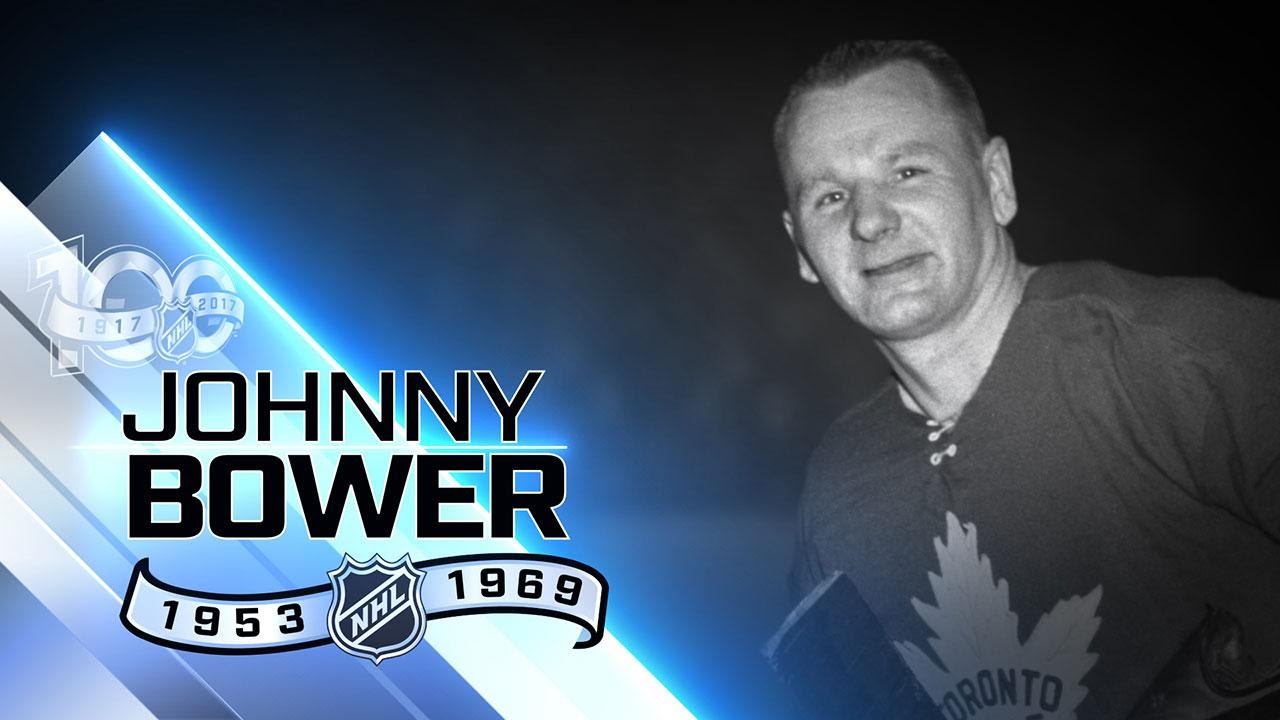
The Toronto Maple Leafs were a force to be reckoned with during the 1960s, winning four Stanley Cup champions (in 1962, 1963, 1964, and 1967). One of the main reasons for their success had to do with their more mature goaltender, Johnny Bower, who also won the Vezina Trophy in 1961 and 1965. During the 1968-69 playoffs, he became the oldest goalie to play during the postseason. He was allegedly aged 44 years, 4 months, 28 days when he started on April 6, 1969.
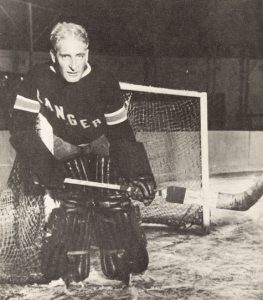
According to record, Bower was born November 8, 1924. If correct, he would have been about a month and a half older than the previous oldest person to mind an NHL net during playoffs, Lester Patrick, born on December 31, 1883. Patrick had a full career playing for western professional teams before finishing his playing career with one season, 1926-27, as a defenseman in the NHL. That same season, he became coach and general manager of the New York Rangers, and he remained with them for 13 seasons until 1933. As a player, Patrick was inducted into the Hockey Hall of Fame in 1947.
Hockey Hall of Fame – Frank Lennon, via Wikimedia Commons
On April 7, 1928, Coach Patrick was 44 when he had to tend his team’s net during the second game of the Stanley Cup finals, held at Montreal Forum. New York’s goalie, Lorne Chabot, received an eye injury at the beginning of the second period, but their opponents, the Montreal Maroons, would not allow the backup goalie or a minor league goalie to join the game. Rangers captain Bill Cook and teammate Frank Boucher urged Patrick to fill in since he had some experience from his Pacific Coast teams. Patrick only allowed in one goal on 18 shots, but unfortunately, it was the tying score. Fortunately, Boucher saved the day in overtime. With permission to borrow the New York Americans’ Joe Miller, the Rangers lost the third game but won the final two. Despite the goalie debacle, the Rangers won their first Stanley Cup.
Bower’s age was uncertain since he lied to join the military during World War I. According to the NHL’s 100-Greatest Series, “He looked like your grandfather, but he moved like a teenager — light on his feet, quick with his hands and especially adept at thrusting his stick out to poke the puck from a charging attacker.” Bower earned the nickname “The China Wall” during his time in the AHL because he blocked like a brick wall, but he was also often called “as old as the Great Wall of China.” His surname was one he chose when he left behind his birth surname of Kiszkan after a “separation in the family.”
Like the Great Wall, Bower’s road was long. While playing in the minors beginning in 1944, he occasionally tended goal for the New York Rangers from 1953 to 1957 and then joined Toronto in 1958. Throughout, he was beloved and respected by teammates and fans.
Although Bower made history as the oldest goalie to play during the postseason, he and his team had a rough time during the 1969 Quarter-Finals. The second-place Boston Bruins not only swept fourth-place Toronto, but in the process, handed them two humiliating losses from get-go. On April 2, Boston fans watched their team score seven goals on Toronto’s starting goalie, Bruce Gamble. Even after Bower went in for the third period, the Bruins scored thrice more for a 10-0 shutout. The very next night, the Bruins potted four goals before Bower replaced Gamble early in the second period. According to the Boston Globe, “Bower had a little more luck, but not much.” He let in another three goals to leave Boston with a 7-0 shutout. The series moved to Toronto, but the Maple Leafs did not improve enough. On April 5, after Gamble let in two goals during the first period, Bower again took over the net. Even though Bower also let in two, he received the No. 2 star of the night while Boston goalie Gerry Cheevers took No. 1. The Bruins won 4-3.
Finally, on April 6, with the whole series on the line, the Leafs started Bower. It made sense that Gamble had been given the responsibility first since he had played the majority of the regular-season games. He had a record of 28-20-11 compared to Bower’s 6-4-3, and Gamble was at his prime at 30. However, according to the Boston Globe coverage, “Old John stood off a number of good Bruins bids, and there was speculation of how much difference there might have been if he had been the original selection of Punch Imlach instead of Bruce Gamble.” The press credited him with inspiring his teammates and later leading them to shake hands with class as they lost 3-2. Almost immediately, Toronto fired Imlach, the Leafs’ coach and general manager throughout the four 1960s championships. A Leafs’ spokesman said, “The Imlach era has come to an end. It was coming if he had beaten the Bruins. It was coming if he won the Stanley Cup.” Partly in solidarity, Bower announced that he would retire.
As his swan song, on December 10, 1969, Bower became the oldest netminder to play during the regular season. That night did not go well for him either, and he never played another NHL game. He was inducted into the Hockey Hall of Fame in 1976.
Additional Sources:
Tom Fitzgerald, “Bruins in 3-2 Sweep, Toronto Fires Coach,” Boston Globe, morning edition, 7 April 1969, pp. 1 and 25-26.
John Ahern, “Punch’s Ouster Shocks Bruins,” Boston Globe, morning edition, 7 April 1969, p. 26.
“Bower Displays Class, Embraces Rival Cheevers” and “Toronto Coach Fired After Leafs Lose,” Boston Globe, morning edition, 7 April 1969, p. 27.
Tom Fitzgerald, “Espo (4), Bruins Crush Toronto, In Wild Opener, 10-0; Orr Hurt,” Boston Globe, 3 April 1969, pp. 49-50.
Harold Kaese, “Barraging Bruins Now 17 To Tepid Toronto’s Zero,” Boston Globe, 4 April 1969, pp. 1 and 25.
Tom Fitzgerald, “Bruins Top Toronto, 4-3,” Boston Globe, 6 April 1969, pp. 1 and 81-82.
They played on the same date 23 years apart, but left wingers Harvey “Busher” Jackson and Ted Lindsay set and tied the record for most goals in one playoff period. On April 5, 1932 and 1955, respectively, they each scored a hat trick within the second period of a playoff final.
In 1932, Jackson’s Toronto Maple Leafs swept the New York Rangers in a best-three-of-five series to win the Stanley Cup. It was the first sweep in Stanley Cup history. Toronto had had a rocky season. By replacing coach Art Duncan with Dick Irvin, they jumped from last to first place in just one month. However, they finished second (with a 23-18-7 record) to the Montreal Canadiens in the Canadian Division. Meanwhile, the Rangers won the American Division (with a 23-17-8 record). They went on to eliminate the Canadiens in the first round of the playoffs. Toronto knocked out the Chicago Blackhawks then the Montreal Maroons.
With 53 points (28 goals and 25 assists), Jackson led the scoring race for the 1931-32 season. He had joined the Maple Leafs in 1929 and played with them until they traded him to the New York Americans in 1939. After two years there, he was traded to the Boston Bruins, where he remained until his career ended in 1944. When the 1932 playoffs ended, Jackson had five goals and two assists for seven points, just one behind his teammate, the lead scorer, Charlie Conacher.
Jackson’s biggest night was the first game of the series, Tuesday, April 5. A whopping 18,000 came to Madison Square Garden to watch the visiting Maple Leafs beat the Rangers 6-4 with the “speediest hockey New Yorkers have seen this season.” The first period ended with a 1-1 tie. Then, the Leafs went on a “wild scoring spree in the second.” Jackson took a short pass from Hap Day to score at 3:35. Then at 10:20, he took another pass to score, and only 30 seconds later, Conacher squeezed in a goal. Finally, at 17:05, Jackson scored “on a long drive.” The Rangers got on the board again at the end of the second and beginning of the third. In the last minutes of the game, at 18:32, the “whole Ranger team was in Toronto territory” in a “furious attempt to turn the trick,” so Red “Horner and Jackson stole off on a foray of their own, Horner netting the disk on a pass from Jackson.”
The Leafs proceeded to score six goals in each of the next two games. Only 13,000 attended the middle game at Boston Garden on April 7, when Toronto won 6-2. The Rangers got the first two goals of the game. Less than a minute after the second one, Jackson “ragged the puck into the New York zone, fooled Brennan neatly, and scored. Charley Conacher registered an unassisted tally to tie.” The Leafs sunk four unanswered goals throughout the third period. For the final game, on April 9, 14,500 watched the action at Maple Leaf Gardens. The Leafs’ Andy Blair scored the only two goals in the first period. Then in the second, Jackson “blasted in Toronto’s third goal with a sparkling combination play with Primeau and Conacher.” The Rangers joined the party thanks to Frank Boucher, who scored the last two goals of the game within two minutes. Still, Toronto won 6-4. These scores led to the nickname “the tennis series.” The Leafs’ victory also meant that Conn Smythe kept his vow of building a better team than the New York team he had been fired from.
In 1955, both the Detroit Red Wings and the Montreal Canadiens had faced the suspension of their star players. Detroit’s captain, Lindsay, had received a 10-game suspension after hitting a spectator with his stick back in January. Meanwhile, Maurice Richard’s suspension caused riots in Montreal. Still, the two teams placed first and second, respectively, with Detroit’s 42-17-11 record and Montreal’s 41-18-11 record. In fact, by the time of the April 5th game, Detroit had not lost a game in seven weeks, since before February 27. Their 15 consecutive wins set a record, breaking the record 14 set by the Boston Bruins during the 1929-30 season 25 years earlier.
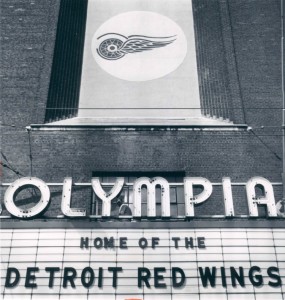
During the seven-game finals, each team won all of their home games. The top-ranked Red Wings had home-ice advantage for four games, giving them their second consecutive Stanley Cup. The first two games were won by Detroit at Olympia Stadium. Montreal won the next two at the Forum. Then the teams alternated with the fifth and seventh won by the Red Wings at Detroit and the sixth by the Canadiens at Montreal.
Despite “still playing with his injured shoulder in a brace,” Lindsay had his big moment during the second game of the series, before 13,942 at Olympia Stadium. With a score of 7-1, Detroit just missed having a shutout when the Canadiens scored midway through the third period. From the penalty box, he watched his teammate Marcel Pronovost score the first goal (at 2:15 of the first period). About a minute later, Montreal replaced goalie Jacques Plante with Charlie Hodge. That turned out to be a bad idea. At 9:57, Lindsay (“jabbed home [Gordie] Howe’s passout.” As the 16th minute approached, Detroit’s Terry Sawchuk had to leave the net to get five stitches over his left eye. Shortly thereafter, his teammate Alex Delvecchio scored, and Howe followed that up at 17:11.
Although Montreal pulled Hodge and sent Plante back in for the second period, Lindsay “personally spearheaded one of the wildest and most satisfactory playoff triumphs ever enjoyed by the Red Wings.” His three goals came at 8:10, 15:48, and 19:37. For the last goal, he “took a pass from Dutch Reibel and roared in on Plante. He lost control of the puck but it rolled in anyway.” He tied Jackson’s record of three goals in one playoff period and was the first (since 1926) to score four goals in a finals game. With that goal, Lindsay earned his 15th point in the playoffs, setting a club record. In honor, “the linesman took the puck out of play and gave it to the Wing bench to save for Lindsay’s trophy case.”
The club record of 14 playoff points was set by Don Grosso in 1942 (in 12 games) and Carl Liscombe in 1943 (in 10 games). Only in the sixth playoff game that season, Lindsay had topped them. After Howe’s goal and three assists in the same game, he tied with 15 points. The NHL record was 18. Both Lindsay and Howe ended up topping that by the end of the 11 playoff games, with Lindsay’s 19 points and Howe’s 20. Furthermore, their line (with Dutch Reibel) had already amassed 39 points by the April 5th game. The NHL record was 48, and by the end, they had 51.
Lindsay skated with the Red Wings from 1944 to 1957 and again during the 1964-65 season, so he won the Stanley Cup championships four times. In between, he played for the Chicago Blackhawks from 1957 to 1960. Lindsay was inducted into the Hockey Hall of Fame in 1966, and Jackson joined him in 1971.
Additional Sources:
Brian McFarlane, Brian McFarlane’s History of Hockey (Champaign, Ill.: Sports Publishing Inc., c1997), 34-35 and 76.
Jim Kahn, “Leafs Fall on Rangers,” New York Daily News, 6 April 1932, p. 48.
“Rangers, Leafs Resumer Series on Boston Ice,” New York Daily News, 7 April 1932, p. 48.
“Rangers Lose Again, 6-2,” New York Daily News, 8 April 1932, p. 55
“It’s All Over! Leafs Win, 6-4!,” New York Daily News, 10 April 1932, p. 71.
Marshall Dann, “Wings Crush Canadiens, 7-1,” Detroit Free Press, 6 April 1955, pp. 1 and 23.
Bob Latshaw, “That Wasn’t Rocket Exploding on Ice,” Detroit Free Press, 6 April 1955, p. 23.
Dink Carroll, “Lindsay Scores 4 Goals as Wings Rout Canadiens 7-1,” Montreal Gazette, 6 April 1955, pp. 21.
On a date of all fours, a defenseman with a four-letter last name scored his first and last NHL goal in the last game to end in a tie, the last regular-season game of the 2003-04 season.
The end of the season came on April 4, 2004, and the Carolina Hurricanes traveled down to Sunrise, Florida to play the Florida Panthers. A crowd of 16,207 came out to the Office Depot Center to watch. At first, they were sorely disappointed as the Florida defense gave their goalie Robert Luongo an unpleasant 25th birthday by allowing four goals in the first period. After the game, Luongo conceded, “The last two games, I gave up 11 goals. It’s not the way I really wanted to finish my year off.” It was so rough he missed his chance at the Roger Crozier Saving Grace Award for best save percentage.
Then the Panthers “rolled off six straight goals in the next 26:23.” Captain Olli Jokinen explained, “Everything in the last game is what you’ve been seeing the whole year. We started flat. It’s 4-0 after the first, and then we play our best hockey of the year the next 25, 30 minutes. And then all of a sudden we stop playing again.” Jokinen had 3 assists, totaling 32 for the season, his personal best. His season total of 58 points made him the highest-scoring Finn in the NHL that year. He beat Montreal’s Saku Koivu by one point. “That was my goal going into the last game,” Jokinen said later. Panthers Coach John Torchetti commented, “We fought back hard, down 4-0. We haven’t seen that all year. We go up 6-4 and didn’t hold the lead. See, that just shows us how much more we have to emphasize this offseason getting some veteran leadership on this team.”
In the last five minutes of the game, two Carolina rookies found the net. At 15:04, Eric Staal scored his 11th goal of the season. Only two and a half minutes later, Brad Fast tied up the game. According to one Florida newspaper, “Carolina rallied to spoil Fan Appreciation Day.”
Fast had been drafted by Carolina back in 1999 before completing his NCAA career at Michigan State University. He then spent time in the AHL affiliation, the Lowell Lock Monsters. Carolina recalled Fast for their season finale, so he made his NHL debut scoring the tying goal. Fast took a pass from Rod Brind’Amour to score his only NHL goal in his only NHL game. Since no one scored in overtime, the game ended with a 6-6 tie. Later Fast told Ken Reid for One Night Only, “It will be a great trivia question. And some people – they won’t even understand why we were playing to a tie.” After remaining in the AHL until 2006, Fast went to play abroad until 2011.
With the tie, the Hurricanes ended the season on a four-game winless streak. However, they still beat the Panthers by one point by earning 76 (28-34-14-6) to their 75 (28-35-15-4). Florida took comfort in that still being five points better than their previous season total. Neither team made the playoffs when the Hurricanes finished third and the Panthers fourth in the Southeast Division. The Hurricanes had not made playoffs since losing the finals in 2002, but they came back to win the very next Stanley Cup championships in 2006. The Panthers have only made the playoffs five times in their 25 seasons.
The following season was cancelled due to a lockout. During the summer after that, in 2005, the NHL changed many rules. Among them was the new rule that if a game was tied after regulation without any scoring in overtime, a shootout would determine the winner. After all, the NHL found that during the 2003-04 season, fourteen percent of regular-season games ended in a tie (170 games of 1,230). With the new rule, games could no longer end in ties. As the NHL announced, “The new shootout rule guarantees a winner each game; ties have been eliminated. If a game remains tied after the five-minute, four-on-four overtime period, the teams will engage in a shootout, in which three skaters aside take alternating penalty shots against the opposing goaltender. If still tied after three shots per team, sudden-death shots will be taken to reach a decision.” That meant that the Hurricanes-Panthers game was the final NHL game to end in a tie and that Fast’s was the final tying goal to decide an NHL game.
Additional Sources:
Mike Commito, Hockey 365: Daily Stories from the Ice (Toronto: Dundurn, 2018), kindle edition.
“NHL Roundup,” Asheville Citizen-Times, 5 April 2004, p. D4.
Michael Russo, “Tie is a disappointing finish,” South Florida Sun Sentinel, 5 April 2004, pp. C8-9.
Brian Biggane, “Panthers Go Away Happy,” Palm Beach Post, 5 April 2004, pp. 1C and 12C.


 Although Bower made history as the oldest goalie to play during the postseason, he and his team had a rough time during the 1969 Quarter-Finals. The second-place Boston Bruins not only swept fourth-place Toronto, but in the process, handed them two humiliating losses from get-go. On April 2, Boston fans watched their team score seven goals on Toronto’s starting goalie, Bruce Gamble. Even after Bower went in for the third period, the Bruins scored thrice more for a 10-0 shutout. The very next night, the Bruins potted four goals before Bower replaced Gamble early in the second period. According to the Boston Globe, “Bower had a little more luck, but not much.” He let in another three goals to leave Boston with a 7-0 shutout. The series moved to Toronto, but the Maple Leafs did not improve enough. On April 5, after Gamble let in two goals during the first period, Bower again took over the net. Even though Bower also let in two, he received the No. 2 star of the night while Boston goalie Gerry Cheevers took No. 1. The Bruins won 4-3.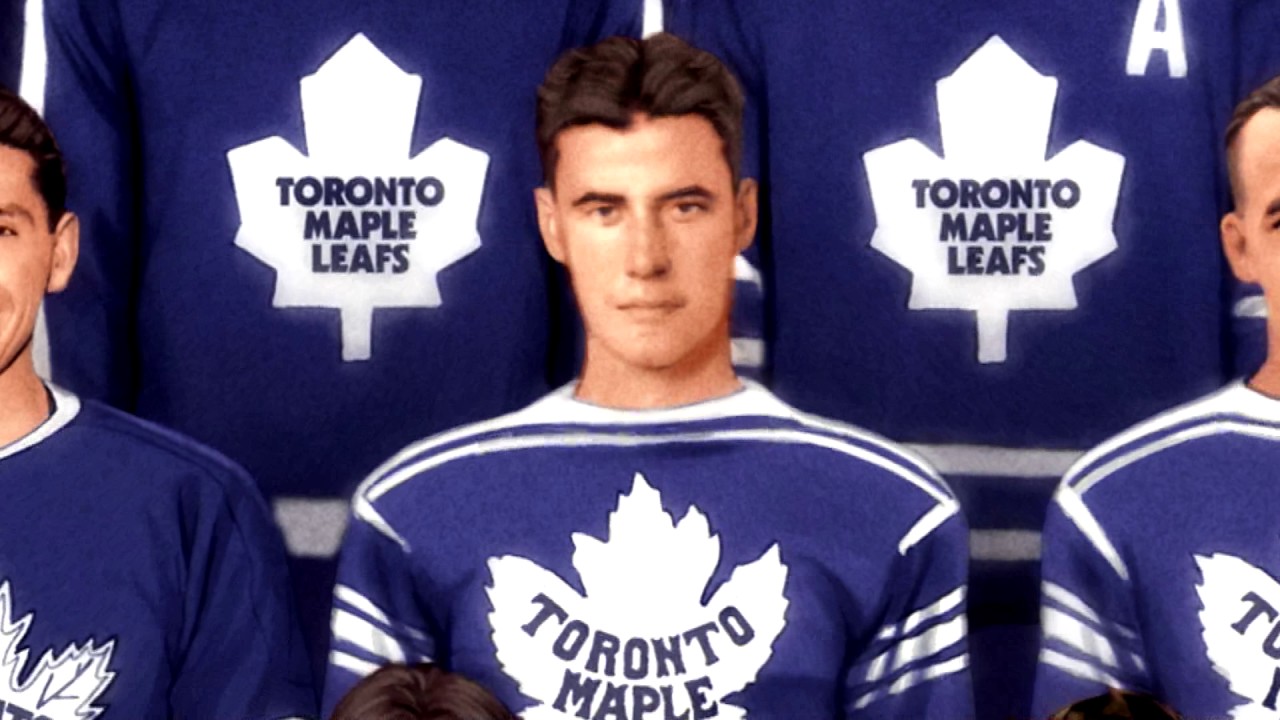
 In 1955, both the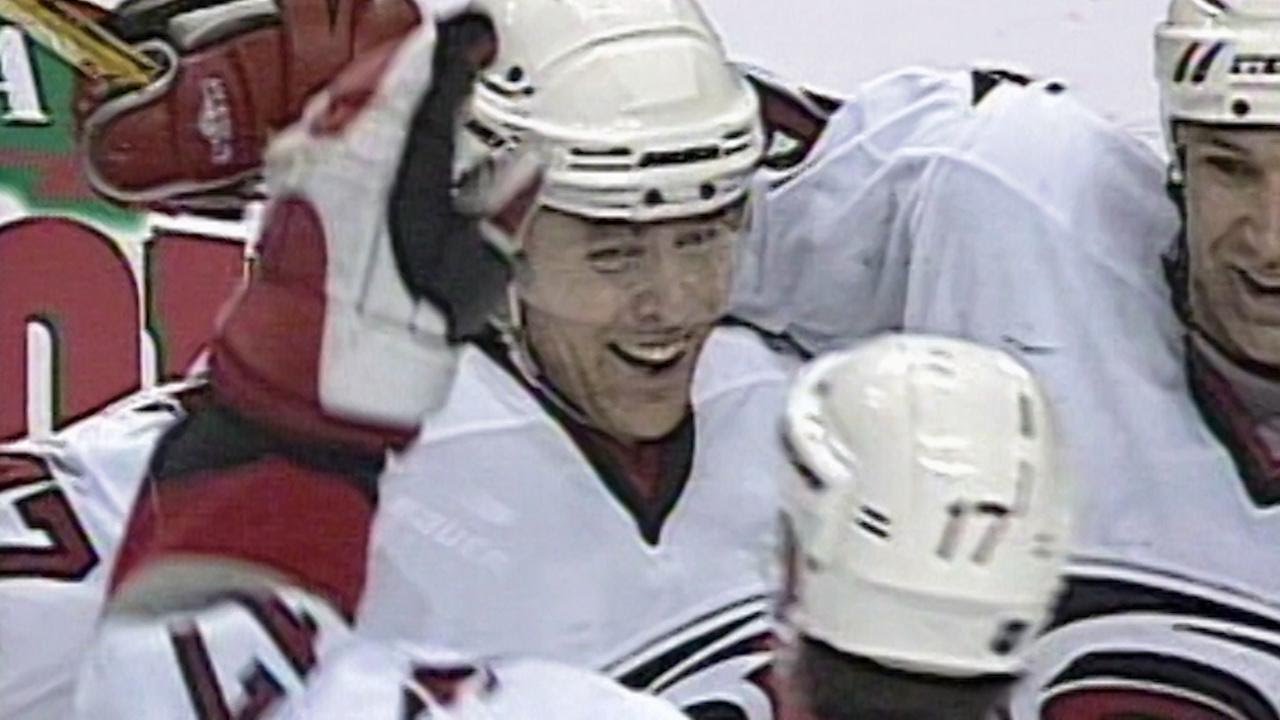
 Prev
Prev