The NHL had existed for three seasons when ice
hockey truly went international. Ice hockey was first made an Olympic sport
just in time for the 1920 Summer Games held at Antwerp, Belgium (since Winter
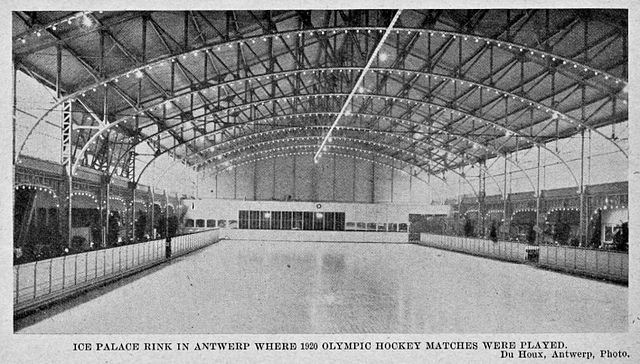
Games did not yet exist). Antwerp’s Le Palais de Glace arena would only allow
figure skating events with the inclusion of hockey matches. Although bandy was
still more popular in Europe, the Ligue International de Hockey sur Glace
(today’s International Ice Hockey Federation (IIHF)) was founded in 1908 and
held European championships as early as 1910. For the 1920 Olympics, the IIHF
welcomed in Canada and the United States as members.
The two North American teams and five European
teams (Sweden, Switzerland, Czechoslovakia, France, and the home team, Belgium)
agreed to participate in that first Olympics. As a result of the First World
War, Germany and Austria did not attend. The Falcon Hockey Club of Winnipeg,
featuring mostly Icelandic Canadiens, represented Canada. Their entire team had
enlisted and played hockey for the 223rd Battalion during the war and returned
to win the Allan Cup championship. Funny enough, the U.S. team featured four
Canadian-born players out of the eleven they brought to the Olympics. Sweden
basically outfitted bandy players in soccer uniforms. IIHF President Max Sillig
skated with Switzerland as the first acting president to take part in a World
Championship. William Hewitt (father of Foster Hewitt, the voice of Canadian
hockey for 40 years) officiated and described the Czechs saying, “They run on
their skates with clumsy movements and use wrist shots and their play is all
individual.” As the Games would show, at the time, the Europeans just could not
keep up with the North Americans.
Since all the teams played by different rules,
the Olympics went with seven-man hockey (including the rover position already
eliminated from North American hockey) with no substitutions allowed (meaning
both teams would sit a player if someone was injured). The games were played
with two 20-minute sessions broken up by a 10-minute intermission. Immediately
after the 1920 Olympics, they switched the rules to six-man hockey and three
20-minute periods.
The tournament system, created by Erik Bergvall (for water polo in the 1912 Olympics), essentially had the
teams play for the gold medal, then set up everyone who lost against the
winning team to play for the silver, and finally the losers to the bronze team
played again for the bronze. The tournament ended up having ten games, and only
two were close in score. The quarter-finals, played on April 24, resulted in
three shutouts. Canada blanked Czechoslovakia 15-0 while the U.S. crushed
Switzerland 29-0 and Sweden beat Belgium 8-0. The next day’s semi-finals
produced two shutouts. Sweden defeated France 4-0. In what some consider the
best ice hockey Europe had seen until that point, the two North American teams
faced off against each other. The Canadians pulled off a 2-0 victory.
On April 26, 1920, the gold medal match was
held between the undefeated Canada and Sweden. The Canadians dominated tallying
12 goals. However, it was the sole goal for Sweden that received all the
attention. An Associated Press article described the play. “Sweden’s goal was
scored in the first half, after ten minutes of play, and came as an utter
surprise to the Canadians. The victors had easily scored five goals, when
[Einar] Svensson, the Swedish right defence, carried the puck down near to the
Canadian goal and drove it into the net, surprising Goalkeeper Byron so much
that he fell down.” Not only did that goal prevent a shutout, but it was the
only goal scored on Canada during the entire tournament. The Swedes took pride
in that accomplishment.
Thanks to the flawed system, the three teams that had lost to Canada had to play for the silver medal. Over the next two days, the U.S. shutout Sweden 7-0 and Czechoslovakia 16-0. With the silver safely in American hands, the other two played each other and Switzerland for bronze. The two games, held April 28 and April 29, also resulted in shutouts. Sweden beat Switzerland 4-0 but ended up missing the podium when the Czechs scored their only goal of the entire tournament. Despite having 31 goals scored on them, their single 1-0 win over Sweden gave Czechoslovakia the bronze. Sweden had won three games, as had Canada and the U.S. The Winnipeg Falcons returned to Canada to celebrate with a parade, banquets, and gold pocket watches. In 2006, the team was inducted into the Canadian Olympic Hall of Fame. They were the first ever ice hockey team to win gold at the Olympics.
Additional Sources:
Andrew Podnieks, Where Countries Come to Play (Toronto: McClelland & Stewart, 2013), kindle version.
In 2008 and 2009, the Pittsburgh Penguins had eerily similar back-to-back postseasons. At the end of
each regular season, they finished first (with 102 points) and then second
(with 99 points), respectively, in the Atlantic Division. During their April 25th game each year, the Penguins rallied from a three-goal
deficit to steal the win with five goals. With that, they took the first game
of the Eastern Conference semi-finals in 2008 and the last game of the Eastern
Conference quarter-finals in 2009.
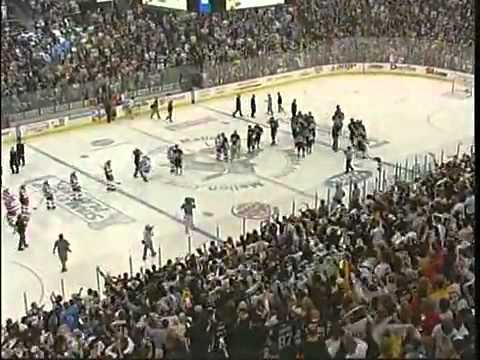
Having swept the Ottawa Senators in the
Eastern Conference quarter-finals (4-0), Pittsburgh took on the New York
Rangers in the semi-finals. Game 1, held April 25, 2008, took place at Mellon
Arena before a white-out crowd of 17,132. The Rangers potted three goals before
the Penguins even got on the board. In their 48 playoff games, the only time
they had been able to make up for a three-goal gap like that had been during
Game 1 of the 1992 Stanley Cup finals. Meanwhile, the Rangers had won 93 of 94
times that they had led by three or more goals.
Still, the Penguins did not let those odds
stop them. During the second period, Jarkko Ruutu scored at 8:13 as did Pascal
Dupuis 14 seconds later. “The crowd got into it, and we got back into the game,”
Dupuis noted. “It was something new for us, coming back from a three-goal
deficit in the playoffs.” Pittsburgh’s Marian Hossa tied the score at 3-3 at
the beginning of the third period. He explained, “We knew it was the first game
and we knew that we were a little rusty, and maybe things didn’t go our way
early. We knew if we scored the first one, we’d start rolling. And that’s what
happened; we battled our way back.” Although Petr Sykora gave the Penguins
their first lead of the night 20 seconds later, at 5:00, the Rangers tied up
the game again about five minutes later. Overtime seemed inevitable, but with
101 seconds remaining in regulation, Sidney Crosby sent a slap shot toward the
net that bounced off teammate Evgeni Malkin’s skate before passing goalie
Henrik Lundqvist. According to Malkin, “I was just standing there with no
energy at all. [Crosby] shot that puck, and it bounced off my skate. He just
put everything – all the emotion, all the power – to shoot the puck that hard.”
Crosby shrugged off earning an assist instead of a goal, “It figures that would
happen, but it doesn’t matter how it went in, as long as we got it.”
With the 5-4 win in Game 1, the Penguins went
on to eliminate the Rangers in five games. Their next victims, for the Eastern Conference
finals, were the Philadelphia Flyers. Again, it took the Penguins only five
games to advance.
Those same Flyers had to face the Penguins in
a Pennsylvania battle for the Eastern Conference quarter-finals the following
year. The team from the western part of the state took the first two games at
home, and then the teams alternated for the next three games leaving Pittsburgh
leading the series 3-2. They played Game 6 on April 25, 2009 at Philadelphia’s
Wachovia Center, attended by 20,072 fans. The Penguins had been shutout 3-0 in
Game 5 and started Game 6 the same way. Crosby said of the Flyers, “They were
everything we expected. And maybe more.”
About four minutes into the second period, the
Flyers scored their third unanswered goal after stealing the puck from
Pittsburgh center Max Talbot. To make up for it, Talbot proceeded to lose a
fight to Daniel Carcillo. His teammates applauded his efforts. Tyler Kennedy
praised, “Max really stepped up. He showed a ton of guts.” Their captain,
Crosby, agreed, “When you see what he tried to do, to lift our spirits, it’s
good when you can follow that up.” Exactly 14 seconds after the fighters
received their major penalties, the Penguins began their scoring spree. The
first three all made good on rebounds. Ruslan Fedotenko scored on Malkin’s
rebound, then Mark Eaton on Kennedy’s rebound, and then Crosby on Bill Guerin’s
rebound. At the beginning of the third period, Sergei Gonchar netted the
game-winner on a slap shot. Finally, with little more than 27 seconds remaining,
Crosby put the nail in the coffin on the empty net. Afterwards, he commented,
“To get that last one and hear a little bit of silence was definitely
gratifying.”
Upon defeating the Flyers in the 2009 quarter-finals, the Penguins made their way through the Washington Capitals (4-3) in the semi-finals and the Carolina Hurricanes (4-0) in the conference finals. After winning the April 25th game in both seasons, the Penguins ascended to the Stanley Cup finals. Both times, they played the Detroit Red Wings. That was where the story differed. In 2008, Pittsburgh lost the series (4-2), despite winning Game 5 after three overtime sessions. A year later, the Penguins again came from behind and this time took home the Stanley Cup.
Additional Sources:
“Star Burst,” Pittsburgh Post-Gazette, 26 April 2008, pp. E-1 and E-6.
“NHL Playoffs/Penguins vs. Rangers,” Pittsburgh Post-Gazette, 26 April 2008, pp. E-6 and E-7.
“NHL Playoffs,” Pittsburgh Post-Gazette, 26 April 2009, pp. C-1, C-6, C-7.
During Game 7 of the Adams Division finals,
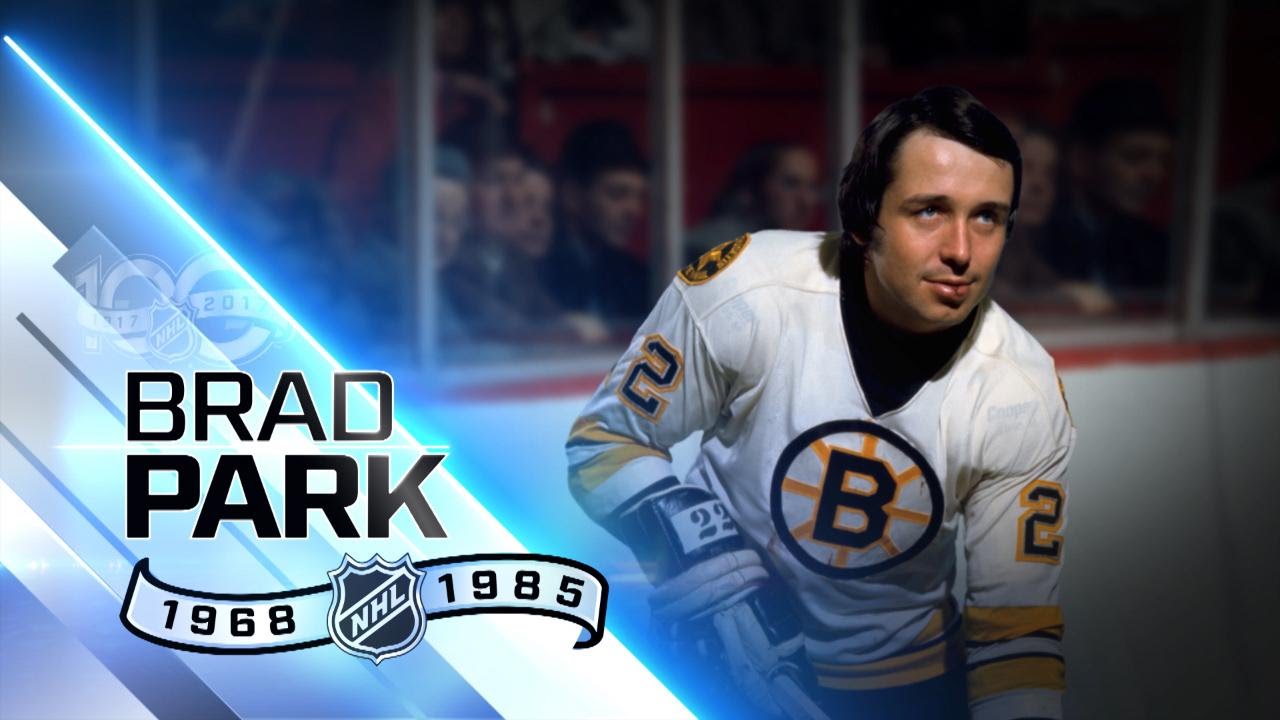
held on April 24, 1983, defenseman Brad Park accomplished at least five things with his two goals. He
tied and then won the game for the Boston Bruins, which allowed them to win the series and
advance to the conference finals. Park was the first person to score the tying
and then the overtime winning goal in a Game 7. In fact, he was the first
defenseman even to score two goals in a Game 7. On a personal level, he said,
“I’d never won a seventh game before. I’d never scored a winning goal in
overtime. I’d never done any of this and here it was.” Finally, with his goals,
the Bruins reached their milestone 1,000th playoff goal.
At the time of the game, Park, at 34, had
played 15 seasons in the NHL and had gone through five major knee operations.
The New York Daily News commented that he “lets his mind do
work because his legs can’t carry him any more.” Having begun his career with
the New York Rangers, he was always in direct competition for best NHL
defenseman with the Bruins’ Bobby Orr, who also experienced disastrous knee
issues. Orr’s knees were a factor in Boston General Manager Harry Sinden’s
decision to make a shocking trade to obtain Park in 1975. Although Park
had just been made the youngest Rangers captain the year before, he was booed
by fans as the team faltered. Boston fans, who were not too pleased with Park,
soon did an about face and began appreciating Park’s talent and toughness.
For the 1983 playoffs, the Bruins came in
first in the Adams Division with 110 points (50-20-10). They defeated the
Quebec Nordiques (3-1) in the division semi-finals. Throughout the division
finals, the Bruins and the Buffalo Sabres essentially traded off winning to
force a Game 7. The Bruins had home ice advantage at Boston Garden, but due to
a recent basketball game and the rain, the rink was humid with poor ice.
The Sabres took a 2-0 lead when Ric Seiling
scored twice with assists from Mike Ramsey and Andre Savard. During the second
period, the Bruins caught up. Barry Pederson scored at 6:32, and Park tied up
the game during a power play at 9:21. Rick Middleton assisted on both goals.
The game went into overtime, but it did not
last long. Pederson won a faceoff against Brent Peterson, and after some
passing with Middleton, Park ended up with the puck. His shot almost made it in
the net as it seemed like all the Sabres, including goalie Bob Sauve, were
laying in front of the net. Center Andre Savard stood in the crease and whacked
at the puck. It ended up by Park, who took another shot at 1:52. “I’ve seen a
lot of overtime goals. I’ve seen them bounce in, deflected in, kicked in, and
I’ve seen perfect shots, too,” commented Park. “When it went by the bodies in
front of the net, I knew it was in. I didn’t have to wait for it to hit the
back of the net.” With that, the game and series were over. Park reflected,
“Then I just stopped and I stood there and I looked, kind of numb.” The
jubilant fans made up for his lack of reaction by coming on the ice and
throwing cups and clothing. Coach Gerry Cheevers only said, “I’m speechless.
Those were two goals (tying and winning) by a great player. We deserve a break.
We’re all going to McDonald’s.”
The tired Bruins had a feeling their next
opponents, the New York Islanders, would be tough. As feared, the Islanders
took the conference finals (4-2) and went on to win their fourth consecutive
Stanley Cup.
That was Park’s final season with the Bruins. Over the summer, he signed with the Detroit Red Wings. They made the playoffs both seasons he played before he retired in 1985. Park’s teams qualified for the postseason for every single one of his 17 NHL seasons, which beat Jean Beliveau’s record (16 seasons). He later claimed, “I never even knew about the record, but when I joined the Wings, the only goal I had was to help the team get into the playoffs.”
Additional Sources:
“Bruins foil Sabres in OT, 3-2,” Boston Globe, 25 April 1983, pp. 27 and 31.
Frank Brown, “Park OT goal puts Bruins against Isles,” New York Daily News, 25 April 1983, p. 46.
Playoff hockey is a higher level in intensity both on and off the ice. The players know that every move counts in the playoffs. The fans know that their energy plays its own unique role in the game. And while the playoffs are extreme, with the exception of perhaps the Stanley Cup Finals, there is nothing more fierce and palpable than a Game 7, no matter what round. It is that do or die experience for both teams, where they must each put it on the line to continue. Such was the case for the Boston Bruins and the Toronto Maple Leafs on Tuesday night. Of course, a Game 7 between the Bruins and the Maple Leafs is actually nothing new – these two teams seem to take it to the limit each time they find themselves competing against each other in the postseason. It happened when they met in 2013 and again in 2018. So perhaps it was inevitable that they would take it all the way again in 2019.
Joakim Nordstrom
What perhaps was different in this Game 7 was
who stepped up to put the Boston Bruins on the board. Everyone expected the top
line of Brad Marchand, Patrice Bergeron, and Danton Heinen to notch the goals.
However, the Bruins got scoring from their bottom six to get things started in
the first period. Joakim Nordstrom put Boston on the board
first at 14:29 of the opening period, while Marcus Johansson gave them a little breathing room at
17:46. They took a 2-0 lead into the first intermission.
It was perhaps a very good thing that they
did, because they seemed to get away from their game a bit and without the
stellar play of Tuukka Rask between
the pipes, it could have been a completely different story by the end of the
second. Rask did indeed keep his team in the game.
“No, that’s not overstating it,” said head coach Bruce Cassidy of Rask’s importance during the second period. “I think that’s accurate. I believe he was our best player. And in the second period, we broke down. We had a tough time moving the puck out of our zone. He was there for us.”
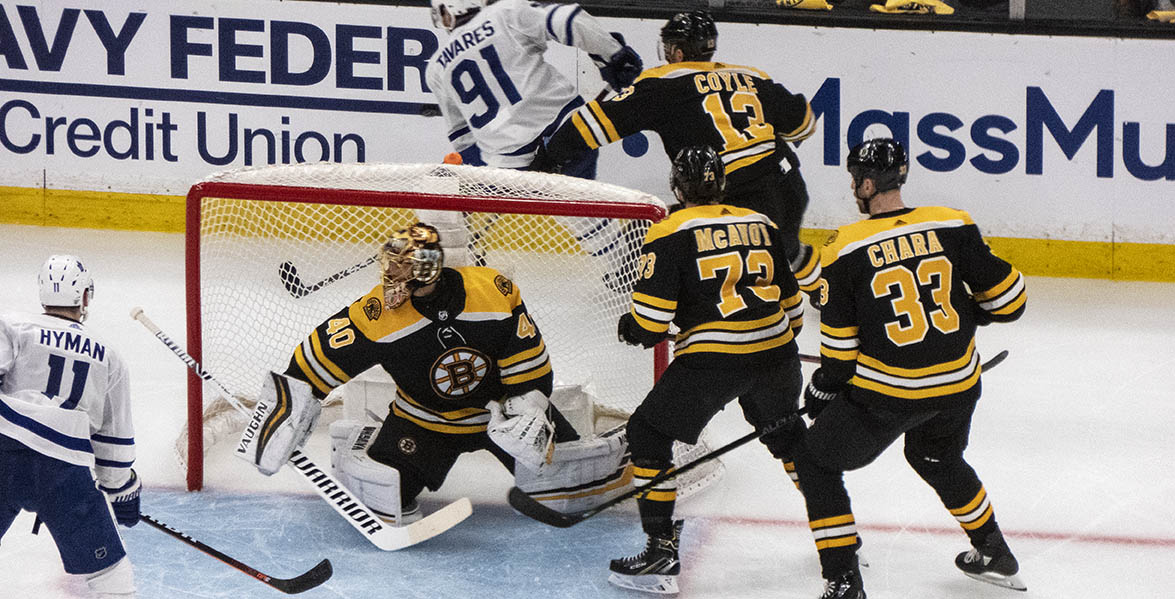
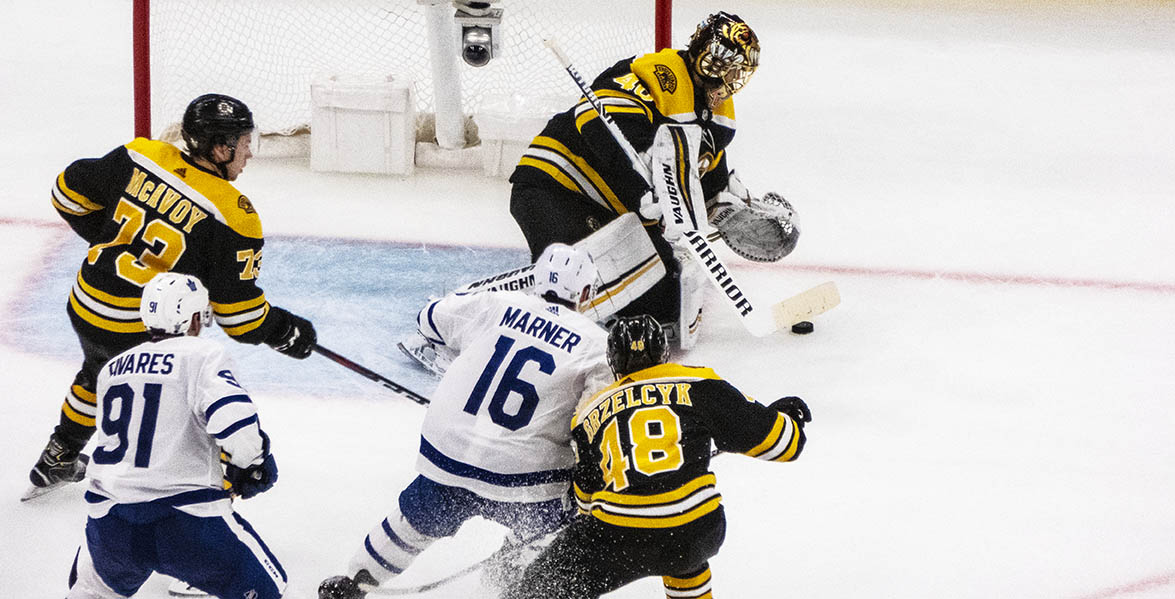
John Tavares puts one past Tuukka Rask
The Leafs were outshooting the Bruins and
hemming them in their own end much too frequently during the middle period.
Rask stopped 12 of the 13 shots he saw in that twenty, allowing only the John Tavares’ wrister 3:54 into the second.
“It was tipped. I think whoever the
back-checker was got his stick on Tavares’ stick before he wanted to release.
It was kind of the same play as on [Marc-Andre] Fleury the other night. You’re
kind of sitting there, ‘there’s no way I didn’t just react to that shot.’ When
I look at that replay it kind of makes sense, the release point was kind of
earlier, so it throws you off,” Rask described.
After that, Rask shut the door for the period
and what turned out to be the rest of the game.
As the teams got back at it in the third
period, it was clear that the next goal could undoubtedly tilt the ice in favor
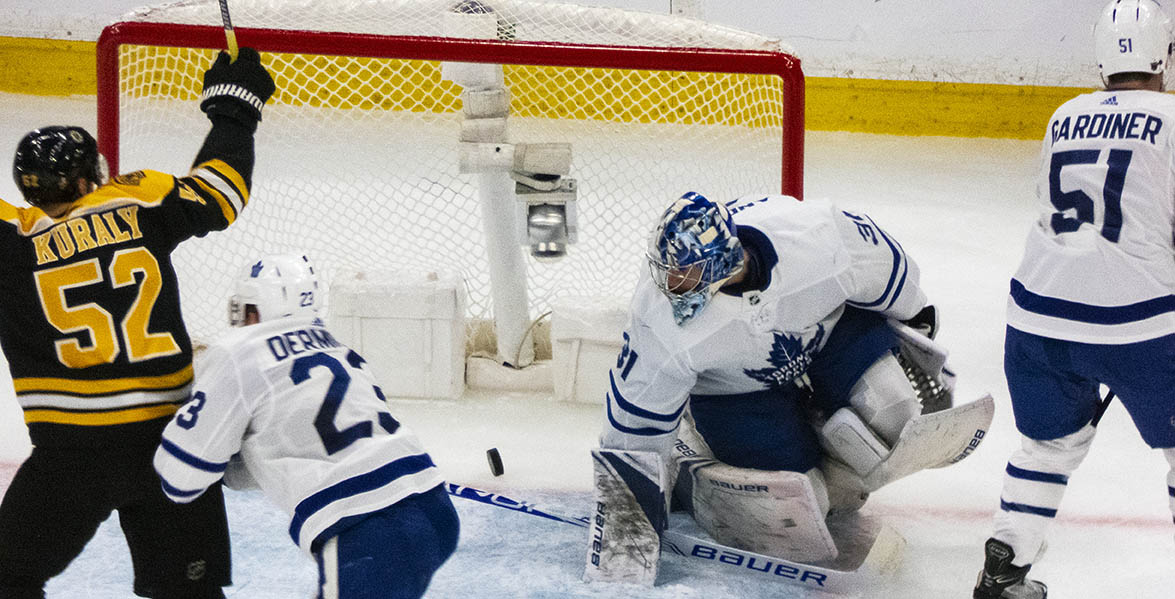
of whichever team got it. Bruin Sean Kuraly,
who missed much of the series due to injury and had only returned in Game 5,
stepped up big, notching his first of the postseason at 2:40 of the final
twenty.
Postgame, both Bergeron and Rask were confident that Kuraly would make that goal, as they shared during the postgame media scrums. Kuraly’s thoughts? “I wish that I felt that way. You know, I think when I’m thinking the least amount is when I kind of find myself making good plays. So you know, it’s kind of like I don’t really know what was going on at the time. I just, was just playing, kind of taking what was next and, you know, I just found myself close to the net and figured I’d put it on net really,” Kuraly said. “Noel [Acciari] made a good play coming out of the zone, and then I got a little room in the neutral zone and I just found myself in the slot all of a sudden and just put it on net really. They don’t usually go in for me, but that was a good one and a big one and I think you can see by the way I reacted how I felt about that goal, and so if you want to know, just, you can watch it again I think.”
And it seemed from that point that the Bruins
shifted into a higher gear. Even when they found themselves down a man for a
too many men on the ice penalty, they refused to give the Leafs any momentum.
Toronto’s head coach, Mike Babcock,
aggressively pulled Frederik Andersen with three minutes remaining in an
effort to try and pull within one goal and perhaps push the game to overtime.
However, the Bruins were feeling it and Charlie Coyle got an empty-netter at 17:26 to give the Bruins a 4-1
lead. Coach Babcock pulled Andersen again, and just as the clock ticked to the
last second, Bergeron put another puck in the empty net to give the Bruins the
5-1 victory.
The Bruins have little time to bask in their
win. It was announced shortly after the game finished that Game 1 of Round 2
would take place on Thursday night at TD Garden as the Bruins take on the Columbus Blue Jackets who managed to sweep the Tampa Bay Lightning in Round 1.
It just seems as though when the Boston Bruins
and Toronto Maple Leafs meet in the postseason lately, the series is destined
to go seven games. The first round of the 2019 Stanley Cup Playoffs is no
different with the series having been back-and-forth between the two teams.
The pivotal seventh game of the series is set
for Tuesday April 23 at 7:00 p.m. ET on NBCSN and here are five keys to the
game.
1) Speed and Physicality: Maple Leafs
The Toronto
Maple Leafs have seemed to
play their best hockey this series when they are playing with speed, but also
being physical. If the Leafs can come out of the gate and set the pace early in
this one then they should have an advantage. The Bruins need to watch out for
the transition speed of the Leafs since they have a ton of it, and often look
to go on the attack right from the defensive zone. The Leafs not only need to
use their speed in transition, but need to be physical to wear down the Bruins
throughout the game.
2) Discipline- Maple Leafs
The Leafs need to find a way to not take any
unnecessary penalties since the penalty kill has been an area of weakness in
this series. The only team with worse penalty kill numbers so far in the
postseason is the Tampa Bay Lightning, who were swept right out of the playoffs
by the Columbus Blue Jackets. The Leafs have been shorthanded 16 times and have
allowed seven power play goals against. The team does have one shorthanded goal
in the series, but is only killing off 56.3% of penalties taken, which is why
the team needs to avoid the penalty box in the final game of the series.
3) Power Play: Bruins
On the flip side, the Boston
Bruins power play is
ranked second only behind the Columbus Blue Jackets. The team is operating at a
43.8% clip while on the man advantage in the playoffs. In 16 power play
opportunities, the Bruins have scored seven times and have allowed just one
shorthanded goal against. The Bruins are getting setup in the Maple Leafs zone
and managing to get screens in front, making life tough for Frederik Andersen
while his team is down a man.
4) Top Line: Bruins
The Leafs have done a really good job of
shutting down the Bruins’ top line of Brad Marchand, Patrice Bergeron and David
Pastrnak at even strength. The trio has a combined for nine of its 19 total
points at even strength. The power play has been where the top line has done
most of its damage. The trio has combined for 10 power play points, and has
been the main catalyst while the team has had the man advantage.
5) Goaltending: Maple Leafs & Bruins
The goaltending for both teams has been pretty
good in this series. Tuukka Rask and Frederik Andersen have been making saves
at key moments in games to keep their teams in the games. Each team has really
had some quality chances and the goalies have been there to make the saves. The
goaltenders are going to have to make key saves at key moments and probably
make one or two highlight reel saves. The goaltender that can make saves and
keep his team in the game will help his team to advance to the next round.
There is nothing like playoff hockey. It can
be exhilarating, frustrating, physical, and disappointing. For the Boston
Bruins, who returned to
Boston tied 2-2 in the series with the Toronto
Maple Leafs, Game 5 was
disappointing when the final horn sounded.
For much of the game, it was a battle of wills
between two elite goalies. Tuukka Rask stood strong in net, especially when the Maple
Leafs were outshooting the Bruins, to give his teammates every opportunity
possible through the first almost 52 minutes. Frederik Andersen did the same for the Leafs, denying the
Bruins any chances through 59 minutes.
The big question for the Bruins through has to
be “Where was the energy?” They were skating, but there were a lot of mistakes
that eventually caught up to them. Through two periods they had three power
play opportunities that they simply couldn’t convert. Their top line seemed to
be a bit discombobulated. Coupling that with some missed passes from the other
lines, and Bruins head coach Bruce Cassidy ultimately had to shorten his bench
and shake up some of his lines.
This was not the Bruins who took to the ice on
Wednesday night in Game 4. And it is not the team that grabbed the win in Game
2 either. While certainly Toronto has done a lot of things right and they are a
skilled and quick team, the Bruins inability to transition out of their end at
times has become somewhat of an Achilles’ heel in this series.
As the teams went into the third period, it
perhaps shouldn’t have been surprising that whichever team was able to get that
first goal would ultimately take the game. The first period saw the Maple Leafs
marginally outshoot Boston 7-6, though nine minutes into the period it was all
Toronto, as they had five shots to Boston’s one at that point. The faceoffs
were 64% for the Leafs and 36% for the Bruins. Through two periods, the shots
on goal were 16-15 in favor of Toronto, though the middle frame was even at
nine each. Meanwhile the faceoffs had switched in favor of the Bruins, who were
at 57% to Toronto’s 43%. Additionally, the Bruins had three opportunities at
the man advantage in those two periods.
As the Bruins took a too many men on the ice
penalty 7:14 into the third period, a penalty they were able to firmly kill, it
looked like things could have been heading in favor of Boston. Two minutes
after making that kill though and Toronto would break through getting the first
goal of the game at 11:33 of the third. Coach Cassidy used his challenge
believing that Rask was interfered with, but the call on the ice was upheld. It
didn’t result in a watershed of goals for Toronto, but blood had been drawn, so
to speak.
“We had chances to get the first goal. When
it’s a long-tied game, sometimes the one goal is what you need, and we didn’t
get it first,” said David Pastrnak.
Was Rask interfered with? This question may be
unanswerable, as few who watch these games seem to know what constitutes
goaltender interference anymore. While Toronto now weighs in on any such
challenge, it hasn’t made this penalty—or lack thereof—any clearer. Perhaps the
NHL should consider adopting the European approach of no one being allowed in
the blue paint.
“I just felt the contact so I went after the
ref there, let him know that there was contact. I don’t – they looked at it, so
it’s a goal. I mean, I just saw him, he had the puck, as soon as he passed it
he kind of like bumped into my head and then that was it. But, you know, I mean
I trust that they get them right.,” Rask described.
Of course, there was still plenty of time for
the Bruins to tie things up, but Toronto persisted, keeping them to the outside.
Meanwhile the Bruins continued to fan on shots, make blind passes that resulted
in the puck often ending up on the stick of an opposition player, and in many
ways stray from their game.
“We’ve had better games. I don’t think either
team was great, but it was the difference of one play. Game is over now, worry
about the next one,” Brad Marchand shared.
Indeed, the Boston Bruins
need to shelve any feelings about the loss on Friday night and get back to
playing a simple, hard fought game, because they will be in Toronto playing
with everything to lose. Sunday’s afternoon game is a do or die situation. Win
or go home.
On the same date, April 16, in back-to-back years, an overtime goal decided the Stanley Cup victor. In 1953, Elmer Lach earned the win for the Montreal Canadiens by scoring on the Boston Bruins. The following year, Tony Leswick scored on the Canadiens to win for the Detroit Red Wings. It was the sixth time each team had won the Stanley Cup.
For the 1952-53 championship
finals, the Canadiens and Bruins faced off just as they had back in 1946, the
last time Montreal had taken home the Stanley Cup. Going into the game on April
16, the Canadiens led the series 3-1. About 14,450 gathered at the Forum to see
if the home team could take home the hardware. Before the game Montreal coach Dick
Irvin told Lach, “I have a feeling you’re going to get a goal tonight.” According
to Irvin, Lach replied, “You’re darn right I am.” However, the game remained completely
scoreless as regulation ended.
At 1:22 into overtime, the 35-year-old,
13-season veteran center made the most of his chance. The Boston Globe’s recap claimed that Lach intercepted a pass when Bruins
Milt Schmidt tried to clear the puck. As told by the Montreal Gazette, the Bruins goalie, Jim Henry, “had to make a
sudden lunge to save from Eddie Mazur. Rocket Richard grabbed the rebound and
passed to Elmer from the end boards. It was a perfect pass, directly on Elmer’s
stick as he wheeled to pick it up and let go with the big drive that wrapped up
the coveted Cup.” It was Lach’s only goal and Richard’s only assist in the
playoffs that season.
The Globe reported that Henry “played a terrific game despite a painful
ankle injury never had a chance. The shot was screened all the way and he never
saw it, until the puck was in the net.” The Gazette
noticed that “Henry looked a trifle off balance on the play.” Afterwards, Henry
“was in tears as he pulled off his goalie armor for the last time” and blamed
himself for letting the Bruins down with his injury. No one else blamed him but
instead admired him for playing with everything he had.
Meanwhile, Lach and the
Canadiens celebrated their 1-0 victory. Lach said, “I didn’t even have time to
see the puck go into the net before the Rocket hugged me, knocked me down. I
just let the shot go when the puck suddenly came in front of me.” He raised his
stick and went “rolling and sprawling along the ice” before his teammates
carried him on their shoulders to the bench. The crowd joined the celebration by
throwing things and “several hundred scrambled over the boards.” It took a
while to clear enough space for President Clarence Campbell to present the Cup
to captain Butch Bouchard. Later, Lach exclaimed, “I never expected it would be
me who would score the big goal in the Stanley Cup. It’s the most important
goal I ever scored.” Canadiens GM Frank Selke said to him, “They told me you
were too tired to skate, too old to do anything. You’ll be back again with us
next year.”
Indeed, Lach was back with the
Canadiens the next year (for his final season) as they played the Detroit Red
Wings in the Stanley Cup finals. The series was tied 3-3 going into the April
16 finale. Olympia Stadium hosted a record crowd of 15,791, who watched regulation
run out with a 1-1 tie.
This time it took until 4:29 of
overtime for a winner to emerge. The Detroit
Free Press described the unfolding of events, Glen “Skov’s forechecking
suddenly proved fatal to Montreal. He slapped at Elmer Lach’s attempted pass
out and Leswick outfought Rocket Richard for the puck.” So the same duo that
had won the Cup the previous season were on the ice to lose it in 1954. The Free Press continued, “It was a routine
effort when it started. Leswick’s drive from near the right boards had neither
speed nor sting.” However, the shot was screened by Montreal defenseman Doug
Harvey, who said later that he made to grab for the puck when “it ticked off my
glove into the net.” The Free Press
commented, “Gerry McNeil, the terrific little Montreal goalie, knew a shot was
on its way, but he couldn’t tell exactly where it was headed. … It slipped
cleanly over McNeil’s upraised right arm and high into the Montreal cage.” Meanwhile,
the Montreal Gazette recapped, “Gerry
didn’t see it and it appeared to hit him on the arm and bounce off into the
net.”
Like the celebrations in 1953,
Leswick’s teammates carried him off the ice as fans swarmed the ice. President
Campbell presented the Cup to captain Ted Lindsay, who climbed over the wall to
kiss his wife in the stands. That was the last time the Stanley Cup was decided
with an overtime goal in Game 7.
During the 1950s, the Canadiens and Red Wings sent the Cup back and forth between Montreal and Detroit. The Cup won by Detroit in 1950, 1952, 1954, and 1955. Alternately, Montreal held the Cup in 1953 and for the rest of the decade from 1955 through 1960. Both Lach and Leswick won three Stanley Cup championships with their respective teams.
Additional Sources:
Herb Ralby, “Henry Never Saw the Shot That Beat B’s for Title,” Boston Globe, 17 April 1953, p. 20.
“Overtime Score by Lach Beats Bruins 1-0, Wins Cup,” Montreal Gazette, 17 April 1953, pp. 22-23.
Marshall Dann, “Record 15,791 See Wings Win Cup,” Detroit Free Press, 17 April 1954, pp. 1 and 11.
“Wings Cop Stanley Cup on Leswick’s Overtime Goal,” Montreal Gazette, 17 April 1954, p. 8.
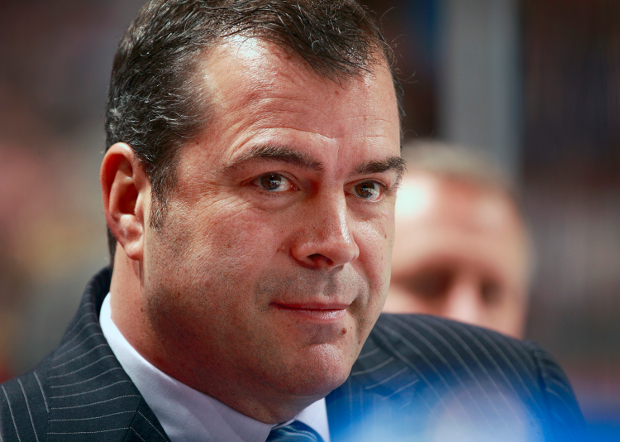
The Philadelphia Flyers coaching search began after the regular season ended on April 6 and ended quickly with the hiring of Alain Vigneault on April 15. Vigneault is the 21st coach in the organization’s history. He was named Team Canada’s lead man for the World Championships that start in May.
When the team’s social media announced the hiring, the reactions of the fans on social media were mixed with some liking the move and others disliking it. As with any new hiring or organizational move there are pros and cons that can occur, and here are some to the Vigneault hiring.
The Pros of Hiring Vigneault
Vigneault Has a Ton of Experience
Vigneault will be entering his 17th season as a head coach in the NHL. He spent four seasons with the Montreal Canadiens, seven seasons with the Vancouver Canucks and five seasons with the New York Rangers. Vigneault has coached 1,216 NHL games and has a record of 648-435-35-98. He has taken two different teams to the Stanley Cup Final (2011 Canucks and 2014 Rangers). He won the Jack Adams Award as the League’s best coach for the 2006-07 season, while with the Canucks.
Head Coach in Place for Draft and Free Agency
The Flyers and Chuck Fletcher made things easier on themselves by having a head coach in place well before the 2019 NHL Entry Draft and before the World Championships in May. They won’t have to compete with other teams who still have a vacancy at the head coach position. Fletcher and Vigneault can start getting assistant coaches on board and getting an idea of what this team needs to be successful. The two can sit down and start working on the Flyers roster either before or after the World Championships.
Vigneault Holds Players Accountable
He has held players accountable throughout his coaching career, and this could either be a pro or a con, but I’m going with a pro for this team. This team made the same mistakes game after game and weren’t held accountable so they kept making them especially on the defensive side of the puck. They could use a coach that will hold them responsible for mistakes, whether it’s sitting a game, being benched during a game, or being demoted a line or pairing during a game. The Flyers have some young players and being held accountable could either hurt their confidence or make them a better player depending on how they respond to benching or demotion.
The Cons of Hiring Vigneault
Preference of Veterans Over Younger Kids
During the course of his coaching career, Vigneault has preferred to play a veteran player over a younger kid in the lineup. The Flyers roster is one of the younger ones in the NHL with the kids gaining some confidence once they got some playing time. Dave Hakstol, Flyers former head coach, played the veteran players over the kids, and it hurt the development of the younger players. It also cost the team wins because they weren’t dressing the best possible lineup. This could also lead Fletcher to trading some younger players or prospects for more NHL-ready players, who can make an immediate impact.
Lack of Playoff Success
Yes, Vigneault has plenty of experience in the postseason and has passed the first round in eight of the 11 times his teams have been in the postseason. He reached the Stanley Cup Final twice with two different teams, but didn’t win either time. His teams seem to go deep into the playoff for the first few years, but then go out early as he stays longer in one city. In Vancouver, he took the team deep into the playoffs in four of his first five seasons, and then he was out in the first round in his final two seasons.
System Can Make or Break a Team
Vigneault likes his team to play with some pace to its game. He likes them to use speed in transition, and battle hard for pucks along the boards. A major flaw in his system is that there are odd man rushes going the other way, if the defensemen are activated, Carter Hart could be facing a lot of odd man rushes this season.
Will Vigneault be the right fit for the Flyers? Only time will tell, but he has had success in the NHL so let’s see what he can do with a revamped Flyers lineup before deciding if this was a good hire or not.
(Photo: Doug Kerr from Albany, NY, United States [CC BY-SA 2.0] )
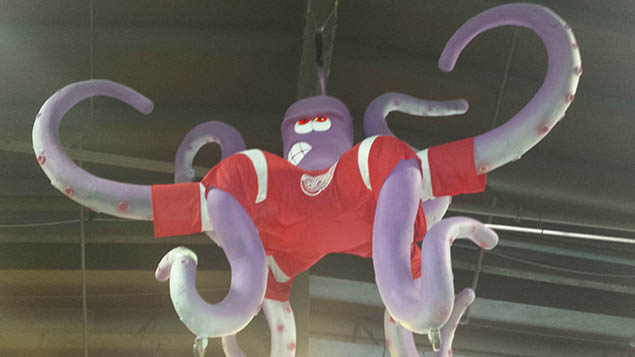
Nowadays, throwing anything on the ice is frowned upon. That does not stop fans from following one particular tradition that has been attached to the Detroit Red Wings since April 15, 1952, when the first octopus was thrown onto their ice.
Back in 1952, teams had to play
two best-of-seven series in order to win the Stanley Cup. That meant that the
fewest amount of games needed to win was eight while the most was fourteen.
When the Red Wings had last won the championship, in 1950, they had to play all
fourteen to squeeze out a win. The 1951-52 postseason looked like it would end
much sooner.
Detroit had finished first in
the NHL with 100 points (44-14-12) and had the league’s top two scorers, Gordie
Howe (86P) and Ted Lindsay (69P). They swept the Toronto Maple Leafs in four
games during the semi-finals. Beginning the series at Detroit, Terry Sawchuk
shutout the visitors in the first two contests, 3-0 and 1-0. In the latter two
tilts up in Toronto, the Red Wings scored a total of nine goals to the Leafs’
three.
After a nine-day break, the
Wings traveled up to Montreal for the finals. There, Detroit defeated the
Canadiens 3-1 and 2-1. The play moved to Detroit for Game 3 on April 13, when
Sawchuk earned his third shutout of the playoffs. The Red Wings were leading
the series 3-0 and had only played seven playoff games.
At about this time, a
conversation was held at Detroit’s Eastern Market by its owners, brothers Pete
and Jerry Cusimano. According to Pete, Jerry picked up an octopus tentacle and
said, “Here’s the thing with eight legs. Why don’t we throw it on the ice and
maybe the Wings’ll win eight straight?” The brothers thought the eight-legged
mollusk neatly represented the eight wins necessary to take home the Stanley
Cup.
For Game 4 on April 15, the Olympia held a crowd of 14,545, including the Cusimano brothers. Almost seven minutes into the first period, Detroit’s Metro Prystai scored the first goal of the night. With the score remaining unchanged midway through the game, the Cusimano brothers made their move. The Montreal Gazette made two brief mentions of the incident. “Some hardy soul, apparently from a line of deep sea fishermen, tossed a small octopus on the ice. Referee Bill Chadwick halted play to dispose of the little crawler.” Later in the article, the Gazette noted that “fans got a great laugh when a fan threw a dead octopus 10 inches long on the ice. Play was halted for a minute.” That seemed to be that. Later that period, Glen Skov scored another Detroit goal. Finally, at 7:35 of the third, Prystai scored again for the Red Wings.
Once again, Sawchuk had stopped
all comers. He told the press afterwards, “This last game was the toughest of
the entire series, and I believe it was my best game. The Canadiens were trying
to rough me up in the goal mouth and knock me off my feet every time they
skated by.” That did not seem to matter considering he had finished the
playoffs with four shutouts, all on home ice. That tied him with Toronto’s
Frank McColl and New York’s Dave Kerr for the record in playoff shutouts.
As the Cusimano brothers had hoped, the Red Wings had swept the entire playoffs in eight games. They were the first to do so since the 1939 implementation of the best-of-seven series. On receiving the Stanley Cup, captain Syd Abel said to President Clarence Campbell, “Thanks for the return of the Stanley Cup. Now it’s back in Detroit, where it belongs.” Detroit Coach Jack Adams called this “the best balanced team I’ve seen in my 35 years in hockey as a player, coach and manager.” To encourage more season endings like 1952, the “Legend of the Octopus” tradition of throwing octopi on the ice has continued, even as the victories needed to win doubled. They rained down on the ice when Detroit’s Joe Louis Arena opened in 1979 and closed in 2017. During the octopus heyday, at one game in 1995, the ice was scattered with a total of 36 octopuses with some weighing over 30 pounds. The head ice manager and Zamboni driver, Al Sobotka, had the task of clearing the ice and would make a show of swinging the dead cephalopods over his head. In April 2008, the NHL tried to ban this (to prevent how “matter flies off the octopus and gets on the ice”) by giving the linesmen clean-up duty instead. They faced backlash in what the Detroit Free Press called “Octopus-gate,” so by playoffs the ban had loosened. Named for Sobotka, Al the Octopus is Detroit’s mascot, who is raised to the rafters wearing a No. 8 jersey.
Additional Sources:
Mike Commito, Hockey 365: Daily Stories from the Ice (Toronto: Dundurn, 2018), kindle edition.
Vern Degeer, “Defeat Canadiens 3-0; Sweep Playoff Series,” Montreal Gazette, 16 April 1952, p. 18.
“Wings Complete Cup Sweep,” Detroit Free Press, 16 April 1952, pp. 1 and 19.
Brian McFarlane, Brian McFarlane’s History of Hockey (Champaign, Ill.: Sports Publishing Inc., c1997), 70-71.
The season that began in ’03 ended in threes for the New York Islanders. The Tampa Bay Lightning eliminated them in the conference quarter-finals by winning games with three goals and thanks to three shutouts by goalie Nikolai Khabibulin.
After topping the ranks of the Southeast Division and placing second in the NHL with 106 points (46-22-8-6), Tampa Bay had home ice advantage for the 2003-04 playoffs. Their quarter-final opponents, the Islanders, had finished third in the Atlantic Division with 91 points (38-29-11-4). The first two games were held at Florida and the next two at New York before returning to Florida.
All of the first four games were three-goal victories. The Lightning shutout the Islanders 3-0 on April 8, thanks to Khabibulin’s 30 saves. Two nights later, the Islanders took their only turn at winning 3-0. Khabibulin had let in a soft goal in the first and another goal in the third. Since the final Islanders’ goal was an empty netter, Khabibulin had blocked 22 of 24 shots made on him.
New York fans at Nassau Coliseum were quite unhappy when their team lost both games there with a score of 3-0. During Game 4, the unhappy crowd spent the third period sporadically chanting, “We want a goal.” They then threw playoff towels and crumpled papers onto the ice as the teams skated back to the locker rooms. Lightning defenseman Dan Boyle said, “It shows we got their team frustrated and their fans. They feed off that crowd. By the second period, they started booing and turning on them.”
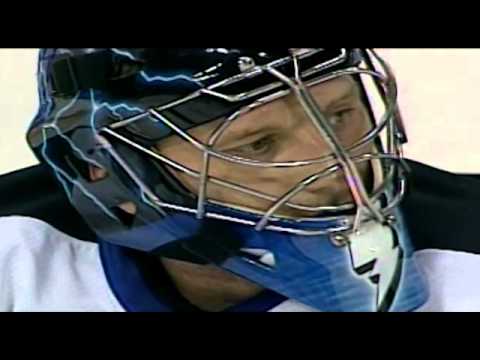
Game 4, held on April 14, 2004, allowed Khabibulin to tie an NHL record by earning three shutouts in a single series. Martin Brodeur of the New Jersey Devils had shutout the Mighty Ducks of Anaheim three times (also all with scores of 3-0) to win the 2002-03 Stanley Cup finals. The “Khabibulin Trilogy” was more surprising as Khabibulin had only had three shutouts throughout the 58 games he played during the regular season. His goalie coach, Jeff Reese, was not surprised by the success of the world-class goaltender. “He’s making it look flawless, making it look easy. That’s when Nik is on top of his game. He’s reacting, letting the puck hit him. He’s very patient right now. He’s in the zone, He’s on top of his game.” Coach John Tortorella added, “He’s been our best player. I just think he is playing with confidence and he’s just going about his business.” Sure enough, “The Bulin Wall” had made a total of 113 saves on 115 shots throughout the series for a .983 save percentage. One of Tampa Bay’s top scorers, Martin St. Louis, credited Khabibulin for their success. “He’s been tremendous. You are going as far as your goalie, that’s not a lie. . . . You need to score goals, too, but it all starts with good defense and he’s the backbone of that good defense.”
Back at St. Pete Times Forum on April 16, the home crowd enjoyed the final score of both Game 5 and the series. At the end of regulation, the teams were tied at 2-2. St. Louis scored goal three for the Lightning just over four minutes into overtime. Khabibulin made 24 saves on 26 shots during the 3-2 victory.
Tampa Bay went on to knock out the Montreal Canadiens (4-0), the Philadelphia Flyers (4-3), and finally the Calgary Flames (4-3) to win their only Stanley Cup to date.
Additional Sources:
“Quest for the Cup,” Tampa Bay Times, 15 April 2004, p. 1X-4X.
“Three Of A Kind,” Tampa Tribune, 15 April 2004, sports, pp. 1, 6-7.


 Prev
Prev