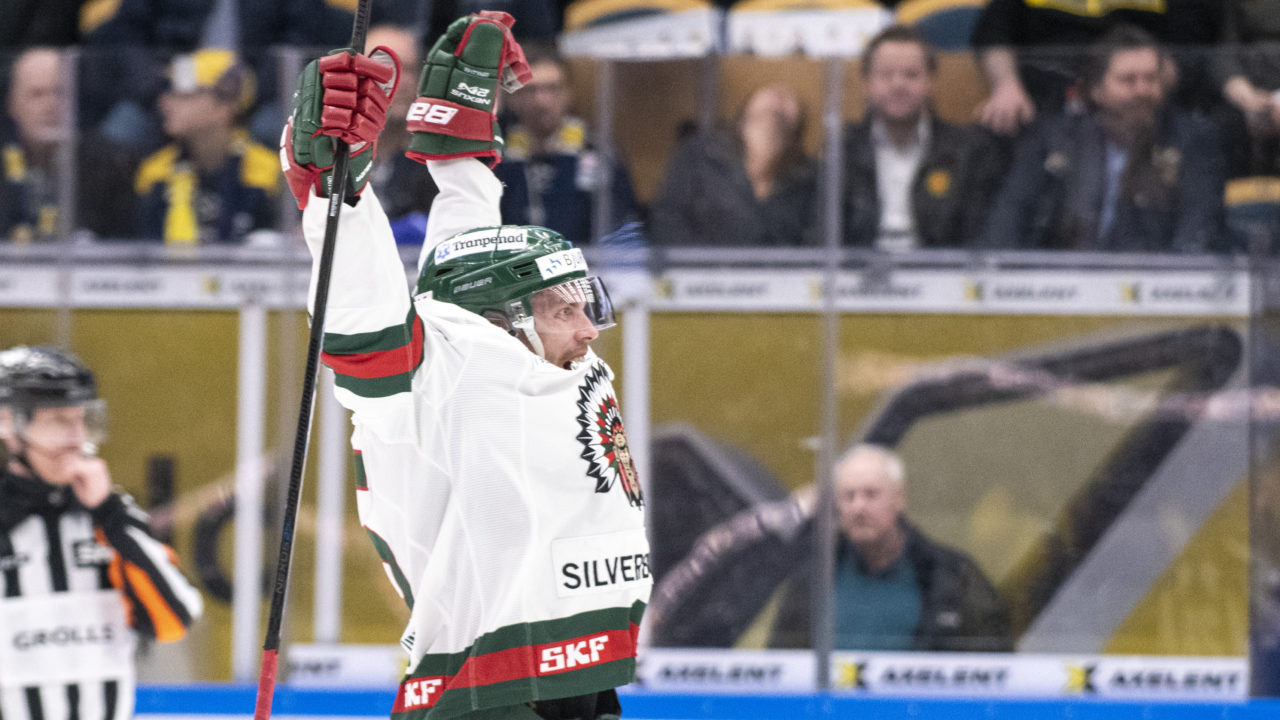
Frölunda Hockey Club are the 2019 Swedish Hockey Leagues’ champions after have beaten rival team Djurgården Hockey … in Game 6 during Thursday evening at Ericsson Globe Arena in Stockholm, Sweden.
Frölunda wasn’t from the beginning one the favourites to win Swedish Hockey League 2018/19, but in the playoffs they have shown a great performence. The Final Rounds against Djurgården have been a tough journey for the teams, but finally one team has to stand as victorious.
It was Frölundas’ fifth win of the SHL trophy Le Mat and a well deserved one too. The team from Gothenburg, Sweden have played a great defensive game with a lethal offensive play. They have taken care of their opportunities and have let the puck talk.
The most valuables players have been goalie Jonas Gustafsson and forward Ryan Lasch along with the their captain Joel Lundqvist (brother to New York Rangers Henrik Lundqvist). But the whole team have been playing as just a team with a bunch of great individual performances as each one has made extra effort on the ice.
So, Frölunda are the 2019 Swedish Hockey Leagues champions.
On May 2, 1967 the Toronto Maple Leafs beat the Montreal Canadiens in Toronto at the Maple Leaf Gardens in Game 6 of the Stanley Cup Final with a score of 3-1. This date is often associated with the fact that this was the last Stanley Cup awarded in what has become known as the Original Six Era. It was also the the last time the Leafs won the Stanley Cup.
However, when the Leafs beat the Canadiens on May 2nd, they also became the first team in NHL history to win the Stanley Cup with a team whose average age was 30 or older. This achievement is often overshadowed, though it spoked to the tenacity of their team.
“The Leafs who were underdogs at the start of the
best-of-seven series, took the cup 4-2 by winning the second, third, fifthy and
sixth games,” reported the Star-Phoenix
of Saskatoon.
Game 6 saw no goals scored in the first period.
Ron Ellis, who was 22 at the time of the game, got the Leafs on the scoreboard 6:25 into the middle frame, and with that lead, Toronto never trailed in the game. With 36 seconds remaining in the second, 27-year-old Jim Pappin got the team in blue and white another, giving them a little breathing space going into the third.
While the Canadiens managed to get one back off the stick of Dick Duff 5:28 into the third, Leafs captain George Armstrong, sealed the deal with his empty net goal at 19:13 of the third. Armstrong was 36, and he wasn’t the oldest of the team by any means.
The Leafs goaltending duo were Terry Sawchuk, who was 37 years
old and the man between the pipes that night. He made 40 of 41 saves that night.
His backup was Johnny Bower, age 42. On the back end Toronto’s d-men included Allan
Stanley (age 40), Tim Horton (age 37), Marcel Pronovost (age 36) and Bob Baun
(age 30). In addition to Armstong, Red Kelly (age 39), who was two months and
one week shy of his 40th birthday, represented the forwards.
“[The team may have had] more ability in other years, but I’ve never played with a club that had more fight,” Armstrong said. “We might not have outplayed them but we certainly outscored them. This was a different kind of team. Young fellows came along and they were the ones that gave us the edge. It was a great mesh of old and young and great goaltending.”
It just goes to show that while hockey is traditionally played by the youngsters, that if the team’s players have the fight, the heart and the determination, that sometimes even the fastest of teams may not be able to stop that hurtling hockey train from succeeding.
Additional Sources:
Star-Phoenix (Saskatoon, Saskatchewan), May 3, 1967, p. 18, col. 1-6.
Edmonton Journal (Edmonton, Alberta), May 3, 1967, p. 42, col. 1.
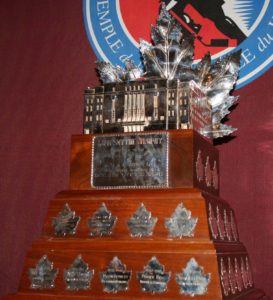
The Conn Smythe Trophy is named for Constantine Falkland Cary Smythe, known around the National Hockey League as Conn Smythe. He is best known as being the principal owner of the Toronto Maple Leafs, originally known as the Toronto St. Patricks until the sale in February 1927 to the group that included Smythe.
Elected now by the Professional Hockey Writers’ Association,
the Conn Smythe Trophy is awarded to the most valuable player in the Stanley
Cup Playoffs. It is not just the player who was the best in the final game, at
which the trophy will be awarded, but his overall performance throughout all
games played during the playoff season.
The first year that the Conn Smythe Trophy was awarded those
voting were the Governors of the six NHL teams or their representatives.
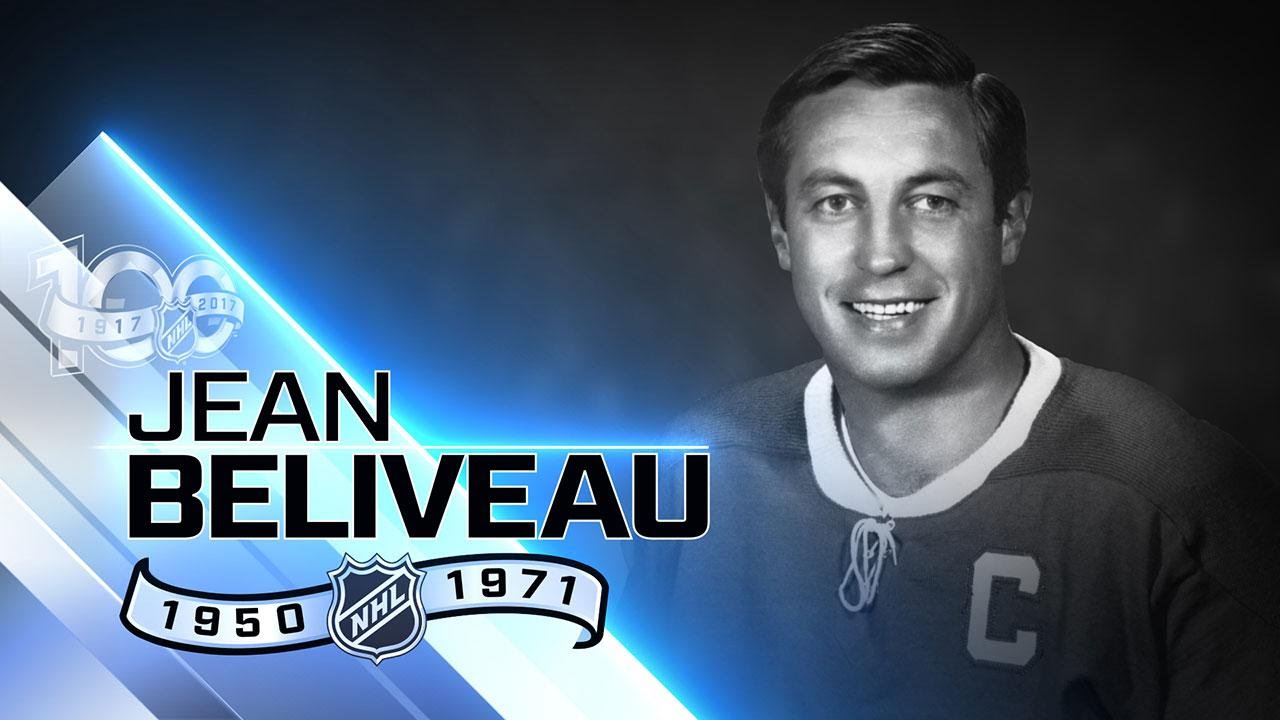
During Game Five on April 27 of the 1965 Stanley Cup Finals between the Montreal Canadiens and the Chicago Blackhawks, Jean Béliveau of the Canadiens stepped up with solid play in their impressive 6-0 routing of the Hawks.
“Big Jean Beliveau, who contributed two goals and two assists to the cause, was the centre of attention and somebody asked him if he was thinking about the Conn Smythe Trophy as the best Stanley Cup performer,” reported Ted Blackman of the Montreal Gazette. “’Right now I’m thinking about another trophy, the Stanley Cup,’ he replied. ‘That’s more important.’”
Whoever asked the question wasn’t the only one who thought that Béliveau was in the running. “One governor who does the voting was heard to say the Conn Smythe Trophy was between [Bobby] Hull and Beliveau,” reported the Ottawa Journal on April 29th.
The series would end up going the full seven games, but the Canadiens would win their first Stanley Cup in five years, on May 1, 1965. However, along with the silver chalice that hockey players put their bodies on the line for, another award accompanied it onto the ice for presentation. And the first ever recipient of the Conn Smythe was indeed the captain of the Canadiens – Béliveau.
“Probably the happiest player in the madhouse that was Montreal Canadiens’ dressing room Saturday night was team captain Jean Beliveau. The veteran centre-ice star was declared the initial winner of the Conn Smythe Trophy as the outstanding performer in the Stanley Cup playoffs, following Canadiens 4-0 victory over Chicago Black Hawks. In becoming the first winner of professional hockey’s newest trophy, Beliveau receives $2,000, made up of $1,000 from the National Hockey League and a similar amount from Canadiens’ management,” reported The Leader-Post of Regina, Saskatchewan on Monday, May 3rd.
In fact, Béliveau finished the postseason one point behind the Black Hawks’ Hull. His 12th season in the NHL, certainly didn’t start out good and certainly didn’t seem like he would make history as the first recipient of a trophy to honor the playoffs best performer. He struggled mightily in the first half of the 1964-65 season, though as the second half continued he was considered a key player in the Canadiens’ getting to the playoffs.
Management of the Montreal Canadiens knew they wanted the Trois Rivieres native who made his NHL debut in 1950 with Montreal, though he apparently wasn’t immediately keen on signing on full time with the bleu, blanc et rouge. Because the Canadiens owned his rights, he couldn’t play for another professional team, so he settled for playing with the Quebec Aces of the Quebec Senior Hockey League, an amateur team. Montreal ultimately purchased the entire league, turned it professional, and ultimately got Béliveau on the Canadiens roster for good. Béliveau finally signed with the Canadiens in 1953, for what was then a staggering $100,000 contract for five years. In addition to his brief appearances in the 1950-51 and 1952-53 seasons, Béliveau played an additional 18 seasons as a Canadien and hoisted the Stanley Cup ten times with them. He also served ten of those seasons as the Canadiens’ captain. He played 1,125 regular season NHL games, in which he notched 507 goals and had a total of 1,219 points. He was inducted into the Hockey Hall of Fame in 1972.
Additional Sources:
Mike Commito, Hockey 365, Daily Stories from the Ice, Kindle version.
Ted Blackman, “Ferguson’s TKO Of Nesterenko Took Steam Out of Black Hawks,” The Gazette (Montreal), April 28, 1965, p. 35, col. 1-4.
The Ottawa Journal, April 29, 1965, p. 17, col. 1-2.
The Leader-Post (Regina, Saskatchewan), May 3, 1965, p. 24, col. 1-4.
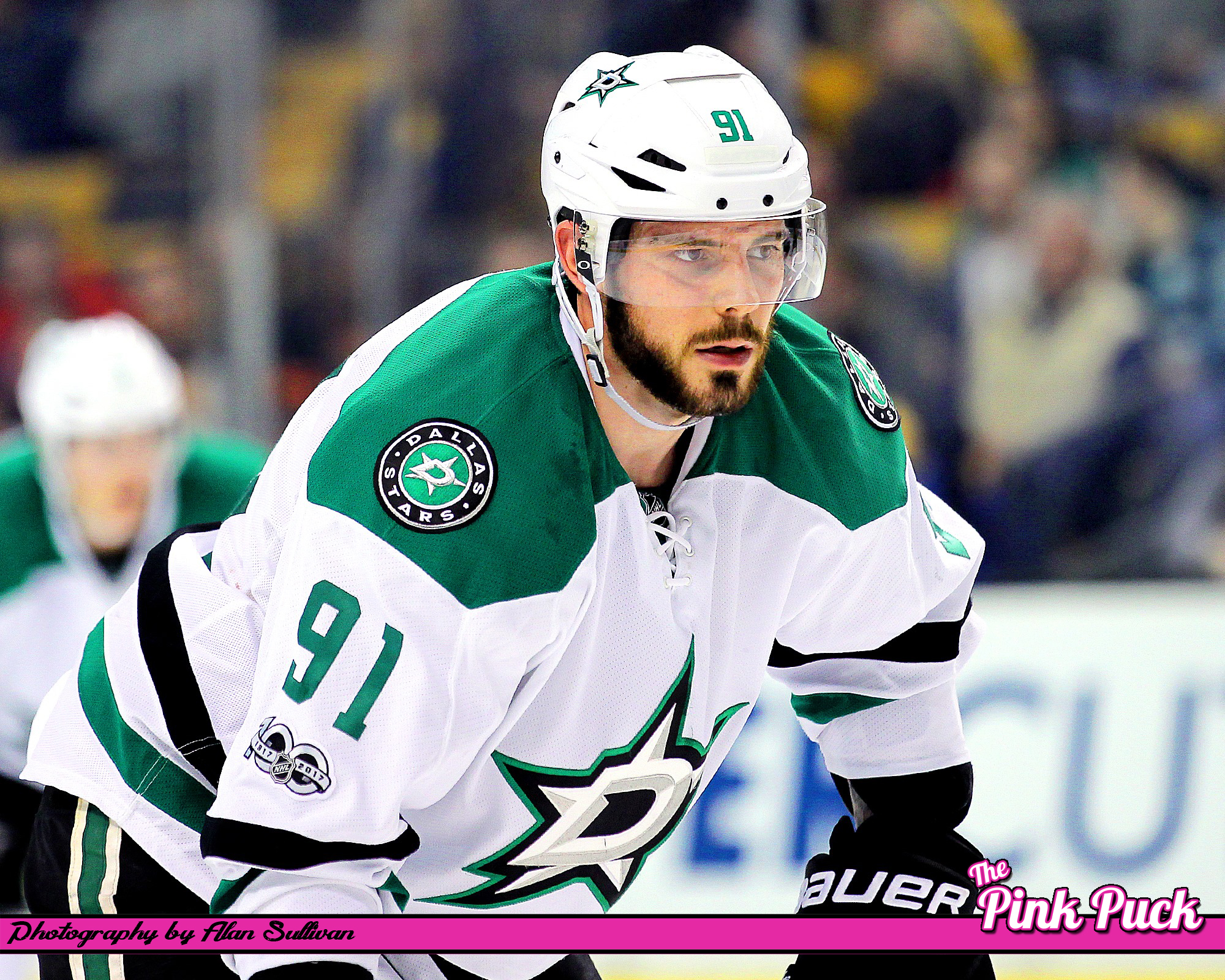
The St. Louis Blues look to remain undefeated in road games this postseason, while the Dallas Stars need to bounce back from a tough Game 3 loss. The third period of the third game of the series was a crazy one with four goals scored in just over five minutes of game action. The game winning goal scored by Patrick Maroon came with under two minutes left in regulation.
The fourth game of the series will be played in Dallas on Wednesday night. The puck is set to drop at 9:30 p.m. eastern time, and can be viewed on NBCSN. Here are three things to expect from the Stars to bounce back and grab a win on home ice.
1) Production from Big Three
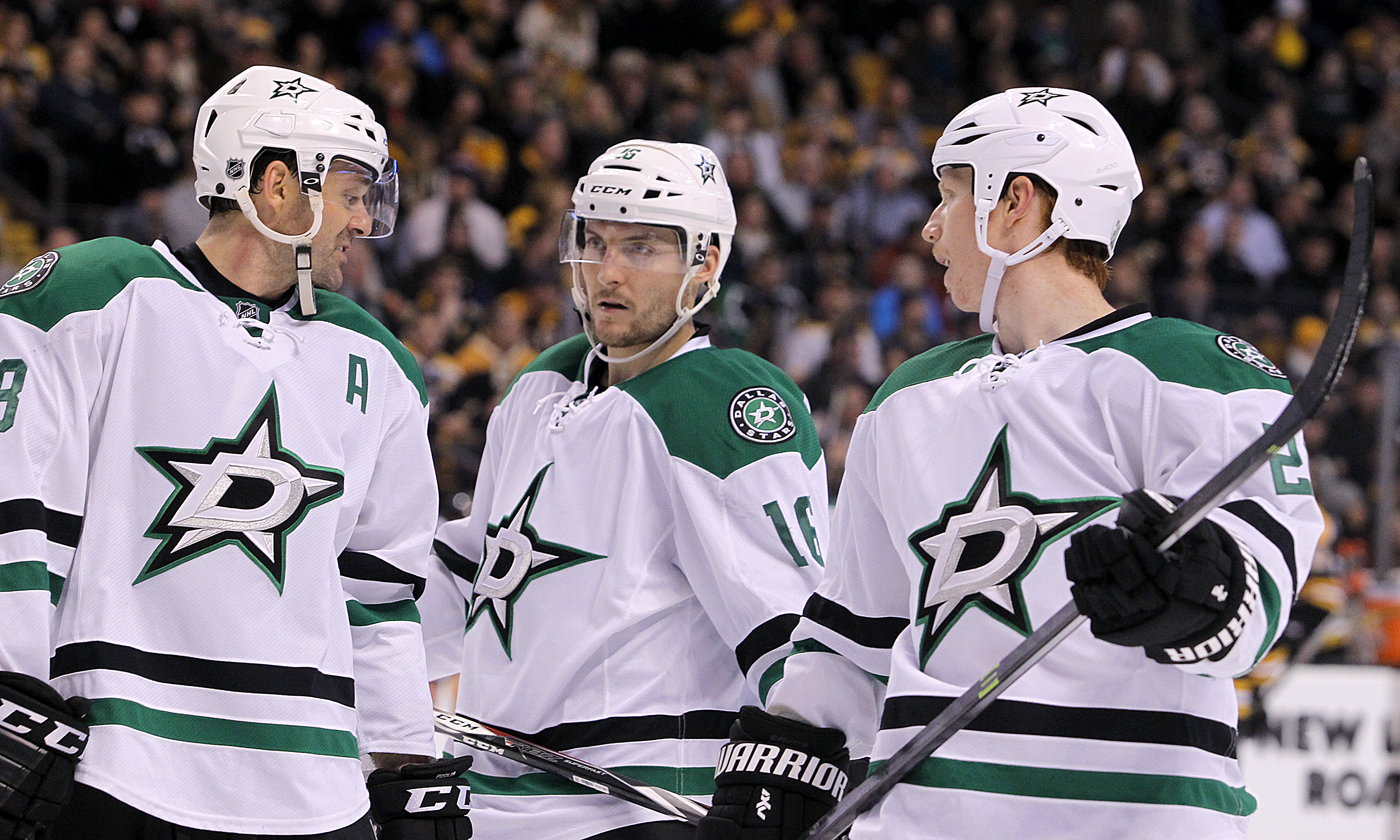
The trio of Jamie Benn, Tyler Seguin and Alexander Radulov have been held to three goals in the first three games of this series. They have looked like they’ve been struggling at times during the series, so it may be a good idea to break the line up and establish some depth throughout the lineup. If Head Coach Jim Montgomery decides to break up the trio then it would make it a bit harder for the St. Louis Blues to get the matchup that they want against that specific line. If the Stars want to win this series then they are going to have to find a way to get some production from its big three and breaking them up could be the start to getting them going.
2) Fast Start/Strong Finish
The team that has scored the first goal has won every game so far in this series. The Stars want to come out and feed off the energy from the home crowd. The team will want to make sure that they get the first goal of the game and play a solid 60-minute game. The Stars were under two minutes away from forcing overtime on Monday night, but instead gave up the game winning goal and a 2-1 series lead to the Blues. The team may want to shore up its late game defense if they want to have a shot at winning this series.
3) Ben Bishop
The Stars’ goalie has let up some soft goals in the series so far. He will want to shore up his play and make sure that he is in position to make the save. The Blues seem to have found a spot to score on Bishop. When he goes down into the butterfly to make a save, he is leaving a little bit of room between his body and where his arm is on his blocker side. The last two goals of the game for the Blues went through that hole on his blocker side. Bishop need to keep his arm closer to his body when going down into the butterfly.
If the Stars can manage to get some production from the big three and get solid goaltending from Bishop then they should be able to even the series at two games a piece.
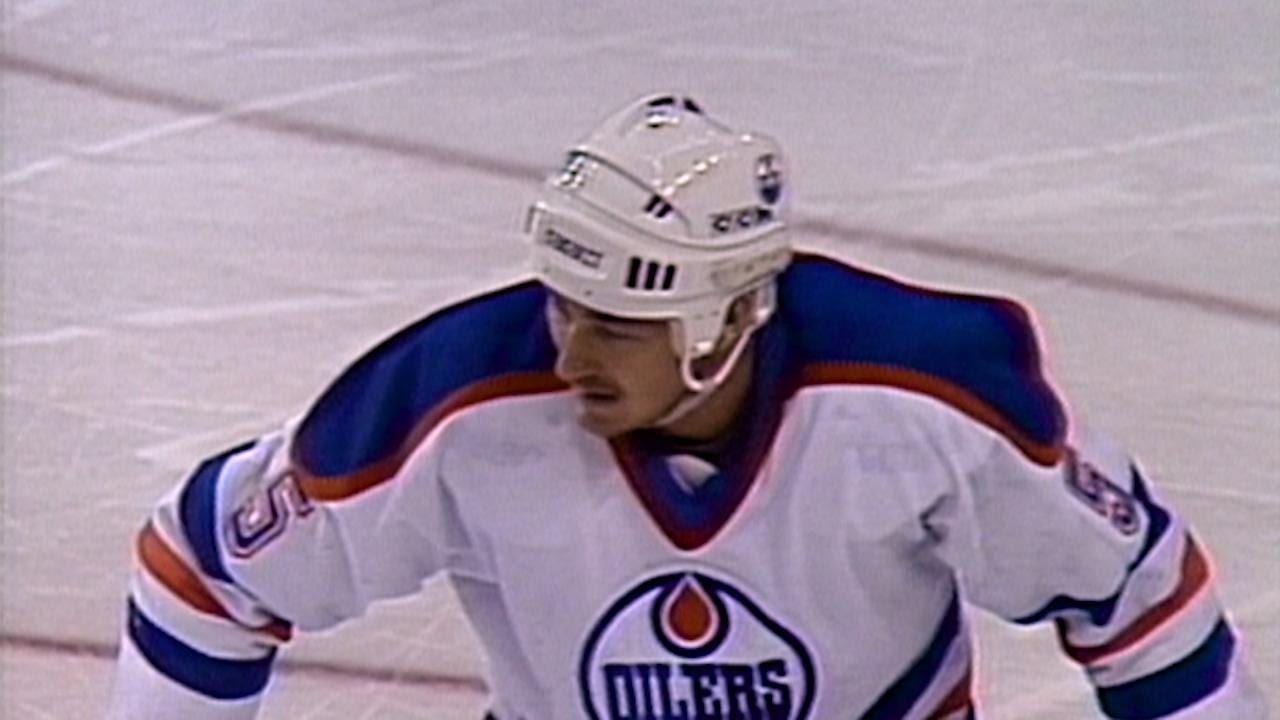
With good reason, everyone always talks about how amazing the Edmonton Oilers played during the 1980s. However, even the best team with the best players can have an off game or series. For the Oilers, they only missed capturing the Stanley Cup twice between the 1983-84 and 1989-90 seasons. One of those misses came on April 30, 1986, when they failed to advance out of the Smythe Division semi-finals.
The Oilers looked poised to three-peat when they won the first President’s Trophy with 119 points (56-17-7). They swept the Vancouver Canucks (3-0) during the Smythe Division semi-finals. For the Division finals, Edmonton would play the Calgary Flames, who had swept the Winnipeg Jets. Calgary had come in second to Edmonton at the end of the regular season, finishing 30 points behind (40-31-9).
Throughout the semi-finals, the teams in the “Battle of Alberta” alternated winning. Calgary took the lead only for Edmonton to tie up the series each time. That left them to play Game 7 on April 30 before 17,498 fans at Edmonton’s Northlands Coliseum. As they had all series, the Flames took the lead but the Oilers tied up (2-2) with a Mark Messier goal in the last minute of the second period. “They played us dead even,” said Oilers coach Glen Sather. “It’s just too bad to end the way it did.”
Only about five minutes into the third period, defenseman Steve Smith made perhaps the worst mistake of his career. It was his 23rd birthday, so the press commented about how he really “blew out the candles on the Oilers’ even younger Stanley Cup dynasty.” His attempt to send a cross-ice pass deflected off the back of goalie Grant Fuhr’s skate. Smith had inadvertently scored on his own team. That goal ended up being the game-winner credited to Perry Berezin, the Flames forward who had the puck before Smith. The Oilers spent the rest of the period trying to make up for the fluke but had no luck. The game ended in Calgary’s 3-2 victory.
The Flames went on to pass the St. Louis Blues (4-3) in the conference finals only to lose the Stanley Cup finals to the Montreal Canadiens (4-1). For the Oilers, 1986 was a blip in their winningest decade. Having won the Stanley Cup in 1984 and 1985, they went on to win the championships of 1987, 1988, and 1990.
Additional Source:
“Oilers beat themselves,” Edmonton Journal, 1 May 1986, morning edition, pp. A1 and E1-E2.
Three
pairs of quarter-final opponents played Game 7s on April 29, 1997. The
Edmonton Oilers eliminated the Dallas Stars but lost the next round. Of the other
four teams playing, three of them wrapped up their first ever playoff series.
The Ottawa
Senators joined the NHL in 1992 while the Mighty
Ducks of Anaheim followed in 1993, but neither had nabbed a playoff berth
until the 1996-97 season. Ottawa had had a franchise from the start of the NHL
until 1934, and 1930 was the last time that Senators team had a postseason. In
1997 they played the Buffalo
Sabres, who had been in the NHL since 1970 and had made the playoffs
all but six seasons. Anaheim’s first postseason opponents would be the Phoenix
Coyotes, in their first season after relocated and rebranded from the
Winnipeg Jets.
Of the
four teams, the Sabres and the Ducks ranked higher at the end of the regular
season. Buffalo finished first in the Northeast Division and sixth in the NHL
with 92 points (40-30-12). Their opponents, the Senators, came in low at third
in their division and 16th in the NHL with 77 points (31-36-15). Anaheim came
in ninth overall with 85 points (36-33-13), while the Coyotes trailed them in
12th with 83 points (38-37-7).
Buffalo
hosted the Sabres’ Game 7 at Marine Midland Arena for over 18,500. Just as they
had tied the series, the Sabres and the Senators tied the final game. Ottawa
scored on a power play in the first period, and Buffalo scored on a power play
in the second. Ottawa scored 45 seconds into the third period, and at 6:29,
Minnesota-native Derek Plante knotted the score. The center sent the puck
“directly into the net from the right faceoff circle after linesman Kevin
Collins dropped it.” Completely taken by surprise, goalie Ron Tugnutt barely
saw the puck fly over his hand. Plante said afterwards, “I didn’t know it was
going in. I saw Tugnutt go backward, and then I heard the crowd erupt. It was
awesome.”
The
game went into overtime with Buffalo outshooting Ottawa three to one. With
those odds, this time it was not surprising when Plante found the net again.
After 5:24, from inside Ottawa’s blueline, Plante “wired a hard slapshot that
just bounced off Senators goaltender Ron Tugnutt’s glove and trickled into the
net.” Tugnutt commented, “I got a good portion of it but it went off the tip of
my glove. I would have preferred it to be cleaner. This just doesn’t seem like
a fitting finish to a pretty good season.” Whereas, the jubilant Plante
exclaimed, “Stanley Cup playoffs, game-winning goal, seventh game. You can’t
score a bigger goal unless you win the Stanley Cup. It’s a great time for me.”
Fans agreed and chanted, “USA! USA! USA!” Plante became the first player to
score an overtime game-winner after having tied the score in the third period
of Game 7. On April
24, 1983, Brad Park had been the first to do so after tying in the second
period. Until this 3-2 victory, Buffalo had not won a playoff series since 1993
and had never won a Game 7.
Meanwhile,
at Arrowhead Pond of Anaheim, 17,174 came out to watch the Ducks win their Game
7 with a shutout. Guy Hebert earned his first playoff shutout with 31 saves.
Anaheim scored once in the first and twice in the second. They almost had
another goal, scored by Teemu Selanne, but the video review showed that his
teammate Steve Rucchin was in the crease. Although he seemed to have been
pushed there by Phoenix defenseman Murray Baron, it was still the fifth goal
waived off due to having a man in the crease. Still, Selanne said, “I think
right now we can enjoy this win, maybe have a party tonight. Tomorrow, we start
the next series.” Winger Joe Sacco, who scored the third goal and had been with
the team since its beginning, agreed, “It was a good celebration, but not too
much. We’re still looking ahead to the next round.” With two minutes remaining
in the game, the audience began giving a standing ovation. The Ducks piled on
their calm goalie in celebration.
Arizona attributed their loss partly due to their top scorer, Jeremy Roenick, needing crutches instead of being able to skate. Though this was their first season in Arizona, when counting their time as the Winnipeg Jets, the franchise had only played a Game 7 twice before and had only advanced out of the first round of playoffs twice. This was Anaheim’s first playoff series victory, and they became the seventh NHL team to move on to the next round on their first try. For the two teams who advanced, the Buffalo Sabres and the Mighty Ducks of Anaheim, they both fared miserably in the semi-finals. The Sabres only managed to win one game against the Philadelphia Flyers, who made it to the finals. The Ducks were swept by the Detroit Red Wings, who went on the win the Stanley Cup. Out of the four teams that played on April 29, only Anaheim has won the Stanley Cup (in 2007).
Additional Resources:
Mike Commito, Hockey 365: Daily Stories from the Ice (Toronto: Dundurn, 2018), kindle edition.
Roy MacGregor, “The Fairy Tale Ends,” Ottawa Citizen, 30 April 1997, pp. A1-A2.
Ken Warren, “The slap shot heard ‘round Ottawa” and Wayne Scanlan, “The pain will fade; the thrill will endure,” Ottawa Citizen, 30 April 1997, pp. D1-D2.
Allen Panzeri, “The little team that could,” Ottawa Citizen, 30 April 1997, p. D5.
“Sabres Plante Senators in OT,” New York Daily News, 30 April 1997, p. 66.
Bob McManaman, “Fowled Out,” Arizona Republic, 30 April 1997, pp. D1 and D4.
“It’s Still Duck Season,” Los Angeles Times, 30 April 1997, pp. C1 and C7-C8.
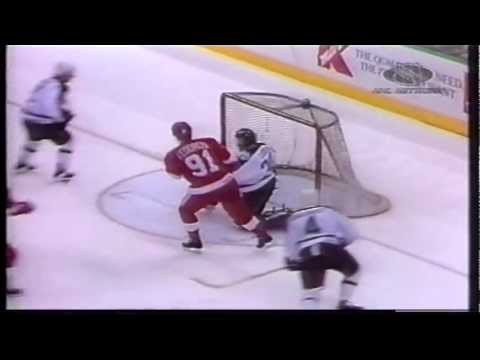
Sergei Fedorov may have been born on December 13, but he made April 28 his day – twice. Seventeen years apart, at opposite ends of his career, he scored the game-winning goal at the end of a playoff game to lengthen his team’s postseason. In 1992, only his second season with his first NHL team (since defecting from Russia in 1990), the Detroit Red Wings, Fedorov ended the sudden-death overtime to force a Game 7. In 2009, in his final season with his last NHL team, the Washington Capitals, he got the go-ahead goal as Game 7 wound down.
In both years, Fedorov’s team
ended the regular season first in the division. The Red Wings topped the Norris
Division with 98 points (43-25-12), and the Capitals topped the Southeast
Division with 108 points (50-24-8). Detroit first faced the Minnesota North
Stars, and by April 28, Game 6, they were trailing the series with two wins to
Minnesota’s three. In 2009, Washington had caught up to the New York Rangers to
force a Game 7.
The goaltenders battled through
Game 6 at the Met Center in 1992, keeping the score at 0-0 at the end of
regulation. After 16:13 of overtime, Fedorov took a shot. As he said, “The puck
went in and came back right away. I didn’t know for sure, but I thought that it
was pretty much in. The referee did a good job. He went to the other side of
the arena while they looked at the replay.” His teammate, Paul Ysebaert,
adamantly stated, “I was sure it was no good. I was out there when Sergei shot
it, I had a bird’s-eye view, and I was sure it hit the crossbar and came out.”
The goal judge seemed to agree
as he shook his head, but he was overruled by Paul Ryan, the video judge. After
watching the instant replay and seeing the puck hit the frame inside the net
behind Jon Casey, officials ruled it a goal. This was the very first time in
the NHL that a video review ruled for an decision overtime goal. Waiting by the
officials for the results, Captain Steve Yzerman said, “I wanted to come back
to the bench shaking my head and fake everybody out.” However, as soon as he
heard the news, he spun to his bench raising his arms. “But I guess I was too
excited to hide it.” Yzerman continued, “That was the most exciting game our
team has played since I’ve been here. I know I’ll remember it for a long time.”
The 1-0 goal gave Detroit goalie
Tim Cheveldae his second consecutive shutout, totaling 144:46 since he had last
had a goal scored on him. Cheveldae commented, “I just went out and tried to
play my own style. . . . I was actually pretty calm. I just tried to stay
focused from the start to the end, and it worked.”
On April 28, 2009, Fedorov and the Capitals played Game 7 on home ice at the Verizon Center. The series until that point had been interesting. According to the Baltimore Sun, “The Capitals switched goalies after one game. There were two suspensions and an alleged biting incident.” The opponents had each scored one goal in the first period, and the goalies had blocked all comers after that. Finally, in the last five minutes of the game, Fedorov “snagged the puck at the Washington blue line, blasted through the neutral zone and snapped a shot . . . past goaltender Henrik Lundqvist’s glove.” The aftermath may have been the loudest that arena ever heard. The Capitals were able to maintain the 2-1 lead until time expired. They were finally able to advance to the second round for the first time since 1998, when the Red Wings swept them in the Stanley Cup finals. Fedorov, at 39, was the oldest NHL player to score a Game-7 winner. Thanks to Fedorov’s timely goals, his teams advanced to the next round.
Unfortunately, in those two seasons, the story ended there. In 1992, Detroit was swept by the Chicago Blackhawks in the Division finals, and in 2009, Washington lost the semi-finals (4-3) to the Pittsburgh Penguins. That did not mean that Fedorov went without any hardware. During the 1990s, he earned the Frank J. Selke Trophy twice and the Hart Memorial Torphy and Ted Lindsay Award once each. With him on the team, Detroit won the Stanley Cup three times before Fedorov signed with Anaheim in 2003. He was traded to Columbus in 2005 and then to Washington in 2008. Fedorov returned to his Russian roots upon leaving the NHL in 2009. He was inducted into the Hockey Hall of Fame in 2015.
Additional Sources:
“Instant Life,” Detroit Free Press, 29 April 1992, pp. 1C, 4C-5C. Tarik El-Bashir, “Federov ices series for Caps in Game 7,” Baltimore Sun, 29 April 2009, pp. D1 and D3.
The Dallas
Stars look to bounce back
from a Game One loss to the St. Louis Blues on Thursday night. The Stars got off to
a slow start, but turned up the pressure in the third period. They threw 17
shots at the net, but Jordan Binnington stopped all but one shot that was
thrown on net.
Game 2 of the series is Saturday afternoon
with puck drop slated for 3:00 p.m. Eastern Time. Here are three things the
Stars need to happen to win the game.
1) Fast Start
The Stars need to set the pace and tone early
in this game, preferably right from the drop of the puck. The Blues scored
within the first six minutes of game one and kept the crowd in the game. The
tone can be set with either a physical play or a goal very early in the game.
They’ll want to establish a good forecheck and pressure the player carrying the
puck for the Blues to try to force some turnovers. The biggest reason they will
want to set the tone and pace early is to take the crowd out of the game and
quiet the building.
2) Top Line Produces
A big reason that the Stars disposed of the
Nashville Predators in six games in the first round was because the top line
came up big. The trio of Jamie Benn, Tyler Seguin and Alexander Radulov didn’t start the series on the same
line, but Jim Montgomery made the change and the line produced. Benn did have a
goal in game one, but the line needs to be in the offensive zone forechecking
and cycling to get some chances. Seguin and Radulov were kept off the board in
the first game and if the Stars want to bounce back and steal a game in St.
Louis then these two guys need to step their game up.
3) Ben Bishop Bounce Back
Bishop will need to bounce back from the game one loss. He let a few pucks get by him that may be he should have stopped. The first Blues goal went five hole and he should have stopped that puck, if he saves that shot it could have been the difference in the game. The second goal was a power play goal where he was screened a little bit by his own teammate, but again he was beat five-hole. The third and final goal for St. Louis, he was just too aggressive and tried to poke check the puck off of Vladimir Tarasenko’s stick, but missed and it wound up behind him. If Bishop can play just a tad better then the Stars have a good chance at stealing a game on the road in this series.
The Columbus Blue Jackets look to bounce back from an overtime game one loss to
the Boston Bruins in game one of the series. The Blue Jackets came out of
the gate slow in game one after a significant lay off. The Bruins were fresh
off a game seven win over the Toronto Maple Leafs to advance to the next
round.
The second game of this series is set for
Saturday night at 8 p.m. eastern time on NBC. Here are three keys to this
pivotal game two.
1) Forecheck/Pressure: Blue Jackets
The Blue Jackets tend to play their best
hockey when they have a good forecheck game going and are physical with the
opposition. In the first game, the team came out a little slow in this
department and it cost them. They should try to hit a player on the Bruins
every time that he has the puck to wear them them down since the Bruins just
battled with the Maple Leafs for seven games. When the Blue Jackets are forced
to dump and chase then they need to make sure that they can get some contact
with the Bruins defensemen to wear them down.
2) David Krejci: Bruins
David Krejci was hit late in the first game and was unable to return to
game one. The big question heading into game two is whether he will be
available to play and, if not, who steps up to take his place in the lineup?
Krejci has two goals, three assists and five points in eight games played in
this postseason. He has been one of the Bruins better players, if not the best
during this postseason. Krejci may not be the flashiest of players or the guy
that shows up on the stat sheet every night, but he has been one of the more
noticeable Bruins players.
3) Goaltending: Blue Jackets & Bruins
This series has a good chance of coming down to which team gets the better goaltending. Tuukka Rask has been good for the Bruins in the postseason. He has been keeping his team in games and giving them a chance to win. Sergei Bobrovsky had a shaky start to this postseason, but bounced back nicely to help his team win their first ever playoff series over the top-seeded Tampa Bay Lightning. These goalies have the ability to make the easy save and the highlight reel save, so it could come down to which team is able to get more traffic and deflections in front of the goalies.
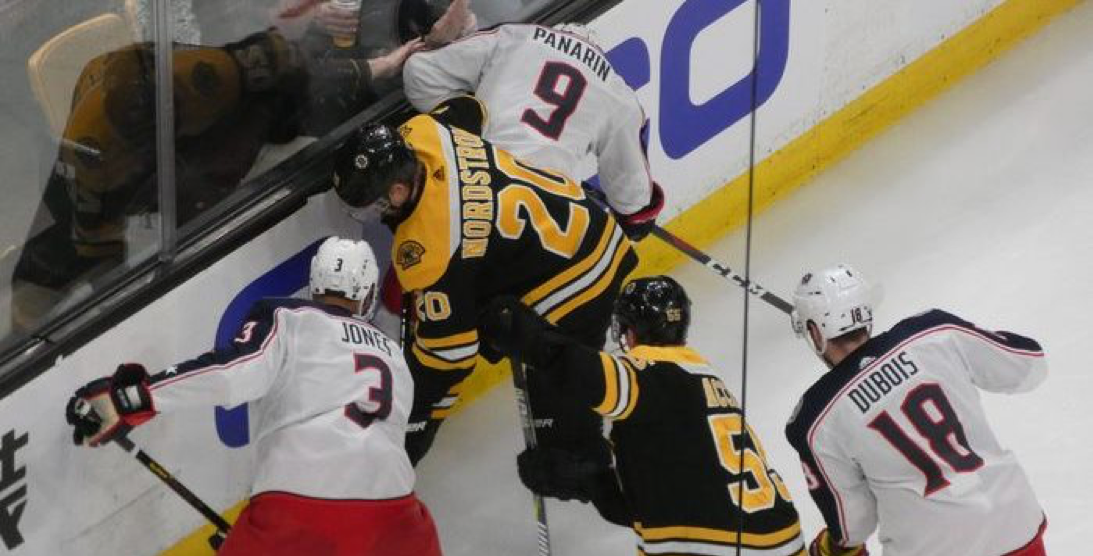
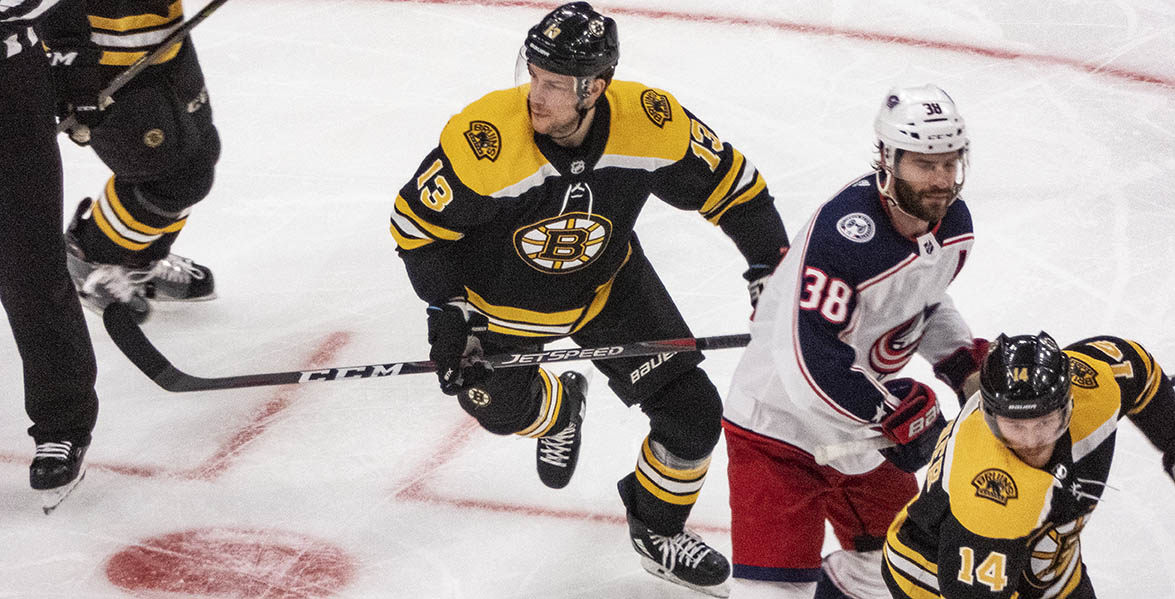
After finishing off the Toronto Maple Leafs on Tuesday night in a series that took all seven games to declare the winner, the Boston Bruins found themselves right back at it Thursday night, as they met the Columbus Blue Jacketsin Game 1 of the second round.
Some expected that the Bruins might come out at the beginning of the game showing a bit of fatigue. Likewise, since the Blue Jackets had swept the Tampa Bay Lightning, they were rested, and it was expected that they would quickly set the tempo. Instead it was Boston that set the tempo to start the game, and throughout most of the first period. In fact, without the absolutely stunning performance by their netminder Sergei Bobrovsky, who played a major role in Columbus’ Round One upset, the game could have quickly gotten away from the Blue Jackets. At the end of the first period, the Bruins had managed 12 shots on goal, with another 12 attempts, and notched one goal. On the flip side, Columbus had four shots on goal, and only three additional attempts. The Bruins goal came while they were killing a hooking penalty assessed to Charlie Coyle. Noel Acciari, earned his first goal of the playoffs, while Charlie McAvoy got the assist. Secondary scoring has been crucial to the Bruins in the postseason, as their top line has seen some struggles to produce.
“Typically, the secondary scorers aren’t going
to score every night. That’s why they’re secondary scorers, right? Because
they’re not guys that do it every night. So far, they have the last few. We
talked about it here. I think any good Stanley Cup caliber team has to have it
at some point. We’re getting it. Great job by those guys in the bottom of the
lineup. Not only do they score, they killed, what – that was a 50% power play
going into this game for Columbus, and we killed every one. So, they did a hell
of a job in that area too. So not only did they do what they always do well,
and they pitched in on the scoring, so good for us,” Bruins head coach Bruce
Cassidy shared.
The Bruins weathered a more difficult middle
frame in which it did look like a bit of fatigue had caught up to them.
Meanwhile the Blue Jackets seemed to be finding their rhythm after that rusty
first period. Despite Columbus outshooting the Bruins in that period, Boston
was able to go into the second intermission still in the lead on Acciari’s goal
back at 10:34 of the first.
The second period had been a bit of an issue
throughout much of Round 1 for the Bruins and was a time when they were likely
to dial back their pressure some. Like Game 7 against the Leafs, Tuukka Rask stood
his ground between the pipes, and once again gave his team the chance to win.
Early in the third period, as Boone Jenner was
sent to the box for a holding penalty the Bruins had an opportunity to try and
give themselves a little breathing room on the scoreboard while on the man
advantage. However, Bobrovsky continued to do everything he could to remain a
brick wall in net. It would soon look like perhaps Boston’s inability to
convert on the power play might leave them with regrets at the end of the game.
At 7:39 of the third, Brandon Dubinsky got things tied after Coyle turned the
puck over in the Bruins’ end. The deflection that resulted in the goal wasn’t
something that Rask could have anticipated.
A tied game didn’t seem like a problem, except
that 13 seconds later, it wasn’t tied, and the Bruins were now on the losing
end of the scoresheet, when the puck ricocheted off Pierre-Luc DuBois to put the Blue Jackets up 2-1 with
12:08 remaining.
While fans on social media began their
meltdowns, the Bruins continued to bring their game. They had picked up the
pace in the third. Despite the score, they were in more control of the overall
play in the third and were again outshooting Columbus. Though down a goal, they
focused on the work at hand and remained calm on the bench.
“I think it starts with our leadership group.
You go back to their most successful season with that core group. They were
down 2-0 at home to Vancouver. They came back to win a Stanley Cup. They know
what it takes. They know what it takes. It’s not the end of the world to have
things not go your way right away. You have to work hard to correct it to play
the right way, so I have to credit it all to the guys in the room. As a staff,
we’ve read off them, so we try to be the same way. Listen, of course you get
upset if something doesn’t go your way. You know, if we’re not playing the
right way, we move on. We address it, ‘hey let’s get back to the way we need to
play.’ I just think it’s the guys that go over the boards. They start that
process again. Those guys that are going over the boards are generally the
Bergys [Patrice Bergeron], the Krechs [David Krejci], the [Zdeno] Charas, and
then the guys, it snowballs from there. The rest of the soldiers kind of fall
in line, and then off you go,” Cassidy said of their response.
Respond they did and it came from the player
who perhaps felt he needed to make amends—Coyle.
“I had a costly turnover in the third period, you can’t have that during the game. I’m glad our line kept playing and kept going out there to redeem ourselves,” Coyle stated honestly. As Marcus Johansson and Coyle were coming into the Blue Jackets’ end, Johansson got the puck down low along the right wall and shot it at Coyle. Coyle’s one-timer was perfectly timed, as even half a second later and Bobrovsky would have closed off the narrow slot the puck squeaked through. It was so fast that the on-ice official didn’t even give the goal sign right away, the puck having come out so quickly. With just 4:35 remaining in that third period, Coyle had given the Bruins the opportunity to push even harder and possibly get the win.
Nothing would be decided in regulation. The teams came back out after a 15-minute intermission and once again it the Bruins confidence was on display. They were limiting the chances of Columbus while making some good shots on Bobrovsky. Once again it would be the magic of Johansson and Coyle who would put an end to the game and give the Bruins the win.
For Coyle, who had a penalty and the costly
turnover, he was simply happy the Bruins notched the win. The Weymouth native,
one of a couple of hometown boys on the team, proved what a great acquisition
he was at the trade deadline. He now has five goals in eight playoff games.
“Yeah, he’s a really important forward for us.
Such a great pickup at the deadline and if we’re going to go far, he’s going to
be a key guy for us. Obviously, exciting for him being a hometown guy to lift
the Bruins to an overtime playoff victory. Exciting stuff. We’re glad to
have him,” Torey Krug said.
There are things that the
Bruins need to fix, as there always are. They will enjoy the win briefly and
then get right back to work on Friday. The teams meet again on Saturday night
at 8:00 p.m. ET for the second game in this series.



 Prev
Prev