Bookending the 1970s, the Boston Bruins had their best and worst moments at the end of games held on May 10. Forty seconds into overtime on that date in 1970, Bobby Orr flew after scoring the Stanley-Cup-winning goal. In 1979, with 2:34 remaining in regulation, the Bruins were penalized for having too many men on the ice, leading to their elimination from the semi-finals.
In 1970, 14,835 fans gathered at Boston Garden to watch Game 4 of the Stanley Cup finals. The Bruins had already taken the first three games and wanted the home crowd to see them win their first championship since 1941. Defenseman Bobby Orr later wrote, “The drought had persisted long enough — at least in the eyes of the Bruins faithful. As for the players, we wanted it done, right then and there. The chance to sweep on home ice was within our grasp.” The St. Louis Blues just wanted to keep the series going for the chance to stage a comeback.
Thus, the two teams each score a
goal in each period. Johnny Bucyk potted the final one in regulation at 13:28.
He would celebrate his 35th birthday just two days later. Of this goal, Bucyk
commented, “But I don’t think there ever was one bigger than that.”
Tied at 3-3, the game, for the
first time in 14 games, went into overtime. Orr wrote in his memoirs, “It was
off to overtime, which is the way every kid wants to win the Cup. No one needed
a speech in the dressing room to get motivated to go back out there. Not much
was said. At least I never heard much. I suppose nothing really needed to be
said. We all knew what was at stake.” Bruins Coach Harry Sinden later explained,
“I started with what was known as the checking line, but my intent was to
hopefully get through the first five or eight minutes of overtime. I thought
the longer the overtime went, the better chance we had of winning it.
Fortunately, we got the break in the first five minutes.” That was because he
put the best defensemen, Orr and Don Awrey, behind the third line, Derek
Sanderson centering for Wayne Carleton and Ed Westfall.
Sanderson took a shot that
rebounded to the right-side boards. Orr passed the puck to Sanderson waiting
behind the net. “Derek gave me a great pass and when I got the pass I was
moving across,” described Orr. “As I skated across, Glenn [Hall] had to move
across the crease and had to open his pads a little. I was really trying to get
the puck on net, and I did. As I went across, Glenn’s legs opened, so I jumped.”
At only 40 seconds into overtime, as the Boston
Globe recapped, “Swooping in front of the Blues’ net, Bobby Orr took a
swipe past old Glenn Hall in a move so rapid that there was a slight delay in
the roar from the stands until a few moments after the red light flashed.” Orr
admitted, “Honest, I really don’t know how it went in.” But he also wrote, “To
actually do what you have dreamed of a thousand times since you were a kid is a
feeling like nothing else.”
As the puck left Orr’s stick,
Blues defenseman Noel Picard made a desperate attempt to stop the play.
Instead, he tripped Orr lifting his legs with his stick. Orr, lifting his arms
in victory, appeared to fly. According to Orr’s autobiography, “He brought me
down, but not before I’d spent that moment airborne. And as soon as I fell back
to the ice, Sanderson jumped on me, and the celebrations began.” Orr was
immediately mobbed by his teammates as the game ended at 5:10 that afternoon.
The moment was immortalized by the
press, but particularly in Ray Lussier’s photo. It shows Orr flying with arms
raised as goalie Glenn Hall leans on the crossbar of his net with the puck at
his feet. Despite his defeat, the iconic image has become the most famous of “Mr.
Goalie,” who has been asked to sign it nearly as often as Orr. Hall commented, “Is
this the most famous photo of me? Yes, I think they’ve probably made it so.”
However, Hall, greatly admired Orr, saying, “He was capable of scoring goals
and he did things different than we thought defensemen should be doing. I’ll
tell you, he was a great, great player and he’s a great, great person, as are
all the top guys who represent the NHL so well.” He had followed Orr throughout
the play and noted, “I’ll tell you, if you were a goalkeeper and you didn’t
know where Bobby Orr was on the ice, you weren’t paying attention. He was the
whole focus.” When Orr and Hall captained the Eastern Conference and Western
Conference (respectively) in the 1996 All-Star game, Hall said, “We were signing
that photo, over and over again. I think I turned to him that day and said, ‘Bobby,
was this the only goal you ever scored?’ You know, it might live forever. And
that’s fine with me.” Orr’s image has certainly lasted as it has been turned
into a statue outside TD Garden.
As one article about May 10,
1970 pointed out, No. 4 (as he was being tripped by No. 4) had scored the
Bruins’ fourth goal in the fourth session of Game 4 to win the Bruins’ fourth
championship. In addition to the Cup, that year Orr earned the Art Ross Trophy
as lead scorer (with 120 points), the James Norris Memorial Trophy as lead
defenseman, the Hart Memorial Trophy as regular-season MVP, and the Conn Smythe
Trophy as playoff MVP. He was the first to win all four trophies in one season.
But what goes up must come down.
After winning the Cup again in 1972, the Bruins lost the finals to Philadelphia
in 1974 and twice to Montreal in 1977 and 1978. Having topped the Adams
Division in 1979, the Bruins wanted to finally defeat the Montreal Canadiens.
They met in the semi-finals and played Game 7 on May 10.
The first bad sign was that the
game was played at Montreal’s Forum. Still, after both teams scored one apiece
in the first period, the Bruins took the lead in the second thanks to two goals
by captain Wayne Cashman. At that point, Montreal Coach Scotty Bowman found the
situation dire. “I really doubted we could win at that point unless we got some
power plays.” He got his wish. Boston Coach Don Cherry complained to the press,
“But I could sense something was going to happen with the officiating. It always
does up here. They get away with murder. It’s always that way. What were the
power plays in the game – five for them and two for us.” The Canadiens rallied
and scored twice in the first half of the third period. The Bruins thought they
essentially won when Rick Middleton scored at 16:01.
Then along came Canadiens
superstar Guy Lafleur. The Bruins had assignments to shadow him for the game,
so they had a mix-up with the shifts when Lafleur stayed on the ice for a
triple shift. Later it was clarified that left winger Don Marcotte went out to
shadow Lafleur while another Boston left wing was already on the ice. Immediately
after the game, it was assumed that the mix-up came because of dual centers Pete
McNab and Bob Miller. Either way, the Bruins clearly had too many players
skating that shift. Linesman John D’Amico did not want to make the call but had
to after this continued for 20 seconds. Only 2:34 remained in the game when Boston
received a bench minor for having too many men on the ice.
The opposing coaches and the
Bruins general manager had differing reactions to the call. Harry Sinden raged,
“You just don’t make that call in that situation. I’ve been talking to all
kinds of people trying to find one that saw it. I can’t find them yet. If we
had an extra man on the ice, he didn’t interfere with the play and, if he didn’t,
the call shouldn’t have been made. Never. Not in the final minutes of a seventh
game of the Stanley Cup.” Bowman could afford to be kind stating, “They just
got a little excited with two-three minutes to go.” Don Cherry bore the guilt
saying, “When there are too many men on the ice it’s the coach’s fault. It’s
the coach’s responsibility to see that things like that don’t happen.”
Lafleur capitalized on the power
play. With 1:14 remaining in regulation, he sent a slap shot from the right
circle to knot the game. Lafleur later commented, “Sometimes in a game, there’s
a window [that] is going to open up and just can’t afford to miss it.” His
teammate, Yvon Lambert scored the game-winner at 9:33 of overtime. “They took a
stupid penalty,” Lambert stated bluntly. “I just know that a team with their
experience shouldn’t be making a mistake like that in the playoffs.” The result
was that the Canadiens became the first NHL team to win a Game 7 after trailing
so much going into the third. They went on to win their fourth consecutive
championship.
Gilles Gilbert, the goalie who
had let these two goals past him, had faced 52 shots. “The most shots I’ve seen
since I was a pee wee,” he said. “We were there, but we’re only human. We can’t
stop everything.” Coach Cherry credited Gilbert saying, “Gilles was super. Just
great. He didn’t have a chance on the winning goal. And Lafleur just made a fantastic
shot to beat him at the end of regulation. I said when Himself (Bobby Orr)
retired that the greatest player in the game was Lafleur. They gave everything
they had, and in the end we just got worn down.”
Mourning the loss in the locker
room, Brad Park said numbly, “There will be nothing out of me. There is nothing
I can say. I feel too bad.” “We had ‘em once, we had ‘em twice,” bemoaned
McNab. “The pain just doesn’t go away from a thing like this. It’s a lifetime
pain.” Tearing up, Gerry Cheevers commented, “I want to cry for every one of
them. Each guy I see makes me want to start crying all over. I just feel so sorry
for all of them. They just tried so hard. I’ve never seen them try so hard.”
The Bruins were in for yet another long drought. They
did not even make it back to the Stanley Cup finals until 1988, and it took
until 2011 for the team to once again raise the Cup.
Thursday night saw Game 1 of the Eastern Conference Finals between the Boston Bruins and the Carolina Hurricanes. It took Boston seven games in Round 1 to send the Toronto Maple Leafs packing and then six games in Round 2 to finish off the Columbus Blue Jackets. Meanwhile the Hurricanes had to go the distance with the Washington Capitals in Round 1 before moving on to sweep the New York Islanders in Round 2.
Despite the two goals scored—one for each team—in the first
period, it seemed that both teams were a bit tentative and perhaps trying to
get a feel for the other’s approach to the game. As has been seen too many
times in the postseason for the Bruins, the second period was again not their
strongest twenty minutes, and they ended up going into the second intermission
down 2-1.
There has been much discussion as to the abilities of the
Carolina Hurricanes during this post season and there is no doubt that they
have a number of skilled players and that they are not afraid to take the body
or get as physical as is necessary in each game. Some of their grittiness was
on display Thursday night.
Carolina’s first goal, a deflection by Sebastian Aho while on the power play, happened three seconds into their power play after Sean Kuraly got sent off for a roughing. That evened things up and came a mere 47 seconds after the Bruins Steven Kampfer got Boston on the scoreboard first.
“We did a pretty good job. That’s kind of their sneaky line, they find each other a lot and they get lost on the side of the net. A lot of time it kind of looks like a nothing play, they just fold those pucks in there, and then they find each other and it’s an open chance,” said Bruins netminder Tuukka Rask.
No one thought it was going to be an easy game, and once
again there were some frustrations with the refereeing, making it difficult for
the players on both sides to truly understand what really constitutes a penalty.
There were many things not called, but then some of what was whistled seemed to
be either soft or questionable.
“There were penalties both ways I thought, some were called
and not called so I mean there’s no point in getting into the officiating. I’m
as frustrated as everybody on some of the calls but again I think we got to
kill them. We take a penalty, we have to
kill them, and we didn’t do that,” said Carolina’s Head Coach Rod Brind’Amour
Carolina went up 2-1 during the second as foward Greg McKegg went hard to the net firing off a shot that beat Rask. McKegg was hauled down by Kampfer, who was trying to break up the play, just after the puck got through Rask, and that resulted in McKegg taking out Rask in the net. Fortunately for the Bruins, Rask was not injured. Despite having given up the two goals, he continued to be the Bruins best player.
Rask’s stinginess between the pipes kept Boston in the game during
what could only be described as an uninspired second period for them. Kuraly
took his second penalty of the game in that period. Meanwhile, the Bruins had a
power play opportunity on which they couldn’t convert. As they went off during
the second intermission, it was in large part due to Rask that the Bruins were
only down a single goal.
And like most of the games this post season, the Bruins who returned for the third period seemed almost like an entirely different team than the one that was on the ice in the middle frame. Jordan Stall took a boarding penalty 49 seconds into the final twenty, and though the Bruins had been unable to score on their previous two opportunities on the man advantage, Marcus Johansson, by going to the dirty areas and being patient, was able to lift a rebounding puck over Petr Mrazek to knot things up with 23 seconds left on Stall’s penalty.
Fifteen seconds after everything was tied up, Dougie Hamilton found himself in the box for Carolina, for a somewhat questionable roughing penalty on Joakim Nordstrom. Thirteen seconds into the power play—and 28 seconds after tying the game—the Bruins were leading for the first time since the 2:55 mark of the first period. This time it was Jake DeBrusk to Brad Marchand to Patrice Bergeron for giving them the go-ahead goal.
“I thought the third was the way we want to play and not going to lie, the second goal got us going and got the momentum on our side, and then we got rolling. But yeah, the third period is a little more of what the type of game that we want to bring, but again, we’ve got to be better. They’re a good team and it was a tough game tonight,” shared Bergeron.
There is still a lot of hockey expected in this series to see who moves on to the Stanley Cup Final, but for the Bruins, getting a 5-2 win speaks to their dogged perseverance. After all, the Carolina Hurricanes allowed just five goals total in their four games against the New York Islanders during the second round. So for them to allow five goals in just a single game—a game that ended their six-game winning streak, speaks not only to the skill and steadfastness of the Bruins, but also to their impressive belief in each other on the ice and what, as a team, they can do and are expected to do.
For both teams they now have a little bit of rest, as they don’t play again until Sunday afternoon at 3:00 pm eastern time. Undoubtedly the physicality of the series is liable to increase some as both teams continue to prove who has the will, skill, and desire to take on whomever wins in the West Coast Final, which begins Saturday night on NBC pitting the St. Louis Blues and the San Jose Sharks against each other at 8:00pm eastern time.
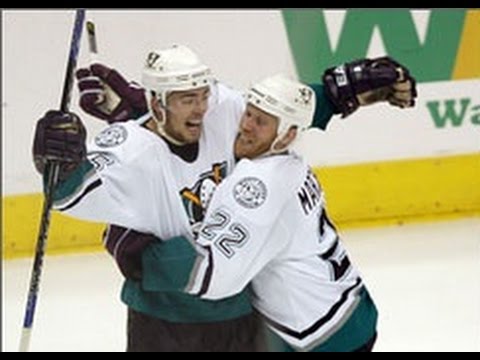
As the saying goes, there’s no “I” in “team.” However, after the Anaheim Ducks defeated the Colorado Avalanche on May 9, 2006, most attributed the 4-3 victory on one man alone, Joffrey Lupul. He scored all four Anaheim goals as the first NHL player to score four goals in one playoff game that included an overtime game-winner among them. As amazing as this feat was, Lupul relied heavily on his linemates, Dustin Penner and Todd Marchant. For this game, at least, the Ducks had a one-line show.
In the 2006 postseason, the
Ducks had already defeated the Calgary Flames (4-3) in the quarter-finals. They
then shutout Colorado in the first two games of the semi-finals. In Game 1 on May
5, they won 5-0, with Lupul scoring the fourth goal on a power play in the
final seconds of the second period. Game 2, held May 7, featured a 3-0 shutout
in which Lupul scored the final goal (assisted by Penner and Marchant).
Game 3 was held at the sold-out
Pepsi Center, filled with 18,007 fans. Goalie Ilya Bryzgalov’s shutout streak was
finally broken when Dan Hinote scored Colorado’s first goal of the series at
19:33 of the first period. Bryzgalov’s streak had lasted 249:15, then only second
to George Hainsworth’s streak of 270:08 set in 1930 for Montreal. Bryzgalov
shrugged, “Someday it was going to happen. It just happened to be today. Nobody
can play hockey without giving up a goal for the rest of their life.”
Lupul scored the only goal of
the second period, at 9:02, with Penner’s assistance. With the score tied, the opponents
went back and forth throughout the third period. Colorado took the lead at 4:47.
Then Lupul and his line tied and took the lead about halfway through. At 8:54,
Marchant assisted Lupul in snapping a wrist shot into the net. Almost two
minutes later, Penner assisted Lupul in “another wicked wrist shot . . . that
beat Theodore on the stick side.” Lupul said of the play, “I was yelling for
it. I think he [Penner] was looking for me today after I had a couple. He made
a nice drop pass. I got a little fortunate on that one.” Unfortunately for Anaheim,
Rob Blake tied up the score at 13:35, forcing the game into overtime.
The overtime session was winding
down, when at 16:30, Penner intercepted a pass and fed the puck to Lupul. From
Lupul’s shot, the puck snuck through the legs of goalie Jose Theodore. The
Ducks had won thanks to 21-year-old Lupul making four goals off of his six
shots. According to Lupul, “They just went in tonight. I got a couple of good
passes. And some breaks.” He went on, “Sometimes, you feel like, ‘Is it ever
going to go in?’ Tonight was a feeling like, ‘Am I ever going to miss?’” Still,
he enthused, “It’s awesome. I’ll remember this as long as I live.”
The last time an NHL player had
scored four goals in a playoff game was Theo Fleury in 1995. Lupul became the
first to do so with an overtime game-winner. Lupul mused, “I don’t know if I’d
ever dream of four goals in a playoff game, including an overtime winner.” Penner
goaded, “He’s going to have to do it again. . . . I think he’s capable of it.”
Their captain, Scott Niedermayer, commented, “To get four goals like he did . .
. we needed them all. Those nights are great when they happen.”
Along with Lupul’s four goals,
Penner had three assists while their center, Marchant, had one. Rookie Penner said
of their line, “We mesh together pretty well. We feed off each other. We have a
sniper, a solid, two-way center, and I try to be a big body down low and hold
onto the puck.” Veteran Marchant commented, “I’ve been on lines where we’ve had
that chemistry, and you just know where the guys are going to be and make those
plays and know their tendencies. And I just hope it continues.”
The Ducks wrapped up their sweep in Game 4 on May 11.
Thanks to Marchant’s two goals, Penner’s goal and assist, and Lupul’s assist, Anaheim
won 4-1. They went on to the Conference finals, which they lost 4-1 to the
Edmonton Oilers. The team’s top scorers throughout the playoffs included all
three. Coming in second (one point behind Teemu Selanne), Marchant had 13
points (3G, 10A). Tying with their captain for third, Lupul had 11 points (9G,
2A). Finally, Penner (3G, 6A) and two others all had 9 points. The very next
season, the Ducks won their only Stanley Cup championships to date.
Additional Sources:
Helene Elliott and Eric Stephens, “Lupul Hits Command Key,” Los Angeles Times, 10 May 2006, pp. D1 and D6.
Mike Commito, Hockey 365: Daily Stories from the Ice (Toronto: Dundurn, 2018), kindle edition.
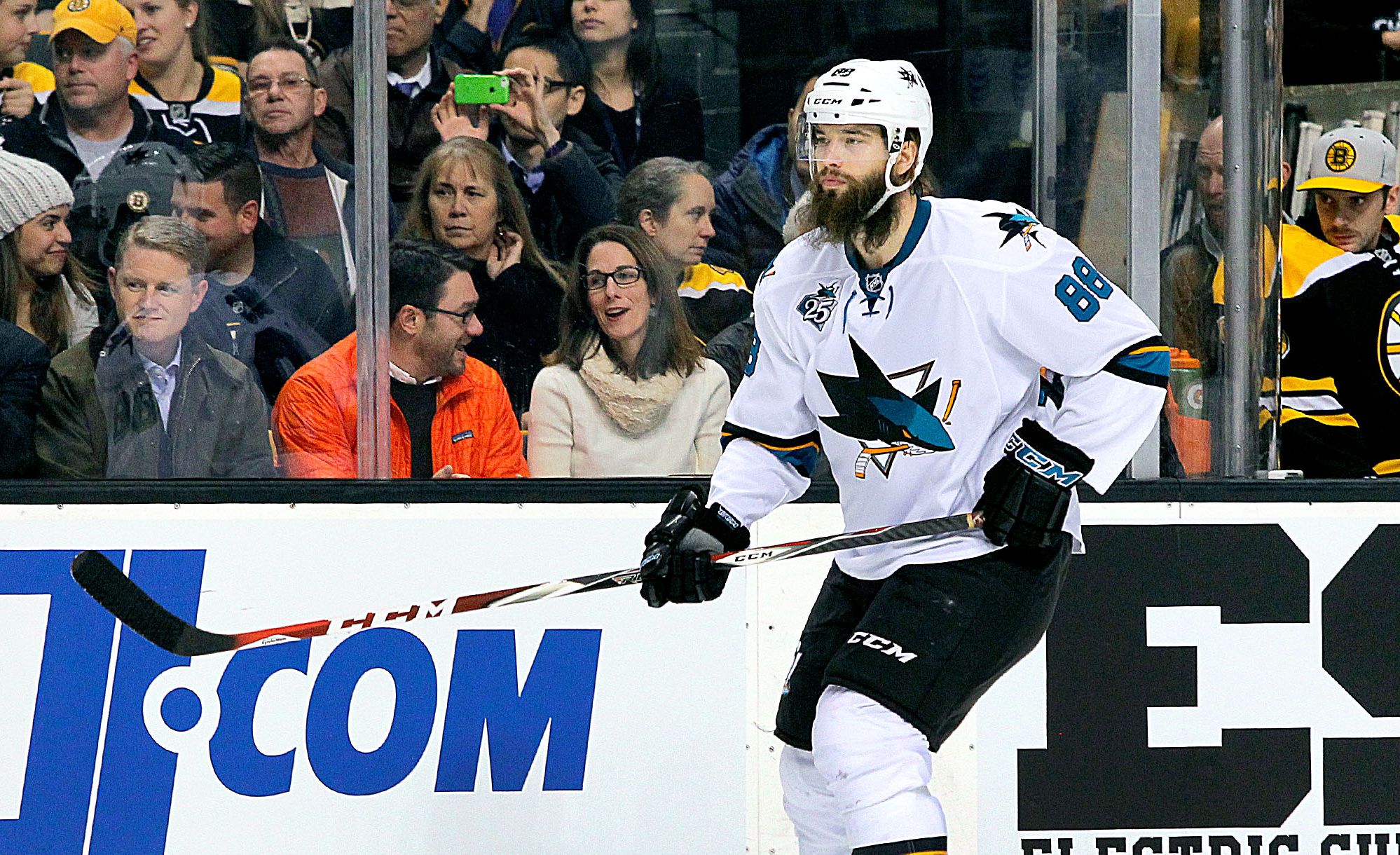
The San Jose Sharks have been playing without its captain, Joe Pavelski, since about the halfway point of the third period of a series decided Game 7 against the Vegas Golden Knights. Pavelski was taking the face-off against Cody Eakin, who cross-checked him and then there was incidental contact with Paul Stastny. Pavelski left the game with an undisclosed injury, but blood had to be cleaned off the ice once he left the playing surface.
Pavelski hasn’t returned to game action since that moment. In the time that he has missed, these three Sharks have stepped up to keep the team alive to play in a pivotal Game 7 against the Colorado Avalanche on Wednesday night
1) Logan Couture
Logan Couture got thing started for the Sharks when they were down 3-0 in the third period against the Golden Knights in game seven. He scored the first power play goal on the 5:00 major given to Eakin. After the goal was scored, he turned to the Sharks’ bench and said, “That’s One.” Couture then went and scored the third power play goal of the major to tie the game at 3-3. Couture started the amazing comeback by the Sharks, who managed to win the game and series in overtime.
The Sharks are in a battle with the Colorado Avalanche in the second round of the playoffs. Couture has three goals, three assists and six points in six games played so far. A Game 7 will be played at home on Wednesday night. Couture’s assists have all come on game tying goals, whether it be to tie the game at 1-1 or to tie the game late to force overtime. All three of his goals in this series came during Game 3 when he posted a hat trick.
2) Tomas Hertl
Tomas Hertl had an assist on the first of the four power play goals once Pavelski left Game 7 against the Golden Knights. He also scored the second goal of the game for the Sharks. It seems as though when the Sharks have needed to turn the game around, he is pitching in on the offensive end. It could be his playmaking or his goal scoring ability.
In the series against the Avalanche, he has been stymied a bit and only has two goals and two assists for four points in six games. His first points of the series came in the second game where he added two assists, one on the Sharks’ first goal and another on the team’s third goal. The Sharks lost the game 4-3. His two goals came in game five and they were the only two goals scored by the Sharks in a 2-1 regulation win.
3) Brent Burns
Brent Burns assisted on the game-tying power play goal for the Sharks against the Golden Knights. He can act as a fourth forward while on the ice since he can skate and move the puck. Burns likes to join in the play on the offensive side of the puck, but can also scurry back to defend his own zone.
The defenseman started out red hot in the second round against the Colorado Avalanche. In the first two games, he had a combined three goals four assists and seven points. In four games since, he has one goal for one point. Burns has four goals, four assists and eight points in six games with Game 7 being played Wednesday night at 9 p.m.
In the worst kind of goalie battle, the opponents seemingly competed for letting in the most shots. By the end of Game 5 of the 1973 Stanley Cup finals, on May 8, goalies Tony Esposito and Ken Dryden found themselves with save percentages of .774 and .724, respectively as the Chicago Blackhawks defeated the Montreal Canadiens 8-7.
The two goalies were pretty evenly matched in their careers. Esposito earned the Calder Memorial Trophy in 1969-70, his first year with Chicago. Dryden earned the same in 1971-72, his second with Montreal. The Blackhawks goalie thrice earned the Vezina Trophy, while the Canadiens goalie earned it five times. Of the eight years Dryden tended goal for Montreal, they won the Stanley Cup championships six times. Esposito had played one season for Montreal and then fifteen with Chicago, so he played almost 500 more games than his counterpart. Esposito’s career save percentage was .906 compared to Dryden’s .922. Dryden entered the Hockey Hall of Fame in 1983, and Esposito followed five years later.
They faced each other in the
finals of 1973. Game 5 took place at Montreal’s Forum. By that time, the Canadiens
led the series 3-1, so they were motivated to win this game and hoist the Cup
before the home crowd of 18,950. The Blackhawks needed to win to keep the
series going and catch up.
For the majority of the game,
the teams traded goals. Montreal’s Frank Mahovlich scored early in the first period,
but Chicago’s Bobby Hull and Stan Mikita answered. Frank assisted his brother,
Pete Mahovlich, in closing out the period. Frank said afterward, “I can’t
believe it. I’ve never seen a crazy game like that in all my life. There’s just
not any explanation in the world for it.” Meanwhile, Chicago coach Billy Reay
noted, “Everybody worked like hell and we had a little more balance.”
The craziest part came in the
second period. Montreal’s Claude Larose scored in the first 37 seconds and
again at 4:23. Between his goals, Chicago’s Dave Kryskow tallied at 3:10. At 6:21,
Mikita potted his second goal of the night. Montreal’s Yvan Cournoyer countered
at 7:09. After pausing for over four minutes, Chicago came roaring back with
three unanswered goals. Jim Pappin scored two of them, and Mikita assisted on the
last two. After the game, Montreal coach Scotty Bowman commented, “I have never
seen anything like it. I have no explanation for it at all.”
At the top of the third,
Montreal’s Serge Savard narrowed the gap. At 4:04, Lou Angotti potted the
eighth and final goal for Chicago. In the latter half of the period, captain
Henri Richard, assisted by Frank Mahovlich, valiantly attempted to tie the
game. However, that turned out to be the seventh and final Montreal goal. Richard
admitted, “I’m terribly disappointed. I thought we could tie it up, there was
still eight minutes to go, but we just seemed to run out of steam.” His
teammate, defenseman Larry Robinson, said, “I have never been as disappointed
in my life. I was making goofs out there that I haven’t made since I was in
junior.”
Both goalies seemed equally hard
on themselves. They had each faced 30 shots on goal, even though Dryden was
pulled with less than a minute remaining. The Montreal Gazette said he had been “beaten more often than any
Canadiens goaltender within memory.” Dryden said, “The goals started to come,
and it just kept escalating.” Meanwhile, Esposito commented, “You hate to let
in goals in the playoffs. Everytime one goes in with this much on the line you
know you are letting down 18 other guys and making it that much harder to catch
up.”
Coach Reay attributed their win
to matching Montreal by using four lines. He commented to the press, “I notice
that everybody wrote us off again. And we came back again. All season long this
team has been coming up with the big game when we needed the big game, and they
did it again.” His counterpart, Bowman, merely commented, “I’ve learned now to
expect anything.”
Having scored 15 goals total, the two opponents set a record for the most ever scored in a playoff game. The previous record of 13 had stood since 1936. Coach Reay exclaimed, “But God, the score was amazing. Not only don’t I remember anything like it in the playoffs before, I don’t remember anything like it in the regular season before either.” Furthermore, the eight-goal second period also set a record at the time for most goals in one playoff period.
As Angotti realized, “What this all means is that we all have to go back to Chicago and play another hockey game.” Despite Chicago forcing a Game 6, they could not hold back the Montreal tide any further. The Canadiens won 6-4, taking home their second Stanley Cup in three years.
Additional Sources:
Mike Commito, Hockey 365: Daily Stories from the Ice (Toronto: Dundurn, 2018), kindle edition.
Tim Burke, “Hawks Win a Wild, Wild One 8-7,” Montreal Gazette, 9 May 1973, pp. 43 and 45.
Doug Gilbert, “Hawks subdued, wonder what next game will bring,” Montreal Gazette, 9 May 1973, p. 45.
Bob Verdi, “Records fall, Hawks nip Montreal 8-7,” Chicago Tribune, 9 May 1973, section 3, pp. 1 and 6.
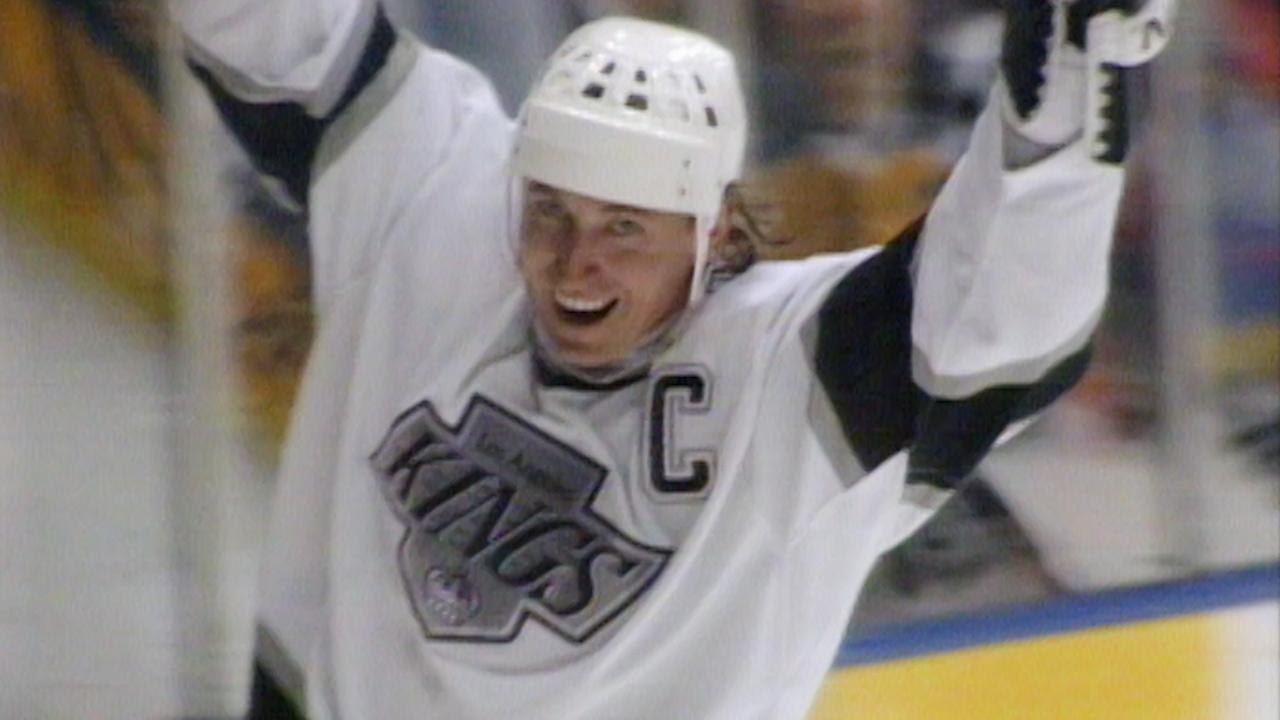
It did not matter which team or which decade, on May 7, Wayne Gretzky made a difference. In 1985, he contributed three assists to help the Edmonton Oilers set a record for consecutive playoff wins. Then in 1993, his two goals for the Los Angeles Kings made him the first NHL player to reach 100 playoff goals and 19 playoff-game winners.
Edmonton sailed into the 1985
postseason as the defending champions. Having swept the Kings (3-0) and
Winnipeg Jets (4-0), the Oilers moved into the Campbell Conference finals,
where they played the Chicago Blackhawks. The first two games of the series
took place at Edmonton’s Northlands Coliseum. The Oilers crushed the Blackhawks
11-2 on May 4.
Although Chicago improved in
Game 2, Edmonton still scored nearly double, thanks to Captain Gretzky and his
teammates Jari Kurri and Glenn Anderson. Kurri had a hat trick (his second in three
games) thanks to two Gretzky assists, and Anderson scored twice while assisting
on Kurri’s third goal. For their final goals, Kurri and Anderson scored seven
seconds apart on Chicago’s empty net.
The Oilers set a record by
winning their ninth consecutive playoff game in one season. Since they had won
their final three games in the finals the previous season (on May 15, 17, and
19), the Oilers actually had a streak of twelve games.
In one of the most shocking
trades in NHL history, Gretzky joined the Kings in 1988. Through 1992, they
always lost in the Division semi-finals or finals. During the 1993 postseason,
Los Angeles defeated the Calgary Flames in the semi-finals (4-2) and went on to
play the Vancouver Canucks in the Smythe Division finals. Although they lost Game
1 at Vancouver on May 2 (5-2), they won Game 2 there on May 5 (6-3).
For Game 3, on May 7, the series
moved to California’s Great Western Forum. No one scored until the latter half
of the second period, when the Kings succeeded on a power play. Vancouver answered
with two goals, and at 19:09, Gretzky assisted on Los Angeles’ tying goal. The
Kings tallied three more in the first ten minutes of the third. Gretzky’s old
teammate Jari Kurri, having made his way onto the same team in 1991, assisted
on the first and scored the second of these. At 9:03, as the first to do so, Gretzky
scored his 100th playoff goal, unassisted.
Vancouver managed two more goals
over the last half, so Gretzky’s ended up being the game-winner. That put him
one over Maurice Richard, the previous record-holder for game-winning playoff
goals. Gretzky commented, “Any time you reach a milestone it’s always exciting,
but they never really mean a whole lot unless you win. It really makes it extra
special when it’s a big goal. We went up 5-2 and as it turned out, it was a big
goal for us.”
To top off the night at the
literal final second, Gretzky, again unassisted, sent a slap shot from the boards
into the empty net. Afterwards, coach Barry Melose admitted that Gretzky had played
with a cracked rib the whole time. He told the press, “It was broken in half.
He was playing with it loose in his stomach. He also has a terrible vertebrae,
two bad knees and hemmorhoids. It’s no big deal.” Goalie Kelly Hrudey adequately
summed up the game in one sentence, “But leave it to Gretzky.”
Gretzky’s contributions had
similar outcomes on game day but different results down the line. On May 7, the
Oilers won 7-3 and the Kings won 7-4. Both teams survived the series, 4-2, to
move on in the playoffs. Edmonton went on to defeat the Philadelphia Flyers to
win the 1985 Stanley Cup. Los Angeles defeated the Toronto Maple Leafs in the
Conference finals but lost to the Montreal Canadiens in the 1993 Stanley Cup
finals.
As for Gretzky himself, he was the postseason scoring
leader for both 1985 (17G, 30A, 47P) and 1993 (15G, 25A, 40P). He finished his
career with 24 game-winners, a record later matched by Brett Hull. Gretzky also
had a total of 122 playoff goals, a record that may never be broken.
Additional Sources:
Mike Commito, Hockey 365: Daily Stories from the Ice (Toronto: Dundurn, 2018), kindle edition.
Jim Matheson, “Oilers Beat Improved Hawks,” Edmonton Journal, 8 May 1985, p. C1.
Iain MacIntyre, “Kings’ coach splits a rib after concealing Gretzky injury,” Vancouver Sun, 8 May 1993, p. D1.
“Gretzky reaches a new milestone,” San Francisco Examiner, 8 May 1993, p. C-3.
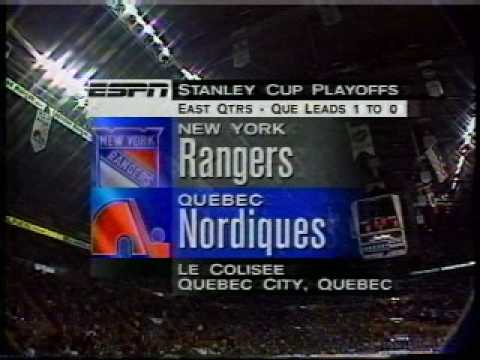
The season before, the Quebec Nordiques did not even make the playoffs while the New York Rangers won the Stanley Cup. At the end of the 1994-95 regular season, the Rangers crept into the playoffs with the last berth (with 47 points) while the Nordiques led the Northeast Division with 65 points (only five points behind NHL-leading Detroit Red Wings). When the two teams met on May 6 for Game 1 of the Eastern Conference quarter-finals, the Nordiques took an early lead thanks to captain Joe Sakic.
Sakic spent his entire 20-year
career with the same franchise. Drafted (15th overall) by Quebec in 1987, he
played there until 1995, when the franchise moved to Colorado. In his fifth
season, the 23-year-old was made captain of the Nordiques. Sakic’s success stemmed
from his shooting skills. He once said, “I would shoot pucks for hours, from
all kinds of different positions. It became something that I had to do every
day, right to the end of my career. If I ever missed a day of that, I would
stress out shooting.” Thanks to all that practice, Sakic made 17 hat tricks during
playoffs throughout his career.
His sixth playoff hat trick came
on May 6, 1995. Rangers left winger Adam Graves started off the first and
second periods with power play goals. However, during the last three minutes of
the first period, his teammate, defenseman Brian Leetch, made a few costly
errors. He dove after missing a bouncing puck at Quebec’s blue line and then
turned over in the neutral zone. That allowed Scott Young to catch a pass and
score a shortie for Quebec at 17:03. The other New York defenseman, Jeff
Beukenboom, was called for tripping at 18:55. Leetch was stuck behind the net
while Young assisted Sakic in scoring with about 19 seconds left. Still, the
Rangers pulled ahead with two additional goals in the second period so that the
score was 4-2.
Almost halfway into the third,
Sakic scored after the puck bounced off goalie Mike Richter’s back and bucket.
Sakic’s shot put the puck in the bottom corner just inside the net. Although
Richter’s glove came in behind the puck and covered it, the video showed that
the puck hit the net before his glove reached back. The Nordiques tied thanks
to Bob Bassen’s goal at 14:07. With less than 38 seconds remaining in regulation,
Sakic came towards Richter in a two-on-one and sent a “blistering 35-foot shot.”
Because Beukeboom “slighty screened Sakic’s low shot, the puck skipped past
Richter.” Sakic’s hat trick gave the Nordiques Game 1.
Despite the great start to the series, the Nordiques failed to maintain the momentum. They lost the next three games. On May 14, they pulled off a 4-2 victory at home to stay in the series, and it would be their final game at the Quebec Coliseum. Although Sakic added a goal and an assist in Game 6 on May 16, Quebec lost 4-2. The Nordiques had been eliminated, having played their final series as the Quebec Nordiques. They would begin the next season playing in Colorado as the Avalanche. The franchise won its first Stanley Cup championships the very next season, 1995-96, when Sakic received the Conn Smythe Trophy as MVP of the playoffs.
The 2000-01 season would be the other big winner for the Avalanche and Sakic. In addition to the Cup, Sakic earned the Hart Trophy as NHL MVP with 118 points (54G, 64A), the Lester B. Pearson Award for most outstanding player, and the Lady Bing Trophy as the most gentlemanly player. Then Sakic, the MVP, led Canada to a gold medal at the 2002 Winter Olympics at Salt Lake City. Almost as soon as Sakic retired, the Avalanche retired his No. 19. Along with former Nordiques teammate Mats Sundin, Sakic was inducted into the Hockey Hall of Fame in 2012. As teammate Peter Stastny put it, “He was a complete player and one of the greatest in history.”
Additional Sources:
“Rangers,” New York Daily News, 7 May 1995, pp. 46-47, 66.
The NHL doubled from the Original Six in 1967, but it took until 1974 before one of the expansion teams moved into the Stanley Cup finals by defeating an established team. On May 5 that year, the Philadelphia Flyers won Game 7 of the semi-finals against the New York Rangers.
At the end of the regular
season, the Flyers finished first in the West Division (and only one point
behind the NHL-leading Boston Bruins) with 112 points (50-16-12). They swept
the Atlanta Flames in the quarter-finals before meeting the Rangers in the semi-finals.
Rangers coach Emile Francis said of the Flyers, “Hell, yes, they got talent.
They got a great goalie and the best defense in the league and they just keep
swarming you. Flukes? You don’t fluke yourself into first place in this league.”
The Flyers started strong winning the first two games at home. It turned out,
though, that both teams could only win before the home crowds.
Luckily for the Flyers, Game 7
was played at Philadelphia’s Spectrum before 17,007 fans. Still, during the
first period, New York drew first blood, though Philadelphia matched them less
than a minute later. The Flyers scored two unanswered goals in the second
session. Twelve seconds after the Rangers scored at 8:49 of the third, Gary
Dornhoefer scored his second goal of the night for the Flyers. The final goal
of the night was New York’s, but that was not enough to catch Philadelphia. The
poor Rangers did not help themselves when they were called for having too many
men on the ice as they tried to pull goalie Ed Giacomin in the last minute. The
exhausted goalie commented afterwards, “Every time you think you’re about to
gain some ground on them, they kick everything out from under you. Then you
scramble back up and look around and you’re further behind than you were a
couple of minutes before.” Giacomin summed it up, “They won because they were
all over us all the time.”
With the 4-3 victory, the Philadelphia
Flyers became the first expansion team to eliminate an established team from
the playoffs. “This win over an establishment team has given us great
confidence,” said Flyers coach Freddie Shero. “We knew that New York has much
more depth than Boston but that isn’t the whole story.”
Over the course of the seven
games, another record was set – the teams accumulated 405 penalty minutes. In
fact, “Broad Street Bullies” coach Freddie Shero felt that the turning point of
the final game was when his Dave Schultz fought Dale Rolfe one-on-one along the
boards about twelve minutes into the game. “We fought ‘em man to man. In other
words, we didn’t jump ‘em from behind. We proved our class.”
Philadelphia went on to defeat the Bruins 4-2 to take
home their first of back-to-back Stanley Cup championships.
Additional Sources:
“It’s On to the Stanley Cup Finals As Flyers Turn Back Rangers, 4-3,” Philadelphia Inquirer, 6 May 1974, pp. 1-C and 2-C.
Mike Commito, Hockey 365: Daily Stories from the Ice (Toronto: Dundurn, 2018), kindle edition.
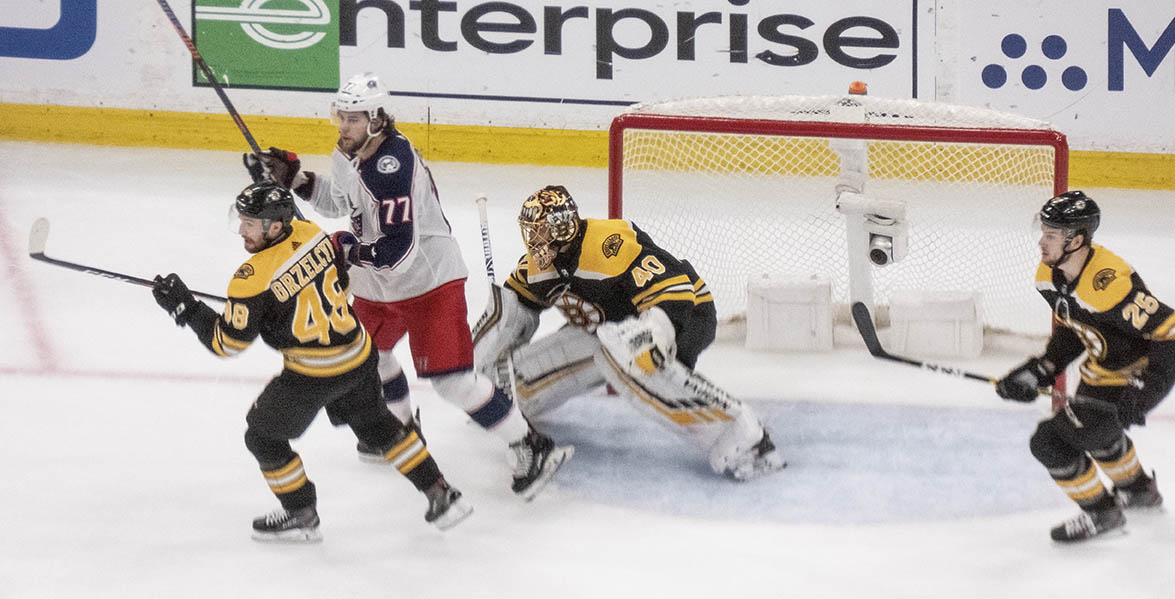
For the first time in this postseason, the Boston Bruins have come away leading a series 3-2 after Saturday night’s Game 5 win against the Columbus Blue Jackets.
Watching these two teams, it is clear that they are similar in many ways, and so it shouldn’t be a surprise that even when it appears that one team is tremendously tilting the ice, that is sometimes an illusion. During Game 5, the shots on goal for the Blue Jackets (by period) were 8-15-13 for a total of 36 shots on Tuukka Rask, of which he was able to stop 33. By the same token, the Bruins shots through three periods were 9-12-15 for a total of 36 shots on Sergei Bobrovsky, who in turn denied 32.
Both goaltenders have been stupendous throughout the entire series, but whereas Columbus was able to sweep the Tampa Bay Lightning in the first round, it would seem that the similar styles of play for Boston and Columbus are what have made this series a close affair for the most part. Game 1 went to overtime and the Bruins won 3-2. Game 2 required a double overtime before the Blue Jackets got the 3-2 win. As things went to Columbus, the Blue Jackets took Game 3 with a score of 2-1. It wasn’t until the fourth game that there was more than a one-goal difference in the score when the Bruins took the win with a 4-1 final, that included two goals from Patrice Bergeron and David Pastrnak started their scoring.
David Krejci
Back in Boston tied in the series, the Bruins certainly looked to capitalize on their momentum as well as gaining energy from the crowd. Unlike the previous game, where scoring began in the first period, Game 5 would see nothing scored in the first. David Krejci’s wrist shot 1:39 into the second period put the Black and Gold on the scoresheet first. But that’s where things stalled until Brad Marchand was able to give them a little extra breathing space as he put the Bruins up 2-0 at 4:51 of the third.
Perhaps it was going up that extra goal, but the Bruins did get a bit away from their game, and the aggressive Blue Jackets weren’t going to just idly sit by. Instead they pounced, and at 10:33 of the third Seth Jones cut the Bruins lead in half. There was a question as to whether or not that goal was good, and the review did take considerable time. However, the Bruins did not panic or appear to have a beaten attitude when Columbus was awarded that goal. In fact, 43 seconds later Pastrnak regained the two-goal lead.
“I don’t know, we got right back and scored a goal right away, so I thought it was a good response. I really feel like maybe in a way … but I really think like we got away from attacking and being aggressive and you know playing the way that we are supposed to play and they took it to us for a little bit,” Bergeron said of the delay.
“Well, we had a [Auston] Matthews call, too, in Toronto, didn’t go our way, Game 5, so we had to dig out of that. At the end of the day, I think our guys are very resilient. On the bench, of course you’re upset with the call, but at the end of the day most of the time on those long ones it’s like hey whatever happens here, we have to be ready to go here off of this faceoff, whether it’s at center ice or our end. Most of the time we are. I thought we bounced back well from that call, scored the next goal, seemed to have it under control. Clearly, we didn’t. They made a couple of high-end plays, but that’s our group. We’re resilient. We’ve battled through a lot this year. We came back from an elimination game on the road against a good team. We battled through injuries all year to keep our position in the standings, so our guys are pretty good at that. Credit to the veteran guys in the room, and even the younger guys we talked about, their contributions,” said Bruins head coach Bruce Cassidy.
Cassidy’s comment about not apparently having the game under control was in reference to how Ryan Dzingel got Columbus back within one goal just 51 seconds after Pastrnak thought he gave his team some space to relax. And then before anyone knew it, Dean Kukan knotted the score with 6:02 still left on the clock.
The Bruins have found themselves in many tight games at crucial
times in the postseason in the last few years. They have come back from what
many felt were insurmountable odds—when they managed to come back from their
three-goal deficit in Game 7 of the first round against the Toronto Maple Leafs
in 2013 to force an overtime in which they won. Having some of their core group
experience such a game instills a confidence that if they focus on playing
their game, they can get the win.
And while many armchair coaches had been suggesting that Pastrnak should have been a healthy scratch due to his struggles in this series, Pastrnak showed why Coach Cassidy didn’t even consider doing such a thing when he gave the Bruins the lead at 18:32 of the third period. And this time the Bruins would hang on.
In fact, Pastrnak put seven shots on Bobrovsky in Game 5, while
his linemate Bergeron got six on goal himself.
The Bruins once again got the win, though it didn’t come without its costs. Joakim Nordstrom had to be tended to at one point, and Charlie McAvoy blocked a ciritical shot with under 30 seconds to play ensuring that the Bruins were able to get the win.
“That was a great block. We kind of
turned the puck over a couple of times there. Definitely didn’t want to do
that, but he sacrificed and made a great block. He’s one of the best players
shooting there one-timer, so who knows what would have happened,” Rask said of
McAvoy’s sacrificing his body to keep the puck from getting to the net and thus
preventing the Blue Jackets from possibly pushing the game to overtime.
But perhaps McAvoy was just doing what Bruins do, having learned what the standard is from the leadership core.
“I mean, that’s the thing, we have – there’s no doubt in any of our minds they’re going to come through. They always do. They love the big stage, and we needed them big time tonight, and they showed up; they delivered. From the bottom all the way to the top, I think we had everyone contribute tonight in one way or another, and that’s what it’s going to take,” McAvoy said.
In looking at the final sheet from the game, McAvoy was correct—everyone stepped up. Eight players contributed to the score sheet for the Black and Gold, and there were a host of players who, like McAvoy on that blocked shot, contributed in ways that will never show up on the tally.
The teams will head back to Columbus where they will meet at the PNC Arena for a do-or-die situation for the Blue Jackets, who undoubtedly will get a jolt of momentum from playing on home ice. The teams square off on Monday night at 7:00pm Eastern time, with the game airing on NBCSN.
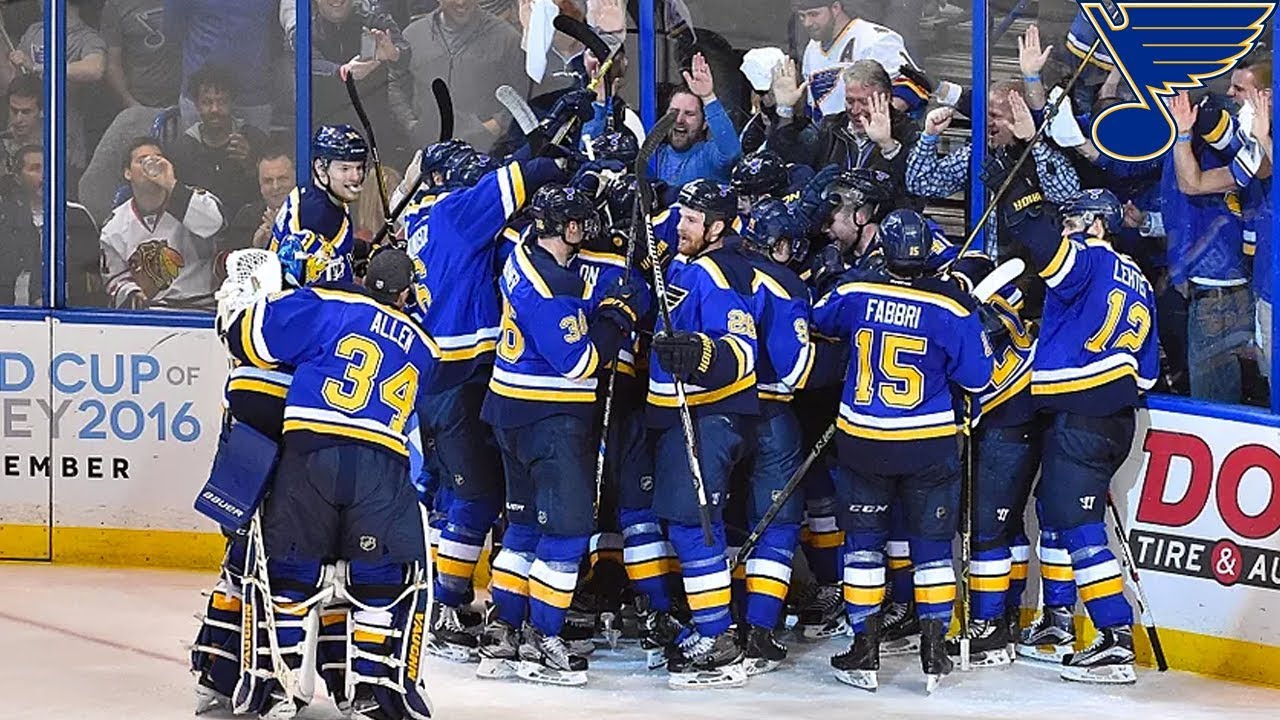
In February of 1966, the National Hockey League looked to expand from six teams to twelve, including adding teams in the American west. They accepted applications from four different ownership groups from Los Angeles (5 groups), Pittsburgh (2 groups), and one each from Minneapolis-Saint Paul, Philadelphia, San Francisco-Oakland, Buffalo and Vancouver. From those applications the new six teams became the California Seals (San Francisco-Oakland), Los Angeles Kings, Minnesota North Stars, Philadelphia Flyers, Pittsburgh Penguins, and St. Louis Blues.
The St. Louis Blues would go far in their first postseason. As they went into the semifinals they would take on the Minnesota North Stars in a series that would go seven games. Perhaps it was not surprising that the Blues were up against the North Stars, the same team they played in their first franchise game on October 11, 1967 at St. Louis Arena—a game that would end in a 2-2 tie.
By the end of the season St. Louis sat in third place in the new Western Division—which was full of all the new teams. During the quarterfinals, St. Louis would have to go seven games against the Philadelphia Flyers, to win the series 4-3 while on the road in Pennsylvania. The semifinals would likewise require them to go the full seven and would find them at home on May 3, 1968 with one of those two expansion teams going to the Stanley Cup Finals, where they would take on the Montreal Canadians.
To say that everything was on the line would not be an
understatement.
Just as the series with the North Stars went to the seventh game, 60 minutes was not enough to determine the winner. The game had been scoreless through the first two periods and then well into the third.
“Dickie Moore scored the… St. Louis goal with 2:40 remaining
in regulation time, 31 seconds after rookie Walt McKechnie had given Minnesota
a lead that looked as if it would stand up,” reported the Star-Phoenix the day after the game.
Blues head coach Scotty Bowman had all but benched Ron Schock as a result of a play during the quarterfinals against Philadelphia that saw Schock’s clearing attempt wind up on the stick of Ed Van Impe’s stick, which gave the Flyers a tying goal with 15 seconds remaining in regulation. The Flyers went on to win that game in overtime and Schock would spend most of the games thereafter riding the pines until game seven.
“After the teams had gone through almost 83 minutes of bruising
action Friday night, the rest proved valuable. Schock outskated Minnesota
defenceman Bob McCord for a clear shot at Minnesota’s Cesare Maniago and the
goal that delighted a record St. Louis crowd of 15,566,” shared Graham Cox of The Ottawa Journal.
While the North Stars netminder Maniago had blocked 34 shots including four from the Blues in the second overtime, St. Louis’ own goaltender Glenn Hall worked hard in his net to give his team the best opportunity for the win, making 44 saves.
With the win the St. Louis Blues became the first expansion
team to make it into the Stanley Cup Finals in their first year. However, they
would find themselves schooled and swept by the Montreal Canadiens in the
final.
Undaunted the Blues would return to the Finals in 1969 and 1970, eliminated each time. The Canadiens swept them again in 1969 and then the Boston Bruins swept them in 1970, with the final game going into overtime in which Bobby Orr scored the game winner and the iconic photo of him looking like he was flying through the air was taken.
It would take 40 years for another expansion team to get to the Stanley Cup Finals in their first year as a franchise. The Vegas Golden Knights managed to do it in 2018 and also managed to last one game longer than the Blues, when they fell 4-1 to the Washington Capitals.
Additional Sources:
Graham Cox, “Blues in Cup Final On Schock’s Goal,” The Ottawa Journal, May 4 ,1968, p. 13, col. 6-8.
Star-Phoenix (Saskatoon, Saskatchewan), May 4, 1968, p. 24, col. 4-8.



 Prev
Prev