In the 51 seasons since the Pittsburgh Penguins joined the NHL in 1967, they have won the Stanley Cup championships five times. During all five postseasons, Pittsburgh played significant games on May 25 or May 26.
On May 25, 1991, the Penguins won
their first Stanley Cup championship. They had ended the regular season with 88
points, which put them first in the Patrick Division but seventh in the NHL.
During playoffs, they knocked out the New Jersey Devils (4-3), the Washington
Capitals (4-1), and the Boston Bruins (4-2) to advance to the finals against
the Minnesota North Stars. For the Cup, Pittsburgh won the finals (4-2) with an
8-0 shutout at the Met Center. With 39 saves, Tom Barrasso had earned his first
NHL playoff shutout.
The defending champions returned
to the Stanley Cup finals in 1992. They had again finished seventh in the NHL
(but third in the Patrick Division) with 87 points. This time, they eliminated
the Capitals (4-3) and then the New York Rangers (4-2). The Bruins again were
their victims in the conference finals during Pittsburgh’s sweep. The finals
began on May 26 at Pittsburgh’s Civic Arena. Although the Chicago Blackhawks scored
three unanswered goals to start the first period, the Penguins battled back. With
five minutes remaining, Jaromir Jagr tied the game at 4-4, and then, with mere
seconds to spare, Mario Lemieux potted the game-winner during a power play.
Chicago’s record streak of 11 playoff wins ended, and Pittsburgh prevented them
from winning any more. In the midst of the sweep, for Game 3 on May 30, Barrasso
would have his only other playoff shutout.
In both postseasons, center Mario Lemieux led the scoring and received the Conn Smythe Trophy as MVP. Having scored 16 goals in each, he also had 28 assists in 1991 and 18 assists in 1992. He had one of those goals and three assists at the May 25th game in 1991. His two goals helped tie and then win the game on May 26, 1992.
Pittsburgh always seemed to make
it to the championships in back-to-back years. In both 2008 and 2009, the
Penguins played the Detroit Red Wings in the finals. For the two seasons, the
Pennsylvanian team placed first (with 102 points) and second (with 99 points),
respectively, in the Atlantic Division. The May 26th game went very
differently, as did the result of the finals. In 2008, the Penguins lost Game 2
of the finals with a 3-0 shutout and went on to lose the series 4-2. On May 26,
2009, Pittsburgh won Game 4 of the Eastern Conference finals 4-1. Having swept
the Carolina Hurricanes, they advanced to the finals, which they won 4-3.
The Penguins’ most recent
back-to-back Stanley Cup championships occurred in 2016 and 2017. With 104 points
and 111 points, respectively, they placed second in the Metropolitan Division
both seasons. They mostly faced different opponents throughout the two postseasons.
To make it to the finals in 2016, Pittsburgh defeated the New York Rangers (4-1),
the Washington Capitals (4-2), and the Tampa Bay Lightning (4-3). The following
year, they passed the Columbus Blue Jackets (4-1), the Washington Capitals
(4-3), and the Ottawa Senators (4-3).
On May 26, 2016 and May 25, 2017,
the Penguins played Game 7 of the conference finals. Both games took place at
Pittsburgh, the former at the CONSOL Energy Center and the latter at PPG Paints
Arena. The Penguins scored first and then alternated scoring with their
opponents until they came out on top. In 2016, Pittsburgh rookie Bryan Rust
scored the first and third goals of the game, all within the second period, to
give his team a 2-1 victory. Having vanquished Tampa Bay, the Penguins went on
to defeat the San Jose Sharks (4-2) in the finals. In 2017, Pittsburgh and Ottawa
each scored one goal in the second and third periods. Ending regulation tied
2-2, they went through one overtime session and 5:09 into the second. At that
time, Pittsburgh’s Chris Kunitz sunk his first goal of the playoffs to advance
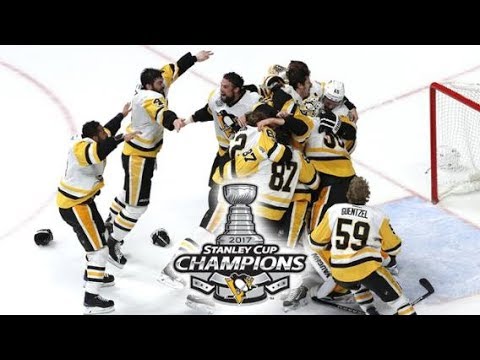
his teams to the finals. There, the Penguins defeated the Nashville Predators
4-2.
Throughout the latest four postseasons in which the Penguins made it to the finals, Evgeni Malkin and Sidney Crosby have vied for the top scorer. In 2008, Crosby topped with 27 points while Malkin came in third with 22. The following year, Malkin had 36 points and Crosby trailed with 31. Come 2016, Crosby placed second with 19 while Malkin followed with 18 points. Finally, in 2017, Malkin led the pack with 28 points while Crosby had one less. Malkin received the Conn Smythe Trophy in 2009, and Crosby took home the award in both 2016 and 2017.
The Penguins have not missed the playoffs since 2007.
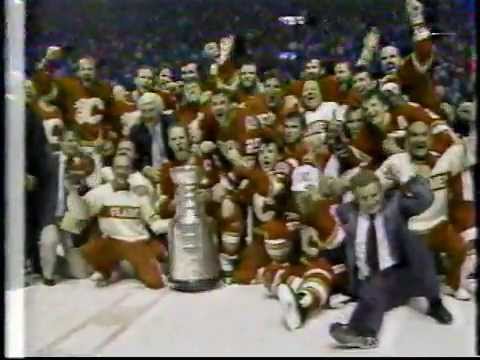
The Calgary Flames earned a do-over against the Montreal Canadiens in the Stanley Cup finals. In their first ever finals experience, in 1986, the Flames won Game 1 but lost the next four. Montreal won a 23rd championship. Three seasons later, the rivals again made it into the finals to play each other. This time, Calgary came out the winner, on May 25, 1989, to take home the Stanley Cup for the first time.
The 1988-89 regular season
demonstrated how well-matched the two leading teams were. The Calgary Flames
came out on top with 117 points (54-17-9). The Montreal Canadiens took second
with only one game difference, having 115 points (53-18-9). Of the three games
the teams played against each other, Montreal had the edge winning 2-1. In the
postseason, Calgary sailed through the Vancouver Canucks (4-3), the Los Angeles
Kings (4-0), and the Chicago Blackhawks (4-1). The Canadiens defeated the
Hartford Whalers (4-0), the Boston Bruins (4-1), and the Philadelphia Flyers
(4-2). Eventually, the two Canadian teams met each other for the Stanley Cup
finals.
After the Flames won Game 1
(3-2), they lost the next two – including a controversial end to double
overtime in Game 3. Calgary fought back to win the next two games to lead the
series 3-2.
A crowd of 17,909 fans filled Montreal’s
Forum for Game 6. Most of them returned home dejected but without giving the
numerous police cars outside the Forum anything to worry about. The visiting
Flames won the game and the finals 4-2. That marked the first time, in their
80-year history, that the Canadiens lost the finals in their own barn. According
to Red Fisher’s article for the Montreal Gazette, the Flames won the “Canadiens’
way. Defence. Superb goaltending, And, in the final analysis, character.”
McDonald, the veteran captain,
had ridden the bench for three games when Coach Terry Crisp swapped him in for
co-captain Jim Peplinski. The game was tied 1-1 when his holding penalty
expired at 4:13 of the second period. Teammate Hakan Loob carried the puck
across center ice and passed to Joe Nieuwendyk, who passed to the
newly-released McDonald “alone on the right side.” As Canadiens goalie Patrick
Roy dropped, McDonald netted the puck high on the glove side. “It was a Cinderella
finish,” said Coach Crisp. “But we also felt that Lanny was rested. . . . We
felt tonight Lanny would give us an emotional lift – which he did.” McDonald
had scored his first NHL goal and now his last at the Forum. He commented
afterwards, “It’s just an unbelievable feeling. I said to some of the guys
before the game that I scored my first career goal at the Forum, and wouldn’t
it be great to get one tonight. There’s no feeling like it.”
On the back side of period
three, Gilmour, who had just been traded to Calgary at the start of the season,
proved his worth. During a power play, at 11:02, he scored on his own rebound.
Montreal’s Rick Green snuck in a goal 51 seconds later. Since that was the last
Montreal goal, Gilmour’s rebound ended up the game-winner. At 18:57, when
Montreal pulled Roy, Gilmour ensured Calgary’s victory with an empty-netter. “I
was just trying to play hard every game. So many of our guys have played well
to get us this far. We had great goaltending from Mike Vernon and our team
defence was solid. I went out every night and played the best I could,”
remarked Gilmour. “Words can’t explain it right now. It’s such a great
organization and I’m just glad to be a part of it.”
Defenseman MacInnis maintained a
streak of 17 consecutive games in which he scored points, which was only one
less than Bryan Trottier’s record. In fact, the only playoff games in which he
did not tally were the two shutouts during Round 1. He contributed two assists
in the final game – on the first goal (scored by Colin Patterson) and on
Gilmour’s first goal. For these accomplishments, MacInnis received the Conn
Smythe Trophy as the playoff MVP. He was only the fourth defenseman so awarded.
“There’s no question I feel really happy winning it. If you look down our
lineup, there’s so many guys that could have won,” said a humble MacInnis. “It’s
a great feeling. I’ve been in this organization six years. There’s been a lot
of changes. A lot of guys have come and gone. It’s great the organization
showed faith in you all these years. I’d like to thank them for the faith they
showed in me.”
On winning, McDonald stated, “There is just no feeling like it. It’s something I wish a person could describe to the people outside – how much hard work it takes for 25 guys to put it all together.” His teammate, Ric Nattress (formerly with the Canadiens), celebrated his 27th birthday that night. “Have I ever had a better gift than this? Not really. This is the most incredible thing that’s ever happened to me.” McDonald and his co-captains accepted the Stanley Cup, and he remarked, “There isn’t a weight to it. You could probably carry that forever – and I think we will.”
The 1988-89 championship was the first (and thus far only) for the Flames. Nine years prior, the owners had paid $16-million for the Atlanta Flames, which had received the franchise back in 1972. General Manager Cliff Fletcher had been with them since the beginning. “Sixteen years, we’ve been saying, ‘Wait ‘til next year.’ Next year finally arrived.” He had grown up near the Forum and commented, “To beat Montreal three games in a row, to be the first team to win the Stanley Cup here, what a feeling. There’s no divine right in sports. You have to earn it.” Coach Crisp added, “It’s great for me and for the players, but I think this one is very special for Mr. and Mrs. Fletcher.” Fletcher summarized, “We just had a hell of a year.”
Additional Sources:
“Flames win their first Stanley Cup,” Montreal Gazette, early ed., 26 May 1989, pp. A1 and F1-F2.
“Flames Win,” Calgary Herald, 26 May 1989, pp. A1-A2.
“Stanley Cup,” Calgary Herald, 26 May 1989, pp. C1-C4, C9, C12-C14.
Twice in one postseason the Boston Bruins saw the lights go out before lights out came on their Stanley Cup dreams. During Game 1 of the Division Finals, held April 18, 1988, Montreal experienced a blackout. Fortunately, the generator at the Forum allowed the game to continue. That was the only game the Bruins lost that series as they came back to win the next four. Having defeated the Canadiens, the Bruins then surpassed the New Jersey Devils (4-3). For the Stanley Cup finals, the Bruins took on the Edmonton Oilers’ dynasty. In Game 4, on May 24, Boston Garden experienced a power failure. This time, the game did not continue.
Game 4 of the Stanley Cup Finals
took place before a crowd of 14,451 packed into a humid Boston Garden. From the
opening faceoff, as fog hovered over the ice, the Oilers took control. Mark
Messier passed to Glenn Anderson, who scored “with a short backhander inside
the right post.” The goal came at just ten seconds into the game as the fastest
ever in NHL finals.
Towards the end of the first
period, Edmonton scored again, but Boston followed a minute and a half later. At
6:12 of the second period, Boston caught up, and about a minute and a half
later they took the lead. The trouble started just as Edmonton’s Craig Simpson
tied up the game.
At 9:31 pm, with only 3:23 remaining
in the second period, Joel Perlmutter’s announcement cut off as he said, “Edmonton
goal scored by…” The power had gone out when a Boston & Maine electrical
switch blew. The Bruins’ publicity director, Nate Greenberg, explained that a
4,000-volt switch had blown on Accalon Way (a side street outside the Garden) “thus
burning out the main lines of power.” According to General Manager Harry
Sinden, this was not the fault of the 60-year-old Garden. “We had a transformer
blow up or whatever it did, and that was because of high humidity and the
thunderstorms we had today.”
Garden president Larry Moulter had
had his staff test the generator and emergency protocol after the blackout in
Montreal the month earlier. The auxiliary generator had enough power to light
the way to the exits, but it would only last about 20 minutes. After testing,
they had “bought all new flashlights and issued them as soon as possible to all
the ushers,” said Moulter. “We were prepared for it. Unfortunately, it
happened.”
Because of the 20-minute limit, the
public had to evacuate the Garden. “We don’t know what the problem is,” began
Moulter. “But we have to evacuate the building in 20 minutes before the
generator goes. We’ve got to get these people out of here.” Sinden helped relay
the message to the fans, “You gotta get out of here. This whole place could go
dark in five minutes.” Some 14-year-old kids chanted back, “Hell no, we won’t
go.” Still, the crowd exited in a “surprisingly orderly procession.”
Meanwhile, the players retreated
to their darkened locker rooms. Bruins assistant coach John Cunniff told the
press, “We went into the locker room and we had to find a flashlight just to
see. Then we got a TV camera light, and that worked better. Everyone was just
sitting there, waiting for information. It seemed to be a long time before we
got information.” His counterpart, Oilers associate coach John Muckler, said, “We
had one TV camera light, and then when the batteries started to go, we got
another one. The players sat for a few minutes in their uniforms, but then they
switched to sweats. Then we waited.”
The lights came back up at 10:07
pm. Gerry Helper, an NHL spokesman, said, “The lights are back on, but we think
they are too weak to work.” Sinden explained, “First of all, we’re not sure the
power will last. They’ve Band-Aided the problem, and it would probably have
been fixed by (today), but there’s no guarantee.” Greensberg was more
straightforward. “The only guarantee we have is that the game will not be
played tonight.”
Finally, at 10:15, NHL President
John Ziegler met with both general managers to decide what to do about the
game. He then announced, “The bylaws governed what we did. The bylaws state if
a game is altered for any reason, we resume play with the next scheduled game
at the scheduled location.” He meant that this game would only count for
statistics. Game 4 would start over again but at Edmonton on the scheduled date
for Game 5, May 26. If needed, Game 5 would be played at Boston on May 28, Game
6 at Edmonton on May 30, and Game 7 at Boston on June 2.
The Oilers had already won three
games. Who knows how Game 4 might have ended had the Garden’s lights remained
on. With the series back at Edmonton, the Bruins lost a fourth game and thus the
finals. The Edmonton Oilers won their fourth Stanley Cup championship in five
seasons.
Of the playoffs as a whole, Sinden exclaimed, “It’s
just crazy. We’ve had two power outages and a referee outage.”
Additional Sources:
Bob Morrissey, “First star at Canadiens game: Forum’s 100-tonne generator,” Montreal Gazette, 19 April 1988, p. 1.
Leigh Montville, “Bruins-Oilers postponed as Garden goes dark,” Boston Globe, 25 May 1988, pp. 1 and 60.
Jackie MacMullan, “It’s lights out on Bruins game,” Boston Globe, 25 May 1988, pp. 53 and 58.
Kevin Paul Dupont, “Non-game mystifies players,” Boston Globe, 25 May 1988, pp. 53 and 60.
Kevin Paul Dupont, “In the dark, Garden crowd hits the street,” Boston Globe, 25 May 1988, p. 58.
Francis Rosa, “Bruins 3, Oiler 3 – then the blackout,” Boston Globe, 25 May 1988, p. 59.
Playoff hockey is nothing if not full of tension as opposing
players do their best to eliminate each other. The teams are often so close in
skill and defense that more than one game has gone to extra time.
“The difference between these teams? As thin as a puck. As
tight as the best two teams in hockey can be,” wrote Red Wings beat writer Bob
Wojnowski in The Times Herald of Port Huron, Michigan.
The teams? The Detroit Red Wings and the Colorado Avalanche.
The game? Game three of the Western division semifinals of the 2002 Stanley Cup
Playoffs.
“This was the hockey we expected all along. The goalies, Dominik Hasek and Patrick Roy, made their belated arrivals. The defenses finally showed up. And, oh yes, the tension here, in full force,” Wojnowski continued.
These two teams were as close to each other as possible in competition. This was the third of what would be a seven-game series. Of the periods played through that third game, in regulation the teams were tied or differed by a single goal in eight of the nine periods. Some battles are like that, and game three saw the teams tied as time ran out in regulation.
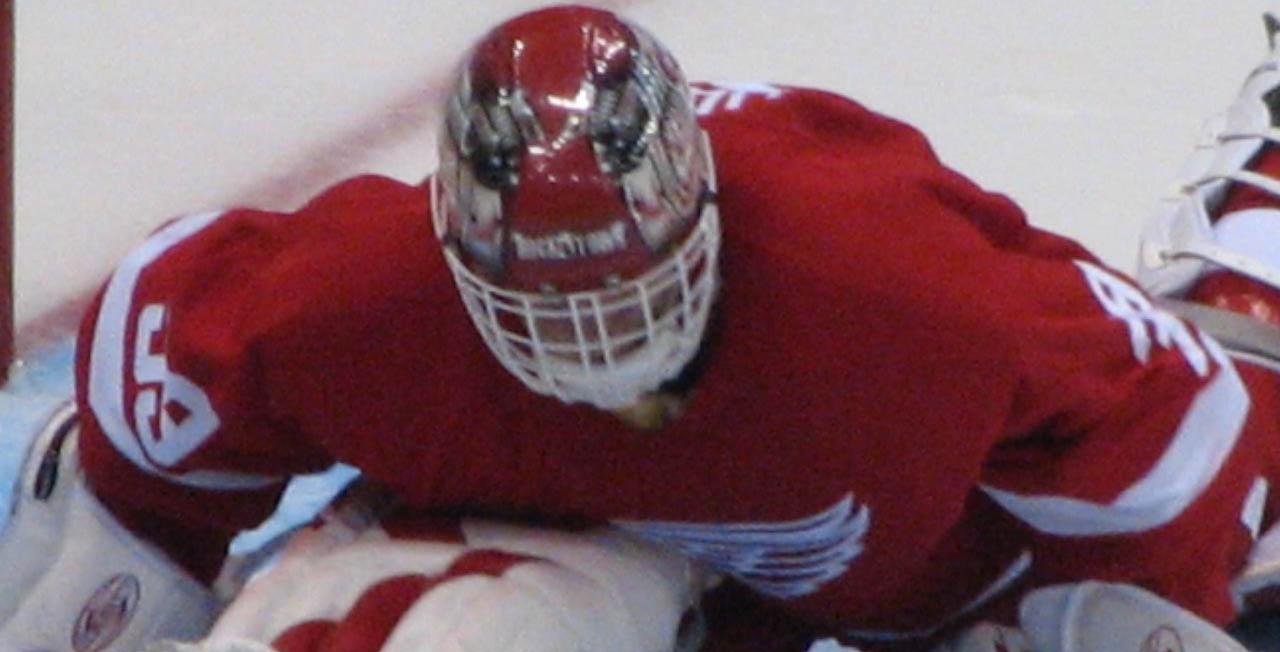
What wasn’t close during the game on May 22nd, was the number of shots each goaltender saw during the game and close to 13 minutes of overtime. For the Red Wings’ Hasek, he faced only 21 shots, of which he stopped all but one. Meanwhile Colorado’s Roy saw 42 shots. He failed to stop one during regulation, and he also failed to stop the one in overtime that would give the Red Wings the win and see them lead the series 2-1.
The overtime goal for the Red Wings was scored by Fredrik Olausson, who hadn’t scored a playoff goal in more than a decade. His last playoff goal having come on April 18, 1992, when Olausson played for the Winnipeg Jets and they were playing against the Vancouver Canucks. Because of that feat, his goal overshadowed a historical moment.
Hasek had stopped five shots during the overtime period, which
included consecutive ones by both Riku Hahl and Joe Sakic from the left circle.
However, in clearing a loose puck out to center to Steve Yzerman, Hasek set up the goal that gave the Red Wings the game. Yzerman saw Olausson and got the puck to him and Olausson found the back of the net.
Hasek’s assist on the goal marked the first time ever that a goaltender had an assist on an overtime goal in the playoffs.
Additional Sources:
Bob Wojnowski, “Federov must take control if Wings hope to win series,” The Times Herald (Port Huron, Michigan), May 23, 2002, pp. 1C, 5C.
Daily Press (Newport News, Virginia), May 23, 2002, p. B3.
Mike Commito, Hockey 365, Daily Stories from the Ice, Kindle edition.
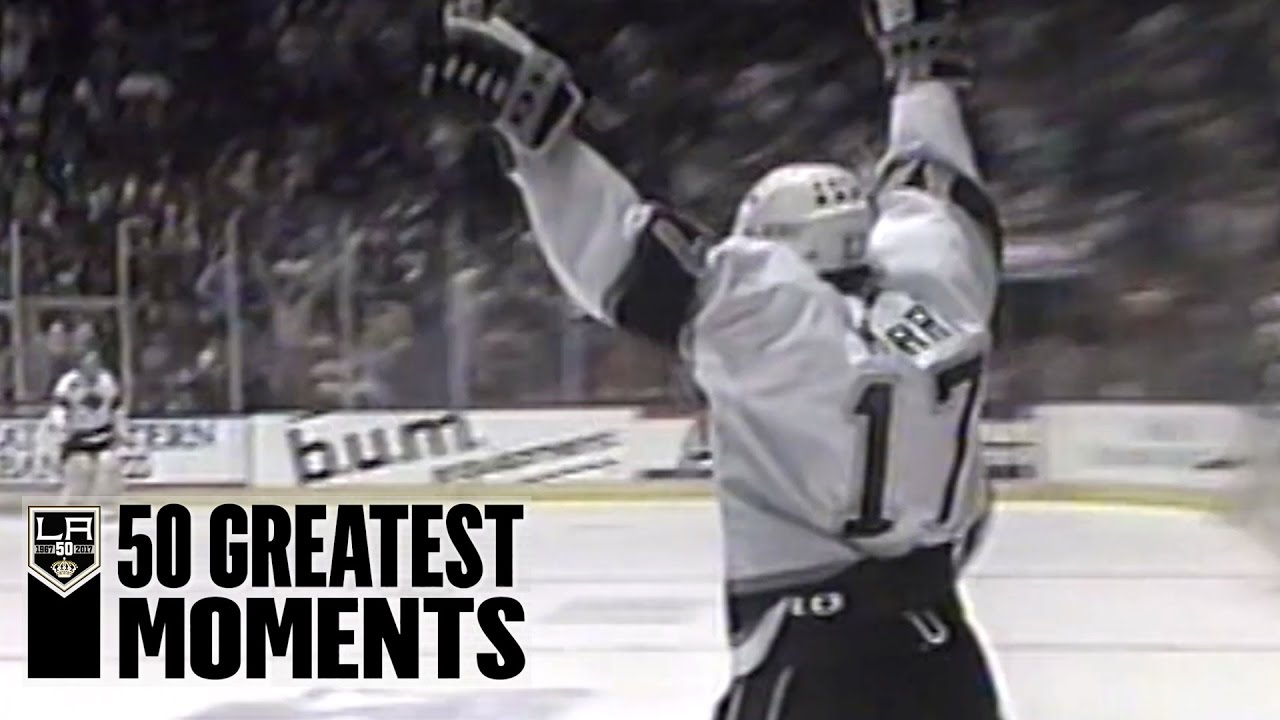
Even with his outstanding career, Jari Kurri often has been overlooked because of his teammate, Wayne “The Great One” Gretzky. The two played on the same line for the Edmonton Oilers and then reunited when playing for the Los Angeles Kings. On May 21, 1993, Kurri became only the second – after Gretzky – to score 100 career playoff goals.
Right winger Kurri had honed his
two-way skills playing for a professional team in Helsinki before joining the Oilers
following the 1980 NHL Draft. Although he did not plan to remain in the NHL
long, Kurri later said, “But just being around those guys [it] began to feel
like home. The game was so fun to play, we had so much talent and so many great
players to play with.” The player he had the most connection with was Gretzky. They
assisted each other more than any other player. Gretzky said, “We figured we
could score nine out of 10 times. No matter where I put the puck, on Jari’s
stick, in his feet … he’d snap it.” After 10 seasons with the Oilers, Kurri
chose to sign with an Italian team for a season and then joined the Kings in
1991.
In their 26th season, the Kings
made it to the conference finals for the first time. Having eliminated the
Calgary Flames (4-2) and the Vancouver Canucks (4-2), they took on the Toronto
Maple Leafs in the Campbell Conference finals. Kings coach Bary Melrose
commented, “We’ve played maybe the three biggest teams in the league in the
playoffs (Calgary, Vancouver and now Toronto). But we haven’t backed down.”
“Now, to look up in the stands
and see everyone having such a great time . . . it’s really fun for me. It’s
taken a lot of years for us to get to this point,” remarked veteran Dave Taylor.
“There were a lot of years when I had my doubts. But this year, I have to say I
was confident in this team. And now this club is very confident in itself. With
each game and each (playoff) round, it kind of snowballs. We’re really feeling
good about ourselves.”
The series was tied 1-1 after the
two games at Toronto. Game 3 took place at the Forum in Inglewood, California
for a crowd of 16,005. A banner honoring the Kings as the Smythe Division
champions was unveiled to start things off. Los Angeles led the scoring with a
goal in the first period followed by Kurri’s goal in the second.
During a penalty kill, Kings defenseman
Marty McSorley “sent a pass from the right side to a wide-open Kurri.” At 9:26,
Kurri’s shot passed Felix Potvin on the left side. The shorthanded goal was
Kurri’s 100th playoff goal. As Taylor noted, “Shorthanded goals are pretty
rare. It certainly took a little wind out of their sails.”
After Kurri’s milestone goal,
Toronto came back to tie up the game. Shortly before the period ended, the Kings
made good on a power play. Finally, at 1:26 of the third period, Taylor scored
the other Kings shortie. He commented, “After so many lean years in L.A., it
feels really great to help us get to this point.”
Thanks in part to Kurri, the
Kings won 4-2. Although they lost the next two games, they came back to win the
final two and the series. After Game 3, Toronto coach Pat Burns admitted, “You
have to give credit to the Kings. They outmuscled us, outskated us and
outscored us. Right now they’ve proven they’re better than us in certain
situations.”
The Kings had made it to Stanley
Cup finals for first time. After winning Game 1, they lost the following four
and the Cup to the Montreal Canadiens. Even so, Kurri said, “It’s a dream to
face the Canadiens. When I was a child in Finland, I dreamed of playing in the
[Montreal] Forum in the finals.”
Throughout the playoffs, Kurri
racked up 17 points (9G, 8A). He ranked fourth of the Kings’ scorers. “Playing
your best games in the playoffs, that was a big thing personally for me,” said
Kurri. “We loved [big games]. I don’t think we saw it as pressure or being
nervous. It was more that we enjoyed it. This is what it’s all about.”
Having played 17 seasons in the
NHL, the same number as his jersey, Kurri retired in 1998. At the time, his 601
goals, 797 assists, and 1,398 points made him the most prolific European scorer
in the NHL. Although those records have since been surpassed, Kurri was
inducted into the Hockey Hall of Fame in 2001.
Additional Sources:
Beth Harris, “Kurri, Taylor give Kings 2-1 lead,” San Francisco Examiner, 22 May 1993, p. C-2.
Mike Davis, “Kings outmuscle Toronto,” San Bernardino County Sun, 22 May 1993, pp. C1 and C3 and C7.
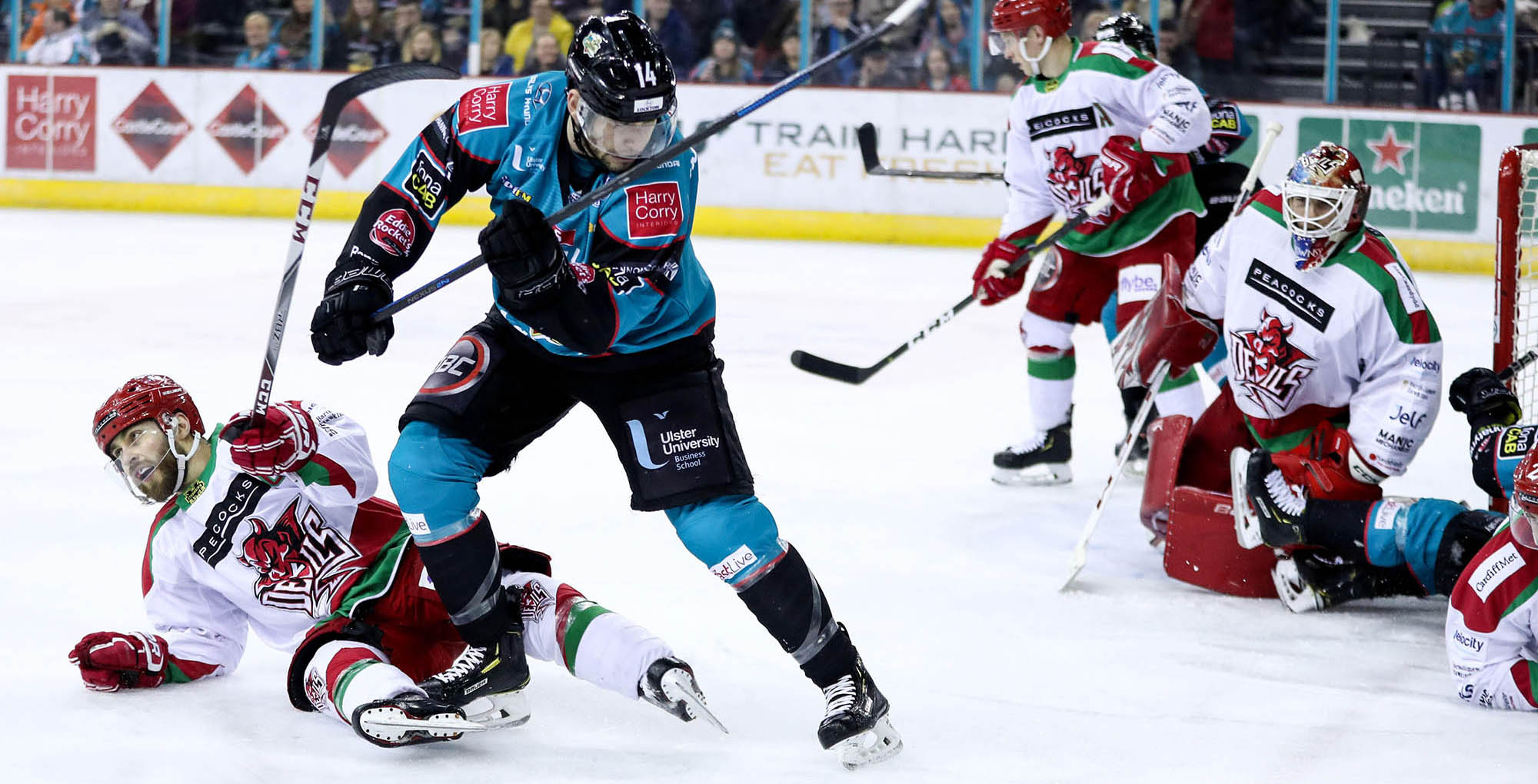
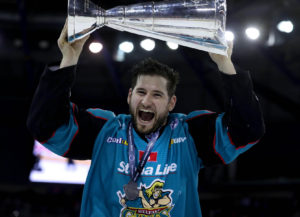
Last week, the Belfast Giants announced the return of forward Jordan Smotherman to the team for the coming 2019-20 season. He contributed to some major events, including the winning of two cups for the Giants during his short two months with the team last season.
Though born in Oregon, the 33-year-old Smotherman grew up in
Massachusetts before he headed north to Canada to begin his career as a hockey
player by playing in the QMJHL’s Quebec Remparts. But when did he decide he really wanted to be
a professional hockey player?
“It’s actually really a funny question. One of my summer projects
here has been to take all of our old family video tapes and digitize them onto
the computer so that the rest of the family, we can all have copies of them. I
think it was during one of my birthdays I was asked what I want to do when I
grow up, and I was probably six and my answer was ‘Well I want to be a
professional hockey player,’” Smotherman shared with laughter. “The idea
started then, but I want to say that the actual idea of going and making a
career out of this probably started probably when I was 15 and I had some NHL
scouts that were starting to watch me play.”
Throughout his career, the journeyman has played for quite a few teams and leagues, some of those teams achieved trophies while others showed what they were made of. In talking with Smotherman, it was clear the determination that he has had over the years and the commitment he continues to display have attributed to his success.
Photo by William Cherry/Presseye Belfast Giants’ Jordan Smotherman pictured with the Elite Ice Hockey League trophy after being crowned Champions at the SSE Arena, Belfast.
“I think at least for myself personally, anytime that I start a season, it’s with the expectations to finish at the top of the ladder. And I think as athletes in general, you know, that’s … the ultimate prize, that’s the ultimate reward for a season and an off season of hard work,” he said. “The way we ended last season, raising a couple of trophies, kind of leaves me wanting and expecting to push for the same thing next year. So, for me [I] just [want] another successful season in Belfast and continuing to grow the excitement for hockey in Northern Ireland.”
Even if those who claim to be experts at the sport suggest otherwise, Smotherman is not one to be side tracked on his goal by what may be said of his team in the press.
“There was one year in Sweden that I tend to reflect back on quite a bit, with Karlskrona, in the Allsvenskan in Sweden, where we had an amazing group of guys. They picked us to finish dead last at the beginning of the season. That’s what all the experts said. And we started off the season by winning 12 games in a row. We made it to the playoffs for the first time in that franchise’s history,”
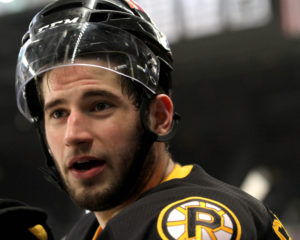
Jordan Smotherman (Photo: Alan Sullivan)
Smotherman will be entering his 13th season as a professional,
though there was a point when he wasn’t sure if he wanted to continue playing. When
you consider the grind on a player’s body throughout the season and the strict
regimen of nutrition and training that he must stick to even during the
offseason, there needs to be much more than just a paycheck for a player to
keep going back.
“At this point it is just the love of the game and the
enjoyment in what I do. I went through a little bit of a period where I wasn’t
enjoying the game as much and I thought about retiring for a coaching job.
Luckily, I didn’t because my experience with Belfast last year and everything
that that city has to offer and their fan base has to offer, I really …
completely reinvigorated my love for playing and my passion for the game,” he
said.
Coach Adam Keefe, when asked about Smotherman being re-signed, mentioned that the 6’3” winger would bring “a work ethic to our 2019-20 team.”
“It certainly means a lot. I pride myself in the effort that I put in, night in and night out, whether it’s a night where I’ve got good legs and I’m flying out there or it’s a night where I don’t feel so well, the one thing that I personally always like to tell myself that I can count on is that no matter how the game’s going for me or the team, I can always work hard to make up for whatever insufficiencies there are that night,” Smotherman responded when told of Coach Keefe’s comment.
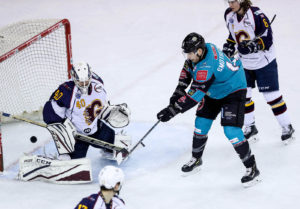
Photo by William Cherry/Presseye Belfast Giants’ Jordan Smotherman
Though he joined the Belfast Giants just this previous year, he’s been on the Giants’ radar for a while as both Keefe and Steve Thornton, Head of Hockey Operations, had reached out in prior seasons. Likewise, Smotherman saw Belfast on his horizon at some point as well.
“I always knew that towards the end of my career, really in
the last four to five years, two or three years, whatever it would be that it
would be something that I would definitely want to consider doing. I had so
many friends that had played with the organization that loved it so much that
when they originally reached out it wasn’t quite the time for me, but it was
always in the back of my mind as a potential option because of all of the
wonderful things I had heard about it.”
In addition to being a hard working teammate, he showed the
organization and the fans of Belfast the kind of great person he is as well
when he altered plans to join the team sooner after the Giants lost a man to
injury.
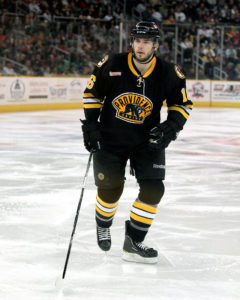
Jordan Smotherman with Providence Bruins (Photo: Alan Sullivan)
“My entire life I’ve always kind of been the one to try and
help out in any way I can and in any situation that I can. And so certainly
coming over early and getting on that flight and playing the same day is a good
example of what I like to do and what I like to bring to a team. And I just
hope that I can continue to do that from now on.”
While I have been familiar with the Belfast Giants for many years, I know that there are many here in the United States who didn’t even know they played hockey in Northern Ireland. So, I asked him what he thought would be something surprising to hockey fans here about the team.
“I think, one thing, that a lot of teams here have their passionate fans and their passionate following, and I’ve said this before, that one thing that people [in the U.S.] might not understand is how much more this team means to a lot of people than your average sports team. And I think that’s something that people probably don’t know over here. That there’s a whole different level of dedication and passion from that fan base there in Belfast and the people that follow that team closely.”
I would definitely have to agree with his conclusion, having seen the fans in person. Belfast is a great place to be a hockey player and a fan of hockey. And I know for a fact that the Belfast Giants fans are thrilled to see Jordan Smotherman donning the teal again for the coming season.
The St. Louis Blues have faced their share of adversity all season long, but they have found ways to conquer whatever is thrown their way. The team got off to a slow start, fired their coach, named an interim coach, battled through goaltender struggles, called up an unknown rookie goalie and were in last place this season.
The adversity faced and the response to it has only made this team stronger. They are now only one win away from the Stanley Cup Final, where the Boston Bruins are awaiting their opponent.
Mike Yeo Relieved of Head Coaching Duties
The Blues got off to a slow start to the regular season after some high expectations going into the new season. The 7-8-3 start wound up getting head coach Mike Yeo fired on Nov. 20, 2018. Yeo had taken over for Ken Hitchcock in the 2017 season and went 73-48-11 during his time as the bench boss.
The team named assistant coach Craig Berube as the Interim Head Coach. Berube spent parts of two seasons as the head coach of the Philadelphia Flyers so he had some experience. It took Craig Berube and the coaching staff some time to turn the season around, but they eventually got it turned around and were playing some good hockey heading into the stretch.
Jake Allen Struggling as Starting Goalie
Jake Allen was the outright number one goaltending going into the regular season, but he struggled mightily and that was a big cause of the Blues struggles. He couldn’t stop the puck and was letting in soft goals regularly. The Blues didn’t have any better options and didn’t want to rush up an AHL goalie, just to possibly be on the bench. Finally, the Blues organization decided to call up rookie goalie Jordan Binnington in late December and he made his first start when the team was in last place and things weren’t looking good.
On Jan. 7, 2019, a relatively unknown rookie goalie made his debut against the Philadelphia Flyers and shut them out. The rookie goaltender, Jordan Binnington, would put the League on notice after that game. Binnington was making saves left and right to eventually take over the number one starting goalie job. Allen went from the starting goalie to riding the pine. It seemed as though having a confident goalie in net helped the whole team including Allen, who played much better when he got into a game.
Last Place to the Postseason
The Blues got off to a slow start, and that continued even after the coaching change. It took Berube about a month and a half to turn things around and that started with the call up of Binnington. In the beginning of January, the Blues were the worst team in the NHL and looked like they would be in the running for the NHL Lottery.
The team managed to turn their season around with a solid second half run. They went from last place in the NHL to third in the Central Division and a date with the Winnipeg Jets in the first round of the playoffs. They beat the higher seeded Jets in six games and faced the Dallas Stars in the second round. The Blues beat the Dallas Stars in seven games and are currently up 3-2 against the San Jose Sharks in the Western Conference Finals.
Postseason Adversity
The adversity didn’t stop once the regular season ended. The team has been down in games and down in series, but they have managed to respond with a win or by putting some goals in the opposition’s net. The Blues went up 2-0 in the series against the Jets and then lost the two home games, but went on to win the series in six games. The Blues managed to win the series against the Stars in the second round.
The most adversity in the playoffs has come in the series against the San Jose Sharks. The Sharks won the first game of the series by a score of 6-3. In the second game, the Blues came back and won the game 4-2 to even the series. The biggest test of the postseason came in game three at home when the Sharks scored the game-winning goal in overtime on a hand pass, which was missed by the refs. The play was not reviewable so the goal stood, but the Blues have come back to win the next two games of the series to take a 3-2 games lead.
The Blues have been responding to adversity all season long and it has brought them within a game of the Stanley Cup Final.
Fog, beer, and a bat – oh my. Game 3 of the 1974-75 Stanley Cup finals, held on May 20, turned out to be a wild night in Buffalo.
The Buffalo Sabres had passed through the Chicago Blackhawks (4-1) and the Montreal Canadiens (4-2) to reach the finals. During the semi-finals, they had two overtime victories, and Game 3 of the finals headed into overtime when rookie defenseman Bill Hajt “lifted the second rebound of a shot by Rick Martin over Philadelphia goalie Bernie Parent” at 9:56 of the third period.
One member of the 15,863 gathered at Memorial Auditorium “poured a big cup of beer on Dave Schultz,” left winger for the opposing Philadelphia Flyers. He was none too pleased despite the high temperatures and humidity in the rink.
Apparently, a bat made its way
into the rink. Sabres right winger Jim Lorentz swiped it down with its stick as
it made low passes over the ice. As Frank Dolson wrote for the Philadelphia Inquirer, “It was a fair exchange:
the Sabres killed the bat, the Flyers killed the penalty.”
The beer and the bat were easily
dealt with, but the lingering issue was the fog that kept rolling across the
ice hindering visibility. The spring evening was hot enough to raise
temperatures inside the non-air-conditioned Memorial Auditorium to 80 or 90
degrees. Flyers defenseman Ed Van Impe said, “It was so bloody hot out there,
it was unbearable.” According to Buffalo rookie Danny Gare, “You could only
stay on for 45 seconds at a time from the start of the third period on. The heat
off the crowd around the sides was the worst part.” Even the supervisor of
officials, Frank Udvari, commented, “You should see (referee Lloyd) Gilmour’s
sweater. It must weight three pounds. You can imagine how the players feel. This
is the hottest I ever recall a building being in 24 years.”
Heat and humidity caused
condensation, a fog thick enough to impair the vision of officials and players
alike. Referee Lloyd Gilmour had to stop the play five times during the third
period and seven times during overtime to have the players skate around to
dissipate the fog. Udvari acknowledged the players used the dissipation
routines as a ploy to rest, but he could hardly blame them. The goaltenders
fared the worst. Buffalo’s Gerry Desjardins explained, “I was a second late on
every shot that was coming in.” Thus, he asked Coach Floyd Smith to replace him
with Roger Crozier after the first period. “Roger and the rest bailed me out. I’ll
be back.” As for Philadelphia’s Bernie Parent, he commented, “By having a fog
like this on the ice I didn’t know where the puck was going. I’m surprised it
didn’t end before this.”
The game did not end until 18:29 into overtime. Coach Smith explained, “Our only strategy for the overtime was to keep as many fresh legs on the ice as possible.” With 1:31 remaining in the first session, Buffalo right wing Rene Robert picked up the puck after it bounced off the boards after it was dumped into Philadelphia’s zone. He sent a 20-foot slapshot from a deep right angle into the net. Of his goal, Robert merely said, “You just tried to put the puck on the net in a situation like that.” Parent commented, “I saw Robert’s shot too late for me to come out and stop it. I’m surprised the overtime took so long. It was hard to see the puck from the red line. If three men came down and one made a good pass from the red line, you couldn’t see the puck. A good shot from the red line could have won it.”
With Robert’s shot, Buffalo won 5-4. Their coach commented, “It was really tough on the kids, it was tough on both sides. It was just a tough game.” He continued, “But we don’t do anything easy, we don’t do nothing easy. And this was a big one for us. You know it was the first time we have ever been in front of the Flyers in this series. When we got that winning goal, that’s the only time we’ve led them in three games.”
Having lost the first two games
of the finals, the Sabres won on May 20 and Game 4 two days later. They then
lost the final two games, the first away (5-1) and then the second at home
(2-0). Thus, the Flyers won the Stanley Cup. Still, Game 3 was big for the Sabres,
who had not defeated the Flyers in 11 matchups (since March 28, 1973). The
Sabres had not managed to beat Parent in their entire five-year history until
that point. Perhaps the fog helped.
Additional Sources:
Tom Fitzgerald, “Robert gives Sabres overtime win,” Rochester Democrat and Chronicle, 21 May 1975, pp. 1D-2D.
Chuck Newman, “Robert’s Goal Beats Flyers,” Philadelphia Inquirer, 21 May 1975, pp. 1D-2D.
Frank Dolson, “Heat and Fog Drive ‘Em Batty in Buffalo,” Philadelphia Inquirer, 21 May 1975, pp. 1D-2D.
Skip Myslenski, “No Place Like Home,” Philadelphia Inquirer, 21 May 1975, pp. 1D-2D.
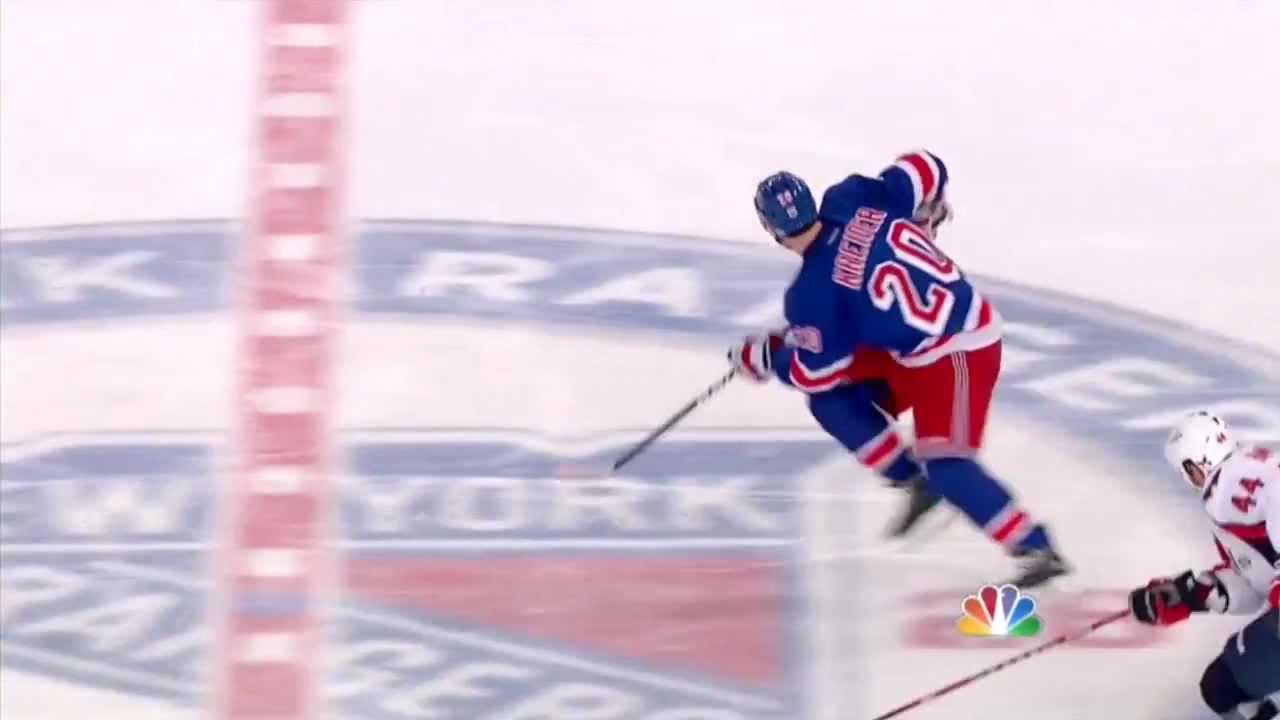
For the 2011-12 Eastern Conference finals, the New York Rangers played the New Jersey Devils. They had finished the regular season in first and fourth place, respectively, of the Atlantic Division. One member of the Rangers’ team, Chris Kreider, did not play a single game in the NHL or AHL during the regular season. Still, he scored in all of the first three games of the conference finals. With his goal on May 19, 2012, he set a NHL record for most goals scored in the playoffs for someone who had not yet played in a regular-season game.
After being drafted by the
Rangers in the first round of the 2009 draft, Kreider played for the Boston
College Eagles. In 2010, he scored a goal that helped the Eagles win the
national championship, and his six goals helped the U.S. win gold in the World
Junior Championship. The following year, he essentially repeated both feats
with Boston College winning another NCAA championship and the U.S. winning
bronze. Signing an entry-level contract, Kreider joined the Rangers on the ice
in Game 3 of the first round of playoffs.
Kreider began his postseason scoring
in Game 6, held at Ottawa on April 23. His ended up being the game-winner when
the Rangers won 3-2. That tied up the series forcing Game 7, which the Rangers
won. In Game 1 of the second round, on April 28, Kreider again scored the
game-winner. The home crowd at Madison Square Garden witnessed the Rangers win
3-1. New York managed to win all the odd-numbered games in that series to
eliminate the Washington Capitals in seven games.
For the conference finals, Game
1 (on May 14) and Game 3 (on May 19) played out almost exactly the same. Both
featured the Rangers winning 3-0 with Kreider scoring the second goal in each. They
scored all goals in the third period. The major difference was that the first
was played at home and the second at the Prudential Center. The former
attracted the slightly larger crowd of 18,200 compared to 17,625.
In both games, defenseman Dan
Girardi scored first early in the third period. According to Girardi, “We’re
just fortunate some of our shots are going in right now. Eventually, the
forwards, there’s going to be offense from them. It’s just the way it’s going
right now.”
Then along came Kreider. In Game
1, it took about 11 minutes before he scored on a power play. For Game 3, his
goal came less than two minutes after Girardi’s. Teammate Ryan McDonagh sent a
shot toward the net that Kreider helpfully tipped in at 5:16. Kreider
commented, “I was just trying to get to the net. It was a great shot and found
my stick.” He had also scored in Game 2 and said he’d trade those three goals
for three wins.
With his five goals (and two assists), Kreider had the most postseason goals and points of any NHLer yet to play during the regular season. Montreal’s Eddie Mazur previously held the record, having scored two goals in the 1951-52 postseason and two goals and two assists in the 1952-53 postseason before playing his first regular-season game in 1953-54. “It’s pretty cool. I’m surrounded by some pretty good players. I knew I could polish off some of the chances they’ve been giving me. I’ve been really lucky,” said Kreider.
Both Game 1 and Game 3 ended with
goals on the empty net. Artem Anisimov finished off the former at 18:33. To
finish Game 3, Captain Ryan Callahan scored an empty-netter at 17:47. The crowd
really began chanting, “Let’s go Ran-gers!”
New York netminder Henrik Lundqvist
had shut out the Devils twice. Lundqvist commented after Game 3, “I was a
little lucky today, a couple times where I made the first move I still ended up
making the save. That’s not going to happen all the time. So you need some luck
sometimes. I always say you earn your luck by working hard. But today was a
good day.” Teammate McDonagh remained cautious, “We’ve got Hankie making saves
for us, but we have to stay with our structure and believe in it, like we did
today. When we’re working as five out there, it’s tough to stop us.” Girardi
praised, “He’s been the backbone of our team for a long time now. He’s making
huge saves.”
Rangers Coach John Tortorella
said after Game 3, “I’m not sure how far we go, I’m not sure what goes on from
here, but it’s a team that stays with it. We still have things to improve on,
but there’s no panic. We know who we are. We know how we have to play.” Despite
this, the Rangers ultimately lost the next three games and thus the series. Throughout
the postseason, the Rangers had the pattern that they won Game 1, lost Game 2,
and won Game 3. In the first two rounds, they won Game 7, but they failed to do
so in the conference finals. The Devils went on to lose the Stanley Cup finals
to the Los Angeles Kings. Two seasons later, in 2014, the Rangers made it to
the Stanley Cup finals, but they too lost to the Kings.
The 1985-86 postseason ended in a final matchup between the Montreal Canadiens and the Calgary Flames. The latter had not yet won a Stanley Cup while it had been seven years since the former won four in a row. However, in Game 2 on May 18, 1986, rather than an established veteran, it was a Canadiens rookie who helped turn the series around.
Two days after they won Game 1,
Calgary also hosted Game 2 for 16,762 fans. They took the lead at 9:06 of the
first period with a goal by John Tonelli. Only 15 seconds into the second
period, they scored on a power play. It looked like sixth-place Calgary might
not need long to win the Cup over seventh-place Montreal.
That is when the Canadiens
staged their comeback. They scored at nearly the same time in the second and
third periods, 3:45 and 3:30 (respectively). Having outshot the Flames with 35
shots on goal to 22, they held the tie to the end of regulation.
For the overtime session, Coach Jean Perron started the checking line of Brian Skrudland, Mike McPhee, and Claude Lemieux. As center, rookie Skrudland won the faceoff. McPhee nabbed the loose puck and maneuvered around a defenseman. The two linemates skated down the ice together with only on Flames defenseman, Al MacInnis, in the way.
Skrudland explained, “Everybody
thought he [McPhee] was going to shoot. The defenceman thought so. Their goalie
(Mike Vernon) thought he was going to shoot. He had me thinking he was going to
shoot.” Even McPhee agreed, saying, “I was thinking ‘shoot’ from the moment I got
to the puck. Then Brian gave me that little yell.” Just as Vernon lunged to
block a shot from McPhee, the wing instead sent a cross-ice pass to Skrudland. “Mike
couldn’t have made a nicer play than that,” Skrudland later said. “But leave it
to me to almost [mess] it up. I had a wide-open net, the full 4-by-6 to shoot
at, but I still managed to bank it in off the post and in.” Directly after the
game, Skrudland, commented, “I still hadn’t seen the red light go on, but I knew
the puck was in the net and it was just a great feeling. I wouldn’t have
predicted this in 1,000 years.”
At only 9 seconds into overtime,
Skrudland scored the game-winner for Montreal. Skrudland remarked, “We watched
the goal going in, and we smiled and smiled. We smiled so much there wasn’t
room for another smile in the room. Down the road, I’ll take a lot of pride in
the record, but right now, what I want a lot more is three more wins in this
series.”
That goal went down as the fastest overtime playoff goal in NHL history. The previous record, set in 1975 by J.P. Parise of the New York Islanders, took 11 seconds. Not only that, but Skrudland, in his first NHL season, had just scored his very first NHL playoff goal. Prior to that, only Cy Wentworth of the Chicago Blackhawks, back in 1931, had managed to score his first postseason goal in overtime during the Stanley Cup finals.
The Montreal Canadiens proceeded to win the next three games to take home the Stanley Cup yet again. For the final game, on May 24, the series returned to Calgary. Skrudland scored his only other postseason goal to break the 1-1 tie in the second period. Interestingly, Skrudland was traded by Montreal to Calgary in January 1993, while the Canadiens went on to win their next Stanley Cup. After only half a year, he was claimed by Florida in the Expansion Draft. In his second-to-last NHL season, 1998-99, Skrudland earned his only other Stanley Cup, with the Dallas Stars.
Additional Sources:
Mike Commito, Hockey 365: Daily Stories from the Ice (Toronto: Dundurn, 2018), kindle edition.
Red Fisher, “Skrudland brings smiles to Habs,” Montreal Gazette, 20 May 1986, p. F1.



 Prev
Prev