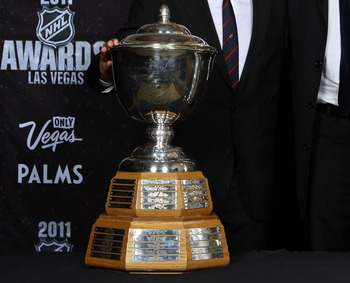
Norris Trophy: The National Hockey League’s most outstanding defenseman.
Wikipedia
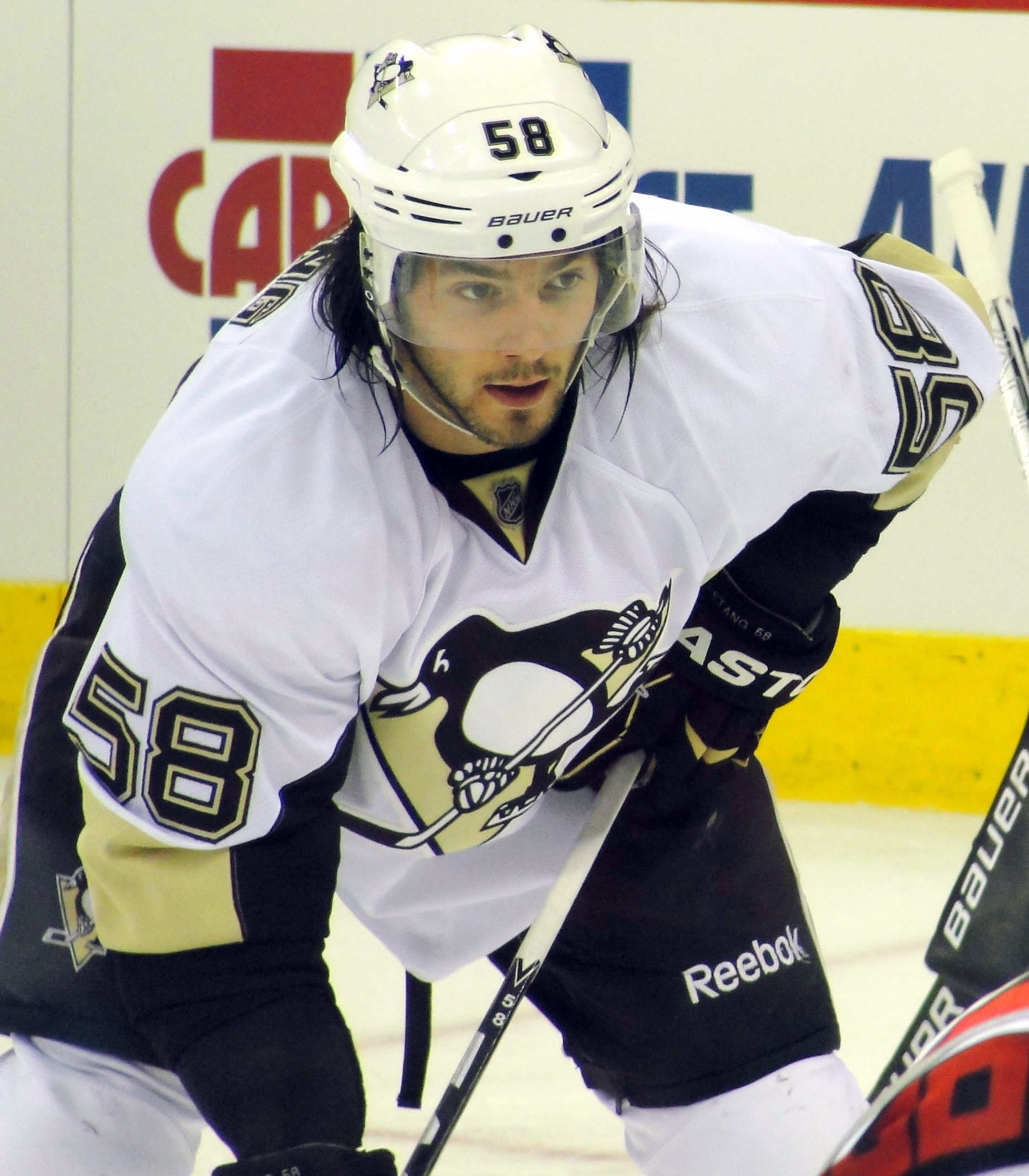
Kris Letang of the Pittsburgh Penguins: Kris Letang was an offensive and defensive force for the Pittsburgh Penguins this season. If Letang didn’t suffer injuries throughout the season, he would have most likely been in the top ten players for time on ice. He only played in 35 games this season and accumulated 897 minutes on the ice. Per game, Letang was on the ice for about 25:38, which ranks him second among the other nominees. In the 35 games he played, he racked up a league-leading 33 assists. He also notched 5 goals and tied P.K. Subban for first in points. Out of the nominees, Letang had the best plus/minus rating with a +16. He also accounted for 45 hits, 59 blocked shots, and 12 takeaways. With a team full of all-stars, Letang did a great job standing out.
ESPN
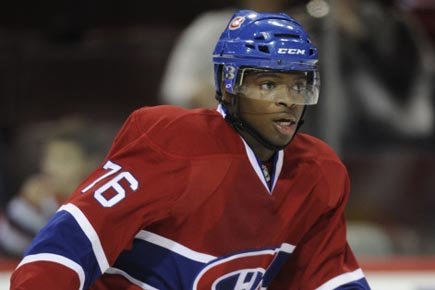
P.K. Subban of the Montreal Canadiens: Subban was way down the list with only 976 minutes of ice time, but only played in 42 games. That boils down to being on the ice for about 23:14 minutes per game, which ranks last among the nominees. In the shortened season, P.K. finished with a +12 plus/minus rating. Offensively, Subban was a huge asset to the Canadiens. He came in third for assists (27), second in goals (11), and first in power play goals (8). He was also tied for first in points among defensemen with 38. Defensively, he had 51 hits, 49 blocked shots, and 10 takeaways. While it’s relatively safe to say that Subban was the best offensive defenseman, it’s hard to say whether or not that means he was the overall best defenseman.
NHL.com
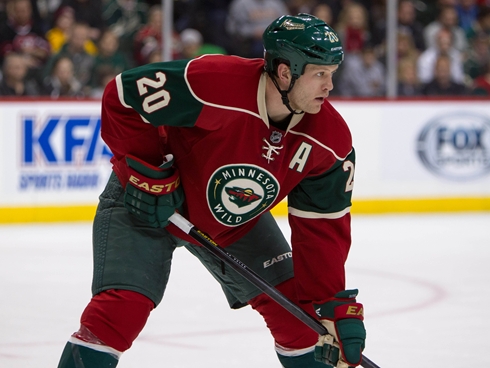
Ryan Suter of the Minnesota Wild: Suter started out a little slow, but once he found his game he was sensational. The Wild defenseman led the entire league in ice time with 1,309 minutes and played in every game of the season. He also takes the lead for ice time per game with 27:16 minutes. That’s nearly half a game. And not half a baseball game (no offense to baseball fans)—but half of a hard-hitting hockey game. Offensively, Suter came in second for assists (28) and also had 4 goals. With Letang and Subban tied for first in points, that leaves Suter not far off in second with 32. He ended the regular season with only a +2 and only 33 hits, but made up for it with his 74 blocked shots and 9 takeaways. Suter was one of the biggest reasons for Minnesota’s success this year.
Pink Puck Pick: Kris Letang. This is a really tough category to judge. It’s easy to find offensive stats and go from there, but the best defenseman is much more than that. Subban is a very offensive asset and helped his team with flashy numbers. On the other hand, Suter is much more defensive-minded, so it’s hard to put his success into numbers. It’s tough to measure how much defensemen contribute to their team by preventing goals, which is just as important as scoring them. That’s why my vote goes to Kris Letang. He is a great balance of scoring, defending, hitting, blocking shots, and sticking up for his teammates. Among the other nominees, Letang had the most evenly distributed resume between offensive numbers and defensive play.
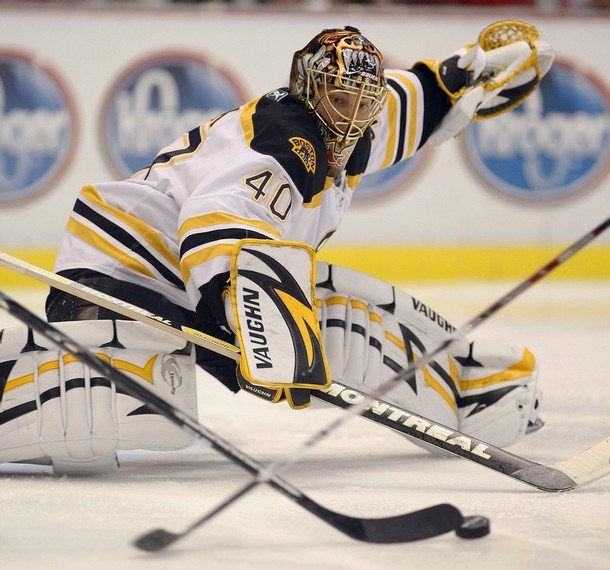
Boston Bruins #1 netminder Tuukka Rask has had a history of minor “freak outs” over the years, creatively labeled “Tuukka Tantrums”. You may recall this little tantrum back in his American Hockey League days in Providence:
Perhaps more mellow in nature than his AHL moment, Rask was caught swearing on camera during an interview leading up to Game 4 in New York. It’s common sense not to touch a players equipment, can’t really say we blame Tuukka’s word choice on this one – maybe it was #becauseitsthecup
The rivalry is as intense as any Original Six matchup. The tension between the San Jose Sharks and the Los Angeles Kings goes beyond the ice and into the stands as Northern Californians have a particular dislike of anything to do with So-Cal, be it Baseball or Hockey. BEAT LAbecame a thunderous wave as the last minute of play came to the close of Game Four and the Sharks took another bite out of the Kings, tying up the series 2-2 in the Western Conference Semi-final round. The Sharks dominated the first 40 minutes of play, keeping LA frustrated, penalty-prone and on their heels. The Sharks swam freely in the Kings zone. LA turned up the heat in the third but it wasn’t enough to pull out a win. San Jose showed dominance with all four lines, but it was the top two lines of Pavelski-Couture-Marleau and Burns-Thornton-Galiardi that produced.
The Sharks turned up the heat early on in the first period with a blast from Brent Burns off a feed from the Captain, Joe Thornton, from behind Quick’s net only six minutes into the game. Jumbo Joe seemed to have found his wheels as he spent most of the game flying around the ice with Burns and Galiardi, continuing the intense play that this second line has shown in this series, challenging LA at every opportunity. The Sharks kept up the pressure with Pavelski, Marleau, and Couture continuing to apply pressure deep in the Kings’ zone. LA began to get frustrated with their inability to control the puck and get far off their blue line, leading to two power play opportunities in a row for the Sharks. LA’sColin Fraser got called for hooking against Patrick Marleau and then just seconds after he stepped out of the box Drew Doughty was called for slashing on the Sharks Marc-Eduard Vlasic. During the power play, the Sharks kept LA guessing and a drive from Wingels in the final seconds rung off the post, barely missing the back of the net. The Sharks didn’t allow the Kings a single shot during the last 10 minutes of the first frame and outshot them 15-3.
San Jose continued to shutdown LA’s offense during the second period but the Kings stepped up the defensive pressure with heavy hitting directed at both Couture and Galiardi. Colin Fraser returned to the box and put the Sharks on the power play, but this time Team Teal capitalized on the man advantage. Boyle fired one in from the point off a feed from Joe Pavelski and Couture got the tip-in to put the Sharks up 2-0. Thiswouldeventually be the game winner and makes his third during the playoffs, tying him with LA’s Slava Voynov. The continued harassment by the Kings on Galiardi led to a Kings power play with the chirping Gally going off for an interference call at 8:33 of the second. LA never got a chance to set up shop in the Sharks zone as the penalty killers cleared at every chance.
The momentum shifted in the third as Los Angeles tried to salvage the game. San Jose spent most of the period trying to extract the Kings from their end. Brent Burns delivered some heavy hits and eventually was hauled off for boarding Anze Kopitar almost midway through the period. The call would cost the Sharks as the Kings power play unit hemmed San Jose in and Mike Richards snuck one past Niemi. Although the Kings poured on the pressure and evened up the shot clock at 23, it wouldn’t be enoughto get any more past the Sharks netminder, sending the series back to LA tied at two games a piece.
After the Providence Bruins took a convincing 3-0 series lead in the second round of the playoffs, it seemed that their place in the Conference Finals was all but guaranteed. All they had to do was win one more game. The Wilkes-Barre/Scranton Penguins were not ready to let their season die so easily. After allowing 12 goals in just two games, the Penguins decided it was time to make a goaltending change. Brad Thiessen came in to replace Jeff Zatkoff and that has been the change they needed.
Although the Penguins dropped game 3, it was an overtime loss and it was a much closer game for the team. The next two games were clear wins for the Penguins as Thiessen stopped 61 of 62 shots, where game 5 was a shutout. Not only did that force a game 6, but it showed how high tensions were running between the two teams. During game 5, the two teams combined for 117 penalty minutes, 74 of which came in the final 6 minutes of the game. It involved a handful of fighting majors and misconducts and also ultimately included a two game suspension for Bruins forward Graham Mink for an action where it appeared he had the intent to injure.
Game 6 came back to Providence and once again, Thiessen got the start of the Penguins. It only took about 30 seconds before the teams started pushing and shoving after the whistle. It seemed as if this could be another rough game. The first period seemed to go quickly with a lot of hard hitting and a lot of good chances for each team. It seemed like both teams were playing with an edge. The officials managed to keep a fight from breaking out and the first period ended scoreless.
Although the second period started scoreless, it would not stay that way long. Just about a minute into the middle frame, Craig Cunningham scored his third of the post season for Providence. Jamie Tardif fed Cunningham a beautiful pass that he was able to convert into a goal. The Bruins would not be able to hold onto the lead, though, as about five minutes later, the Penguins tied it up. Rookie Penguins defenseman Brian Dumoulin took a hard shot from the blue line that beat Niklas Svedberg to tie the score 1-1. This game-tying goal came despite the Penguins notching just 3 shots during the second.
The third period started and it was clear that Providence wanted to keep this game from going into overtime. During the third frame, the Bruins put up an impressive 20 shots on goal. But, Thiessen stood tall and came up with some impressive saves to stop all 20 shots. As a result of Providence controlling the puck so well, Wilkes-Barre/Scranton only managed 2 shots during the entire last period. When the buzzer sounded to indicate the end of regulation, the score still stood at 1-1 and the players cleared the ice for sudden death overtime.
When the teams came back out for overtime, it seemed like the momentum had shifted again. There were only three shots during the extra period, all of which came from the Penguins. The final shot came as Trevor Smith beat Svedberg to end the overtime and give his team the win. That goal tied the series up and forced the teams to meet again in Providence for game 7. The final shots were 47-18 in favor of Providence as they were only able to beat Thiessen once.
The final game of the series is set to take place at the Dunkin Donuts Center in Providence on Wednesday, May 22nd at 7:05pm. Whoever wins the game will continue on to meet Syracuse in the Eastern Conference Finals. The Syracuse Crunch have not lost yet this post season and appear to be a difficult team to solve.
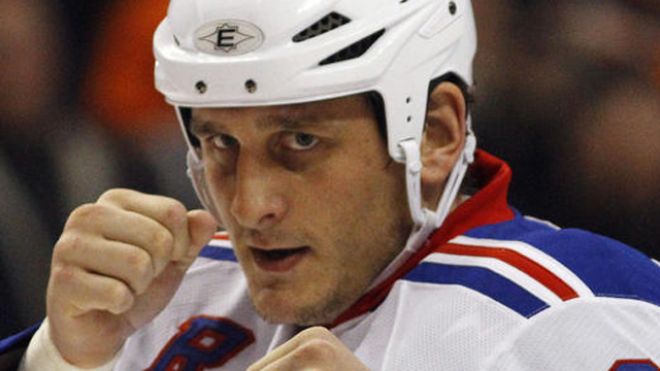
The recent lawsuit filed by the family of former New York Rangers enforcer, Derek Boogaard, has added more scrutiny to an already sensitive subject for the National Hockey League. Is the game too physical?
Boogaard, passed away in May 2011 of an accidental overdose. After his death, his brain was studied by the Boston University Center for the Study of Traumatic Encephalopathy. It was determined that Boogaard’s brain suffered from C.T.E. or chronic traumatic encephalopathy which according to the Boston University’s Center for the Study of Traumatic Encephalopathy is:
“A progressive degenerative disease of the brain found in athletes (and others) with a history of repetitive brain trauma, including symptomatic concussions as well as asymptomatic subconcussive hits to the head… These changes in the brain can begin months, years, or even decades after the last brain trauma or end of active athletic involvement. The brain degeneration is associated with memory loss, confusion, impaired judgment, impulse control problems, aggression, depression, and, eventually, progressive dementia”.
C.T.E. has been found or suspected in a number of other athletes including former New England Patriots linebacker, Junior Seau and former New York Rangers defenseman, Reggie Fleming. Researchers have known about C.T.E. in boxers for quite some time, more recently in football, and now hockey has been added to the list. Unfortunately, C.T.E. can only be diagnosed after death which rules out any examinations on current athletes or former athletes who are still alive.
Depending on what you read and where it is coming from, some sources will indicate the C.T.E. is directly linked to repeated blows or hits to the head over a period of time. While others will say there is no conclusive evidence that repeated head trauma and C.T.E. are related. Regardless of where you stand on the issue, it is important to consider the safety and well-being of these people, who are just out there doing their job. These are sons, brothers, fathers, and husbands to some and glorified athletes or jocks to others. That being said, what should, if anything, be done about the issue of physicality in hockey or other sports?
Should the league amend the rules to abolish hits to the head like the Ontario Hockey League or the Olympics? Or should the league leave the rules as they stand and implement a more comprehensive health benefits plan for retired players? Or should the league do nothing at all?
There are many questions to this debate and many people, hockey fans and non-hockey fans, have differing opinions on the physicality of hockey. In my opinion, I believe the NHL and the players would see very little change if they implemented a no-hit to the head rule. It doesn’t mean players can’t hit or check, it just means that they can’t go after the other guy’s head without a consequence.
As for fighting, that is a long-standing element of the game that I fear would alter the game if removed. Many fights break out just to pump the crowd or team up. Though an argument may be, why allow fighting if you’re going to take out head shots? Both are violent acts. However, the biggest difference between fighting and hits to the head is that fighting is performed by two willing players (emphasis on willing) whereas hits to the head often occur when players are vulnerable and not expecting the hit.
Obviously incidents with accidental contact to the head will occur. A player is going in for a check and at the last second the opposition ducks or shifts and the player’s elbow or shoulder gets the opponent in the head. This is the type of situation that would cause the most stir among fans and players: is this a hit to the head or was it accidental? How will officials be trained to call hits that appear to be intentional versus accidental? This is just another question that needs to be answered if the league were to consider a hit to the head rule.
The NHL has yet to do anything in regards to rule amendments, but the next year or two in hockey should be interesting to watch. Watching to see if any rules change or if players, or teams, will see increased fines or suspensions for hits to the head, especially those resulting in injuries. As a fan and a former player, it is difficult to imagine the rules of the game changing much from where they stand today. However, I believe it is more painful to watch a player suffer a season or career-ending injury in the game that we all love so much.
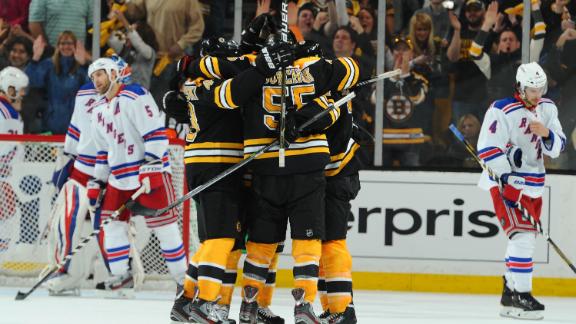
Nothing beats the atmosphere of a playoff game, the creative signs held up during stoppages in play, the thunderous roars around the arena and the fans. At the end of the day, it’s the fans that make the quest for the cup possible. Last night, the Boston Bruins skated one game closer to the final result. Taking a 2-0 series lead against the Rangers, Boston gave their fans everything they were looking for with a 5-2 win.
As is customary for a playoff run, injuries occur. An injury for one player is an opportunity for another and the young defensemen in Boston have stepped up to the challenge. With the current loss of line-up regulars Dennis Seidenberg and Andrew Ference, it’s been the mixed combination of Dougie Hamilton, Matt Bartkowski and newest recall Torey Krug that have lent an unexpected depth to the Bruins blue-line.
Bartkowski has been filling the physicality quotient almost every shift since his playoff goal in Game 7 of the unexpected series win over Toronto. But the real spark for the Bruins has come from 5′ 9″ defensemen Torey Krug. The Michigan native has recorded two goals in his first two playoff games, showcasing skill and an offensive style of play.
“Yeah, that’s a skill that sometimes you work on it after practice,” said Krug regarding his goal. “You don’t have to work on it too much. It’s just a couple extra reps here or there at the end, picking up pucks with your feet. So, it’s just something that I try to do, and I was lucky enough that it bounced my way.”
During any game, it’s all about just playing your game. Despite an added pressure of a playoff tilt, the mentality needs to remain the same.
“I told him, ‘don’t be afraid to make mistakes and play your game,’” said Bruins Head Coach Claude Julien upon Krugs’ arrival in Boston. “I said, ‘You know, I know how good you are, I know what you can bring to this team, just go out there and do it.’”
It’s been the defensive units that have yet again lifted Boston, and not just the newer additions. Blueline regular Johnny Boychuk scored his third goal of the playoffs, but still gave credit to the continued success of the young guns.
“They’ve been amazing. They’re making a case for themselves to stay in the lineup and that’s what you need,” said Boychuk regarding the newer defensemen. “You want to stay in the lineup and the way that they’re playing, they’ve been playing very, very good and responsible, and even in the D-zone I’ve been watching they’ve been battling hard and doing the right things and that’s what you need.”
It hasn’t been just the defense appreciating each other, but the team as a whole has noticed them stepping up their game. Forward Brad Marchand, who also recorded a goal in the 5-2 win was quick to give praise.
“Yeah, it’s huge the way they’re stepping up and getting goals,” said Marchand. “The way the young guys have come in and played very, very hard and very strong, and our older guys stepping up and playing huge minutes, it’s very big for us right now and we’re going to need that to continue when we’re in New York.”
Winning two games at home to begin the series is a blessing, but now the hard work really begins, winning two more in a crowd that won’t have the same energy supporting you. The Bruins will look to keep the momentum going in New York during Games 3 and 4 on Tuesday and Thursday night respectively.
The San Jose Sharks gave the LA Kings a bit of their own medicine on Saturday night as Logan Couture potted the game winning goal at 1:29 into overtime during a power play opportunity to bring the Sharks back into the series and send Jonathan Quick chasing after the officials.
The Sharks started the first period as if a fire had been lit in the locker room, a desperate team down 2-0 in the second round of the Stanley Cup playoffs.Ironically, it would be a Delay of Game penalty called on Muzzin 1:30 into the first that would put the Sharks on the power play and up a goal. Off the faceoff, Pavelski would feed to Marleau, who sent it to the point where Boyle fired in past Quick’s stick side putting the Sharks up 1-0 early on. The Kings would soon find the equalizer as Brad Stuart misread the play and placed the puck on the stick of LA’s Tyler Toffoli, who wasted no time in putting it past Niemi to give him his first NHL playoff goal.
With Raffi Torres out on suspension, the Sharks brought back the injury plagued Martin Havlat to the line-up. He did not continue play into the second however, his lower body injury sustained in the first playoff round still causing him grief. Early in the second period, as Couture chased a puck to the boards, he impacted at an awkward angle, his left skate making contact sideways. He would skate off on his own power but went straight to the dressing room, favoring the leg. The Sharks were without their best all around player for most of the second period. LA would try to take advantage, driving the net, however both Vlasic and Braun applied the pressure, shutting down the Kings’ Brown, Kopitar, and Penner and keeping the tally 1-1. The Sharks 2nd line of Brent Burns, Joe Thornton, and TJ Galiardi created havoc in the Kings’ offensive zone, generating the most scoring chances for the Sharks. Couture would return late in the 2nd, drawing a roar from already frenzied crowd.
The intensity level stepped up in the 3rd as both teams vied for the go-ahead goal. Tight checking and north-south play dominated the period, indicating this game would need overtime to resolve.The end of the period would play out in eerie similarity to game 2 when LA went on the power play to eventually win the game. This time the call was on LA, as Tommy Wingels would draw the penalty and put the King’s Regehr in the box for Hooking at 19:18 of the 3rd. Not 30 seconds later on a shorthanded attempt by the Kings, Trevor Lewis came to the net with speed, failing to stop before taking the Sharks netminder with him, drawing an interference call and creating a 5-3 power play for the Sharks just at the end of regulation.
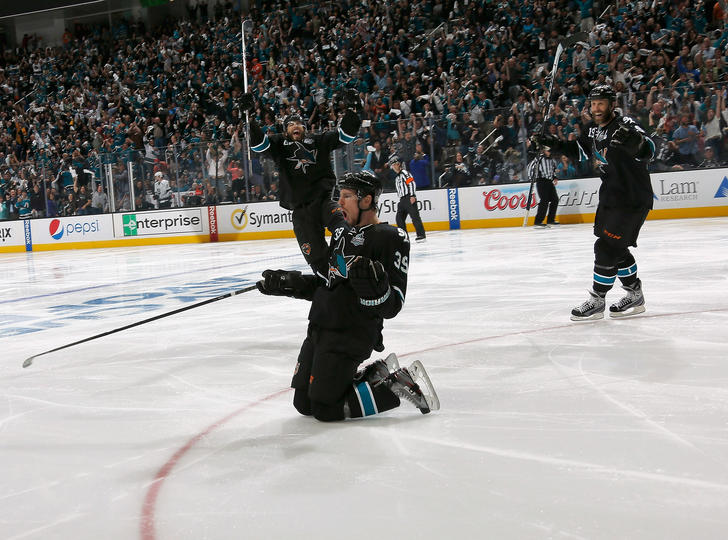
The game would go to overtime with the King’s successfully killing the 5-3, leaving just Lewis in the box. Still on the power play, at 1:29 into OT, the face of the team, Logan Couture, would get his first game winning overtime playoff goal of his career as he took a feed from Marleau and Thornton and roofed it past Quick, putting the Sharks back in the series. As the Sharks celebrated, Quick was visibly upset, slamming his stick against the goalpost and then pursuing the linesman where he exchanged words, those words earning him a game misconduct and potential supplemental discipline. The Sharks continue their homestand for Game 4 with the LA Kings on Tuesday night, looking to tie up the series at 2.
It was last week, when I sat glued to the TV screen.
Toronto Maple Leafs playing for the cup! ( with Boston!)
Even though Boston won, the Leafs played good and hard. It was a blast to see them move into a semi-round. (when was the last time?)
While I was watching, the old feelings came back. The feelings of being proud of the team and the excitement of the speed and the skates. I was transformed back into a teenager again, shouting in my living room at a team that was playing thousands of miles away!
And yes, I ran into my bedroom and I jumped into my team’s jersey and I wore the shirt with pride. I wore it though the whole game, even when I felt the first tear fall, in the last few minutes of the game.
I asked myself what went wrong? We were leading 4-1 in the third period. But then I realized it didn’t matter at all. Why you may ask? The team finally hit the big time. They had a glance at a level they have not achieved in a long time: a place to compete for the Cup. The Leafs could and should have done better but in that one game, they were lightening. They had wings on their skates and a drive that outdid Boston.
If the same team members play next season, then I bet that the Leafs will go farther. There seemed to be a connection between all the players with like a huge spider’s web.
All I know is that it was a great game. It made me realize that I still love the team and I will always support them even though I am miles away. The city I live in has their own hockey team, but it is not the same and for some reason I don’t feel close to them at all.
The Toronto Maple Leafs are still my team no matter what and my dream of them winning the Stanley Cup before I die, came a bit closer last week.
Sixteen wins, four rounds, those are the statistics that stand between a team and the ultimate goal. A goal completed just two years ago, the Bruins bested the Leafs in an unbelievable comeback to get one round closer to winning the cup. With the first round behind them, Boston will have to complete four wins against often rival New York Rangers in order to advance to the next round.
Sidney Crosby, Josh Harding and Adam McQuaid were named finalists for the Masterton Trophy. The Masterton is given to the player who best exemplifies the qualities of perseverance, sportsmanship and dedication to hockey. McQuaid has proven his worth on the Bruins blue line time and time again after coming back to the ice from Thoracic Outlet Syndrome. A by-product of the syndrome came in the form of potentially life-threatening blood clots, forcing the defencemen to undergo two emergency surgeries. With a bleak prognosis in terms of off-season workouts, McQuaid still managed to return to the ice in December. The native of Charlottestown, Prince Edward Island made his return to the ice in January against the Rangers. After a personally successful first round, McQuaid will continue to lend his looming size to the defense of his teammates- a presence that is very much needed with a depleted list of defensemen. Boston is currently missing Ference and Seidenberg from the lineup.
Rookie defensemen Dougie Hamilton and Providence Bruins Torey Krug and Matt Bartkowski found themselves thrust into second round playoff pressure. Although it was Bartkowski who got the scoring going in the now memorable Game 7 win against Toronto.
With an event less first period, both teams came out strong in the second. Only to find Boston suffering another defense loss when Johnny Boychuk was checked into the boards on a suspect hit from Rangers Taylor Pyatt – Boychuk did return shortly thereafter. A ray of excitement came at 12:23 from a drop pass by David Krejci to Zdeno Chara. Lundqvist made the initial stop, but the puck squeaked through giving Boston a 1-0 lead. Both Horton and Krejci with the assists on the Chara goal. 13:52 found the Rangers on a power play after an interference call on Bruins McQuaid. With just two seconds remaining in the second period 19:58, Rangers Ryan Mcdonagh made it a 1-1 game with help from Rick Nash and Derick Brassard.
Scoring their second goal of the game just 14 seconds into the third period, New York went up 2-1, with thanks to Derek Stepan (assisted Carl Hagelin, Ryan Callahan). 1:09 gave Boston a power play opportunity when Steve Eminger was called for holding. Skating in his first professional playoff game, Torey Krug made it 2-2 at 2:55 – assisted by Hamilton and Marchand.
Per playoff rules, the game headed to a fourth period for sudden death overtime. After multiple scoring chances, it was Bruins Marchand who gave his team the first game of the series on a goal from Chara and Bergeron at 15:40.
The teams will face off on Sunday at 3 p.m. for Game 2 in Boston.


 Prev
Prev