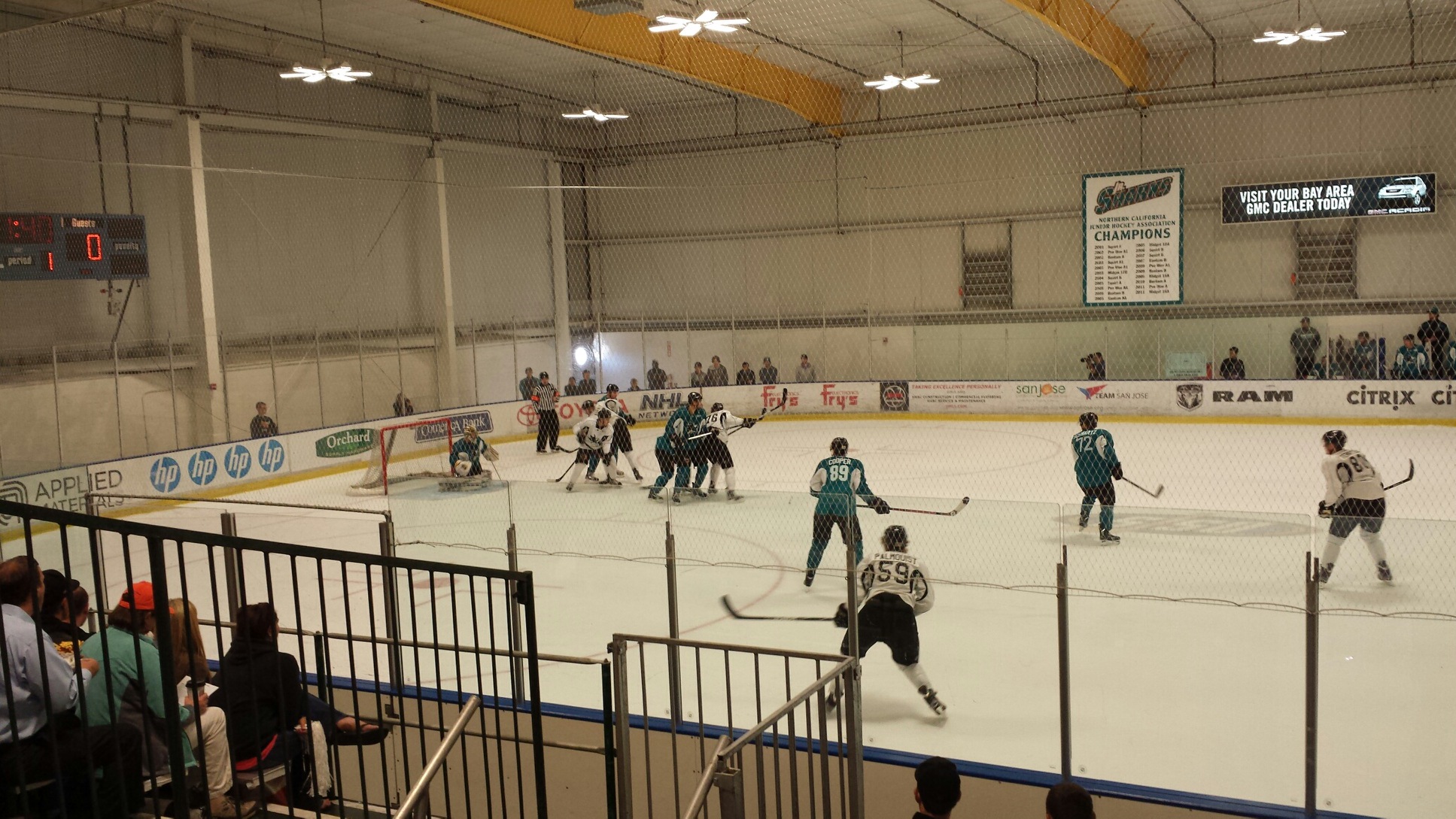
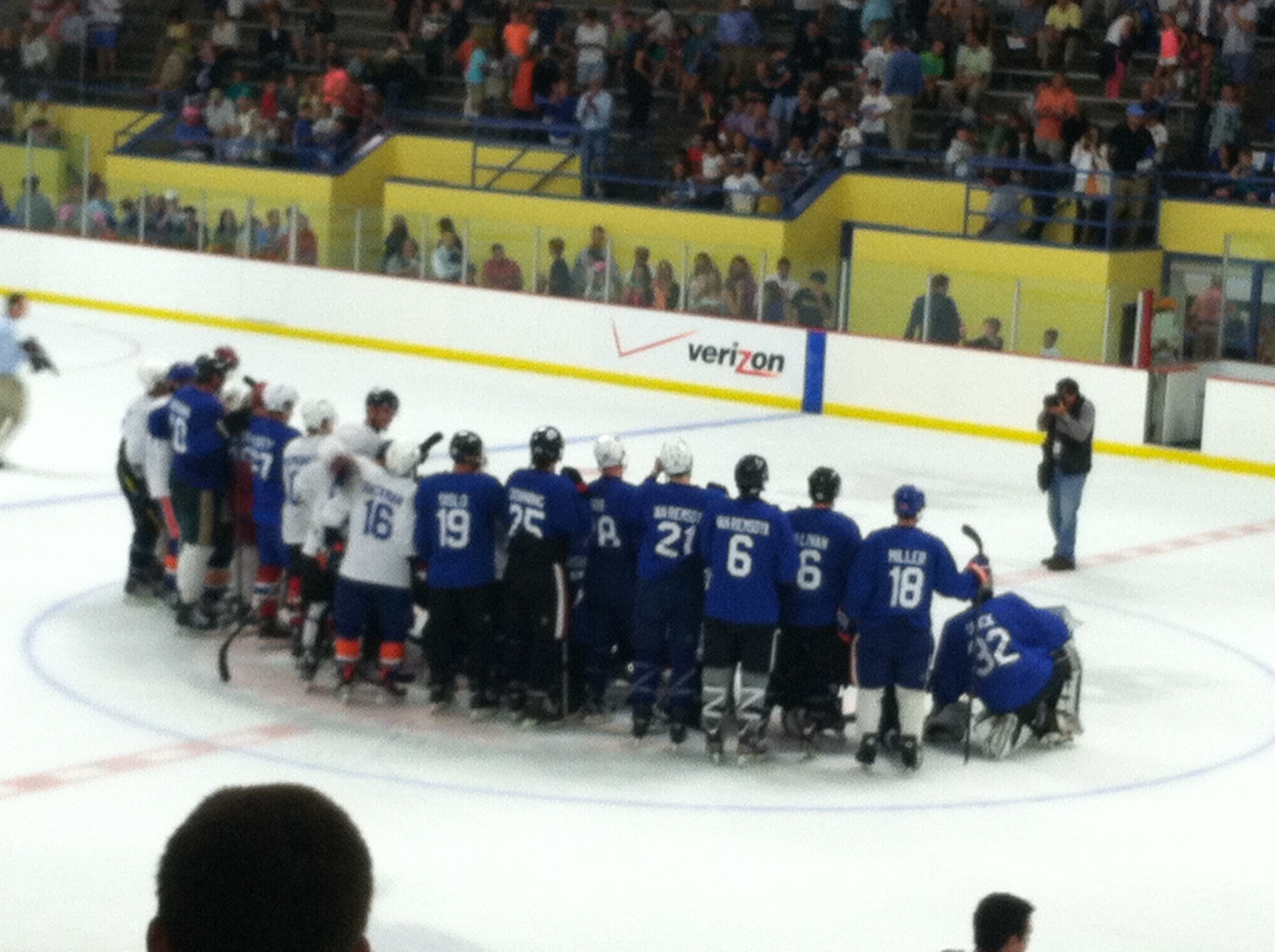
The San Jose Sharks gave fans a taste for the future of the team in its first Prospects Summer Scrimmage on July 11th. Sharks Development Camp has traditionally been a cloistered affair, but this year the club opened its doors for the fans with proceeds benefiting the Sharks Foundation. Highly anticipated prospects included the 2012 First Round Draft pick (17th overall) Tomas Hertl and this year’s 1st pick (18th overall) Mirco Mueller. The scrimmage featured Team Marchment v Team Ricci squaring off for two 25-minute halves, in what was a fast paced, high intensity match up of young talent.
Daniil Tarasov had a whale of a game and came away the points leader, scoring 2 goals and an assist. Chris Tierney generated scoring chances for Tarasov, garnering 2 assists and a shootout goal. Matthew Nieto built on his already impressive point total for the year scoring 2 goals over two halves. Another standout forward, Rylan Schwartz was active in the slot, his timing and positioning led to a quick shot in past goalie Steve Racine. The next time the puck found his tape, Schwartz fed a pass in to Tarasov for a follow-up goal.
As expected, Tomas Hertl could be found all over the ice. His speed through the neutral zone and his skill in front of the net generated multiple scoring opportunities for his line. Petter Emanuelsson received a perfectly timed pass from Hertl that found its way to the back of the net and another full drive into the zone came close to giving his team a goal in the waning moments of the scrimmage.
After the scrimmage, Mirco Mueller commented on the intensity of the game and that this was definitely the fastest that he has played. . One of his take a ways from camp was his need to gain weight and improve his endurance level. Mueller “really had fun” and having the fans for the scrimmage made him feel welcome in San Jose.

Matt Tennyson speaking after the scrimmage
In his second time out, Matt Tennyson took on more of a leadership role at this year’s development camp. During post-scrimmage interviews, Tennyson said most of the guys with their first time at camp work on the big picture of the game. His focus was more on little things like adjusting his stick positioning or opening his hips more to improve his defensive game. When asked about Tomas Hertl, he commented, “He’s going to be a good player, for sure.” Tennyson didn’t feel that his limited English would be much of a barrier, especially out on the ice where the universal language is Hockey.
Following the scrimmage, Daniil Tarasov expressed confidence in his game and said, “I tried to do all the stuff we learned all week. All the little things the Coach teach us, and this week went pretty well and I learned a lot.” He was excited to be in San Jose and the support of the fans gave them energy out on the ice. Tarasov, on his experience at his first Sharks development camp:
“It’s a pleasure being here with all these guys around and the coaching staff. It’s amazing being here, and to put on that jersey.”
[tubepress video=”RgDOlxz9gbw”]
Earlier this season, The Pink Puck’s Jessica Higham interviewed both Daniil Tarasov and Matthew Nieto. Both pieces take an in-depth look at these players’ paths towards the NHL.
To learn more about all of the prospects invited to this year’s development camp, detailed roster notes can be found here:
http://sharks.nhl.com/v2/ext/PDF/20130710-sharks-prospect-scrimmage-handout.pdf
 A day after announcing that Tuukka Rask had been re-signed to an 8 year deal, the Boston Bruins announced that they had signed Patrice Bergeron to an 8 year, $52 million extension. Bergeron’s contract would have been up after this coming season. The new deal keeps him in black and gold through the 2021-2022 season.
“He embodies a lot of what the Bruins stand for. He’s a responsible player. He’s a hard player. He’s a leader. He’s a clutch player. He’s just done a classic way of carrying himself that I like to be part of and the Bruins like to be part of,” Bruins GM Peter Chiarelli said of Bergeron. “We’ve seen his performance over the years. We saw a gutty performance this year in the playoffs. We’re really happy that we can get Patrice [Bergeron] signed to a long term extension.”
Bergeron has been part of the Bruins organization since they drafted him during the 2nd round of the 2003 NHL Entry Draft. He made the Bruins that first year and has played with Boston since, with the exception of the 2004-2005 season and the first part of the 2012-2013 season, when the league was locked out. Throughout his time with the Bruins, he has been a consistent producer and one of the faces of the Bruins.
Even though Bergeron could have made more money as a free agent at the end of next year, he and his family have come to think of Boston as home. He never had any intention of testing the open market; he wants to retire as a Bruin.
“I’m really happy now to see that I will hopefully retire a Bruin. That’s the goal and that’s what I want. I’d like to thank my teammates for helping me on and off the ice become a better person and a better player,” Bergeron said. “I really have a lot of pride every time I step on the ice as a Bruin and I couldn’t be happier.”
During this past playoff run, Bergeron was truly a warrior. He put up 9 goals and 6 assists in 22 games. But that won’t be what people remember from the Bruins coming within two wins of the Stanley Cup. People will remember that after the playoffs ended, Bergeron went straight to the hospital where he would spend the next 3 days. Bergeron was playing with incredible injuries. He admitted that he tore rib cartilage during Game 4 of the Finals, a broke rib during Game 5, and finally a separated shoulder and punctured lung during Game 6. Now he is recovering and can’t wait to get back to training.
“It’s going the way that it should be. I spoke to the doctors earlier this week and they said I should not do anything for four weeks,” Bergeron said of his numerous injuries. “It’s longer than expected I guess, but things are going well. I’m feeling good and I can’t wait to start working out again and just starting to get ready for next year.”
Rest assured, Bruins fans, Patrice Bergeron wants to be in Boston for the long haul. He is confident in his teammates, coaches, and owners.
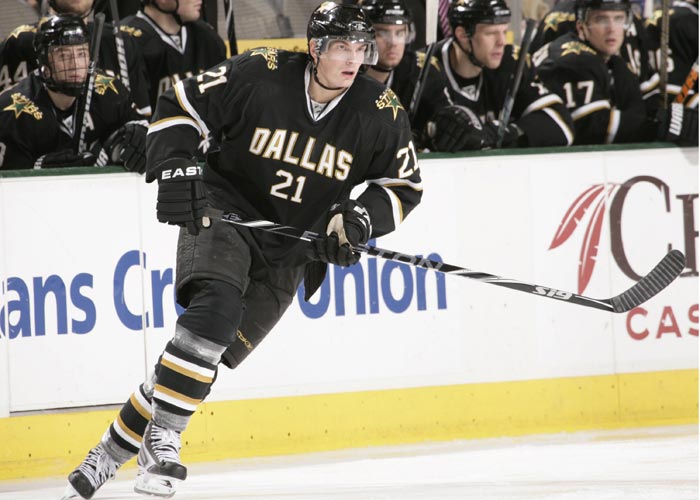
While every offseason is marked by big signings during offseason, the Boston Bruins kicked things off with a big trade on July 4th. The day before free agency opened, the Bruins and the Dallas Stars swapped a total of 7 players that everyone talking. Boston gained forwards Loui Eriksson, Reilly Smith, and Matt Fraser as well as defenseman Joe Morrow. In term, they sent forwards Tyler Seguin and Rich Peverly as well as defenseman, Ryan Button, to Dallas. It was a huge move and Bruins fans have some new faces to get to know.
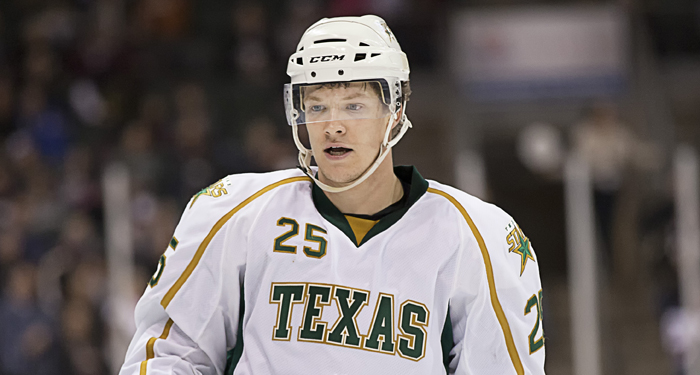
One of those names is Matt Fraser. The 6’2 Red Deer, Alberta native went undrafted before signing with the Dallas Stars in 2010. He has spent the past two seasons playing primarily with the Texas Stars in the AHL. Before he made the transition to professional hockey, he played in the Western Hockey League. He feels like it was a perfect league to prepare him going forward.
“I think the Western League is such a good hybrid of being physical and skilled players. It’s a great league,” Fraser said. “There’s a lot of talent coming out of it. You see with the draft, there’s more and more players coming out of that league and it’s exciting.”
When he was first starting his junior career, Fraser played a few games with his hometown team, the Red Deer Rebels. After the first few games of the 2007-2008 season, he found himself with the Kootenay Ice. That would be his team for the next four years of his career. It was able to finish it off in one of the best ways possible.
“My 20 year old year, we won the league and went to the Memorial Cup. I spent four years in Kootenay and to finish off my Western League career with a championship under my belt was great,” Fraser said. “I couldn’t have asked for a better finish other than winning the Memorial Cup. It was exciting for me and for my team.”
While in the AHL, he has been one of the team’s stop scorers. During both of his professional seasons, Fraser has been invited to the AHL All-Star game and he got to attend the most recent one with another teammate.
“It was exciting. I was fortunate enough to go [to the All-Star Game] my first season as well. It was good but being the only guy from Texas, but you don’t really know anyone,” Fraser said. “So, it was good to go with Jamie Oleksiak this year and have someone to hang around with. The experience was real positive and I was honored to go.”
It was during the 2011-2012 season that Fraser got his first NHL call-up. He only made it into one game that season. Then, during the 2012-2013 season, he got more of a chance. Over the course of a few different call-ups, he got into 12 games and registered that elusive first goal when he beat Pekka Rinne of the Nashville Predators. That is something that no player ever forgets.
“Nothing can really prepare you for that. As much as you play in the AHL, the NHL is a different animal,” Fraser said. “You want to play as many games as long as you can. The 12 games I spent in Dallas is invaluable.”
“That was pretty surreal. That’s something I wish every kid growing up could experience,” Fraser said on his first NHL goal. “That one moment made it feel like everything paid off. You get that one goal and you get more confidence.”
Fraser has spent two full seasons playing hockey in Texas, which is not your traditional hockey market. Despite Texas being a football-first state in terms of sports, the Texas Stars of the AHL have gotten excellent fan support. You can even get used to the weather.
“In Cedar Park, it’s really good. We have really good fans and lots of support. When you think of Texas, you think of the Cowboys and there’s a lot of football. For the most part, we get really good fan support,” Fraser said. “The hardest part is probably the weather. You’re not used to that kind of heat and going to the rink in shorts and a t-shirt. But once you get to the rink, it’s all the same.”
For AHL teams in the Northeast, travel is not really an issue. Most of the trips for those teams are simple bus trips because other teams are so close. In Texas the travel is much more extensive. If Fraser finds himself in Providence in the AHL, he won’t have to worry about long trips anymore. But, he has not minded during his time in Texas.
“It’s a bit of a grind. But I grew up and played in the Western Hockey League so it’s not different. It’s actually probably better than that,” said Fraser. “It’s lots of long bus trips and long flights. When it comes down to it, though, it’s not that bad. You get to play hockey for a living and I feel fortunate.”
Being from Canada, Fraser got started playing hockey early and has never looked back. Although he was not always sure that he would get the chance to play professionally, it was something he worked towards. He also knew that if he got a chance, it might be his only one and he could not waste it.
“I was 5 years old when I started and honestly, I just loved playing. We had an outdoor rink by my house and just took off from there,” said Fraser. “I remember telling myself that you only get one chance to play in the NHL and I would do whatever I could to make it there. I knew I gave it everything I had.”
Every hockey player can tell you about the coaches that helped them growing up. There are a lot of people throughout a player’s career that shape the style of play and the approach to the game. But, for Matt Fraser, he will never be able to thank his parents and his sister enough for everything they have done for him.
“I can say that without a blink of the eye that my parents and my sister have been the biggest influence. My sister has given up a lot of personal time to be at different things for me. I’m forever in debt for that. Even my parents have given up trips to go see her or to come see me play,” Fraser said. “People reading this might not understand what that means to a player to have them at my games. I know that my sister has my back and supports me. Obviously my parents have given up a lot of time and money to support me and be there. I owe a lot to the three of them.”
Shortly after Matt Fraser signed a new one-year deal with the Dallas Stars to rejoin the organization for the 2013-2014 season, he found out he would have a new home. He would be moving to an entirely different hockey market to play for the Bruins organization.
“It was definitely a little bit of a shock but it’s exciting. Boston has a winning tradition and culture in that organization. I’m looking forward to it,” Fraser said. “When you think of Boston you think of how much success they’ve had as a team and as a city as well with their other sports teams. It’ll be really exciting to hopefully play in Boston and contribute.”
This trade is not going to change the way Fraser is approaching his offseason training, though. He is going to continue to work hard and prepare for the coming season. He is not yet sure where he will fit in, but is looking forward to any opportunity.
“As of right now I’m just trying to stay focused on working out,” Fraser said. “It’s just another rink and another dressing room so as soon as I can get comfortable I can get to start playing my game.”
Hockey is a small world and a tight-knit community. Normally, going into a new organization is made easier by a familiar face. A player will know someone from somewhere earlier in their career or training in the offseason or playing a team a lot. For Fraser, this organization is brand new aside from his teammates that got traded along with him.
“It’s pretty brand new which is pretty rare these days. Usually you know someone somewhere but it’ll be nice that Joe Morrow and Reilly Smith will be there,” Fraser said. “It’ll be nice to have those familiar faces to make me more comfortable.”
Come September, Fraser will join his new teammates in Boston for training camp where he will hope to earn a spot on the NHL roster. He is a young player that will have a chance to further develop his skills. He is definitely a name for all Bruins fans to watch out for.

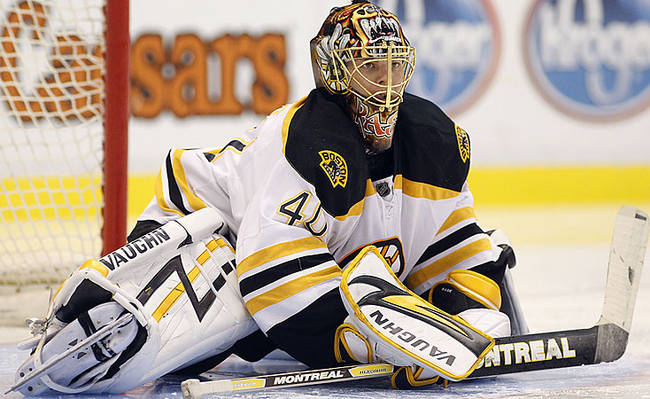
Yesterday, the Boston Bruins announced that they had reached a deal to keep goaltender Tuukka Rask in Boston. The deal is good for 8 years and a salary cap hit of $7 million. It might seem like a lot of money and a long time-frame, but the team feels that their young goaltender is worth it. After the playoff run the Bruins had this past year, many fans agree.
“[Tuukka] showed me patience, perseverance, hard work, work ethic in continuing to get better as a goaltender and he’s turned into an elite goaltender. We saw that this past spring, summer I guess too,” Bruins GM Peter Chiarelli said. “As a result, we felt that we were ready to commit to him to a long term contract and he was ready to commit to us. We’re excited. He’s still a young player, especially as a goaltender, he’s still quite young. He’s really starting to reach his prime. Only better things will happen for him and the Bruins for years to come.
Since being drafted by the Toronto Maple Leafs during the first round of the 2005 NHL Entry Draft, Rask has steadily improved. He has been with the Bruins organization since 2007 and now will extend that through the 2020-2021 season. During the 2009-2010 season, he and Thomas had split time between the pipes but he fell to back-up for the two seasons after that. His dedication to the organization and his development has not gone unnoticed.
“Well, I mean, looking back it’s been a lot of fun for sure. It hasn’t always been easy. I have been really passionate and I have set really high goals for myself,” Rask said. “I have really been happy about being with this Organization throughout these years and you know, really had great experiences. But then again, it hasn’t always been easy but who says it should be?”
Rask has never considered looking for a different team, not even during this off season. This new contract shows that the Bruins are as dedicated to Rask as he is to the team and to the city.
“As I’ve said all along I’ve enjoyed my time in Boston and I’ve never even considered playing on another team. I’m in a great situation right now that I have an opportunity to play with the Bruins throughout my whole career hopefully,” Rask said. “We all know it’s a huge honor to play for the Bruins and I’ve had such a great time throughout my years with the Bruins. I’m looking forward to keep that going and hopefully bring the Cup back to Boston where it belongs.”
 Everyday is a great day for hockey, especially when the day is all about giving back. Hockey players are no strangers to supporting local and national charities. Perhaps marked some of the best professional athletes in sports, it is well documented during the season when hockey players do good. But what happens when the season ends and the summer sets in? Players don’t stop giving back to the communities while they’re on “vacation”, instead they take a break from training to lend a hand.
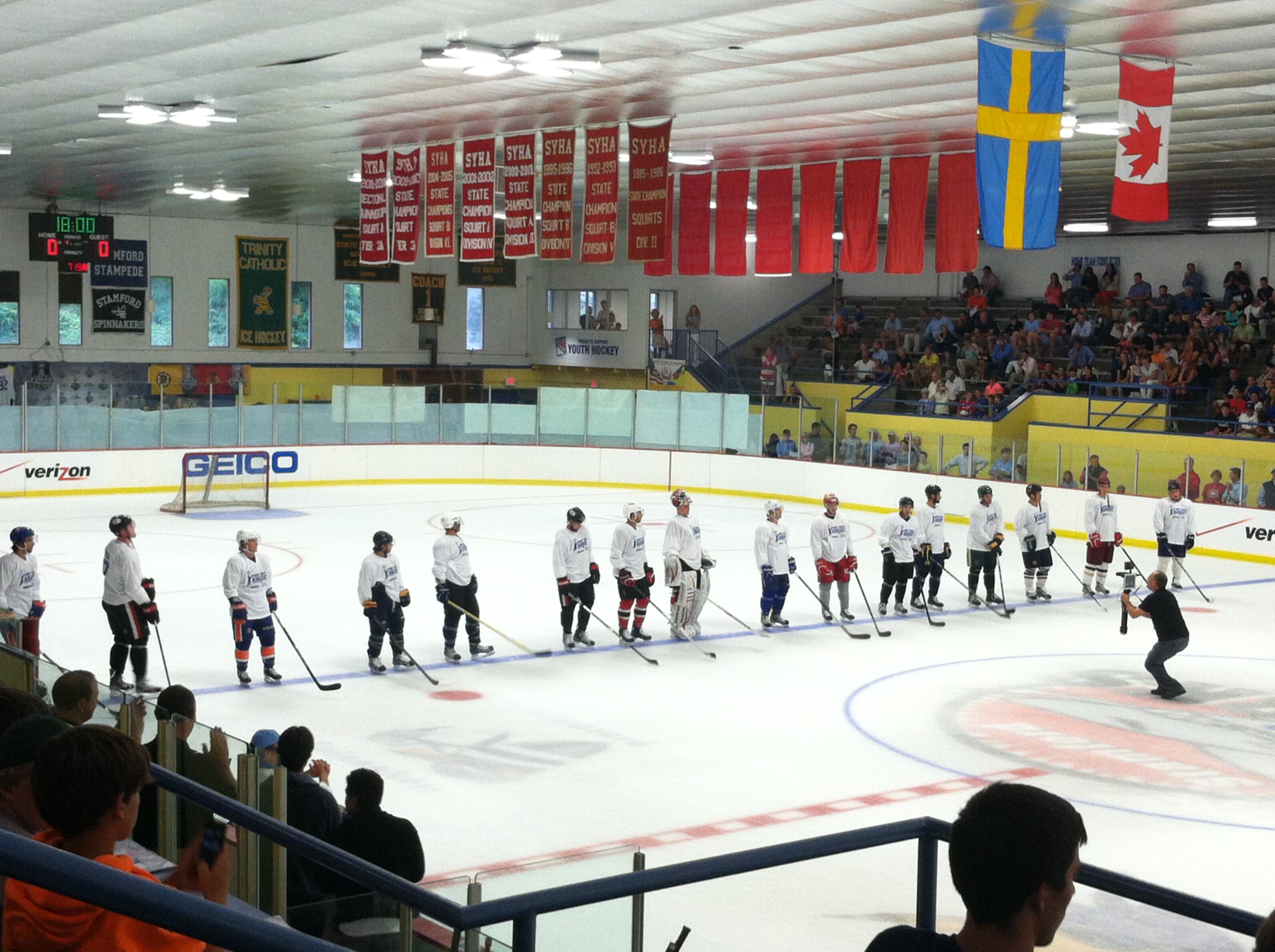
The fifth annual Big Assist charity hockey game faced off in Stamford, Connecticut on Wednesday evening. While the event drew big names to the ice, it drew even bigger crowds off of it and all for the benefit of the Obie Harrington – Howes Foundation.
“Obie was my youth hockey coach, he shared the passion for sports and was a significant part of my upbringing, he had an injury at Jones Beach that left him in a wheelchair. This foundation started from that injury,” said Ryan Shannon, Big Assist founder. “From there, I was fortunate enough to win the Stanley Cup with Anaheim in 2007. With the cup comes a lot of attention and the opportunity to do something charitable. One of the ideas that we came up with was to put all the proceeds of people seeing the Stanley Cup to the Obie Harrington-Howes foundation.”
The initial proceeds from the Cup gave birth to a new idea with more permanence, the Big Assist. The game played annually has raised over $150,000 during it’s first four years. 2013 marked the fifth year that local hockey players or players training in the area, have taken the ice in support of the charity.
“The community support has been really impressive, it’s really just a bunch of people trying to do the right thing,” said Shannon. “Hockey players are the best guys in sports. They give up their time during a very hectic summer schedule and it takes some sacrifice for them to commit to something like this. It’s great that they do it, I’m very thankful. What’s important to the players is that it really makes a difference in the people that have had the injuries. The proceeds go to creating a better quality of life.”
While Shannon claims that the commitment is a sacrifice, that’s clearly not the view of the players who look forward to playing in the game year in and year out.
“This is my third time playing in the game,” said Maple Leafs James van Reimsdyk. “I got involved because I work out at the same gym as Ryan Shannon. Being from this general neck of the woods, it’s great to play in games like that that support great causes.”
The area boasts many big name professional players, all of whom are more than happy to participate in an event that has had such a positive impact on the small Connecticut community.
“You grow up and you’re obviously fortunate to be where you are. To be in a community that has a couple events like this is great,” said New York Islanders Matt Moulson. “Ryan Shannon has called upon us the last few years, we owe it to the people in the community. We all like giving back whenever we can, no harm in having some fun, playing in a charity game, and raising money while we do it. I’ve been every year, haven’t missed one yet.”
Off season or not, the chance to give back is always at the forefront of a players mind.
“I got involved through Ryan Shannon, he’s kind of been preaching it to the guys in the area that play hockey,” said Canadiens Max Pacioretty. “Anytime you’re given the chance to give back, you take it. There’s a lot of good guys around the area that want to do that and are happy to do it. I’ve been here every year and the fan participation has gotten much better every year as well – it’s exciting to see so many people out supporting the cause today.”
While they may be rivals on the ice, for the participants, the off ice camaraderie in supporting and giving back is ultimately what it’s all about.
“It’s very important to be a part of it,” said Blue Jackets Cam Atkinson. “Any time you can give back, especially to a local charity it’s every professional athlete’s duty to do that. I’m just fortunate they asked me to be part of it and it’s been my fourth year doing it.”
The game held annually is a must for any hockey fan looking not only for a bit of off season hockey, but a chance to follow in the strides of their NHL heroes. Giving back to the community at every opportunity, is what being a fan of hockey is all about.
-
-

-
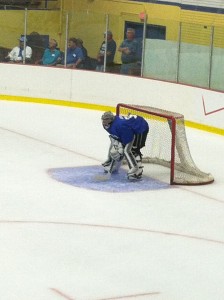
LA Kings Jonathan Quick
-

-
Islanders Matt Moulson signs autographs for fans
-
-
-
-
-
LA Kings Jonathan Quick
-

-
Blue Jackets Cam Atkinson
-

-
Leafs James van Riemsdyk
-
-
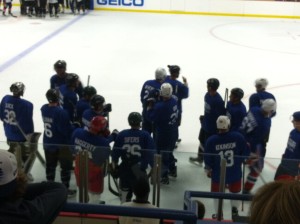
Final buzzer celebrations
-
-
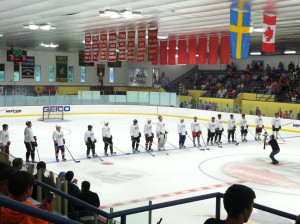
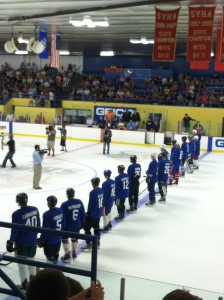
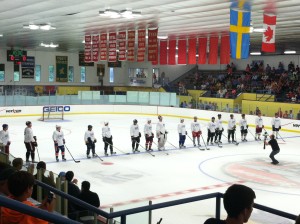
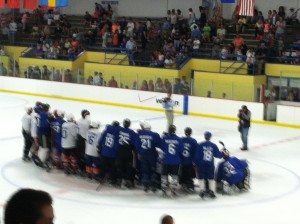
Both teams pose for center ice photos
-

-
Canadiens Max Pacioretty
 Hockey fans patiently await the arrival of NHL14 on September 10th. If you’re wondering how it could top NHL13, the games creator EA Sports released this teaser for fans of the game. A 94′ throwback mode is just one element that puts NHL14 on track to supersede past versions. Snipe, deke, celly, it’s bound to be a good time!
http://youtu.be/c8pLV4-RImk
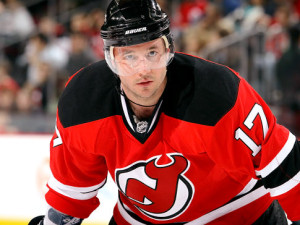
Photo: NJ Devils
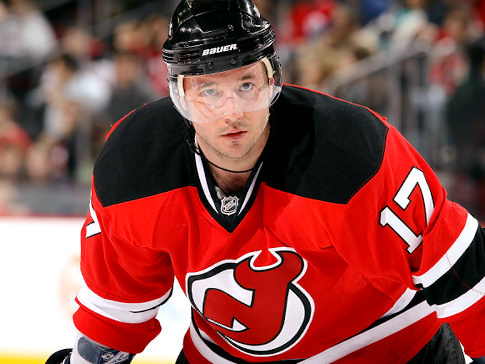
In a surprising move on Thursday, the New Jersey Devils announced the retirement of superstar forward and often face of the organization, Illya Kovalchuk. The official press release from the Devils can be seen here.
At 30-years-old, Kovalchuk was just three years into a 15-year, $100 million contract. The announcement came as a shock, but reports claim that Kovalchuk will seek ice time in his native Russia with the KHL.
Kovalchuk played 11 seasons in the NHL, including the last four with New Jersey. He retires with career NHL totals of 417 goals and 399 assists for 816 points with 516 penalty minutes in 816 games.
By Jaclyn Matisak
After 15 years in the NHL, Matt Cooke has made a career out of misbehaving on the ice. During this time, he has been suspended five times, for a total of 27 games, and some of his worst bodily harm he was never penalized for.
Known throughout the league as a pest, Cooke has been criticized by the media, league and team executives, and players for his aggressive style of play. Notorious for giving cheap shots and dirty hits, he has well earned his reputation and has become the most hated player in the league.
On March 7, 2010 Marc Savard took an elbow to the head from Cooke that had essentially ended his career. In a ruling that received loads of criticism, Cooke was not given a suspension for the hit. However, on March 24, 2010, the league implemented a new rule aimed at prohibiting blindside hits to the head, just like the one Cooke delivered to Savard.
In 2011, Cooke received a 17-game suspension for elbowing Rangers defenseman Ryan McDonagh in the head. He was suspended for the last 10 games of the regular season and the first round of the playoffs. ‘Seeing the light’ during his suspension, Cooke vowed to change his ways.
“There’s still times that you can go out and get a hit and get big hits that are clean, and they’re part of the game. It was the other ones that I wanted to get rid of,” Cooke said.
Although his hit to McDonagh was his last suspension and he has gone two full seasons without being suspended, Cooke’s style has still been questioned by many members of the league and fans.
During last season, in February, Cooke’s skate blade sliced the Achilles tendon of Senators defenseman Erik Karlsson. Not punished, Cooke called the play a “freak, unfortunate accident.” During Game 1 of the Eastern Conference Finals, Cooke received a five-minute major for boarding on Adam McQuaid and a game misconduct.
Matt Cooke’s actions in his past have well earned him his title of a dirty player; he can’t change the fact that he has been a violent, dangerous player in the NHL. Starting the season with a new team and a fan base that already holds a grudge against him, can Matt Cooke save himself from his past?
After signing a three-year contract, Cooke spoke with Minnesota reporters, “I’m sure there’s a lot of fans there maybe aren’t fond of me and they remember when I played for Vancouver, but hopefully I can change their opinions rather quickly once I get there.”
“Matt is a player that brings a lot to the table. I think when everybody watches him as a player and focuses in on what he is now as a player versus what his reputation is as a player, I think you’ll be pleasantly surprised at what you see,” Wild GM Chuck Fletcher explained.
Fletcher is confident the perception in Minnesota will change, just as Cooke says his game has changed. Hopefully he can reinvent himself as a player before his demons come back to haunt him.
By Mark Healey
Most coaching and fitness professionals understand the importance of developing a diverse set of sport-related motor skills to achieve elite status in a single sport. Especially true for younger athletes, participating in many sports can help increase transferable skills. For example, if you send your son to a premier boys soccer camp, the coaches will employ a plethora of unconventional drills to improve a number of specific soccer-related skills.
In fact, skill transfer between diverse activities can provide fantastic technical advantages. So how do skills transfer? And, are all transferrable skills helpful or do some hurt performance from one activity to the next?
Turns out, it’s a bit of both! There are actually many underlying causes for skill transfer. Let’s take a closer look at the varying types of skill transfer and how they can impact performance.
Positive Transfer
Positive transfer refers to two or more skills that positively influence performance in the other(s) when practiced independently. A “common sense” example of this is when someone who knows how to rollerblade first learns how to ice skate. Compared to an individual who has neither ice skated nor rollerbladed, you might predict the rollerblader will perform better at their first ice skating attempt. Eliminating all other experience variables, it’s easy to see why the rollerblader will more efficiently navigate the ice – the similarity between motions.
The rollerblading and ice skating example is good for visualizing positive transfer via functional motor skills, but there is much more to positive transfer than meets the eye. Studies indicate that bilinguals can more easily learn a third language than those learning a second. Neurologically speaking, people who know multiple languages have highly developed brain-language-centers, making them more linguistically intelligent and flexible. This not only makes learning a new language easier, but also improves proficiency in native languages. Positive transfer.
Negative Transfer
Unlike positive transfer, negative transfer refers to two or more skills that negatively influence performance in the other(s) when practiced independently. If you watched Happy Gilmore at any point in your life then you’ve seen negative transfer in action. He crushes his drive but putts like a 2-year old. Even though positive transfer occurs between his slap-shot and drive (even though his form is ridiculous), negative transfer from previously learned hockey skills disrupt his putting control. Happy’s perception of putting was skewed due to the subtle differences in movement patterns and timing of movements learned while playing hockey. Interestingly enough, rather than unlearning his hockey-like disposition, he circumvents the negative transfer issue by using a mini hockeystick as his putter. Problem solved.
Bilateral Transfer
Bilateral transfer, a very interesting concept, occurs when the transfer of learning relates to learning of the same task but with different limbs. To test bilateral transfer for a particular skill, subjects undergo a pretest with both their preferred and non-preferred limbs by performing a specific task – like kicking a football or throwing a baseball. The pre-test assess each limb’s baseline skill level. Following the pretest, each subject practices the given task with only their preferred limb. A posttest reassesses both preferred and non-preferred limbs and determines whether or not skill was transferred to the non-practiced limb. If skill is transferred, both limbs will show improved results from the pretest to the posttest.
What learning mechanism causes bilateral transfer?
Some of you might know that the brain’s left hemisphere controls the motor actions of the right side of the body and vice versa. It just so happens that there is quite a bit of communication between both hemispheres and motor skills learned with one side of the body can directly impact the opposite side’s skill level. This occurs in two ways: a) the cognitive aspects of the skill are transferred b) the learned motor control program transfers from one limb to other (like copying a computer game from one computer to another).
It’s amazing to see a snapshot of how the brain and body learn together. Plus, understanding how skills are transfered from one experience to the next only further promotes the importance of practice and training.

Photo: NHL
The blockbuster trade that sent Tyler Seguin to Dallas and brought Loui Eriksson to Boston is done and has been since July 4th. With reports continuing to surface about Seguins’ partying ways, Eriksson should prove to be a breath of fresh air for Boston sports. 27-year-old Eriksson seems to be more about the game, less about the lifestyle and that should be a perfect fit for the Bruins style of hockey both on and off the ice.
For Eriksson it was an easy decision to waive his No Trade Clause and make the move to Boston. Excited to play with a talented team, there is no doubt that he will excel with the likes of Bergeron, Krejci and Iginla among his teammates.
“It’s a good hockey town,” said Eriksson. “I’ve heard good things about the whole city of Boston. I’ll be ready to play there and it will be awesome.”
Thus begins a new chapter in the continuing book of Bruins hockey.
 Prev1...353354355...412Next
  Page 354 of 412