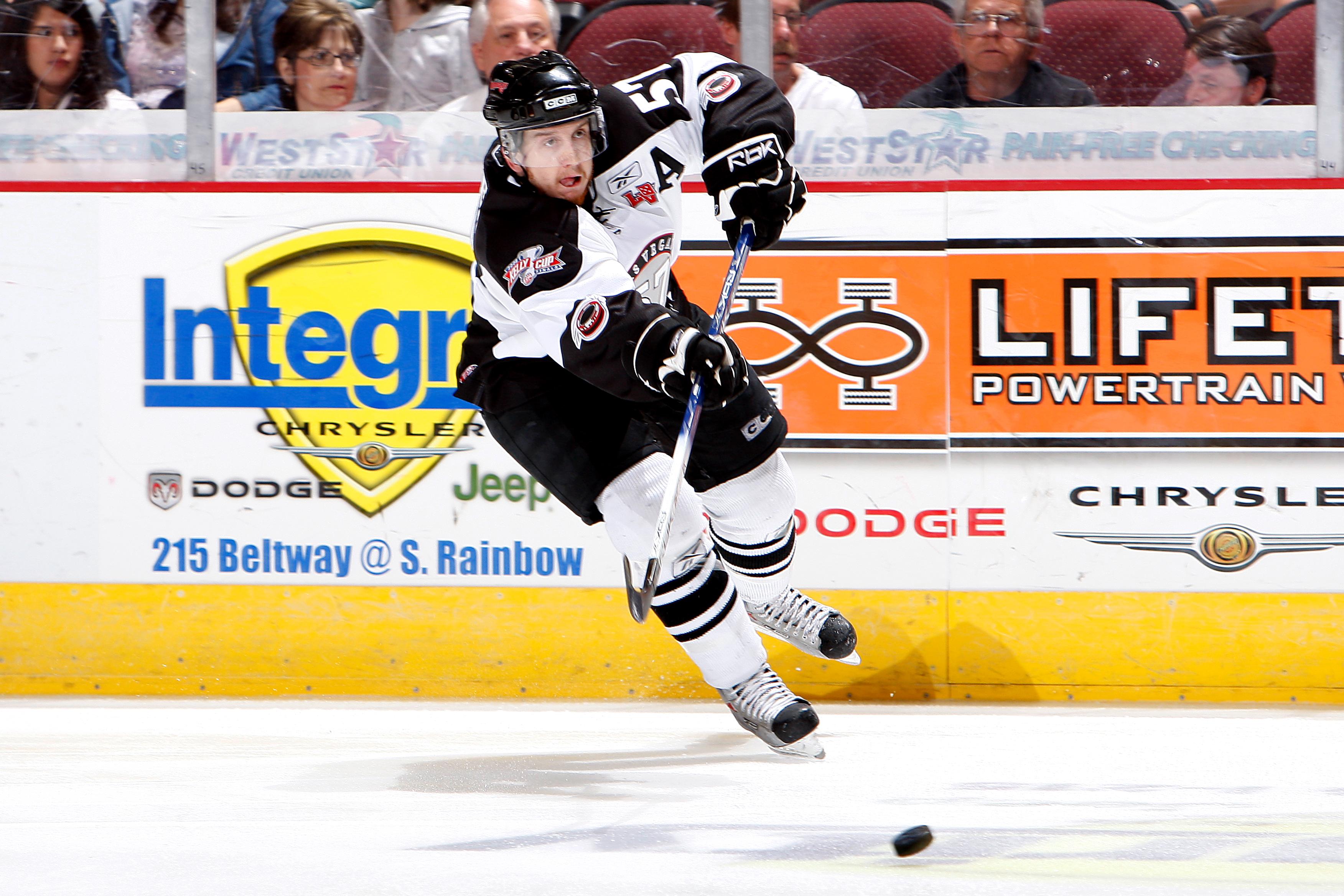
The Las Vegas Wranglers begin the season with two new bosses behind the bench, Head Coach Mike Madill and Assistant Coach Aaron Power, both who are former players for the team, and together are making the transition to coaching. Aaron Power had decided at the end of last season, after playing the year in Italy, that when he came home he would turn from hockey to firefighting. It was the right time in his life to stop, he had just started a family, and he was looking ahead into the future.
“I could’ve played hockey until I was 40 if I had wanted to, but it was one of those life changing decisions that I had to make and I don’t have any regrets. I got to play a game I love for a long time and met a lot of good people and I’m happy where I am at today.”
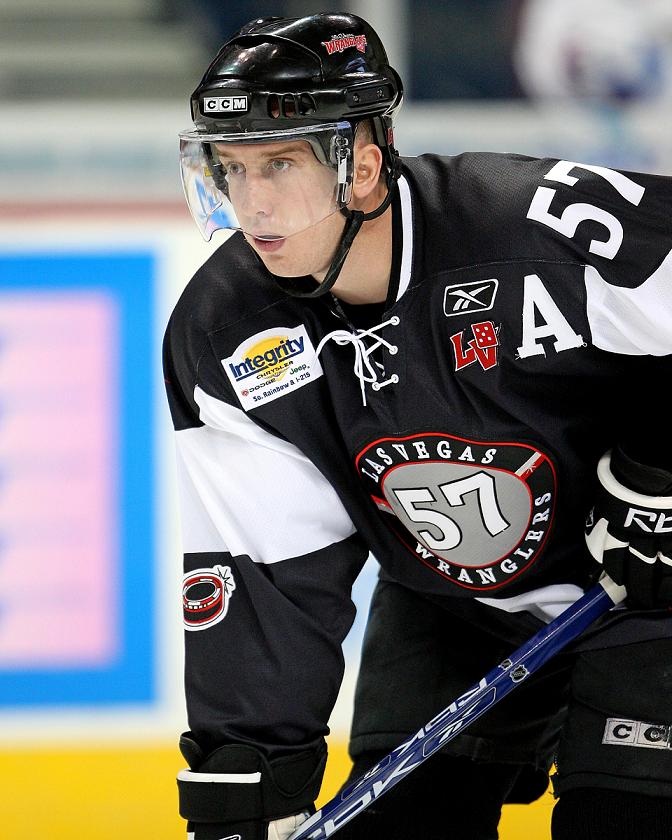
IIA Photography
He began the hiring process at the local fire department in Las Vegas and starting in April he worked for the Nevada Division of Forestry as a seasonal firefighter. He was stationed at Mount Charleston, Nevada, battling the two big blazes that touched the area. On his way to work one day, he decided to give Mike a call. He was missing hockey, the game that had defined who he was for the past 20 years and he had an idea that he wanted to run by his friend. He had figured out a way to still be in the game that he loved.
“I said to him ‘if you’re going to have an assistant coaching position open, I want to hand my resume in’ and he was like ‘yeah if you want to’. He knows me, knows me as a person, he knows my family he knows what I’m all about. It seemed like a good fit… That’s where we are today.”
Aaron wants to be a player’s coach. He understands their mindset, having just stepped off the ice himself and he wants to support them as a mentor and look out for them. He knows that playing is a grind, battling through injuries, but that it is a part of being a professional athlete and that it requires a certain amount of mental strength to push through every game and perform.
“I just finished playing so I know what it’s like to play, what it’s like to be tired. I know how everything works. I’ll do my best to help the guys out and point out things I think I know they can do better, motivate them, hold them accountable…I know they are not going to be perfect every game, I had bad games, that’s life nobody’s perfect. We are going to make mistakes but I think we can live with that.”
For Aaron and Mike, both new to the bench, there will be a learning curve and this same philosophy that Aaron holds the players to applies to him as well. It will take time to adjust and make the transition from player to coach. There will be good games and there will be days when mistakes are made that you learn from. He has spent the summer going over drills in his head that he’s picked up from other coaches during his playing career. He has also stayed in contact with former Wranglers Coach and now Assistant Coach of the Vancouver Canucks Glen Gulutzan, a man who made a significant impact on Power. The two have talked a few times and Glen has graciously offered to help.
“He’s said if you run into any issues or have any problems to call him and run things by him. He’s been very successful and he’s coaching in the best league in the world now. I’m sure at some point I’ll bounce an idea off him, we’ll (Mike and I) come across a situation where, it’s something new to us, to have him there, to offer his assistance is really, you know what I mean.”
It is clear that the gesture means a great deal to Aaron and that he holds Gulutzan’s thoughts and opinions in high regard. It is no surprise given that under Gulutzan’s direction the Wranglers won two division championships, a Brabham Cup and an appearance in the Kelly Cup Finals. He was awarded the John Brophy Trophy for the ECHL’s best coach in the 2005-06 season and his team became the first in the league’s history to have three-consecutive 100 point seasons. He also was named head coach to the All-Star team for three straight years, from 2006-08. Glen is the right coach to look to for the young bench boss. Aaron also has his own experience to draw from, especially for special teams like the power play. It is one of the many reasons Mike Madill named him assistant coach. In a press release at the end of the summer Mike described Aaron as “always a power play specialist, and those skills can be passed on to our players and will be something our team will benefit from.”
He is a big believer in getting the puck to the net, just shooting the puck and Power is ready to give the players his insights and share what made him successful out on the ice. He can offer his guidance and help them out but ultimately they will be the ones out there so he is open to their input as well.
“We have some pretty good D coming in so… you know their resumes speak for themselves. They’ve played in some pretty good leagues and obviously they are here for a reason and they’re good at what they do… they are the ones that have to perform and get it done. I want to take some of their input too, they are good players and they’ve played in good leagues and maybe they can teach me a couple things too.”
Aaron is excited for the season and to again be a part of the Wranglers Organization. When he first contemplated playing in Las Vegas back in 2006, he nearly passed to play in Europe, but for him it was the best decision he’s made. He met his wife and the first two years he played on a tight knit team that made it to the Kelly Cup Finals, and formed a lasting friendship with Mike Madill. Right now it’s paying off in spades.
The Las Vegas Wranglers begin their season on October 19th when they meet the Utah Grizzlies at the Orleans Arena in Las Vegas, Nevada. For more information on tickets and schedule visit the Wranglers website
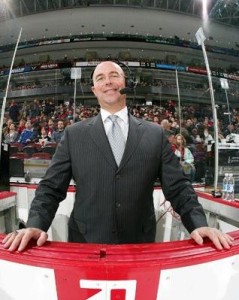

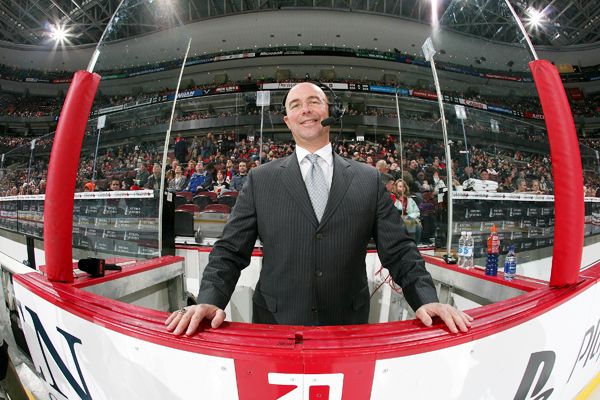
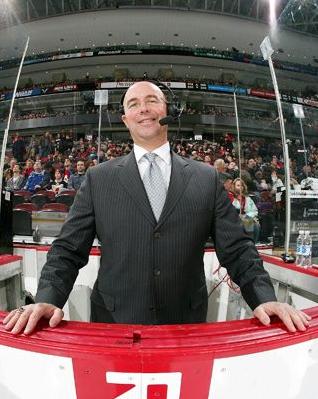
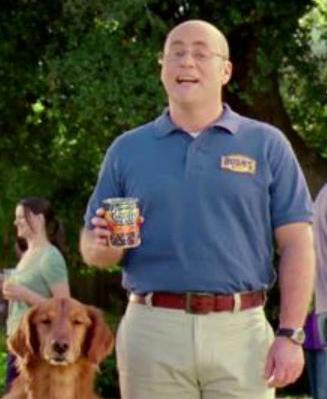
Maybe it’s just me, but whenever a commercial for Bush’s Baked Beans comes on, I see an uncanny resemblance between spokesman Jay Bush, and NBC analyst Pierre McGuire. Jay Bush is best known for his “secret family recipe” and his talking canine companion, Duke, who is always trying to sell the formula. Pierre is more well-known for awkward player interviews, telling skaters to “have fun out there,” and interrupting his play-by-play man.
Roll that beautiful Crosby footage!
One almost certainty of growing up in Canada, is you’re bound to love hockey at some point in your life. For most, the game is found at a young age and for Hamilton Bulldogs centre Martin St. Pierre the game called him in early and never let go.
“I grew up outside Ottawa, with 8-10,000 people and it’s a hockey town, I grew up right near the rink. It’s obviously a Canadian sport and back when I was growing up the winters were very cold and long and it was what we did. My dad played hockey as well, and he got me into skating at the age of three. My brother and I would spend countless hours skating at the outdoor rink. I was one of those kids, when my mom would be yelling for dinner and I’d still be playing although it was almost dark.”
It wasn’t simply the countless hours spent skating until the stars shone brightly overhead, it was hours spent watching his childhood idol that lent a glove in strengthening St. Pierres’ bond with the sport.
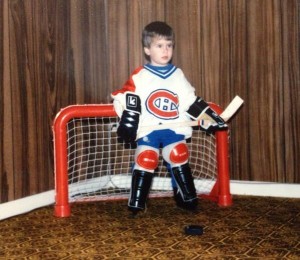
Photo: @MStPierre39
“I was a big Montreal Canadiens fan growing up, I loved the old Montreal Forum, so growing up I was a big Mats Naslund – wore number 26 for Montreal. I think as a kid you often get attached to one player and for me he was it. I had his jersey. I remember I actually met him as a kid at an autograph signing and I was starstruck. He’s a small player, obviously he was an elite player in the NHL back in the day and I grew up wanting to be him. It was always having my mini stick and puck and watching the Canadiens with my Dad.”
A sport based on family values, it’s no surprise that St. Pierre gives gratitude where it’s due.
“My parents were great, mom and dad both worked shifts and they would have to compensate a lot so my brother and I could play, hockey is very expensive. What they did when I was younger is a big part of where I am now.”
For many players, the support system given off the ice usually holds the hockey mentality. Stemming from a family immersed in the game is often a factor in the longevity of a players career.
“Hockey is a big part of my family, my brother plays professionally in the minor leagues, he had knee surgery this past summer so he’s rehabbing with that. My dad still plays old timer hockey and it active a lot, then you have my mom who works a ton but she likes the game too. So it’s me who plays hockey professionally, but my hockey support system lies with my parents and my brother – they’re tremendous. I couldn’t have done anything without them.”
With an abundance of on ice heroes for young players to look towards, it’s the people you encounter off the ice that are often the most influential and inspiring. For St. Pierre, without a doubt the presence of his parents to this day has been the most beneficial.
“It’s my parents, it’s one thing having talent and working hard on the ice. But it’s the people off the ice that help you in your role as a professional athlete. There’s a lot to learn and you go through a lot of things very quickly, my parents were always good about keeping me down to earth and grounded. The biggest thing for them is to ‘remember where you come from, always give back when you get a chance, because hockey careers don’t last forever and you need to make the best of it while you can.’ That was probably one of the best pieces of advice I was ever given. They always wanted me to chase my dreams, but they made it clear to stay on an even keel.”
The importance of family and the support they lend is a key component of the lifestyle. But it isn’t solely the familial relationships that St. Pierre cherishes, it’s the bonds that he’s made over countless years playing the game that are also special.
“In hockey there’s a lot of ups and downs, whether it be in the NHL, the minors or the OHL. You’re moving away from home, so, surrounding yourself with great friends who stay by your side and family is very important.”
Photo: AHL
Take nothing for granted is a thought that many should possess. It’s one that St. Pierre has lived by throughout his career, and giving back to those in need has become a significant part of his life.
“I try to get involved as much as I can during the season, hospital visits, reading at elementary schools and whatnot. It’s important to help kids realize that anyone can achieve their dreams, whether its hockey, sports or anything else.”
It isn’t only team sanctioned events that drive community involvement, St. Pierre also hosts a charity golf tournament each summer with other players and big names participating, the event benefits CHEO (Childrens Hospital of Eastern Ontario) and will be heading into its 8th year this coming summer.
“We missed my golf tournament this summer, but it will be back next summer, it’ll be the 8th annual and it goes to a big childrens hospital in Ottawa, CHEO. There are some people in my hometown with their kids that have needed assistance, childcare is very expensive these days, even with the healthcare in Ontario helping with many of the expenses. It’s all about helping those in need, giving back and making a fun event out of it. At the end of the day I just love that I can help give back.”
Spending time off the ice giving back is a notion that many players look forward to and many start during their early years of playing the game. Similar to many of his peers, the Ontario Hockey League was a starting point for success. Four seasons with the Guelph Storm proved beneficial, where the team netted the coveted Wayne Gretzky Trophy during St. Pierre’s final OHL season in 03′-04′. The achievements conquered in the OHL were a necessary start towards furthered professional success.
“It was instrumental, I was going to go to the NCAA on a scholarship after my 99-00 year and then my gut feeling for some reason was that I wanted to play in the OHL and my Dad made sure that happened and got the package going into that. It’s a great city and a great hockey town, I found a lot of success there winning some championships and hosting the Memorial Cup. The organization took care of us with school and helped us out a lot with graduating. You mature a lot, especially with the help of your billets, I had two over the course of my four years there and they become your second family. It carved my path to help me play pro and I’m glad that I chose that route.”
A brief stint in the ECHL iced the way for a contract with the Blackhawks in 2005. Time spent between the NHL and AHL with a few teams led to a cherished opportunity with the Rockford IceHogs last season. A seasoned player with the chance to lend advice and guidance to younger members of the team, St. Pierre found himself donning the “C”.
“Now that I’m getting older, having a good relationship with the Blackhawks, they had a young team, and Ive been through a lot as a player, so I could lend advice and help out the younger guys. They were very open-minded and receptive all season. We had a successful year, although we just missed the playoffs but we made a great run for it and helped develop a lot of young guys who will play for years through. It feels good to help others around you, especially being Captain, wearing the “C” is an honor and especially this year in Hamilton, it’s a young skillful group of core guys that I’ll get to work with, similar to last year.”
Despite a good run with the Blackhawks organization and a humbling experience with Rockford, free agency found St. Pierre a new home. Seizing the opportunity at a lifelong dream, St. Pierre signed a one-year, two-way deal with the Montreal Canadiens on July 6, 2013.
“Being a part of the Canadiens organization and getting to play for three exhibition games for them was amazing. My parents were very touched by that, they came and saw me play the game in Ottawa which was amazing. It’s a childhood dream, I get to live it as part of the organization, I am going to Hamilton, but I’m looking to be consistent and hopefully if I get that call, I’ll be able to wear that Montreal C and live out my dream.”
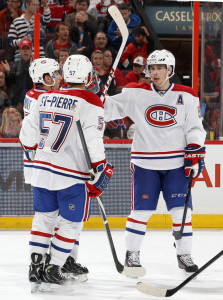
Photo: Canadiens
Hopeful at a chance with the big club, it doesn’t mean St. Pierre is discourage at the opportunity laid before him with Montreal’s AHL affiliate Hamilton Bulldogs.
“Its closer to home, as far as my role, I hope they see me as a leader. I want to help the young guys, when I needed help when I was younger I always had positive role models to look up to. We want a successful season as a team, and personally but the team comes first.”
Perhaps one of the perks of living the hockey life, is the travel. Players often leave parts of their hearts throughout North America, falling in love with different cities at different points in their career.
“I played in Ottawa which is my hometown so that’s awesome, Chicago is Chicago they’ve won cups and they sell out the building every game now. Boston was amazing. Montreal is just another notch, you talk to any of the guys playing for the Canadiens, you cant take it for granted. They’ve won 24 Stanley Cups and there is a lot of history there. The atmosphere is very European like, the crowd is always engaged, it’s crazy there. You get goosebumps every start of the game to play there and it’s just fun to be part of that.”
At 30-years-old, St. Pierre has an abundance of experience and an arena filled with memories, but there will always be a select few that hold a prominent slot on the list.
“Scoring my first goal was amazing, but playing my first game in Dallas and having my family there was the most memorable moment. Getting drafted, throwing that Blackhawks jersey on and walking down that tunnel to get down the ice, I couldn’t even feel my legs. It’s all things you remember. My first face off. The game goes by so quick, but as the years go by you look back and you cant pinpoint every moment of the experience but those would top my list.”
It’s easy to see what type of personality a player brings to the ice, but it’s off the ice that garners less attention.
“I’m a very approachable, down to earth guy. Very sociable, I love meeting new people, talking to them, interacting. I love trying new things. The biggest thing is socializing, respect goes a long way and I like to give that and receive it from people. It goes for off the ice, but on the ice and in the dressing room as well.”
With a season chock full of travel, when downtime presents itself, St. Pierre has a few go to ways to spend his time.
“I like going to dinners, hanging out with friends, movies etc. I also like to take naps and help my body recover quickly. I love to cook at home and spend low key time.”
Unlike the vast majority of his teammates, finding success in the virtual video game world proves quite the challenge.
“I’m the worst player at Call of Duty, the absolute worst. I’m very athletic, I’m very good at water-skiing. But Call of Duty, I’m terrible.”
A fan of country music, the sounds of Luke Bryan take precedence over many playlists. Put on the spot to pick a favorite, the choice was an easy one.
“Luke Bryan, I’m drunk on you. I’ve seen him live a few times, I have so much respect for the guy, one of the classiest I’ve ever met. I love all of his songs, but that’s catchy.”
Perhaps Bryan is one of the classiest country musicians, but many would agree that Martin St. Pierre falls into the same category when it comes to hockey players. A genuine talent with a big heart, both Bulldogs and Canadiens fans should find solace in seeing the Ottawa native on the roster this season.
Follow Martin: @MStPierre39
Most hockey players are known first and foremost for what they do on the ice. They might score a lot of goals, be great on the assist, be quick to drop the gloves, or prone to flash the leather and deny scorers on the other team. Once in awhile, there is a player who makes a positive name for himself off the ice as well.
New addition to the Portland Pirates, Kyle Hagel, is one example of a hockey player that really goes above and beyond. The 28-year- old forward from Hamilton, Ontario is settled into a new city for the 2013-2014 season. Joining the Pirates was incredibly appealing for Hagel, who has made a name for himself by not hesitating to drop his gloves.
“They’ve got a coach that’s cut from the same cloth as I am. He’s a guy that had over 300 penalty minutes at least once in his career. That was an attractive feature. They’re just a young, hardworking team. I thought it would be a great group to be a part of,” Hagel said. “He’s a coach that understands my role and respects the it. He knows it’s not always the easiest thing to do and it’s good to have a coach that’s sympathetic with you in that case.”
This upcoming season will be the first that Hagel has played in the Eastern Conference during his time with the AHL. Playing with the Pirates, 36 of their 78 total games will be against the Manchester Monarchs, the Providence Bruins, and the Worcester Sharks. Seeing teams like that so frequently definitely allows emotions to run high.
“When you play those same teams back to back or play a lot of home and homes, emotions become a big part of the game. If you’ve got some heart and soul guys or tough guys on your team, it’s probably going to pay off,” he said of his new division.
The style of game fans can expect from Hagel is unquestionably a tough game. He is no stranger to the dirty work that some other players might avoid. If he needs to stand up for a teammate, he will do that without being asked. This is the role that he has created for himself and he is definitely valuable.
“I bring fourth line grits. I’m just trying to work on things and do the things that sometimes go unnoticed. I’m blocking shots, finishing checks, and creating back pressure. I try to do some of the dirty work,” said Hagel.
Unlike some of his tough counterparts in professional hockey, Hagel did not come up through the Canadian junior leagues. Since those teams decided to overlook him, he turned his sights on playing college hockey. When Princeton showed interest, he knew it would be a great fit. But, how does a player that comes up through the Ivy Leagues end up slugging it out?
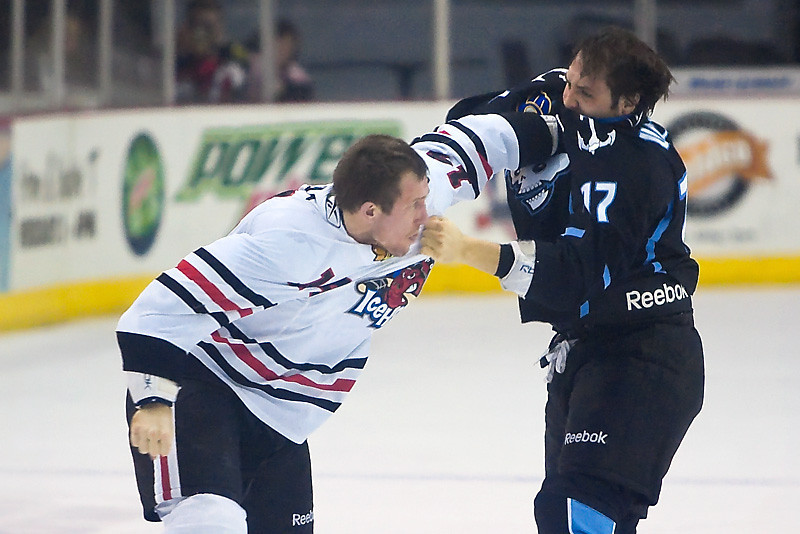
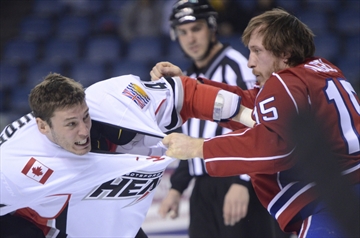
“My first year pro, I was in the ECHL. I wanted to get called up. I knew there was probably going to be one or 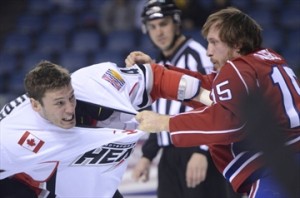 two ways to do that. I could try to score 50 goals or I could try to fight as much as I could. I knew I probably wasn’t going to score a ton of goals,” Hagel said honestly and chuckled. “So I started fighting to attract some attention. You hope a coach or manager sees that you’re willing to fight and maybe that opens their eyes about what else you can do.”
Fighting has gained a lot of attention in professional hockey, especially lately. There are strong advocates both to keep it in the game and to take it out. Each side has it’s merits. But, hockey is a unique and dangerous sport. With all of the hits, many feel that fighting is an important part to protect teammates from more harm.
“It’s a loaded question. But, do I think fighting belongs in hockey? Yes, absolutely. It’s always been a part of the game. It is unique to our sport that things get settled that way,” he said. “I think if you were to talk to the majority of players, they would say they want fighting in hockey. Even the guys who never get in a fight are sometimes the strongest advocates for fighting still being a part of the game.”
“Hockey is unique in the sense that we police ourselves a little bit. It leaves emotions very bare out there sometimes. When something happens that’s wrong, someone stands up and addresses it immediately,” Hagel added.
Hagel is a supporter of keeping fighting in hockey, but he understands that there is a lot of debate. The debate spread to his own family a few years ago when his brother suffered a severe concussion. Although it seems at odds to keeping fighting in the game, he knows that it is important to try and remove the head shots. He has also suffered his own injuries in choosing to make his name as a fighter.
“Sometimes it does get hard and there are injuries. I’ve had really bad injuries because of fighting. I’ve had 3 surgeries on my right shoulder. I had to have a major bone graft and reconstructive surgery. I missed that whole season,” Hagel said. “It shows how dangerous it really is and they are definitely taking an enormous risk every time they do it. There’s a reason those players demand a certain degree of respect from their teammates and their opponents.”
Missing a whole season is never easy for any athlete. Seeing how that athlete copes with the injury and the following recovery period shows a lot about the athlete’s attitude. Hagel is an example of an excellent attitude that carries over to every day life.
“As soon as I got hurt, I knew it was going to be a long road to get back. People have done it before, not only hockey players but other athletes as well. If you look at Adrian Peterson, he’s a guy that had major knee surgery that should have been career ending. But he battled back,” said Hagel. “You can’t be lazy in the rehab process and you have to keep focused on where you want to be. You can claw your way back from just about any injury.”
Kyle Hagel is someone that you can definitely learn something from. He is dedicated and knows what it takes to go after something he wants. He believes that the dedication he brought in overcoming his most serious injury is something that you should bring to life in general. You have to work towards what you want and you can never slack off, according to him.
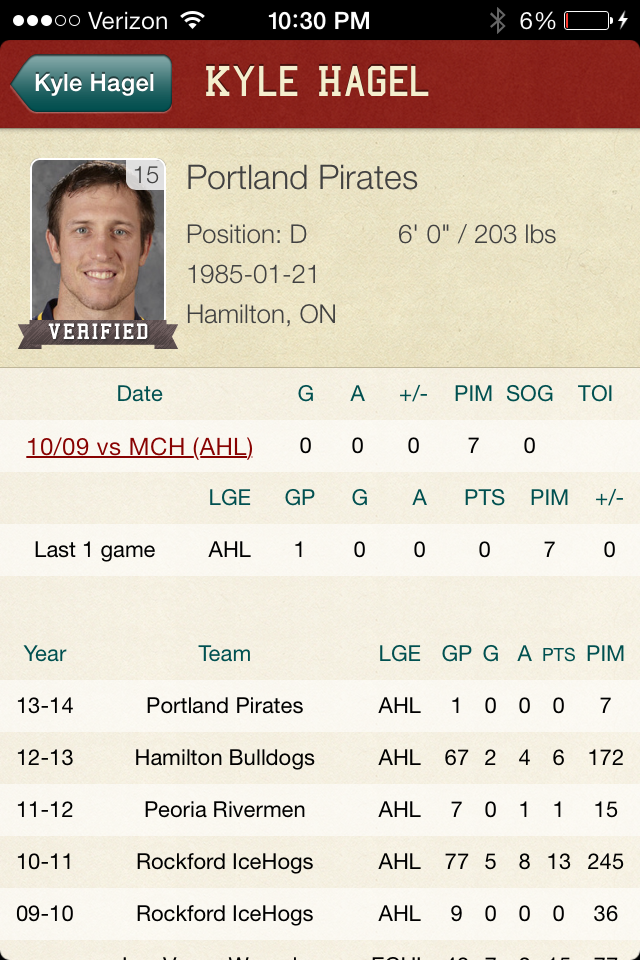
That work ethic and dedication might seem impressive enough on their own, but the name Hagel has made for himself off the ice is equally impressive, if not more so. Just over a year ago, he started the mobile app Shnarped that is gaining popularity in the hockey community with former Princeton teammate, Dustin Sproat. The app is currently available for iPhones and iPads. Players and fans alike can use the app to track season stats, career stats, salary information, tweets, and more in one convenient location.
“It was his idea to put together a website that aggregated all the different information you wanted to look at when you’re tracking hockey players,” he said. “We started working on it in the summer of 2012 and developed it into a mobile app. It’s been going pretty well.”
Later this month, on October 30th, Shnarped will be featured on CBC’s Dragon’s Den. It is similar to Shark Tank in the US and is a great opportunity for everyone on the Shnarped team. It can only help to get the word out more about the app. If you haven’t checked it out, you should definitely give it a shot. It makes finding information about your favorite players much easier. But, it’s not just fans using it. In fact, the fans are noteven the heaviest users.
“One of the things we’re most proud of is that the pros themselves, the guys who are verified on the app, are the heaviest users by far,” he said. “We say it’s built for the players by the players. The guys who are verified pros use it almost more than any other demographic out there.”
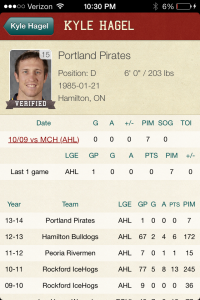
Even though Shnarped has made incredible strides in the first year, there are still things everyone on the team wants to improve. They are constantly testing the features and seeing what work can be done. That attention to detail is sure to make Shnarped one of the most popular hockey apps out there.
“It’s a work in progress. When we first launched it, it wasn’t as good as it is now. What it is now is still a work in progress. I’m still anxious every single day and wondering when the next release is coming out. I’m wondering why certain parts aren’t in there yet. I’m a stickler with the details,” Hagel said. “We’re happy with how far we’ve come but we want it to get bigger. Hopefully this hockey season will be a turning point for us. Eventually, we’d like to extend it to other sports.”
Even now, Hagel stays very involved in the day to day activities. For him, it does not seem hard to balance that involvement with also being a professional hockey player himself. He has learned some excellent time management skills that allow him to do everything that he wants to do. Every Monday, the company has a conference call to check in on their goals for the week as well as what they want to do. That usually ends up working with with Hagel’s AHL schedule. They end up with a lot of Mondays off after having played games Friday, Saturday, and Sunday. But his biggest role is much more important to the success of Shnarped.
“The biggest role I have with Shnarped is interfacing with the players. I have guys on my team telling me what they like, what they don’t like, how often they use it, and if they interact on it. They tell me what makes them want to interact and what makes them not want to,” he said. “I collect that data and give it to our development team and tech team back in Vancouver. From there, they can make improvements. If it’s going to be by the players, for the players, then we have to listen to their concerns and try to make it better for them.”
The Shnarped team hopes that appearing on CBC’s Dragon’s Den will help to give them a push in popularity. It will definitely get their name out there and hopefully will increase their users. Hagel targets more NHL users as being something that would be most helpful to increasing the overall number of users.
“After getting on CBC and getting a little more publicity, I would like to see a couple guys on every NHL team using the app,” he said. “Right now, I think it’s between 30-40% of players in the NHL use twitter actively which is about 6 guys per team. If we have 4-5 guys on every team using it, that would be really helpful.”
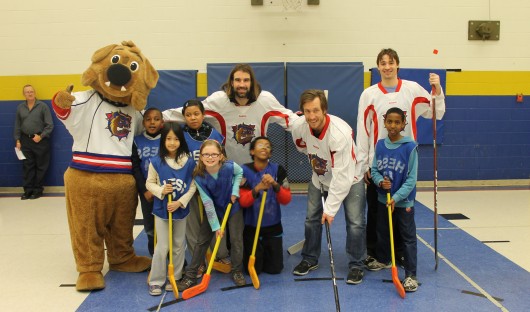
It will be interesting to see how Sharped does after the next season. But, that will not be the only thing that Hagel has going on aside from playing for the Portland Pirates. He also co-founded a charity called Hockey Players 4 Kids (HP4K). Once again, he worked with former Princeton teammate, Dustin Sproat. HP4K has a number of programs including Stick to Reading, where players go and read at local schools, and Give Moore for the Holidays, where players band together to provide presents to those in the community who might not get them otherwise.
 “We figured as hockey players, we have tons of spare time. Why not spend it trying to help out in the community? It’s especially good for hockey players that bounce around from team to team every year, like me this year. I’m playing in Portland and I don’t know anybody except for my teammates,” Hagel said. “At some point this year, I’ll go into a local school and see if I can set up a reading program. The kids get to play hockey with me at the end of the year. The teachers love it and the schools love it. The kids end up reading a lot more. You get the community behind you too.”
It sets a good example for the community, kids especially, to see athletes giving back. This is not something specific to hockey, but true of any professional athlete. There are plenty of athletes out there who want to make a positive impact in the community they live in during the season.
“I think it’s a duty. You’re in a very special place where people in your community look up to you or at least know who you are. I think you can use that to make some kind of positive change. You can brighten kids days,” he said. “There’s a lot of kids that aren’t in the best situation in all the cities I’ve played in. To just spend a little bit of time with them, you might be able to inject a little bit of hope into their lives. I think that it’s must better when we give up our spare time like this.”
During the course of the season, Kyle Hagel is sure to make his presence know as he drops the gloves to defend his teammates. He’s also undeniably an inspirational player. He is an asset to the organizations he joins both for how he handles himself on the ice as well as what he does off the ice. Portland Pirates fans are sure to welcome him as a favorite this season.
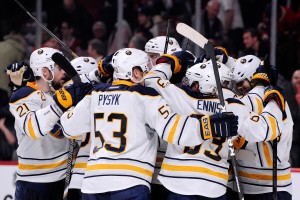
For the first time this season, the Buffalo Sabres were able to beat their opponent. It took a shootout to do it, but it was enough to bring them their first victory, a 4-3 win over the New York Islanders.
The Sabres have become the laughing stock of the NHL and many of their own fans were starting to call them a joke. The lacked leadership, the lacked skating and drive, and the lack in will to win a game. While this game was far from a good game for them, they actually started to look like a team, a team who may want to start winning games instead of just chasing their opponent.
The game started like every other game we have seen this season for the Sabres. They were being out played and out skated. The Islanders came out swinging and clearly had the upper hand on this game, especially when they scored their first goal, a wrist shot by Frans Nielsen. He was in the right place at the right time with no Sabres nearby to stop him. Buffalo was able to tie it up within the first 5 minutes of the second with a wrist shot by Tyler Ennis, his first of the season. New York would regain the lead less than 3 minutes later, a goal by Matt Martin, and take the wind out of Buffalo’s sails. Thomas Vanek was able to get Buffalo a power play goal to tie the game up once again and just over a minute after the Islanders goal. Matt Mouslon would score a power play goal for New York in the third to regain the lead once more and they held on for most of the third period. With just over 2 minutes left, Marcus Foligno would make a nifty turn around shot on goal and it would go past goalie Evgeni Nabokov and Buffalo would tie the game once more. With no goals in the OT period, we moved on to a shoot out with skaters Vanek, Ennis, and Foligno for Buffalo and Moulson, Nielsen, and Tavares for New York. Vanek and Ennis were able to score while Moulson was the only goal scorer for New York. Ryan Miller was able to stop good scoring opportunities from Nielsen and Tavares.
Buffalo heads back home to face the Vancouver Canucks on Thursday and New York continues their home stand hosting the Edmonton Oilers, also on Thursday.
It was Hockey Fights Cancer Night in Carolina, but that didn’t stop the Blackhawks from fighting the Canes for the win until the very end.
Patrick Sharp scored his 200th career goal to open the scoring at 8:56 into the first, putting the reigning cup champs in the lead over the Hurricanes. The last second of a holding penalty to Eric Staal allowed for the Blackhawks to add to their score. The 2-0 lead was from Marion Hossa’s second goal of the season. Hossa, who had been plagued by back pains all summer, came back strong to start the season. He played in both of the team’s opening games, giving a strong performance.
At 17:56 of the second it looked like the Hawks were going to raise the score by one, but Ward said no, sprawling himself out to deflect the puck with the help of defenseman, Jay Harrison. Again, at 1:34, Ward was forced to say no to the Hawks once more, much to the dismay of Brent Seabrook, who took the whistle to have a few words with the goalie. In the final minute of the period Nathan Gerbe went rushing up the ice and took a shot at Corey Crawford, but was unable to score. It left the Hawks with the same 2-0 lead as it was at the top of the second.
Finally in the third, Alex ‘Sasha’ Semin was able to put the Canes on the board, cutting the Hawks lead in half. Jeff Skinner and Radek Dvorak kept trying to pick up the garbage left around the Chicago net, but it was Ron Hainsey, who scored his first goal as a Hurricane, to finally clean up, evening up the score and eventually sending the game into overtime.
In the first minute of overtime, both teams had opportune scoring chances. Nathan Gerbe and Patrick Kane, each sent one into the pads of the goalies, who blocked them to keep the overtime going. Semin and Ryan Murphy both tried to shoot one past Crawford, but again the goalie stood tall and overtime continued with a line change. The Canes were on fire and Semin and Ryan Murphy played ‘hot puck’ passing it back and forth, still unable to score, even on the Blackhawks delayed penalty. Even on the powerplay Murphy and Semin continued their pass pucking antics, this time with the help of Jeff Skinner and Eric Staal. With ten seconds left shots were fired at Crawford left and right, but Staal and Gerbe, but the goalie blocked all of them, and Caniacs and Hawks fans in the building were treated to a shootout game.
Shootout time!
Fans in PNC Arena were on their feet as Con Smyth trophy winner Patrick Kane started off the rounds. Ward shut him down with a glove save. Next was Nathan Gerbe for the Canes, but was denied by Crawford.
Round two started off with Captain Toews, but his shot was blocked and Sasha Semin was up. The Russian lost control of the puck and score stayed even going into the third round.
The man who started off the scoring, Patrick Sharpe, was up next, and once again found the back of the net. Blackhawks fans in the building were ecstatic, hoping that the Jeff Skinner would go scoreless. That is exactly what happened, to the dismay of Skinner and Canes fans, the Hawks won the game 3-2.
Not so ‘quick’ at the start of the game, Jonathan Quick let the first goal through at :19 seconds into the first, as Ryan Malone snapped one past the goalie. He was assisted by Sami Salo, and Marty St. Louis who gained his 900th point as a Bolt in the assist. The Kings had been hoping to make Radko Gudas’s penalty work in their favour, but were unable to score on Bishop. It wasn’t long before St. Louis came rushing to the net, putting fans on the edge of their seats, hoping the captain would raise the score, but he shot high over the net. Then at 13:24, Teddy Purcell wristed one over the glove hand of Jonathan Quick, to score his fourth of the season on his former team. Purcell started his career with the Kings, but was traded to the Bolts in exchange for Jeff Halpern at the 2010 trade deadline.
The Kings came back fast in the second with a goal from Jeff Carter, but it was ultimately waved off by the refs as incidental contact to keep the score 2-0 in the Bolts favour. Shorthanded, the Lightning were able to keep the puck out of their net on Sami Salo’s four-minute high-sticking double minor. Outshooting the home team halfway through the second, 9-2, the Kings were unable to turn the period around as St. Louis rifled his third of the season, a cross-ice pass from Stamkos, past Quick. Andrej Sustr, who got second assist on the goal, scored his first NHL point. It was at this time that Coach Sutter swapped Quick for former Leafs goalie, Ben Scrivens. The Kings nearly had a chance just after the swap, but Ben Bishop covered the puck, lying flat on his back to the stop the Kings at 18:45 in the second. At the end of the period the Lightning led by 3-0.
Throughout early penalties by both teams to start the third, the Bolts were able to keep their lead. At 10:27 Slava Voynov was finally able to put the Kings on the board. It was all for naught as Marty St. Louis scored his second the night with the help of Malone and Stamkos to make the score 4-1. With 2:15 left to play in the game Ondrej Palat got his second of the season, putting the puck over Scrivens thanks to Teddy Purcell.
The Lightning are now 2-1 at home and 4-2 on the season. Bishop had 30 saves on 31 shots in the game. It was no surprise that the goalie, who is 4-0 on the season was awarded third star of the game behind St. Louis and his two goals, and Victor Hedman who had two hits and one point on the night.
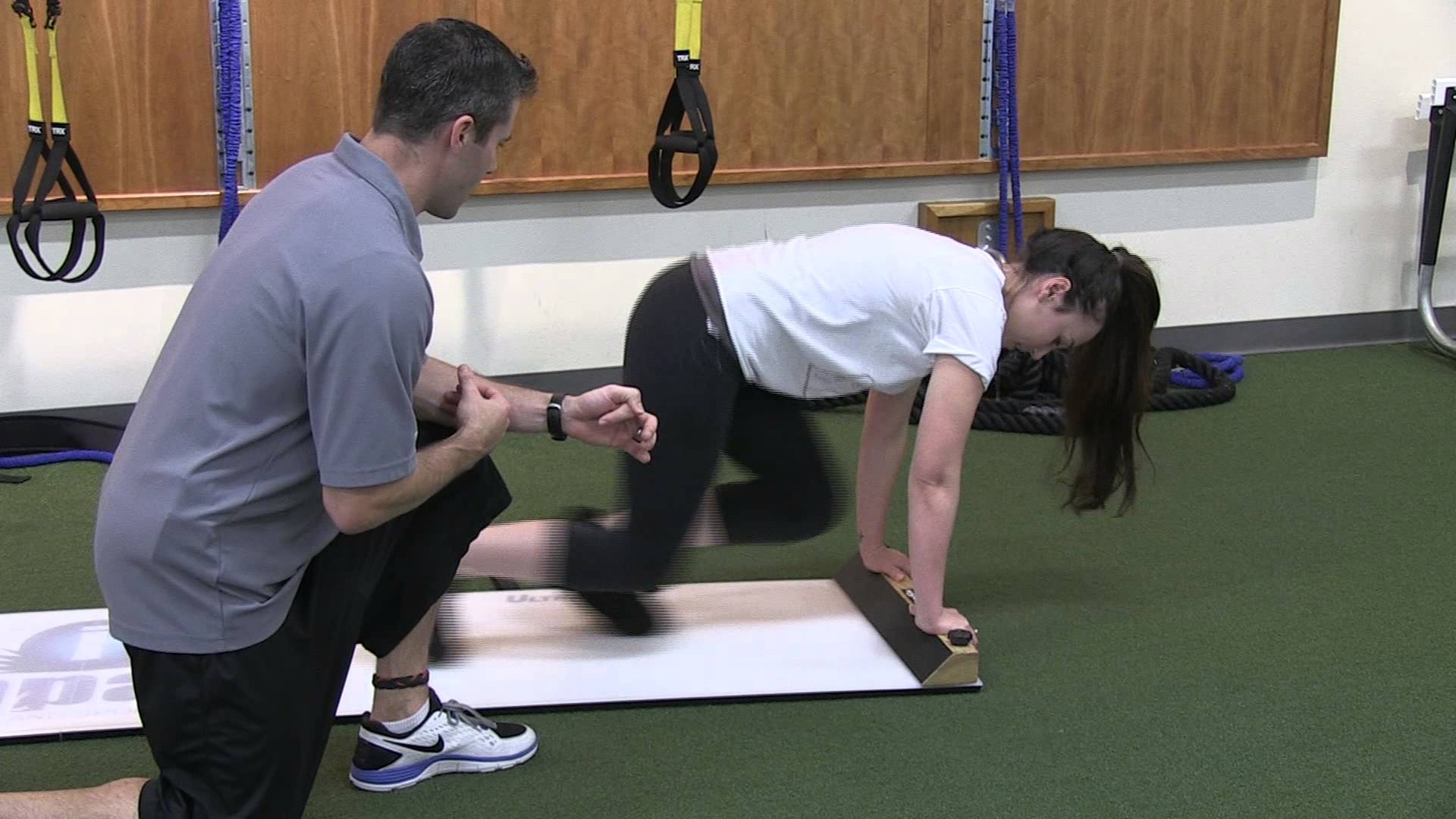
While most of us would love the opportunity to spend all day, everyday on the ice, that isn’t a realistic option. When we aren’t in the rink, we love to do a large variety of dry land workouts. Sure, running on the treadmill is a good form of cardio, but that get’s boring real quick. We ventured out to Impact Functional and Sports Training to learn new ways to impact our off-ice fitness, ultimately helping to grow our on-ice game. The exercises that co-owner and head trainer Anthony Passamonte talked us through were engaging and exhausting but ultimately fun. Having Anthony do all the work would have been the easy way out, instead we put our Editor-in-Chief and hockey player Winter Adams through the regime.
Try them at your local gym or at home with our cheat sheet, Pink Puck fitness, it’s a good thing.
[tubepress video=”arYRi7vFtps”]
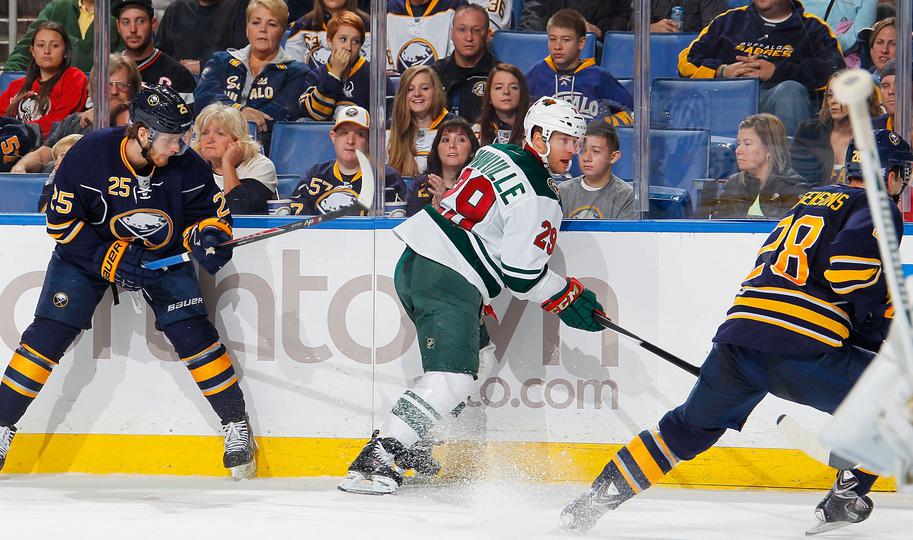
The 0-5-1 Sabres played host to the Minnesota Wild and are still looking for their first win of the season. Off to a very disappointing start, the Sabres are looking for not only their new guys to get into scoring mode, but they are also looking towards the veterans to start getting my opportunity, neither of which was evident in this contest.
In a rather uneventful game, the Wild took control from the opening face-off and never looked back going on to win 2-1. Goalies Josh Harding and Jhonas Enroth did not see too much action in this game facing only 23 and 20 shots, respectively. This teams have only played each other 13 times and it shows as they did not seem to have problems with each other and just played their game.
Minnesota got on the board first within the first 5 minutes of the game on a wrist shot by Kyle Brodziak, his first of the season. Buffalo was able to get on the board with a goal by Brian Flynn, also his first of the season. Things were starting to look up for Buffalo and they appeared to have a little more life in the game, until Drew Stafford was penalized for hooking. Playing his first game back in Buffalo since being traded to Minnesota before last season, Jason Pominville was able to capitalize and give Minnesota a power play goal, his second of the year. The third period saw no scoring and no real opportunities and Minnesota seemed to have this game easily in hand throughout the last 10 minutes.
While the Sabres are still looking for their first win, the Wild will continue their first extended road trip of the season with a game against the hot Toronto Maple Leafs on Tuesday. The Sabres will hop on a plane to NY to play the Islanders, also on Tuesday.
 Prev1...325326327...412Next
  Page 326 of 412