Neither team thought their trade on August 21, 1990 was a big deal. The Minnesota North Stars basically dumped a rookie player on the Boston Bruins in return for the vague “future considerations.” As a result, the Bruins got a Calder Trophy finalist, and the Stars got a draft pick that turned into a Dallas mainstay.
The player in question was 24-year-old right wing Ken Hodge, Jr., son of Ken Hodge, the famous British right wing of the Bruins’ Espo Line. He was born just a couple years before the Chicago Blackhawks traded his father and Phil Esposito to Boston. That meant that he mainly grew up in Massachusetts and then played for the Boston College Eagles. Minnesota drafted Hodge in the third round (46th overall) in 1984, and after graduating in 1987, he spent most of his time playing for their International Hockey League (IHL) affiliate, the Kalamazoo Wings. There, his scoring ranked second in the team. After playing just five games with the North Stars (during the 1988-89 season), they could not come to terms.
Hodge essentially returned to his home town where he had a legacy. There, he had a rookie season good enough to come in third for the Calder Trophy for best rookie. He scored 30 goals in 70 games. However, it was downhill from there. He played 42 games with the Bruins the following season, spending the rest of his time with their AHL affiliate, the Maine Mariners. On September 4, 1992, the Bruins traded Hodge off to the Tampa Bay Lightning, where he played 25 games. That was the end of his NHL career as he played in the AHL and IHL until 1996. Hodge finished his playing career with three seasons in Europe.
Meanwhile, the Stars finally raked in their future considerations by taking Boston’s fourth round pick at the Entry Draft on June 20, 1992. They chose Finnish right wing Jere Lehtinen 88th overall. The Stars brought him along when they relocated to Dallas on June 9, 1993. Unlike Hodge before him, Lehtinen only played one game for Kalamazoo Wings before joining the big team in 1995.
Lehtinen spent his entire 14-year NHL career playing for the Dallas Stars. As a top two-way player, he won the Frank J. Selke Trophy three times (in 1998, 1999, and 2003). He was the third to win two consecutively and the third to win three. Most winners are centers, and only one other right wing has received this award. Lehtinen remains the only Finn to earn the Selke. In addition, he and the Stars won the Stanley Cup in 1999. Nearly seven years after Lehtinen announced his retirement in December 2010, the Stars retired his No. 26 on November 24, 2017.
Additional Sources:
Mike Commito, Hockey 365: Daily Stories from the Ice(Toronto: Dundurn, 2018), kindle edition.
Nancy L. Marrapese, “Bruins get Hodge from Minnesota,” Boston Globe, 22 Aug. 1990, p. 88.
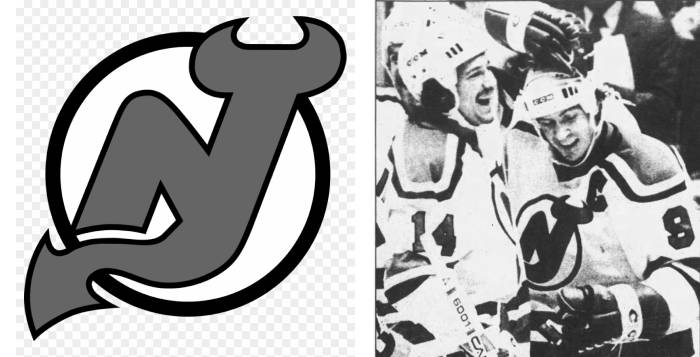
This wouldn’t be Don Lever’s first time around the block. He had already been with a franchise that relocated before moving with the Colorado Rockies to become the New Jersey Devils. He also had already served as captain for the Vancouver Canucks before the Devils named him their first ever captain on August 20, 1982.
Lever was selected 3rd overall in the 1972 Amateur Draft and played for the Vancouver Canucks throughout the 1970s. He captained the team from 1977 until February 1980, when he was traded to the Atlanta Flames. That June, the Flames relocated to Calgary, where Lever played just a couple months beyond one season. On November 25, 1981, the Flames sent him to the Colorado Rockies.
The Rockies franchise was struggling with too few spectators and too many changes in ownership. Lever commented, “Colorado was so depressing last year. There was no interest in the game when I got there. The ownership was not stable. At the all-star break (Lever represented the Rockies in the game), we didn’t know if there’d be a team when we got back.” GM Billy MacMillan said of Lever’s efforts in Colorado, “He did not waver. He gave it all from beginning to end.” Fortunately for Lever and his teammates, the team’s new owner was allowed to move them to New Jersey on June 30, 1982.
Nearly two months later, the Devils held a news conference at their new Meadowlands Arena. “It’ll be nice to play in front of people for a change,” said Lever. “This is a new beginning. This is the most beautiful rink in the league this year. My job is to perform on the ice to my capabilities.” There, the Devils named the 29-year-old left wing as captain. MacMillan explained, “I think Don Lever can fulfill the role of captain better than anyone. I saw him during the crisis in Colorado. He gave his all from beginning to end. The move from Colorado to New Jersey provided stability. The nomination of Don Lever as captain gives the cornerstone more depth.” Vice President Max McNab remarked on Lever’s number being telling of his leadership qualities. “Number 9 is usually worn by players with character. These are the players who play the same, at home or on the road.” Lever’s thoughts going forward were simple. “I pretty much lead by example. But one man can’t lead a team alone. You need all the guys to stick together.”
Fittingly, Lever went on to score the Devils’ first goal, at 2:21 of the first period of their first game, held October 5, 1982. He finished that inaugural season ranked second for the team in scoring. After three seasons in New Jersey, Lever was traded to the Buffalo Sabres in September 1985, and he finished out his playing career there in two seasons.
Lever turned his experience from captaining teams into a coaching career. He started as an assistant coach for the Sabres for the following two seasons after ceasing playing there. From there, he moved on to their AHL team, the Rochester Americans, where he was voted AHL Coach-of-the-Year by leading his team to the Calder Cup finals in 1990-91. He returned to the Sabres as assistant coach until moving on to the St. Louis Blues in 2002. From 2005 to 2009, Lever coached the AHL’s Hamilton Bulldogs, winning the championship in 2007. For a few months of 2009, he served as assistant coach for the Montreal Canadiens before taking the head coaching position with the AHL’s Chicago Wolves.
The Philadelphia Flyers went into the offseason with a new general manager at the helm. Chuck Fletcher’s first job was to find a head coach, and he did in Alain Vigneault. Vigneault had the difficult task of choosing his assistant coaches, who were Michel Therien and Mike Yeo. It was time for Fletcher to get to work making improvements to get this team back to the postseason.
Fletcher had something that the Flyers haven’t had in a while, and that was cap space to work with, even after he signed the team’s restricted free agents. It was expected that Fletcher would be aggressive to fill some gaps in the lineup. It may not have been in the way some fans expected or wanted, but the goal was to improve the on-ice product for the upcoming season, and he did just that with trades and signings in the offseason.
Free Agency
There was one big piece that was needed to get this roster in a better spot and it was a second-line center. Sean Couturier thrived as the team’s top center. Nolan Patrick had another down season as the team’s second-line center, when healthy. A true second-line center who could also play a 200-foot game would solidify the lines and give the Flyers better matchups against the opposition.
Enter Kevin Hayes. The Flyers traded a 2019 5th round draft pick to the Winnipeg Jets for the rights to Hayes, who eventually signed a seven-year deal with the team. The deal has a cap hit of $7 million per season to the dismay of many Flyers fans. Hayes was coming off a career year so it was expected that he would get paid. Sure, the Flyers overpaid a little bit to get him, but Hayes will make a world of a difference while playing with James van Riemsdyk and Jakub Voracek on the second line. The addition of Hayes will make it easier for Patrick, who should thrive in the third center role due to different matchups.
The Flyers bought out defenseman Andrew MacDonald’s final season and re-signed goalie Brian Elliott as the team’s back up to the youngster, Carter Hart. There were also other small moves made during free agency, but those moves were mostly made to improve the Lehigh Valley Phantoms.
Trades
Fletcher made two moves to bring in veteran players to help a young defensive corps that struggled at times last season. The first move brought Matt Niskanen to the Flyers and sent Radko Gudas to the Washington Capitals. The second move sent two draft picks to the San Jose Sharks for Justin Braun. The moves should help with leadership on the back end, and they will settle the defense pairings especially since the Flyers now have three right-handed shots, and three left-handed shots. A righty and lefty can play their natural sides, and that should make it easier to get some pucks on net.
The third and final trade was to dump some potential salary. Ryan Hartman would have made more than the $1 million that Tyler Pitlick was slated to get paid this season. The Flyers sent Hartman to the Dallas Stars for Pitlick, who will likely play a pivotal role on the fourth line this season. Pitlick will also add some speed to the bottom six, and he isn’t afraid to play a gritty game.
Restricted Free Agents
The Flyers decided to not tender right wing Justin Bailey and defenseman Jacob Graves, making them unrestricted free agents. Fletcher agreed to two-year extensions with center Scott Laughton and defenseman Travis Sanhiem, who blossomed last season while playing with Ivan Provorov. Nicolas Aube-Kubel, who spent most of his time with the Phantoms last season, got a one year contract.
There are still two big pieces who have yet to sign new contracts for the upcoming season and beyond. Defenseman Ivan Provorov and winger Travis Konecny are proving to be difficult to sign because it seems that this restricted free agent class won’t budge until the market can be set by one big-name player being signed. Provorov and Konecny are major parts of this team and would be hard to replace if they aren’t ready for the start of the season.
Overall Offseason Grade: C
There is no doubt that the moves made by Fletcher, and company put this team in a spot to be successful, but there are flaws in the plan.
The team is putting a lot of faith in the young kids to build on the success of last season, but what happens if one of them hits a big slump. Will Vigneault give the kids the ice time they need to develop and become better, or will they be in the press box in favor of a veteran at the first sign of struggles? The Flyers also lost their only physical presence when they traded Gudas to the Capitals. Who plays the role of the hitter and enforcer should someone start messing with the team? Robert Hagg and Samuel Morin are possibilities, but those two might see limited to no ice time this season.
The biggest reasons for the C grade is that they are putting a lot of faith in a bounce-back season for Niskanen and that Hayes can continue the success that he had last season with the New York Rangers and Jets.
The New York Rangers had won the Stanley Cup in 1940 but had not returned to the playoffs since 1942. Meanwhile, the Montreal Canadiens had won championships in 1944 and 1946 then lost the Final the following season. On August 19, 1947, with the Rangers rebuilding, they made a trade taking advantage of the Canadiens’ excess depth.
At the time of the trade, Dink Carroll wrote for the Montreal Gazette, “At first glance, it would seem that the Rangers have outsmarted the Habitants in this one, though conceivably it might not work out that way.” The very season of the trade proved that the Rangers indeed had made the better deal.
Montreal had sent two Stanley Cup winners, defenseman Frank Eddolls and center Buddy O’Connor, to New York. From their point of view, Eddolls had never lived up to his potential. They regretted trading Ted Kennedy to the Toronto Maple Leafs in return for him in 1943. After World War II service, Eddolls spent most of the 1944-45 season skating for the Canadiens, before being sent down to the Buffalo Bisons for the majority of the next two seasons. Apparently, they complained that his reflexes seemed too slow for the NHL.
The Rangers disagreed. They had wanted Eddolls a year before the trade went through. He became a solid defenseman for New York for five seasons, serving as their captain in 1950-51. They actually returned him to the Canadiens franchise after his playing career so that he could coach their AHL affiliate, the Buffalo Bisons. After being named AHL coach of the year, he took over as head coach of the Chicago Black Hawks for the 1954-55 season.
O’Connor was a six-year veteran of the Canadiens, who felt the 31-year-old was nearing the end of his career. He was still one of the most popular players, at every level, but he kept falling in the shadow of teammate Elmer Lach (even filling in on the “Punch Line” when Lach was injured). Carroll described him in the Montreal Gazette as “a bit of a will-o-the-wisp a graceful and rhythmic skater and a clever stickhandler.” In his first year with the Rangers, he scored 60 points in 60 games, ranked second (to Lach) in scoring. He became the first to win both the Hart Memorial Trophy (as MVP) and Lady Byng Memorial Trophy (for gentlemanly play) in the same season. At that time, he was even named Canada’s athlete of the year. O’Connor preceded Eddolls as team captain during the 1949-50 season. He retired in 1951 and went on to coach the Cincinnati Mohawks of the IHL. The Hockey Hall of Fame inducted O’Connor in 1988 in the (defunct) Veteran category.
On the other side of the trade, New York sent defenseman Hal Laycoe and two left wings, Joe Bell and George Robertson, to Montreal. None of them turned out to find much success there.
Laycoe, “a big, rugged rearguard,” was expected to be sent to Buffalo at first, and he did spend much of the first season there. After another three seasons struggling to get ice time in Montreal, Laycoe was traded to the Boston Bruins on Valentine’s Day in 1951. He played much more there, and became famous for his fight with Canadiens star Maurice Richard that led to the Richard Riot. He retired from the Bruins in 1956.
Canadiens GM Frank Selke had hopes that Bell would play better for them than the Rangers. “He’s not a particularly aggressive player. He’s more of an opportunist – the type that trails the play in on the nets and pots the puck. If he is teamed with strong players like Lach and Richard he might get a lot of goals for us.” As it turned out, Bell never played a game with the Canadiens. He spent two seasons with the Buffalo Bisons and then played in various minor leagues until 1956. All in all, he had only played 15 games for the Rangers in 1942-43, served in the war, and then played the 1946-47 season. That was the extent of his NHL playing career.
As for Robertson, he was still developing at the time of the trade. He was meant to tryout with the Montreal Royals of Quebec Senior Hockey League and join the NHL in another year or two. He played one game with the Canadiens in 1947-48 and 30 the following year. Like Bell, he then played in minor leagues until 1956.
On a team level, the Rangers had some conflict because Lester Patrick did not agree with GM Frank Boucher’s decision to conduct the trade. However, they made the playoffs right away. In 1950, the Rangers played for the Stanley Cup only to lose the Final. On the flip side, the Canadiens missed playoffs for the only time in many years that first season. However, they soon returned to the top again, making the finals ten consecutive seasons between 1951 and 1960, winning six of them.
Additional Sources:
Dink Carroll, “Playing the Field,” and “Canadiens Trade O’Connor and Eddolls to Rangers,” Montreal Gazette, 20 Aug. 1947, p. 14.
“Roundup Of Sports,” New York Daily News, 20 Aug. 1947, p. 62.
John Kreiser and Lou Friedman, The New York Rangers: Broadway’s Longest Running Hit (Sports Publishing LLC, 1996), 94-95, 108.
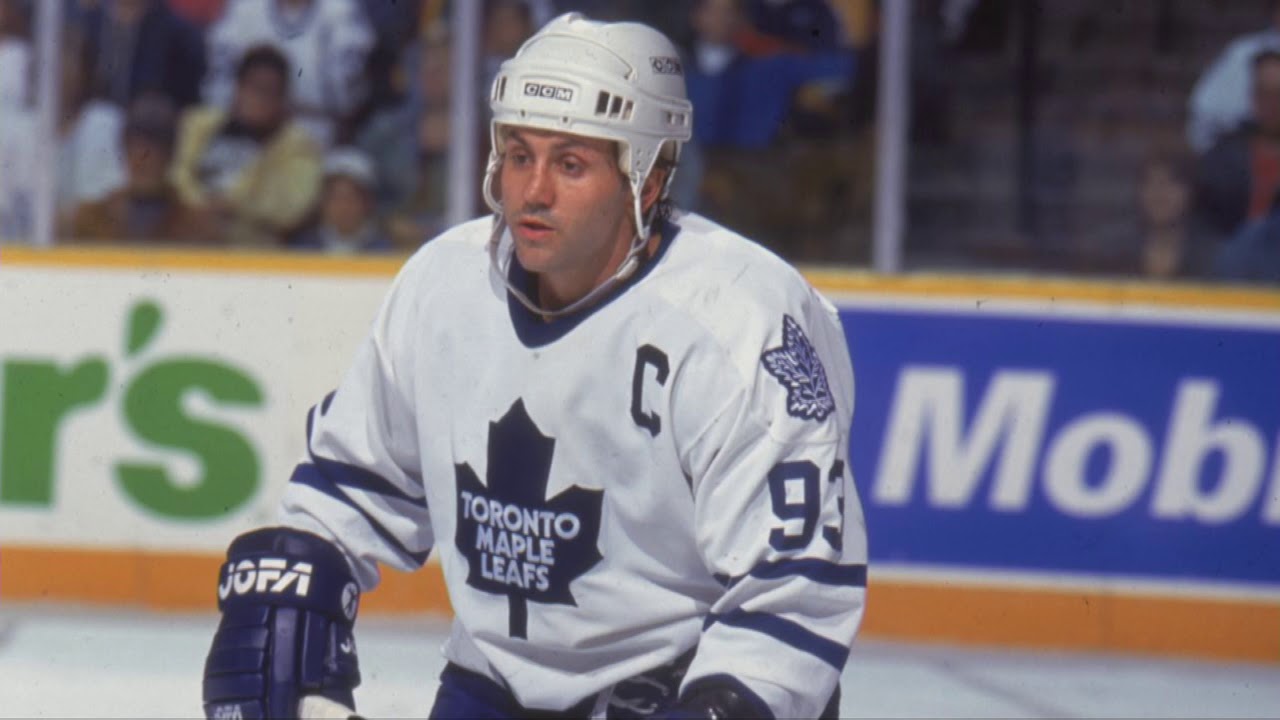
Doug “Killer” Gilmour, a small but tough two-way center, came to the Toronto Maple Leafs at the very start of 1992 and became their captain on August 18, 1994. He later wrote, “I was so proud to wear the C on the blue and white sweater.”
Upon being drafted late (due to his size), in the 1982 Entry Draft, Gilmour began his NHL career with the St. Louis Blues. After five years, he was traded (in the midst of a legal battle) to the Calgary Flames, and that first season, 1988-89, he helped them win the Stanley Cup. During the 1990-91 season, he (and two others) rotated the captaincy. Due to a bitter salary dispute requiring arbitration, Gilmour requested a trade. On New Year’s Eve 1991, he helped the Flames beat the Montreal Canadiens then walked out.
Gilmour started 1992 as part of the largest NHL trade, involving ten players swapped between Calgary and Toronto. He soon became a Leafs fan favorite, which was solidified after he set the franchise record by scoring 127 points during the 1992-93 season. That postseason, he set another scoring record with 35 points. Toronto seemed poised to win the Campbell Conference Final when Wayne Gretzky’s stick cut Gilmour’s chin enough to need eight stitches. Instead of penalizing Gretzky, he scored the game-winning goal within seconds and led the Los Angeles Kings to victory in Game 7. Despite that disappointment, Gilmour won the Frank J. Selke Trophy as the top defensive forward.
Over the next season, Gilmour sometimes filled in as captain when Wendel Clark was out with injuries. Toronto was shocked when, on June 28, 1994, Captain Clark was traded to the Quebec Nordiques for Mats Sundin. Gilmour became the natural choice to replace him. Having twice taken him in from other teams, GM Cliff Fletcher commented, “Doug and I go back a ways before Toronto. In Calgary I had good teams, but never good enough to win it all. Then, in 1988, we got Doug (from St. Louis) and we won the Stanley Cup his first year. And when I got Gilmour for Toronto in mid ’92, it immediately made me a better general manager. We were 15 games under .500 when he arrived and we’ve never been under since.” Gilmour himself had a few reservations. “You can never replace a guy like Wendel Clark. There was a little discomfort initially. I’m glad the organization waited to make the announcement.”
Still, the Maple Leafs chose Gilmour as Toronto’s 15th captain. He wanted a low-key announcement, but the event took place at the Hockey Hall of Fame, where Gilmour would be inducted in 2011. The franchise brought in no less than six former captains to welcome him. Darryl Sittler (captain from 1975-81) remarked, “You are not named captain of a team unless you have some leadership qualities. Obviously, Doug has leadership qualities. I didn’t change just because I was named captain. The thing you have to do is include other players with the leadership qualities. Wendel did that with Doug.” Gilmour did not plan to change his tight-lipped style once captain. “I might have to open my mouth a bit more in public. But I’m not going to change. I’m not a rah-rah guy. But Wendel wasn’t vocal either. He picked his spots to say things. I’m the same way.” Coach Pat Burns had no problem with that saying, “Of course, Dougie was the logical choice. Rah-Rah captains don’t exist any more. Go out and lead by example types are now important.”
Before Gilmour could officially serve as captain, the 1994-95 season was delayed by a lockout. He played in Switzerland until he could return to the Maple Leafs. Gilmour remained captain for nearly three seasons before being traded to the New Jersey Devils on February 25, 1997. During the summer of 1998, he signed with the Chicago Blackhawks, who traded him to the Buffalo Sabres in March 2000. In October 2001, Gilmour signed with the Montreal Canadiens, who returned him to the Toronto Maple Leafs at the 2003 trade deadline. Unfortunately, Gilmour only had one last hurrah for his NHL playing career. In his only game back with Toronto, he tore his ACL and sat the remainder of the season. Toronto decided not to re-sign Gilmour, so he retired on September 8, 2003. Overall, Gilmour spent 20 years in the NHL, playing 1,474 games with 1,414 points.
After his playing career ended, from 2006-2008, Gilmour became a player development advisor for the Leafs. Then for a few months, he served as assistant coach for their AHL affiliate, the Toronto Marlies. Gilmour then became the head coach for the OHL’s Kingston Frontenacs, where he became GM in 2011. That was the year the Ontario Sports Hall of Fame inducted him. The Maple Leafs raised his No. 93 to the rafters in 2009 and officially retired it in 2016.
Additional Sources:
Mike Commito, Hockey 365: Daily Stories from the Ice(Toronto: Dundurn, 2018), kindle edition.
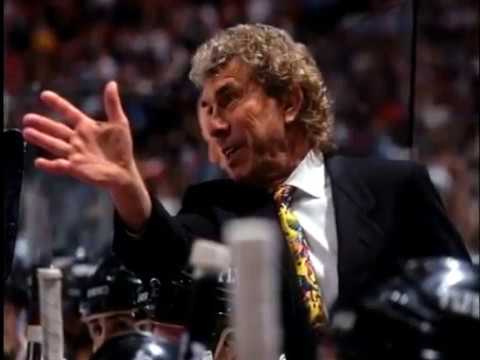
Roger Neilson began his professional coaching career in 1966 when he stepped behind the bench of the Peterborough Petes, a major junior team in the Ontario Hockey League. It was during his years with the Petes that he honed his skills as teacher. He had attended North Toronto Collegiate Institute and then went on to McMaster University, where, as a student, he began coaching. He graduated with a physical education degree in hockey and baseball.
Over the years, Neilson’s knack for teaching and developing
young players would earn him coaching position after coaching position—most of
them in the National Hockey League.
On August 15, 1989, the New York Rangers signed Neilson to a multi-year contract as the 25th Head Coach in the Rangers franchise. He was also the third coach in six months with the Rangers. General Manager Phil Esposito had fired head coach Michel Bergeron on April 1, with just two games remaining in the regular season. Esposito elected to coach the Rangers through the remainder and into the playoffs. The playoffs were short lived as the Pittsburgh Penguins swept the Rangers in the first round. The sweep signaled the end of the season for the Rangers and the end of Esposito’s jobs as head coach and general manager. Neil Smith was put in as the new general manager July 1, 1989 and he hired Neilson.
“He knows how to bring out the best in rookies and young
players. He’s an innovator, a great teacher and he’s perfect for the New York
Rangers at this time,” Smith said.
Innovation sums up Neilson for sure. Today every NHL team relies
on videotape—okay, so now it’s all digital—both in preparation for taking on other
teams as well as for analyzing their own play. It was Neilson who started the
use of videotape to analyze other teams—earning him the nickname of “Captain
Video.” He was also the first to use microphone headsets when communicating
with his assistant coaches.
Some of his innovations were the result of having studied
the rule book always with the idea of looking for loopholes to give his team
the edge. Some of those loopholes were closed as a result of Neilson’s methods
for taking advantage. For instance, when his team was in a 5-on-3 penalty kill
in the last minute of a particular game, he sent too many men out on the ice
every ten seconds knowing that no additional penalties could be served. When he
did so, the referees would stop play, and there would be a faceoff which gave
his defensemen a bit of a break. That tactic along with other deliberate acts
to delay the game, such as the net being intentionally dislodge within the last
two minutes of regulation or in overtime now awards the opposition a penalty
shot.
Neilson substituted a defenseman for his goaltender on a
penalty shot, knowing the defenseman could rush the attacker—thus cutting down
the angle of the shot. The rule was changed to insist that a goaltender be in
net, and that the goaltender couldn’t leave his crease until the opposition
player had touched the puck. Neilson was clever in many such ways, with rule
changes reflecting a closing of those loopholes.
Throughout his coaching career, Neilson coached seven NHL
teams as bench boss: Toronto Maple Leafs (1977-1979); Buffalo Sabres (1980-81
season); Vancouver Canucks (March 1982-January 1984); Los Angeles Kings (February
– April 1984); New York Rangers (1989-January 1993); Florida Panthers
(1993-1995); Philadelphia Flyers (March 1998-2000).
During Neilson’s time behind the bench in New York, he
managed to take the team to the President’s Trophy in 1992.
While coaching the Philadelphia Flyers in 2000, Neilson was
forced to take a medical leave before the playoffs began, the result of
necessary cancer treatment. Though he tried to return at the end of the first
round of the playoffs, he really wasn’t up to it. At the end of their season he
was officially dismissed.
The following season he took an assistant coach’s position with the Ottawa Senators. At that time he was two games shy of having coached 1000 games; a feat accomplished by only eight previous coaches. As such Senators Head Coach Jacques Martin gave up his position behind the bench for the last two regular season games—which win or lose would not have affected the Senators standings—and allowed Neilson to take the helm.
“On Saturday night [April 13, 2002], Harold Ballard will roll over in his grave. That’s what Roger Neilson figures will happen when he closes a circle that began 25 years ago. On Oct. 13, 1977, Neilson, now 67, began his NHL career behind the bench for Ballard’s Toronto Maple Leafs in a 3-3 tie against the Detroit Red Wings. On Saturday, he’ll coach in his 1,000th game, this time appropriately, against the Maple Leafs.”
Neilson’s coaching days were over, and his cancer would claim its victory June 21, 2003, five days after his 69th birthday, but not before he was inducted into the Hockey Hall of Fame as a builder in November 2002.
“Roger Neilson’s long storied trip around the NHL has come
full circle,” reported The Daily News of Lebanon, Pennsylvania. “The vagabond
coach with the loud ties is back in Toronto, the city he calls home, the city
where he had his first head NHL job and the city of his latest stop—the Hockey
Hall of Fame.”
Neilson also was appointed a Member of the Order of Canada
in 2002. In a nod to Neilson’s teaching, the Ontario Hockey League created an
award to recognize the top academic collegiate or university player in 2005.
They named it the Roger Neilson Memorial Award.
Additional Sources:
Allen Panzeri, “Neilson to answer milestone ‘s call,” The Ottawa Citizen (Ottawa, Canada), Tuesday, April 9, 2002, p. C-1.
“Neilson part of quartet to enter hockey Hall,” The Daily News (Lebanon, Pennsylvania), Thursday, June 20, 2002, p. 3C.
“Veteran coach Neilsen <sic> named to lead Rangers,” The Central New Jersey Home News (New Brunswick, New Jersey), Wednesday, August 16, 1989.
Clarence “Taffy” Abel was born in Sault Ste Marie, Michigan on May 28, 1900, the son of John Abel, a salesman, and his wife Charlotte. He also had a younger sister Gertrude.
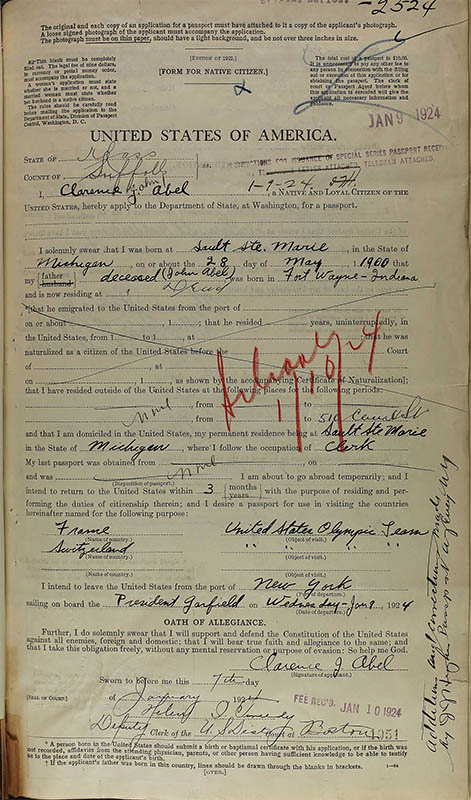
Abel has the distinction of being the first U.S.-born hockey player to get a regular spot with an NHL team. He was signed by Conn Smythe, who at the time was with the New York Rangers, August 14, 1926. Though Abel spent the 1925-26 hockey season playing as a member of the Minneapolis Millers of the Central Hockey League, it was actually more than likely his play at the 1924 Olympics that put him on the radar for any of the professional teams.
Clarence Abel 1924 Passport to go to Olympics (click to enlarge)
Of all the U.S. Olympic athletes that converged on Chamonix,
Abel was the one selected to carry the flag of the United States during the parade
of nations. And he would join his teammates in returning to the States sporting
silver medals.
Though not signed until 1926, Abel was actually approached
in March of 1924 shortly after his return from the Olympics while he was
playing for the St. Paul Hockey Club.
“’Taffy Abel, star defense man on the St. Paul hockey team,
has been offered $4,000 for a three-year contract to play with New York in the
proposed Professional Hockey league, it was reliably reported here today. Abel
also was reported to have been instructed to ‘keep his eyes on other Northwest
men’ who might consider offers to enter the professional sport. The offer was
said to have been made by F. L. Baldwin, one of the men interested with Tex Rickard
in the formation of the league,” reported the Minneapolis Star Tribune on March 16,
1924.
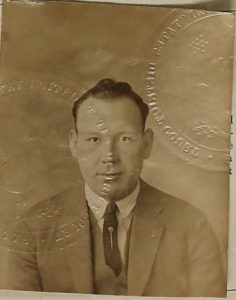
Clarence Abel, 1924, Passport Photo
Abel was a big,
solid man, weighing in at 225 pounds while standing 6’1” in height. This made
him somewhat of an anomaly for a hockey player in his era. In fact, when
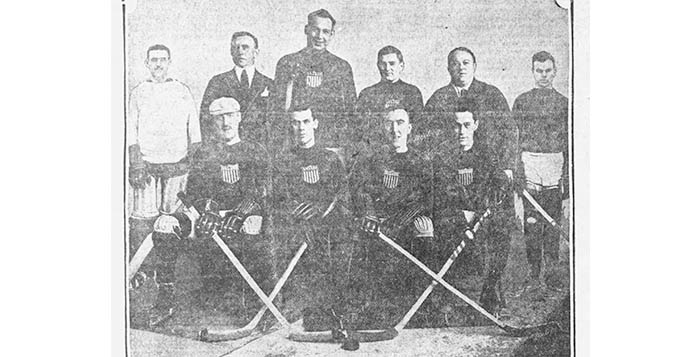
photographed with the U.S. Olympic team, he towered over the rest of the team.
By December of the
New York Rangers inaugural season, there were reports that the Rangers team was
better liked than the New York Americans. Abel was paired with his fellow Minneapolis
Millers teammate Ching Johnson.
“Ching and Taffy
are being described as the ‘patented derrick,” reported The Minneapolis Star. “One writer has fittingly described Ching
and Taffy as ‘tall cedars of the forest’ and they are hard to knock over.”
Abel spent three seasons with the New York Rangers, helping them to their first Stanley Cup in 1928. After the 1928-29 season, the Rangers sold Abel to the Chicago Black Hawks, whom he played with for five seasons. While with Chicago, he earned his second Stanley Cup, while helping the Black Hawks to their first Cup in 1934.
During his time in New York, a reporter called attention to his strong ties to the United States.
“Taffy Abel, the tall
defense man of the Rangers, is one of the few hockey players on the big time
who learned his game south of the Canadian line and also played most of his
career for American clubs. Abel’s sturdy blocking and neat stickwork have
featured the Rangers’ play this season [1926-27]. Now that Taffy has shown the
way it may be that more young American players will try to make good at major
league hockey,” said the Daily
News.
Abel retired after the Stanley Cup run in 1934 and returned to Sault Ste. Marie, where he lived with his second wife Tracy. He coached hockey and owned a restaurant known as The Log Cabin Café. He died where he’d be born, August 1, 1964.
In addition to his Olympic Silver Medal and his two Stanley Cups, Abel was inducted into the United States Hockey Hall of Fame in 1973, who said of him, “Abel’s fabulous climb from Sault Ste. Marie amateur ranks to the NHL stamped him as a legend in Hockey. He left an indelible imprint in pro and amateur circles as a player, coach and manager. Taffy Abel was a name beloved by hockey followers across the continent in the era of the 60-minute men.”
Additional Sources:
‘Taffy’ Abel, St. Paul Star, Is Approached By New York Pro Puck Loop,” The Minneapolis Sunday Tribune, Sunday, March 16, 1924, Sports Section, p. 2.
“Ching Johnson Gets as Much Applause in Garden as Tunney and Dempsey,” The Minneapolis Star (Minneapolis, Minnesota), Thursday, December 9, 1926, p. 12.
“Abel Proves Hockey American, Too,” Daily News (New York, New York), Saturday, December 4, 1926, p 26.
Sault Sainte Marie, Michigan, City Directory, 1941, p. 21.
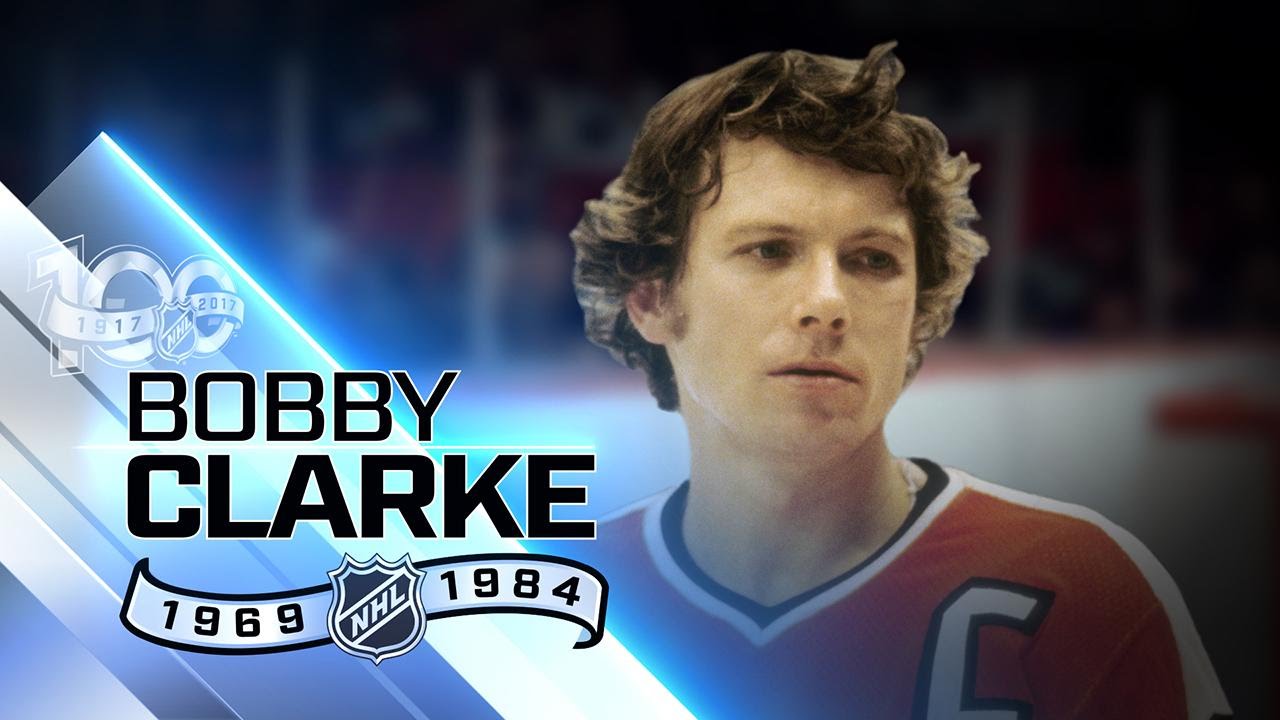
When you are the first at something, that sometimes becomes a tag that overshadows what you really want people to remember about you. Such was the case with Philadelphia Flyers Bobby Clarke when he was a rookie.
Clarke was born on August 13, 1949 in Flin Flon, Manitoba, a small mining town that when he was young boasted just a single indoor rink. Most of his minor hockey days were spent playing on outdoor rinks.
By the time he was thirteen he had been diagnosed with Type
1 diabetes.
“I never had anything to compare it to. [Taking my injection
shots] was what I had to do to live,” he told Kevin Shea in 2003. “As far as
playing hockey, I don’t know if it hurt me, but I never worried about it. I
wanted to be a hockey player. There were some uneducated judgements made by
teams that thought that if you had diabetes, you weren’t going to be strong
enough to play in the National Hockey League. My understanding is that the Flyers
spoke to a diabetic specialist who assured them that if I took the proper care
of myself, I’d be fine.”
Indeed, despite having amassed a record of 177-318-495 in 166
games with the Flin Flon Bombers during his junior career, he was not taken in
the 1969 draft until the second round, at number 14. Now to be fair, there were
only 12 teams in the NHL at the time, but even the Flyers elected not to take
him during their first round pick—instead going with Bob Currier, who retired
after five years and never actually made it to the NHL.
“Bobby Clarke, the one-time darling of Flin Flon Bombers is part of a Sports Illustrated feature this week on hockey. Clarke, a rookie straight out of junior ranks, has caught the imagination of Philadelphia Flyer fans because of his daily battle with diabetes. The article lists Clarke as the “rookie with a heart,” reported the Saskatoon Star-Phoenix on 19 November 1969.
Clarke simply
wanted to be known as a hockey player. And somehow it seemed that every time he
was mentioned, the diabetes was mentioned as well.
“How the hell we
were lucky enough to grab Clarke in the second round of the junior draft amazes
me. I admire his dedication, guts and drive. Nothing is too tough for him to
tackle. There’s no goofing off or taking short-cuts in practice. He reminds me
of Norm Ullman the way he works corners and forechecks. And he’s as smart as he
is rugged. There was no way we could keep Clarke off this team after his
pre-season games,” Flyers head coach Vic Stasiuk told media in October of 1969.
Even in the article
in which Stasiuk’s quotes were included ended with “Getting back to Clarke, you
wonder if coach Stasiuk isn’t getting a bit flowery with his praise. After all,
it won’t be the first time a training camp sensation was something of a bust in
the actual league… Mind you, Clarke has always had that dedication bit going
for him. He’s a diabetic and it’s been an uphill battle most of his life.”
He finally had
enough of the reports that couldn’t leave his diabetes out of their coverage of
him.
“Please do me a big
favor,’ pleaded Bob Clarke, his voice fluttering with every word. ‘Please tell
the other writers how I hate the way they keep rehashing about me being a
diabetic. It really has me upset,” reported Ed Conrad of the Philadelphia Daily News, November 20, 1969.
Conrad’s article
went on to point out that while Clarke’s diabetic condition was as much a part
of him as his ability to score, that Clarke was worried that the constant
reminders of his disease might hurt his chances in his career.
“Having diabetes is
no problem but all the talk surrounding it could be,” Clarke told Conrad. “I expect
that, if I ever hit a slump, everything will come back to the diabetes. That’s
what really worries me.”
In the end Clarke continued to excel, helping the Broad Street Bullies to consecutive Stanley Cups in 1974 and 1975. And throughout his 15-year career with the Flyers he earned just about every trophy and award that was possible.
Today, when his name is mentioned, most people conjure up his toothless grin. But for current Montreal Canadien Max Domi, Clarke’s success in the NHL was something that helped him see that an NHL career was possible with diabetes.
“That was the first time that my jaw kind of hit the floor and I was like: ‘Holy s—! That’s Bobby Clarke!” Domi recalled to Stu Cowman last summer, about meeting him. “That was pretty cool. I’ve done lots of cool things in my life and that’s by far the coolest thing. The reason being is that the guy was like a statue to me… he was iconic in my life. I was like: ‘All right, well if he can do it. I can do it.’ And I told myself that pretty much every single day. I don’t know if I even really said much to him and I don’t even know what he said exactly to me. I was just kind of jaw-dropped and staring at him.”
Today you can see a statue of Clarke along with goaltender Bernie Parent holding the Stanley Cup between them in South Philadelphia. And if you Google his name the most common search terms that follow are hockey and teeth. He never let his diabetes define him. He is a Stanley Cup-winning hockey player.
Additional Sources:
Jack Cook, “Bobby Clarke a Favorite,” Star-Phoenix (Saskatoon, Saskatchewan), Wednesday, November 19, 1969, p. 31.
Jack Cook, “Clarke gets royal treatment,” Star-Phoenix (Saskatoon, Saskatchewan), Wednesday, October 31, 1969, p. 16.
Ed Conrad, “When Enough Is Enough,” Philadelphia Daily News (Philadelphia, Pennsylvania), Thursday, November 20, 1969, p. 63.
Kevin Shea, “One on One With Bobbly Clarke,” Legends of Hockey, 2 May 2003, as found on the WayBackMachine.
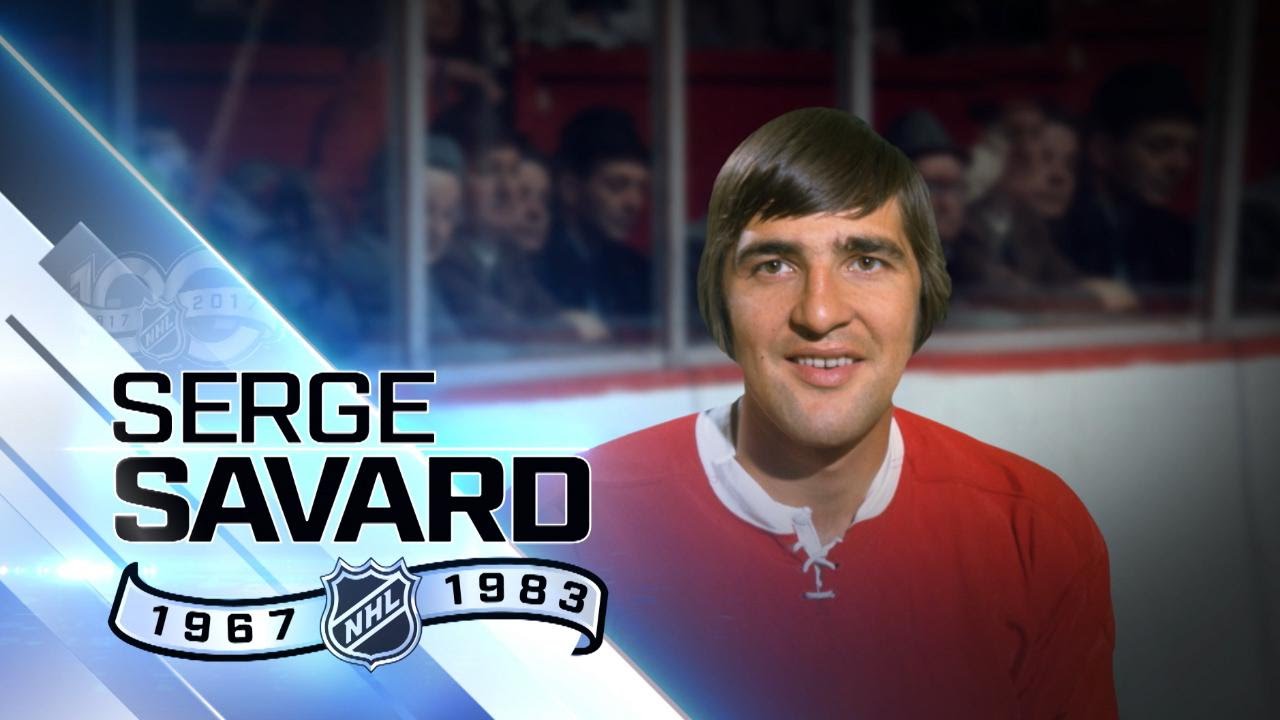
On August 12, 1981, Serge Savard announced his retirement from the NHL, though he had apparently come to that decision at the end of the Montreal Canadiens 1980-81 season. The Montreal native played all but two of his 16 years in the NHL with the Canadiens.
“He had tears in his eyes that night in Edmonton, he recalled,
while he reflected on the past two seasons, the only two which he felt had been
complete downers. ‘I didn’t like the way things had been going on for those two
seasons,’ he said,” as was reported in The Gazette the day after his
announcement.
Savard spent his junior hockey career with the Montreal Junior Canadiens who had actually served as the farm team for the Montreal Canadiens from 1933 until 1961. The NHL Entry Draft was instituted, hosting its first draft in 1963, and the Montreal Junior Canadiens joined the Ontario Hockey Association to compete at the major junior level. Savard played on the Montreal Junior Canadiens from 1963 to 1966.
His first season with the Montreal Canadiens was the 1966-67 season, in which he played just two games, spending the bulk of his time that year with the Houston Apollos. His first full season with Montreal came with the 1967-68 season. However, it was his second full season with the “bleu blanc et rouge” that saw him excel, as he helped them win a second consecutive Stanley Cup that year, himself becoming the first defenseman to win the Conn Smythe Trophy as MVP of the playoffs.
He would go on to hoist Lord Stanley’s Cup eight times during his playing career with the Canadiens: 1968, 1969, 1971, 1973, 1976, 1977, 1978, and 1979. His demeanor on the ice and in the locker room earned him the nickname “le Senateur.”
“I was one of those players who didn’t get nervous,” he
said. “When we were going into overtime in the playoffs or something. I never
thought about the situation or worried about having to score the goal. All that
kind of thing dawned on me only after it was over.”
His career included one of the most famous events in hockey—the
1972 Summit Series—in which the Soviet Union took on Team Canada to see who was
the best at hockey. Much has been written over the years about the eight games
played. Of the five games Savard played in, Team Canada went 4-0-1. He didn’t
play in the opening loss to the Soviets, and he was out with a hairline
fracture in games 4 and 5.
“It was the most memorable series of my career. It was the
closest thing to being in a war,” Savard commented to media the day he made his
retirement announcement.
“Retirement isn’t likely to pose a problem for Savard, who
has business interests, including a number of race horses, and is generally
keen about current affairs,” reported The Ottawa Citizen on August 13.
And yet, apparently retirement was an issue, as it was only four months to the day later when Savard came out of retirement, signing with the Winnipeg Jets.
“We’re looking at Savard as a premier player in the NHL. I
think he can be an unofficial third coach and maybe he’ll pass along some
little hints to the defencemen and I hope they get the benefit of his experience,”
said Jets head coach Tom Watt.
At the time of his retirement, the Canadiens had agreed to
pay Savard $200,000 to not suit up in the 1981-82 season with Montreal. Part of
the deal made between the Jets and the Canadiens saw some of that money
reimbursed by the Jets.
Not everyone was as happy to see Savard suiting up again
though.
Tim Burke, columnist for The Gazette did not think it
was a good idea for Savard to return to the ice.
“Why is it so many fine athletes don’t know enough to stay
retired?” he wrote. “It is depressing enough to witness two former world’s
heavyweight champions—Joe Frazier and Muhammad Ali—returning to the ring as
bloated old caricatures of their once-magnificent selves, but Serge Savard’s
overnight decision to take his skates out of mothballs for a go with the
Winnipeg Jets is mystifying.”
Savard’s statistics during his two seasons with the Jets seem to suggest that he still had something to offer the game. In the 123 games he played, he managed to put together a 6-21-27 record. And it is impossible to say how his presence in the locker room may have helped what was such a young Winnipeg team at the time. After two seasons with the Jets, Savard returned to Montreal, this time not as a player.
“In one of the more unusual trades in National Hockey League
history, the Montreal Canadiens yesterday bargained with the Winnipeg Jets to
acquire Serge Savard, and then named him general manager in Montreal,” the Democrat
and Chronicle of Rochester, New York reported on April 29, 1983.
Savard would serve as General Manager of the Canadiens until he was replaced during the 1995-96 season by Réjean Houle. During his time as GM, Savard would add two more Stanley Cup wins to his name in 1986 and then again in 1993—the last time Montreal won a Stanley Cup.
He was inducted into the Hockey Hall of Fame in 1986 and the Canadiens raised his no. 18 jersey to the rafters on November 18, 2006.
Additional Sources:
Tim Burke, “Savard earns a bow for final curtain call,” The Gazette (Montreal, Canada), Thursday, August 13, 1981, p. 21.
“Savard calls it quits after 15 season,” The Ottawa Citizen (Ottawa, Ontario), Thursday, August 13, 1981, p. 22.
“Savard heads for Winnipeg, Jets’ persistence finally pays off,” Red Deer Advocate (Red Deer, Alberta), Thursday, December 10, 1981, p. 5B.
Tim Burke, “Savard’s return depressing idea,” The Gazette (Montreal, Canada), Friday, December 11, 1981, p. 17.
“Canadiens ‘trade’ for Serge Savard, appoint him GM,” Democrat and Chronicle (Rochester, New York), Friday, April 29, 1983, p. 2D.
Rudolf Pilous was born in Rosser, a municipality of Winnipeg Centre, Manitoba on August 11, 1914, the son of immigrant parents Anton Pilous and Theresa Tropp, who had arrived in Canada in 1903. Rudy’s father was a carpenter, making a living for his wife and six children.
Like most Canadian boys, Rudy was a hockey player, playing
his own junior ice hockey in the Manitoba Junior Hockey League. Briefly a New
York Rangers prospect, he never made it to the NHL. During the 1937-38 season
he suited up with the minor league New York Rovers of the Eastern Hockey League
and then spent the next three seasons playing senior hockey in the Ontario
Hockey Association Senior division.
By 1943, Pilous turned his attention to an involvement in hockey off the ice, co-founding the St. Catherines Falcons—a junior ice hockey team in the Ontario Hockey Association. He would return to St. Catherines more than once and for the final time in his waning years to coach the St. Catherines Saints from 1983 to 1986. During the interim 40 years, Pilous wore many hats in many leagues.
While scouting for the Buffalo Bisons of the American Hockey League, he spent a couple of years with the United States Hockey League (a reincarnation of the American Hockey Association which folded in 1942) and saw his team in Houston take home the championship in 1948. From there he spent a bit of time in the Pacific Coast Hockey League, where once again his team—the San Diego Skyhawks—won their championship in 1949. He then signed on as the coach of the USHL’s Louisville
“The man probably most eager for the start of Louisville’s
hockey season arrived here yesterday [August 11, 1949]. Rudy Pilous, the Blades
new coach, had two reasons for celebrating: he became 35 years old and he was
coach of a team before the season started. The Winnipeg, Manitoba, native has
directed two Pacific Coast League teams to playoff championships after
accepting the reins in mid-season. In both cases, Pilous’ charges were mired in
the second division when he took over. Now he has an opportunity to see what he
can accomplish with a complete season at his disposal,” reported The
Courier-Journal on August 12, 1949.
After the collapse of the PCHL, Poulis returned to St. Catherine’s where he took his place behind the bench of the St. Catherines TeePees (the new name of the junior team he helped found) helping them to a Memorial Cup in 1954. He was general manager of the team when they again won the Memorial Cup in 1960.
And while Pilous couldn’t make it to the NHL as a player, he would spend five years coaching the Chicago Black Hawks, earning himself a place on the Stanley Cup, and in Hawks history, as he coached the Black Hawks to their Stanley Cup victory in 1961. With their win in six games against the Detroit Red Wings, Chicago reclaimed the silver chalice for the first time in 23 years.
From Chicago, Pilous headed to Denver where he coached the
Denver Invaders to the Western Hockey League’s Governor’s Trophy in 1964. In
1967, he was hired as general manager of the NHL expansion Oakland Seals,
though his time was short with them, before returning to the WHL where he
joined the staff of the Denver Spurs.
Pilous wasn’t done finding teams to mold, coaching the Brandon Wheat Kings before ultimately coaching the World Hockey Association’s Winnipeg Jets. After becoming the Jets general manager, he helped lead them to claim the Avco World Trophy in 1976, 1978, and 1979.
Having taken so many teams in so many leagues all the way to their league championships, it was not surprising that Pilous was inducted into the Hockey Hall of Fame in 1985 under the builder category.
While in Louisville in 1949, reporter Dave Kennedy, rather
prophetically, wrote, “Should Rudy Pilous ever decide to quit the hockey
business, which isn’t likely before 1994, there are two other professions in
which he undoubtedly could succeed. They are politics and the theater. The
Blades’ coach has done a little bit of everything in hockey. He’s been Buffalo’s
main trouble shooter and chief scout, has ‘handled’ training camps, coached,
written publicity, acted as trainer, officiated and sharpened skates.”
Though Pilous officially retired from coaching in 1986, he
retired from life in 1994, at the age of 80, on December 6th.
“A good friend died Tuesday, and my paper mentioned it almost in passing. I’m upset,” wrote Ernie Fedoruk, columnist for the Times Colonist. “Not because my friend deserved special treatment, but because Rudy Pilous is one of the greatest ambassadors ever to serve hockey. He always has been Mr. Hockey in St. Catharines, is revered in Chicago as the last one to pilot a Stanely Cup winner there, has his rightful place in the Hall of Fame, and was Winnipeg’s choice when that city joined the majors with the Jets of the old World Hockey Association. Pilon served hockey well, wherever he went, but no one could top him as an after-dinner speaker. Winnipeg-reared, he was a master of many dialects. He was funny and spontaneous.”
It would take the Blackhawks another 39 years after their win in 1961 to reclaim the Stanley Cup. Of course, then then went on to win it three times in the space of six years: 2010, 2013, and 2015.
Additional Sources:
“Toe Blake Will Coach Houston,” The Windsor Star (Windsor, Ontario), Monday, Feb. 2, 1948, p. 5
“Pilous To Pilot Louisville Team,” Edmonton Journal (Edmonton, Alberta), July 25, 1949, p. 10
Dave Kennedy, “Enthused Pilous Ready for Season, Blades’ New Coach to Pilot Ice Team First Time from Scratch,” The Courier-Journal (Louisville, Kentucky), Friday, August 12, 1949, p. 18.
Dave Kennedy, “Rudy Pilous, the mentor of Louisville’s new hockey team, knows his way around in the various phases of the sport,” The Courier-Journal Magazine (Louisville, Kentucky), Sunday, October 23, 1949, p. 19.
Ernie Fedoruk, “Rudy Pilous dealt hockey fans winners along with laughs,” Times Colonist (Victoria, British Columbia), Thursday, December 8, 1994, p. B5.
Library and Archives Canada. Sixth Census of Canada, 1921. Ottawa, Ontario, Canada: Library and Archives Canada, 2013. Series RG31. Statistics Canada Fonds, Folder 30, p. 5, as found on Ancestry.com.




 Prev
Prev