The inaugural World Cup of Hockey, which began August 26, 1996, replaced the Canada Cup which had taken place five times between 1976 and 1991. The Canada Cup was the answer to demands for an international competition that would allow players to compete regardless of their professional status. At the time of the Canada Cup’s inception, the Olympics was still limited to those players who held amateur status. The competition was sanctioned by both the International Ice Hockey Federation and the National Hockey League. Of the five Canada Cup competitions, Canada had won four (1976, 1984, 1987, 1991) and the Soviet Union won once in 1981.
Like the Canada Cup, the World Cup of Hockey was to be played in August and September and was supposed to include the best of the best. However, not all of the players invited for some of the teams accepted those invitations, such as Dominik Hašek, from the Czech Republic, who declined saying that the timing wasn’t good for him. And the Russian team was without Pavel Bure who was recuperating from an injury sustained in a Russia-USA exhibition game that had taken place in Detroit.
The design of the tournament was to have the eight teams broken into two groups, playing three games at the group stage, against the other teams in their group. The first place teams in the two groups would advance to the semi-finals, and then the second and third placed teams played a cross-over quarter-finals. The quarter-finals and semi-finals were single game eliminations and then the final would be a best of three. While the group stage games were played in both North America and Europe, the playoff rounds were all to be played in North America.
The North American Pool was made up of teams representing Canada, Russia, Slovakia, and the United States. The European Pool consisted of teams from the Czech Republic, Finland, Germany and Sweden. The United States, from the North American Pool, and Sweden, from the European Pool advanced to the semi-finals, and then had to wait to see who would join them.
For the North American pool, Team Canada and Team Russia advanced to the quarter-finals, while Finland and Germany represented the European Pool. The quarter-finals saw Canada play the Germans, who they defeated 4-1, while Russia ousted Finland 5-0. The semi-finals saw Canada narrowly defeat Sweden to advance to the championship with a 3-2 overtime win on September 7. Meanwhile the following day, the United States sent the Russians packing in a 5-2 victory.
The best of three championship final games took place on September 10th, 12th, and the 14th. The first game was played in Philadelphia and saw Canada beat the United States in overtime 4-3, though Team USA had been leading 3-1 at the end of two periods. The teams then went to Montreal where the United States managed to tie the series and force a game three.
“The eyes of the country will be upon Team Canada as it battles the United States in the third and deciding game of the World Cup of Hockey,” reported The Leader-Post of Regina, Saskatchewan. “And those eyes, inevitably, will be drawn to big No. 88. Eric Lindros, the love-him-or-leave-him heir apparent to Canadian hockey’s throne, remains the dark prince despite what was to have been his coronation in this tournament.”
“We’ve put ourselves in a situation where it all funnels down into one game,” said Lindros the day before the third game.
“Tomorrow is sudden death. Anytime you’re in a position to be in a sudden-death situation, it’s different than playing a game where you know there’s a tomorrow. There’s pressure on both teams,” shared Team USA’s Mark Messier about game three.
“This is what we worked 35 days for,” said Team USA coach Ron Wilson the day before game three. “It’s sitting right there. Each team has one hand on the World Cup. It’s going to be a slugfest to see who gets the other hand on it.”
And perhaps Wilson’s comments were a hint as to some additional motivation he had designed for his players. He combined highlights from Team USA’s play throughout the tournament with clips from the movie Rocky II.
The plot of Rocky II certainly seemed appropriate. The premise being a rematch between heavyweight boxing champion Apollo Creed and Rocky Balboa. Creed considers his prior win in a split decision a blemish on his career and wants the next bout to be a knockout decision. It was easy enough to see Team USA as Rocky.
“The organizers changed the name this time—to the World Cup of Hockey. Maybe they realized it was no longer Canada’s Cup,” reported The Honolulu Advertiser the day after the final bout.
“The teams entered the third period of the final game of the best-of-3 series tied 1-1 and Canada, which had dominated play throughout, appeared set to retain its mantle of international ice hockey superiority when Adam Foote scored at 12:50, sending the capacity crowd of 21, 273 at the Molson Centre into a deafening roar,” The Honolulu Advertiser continued. “But, the partisan crowd lost its collective voice in a hurry moments later when Brett Hull and Tony Amonte scored in a 43-second span late in the third period. And just like that the United States had its most important victory since the U.S. Olympic hockey team won the 1980 gold medal just down the road at Lake Placid, N.Y.”
“All of Canada must have been abuzz in every bar across the land, jumping up and down with three minutes left. Then two quick goals. You could have probably heard a pin drop everywhere because I know you could in the arena,” said Amonte.
The U.S. would go on to score two more goals in the final minute of that third period with an empty-netter at 19:18 and then their fifth goal of the game at 19:43. Perhaps they were all embracing their inner Rocky, showing just how they could rally, and that they should never be counted out.
Additional Sources:
Mike Commito, Hockey 365, Daily Stories from the Ice (Toronto: Dundurn, 2018), kindle edition
“U.S. topples Canada with late surge, 5-2,” The Honolulu Advertiser (Honolulu, Hawaii), Sunday, September 15, 1996, p. C12
Dave Lueking, “Cup ‘Just a Tournament’ for Hull; To Others, It’s About National Pride,” St. Louis Post-Dispatch (St. Louis, Missouri), Saturday, September 14, 1996, p. D1
“Pressure on Lindaas,” The Leader-Post (Regina, Saskatchewan), Saturday, September 14, 1996, p. C3
John Kekis, “Messier will return for finale,” Wisconsin State Journal (Madison, Wisconsin), September 14, 1996, p. 4D
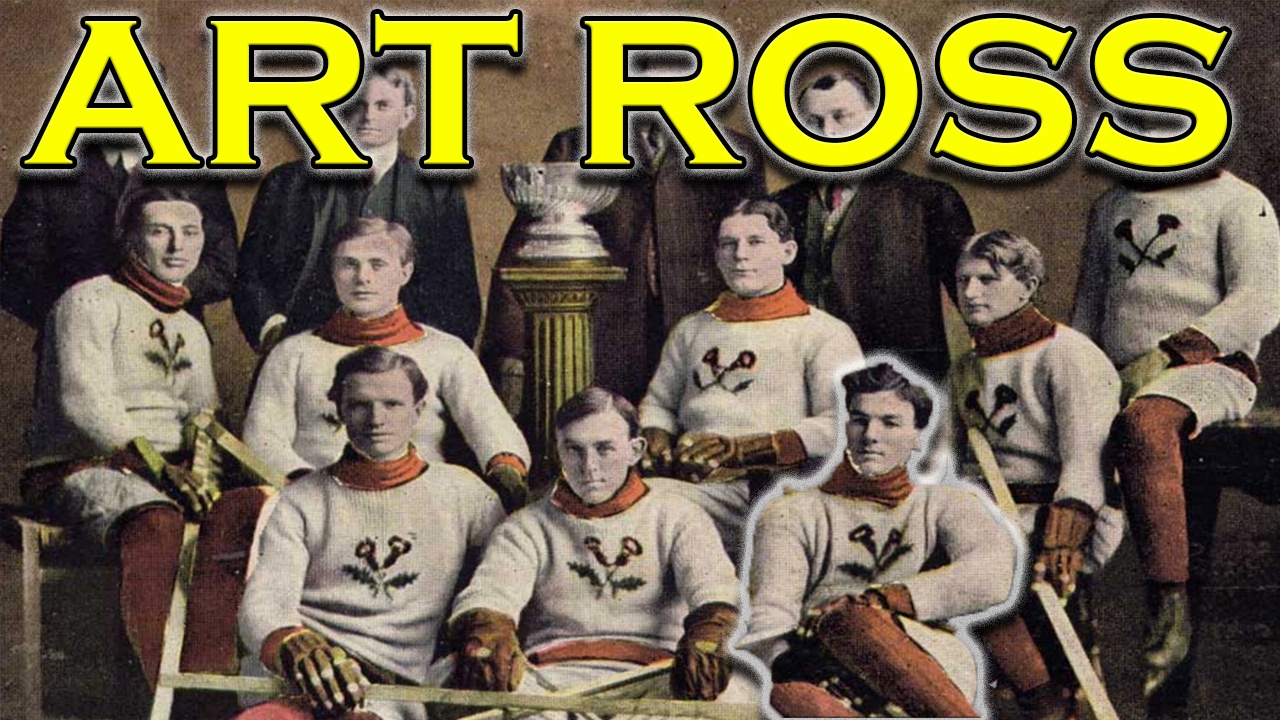
It all turned out to be much ado about nothing, but in 1941, the Boston Bruins felt they had certain rights to a player that were not being respected by the NHL board of governors. The first contentious ruling occurred in January, and the last straw for GM Art Ross was at the board’s semi-annual meeting held at Toronto on September 12, 1941. When the board decided against Boston’s interests again, he verbally tendered his resignation and stormed out.
The player at the heart of the issue was Scotty Angus Cameron, a high-scoring forward who had been playing amateur hockey at home in Regina, Saskatchewan. His Regina Abbotts won the Memorial Cup in 1940, which was probably why both the New York Rangers and the Boston Bruins were interested in negotiating with him. For the 1940-41 season, Cameron played for the Regina Rangers, who went on to win the Allan Cup. The Bruins put him on their negotiation list despite him already being on the Rangers’ list. This added fuel to fire the feud already ongoing between the teams as the Rangers won the Stanley Cup in 1940 and the Bruins took it home in 1941.
At the NHL board meeting in January 1941, President Frank Calder ruled that Cameron would be on Boston’s major league negotiation list but that any minor league rights were retained by New York. Bruins President Weston Adams argued against the decision and said he would appeal. He walked out of the meeting claiming that he would never attend another “until Boston was treated more justly.” Boston continued fighting the ruling until September.
Ross represented the Bruins on the NHL board of governors. He participated in the September meeting for hours before the issue was raised. Again, Calder ruled in favor of the Rangers. This time, he charged Boston with “tampering” by negotiating with Cameron directly. In so doing, the Bruins had forfeited their negotiation rights. According to one hockey historian, Calder “showed Ross to have lied about signing a player to a contract.” Ross himself said, “It isn’t that Cameron is such a great player but the principal of the thing. According to the constitution, I believe the Bruins have the right to him and unless the National League hasn’t any constitution, we should get him.”
The result was that Ross resigned his role on the board of governors, telling them he’d send the resignation in writing when he returned to Boston. “I have positively resigned, and I positively will not reconsider it,” said Ross. “I resigned because I think that the interests of the Boston club would be better protected if someone not so familiar with the changeable whims of the present Governors would represent the Bruins.”
Justifying his actions to the press, Ross said, “Neither Weston Adams nor myself have been in accord with certain rulings and actions by Calder in matters of concern to the Boston Club in the last year. My resignation from the board of governors, as was that of Weston Adams last January, is in the form of a protest by the Boston club. Hereafter, the Bruins will be represented on the board of governors by its attorney, Robert R. Duncan.”
The board met on October 24 without a representative from Boston. They accepted Ross’s resignation and then upheld their decision on Cameron. To ensure this did not happen again, they even amended the NHL by-laws. Before, the board would decide on these kinds of issues or if unable, pass them on to the president. The teams had the opportunity to appeal for the board to make a final decision. As a result of Boston storming out twice, the NHL gave the president final authority over player disputes between the NHL and affiliated minor leagues.
As for poor Cameron caught in this tug-of-war, by the end of 1941, it was uncertain he would ever play for any NHL team. He had injured his back that summer and had to leave the New York Rovers (the Rangers’ farm team) in December. According to the press, “every time he took a good check in that free-wheeling loop he was sidelined for a longer length of time.” Still, during the 1942-43 season, he managed to play 35 games for the New York Rangers, scoring eight goals and eleven assists. After that, he served during World War II and returned to play two seasons with the AHL New Haven Ramblers. He stayed in the minors through 1951.
Despite Ross’s dramatic exit, the board of governors met for nine hours that September. Along with finalizing the season’s schedule, they also made five rule changes. They designated the differences between minor and major penalty shots, with the former being a goalie foul and the latter when a goalie is tripped. The player committing a minor penalty would not have to serve if the penalty shot scored. Another change was that a penalized player with an injury could seek treatment without a substitute sitting in the penalty box. Finally, the offside rule was altered so that the player carrying the puck would not be offside if any part of his body crossed the blue line before the puck.
Additional Sources:
“Ruling on Cameron Irks B’s President,” Boston Globe, 16 Jan. 1941, p. 13.
“Art Ross Resigns After Calder Decision,” Boston Globe, 13 Sept. 1941, p. 7.
Wilf Gruson, “Art Ross Resigns as N.H.L. Governor in Protest Over Ruling by Calder,” Montreal Gazette, 13 Sept. 1941, p. 20.
Herbert Ralby, “Cracked Ice,” Boston Globe, 15 Sept. 1941, p. 10.
Herbert Ralby, “Passport Restrictions May Hamper N.H.L.,” Boston Globe, 16 Sept. 1941, p. 21.
“Bruins’ Boss Quits National Hockey Board,” Boston Globe, 25 Oct. 1941, p. 9.
“Cracked Ice,” Boston Globe, 17 Nov. 1941, p. 10. “So Ends Teapot Tempest,” Boston Globe, 29 Dec. 1941, p. 21.
J. Andrew Ross, Joining the Clubs: The Business of the National Hockey League to 1945(Syracuse University Press, 2015), 296.
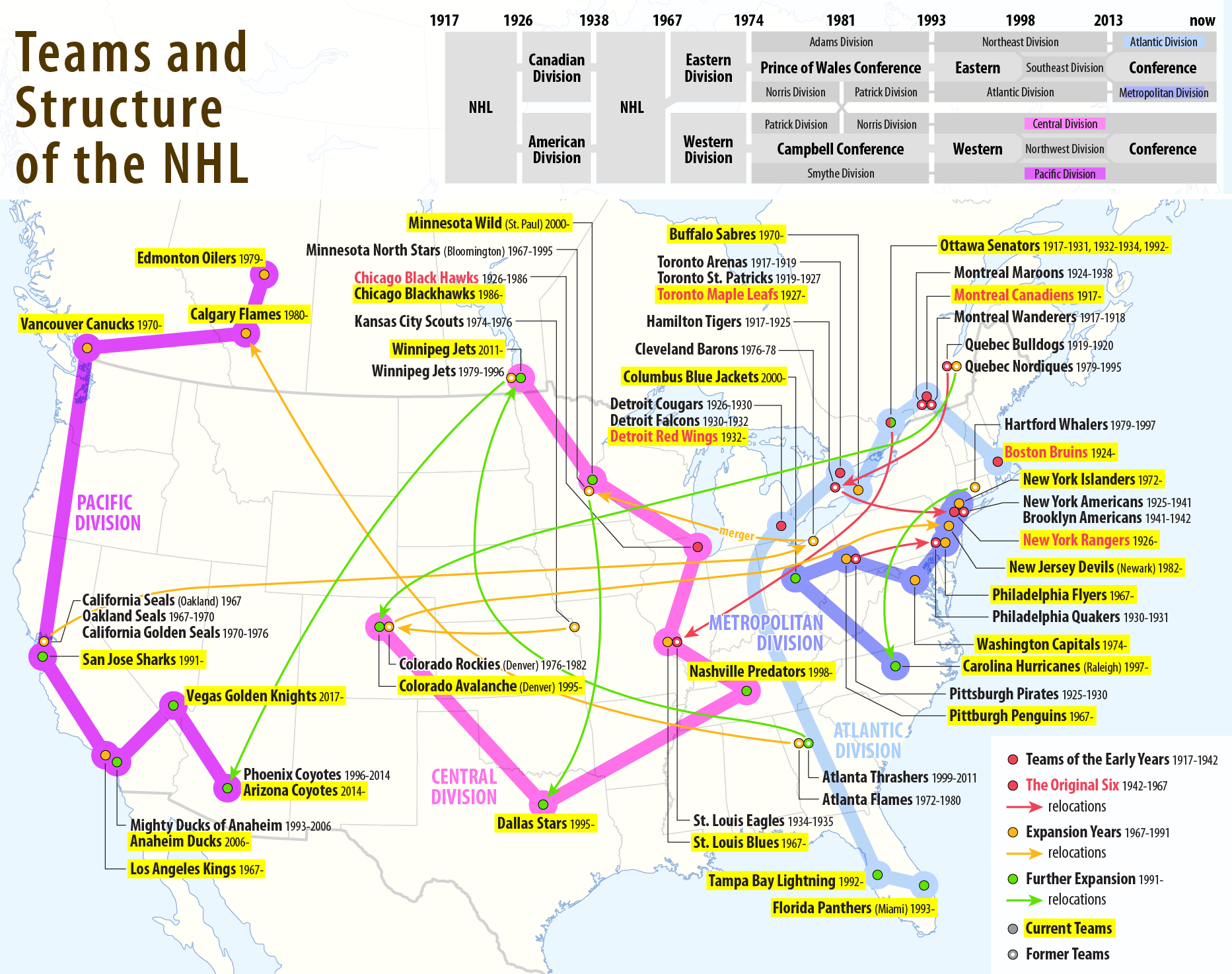
The addition of six new teams in 1967 seemed to go pretty well, so the NHL added two more franchises to begin playing in 1970-71. When they announced the expansion, on September 11, 1968 at simultaneous press conferences in New York and Montreal, President Clarence Campbell made it clear that Vancouver had the first shot at meeting the franchise requirements. Otherwise, the NHL would be accepting applications until December 1, and those accepted would be required to pay $6 million.
Vancouver
The primary reason for this expansion was to bring in another Canadian team. The second franchise was created simply to ensure that the league remained balanced. According to Campbell’s statement, “When the NHL doubled in size from six to 12 teams in 1967-68, no additional Canadian representation was provided for despite the fact that almost all of the playing personnel of the league is Canadian. This led to downright hostility in some parts of the Dominion because of the omission of Vancouver, British Columbia.” Further, “We could not carry on goodwill in Canada, a country which has contributed so much to the sport, unless we added a Canadian team.” He continued, “When it became apparent that expansion to include Vancouver was necessary, it was decided to bring in another city, since the league could not operate with an odd number of teams.”
Vancouver was the obvious choice since the city had hosted professional hockey dating back to 1911 (to 1926), with the Patrick brothers’ Pacific Coast Hockey Association. Although they went 50 years without pro hockey, minor league hockey kept the interest alive. The Canucks had been playing there since at least 1946 as part of the Western Hockey League (WHL) and were on the cusp of winning their sixth championship (the Lester Patrick Cup). The WHL Canucks and Vancouver mayor Fred Hume were turned down for a franchise for 1967 because their NHL-level arena was still being built and (according to them) because Toronto and Montreal did not want to share TV revenues. Since then, they had also been turned down for their offer to relocate the struggling Oakland Seals.
For these reasons, at their June 1968 meeting, the NHL governors granted Vancouver first refusal for the next expansion. Basically, they would have the opportunity to meet the NHL requirements. If they would not or could not, another British Columbia city would have the next chance. Despite the tripled fee to join the NHL, the $1.1 million they would have to pay the WHL, and the $1.5 million it would cost to operate a team, the Vancouver group was adamant. Joseph R. Crozier, coach and GM (and substantial shareholder) of the Canucks said, “The $6 million stipulation creates no problem for us. We have been waiting for this for a long, long time.” One stockholder, Frank McMahon, dropped out saying that he thought even the $2 million franchises paid in 1967 was too pricy. Max Bell (who helped finance the fledgling franchise) remarked, “Vancouver is a big-league town and it deserves a big-league hockey franchise, but at that price it looks like a civic venture rather than a business venture. There aren’t many people that civic-minded.” In the end, a group led by Tom Scallen bid and then paid the required entry fee.
The next step was to purchase the WHL’s Canucks. In anticipation of moving up into the NHL, the team already had hired former NHLers, and six of them were contracted for the new NHL team. The rest of the team mostly came from the 1970 Expansion Draft. When the NHL first announced the drafting rules, Crozier said it was a “bit of a bombshell” and would put his team at a disadvantage. According to Sam Pollack of the NHL Expansion Committee, “Parity will be reached within three years. An expansion draft will make 18 players and two goaltenders available to the new teams in June of 1970. Each old club will be allowed to protect 15 players and two goalies. The new teams will also participate fully in the universal amateur draft and should receive two players capable of stepping right into the NHL if my scouting reports are correct.” Vancouver focused on defense for their draft picks. At the subsequent 1980 Amateur Draft, they used their first pick on Dale Tallon.
Despite their efforts to pick quality skaters, the Canucks struggled, unable to make playoffs during their first four seasons. As coach Hal Laycoe said, “Coaching an expansion club had to be the toughest job in the world because when the going gets tough, the tough don’t always get going.” In January 1971, GM Bud Poile accused Laycoe of being too soft and players for not carrying their weight. Punch Imlach (who had had part ownership in the WHL Canucks until they sold to Medicor company) called the Canucks “4F,” as in “fumbling, frustrated, futile, and folding.” However, the Canucks had one area in which they were extremely strong – the box office. Before they had even been granted a franchise, they had over 500 people trying to buy NHL tickets. For their inaugural season, the Canucks sold 98% of their seats and had to show the game on closed-circuit TV to accommodate overflow crowds.
Buffalo
The other strong contender that was awarded a franchise that December was Buffalo. Thanks partly to their proximity to the Canadian border, they had a strong minor-league presence with the AHL Buffalo Bisons. The Bisons had played there for about 30 years and were about to win their fifth Calder Cup.
Like Vancouver, Buffalo had been asking for a franchise since before 1967 and had wanted to buy the Seals. Brothers Seymour and Northrup Knox (of the Woolworth’s variety store chain) had led both efforts. The former failed when Art Rooney talked his friends James and Bruce Norris to go with Pittsburgh instead, and the latter failed because the NHL thought it was too soon to give up on the Seals. This would be third time’s charm. The brothers held a naming contest to avoid re-using “Bisons,” and the winner was “Sabres.” They then set up a new AHL team called the Cincinnati Swords.
Much of the early success of the Sabres has been credited to their first coach and GM, Punch Imlach. He was able to put together a good team through the expansion draft and then got lucky at the amateur draft. First pick would go to Buffalo or Vancouver based on the spin of a roulette wheel. Although Campbell originally thought the wheel landed on 1 (which would have gone to the Canucks), Imlach told him to check again because it was actually on his lucky number 11. Imlach picked Gilbert Perreault who went on to win the Calder Memorial Trophy as rookie of the year.
As it turned out, 1970 was a big year in Buffalo sports. In addition to hockey, the city also gained teams in the National Football League (Bills) and the National Basketball Association (Braves). The Sabres were much more successful, so the Braves ended up relocating.
At the beginning of the season, Imlach bragged, “You can forget about Toronto and Vancouver. And the Red Wings didn’t look like any ball of fire to me. We’ll be there and you can bet on it.” At the end of the season, his tune had not changed. “I remember one guy who wrote we’d be lucky to finish the season. Another said we wouldn’t win 15 games. Well, with three to play, we’ve won 23, and we’re going to finish ahead of teams which have been in this league from four to 40 years. … But I’ll tell you this, we’re in business now, and nobody, but nobody, handles us easily, anywhere. We’re as established as any team in this league.”
Other bidders
The other city initially thought to have the strongest chance of gaining a franchise was Baltimore. Like Vancouver and Buffalo, it had just missed the 1967 expansion. In fact, most had expected Baltimore to win over St. Louis at the time. Like the other two, this city had a strong local minor league club, the Baltimore Clippers. To join the NHL, Baltimore already had plans to extend their Civic Center, however the $6-million price tag somewhat dampened their enthusiasm. Zanvyl Krieger, the chairman of the board and principal stockholder for Clippers said, “We will do everything possible to bring major league hockey to Baltimore if we think it is feasible. Remember, it is not only the franchise fee we are concerned with but also an additional outlay of approximately $2 million to cover renovations and increased seating capacity at the Civic Center, indemnification to the American Hockey League and the setting up of a farm system.”
By the time of the franchise announcement, four other towns had already submitted informal bids. They were Atlanta, Cleveland, Kansas City, and Washington, D.C. One paper even indicated that interest had been expressed from Phoenix, San Juan, and even Mexico City.
With the two new additions, the NHL restructured its divisions. The Chicago Blackhawks moved into the West Division with the six 1967-expansion teams. Buffalo and Vancouver joined the other five Original Six teams in the East Division. There, they finished fourth (with 63 points) and fifth (with 56 points), respectively that season.
Additional Sources:
Mike Commito, Hockey 365: Daily Stories from the Ice(Toronto: Dundurn, 2018), kindle edition.
Stephen Laroche, Changing the Game: A History of NHL Expansion(Toronto: ECW Press, 2014), 170-195.
“Canuck Brass Feels Pain in Pocketbook” and “‘Twas Day for Second Thoughts,” Vancouver Sun, 12 Sept. 1969, p. 22.
“It’s a Stickup” and “Meanwhile Back at the Bank,” Vancouver Province, 12 Sept. 1969, p. 21.
“Buffalo Among 3 Cities Eyed for NHL Franchises,”Elmira Star-Gazette, 12 Sept. 1969, p. 15.
“NHL To Realign Divisions In 1970” and “Price Surprises Krieger,” Baltimore Sun, 12 Sept. 1969, pp. C1 and C4.
Only about ten days after David Poile had been hired as general manager of the Washington Capitals, he made a big trade to bring them their franchise player, defenseman Rod Langway. On September 9, 1982, the Montreal Canadiens sent Langway, fellow defenseman Brian Engblom, and forwards Doug Jarvis and Craig Laughlin to Washington in return for defenseman Rick Green and forward Ryan Walter. It really was a case of two-for-one deals.
Poile explained how the trade came about. “I have a mandate to bring this team (Washington) into the playoffs. Grundman called me a couple of days after my appointment, wished me luck, and then we started talking. Right off, I made it plain to him I was looking for defencemen and defensive players. I hate to lose somebody like Walter, who’s been an excellent leader, but the fact is Washington haven’t made the playoffs since we came into the league in 1974. I feel the players I got from the Canadiens can put us there.”
The Caps had drafted Walter with their first choice (2nd overall) in 1978 and had since made him their captain. Canadiens’ Managing Director Irving Grundman, who announced the trade, said, “I don’t think any general manager can overlook somebody like Walter if he’s got a chance to get him. My only thought in a deal such as this is that I can’t think of individuals. I’ve got to think of the team. Obviously, I feel that Walter and Green can do something for this team.”
Many teammates, media, and fans felt Montreal gave up too much in return. They could understand trading Laughlin, who (after being drafted in 1977) had just joined the Habs midway through the previous season. Although Jarvis was considered one of the best defensive forwards, he also was understandable. Grundman remarked, “You have to give up quality players to get quality players.”
Engblom and Langway were considered the NHL’s best defensive pair, and their departure caused concern for Montreal’s future. As was everyone else, Englbom was surprised because he was not one of the complainers on the team. “I’m not bitter. Not a bit. It comes with the game. I suppose I didn’t make the best of it while I was here.” He continued, “This trade won’t sink in for a few days, but at the very least, it will be an interesting challenge. … All I can do is go to Washington and play as hard as I can.”
As for Langway, he was glad to be traded. Born on a U.S. army base in Taiwan, he was raised in Massachusetts, where he did not start skating until 13. He was actually scouted as a football quarterback before his college hockey career got him drafted by two leagues in 1977. Although he was drafted by Montreal as their third choice, he was offered better money as the first-round selection of the WHA’s Birmingham Bulls. After a season, he ended up taking advantage of a clause in his contract that allowed him to leave for the NHL. His first year with Montreal, 1978-79, they won the Stanley Cup.
When the Canadian dollar fell, Langway said, “I pushed the button for that trade. I tried to rearrange my contract in my fourth year. I was married, I had two kids and the money situation wasn’t the greatest in Canada and because I am American, the taxes were a problem. I wanted to get a new deal with Montreal that would give me an extended contract in U.S. funds but they didn’t want to cause problems within the organization.” Instead, Montreal traded Langway to the U.S. capital. “I’m happy in one way, not happy in another. I loved it here. … But they knew they either had to make me happy with more money or had to trade me. I was honest with them.” Langway continued, “What makes me really happy with the trade, though, is that I’m going there with three guys from the Canadiens – all of them excellent players. … It’s a whole different game down there. The pressure won’t be as great, and while I know I’m going to a team which hasn’t made the playoffs, what I have to do is help the team make it.”
As had been their goal, Poile and Langway brought the Capitals into the playoffs for the first time and every season of Langway’s career there. According to Langway, “I got traded into the States and came into a pretty bad situation in Washington. … David Poile and Bryan Murray put together a very good team and I was a good part of it, but there were a lot of good players that made the Washington Capitals a team to beat. We had some good runs at the Stanley Cup.” Langway had been made captain right away, and he won back-to-back Norris Trophies during his first two seasons with the Caps. He was considered the franchise’s savior and called the “Secretary of Defense.” Langway understood, “If I had stayed in Montreal, I would have been the same kind of player, but I wouldn’t have received the accolades of winning the Norris Trophy because I would have been put into different situations. … Being the captain and being recognized as a key player with the Washington Capitals, along with the way I played, helped me win the Norris Trophy.” After 11 years leading the Capitals, Langway retired in 1993 (primarily due to knee issues).
Langway’s contributions to the Caps were honored on November 26, 1997, when his No. 5 was retired. “When the Capitals told me they were going to retire my number, I asked to have my number retired when Montreal was in town. “I didn’t realize it when I asked, but it turned out to be the last night of the Washington Capitals Stadium.” They had to take the banner down after the game to raise it in the new arena. “There was a packed house and they were saying goodbye to the stadium and saying hello to me, again.” He was inducted into the United States Hockey Hall of Fame in 1999, Massachusetts Hockey Hall of Fame in 2001, and the Hockey Hall of Fame in 2002.
Bonus: The same day as the trade, Bryan Murray brought his younger brother Terry on board as his assistant in coaching the Capitals. They were the first ever set of brothers coaching the same team together. However, on January 15, 1990, Poile fired Bryan and replaced him with Terry, who remained the head coach until 1994.
Additional Sources:
Red Fisher, “Canadiens Make Blockbuster Trade,” Montreal Gazette, 11 Sept. 1982, p. G1.
The Toronto Maple Leafs had a lot of work to do in the offseason. The first order of business was to clear some cap space so they could find a back up goalie. The Leafs had to find a way to get a number one defenseman, whether via free agency or a trade. The team had some key restricted free agents to re-sign for the upcoming season and beyond, but none of this could be done without finding ways of clearing cap space via trade.
TRADES
The Leafs sent veteran forward Patrick Marleau, his $6.25 million contract and two draft picks to the Carolina Hurricanes for a sixth round 2020 Draft pick. This move was purely done to clear cap space because he was then bought out by the Hurricanes, and Marleau remains a free agent. The team then sent goaltender Garrett Sparks to the Vegas Golden Knights in exchange for forward David Clarkson and a 2020 4th round draft pick. The team will likely put Clarkson on LTIR, and his contract won’t count towards the cap. This deal was to get Sparks out of the organization and give him a fresh start elsewhere.
The Leafs got their number one pairing defenseman when they traded forward Nazem Kadri, defenseman Calle Rosen and a draft pick to the Colorado Avalanche in exchange for defenseman Tyson Barrie, forward Alexander Kerfoot and a draft pick. The Avalanche needed a second line center and weren’t going to re-sign Barrie next offseason. The Leafs needed a number one pairing defenseman and Kadri has had his suspension problems in the postseason so the trade made sense for both teams.
The Leafs sent defenseman Nikita Zaitsev, forward Connor Brown and prospect Michael Carcone to the Ottawa Senators for defenseman Cody Ceci, defenseman Ben Harpur, Aaron Luchuk and a 2020 third round pick. The Leafs were able to get Zaitsev’s awful contract off the books to free up some much needed cap space.
FREE AGENCY
This was spent re-signing key players like Kasperi Kapanen and Andreas Johnsson to new deals. Kapanen signed a new three-year deal with a $3.2 million cap hit per season. Johnsson signed a new four-year deal that has a cap hit of $3.4 million per season. Goalie Michael Hutchinson was brought back on a one-year deal as was defenseman Martin Marincin. The free agency period was mostly spent upgrading the team’s minor league affiliates.
The biggest free agency move was the signing of center Jason Spezza for one-year. Spezza’s new contract is worth $700,000. They will have a cheap option for the bottom six in left wing Pontus Aberg, who signed a one-year, $700,000 deal. The team also signed Nick Shore to a one-year deal and let defenseman Jake Gardiner walk in free agency. Michal Neuvirth and Matt Read have been invited to training camp to see if they can steal a roster spot.
OVERALL GRADE: B-
The Maple Leafs got the number one defenseman who can log minutes and play a two-way game that they needed. The team also signed a backup goalie, who can hopefully start a few games so Frederik Andersen can get some rest and grab some wins. Toronto created cap space and managed to re-sign key restricted free agents to good deals.
The biggest reason for the B- is that Mitch Marner is still unsigned, as are a ton of restricted free agents. The team doesn’t have any cap space available, but can create some by moving Nathan Horton and Clarkson to LTIR. Even with those moves, the Leafs still won’t have enough money to sign Marner to a new deal. They will need to make another move to get even further under the cap Marner can be re-signed.
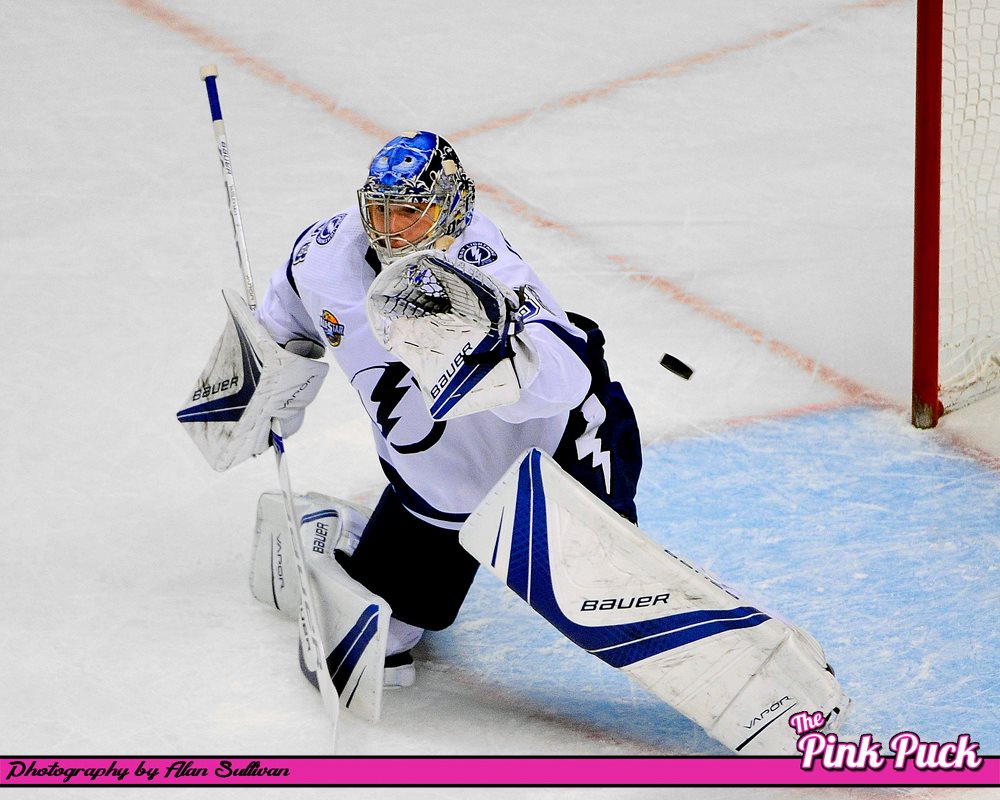
The Tampa Bay Lightning steam rolled through the NHL last season, that is until they reached the postseason. The Columbus Blue Jackets ousted the number one seed in the Eastern Conference in the first round of the playoffs. The Blue Jackets were the more determined team, and the Lightning players looked as though they could win the series on talent alone. The Lightning return a stacked roster that was improved even more in the offseason, and should be favorites to win the Stanley Cup again this year.
The Bolts didn’t need to make too many changes to the roster, but they did need to acquire a back up goalie via free agency or trade. A couple of veteran blue liners were needed to be the sixth or seventh defensemen. The Lightning would have to clear some cap space to get better while trying to re-sign key players to new deals.
FREE AGENCY
The Lightning knew that they would have to be smart with any money spent in the offseason, and they were just that. They managed to re-sign key free agents like Braydon Coburn, Danick Martel, and Cedric Paquette without breaking the bank. The contracts were cap and term friendly. The Lightning also extended defenseman Jan Rutta for one year. The biggest deal of the offseason was to sign goaltender Andrei Vasilevskiy to an eight-year extension worth $76 million dollars with a cap hit of $9.5 million per season. The new cap hit doesn’t start until the 2020-21 season.
In free agency, the Lightning landed the backup goalie that they desperately needed so Vasilevskiy can play less games this season. Curtis McElhinney decided to leave the Carolina Hurricanes and come to Tampa Bay on a two-year contract worth $2.6 million. The other big names the Lightning brought in this offseason were defenseman Kevin Shattenkirk and left wing Patrick Maroon. Shattenkirk signed a one-year deal worth $1.75 million, while Maroon signed a one-year deal worth $900,000. The other notable veterans signed were goalie Scott Wedgewood, defenseman Luke Witkowski and defenseman Luke Schenn.
TRADES
The Lightning had some work to do if they wanted some cap room to sign some restricted free agents to new contracts. The first move to unload cap space of the offseason was to trade forward J.T. Miller to the Vancouver Canucks. Miller had three years, $15.75 million left on his current deal. The Bolts cleared $5.25 million off the books for each of the next three years. The Lightning got a prospect and two picks back in the trade.
The other trade this offseason sent a well liked, but often injured player to the Ottawa Senators. Ryan Callahan and a drafted pick to the Ottawa Senators for Mike Condon and a draft pick. In the trade, the Lightning cleared another $3.4 million off the books. The two players are both unrestricted free agents after the season, but Condon is set to make $2.4 million. Callahan was slated to make $5.8 million, but he will likely be placed on long-term injury reserve due to a career ending neck injury.
OVERALL GRADE: C
The Lightning managed to create some cap space while improved an already stacked roster. The team signed players to cap friendly deals, but signed the goaltender to a pretty hefty contract. They also got the backup goalie needed so Vasilevskiy can get a break during the season, if needed. The Bolts also signed key restricted free agents to new deals, but there remains one key player not signed heading into training camp and preseason.
Brayden Point really stepped up his game last season for the Lightning, and yes, playing with Nikita Kucherov and Steven Stamkos helped. Point is a key player in all facets of the game for the Lighting. He brings speed to the lineup and he isn’t afraid to go to the net. He is often used on the power play, as either the net front presence or a setup guy. If Point is signed and starts the season on time, then the Lightning offseason grade would get boosted up to a B.
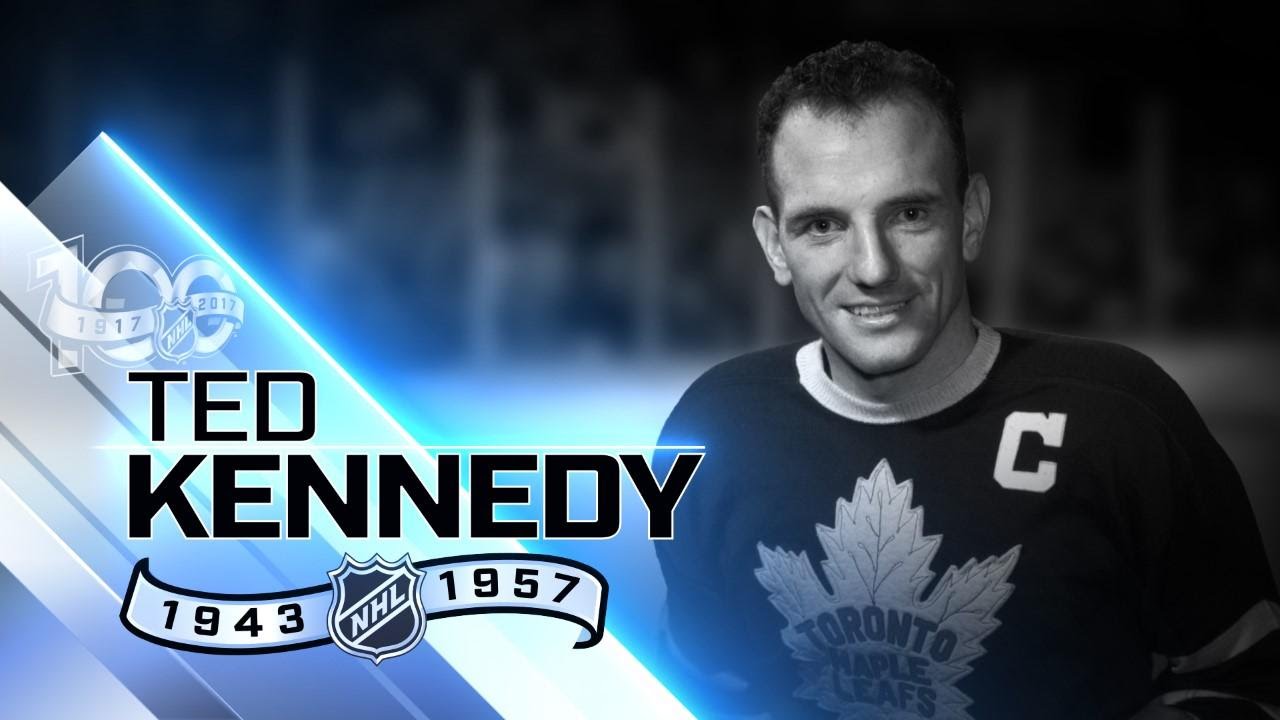
During the early 1940s, Toronto and Montreal played catch, tossing two young players between them. The game ended on September 10, 1943 with Frank Eddolls going to the Canadiens in return for the Maple Leafs keeping Ted “Teeder” Kennedy. It has been called the best trade Toronto ever made, from which they created a dynasty.
Kennedy was born in Humberstone, Ontario, less than two weeks after his father died in a hunting accident. His mother worked at the local hockey arena, where he spent most of his time. From at least the age of 7, when he first saw No. 9 Charlie Conacher, Kennedy was a Maple Leafs fan. He later said, “It was a boyhood dream to play for Toronto.”
However, the first NHL team to show interest was Montreal. In 1942, they invited the 16-year-old to the training camp for their junior team, the Montreal Royals. The scout assured Kennedy’s mother that they would be paying for him to attend Montreal’s prestigious Lower Canada College. From the moment he arrived without anyone from the team to greet him or assist him, Kennedy had bad feelings about continuing with the team. After three weeks, Kennedy grew homesick enough to head home.
Back in Ontario, Kennedy played for the Port Colborne Sailors senior team. Their coach was none other than Nels Stewart, a record-setting NHL goal-scorer (who would be inducted into the Hockey Hall of Fame in 1952). As the season ended in February 1943, a scout negotiated with Kennedy to sign a contract with the Montreal Canadiens. Kennedy declined, explaining, “It wasn’t a bluff for more money, I simply had no intention of going to Montreal.” The scout warned that the only way to turn pro was with the Canadiens.
Meanwhile, Stewart had other ideas, considering Kennedy “a coming great.” He told the Maple Leafs about his protégé and got him a meeting. On February 28, Kennedy traveled to Toronto, was met at the train station, and by that evening, signed a contract with interim GM Frank Selke. As the youngest player ever to dress for the team, he debuted with the Maple Leafs on March 7 and impressed all of the coaches.
As Kennedy was still “officially” owned by the Canadiens, Toronto had to make a trade to obtain clear rights. Once that was done on September 10, Kennedy spent his inaugural season with the Leafs in 1943-44. Coach Hap Day said at the time, “We know we are giving up a strong defence player to deal with Kennedy, but we won’t be shy of defence material after the war and we do need attack strength now.” Selke said much the same. “We are taking a gamble. We think Kennedy is a coming star.”
On the other end of the trade, Eddolls was actually returning to Montreal. The defenseman grew up in Lachine, Quebec and had an arrangement with the Canadiens while playing in juniors. After his Oshawa Generals won the 1940 Memorial Cup, the Maples Leafs wanted to sign him. On June 7, 1940, Montreal traded Eddolls’s rights to Toronto in return for the rights to Joe Benoit. The following year, Eddolls began playing for the AHL Hershey Bears, but he soon left for military service. The trade happened while he was serving, so he returned home to find himself at the Canadiens’ training camp.
Eddolls remained with the Habs for three partial seasons, winning the Stanley Cup in 1946. He was traded to the New York Rangers in August 1947 and finished out his NHL career there in 1952. On October 8, 1952, Eddolls was actually sold back to Montreal, to serve as playing coach of the AHL Buffalo Bisons. Eddolls had one last NHL hurrah, as coach to the Chicago Blackhawks for the 1954-55 season.
Though the trade has widely been praised as one of Toronto’s best, it came at the cost of a schism in management. At the time, Selke was only covering for GM Conn Smythe, who was serving overseas during the war. As Selke himself said (in 1962), “I told Dick Irvin that the Maple Leafs were desperate for bodies to fill the lineup, and that we could give up the rights to [Frank] Eddolls for the rights to Ted Kennedy. After weeks of negotiation and a lot of hesitation, Gorman and Irvin finally consented to make the trade. Fearing they might change their minds … Happy Day and I completed the transfer of Eddolls to Montreal without taking the time to consult Smythe … [We] received a cable from France ordering us to cancel the deal. It was ignored, and Ted Kennedy developed into as effective a hockey player as the Maple Leafs ever owned. But the deal spelled finis to my usefulness as an assistant to Conn Smythe.”
Smythe was so furious when he returned, in 1946 Selke decided to go to Montreal himself. During Selke’s 18 years managing the Canadiens, they beat Toronto’s dynasty by winning five consecutive championships. Meanwhile, back in Toronto, Smythe ended up praising Kennedy as the “greatest competitor in hockey.”
Kennedy had a Hall-of-Fame career in which he only ever played for Toronto, leading to him being called the “quintessential Maple Leaf.” Coach Day made him into the best faceoff man in the league and earned a reputation for making important goals during playoffs. The Leafs won five championships during his first seven seasons, including three consecutively. Having become captain in 1948, he accepted the Stanley Cup on the third win by telling the crowd, “We must have been an awful strain on you because there were times when even we didn’t think we were going to get into the playoffs. But here we are – and there’s the Cup.” At the end of his career, as something of a lifetime acknowledgement, in 1955 he was awarded the Hart Trophy as league MVP. After a brief return to assist his struggling team, Kennedy retired for good in 1957.
Having worn No. 9 throughout his junior career, Kennedy finally received the prized number in the NHL at the start of the 1946-47 season, when Conacher himself presented the number to him. Thus began Toronto’s tradition of having a player pass down his number to another great player. In 1993, the Leafs retired No. 9 for Kennedy and No. 10 for Syl Apps. Kennedy was inducted into the Hockey Hall of Fame in 1966.
Additional Sources:
Eric Zweig, The Toronto Maple Leafs: The Complete Oral History(Dundurn, 2017), kindle version.
Induction into the Hockey Hall of Fame is a great honor. In 1980, the Hall chose two goalies and two men who coached in the American Hockey League (AHL) before moving up from there. At the ceremony held September 8, Gump Worsley, Harry Lumley, Lynn Patrick, and Jack Butterfield were inducted.
Worsley was born in 1929, but he did not break into the NHL until 1952, having played in five different leagues up until that point. He won the Calder Trophy that first season, despite the overall poor showing by his New York Rangers. Oddly, he became the only Calder-winner sent back to the minors for the entire season following his award. Returning to the Rangers, he stayed for the next decade. In 1963, they controversially traded him to the Montreal Canadiens, where he remained seven seasons, winning four championships. Worsley retired in 1969 due to his fear of flying. Being told there wouldn’t be much traveling and that he would receive bonuses based on wins and shutouts, Worsley un-retired, signed with the Minnesota North Stars, and ended up staying four years. As one of the few remaining holdouts, during his last six games, Worsley finally wore a mask.
After 860 games, Worsley had 43 shutouts and a 2.91 goals against average. He was called an “iron goalie.” Despite his long 20-year career, Worsley said at his induction, “I never wanted to leave the sport. I had so many great memories I didn’t want them to stop.”
Born the year after Worsley, at 17 “Apple Cheeks” Lumley was the youngest goalie in the NHL when he backstopped the Detroit Red Wings during World War II. He remained in Detroit through their 1950 Stanley Cup victory, after which they stuck with Terry Sawchuck and traded Lumley to the Chicago Blackhawks. Lumley went back and forth with Chicago and the Toronto Maple Leafs before ending up with the Boston Bruins in 1957 and retiring there in 1960. While with Toronto, Lumley earned the Vezina Trophy in 1953-54. He set a record with his 13 shutouts that stuck until 1970. By the time he was inducted, Lumley was a retired businessman who could “never watch hockey games much anymore” because he would “get too tense.”
As Patrick had died in January, his son Craig accepted the honor on his behalf. Craig would receive his own induction in 2001. Lynn’s father Lester and uncle Frank had already been inducted in 1947 and 1958, respectively. Hardly surprising then that the Patricks have been called “Hockey’s Royal Family.”
As for Lynn Patrick’s worthy career in the NHL, he was actually inducted as a player. After reluctantly (due to nepotism accusations) signing with the New York Rangers (led by his father), he skated with them from 1934 to 1947, winning the Stanley Cup in 1940. After hanging up his skates, Patrick briefly coached the AHL’s New Haven Ramblers before temporarily taking over as the Rangers’ coach. He began coaching the Boston Bruins in 1950 as their GM and then spent the last decade with them just managing. In 1967, Patrick became the St. Louis Blues’ first GM and coach and then became vice president before retiring in 1977.
Butterfield spent six decades working in the AHL, and his start could also be considered nepotism. After breaking his back while serving during World War II, he worked as a trainer with the New Haven Eagles led by his uncle, Eddie Shore. After a few years in other leagues, Butterfield led the AHL’s Springfield Indians as trainer then coach and even general manager. With him as GM, they won three consecutive Calder Cup championships at the beginning of the 1960s.
In 1966, Butterfield took on the role he became best known for and held for a record 28 years, president of the AHL. His successor, David Andrews, said later in eulogy, “The American Hockey League would not exist today were it not for the efforts of Jack Butterfield during his tenure as president. He is a hockey legend and his contributions will forever be honored by the AHL.” He helped the league survive and restructure as the NHL expanded and the WHA came and went. Along those lines, Butterfield revised the league’s constitution and by-laws, and the NHL Rules Committee often asked his opinions.
After his HHOF induction, in 1984, he won his second James C. Hendy Award as outstanding executive. In 1985, Butterfield received the Lester Patrick Award for service to hockey in the U.S. He received the first Thomas Ebright Award for career contributions to the AHL when the award was given in 1998. The AHL finally inducted Butterfield when they began their own Hall of Fame in 2006. In his honor, the Jack A. Butterfield Trophy has been awarded annually since 1984 to the AHL playoff MVP.
Additional Sources:
“Worsley Inducted,” New York Daily News, 9 Sept. 1980, p. 41.
Glenn Cole, “Worsley enters Hall of Fame,” Montreal Gazette, 9 Sept. 1980, p. 17.
“Worsley, Lumley joine Hockey Hall of Fame,” Ottawa Citizen, 9 Sept. 1980, p. 23.
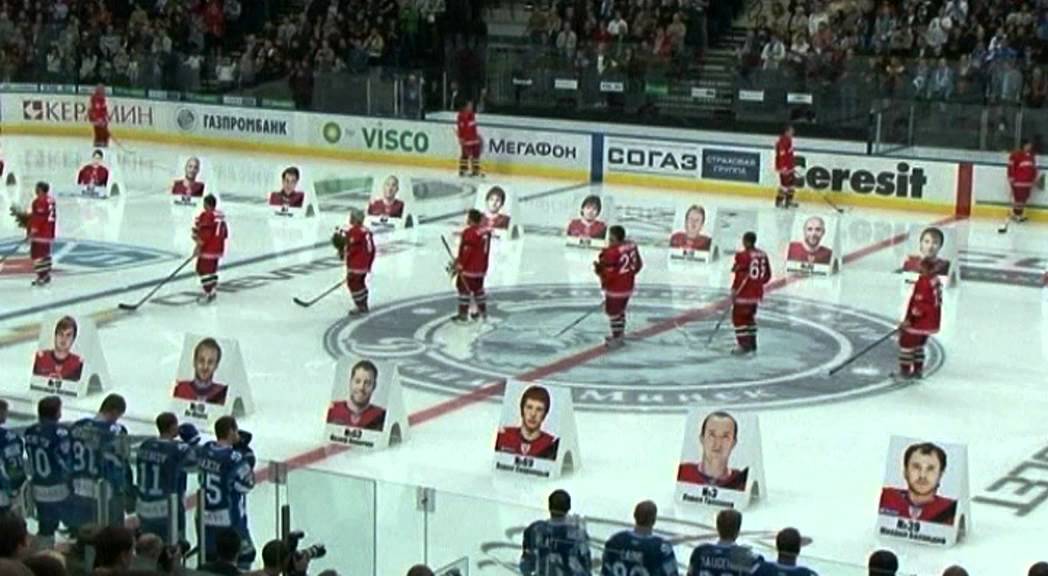
Remembering tragic events can be painful, but the memory of those lost must be honored. On September 7, 2011, a plane crash took the lives of the Lokomotiv Yaroslavl, a Kontinental Hockey League (KHL) team. The ice hockey world mourned together.
The Lokomotiv Yaroslavl had a lot to look forward to when they boarded the chartered Yak-Service Flight 9633 at Tunoshna Airport bound for Minsk, Belarus. They were on their way to their opening game of the 2011-12 season. Three former NHL players (Ruslan Salei, Pavol Demitra, and Kārlis Skrastiņš) were about to make their KHL debut, led by new coaches, also former-NHLers, Igor Korolev and Brad McCrimmon. As Demitra’s agent, Matt Keator, said after the news broke, “I was just there [for their exhibition game], and saw all those guys. Pavol organized a night out, everyone was happy. And you could tell Brad was just psyched to be there and be the head coach. It was such a lively, fun group of guys. This just doesn’t seem possible.’’
Sadly, they never made it to their destination, having hardly made it out of Yaroslavl. The Yakovlev Yak-42 charter flight crashed due to issues during takeoff. According to the report from the subsequent investigation (released that November), the pilots’ poor training, miscalculations, and improper foot placement on the pedals caused the tragedy. In addition to a few other personal problems with the pilots, the main issue was that they inadvertently activated the wheel brake by stepping on the upper part of the pedal (rather than stepping on the lower part to steer). A test pilot who helped investigate, Ruben Yesayan, explained, “A properly trained pilot would have immediately aborted the takeoff when he saw the nose failing to lift. The plane would simply have rolled past the runway and everyone would have been safe.”
The crew waited too long to try to lift the plane and ended up overshooting the runway. The result was that the Yak-42 briefly lifted off too steeply before crashing along the Volga River and exploding into flames.
Almost all of the 45 people on board were lost. By the numbers, 43 died in the crash. Those killed included, 25 players from 10 nations, 19 of them born in Yaroslavl, with 6 of them having played in the NHL. They made up the entire roster plus 4 members of their youth club. The head coach and 2 assistant coaches who died had all played in the NHL. The team had also brought 8 other staff members. The other 7 who died belonged to the flight crew.
Of the six players and three coaches who had previously played in the NHL. Three of them had their names etched on the Stanley Cup. Coach McCrimmon (Canadian) won with the Calgary Flames 1989; Assistant Coach Alexander Karpovtsev (Russian) with the New York Rangers in 1994, and lead scorer Josef Vasicek (Czech) with the Carolina Hurricanes in 2006.
After an 18-year career as an NHL defenseman, McCrimmon spent the next 12 as an assistant coach before being named head coach of the Lokomotiv. He never made it to the first game. His former Boston Bruins teammate, Steve Kasper, said, “Brad had a passion for coaching, he stuck with it … he didn’t have to tell you – you just knew it, from his passion and enthusiasm.’’
Only two people on board the flight survived. Russian winger Alexander Galimov made it out of the crash but did not last the week due to his injuries. The only actual survivor was a 52-year-old airline mechanic and flight engineer, Alexander Sizov. The month following the crash, he spoke to the media from Sklifosovsky Medical Center, where he was recovering from shock, burns, and fractures.
Sizov had inspected the plane before takeoff, and he said, “I didn’t notice anything wrong.” Upon starting the takeoff process, he immediately knew there was a problem. “I quickly realized that we were on unpaved ground. The plane started falling shortly after takeoff, and it was clear that we were going to crash. On impact, everything started flying. Something hit me hard, that’s why my left side is all busted up. Once in the water, I honestly didn’t see or notice anything around — not the fires, not the plane, nothing.”
Memorial services across the globe were held on September 10. Yaroslavl’s Arena 2000, where the Lokomotiv played, hosted about 100,000 mourners. Many national and NHL teams honored their fallen teammates. At least three countries retired the numbers of their players – No. 38 for Pavol Demitra of Slovakia, No. 20 for Robert Dietrich of Germany, and No. 7 for Kārlis Skrastiņš of Latvia. The Dallas Stars and St. Louis Blues placed stickers on their helmets with No. 37 for Skrastiņš (of the Stars) and No. 38 for both Demitra and Igor Korolev (of the Blues). Patches were worn by the Hurricanes for Josef Vašíček, by the Ducks for Ruslan Salei, by the Devils for Karel Rachůnek and Alexander Vasyunov, and by the Red Wings for Salei, Stefan Liv, and McCrimmon.
As a result of the tragedy, Russia set policies to improve airline safety. Before September even ended, Yak-Service had its operating license revoked. As lead investigator Alexei Morozov said, “The company practically lacked a proper system of flight oversight and controls over air safety.” The KHL suspended its season by five days. Unsurprisingly, the Lokomotiv canceled their season but made plans to return a year later.
Additional Sources:
Kevin Paul Dupont, “McCrimmon among plane crash fatalities,” Boston Globe, 8 Sept. 2011.
The Nashville Predators were one of the teams that most people around hockey thought would have a deep playoff run, but that didn’t happen. The Predators were eliminated in the first round by the Dallas Stars. There were a few factors that led to the elimination, but the biggest one was the ineptitude to score while on the man advantage.
The Predators have one of the best defenses in the NHL so they didn’t need any help there. If anything, the Predators were going to have to shed a contract from the blue line to get some cap space to sign a free agent or two. The team needed to add some scoring depth throughout the lineup, but especially add another big playmaker or scorer to the top six. The Preds crease was also set with Pekka Rinne and Juusse Saros as the goalies. The team absolutely wanted to find another player that could help an inept power play, which ranked as one of the worst in the League last season.
FREE AGENCY
The Preds made one major move in free agency and that was to sign center Matt Duchene. The center didn’t come cheap, but the Predators got him at a cheaper cap hit than other teams would have, if he signed elsewhere. Duchene signed a seven-year, $56 million contract that has a cap hit of $8 million per season through the 2025-26 season. In free agency, a team will pay a hefty price to get a decent player because he could sign with any of the other 30 teams.
Duchene will give the Predators the option to split Ryan Johansen, Viktor Arvidsson and Filip Forsberg, if necessary. The Duchene signing will also give the team some depth down the middle of the ice and balance out the top six a little bit more. The center should definitely help what was an inept power play last season. There was too much passing and not a willingness to shoot. The power play also lacked a net front presence at times especially when Arvidsson and Forsberg were out injured.
TRADES
The Predators knew going into the offseason that they needed to shed some cap space going into free agecy, and that it would likely be one of the higher paid defenseman. The rumors were swirling early that P.K. Subban would be the one moved, and it made sense with his cap hit of $9 million dollars for the next three seasons. Dante Fabbro came up late in the season and played well so he could easily take Subban’s roster spot, as he is mobile and can move the puck.
The Predators acquired defenseman Jérémy Davies and Steven Santini from the New Jersey Devils for Subban and Adam Helewka. The Predators also received two draft picks in the deal. The deal made sense for both teams since the Predators needed to shed the cap space and the Devils needed a defenseman with Subban’s offensive ability.
OFFSEASON GRADE: C-
The Predators improved the team by signing one of the best available centers in free agency in Duchene. David Poile also signed Colton Sissons to a seven-year, $20 million cap friendly deal. They traded away a dynamic defenseman who can move the puck and skate. The team didn’t do too much to improve the bottom six of the lineup so the balance just won’t be there again this year. The Predators will be a two-line team that will rely on defense and goaltending to win games.




 Prev
Prev