(photo: REUTERS/Petr Josek)
By Andrew Imber
When the United States hits the ice against Russia, tomorrow, there will be a lot on the line. First place in the group will almost certainly go to the winner of the important tilt, and with that comes a bye into the Quarter Finals. Also, if either team is able to put together a resounding victory, they will be in the running for the top seed, which ensures avoiding the second and third seeded teams until the Gold Medal Game.
With the other two groups finished with two games, things are starting to become clearer. Currently, it appears as though the winner of the Canada/Finland game will be a major player for the top seed. The winner of that game will finish 3-0 in round robin, and will have a goal differential of at least positive nine. This means that the United States is within easy striking distance with a win against the Russians (they would need to beat Slovenia by a few goals, unless Canada/Finland results in a blowout). Sweden will be in the picture, as well, but will need to beat Latvia by a large margin.
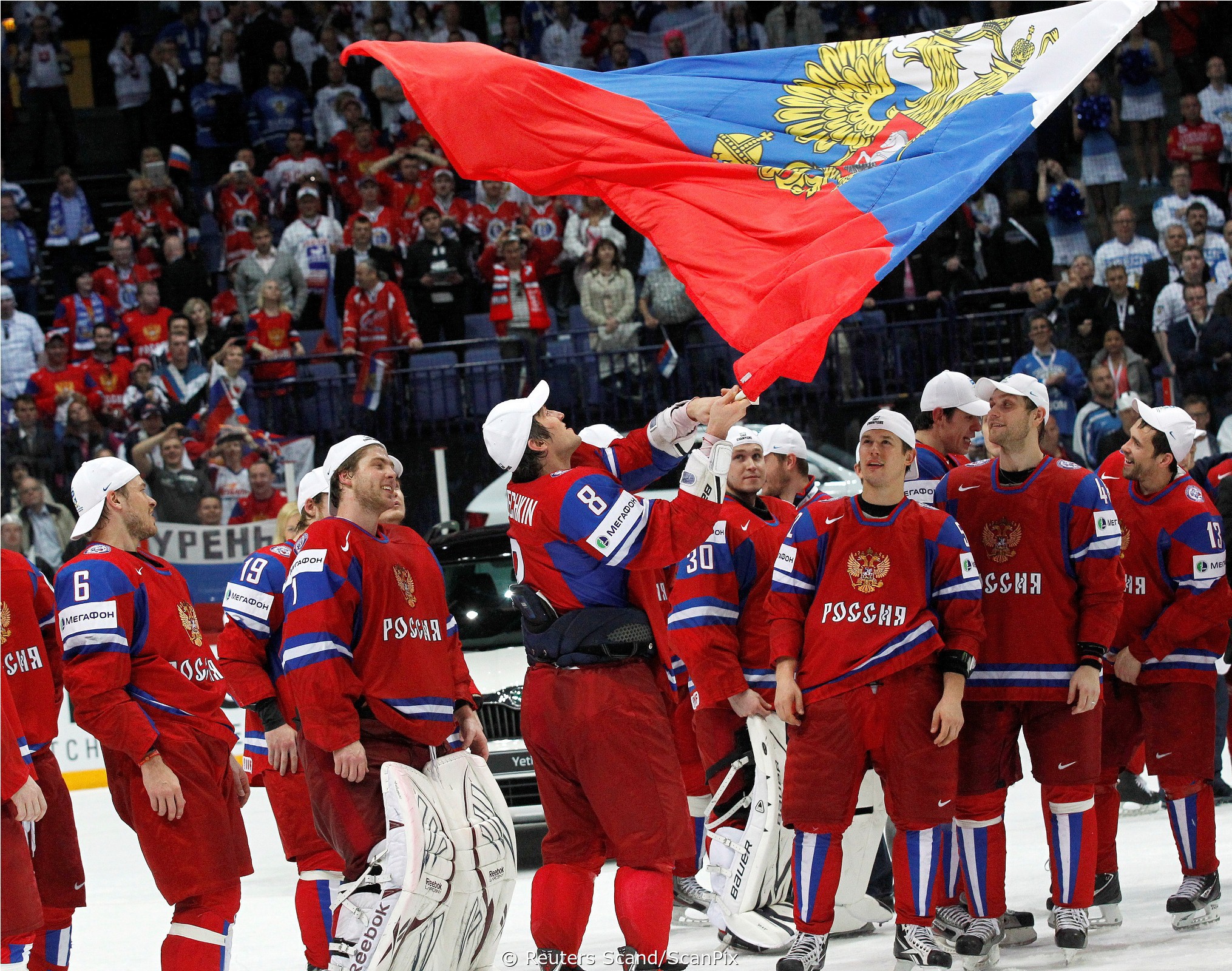
First things first – the focus on Russia. Though they played a surprisingly close game against huge underdog Slovenia, the crowd will be a major force for the home side. The Russian roster features a major blend of NHL and KHL talent, meaning their chemistry should be improving with sixty minutes under their belts. It is a team that features a lot of high end skill, but may lack overall depth.

All eyes will be on Alex Ovechkin (Photo: Winslow Townson Winslow Townson-USA TODAY Sports)
Russia’s noteable NHL’ers – Alexander Ovechkin, Evgeni Malkin, Alexander Semin, Pavel Datsyuk, Vladimir Tarasenko, Andrei Markov, Slava Voynov, Semyon Varlamov, Sergei Bobrovsky
The Good: It’s still early in the tournament, so the mix of NHL and KHL talent could remain an issue for the home team. Rumors are swirling that Russian President Vladimir Putin will be in the house, meaning the pressure will be turned up to ’11’. A quick start by the United States could turn the fans in a hurry. Russia was anything but dominant in their 5-2 victory over 1,000-1 Gold Medal underdog Slovenia. The bottom six forwards of Russia are solid but not spectacular, and their defense is brutally thin. A lot of their high end talent is known for one-way offensive hockey, and their best two-way forward (Datsyuk) might not be 100%. The United States should be able to exploit some questions on Russia’s back end.
The Bad: Russia has quite a few game breakers. Unlike Slovakia, who really had nobody (except arguably Hossa) capable of taking over a game, the Russians have multiple players who can turn the game on its head in an instant. Ovechkin and Malkin are two of the most dynamic players in the World, Ilya Kovalchuk will remind fans why he’s still relevant, and guys like Markov and Voynov can bring it from the point. If he’s even close to healthy, Datsyuk is a problem at both ends of the ice. The home crowd has the ability to give this team a lot of momentum if they start to score in bunches. Though it was a question mark at one time, Varlamov and Bobrovsky give the Russians one of the better one-two punches in goal at these games.
The Bottom Line: This will almost certainly be the biggest turning point of these games for the United States. A win over the host nation sets up the US for a bye into what should be a manageable Quarter Finals match up, and could possibly set them on the opposite side of the table from Canada (should they win their group). On the other end of the spectrum, a loss puts the US in danger of having to play the extra game, and even if not, gives them what would be a more difficult Quarter Finals, and almost certainly one of the bigger powers by the Semis. Can the United States win it all with a loss against Russia? Absolutely. But the numbers (odds) will be a lot more friendly with a win tomorrow.
(photo: nbcolympics.com)
“It may seem insensitive for just keep going after the offense,” announcers Eddie Olczyk and Brian Engblom admitted during the second intermission of today’s contest between the Canadian and Austrian men’s hockey teams, but the nature of Olympic scoring awards points for goal differentials, and Team Canada wasn’t taking any chances earlier this afternoon.
Dark horse forward Jeff Carter in particular seemed to take that knowledge to heart, scoring a natural hat trick early in the second period (Canada’s first since 1956, also against Austria). Carter, who was brought to Vancouver as the “in case of injury” back-up in 2010 clearly came to prove that he belongs on a starting roster that boasts names like Sidney Crosby, Jonathan Toews, Ryan Getzlaf, Shea Weber, and Patrice Bergeron.
(In case we forgot, Olczyk and Engblom were kind enough to remind us: “Patrice Bergeron–and we don’t recommend this, to all you youngsters–played in the Stanley Cup Final with a punctured lung.”)
Most of the game’s action came in that second period, where we saw everything from penalty shots to short-handed goals to hat tricks. Corey Perry was awarded a penalty shot after Florian Iberer took a penalty for hooking, but Canada wasn’t able to monopolize on the opportunity. Patrick Marleau also showed up big to the game, registering an assist on all three of Jeff Carter’s goals. Jamie Benn, who has impressed (and maybe surprised, a little) with his gameplay in the tournament so far, sat in the penalty box while Getzlaf scored an unassisted shorthanded goal in the closing minutes of the period.
Canada’s strength in their matchups so far has been forward-thinking defense, whose aim seems to be as much goal-oriented as their offense. There was constant pressure from their home zone, and it allowed Canada to keep the puck in front of Austria’s net. Combined with the patient, fluid offense that Marleau and Carter showed up front, and we saw a team that clearly has its eyes on gold.
The Austrians held Canada at a 6-goal standstill throughout the third period, though they weren’t able to steal a goal for themselves. Robert Luongo, who started this game instead of Carey Price, made 23 saves (Austrian goalies Bernhard Starkbaum and Mathias Lange combined to make 40 saves of 46 shots on goal).
Austria will next face Norway on February 16 at 3a.m. EST, and Canada is slated to take on Finland at 10a.m. EST the same day.
Sweden edged Switzerland this morning, 1-0, in their second game of Olympic round robin play.
Lundqvist stopped all 24 shots in the contest, which remained scoreless through two periods of play. Switzerland’s strong forecheck in the first period resulted in 13 shots on net, but no production. The Swedes exploded in the second period and put 17 shots on net with the same result.
Neither team could capitalize on their respective power plays, despite Sweden’s four and Switzerland’s two throughout the game. The game-winning goal came from Daniel Alfredsson, assisted by Erik Karlsson, at 12:39 in the third period.
Reto Berra of Switzerland stopped 28 of 29 shots from the Swedes.
Karlsson has now notched two goals and one assist in Olympic play. Lundqvist’s Olympic save percentage is .962%.
The Swedes will face Latvia tomorrow, and Switzerland will square off against the Czech Republic. Both games are at 12 p.m. Eastern Time.
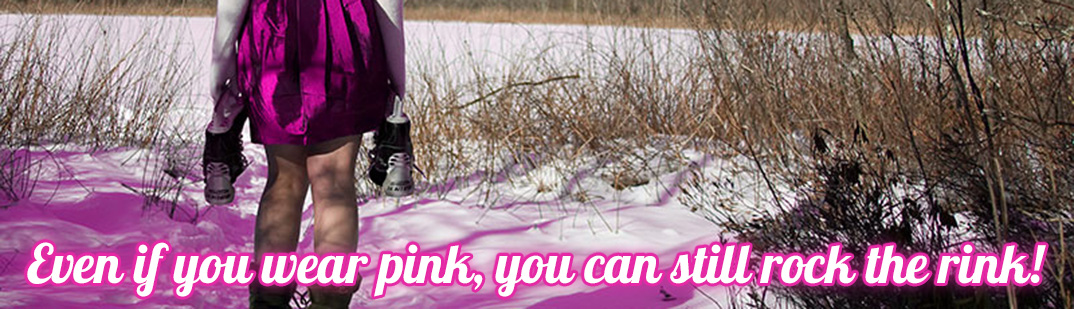
In the real world, today especially, people may hem and haw over your love life or lack thereof. The debate of why you’re single, how long you’ll be taken and how depressed you are that you didn’t receive a box of chocolates or a bouquet of roses takes center ice on February 14th.
But your status doesn’t matter, because you’ll always have a true love: hockey.
Perhaps the greatest relationship you will ever have, it will make you laugh, cry, give you the greatest sense of elation and turn around and break your heart. But it will always be there to aid in the good times and in the bad. As long as you love the game, it will ultimately love you back.
In honor of one of the most loved and despised holidays, from our Pink Puck family to yours, Happy Valentines Day!
(Photos: Pinterest)
(photo: usahockey.com)
By Andrew Imber
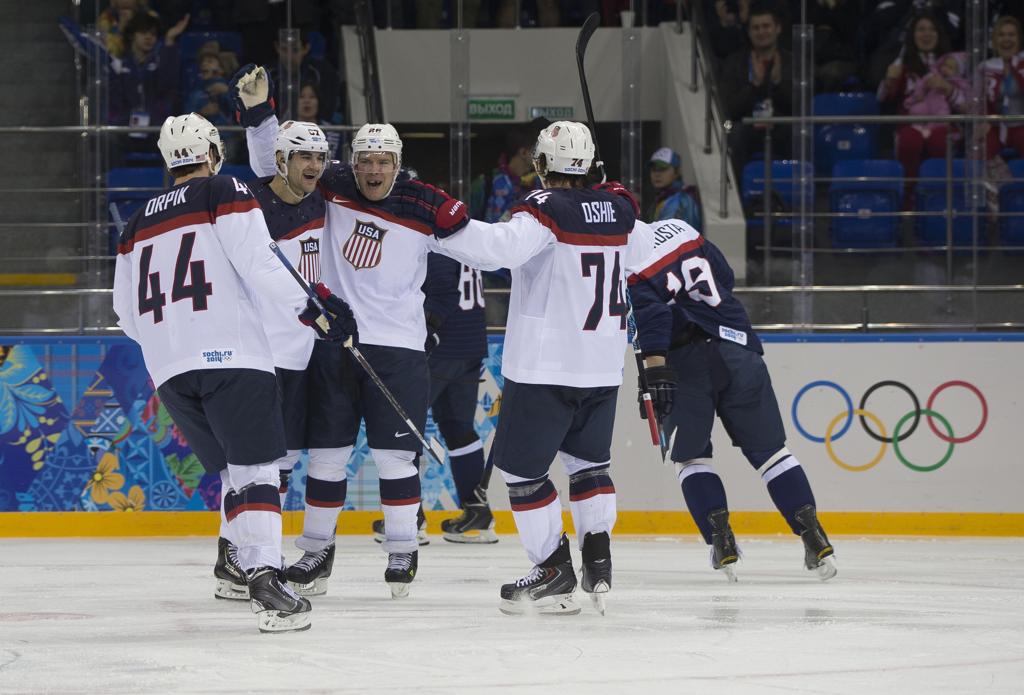
When all was said and done, and the final buzzer went off to signify the end of the United States’ 7-1 victory over Slovakia, the Stars and Stripes had achieved more than a big win. They had also sent a major message to the rest of the field.
Ready or not, here they come. The United States Men’s Hockey Team is for real.
With one game in the books for each team, the United States sits atop the standings based on goal differential. It is also important to note that they did not play the bottom ranking team in their group. They played Slovakia, and though they are older, they were a legitimate contender in 2010. Time will tell just how far Slovakia has fallen in the past four years, or how much the United States simply made them look it.
You can’t overreact to one game, but everything the United States was built to do worked in the opener. They were fast, physical, and dominated virtually the entire game. Their mobile blue line was excellent in transitioning the play out of the defensive zone, assuaging concerns of their overall inexperience. They scored in bunches, and took advantage of the existing chemistry of Toronto teammates Phil Kessel and James van Riemsdyk, as well as new chemistry with combinations such as Paul Stastny, TJ Oshie, and Max Pacioretty. And though he wasn’t tested often, Jonathan Quick did what needed to be done to keep the game in hand.
As I alluded to in my preview of the contest, this win sets up the United States for good things. Of course, they want to beat the Russians, and doing so would almost certainly lock up the group and a bye to the Quarter Finals, shortening a tournament where anything can happen. However, if they do happen to lose to the host nation on Saturday, they will still be firmly in the running for a bye, and a strong seeding for the elimination round. There will be no ‘must-win’ games until the games are literally must-wins, with a trip home as the only alternative.
The United States against Russia may be the most anticipated game of the round robin, and there’s a good chance that the winner may grab the number one seed heading into elimination. The biggest thing about the number one seed is that you are set on the opposite side of the table from both the second and third seeds. Less complicated, that means the number one seed does not have to worry about the second or third seed until the Gold Medal Game, should they get there. If the second and third seeds end up being Sweden and Canada, that would be quite the luxury for the United States.
For now, it is a great start. However, it is only the beginning of the journey. All aboard for the ride.
This morning—last night to people in saner time zones—the Germany and Japan women’s ice hockey teams met for their penultimate Olympic performances. Both teams were eliminated from the medals race before the match even started. So, some may wonder, why bother paying attention to this game, and these teams, at all?
Well, for one thing, Japan and Germany certainly didn’t play like teams who had been eliminated from medal contention. Germany was a little quicker than Japan, but Japan proved to have formidable puck handling skills and took some really good runs at the German goal in the first period.
Japan’s goalie, Nana Fujimoto—who I admire both for her taste in mask artwork and her impressive athleticism—was a key player throughout the game. Germany and Japan were well matched in shots on goal, but Germany was undoubtedly taking better shots on goal, and the score differential by the end of the game could have been disastrous if not for Fujimoto’s dexterity and skill.
Germany got on the board with 6:37 left in the first, thanks to a slapper from the blue line from Manuela Anwander; 48 seconds into the second period Germany did it again. Franziska Bushca exercised her powerful backhand and increased Germany’s lead to 2-0 over Japan.
Japan had some great breakaways—but failed to turn any of them into scoring opportunities.
In the final minutes of the game, Kerstin Spielberger scored for Germany, turning it into a 3-0 game. Japan pulled Fujimoto—why, I can’t tell you, there’s no way they’re making up for that point differential—and Buscha sank an empty netter to earn her second goal of the game. Germany came away with the win, 4-0, over Japan.
As I mentioned before, both teams are out of the medal race. They go on now to play Sunday to determine their final rankings overall.
I think you should watch.
A few days ago I was involved in a discussion online with other hockey fans, and at one point a fellow fan said she didn’t believe that the poor performance of the German women’s ice hockey team was inspiring any little girls back home in Germany to pick up a hockey stick.
I told her I hoped she was wrong about that.
It’s easy to get swept up in the thrill of your country competition for a medal, and medals are, of course, important. For some athletes it’s the only tangible glory they can achieve to recognize a peak in their career.
However, with an event as young as women’s ice hockey—and in Olympic years, women’s ice hockey is till a fledgling sport—it can be just as important to pay attention to the teams who don’t medal, who deserve appreciation and admiration just for getting to the Olympics.
Representation matters. Maybe to the well-versed hockey fan, Germany’s performance is a personal disappointment. But to a small child who maybe sees something of her self in the athletes representing Germany, Japan, Russia and Sweden, there might not be the immediate disappointment associated with a lifetime of understanding winning is most important. Maybe there’s just a moment of awe or wonder that someone who looks like her, who plays hockey like her, is in the Olympics.
Team Japan has been the happiest group of athletes I think I’ve ever seen. They’ve taken pictures everywhere, and are smiling, wide and joyful, in every one of them. They’re revealing in just being at the Olympics. And they should. For a team like Japan, who had to scrape their way into qualifying for the games at all, reaching Sochi is a victory all in itself. And who are we to take that away from them? Or the girls who may look up to them?
Japan won’t medal.
But I think they still won.
-
-
Pyatt
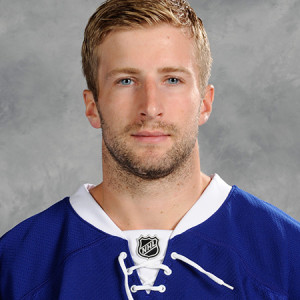
Canadian Tom Pyatt conquers the ice as a forward for the Tampa Bay Lightning. The 26-year-old (soon to be 27 as of tomorrow February 14th, happy birthday buddy), hails from a family of talent. Brother Taylor plays for the Pittsburgh Penguins, while his father is former NHLer Nelson Pyatt, talk about great genes.
While fans of the game may love Pyatt for his skills on the ice, fans may love his celebrity look-a-like for his role in the Avengers, saving the world as Captain America. The 32-year-old, Sudbury, Massachusetts native also hails from a talented gene pool, Evans younger brother Scott brings the drama on the soap opera, One Life to Live.
Despite their talents, both Pyatt and Evans have an undeniable resemblance, marking them our NHL Celebrity Look-a-like of the week!
(Photo credit: AP)
It opened looking like an evenly-matched game, with no pucks in the net until John Carlson scored top shelf with 5:33 left in the first off a drop pass from Phil Kessel. This was Carlson’s first shot in his Olympic debut.
Team USA held that lead into first intermission. Goaltender Jonathan Quick made four saves in the period.
Slovakia came out hard in the second, with Tomas Tatar tying the score off a pass from Marian Hossa just 30 seconds into the period. Slow motion replay would reveal the play was offside (in fact, Hossa seemed to hold the puck at the blue line awaiting a whistle that didn’t come before proceeding with the play), but this went unnoticed by officials.
The Americans weren’t happy with a tie, and they showed it the rest of the period.
Patrick Kane set up Ryan Kesler for a one-timer in the same top-shelf sweet spot Carlson found in the first period to take back their lead.
Paul Stastny rebounded a Pacioretty shot into an open net within the next two minutes.
Team USA scored four more unanswered goals in the second period. David Backes battled the puck through a busy net front. Stastny scored again off a cross-ice pass from Kevin Shattenkirk, making it 5-1, and sending Slovakian netminder Jaroslav Halak to the bench after stopping 20/25 shots. Peter Budaj took his place.
Less than a minute later, James Van Riemsdyk passed to Kessel, who was staking out the net and was able to tip in another goal.
And, with just 4:43 left in the second period, Dustin Brown fired a wrist shot from a John Carlson pass right past Budaj, giving USA the 7-1 lead.
The American team killed a Kessel slashing penalty to close the second and open the third, and both teams battled through a scoreless final period to close the game. For the first half of the period, Slovakia led in shots. Budaj shut down Stastny’s attempt for a hat trick with about 8:30 left in the game.
“I guess you never really expect to beat a team like that 7-1, and you never do it in a tournament like this,” Captain Zach Parise said. “We just capitalized on the chances we had, moved the puck well and used our speed.”
Kane, T.J. Oshie and van Riemsdyk had two assists apiece. Stastny and Kessel each scored twice. The new environment of European ice fared well for the team.
“For the first time on the big ice for most of us, I thought we did pretty well,” Stastny said. “Our strengths are our puck possession and our speed, and we were really able to use both of them. All four lines just kind of clicked, and so did our D-men.”
In the two previous Olympic meetings, Slovakia was victorious against Team USA.
Slovakia was just 15 minutes from a Bronze medal in their game against Finland in 2010. With players like Zdeno Chara, Hossa, and Marcus Kruger, and after a hard fought 3-2 loss to Canada just four years ago, they remain a team with potential.
“We’re going to be better,” Tatar said. “We had a solid first period and then tied it. We’ve just got to play way better in our defensive zone. I think we’re going to be ready to play the next game. We have a lot of talent in our locker room, and we’re going to sort it out.”
They’ll play Slovenia Saturday.
“It’s about one game, and you can beat anybody in one game,” Hossa told media about the Olympics before the games.
Team USA has one game behind them–victorious.
Jonathan Quick stopped 22 of 23 shots and is expected to start Saturday against Russia, with a 7:30 am EST puck drop.
To say Slovenia was an underdog coming into the competition might be overstating it. There’s pretty much no way they’re going to have a legitimate shot at medal contention when going up against such strong powerhouses such as the US, Canada, Sweden, Russia and Finland (say what you will about Finland’s defense, but they have incredible goaltending and the Finnish Flash!). That said, they did a really good job hanging with Russia while being pretty much outplayed for most of the game.
Russia took an early lead with Ovechkin scoring a goal just 1:17 into the opening frame. Shortly after that, they doubled their lead with a goal from Malkin. The Russians came out flying in the first period and really dominated the Slovenian team. By the end of the first, Russia had 18 shots on goal to Slovenia’s 4.
But credit to the Slovenians for not giving up. They played a much better period in the second and scored two goals (their only two, sadly). At 1:43, Ziga Jeglic (pronounced Yeg-lich) cut the host team’s lead in half when he beat a screened Varlamov to score Slovenia’s first ever Olympic goal. For a while, there was a flurry going both ways (neither team was doing an excellent job defending, though the Slovenians did pretty good keeping most of Russia’s shots to the outside) and Robert Kristan, the Slovenian goalie, looked like he might be able to hang with a far superior opponent. However, momentum shifted Russia’s way when Ilya Kovalchuk sniped a goal top shelf on the power play and restored the 2 goal lead. That didn’t sit well with Jeglic as he drove the net, held off two defenders and managed to sneak the puck past Varlamov to bring his country back within one. Anze Kopitar got the secondary assist on Jeglic’s goal for his first Olympic career point.
The third saw a resurgence from the Russians. Valeri Nichushkin walked in on Kristan while fighting off a lone defenseman who attempted to stop him and once again, padded the host’s lead by two. Anton Belov added the final nail in the coffin with a slapshot goal that Kristan was unhappy with.
Kristan managed to stop 30 of 35 shots, which is pretty amazing considering the offensive firepower that Team Russia possesses. And it’s also great when considering that Slovenia’s defense is not very mobile and did not help out their goalie a whole lot in this game.
Anze Kopitar played 20:18 (his average TOI in Los Angeles is 21:14. He was credited with only one shot on goal, picked up a secondary assist, had 2 PIM and won 18 of 25 faceoffs (72%).

(Photo: Getty Images via LA Kings Insider)
Slava Voynov did a good job defensively for his home country. Sometimes the best defensemen are not noticeable and though he is an offensive minded defenseman, his first duty is still to defend and he did that well. He registered one shot on goal, had an even rating and played 16:26 (his average TOI in Los Angeles is around 20 minutes).
Jon Rosen at LA Kings Insider compiled some pictures from Getty Images of the Slovenia-Russia game.

Next up for Team Slovenia: they take on Slovakia who will be looking to redeem themselves after a poor first outing in Thursday’s game. The match is scheduled to take place on February 15 at 3am ET (12pm local time in Sochi).
Next up for Team Russia: Arguably one of their more difficult opponents in the prelims, they square off against the US on February 15 at 7:30 am ET (4:30pm local time in Sochi).
(photo: www.stjohnsicecaps.com)
Last night, the AHL All-Stars took on Farjestad of the Swedish Hockey League in the All-Star Game, after a wild win in the Skills Competition the night before. This was a new take on an AHL tradition to have the best in the league face off against a team from Sweden. While teams from the AHL have occasionally made their way overseas to participate in the Spengler Cup, as the Rochester Americans did this season, this was the first time that a team from the SHL has come over to North America.
The first ever cross-league All-Star Classic in the AHL took place in front of a sold out Mile One Centre in St. John’s. It seemed like the predictions of it being a low scoring game were going to be true through the first part of the first period. But Binghamton’s Mike Hoffman got the AHL All-Stars on the board first. Bridgeport’s Ryan Strome and Abbotsford’s Ben Street quickly followed suit, putting the AHL All-Stars up 3-0 in a span of just over three minutes. Travis Morin of the Texas Stars, who leads the league in points, added one more tally to send the teams to the first intermission with the AHL leading 4-0.
About halfway through the second period, the teams made the goalie switch. Chicago Wolves’ Jake Allen left the net making a perfect 14 saves on 14 shots to be replaced by Dustin Tokarski of the Hamilton Bulldogs. Pekka Tuokkola replaced Frederik Pettersson-Wenztel for Farjestad. Less than 30 seconds after the goaltending switch, Rockford’s Brandon Pirri netted the only goal of the middle frame. The second period also saw the only penalty of the game, to Hoffman for hooking, but the best scoring chance was a shorthanded attempted by the AHL All-Stars.
Farjestad started the final period with a few second left on the power play, but it was just after the man advantage that they got on the board. Magnus Nygren, who shattered the AHL record for hardest shot the night before, fired one home from the blue line. From there, the teams traded off on scoring. Pirri added another one to regain the 5 goal lead. Farjestad captain Rickard Wallin answered back with the final goal of the night for his team. But, the AHL All-Stars would have the final say when Strome added his second with just under two minutes to go in the game.
With 2 goals and an assist, Brandon Pirri earned the honors as the Assante Wealth Management Most Valuable Player. Mike Hoffman, with a goal and two assists, was named AHL player of the game. Farjestad named Christian Berglund as their player of the game.
In addition to Pirri and Hoffman recording multiple points, Wilkes Barre’s Brian Gibbons and Albany’s Joe Whitney each had two assists. Dustin Tokarski made an impressive 20 saves on 22 shots, with Farjestad taking 17 shots just in the final period.
Farjestad had to log a lot of miles (or kilometers in their case) to make it all the way to St. John’s. Traveling there is not easy. But, to make their visit more worthwhile, they will next travel to Toronto to face off against the Marlies in an afternoon game on Saturday. After that, they head back before playing their final few games and hoping to head to the post season.
 Prev1...280281282...412Next
  Page 281 of 412