In 1934, the NHL Board of Governors bumped up their semiannual meeting by a week and met in New York on September 22. Their primary concern was settling issues with the arena rentals in Boston and Chicago so that they could schedule the 1934-35 season. The biggest change to come out of the meeting was the adoption of the penalty shot.
With the Great Depression under way, some reorganizing and renegotiating of leases took place between arenas and hockey clubs. In Boston and Chicago, the failure to come to terms threatened the NHL’s franchises in the two cities. Some Chicagoans even thought the NHL itself might have to suspend operations for a season rather than run without the two franchises. However, Art Ross of the Bruins, immediately negated that by explaining that the NHL had too much money tied up for them to even consider suspension. They would simply schedule the remaining teams if necessary.
The difficulties arose because the arenas reorganized. As a result of a two-hour meeting held September 6, Boston Garden and Boston Arena merged and changed their name to Boston Garden Corporation (from Boston Madison Square Garden Corporation). They intended to host major sporting events at the Garden and lesser events at the Arena. Bruins President C.F. Adams had not yet signed contracts with the National and Canadian-American League teams because, “I have not been approached on the subject by the new organization and until I know their proposition I will make no further statement.” By September 15, the Chicago Blackhawks had not been able to renew their lease because of reorganization with Chicago Stadium Corporation.
In both cases, the teams and the arenas feared taking losses. The Blackhawks had paid the Stadium 35% of their receipts (totaling about $10,200 for each of their 22 home games) and felt they were covering for other lesser events held there. The reorganization committee wanted the Hawks to sign a 25-year lease, which they declined. Blackhawks secretary William Tobin said, “Even if the Stadium submits a suitable proposition, or if the Blackhawks decide to carry on at the Coliseum this winter, it might be inadvisable to go ahead if Boston cannot straighten out its difficulties.”
The Bruins wanted to pay the new Garden corporation 25% of their intake (with potential bonuses), much as they had the previous season. The Garden wanted a flat rental fee of $80,000, which was less than the Bruins had paid previously ($10,000). To try to aid negotiations, on September 18 NHL President Frank Calder dropped by Boston unannounced to meet with Ross and George V. Brown, manager of the combined corporation. When that failed, all negotiations were suspended until the board meeting. At that point, Brown told the press that a group approached him about taking over if the Bruins dropped out. “I told these people, of course, that we couldn’t do any business with them unless they had N.H.L. affiliations in the form of a franchise. I understand that they are ready, if possible, to buy the Bruins and that they will start negotiations with the N.H.L. at its meeting in New York tomorrow. They are ready, too, I understand, to meet our terms as to rent.”
For ten hours on September 22, the board of governors worked with the two clubs and their rinks to ensure the NHL franchises remained in Chicago and Boston. Calder announced that the club owners had worked out rentals with Chicago Stadium and Boston Garden, but none of the specifics of the deals were disclosed. According to the Boston Globe, “Everything was hotsy totsy and lovey dovey between the Boston Bruins and the Boston Garden.”
With the Bruins and Blackhawks able to remain in their home rinks, the NHL board worked out its 48-game 1934-35 schedule. The first matches of the season would take place on November 8 in St. Louis, where the Ottawa Senators had relocated, and in Toronto. The opponents visiting each location, respectively, would be the Chicago Blackhawks and the Boston Bruins. This would turn out to be the only season for the St. Louis Eagles before they folded due to high travel costs.
One thing the Eagles will always be remembered for was scoring the first penalty shot goal. At the same meeting that scheduled St. Louis to play on opening night, the NHL board of governors adopted the penalty shot (without much opposition). It had been invented back in 1922 for the Western League by Frank Patrick (who in 1934 worked with the Bruins). According to Patrick, “The penalty shot takes the place of the former five-minute penalty against any player who commits a foul against an opponent in scoring position. It will, in other words, be called when a player is tripped ‘to save a sure goal.’ … All other members of both teams, except the goalie, must stand aside while the try is being made. If the shot beats the goalie, a face-off, as after any other goal, follows at center ice. If the goalie saves the shot, there is no ensuing scrimmage; instead the disk is faced as for a shot out of bounds, even with the goal, near one of the sideboards. … As a matter of fact, there won’t be many of these penalties called. … It’s something new, will add variety, and I think the crowd will like it. They did out West.” The first penalty shot was awarded on November 10, and the first successful shot was made by Scotty Bowman of the Eagles on November 13.
Additional Sources:
Hy Hurwitz, “Garden-Arena Plan Adopted,” Boston Globe, 7 Sept. 1934, p. 24.
“Hockey League to go on Anyway, Says Ross,” Boston Globe, 15 Sept. 1934, p. 11.
“Bruins and Garden Disagree on Rent,” Boston Globe, 19 Sept. 1934, p. 20.
“Hawks’ Rental Fight Perils Hockey League,” Chicago Tribune, 15 Sept. 1934, p. 19.
“Bruins and Garden Negotiations Rest,” Boston Globe, 21 Sept. 1934, p. 25.
“All Serene with Bruins,” Boston Globe, 24 Sept. 1934, p. 18.
Victor O. Jones, “Bruins Open Home Season in Boston Garden Nov 17,” Boston Globe, 25 Sept. 1934, p. 19.
“Board Adopts Schedule and Puts O.K. on Penalty Shot,” St. Louis Globe-Democrat, 23 Sept. 1934, p. 9A.
“Hockey Moguls To Gather Today,” Ottawa Journal, 22 Sept. 1934, p. 24.
“Opening Hockey Dates Are Issued,” Ottawa Journal, 24 Sept. 1934, p. 14.
“Hawks Settle Rental Fight with Stadium,” Chicago Tribune, 23 Sept. 1934, p. 25.
With the signing of Brandon Carlo on Tuesday, September 17, 2019, the core group of the Boston Bruins is back together and things are looking good for the team that went all the way to Game 7 of the Stanley Cup Final this past June..
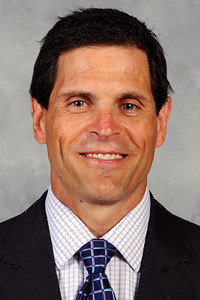
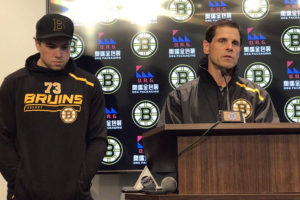
Don Sweeney
To say there was concern that both Charlie McAvoy and Carlo could be signed given the limited amount of cap space the Bruins had would be an understatement. Yet somehow the Bruins general manager, Don Sweeney, managed to work with both players’ agents to reach contracts that each player was happy with. Certainly Sweeney should be commended for the negotiations, but the team and especially the core leadership should also be acknowledged for what they contribute with valuable intangibles.
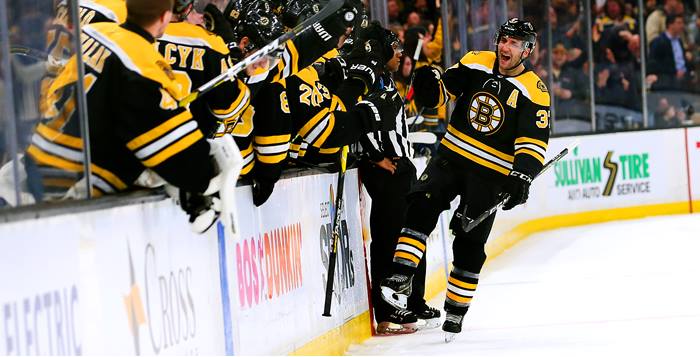
Back when Patrice Bergeron was negotiating his current contract, he was willing to get paid a little less to remain with the Bruins organization. He knew he could have gotten a bigger paycheck as an unrestricted free agent had he put himself on the open market, but he wanted to continue his career wearing a Spoked-B on his chest.
Recently defenseman Torey Krug, who is in the final year of his current contract, intimated that he might be willing to take a little less to remain in Boston, as was reported by Tommy McArdle of Sporting News.
“Would I take less to stay in Boston? It’s something that
I’ve talked about with my family and my agent. It’s something I’m interested
in. How much less—that’s a question that will be answered at a certain time. I
think something that’s fair will be able to be worked out both ways. As long as
they want me, I think something could be done, realistically. Everyone does it.
How much they do it, is kind of their own opinion and [dependent] on their own
circumstances.”
McAvoy took a bridge deal and talked about how happy he was
to be remaining with the Bruins, whom he called a “family.”
Sure, the reference to a team as a family has a cliché feel to it, especially when you hear it from those who have been with a team for awhile. But there is definitely something special about the Bruins’ locker room that makes it seem much more than the trotting out of the standard clichés.
Brandon Carlo vs. Travis Zajac
“It’s just a special room in the regard of everybody wanting to be here and staying here. It’s like a family here. For me I haven’t been with any other NHL teams, but from guys that have come over… For instance, Charlie Coyle last year, the first day that he was with us, he said that he noticed just something special within this group and how we all communicate with each other and are just so close. I recognize that, you know, I realize how blessed I am to be here with that kind of atmosphere, so you obviously don’t want to lose that,” Carlo said after his first practice on Tuesday.
Even players like Brendan Gaunce, who has only been with the Bruins since the start of training camp recognizes what a special team and locker room he is being exposed to. He is not a rookie. His past seven seasons have been with the Vancouver Canucks organization playing also with their American Hockey League affiliate, the Utica Comets. During the 2018-19 season he played only three games with the Canucks, while playing 60 with the Comets.
“I think as a hockey player, that if a team goes far, it’s
usually a pretty welcoming group. It obviously allows young guys to play their
own game; to be themselves, and that’s how you have success. You just know with
the success and all the young guys they integrated into their lineup, they
obviously are a welcoming bunch and it shows on the ice,” Gaunce shared..
So how does this recognition of such a close team resonate
with the veteran leadership? Is it something that they created?
Patrice Bergeron in front of Roberto Luongo
“I think that’s great to hear. I think that’s kind of the culture we’ve tried to establish here. It goes beyond my years basically and we try to keep that going with me, [Zdeno Chara] and the rest of the core guys. So it’s nice to see that, you know, the younger guys are buying in. They’re going to obviously be the future of this franchise. It tells a lot. I think they’re right and I feel the same way. I feel like it is a family. That’s what you try to create. You try to create a bond beyond just being teammates and we’re all working towards the same goal,” said Bergeron.
Certainly Sweeney
deserves a lion share of the recognition in his ability to communicate with
each player and his agent. But it is also possible that one of the bargaining
chips he has to offer is the intangible bonus of that close knit team, or lets
just use family, that the player would be giving up should the two sides not be
able to reach an agreement.
Regardless of how it all came together, the family has been reunited and they are definitely all on the same page in their expectations for the coming season. Sweeney even made sure that head coach Bruce Cassidy would continue to work his magic behind the bench with a multi-year contract extension.
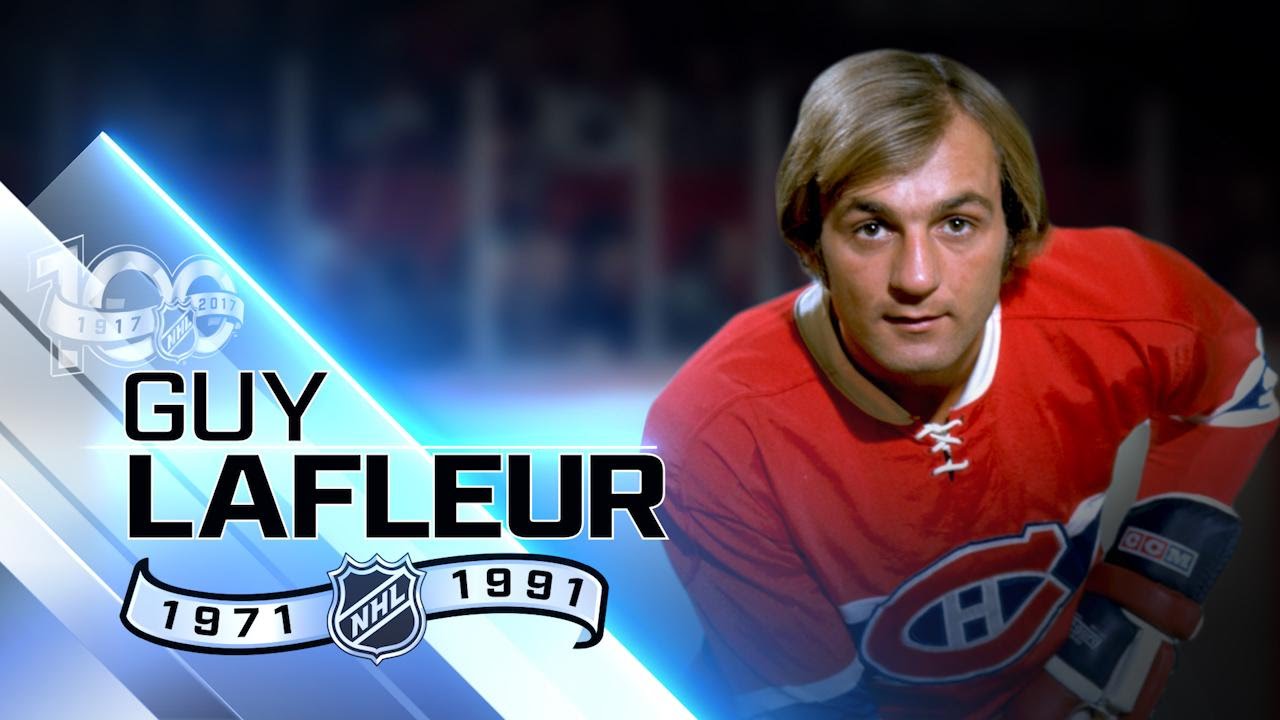
Well before the 1971 NHL Amateur Draft even took place on July 10, 1971, Guy Lafleur was on the radar for the Montreal Canadiens. In fact, he was on their radar the previous December when Claude Ruel—the scout who was also responsible for the Canadiens selecting goaltender Ken Dryden—saw Lafleur playing with his Québec Major Junior Hockey League team, the Québec Remparts.
“I stepped down as coach Dec. 3 to go back to my old job of chief scout and by Dec. 6 I was on the phone from Quebec City to Sam Pollock. I saw Guy Lafleur that night and I knew right away. I told Sam that night…well I told him something,” Ruel said.
Undoubtedly Ruel strongly suggested that Pollock do whatever
was necessary to snatch Lafleur in the draft. And fortunately for Montreal,
they had the first pick in the draft that year.
Born in Thurso, Québec, September 20, 1951, Lafleur was 19
years old in his last year with the Remparts, and his second as captain. During
the 1970-71 season, he suited up for 62 games with the Remparts during the
regular season, and amassed an almost unbelievable 130 goals, 79 assists for
209 points. He led his team to the Memorial Cup Championship that year playing
in 14 games where he tallied 22 goals and 21 assists for 43 points.
During the Canadiens quarter-finals round against the Boston
Bruins in April 1971, which went the full seven games, Pollock actually
mentioned Lafleur, who hadn’t even been drafted yet.
“If I had Lafleur right now, he’d be playing centre and the
point on the power play in this series. There aren’t five or six guys at any
level of hockey who can pass the puck like he can right now,” Pollock said.
The Canadiens managed to beat the Bruins and go on to win
the Stanley Cup, but Lafleur would get his chance at the Bruins soon enough.
But there was still a question of if Lafleur would be able to handle the physicality
of the game at the NHL level.
“Until 20-year-old Guy Lafleur absorbs a few major league
bodychecks, the jury remains out on his chances of becoming a superstar in the
National Hockey League,” reported The Leader-Post of Regina. “In the
bodycheck departmtnt <sic>, Lafleur should get his first taste of the NHL
variety tonight [September 18] when the Canadiens play host to Boston Bruins in
an exhibition game.”
Lafleur was to center a line with Frank Mahovlich and Yvan
Cournoyer. Both of whom were impressed with the rookie’s skills. And apparently
Ruel, Pollock and Lafleur’s line mates were all correct about his abilities.
“Montreal rookie Guy Lafleur shows every sign of stepping into the gap left by Canadien centre Jean Beliveau who retired from the National Hockey League club this summer. Lafleure… picked up three assists, Saturday as the defending Stanley Cup champions dumped the star-studded Boston Bruins 7-4 in an NHL exhibition game in Montreal.”
Lafleur’s assists were all to his line mates. The first was just 41 seconds into the game, when he passed the puck to Mahovlich. The other two assists were on goals made by Cournoyer.
“I was a bit nervous before the start of the game, but it didn’t
take me long to get some confidence,” Lafleur said about his first preseason
game in the NHL.
It would take Lafleur three years to develop his skating and scoring abilities at the NHL level, but once he did, he would become a scoring machine. From the 1974-75 season through the 1979-80 season he scored more than 50 goals during each of those regular seasons. He also helped the Canadiens to five Stanley Cups in 1973, 1976, 1977, 1978, and 1979.
Today, if you visit the Bell Centre, where the Canadiens now
play, you will find a statue of Lafleur in recognition of his many achievements
for the Bleu, Blanc et Rouge. His statue sits out on the promenade with many of
the other Canadiens greats.
Additional Sources:
Ted Blackman, “Ruel’s hot on Lafleur like he was on Dryden,” The Gazette (Montreal, Quebec), Tuesday, June 8, 1971, p. 41
“Guy Lafleur impressive in debut,” The Vancouver Sun (Vancouver, British Columbia), Monday, September 20, 1971, p. 18
The Philadelphia Flyers underachieved last season and missed the postseason. The first order of business this offseason was to name Alain Vigneault the new head coach of the team. Vigneault rounded out the coaching staff by bringing Michal Therien and Mike Yeo on board. The team had a busy offseason buying out defenseman Andrew MacDonald, trading for and signing Kevin Hayes, and acquired two veteran defensemen in Matt Niskanen and Justin Braun. It took a little longer than expected but both big name restricted free agents, Ivan Provorov and Travis Konecny, got signed.
The changes bring another season of postseason expectation. There is anticipation in that it will be goaltender Carter Hart’s second season after an impressive second half last season. The development of Travis Sanheim last season should continue this season even if he is playing less at even strength, he should see ice time while on special teams. If this team can stay healthy and avoid slumps then they should have a shot at making it deep into the postseason.
Here are five bold predictions for the 2019-20 Flyers Season:
1) A Trip to the Eastern Conference Finals
The Flyers have the roster to do this on paper, especially if everyone produces at a high level. Vigneault has been known to take his new teams deep into the playoffs within the first few years of taking over. In his first season as the head coach of the Montreal Canadiens, Vigneault led the team to a second round loss. His first season with the Vancouver Canucks (2006-07) also ended with a second round loss in the postseason. In his first season with the New York Rangers (2013-14), he lost in the Stanley Cup Final to the Los Angeles Kings.
The roster has improved over last season’s plus the younger kids were able to get some consistent playing time in the second half of last year’s season. The consistency of the team will be key to them going on a postseason run. The veteran defensemen will also make this team better since the pairings will likely each have a left-handed defenseman and right-handed defenseman paired together. Another key to a postseason run will be improved special teams play and the addition of Hayes, Niskanen and Braun should help.
2) Carter Hart is a Vezina Finalist
The Flyers and its fans have been waiting a long time for a franchise goalie to come along. They finally have that in 21-year-old Carter Hart. Yes, he only played in 31 games last season, but he was the major reason that the Flyers even entertained postseason play at one point last season. Hart doesn’t seem like he lets the pressure get to him, and he rarely lets in a bad goal.
Hart always seems to be in position to make a save and he manages to get back if he isn’t in position. In order to become a Vezina Finalist, he will need to improve his rebound control. At times, he can leave big rebounds and relies on his defense for the clear. Hart also needs to work on reading the play better on a breakaway, which will come with getting to know players better. The young goalie will be better this season and start even more games for Vigneault and the Flyers, which will help with his development and becoming a Vezina Finalist.
3) Sean Couturier Scores 45 Goals
The 26-year-old Sean Couturier is entering his ninth season with the Flyers, and he was more of a defensive force during his first six seasons in the League. The past two seasons he has taken on more of an offensive role having been elevated to the first line center with Claude Giroux moving to the wing. During the 2017-18 season, he scored 31 goals and he had 33 goals last season. Of the 64 goals over the past two seasons, 49 have come at even strength. He also has 11 game-winning goals in the past two seasons.
Couturier really started coming out of his offensive shell once he was put on the top line with Giroux and Jake Voracek in 2017-18. Last season, he played with Giroux and Konecny. Couturier used his big body as a screen in front of the goalie and isn’t afraid to go to the net to get the gritty goals. An improved power play is also going to help Couturier get to 45 goals this season.
4) Kevin Hayes Finishes with 80 points
Hayes has never had more than 55 points in a season so this bold prediction may be a stretch. Last season with the New York Rangers and Winnipeg Jets, he combined for a career high 55 points. A major reason I think that he will reach the 80 point mark is due to the other two forwards that could potentially be on his line. Another reason is that Nolan Patrick is out with an undisclosed injury right now and is considered more of a week-to-week thing. Patrick may not be available for the team’s opener in Prague on October 4 against the Chicago Blackhawks.
The two potential wingers for Hayes this season could be James van Riemsdyk and Jake Voracek. The trio looked really good in the first preseason game and had a really nice passing play that resulted in a goal. Hayes will be a two-way player on that line, Voracek is the playmaker and van Riemsdyk will be the goal-scorer. The trio has the potential to be a well-balanced point producing machine, if slumps and injuries are avoided. Hayes will also be a key player on the power play unit, whether he plays on the top unit or the second unit.
5) Joel Farabee Makes Team to Start the Season
Joel Farabee had a really good rookie camp and followed it up with a decent rookie game against the New York Islanders. He is in a battle for the third line winger opening along with Chris Stewart and German Rubstov among others. Stewart is with the team on a tryout and has looked okay, but not great so far. Rubstov has looked really good in two preseason games and the rookie game. Rubstov plays a good defensive game and isn’t afraid to go to the net.
Farabee is tenacious on the forecheck. He isn’t afraid to use his speed to try to beat the defender to a loose puck. He will battle for a puck along the boards, but he also gets hit a lot since he still has a smaller frame. Farabee will learn to make the quicker decisions that come with playing in the NHL and the production will start to come with the more playing time that he gets. He started training camp on a line with Couturier and Giroux, due to Konecny’s absence, but he will likely be put on another line now that Konecny is signed and with the team.
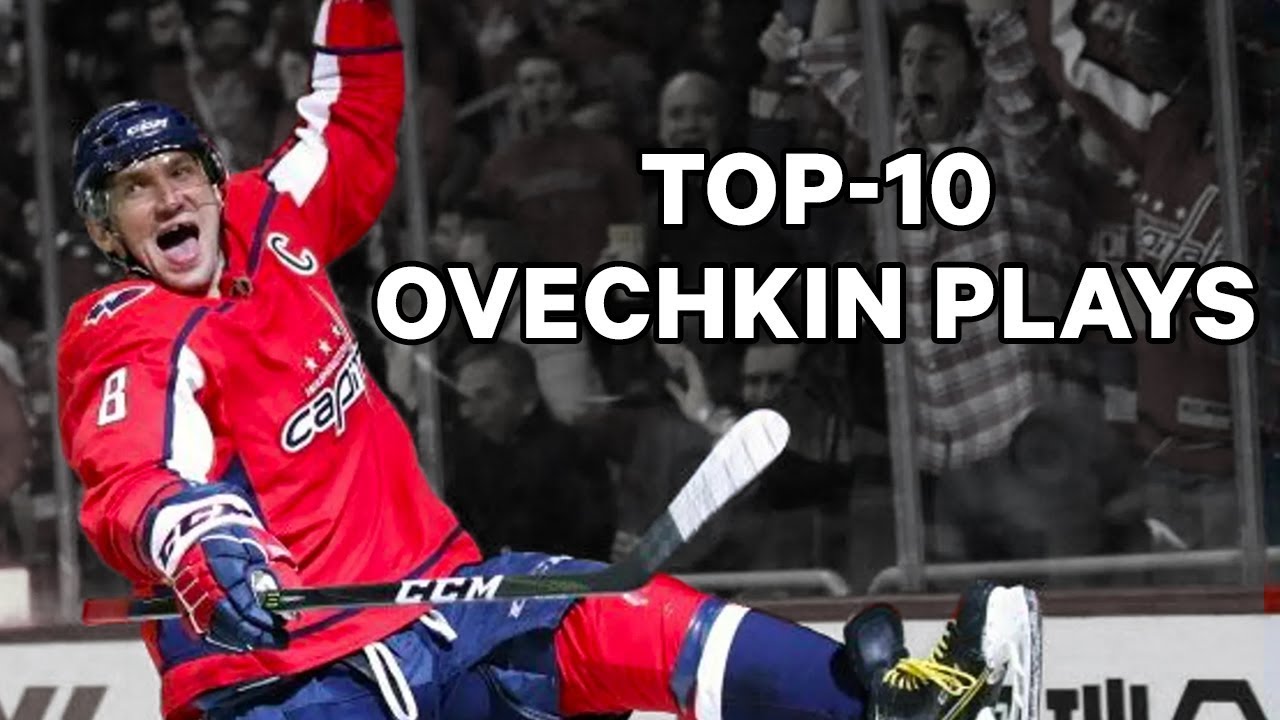
Just six years before the fall of Communism in Russia, Alexander Mikhailovich Ovechkin was born on September 17, 1985 in Moscow. He comes by his athleticism naturally. His mother, Tatyana Nikolaevna (Kabayeva) Ovechkina, was an Olympic gold medalist in basketball. In addition to helping her team win two Olympic medals in 1976 and 1980, she also helped the U.S.S.R. team win the 1975 World Championship and six European Championships (1970, 1972, 1974, 1976, 1978 1980). His father, Mikhail, was a soccer player.
Like so many hockey players, Ovechkin was hooked on hockey
at an early age. He would complete eight and a half years of public school
before moving on to the Dynamo Moscow’s sports school, the development program
of the Russian Superleague’s Dynamo Moscow’s team.
Ovechkin was already breaking records at the age of 11, while still in the Dynamo Moscow’s development program, scoring 56 goals and surpassing the previous record of 53 goals set by Pavel Bure. He would continue with the Dynamo Moscow team, with whom he would begin playing professionally at the age of 16.
His international play began at the age of 16 when in 2003 he scored two hat tricks on the Russian junior national team’s road to the gold medal. He was then selected at the age of 17 by Viktor Tikhonov to play in the Česká Pojišt’ovna Cup, becoming the youngest player ever to play on the Russian national team. Throughout his many years representing Russia, he helped the U18 team to a silver medal in 2002 and a bronze in 2004; the junior team to a gold medal in 2003 and a silver in 2005; and the national team to three golds (2008, 2012, 2014); two silvers (2010, 2015), and four bronze medals (2005, 2007, 2016, 2019). He also represented Russia at the Olympics in 2006, 2010, and 2014. He would undoubtedly have been on the Russian team for the Olympics in 2018 if the NHL had not denied its players the opportunity to participate.
Ovechkin was drafted by the Washington Capitals in the 2004
NHL Entry Draft first overall, though he would not get an opportunity to come
to the United States and play for the Capitals until the 2005-06 season. This
had nothing to do with his skill, and everything to do with the 2004-05 NHL lockout
that canceled the entire season.
Since donning the Washington Capitals sweater, Ovechkin has only played professionally elsewhere during the season one time—returning to Dynamo Moscow during the half season lockout of the 2012-13 season. In just his second season with the Capitals he was named an assistant captain, and he has been wearing the C since the 2009-10 season.
Throughout his present 14 years with the Capitals, he has
played in 1,084 regular season games amassing 658 goals, 553 assists for 1,211
points. He has also helped take his team to the post season 11 times, compiling
a record of 65 goals, 61 assists for 126 points in 128 games. The Capitals won
their first Stanley Cup in 2018 and Ovechkin had much to do with that accomplishment.
“Washington Capitals left wing Alex Ovechkin will be one of those athletes whose dominance will be recognized and appreciated far more post-retirement than it was during his heyday,” wrote Kevin Allen of USA Today in 2015. “The truth is that we are witnessing one of the most amazing players in NHL history, even if not all of us understand that yet.”
Allen’s article mentioned that Ovechkin’s play was often overshadowed by the Capital’s inability to succeed in the playoffs. Perhaps now that they have won a Stanley Cup people will begin to see the Great 8’s skill for what it is.
The National Hockey League offseason is officially over and some teams did better than others. The teams that did well recognized the areas where they needed help and went out with specific targets in mind. Other general managers didn’t maybe didn’t have specific players in mind, but knew where their team needed help. There is always that last minute trade that just comes together and is so big that social media reacts accordingly, and that happened with a few trades this offseason.
Some teams had a really good offseason but missed the cut because a key player isn’t under contract for the season yet. The Colorado Avalanche were this team for me because I really liked what they did in the offseason, but Mikko Rantanen is not signed yet, and he was a key offensive player for them last year. The following five teams found ways to not only improve the team this season, but into the future.
1) New Jersey Devils- Metropolitan Division
The New Jersey Devils and general manager Ray Shero had one of the best offseasons in the NHL. The team managed to land defenseman P.K. Subban in a trade with the Nashville Predators. Sure, they had to give up a decent prospect in Jeremy Davies, but it was worth it for a player as dynamic as Subban. Subban is going to make the team so much better coming out of their own zone since he can skate and move the puck. The Devils re-signed key players like Pavel Zacha, Connor Carrick, and Will Butcher.
They upgraded the offense with the additions of John Hayden, Wayne Simmonds and Nikita Gusev. Hayden was acquired in a trade with the Blackhawks, while Simmonds signed a one-year, $5 million deal in free agency. Gusev was acquired in a trade with the Vegas Golden Knights, and then re-signed a new contract with the Devils. The offense was also upgraded with the addition of Jack Hughes, who was taken first overall in the NHL Entry Draft.
2) New York Rangers- Metropolitan Division
The New York Rangers may not have made the postseason last year and are in the rebuilding stage, but that didn’t stop them from landing a few big name players to upgrade the roster. They signed one of the biggest free agents this offseason in Artemi Panarin. Panarin comes with a big cap hit, but he can also flat out produce. He will help with the Rangers’ offense this season. The other big addition on offense is rookie Kaapo Kakko, who was taken second overall in the 2019 NHL Entry Draft. He then promptly signed a three-year entry level contract and impressed at a rookie tournament the Rangers took part in before main camp started.
There were two additions on defense, one having a bigger impact than the other. The Rangers acquired Jacob Trouba from the Winnipeg Jets for defenseman Neal Poink and a 2019 first round draft pick. Trouba will be a nice addition to the blue line as he can log minutes and play a decent all around game. Adam Fox was the other blue line addition this offseason, and he could help with the Rangers or start the season in the AHL. The team also re-signed Vinni Lettieri, Pavel Buchnevich and Brendan Lemieux to new contracts. The Rangers may not make the postseason this year, but they will be much better than last season with the offseason moves made by management.
3) Buffalo Sabres- Atlantic Division
The Buffalo Sabres had another strong offseason by re-signing key players and acquiring some players via trade to improve the team. The team was again in the running for the draft lottery picks after a disappointing 2018-19 season. The team signed the following key players to new one-year deals: goaltender Linus Ullmark, left wing Remi Elie, center Even Rodrigues, center Johan Larsson, and left wing Zemgus Girgensons. Jake McCabe and C.J. Smith were re-signed to new two-year deals. The Sabres added more forward depth with the addition of Dylan Cozens, who was drafted 8th overall. The team added Curtis Lazar and Marcus Johansson in free agency, and got Jeff Skinner to sign a new eight-year contract.
There were two really good trades to improve the defense. The first was when the Sabres acquired Henri Jokiharju from the Chicago Blackhawks for forward Alex Nylander. Nylander needed a change of scenery and Jokiharju seemed like the odd man out in Chicago with the addition of some defenseman in the offseason. The Vegas Golden Knights needed cap space so they traded Colin Miller to the Sabres for two future draft picks. The final trade of the offseason came with the addition of Jimmy Vesey, who was acquired from the New York Rangers for a draft pick.
4) Chicago Blackhawks- Central Division
The Chicago Blackhawks were another team that underachieved last season but got better in the offseason. They improved mostly via trade, but there was a free agent signing mixed in. The Blackhawks made a nice pick up in free agency when they signed goalie Robin Lehner to a one-year deal. Lehner is coming off of a great season with the New York Islanders, and proved that he can be the starter should Corey Crawford get hurt again. The Blackhawks re-signed John Quenneville and Dylan Sikura to new two-year deals, while Brendan Perlini signed for another year.
Chicago needed to get better while trying to get rid of some cap space. The team acquired left wing Zack Smith from the Ottawa Senators for forward Artem Anisimov, which was an upgrade. They also acquired right wing Alexander Nylander from the Buffalo Sabres for defenseman Henri Jokiharju. The team received defenseman Olli Määttä in a trade with the Pittsburgh Penguins for Dominick Kahun and a draft pick. They also acquired defenseman Calvin de Haan and forwards Aleksi Saarela and Andrew Shaw in two separate trades. In all, the Blackhawks improved an aging blue line and got some depth scoring, which should help them be better positioned this season than last.
5) Arizona Coyotes- Pacific Division
There was no clear cut winner in the offseason for the Pacific Division, but the Arizona Coyotes may be the best positioned team for now and the future. Plus, they made some moves to get deeper up front and kept a key member of the team for the next eight years. The Coyotes made sure to lock up young forward Clayton Keller for the foreseeable future with a new eight-year contract extension.
The Coyotes pulled off one of the bigger trades this offseason when they landed Phil Kessel. Kessel came over with defenseman Dane Birks from the Penguins in exchange for forward Alex Galchenyuk and prospect Pierre-Olivier Joseph. If Kessel plays at a high level then he will be a huge addition for the team, and give them some scoring power in the top six. The team also acquired center Carl Soderberg from the Colorado Avalanche for defenseman Kevin Connauton and a draft pick. Soderberg will add some depth to the bottom six and is a decent defender.
For those who were born after 1991, they have never known a world with the great Soviet Union, communism and the Iron Curtain. To them hockey teams just naturally have players from Russia, the Czech Republic and Slovakia, among other Eastern European countries. However, for many, the Cold War impacted everything, including the hockey they watched.
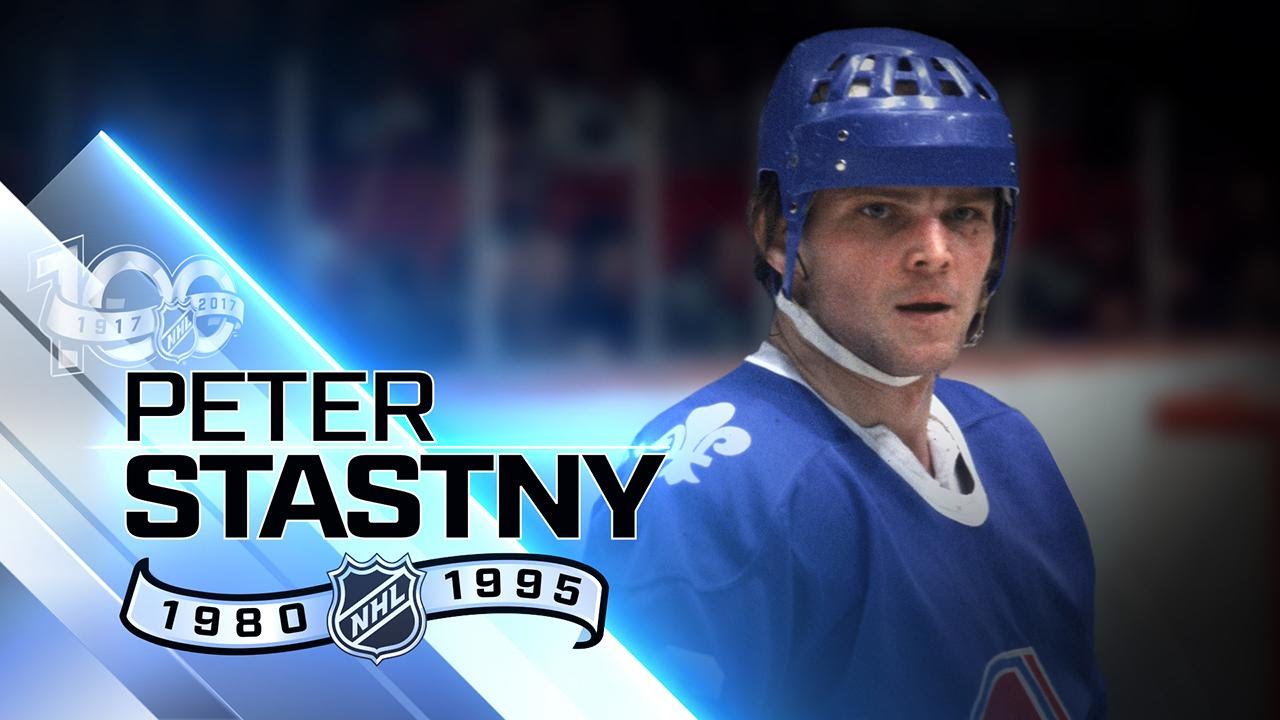
For Peter Stastny and his family, the Soviet Union invaded
his beloved Czechoslovakia in August of 1968.
“Earlier that evening [August 21, 1968], two Soviet aircraft
touched down at Prague’s Ruzyne airport, where several armed troops proceeded
to take over the main terminal. From there, about 500 tanks rolled into the
country as airships dropped leaflets from the sky explaining the peaceful
intentions of these forces. In total, 27 divisions, including 5,000 armored
vehicles and 800 aircraft coming from the Soviet Union, East Germany, Poland,
and Hungrary, swept through the country in a single day. Czech military were
ordered to avoid armed resistance, and all of Czechoslovakia was overtaken
within 24 hours,” Tal Pinchevsky described in his book Breakaway, From
Behind the Iron Curtain to the NHL—The Untold Stories of Hockey’s Great Escapes.
“They were the enemy; the hated ones. They were so big, and
we were just a tiny speck,” Stastny described. “But in the hockey rink, it was
different. We were on even terms.”
Stastny played on the Czechoslovakian national teams that beat the U.S.S.R. team in both the 1976 and 1977 IIHF World Championships. Peter and his older brother Marian combined for ten goals and 18 points in the 1976 World Championships. And they added an assist when it came to the 1977 games, recording ten goals and 19 points. They would continue to impress in 1978 and then they were joined by their younger brother Anton in 1979. The three of them became heroes of their country, however issues within the national team had the brothers seriously considering defecting.
Peter, his wife, and his brother Anton would do just that while their club team HC Slovan Bratislava was in Innsbruck, Austria for a tournament in August of 1980. Peter called the Quebec Nordiques and the very next day their general manager, Marcel Aubut and their director of player development Gilles Leger were in Innsbruck to spirit the three of them away. The harrowing experience, the Stastnys’ arrival in Canada and their difficulties assimilating read like a spy novel.
Peter and Anton played for the Quebec Nordiques and they became the first NHL regulars from a country behind the Iron Curtain. Their brother Marian joined them a year later.
Peter would play ten seasons with the Nordiques, wearing the C the last five. He went on to play four seasons with the New Jersey Devils and then two with the St. Louis Blues, for a total of 16 seasons in the NHL.
On September 16, 1998, he became one of the newest members of the Hockey Hall of Fame. Also, in the same class with him was his Nordiques teammate Michel Goulet.
What the Stastny brothers did, opened a door that many hockey players on teams behind the Iron Curtain didn’t think could ever open. Peter became a Canadian citizen and played for Team Canada in their Canada Cup win in 1984. In 1994, Stastny represented the newly separated Slovakia in the Olympics. Not only was he captain of the team, but he carried the flag during the opening ceremonies.
“That was something more than a dream, carrying the flay for
my new country,” he said.
His sons Yan, who was born in Canada, and Paul, who was born in the United States, have played internationally representing Team USA. They also have both played in the NHL. Peter Stastny’s family has the distinction of being the first family to represent four separate countries in international hockey.
Not only did his defection change hockey, but his style of hockey and level of skill became a benchmark when it came to European-trained NHL players. But like hockey players the world over, he defers such accolades. Humbleness and hockey know no borders.
When he retired, he had played 977 NHL regular season games, amassing 450 goals, 789 assists for 1,239 points. His playoff numbers in 93 games were 33 goals, 72 assists and 105 points. In addition to the Hockey Hall of Fame, he was also inducted into the IIHF Hall of Fame the very next season.
Additional Sources:
Tal Pinchevsky, Breakaway, From Behind the Iron Curtain to the NHL—The Untold Stories of Hockey’s Great Escapes (Mississauga, Ontario: John Wiley & Sons Canada, Ltd., 2012), kindle edition
After much wondering and, let’s face it, some panic from those on the outside looking in, the Boston Bruins have come to terms with defenseman Charlie McAvoy. The signing was announced Sunday, September 15, 2019, while the first group of Bruins players were on the ice on fourth day of the main training camp. There were many who were convinced that the two sides would be unable to reach an agreement despite the constant comments to the contrary by the Bruins general manager Don Sweeney.
McAvoy debuted with the Bruins during the 2017 Stanley Cup playoffs in their first round against the Ottawa Senators where he dressed for six games and notched three assists. He then took off during his rookie year playing in 63 games where he recorded seven goals, 25 assists for 32 points. He ultimately earned the NESN 7th Player award at the end of the 2017-18 regular season for his stellar performance, ranking second among the team’s defenseman in both time on ice and scoring.
The three-year contract carries an annual NHL cap hit of $4.9 million for the Bruins, which is cap friendly to the team who is always right up against the annually set cap ceiling. And this deal allows the Bruins space to continue negotiations with Brandon Carlo.
Charlie McAvoy and Don Sweeney
“Obviously, we’re very pleased to announce that Charlie [McAvoy]
has agreed to a three-year contract. I think I’ve said all along that the
communication with the ORR group, particularly with Mike [Curran] and with Rick
[Curran] has been outstanding. It’s been a long period of time, we’ve had
discussions, every negotiation has some timeline,” Sweeney said after practice
on Sunday. “We felt very comfortable that we eventually would find a common
ground and we were fortunate that Charlie agrees and his group agrees. And I’m
excited. I’ve looked at this as nothing other than well beyond three years as
to what Charlie is going to play for the Boston Bruins. But we’re obviously
excited that we got him back in group here, an important, important part of our
hockey club this year, last year, and many years going forward. I appreciate
the organization and their support to find the common ground.”
For McAvoy, after he thanked all those who had helped him both within the Boston Bruins organization and his family and agent, he kept returning to one major theme regardless of the questions that were asked.
“I’m just really excited to get back, now I can get committed to —
not that I haven’t, but now I get to focus on my conditioning and my execution
and getting back to being the best player I can be for the start of the season.
We have a lot of motivation this year and obviously to just win one more game
than last year. I don’t want to get too far ahead of myself, but I think we are
— I’m motivated, and I know everyone is, and I’m just really excited to be
back.”
Bergeron, Marchand, McAvoy, and Pastrnak
Perhaps the one thing he wasn’t so keen on was the attention he received when he stepped on the ice during the second group’s practice. While he likely expected the ovation from those who were in the stands, it was the response from the team that he would prefer not to experience again.
“I didn’t want that. I thought something like that would happen. I’m just thrilled to be back. Tomorrow, hopefully I don’t get a stick-tap. I just want to be one of the guys again,” McAvoy said.
He also admitted that what he prefers to do is to play hockey.
“We [McAvoy and Sweeney] were joking around today, I don’t know if I’m built for [contract negotiation], I just want to play hockey. And that’s the thing, is now I get to do that and I’m very happy about that,” he said with a huge smile.
So now the work truly begins, but McAvoy was around Boston throughout the summer and training with his teammates during the offseason. No one should think that he just showed up on Sunday to sign on the dotted line. And based on his repetition, he just wants to be the best he can be and work hard with the team that he calls home.
The start of the preseason is officially underway and there are storylines glare around the NHL. There are teams that are trying to implement new systems because of offseason coaching changes. Some teams are dealing with key players not with the team because of no contracts for the season. There will be roster spots to be filled, injuries to be dealt with and captains to be named.
Here are three storylines to watch as the preseason gets underway.
1) Key Restricted Free Agents Remain Unsigned
This RFA class has been a difficult one for teams to get under contract and into camps. Sure some contracts are easier to get done than others, but it just seemed like teams got a late start due to the cap ceiling being set later than usual. Once the cap ceiling was established, teams tried to focus on getting key core player locked into contracts, but the market took forever to get set. This RFA class is a strong one with important players sitting out camps and missing preseason.
The biggest RFA that is not under contract yet is Patrik Laine from the Winnipeg Jets. He is training overseas until a contract can get ironed out, but I wouldn’t be surprised if he pulls a William Nylander and waits until close to the deadline in December to get a deal done. Another key player is Brayden Point of the Tampa Bay Lightning, who plays a big role at even strength as well as on the power play. Other big name RFAs include Mikko Rantanen, Travis Konecny, Kyle Connor, Matthew Tkachuk, Brock Boeser and Brandon Carlo. Only time will tell as to when these kids get signed and are implemented back into their roles for their respective teams.
2) Captain Vacancies
There are still several teams that have not named captains for the upcoming season. Some teams may not name a captain instead going with the naming three or four alternate captains. The San Jose Sharks have named the team’s next captain and to no one’s surprise it was Logan Couture.
There are quite a few teams that had coaching changes over the summer, but the most notable are the Florida Panthers, Philadelphia Flyers and Los Angeles Kings. All three teams missed the postseason last year and underachieved. The Flyers played much better under interim head coach Scott Gordon for the second half of the season, while the Kings struggled all season long.
Joel Quenneville signed early in the offseason with the Florida Panthers, who signed goaltender Sergei Bobrovski during free agency. The expectations for the Panthers will be high and a return to the postseason is expected. It is a different story for the Kings and Todd McLellan, who have an older, more experienced roster. The Kings were one of the worst teams in the League last season and didn’t make the playoffs, which will likely be the same story this season. The Philadelphia Flyers and Alain Vigneault could be the most interesting team to watch in terms of coaching changes. Vigneault is inheriting a roster that is loaded with talented players, but the big question will be do the players buy into his system and find a way to get back to the postseason.
In the fall of 1987, the third Canada Cup tournament took place with six countries represented. For Team Canada, there was a desire to reclaim the trophy, which had been won by the Soviet Union in 1981 in the second Canada Cup tournament. For the Soviet Union, there was certainly a motivation to continue to show the “capitalists” that they were the best.
In addition to Canada, and the Soviet Union, the other countries represented were Czechoslovakia, Finland, Sweden, and the United States. With the six teams, there was a five-game round-robin for each team to establish a ranking of which teams would continue on to the semi-finals. Unfortunately for the United States, they would win just two of their five games (a 4-1 victory over Finland played August 28 at the Civic Centre Coliseum in Hartford, Conneticut; and a 5-2 win against Sweden which took place at Copps Coliseum in Hamilton, Ontario on August 31) which eliminated them from continuing past the round robin. Finland failed to win any of their games and were likewise eliminated.
The rankings after the round robin were:
Canada, 8 points (3-0-2)
Soviet Union, 7 points (3-1-1)
Sweden, 6 points (3-2-0)
Czechoslovakia, 5 points (2-2-1)
Based on those rankings, Canada played Czechoslovakia in a
semi-final while the Soviet Union took on Sweden in the other game. Both were
single elimination games with the winners moving on to the best-of-three Final.
It perhaps shouldn’t have been surprising that just as in
1981, the final would once again see Team Canada and Team U.S.S.R. going at it
to try and prove whose system was the best. After all, for Canada, hockey is
more than a pastime, while the Soviets wanted to continue to dominate in a
sport that they had come into much later, but with a system that seemed almost
unbeatable.
Game 1 took place at The Forum in Montreal on September
11th. The Soviet Union would take the game, but it would require overtime to
decide the winner.
“Aleksandr Semak’s 30-foot shot at 5 minutes, 33 seconds of
overtime gave the Soviet Union a 6-5 victory over Team Canada Friday night in
the opening game of the best-of-three Canada Cup final,” reported the Hartford
Courant. “The goal, which was rifled in under the glove of goalie Grant
Fuhr, brought a jarring end to a game in which Team Canada made one of its most
spectacular comebacks against the Soviets, erasing a 4-1 deficit and capturing
a momentary lead in the final moments of the third period.”
For the Soviets, two of their six goals came while on the
power play and another was shorthanded. Canada had only one power play goal and
the remaining four were event strength.
The full Game 1 of the Final
Two days later, on September 13th, the teams met again, this
time at Copps Coliseum in Hamilton. Once again, the score would end with a 6-5 overtime
victory, only this time it would be Canada with the win. The Canadians were up
3-1 at the end of the first period. The Soviets got one back on the power play 12:11
into the second and tied the score, once again on a shorthanded goal two
minutes later. The Canadians weren’t going to give in to the Soviets though, as
they regained the lead to with 3:15 remaining in the middle frame to go into
the intermission up 4-3. The third period saw the U.S.S.R. tie things up again
4:45 into the period, and then with 9:46 remaining in regulation Canada got a
go-ahead goal. The clock was down to less than two minutes remaining in
regulation when the Soviets once again tied the game. Game 2 would end up going
into double overtime before a winner could be decided.
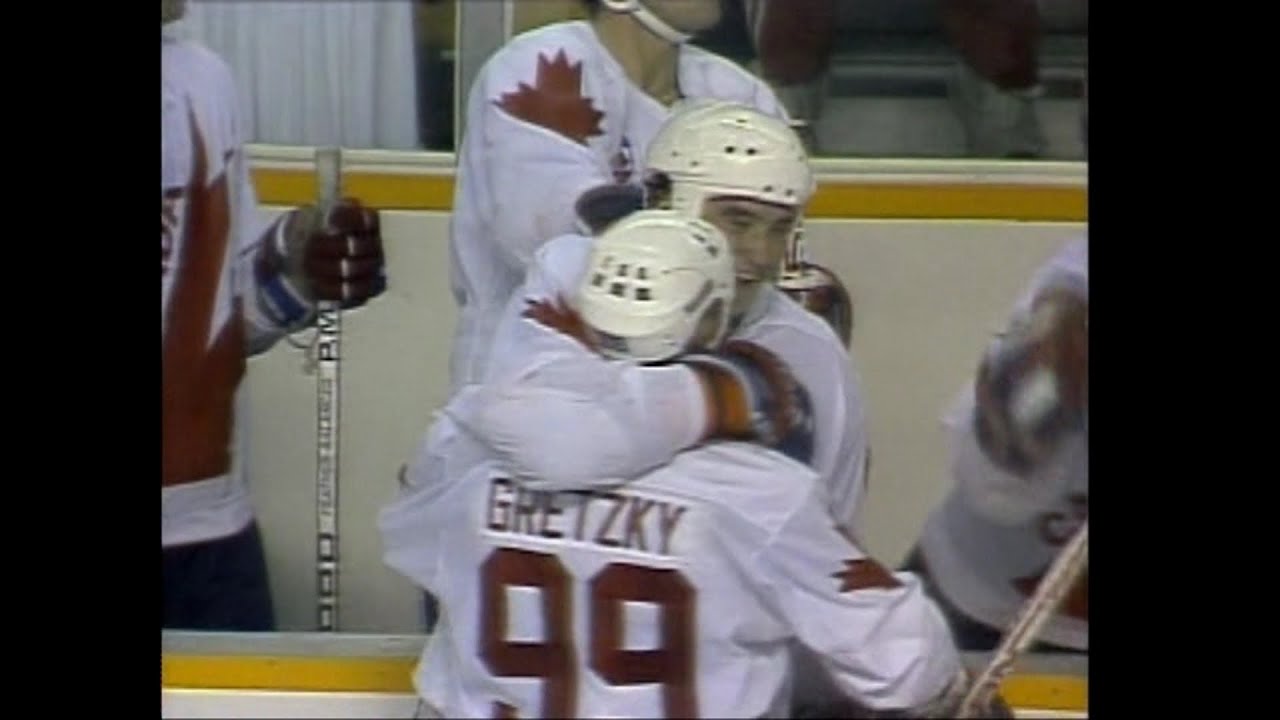
“When you play with the best hockey player in the world, you always get a lot of scoring chances,” said Mario Lemieux the following day.
He had three goals in the game, and they were all assisted
by Wayne Gretzky, including the game winner at 10:07 of the second overtime.
“It’s one of the most satisfying wins I’ve been involved in.
I really feel that I’ve played the best hockey I can play,” said Gretzky.
Game 2 of the Final
With the series tied, the teams would stare across from each other over the puck one more time on Tuesday, September 15th. With this game also taking place in Hamilton.
And perhaps it should have been expected that yes, once
again the score would be a 6-5 decision. And once again Team Canada would find
themselves playing from behind as the Russians were up 3-0 eight minutes into
the game. Like the other two games, it also looked like the teams might be
heading to sudden death, when, after Canada managed to get a lead in the third
period with their fifth goal, the Soviets knotted it up with 7:39 remaining.
Would you care to guess who got the winning goal? As the clock ticked down to 1:26 left in regulation Mario Lemieux notched his 11th goal of the tournament, assisted by none other than Gretzky.
“It was just another hockey series, if Gone With The Wind was just another movie, or if MacBeth was just another play, or if Rembrandt was just another artist,” described Bob Hughes for The Leader-Post the day after. “They should take the tapes of the best-of-three Canada Cup final, and stash them in a time capsule. This, you understand, was one hockey series no generation should be denied viewing. It will become a collectors’ item. It is one which will withstand the ages. It transcended time, elevated itself into a never-never land. It forced everybody to stand back, even the referees, and just let it happen.”
To this day, this best-of-three series continues to be considered the best exhibition of hockey in history, as described by Ken Campbell in The Hockey News in 2017. And there have been a lot of international games and Stanley Cup playoffs that were absolutely amazing since 1987, but maybe just not quite amazing enough to claim the rights as the best.
Additional Sources:
“Soviets top Canada 6-5 in OT,” The Hartford Courant (Hartford, Connecticut), Saturday, September 12, 1987, p. E7
“Lemieux, Gretzky lead Team Canada to overtime triumph,” Times-Colonist (Victoria, British Columbia), Monday, September 14, 1987, p. B1
Bob Hughes, editorial, The Leader-Post (Regina, Saskatchewan), Wednesday, September 16, 1987, p. B1




 Prev
Prev