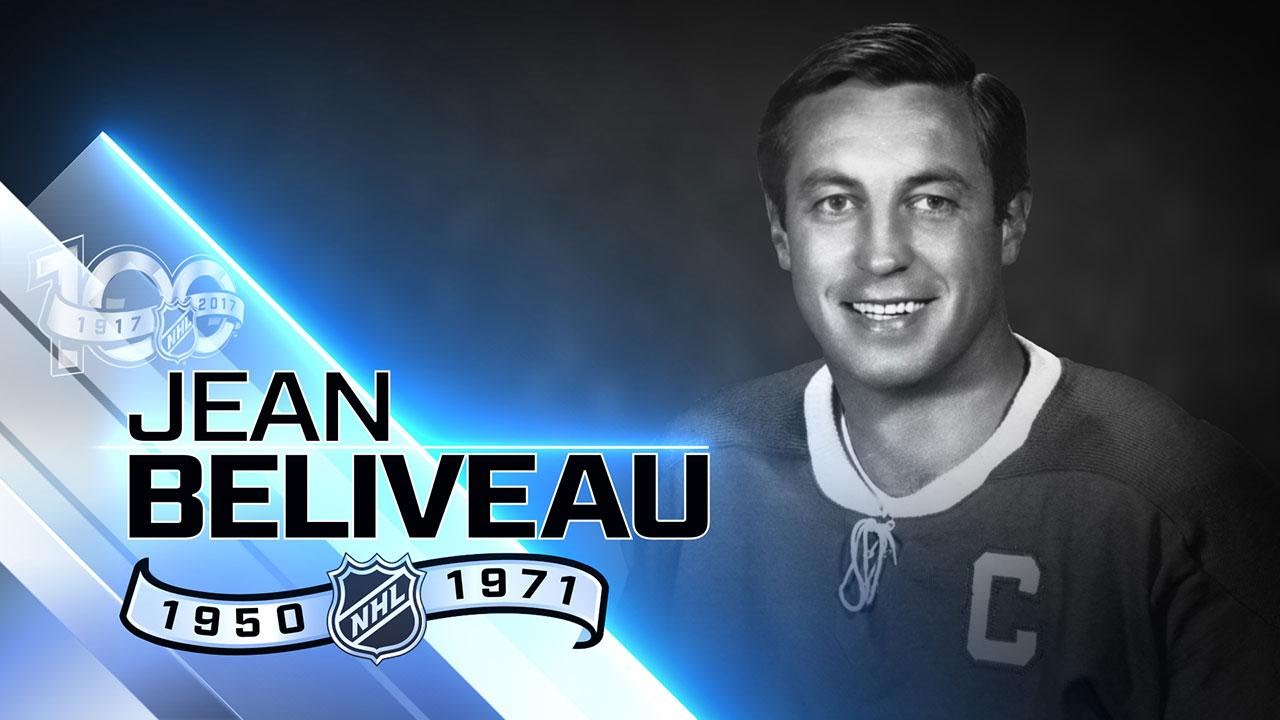
Did anyone ever play as hard to get but turn out to be worth even more than “the highest contract ever” as Jean Beliveau? After five years of being “obligated to do business with Canadiens if he turned professional” and three years of turning down their proffered contracts, on October 3, 1953, Beliveau finally signed with the Montreal Canadiens. He was just in time to join the defending Stanley Cup champions in playing against the NHL All-Stars that night.
Six years after beginning to play in organized hockey, 18-year-old Beliveau joined the junior team Quebec Citadels. In 1951, he then graduated to the Quebec Aces of the Quebec Senior Hockey League (QSHL). These teams were affiliated with the NHL’s Canadiens, so between December 1950 and December 1952, the young scoring sensation was brought up to play five pro games. He notched six goals (thanks to a hat trick) and an assist. His role model, Maurice “Rocket” Richard praised, “He’s got the greatest shot I’ve ever seen in hockey and he’s a fine man. He could help this team plenty and I wish he would change his mind.”
Beliveau had been putting off officially signing with the NHL. He had it good with the Quebec teams with his $20,000 salary well above the NHL average. That made him feel like he wanted to give back by lending his talents for a few seasons. In a lesson from his father, he explained, “Loyalty is another form of responsibility. If you feel that you owe something to someone, no matter what the debt, it behooves you to pay it. … Your good name is your greatest asset.”
In March 1953, the QSHL dropped the “senior” from its name to turn into the fourth-ranking professional league (after the NHL, AHL, and WHL). Many have attributed this change to the Canadiens buying the entire league to force Beliveau to sign, but in a more typical fashion, the move came out of a dispute. Regardless, it did mean that Beliveau could only play up to 29 games with the Aces before being subjected to the NHL draft.
By May, the forward was looking ahead to his 22nd birthday in August and feeling like it would be a good time to join the Canadiens. He told the press, “If I reach an agreement with the management I will play with Canadiens next season. I have not been approached yet, but if they offer me good conditions I will certainly sign a Canadiens contract.” When Beliveau got married the following month, the Canadiens reportedly gifted him with $2,500 to $3,000.
In September, Beliveau attended the Canadiens’ training camp and was paired with Richard for two exhibition games. He still hesitated over issues with how much his salary would be taxed, so unexpectedly, the long negotiation held Friday, October 2 did not result in a contract. In the five years of working to snare Beliveau, Canadiens GM Frank Selke noted, “Neither of us has ever made a crack about the other and Beliveau has always been courteous and considerate.” However, he also happened to mention that Beliveau would not be eligible to play in the All-Star game the next day without a contract. As it was, he missed the banquet held for the Canadiens that night.
It took another three-hour meeting before Beliveau finally signed a five-year contract shortly after 1 pm that Saturday. Selke called it “the highest contract ever given any player – highest by a city block,” and it turned out to be worth $105,000. According to Selke, “It was simple, really. All I did was open the [Montreal] Forum vault and say, ‘Jean, take what you think is right.’” At the time, he said the success of signing Beliveau was “the biggest moment of my long career in hockey.”
That night, the new Canadiens center donned No. 4 because his Aces’ No. 9 was already worn by teammate Richard. Before a record attendance (14,422) worth a record in gross receipts (about $30,387), the defending champs lost to the All-Star team 3-1. Wally Hergesheimer of the New York Rangers scored two power-play goals in the first period. However, Beliveau played well, sending “nifty passes” to Richard. In fact, their only goal of the night was scored on a power play at 4:30 in the third period, when Richard took advantage of a “rebound of a smoking shot” by Beliveau (who was given an assist).
Beliveau looked forward to the coming season with the NHL. “But I will be satisfied if I score 30 goals this season,” he said. Coach Dick Irvin agreed, “Why, if he scores between 25 and 30, I’ll be more than pleased.” He ended up scoring 13, but with 21 assists, he had 34 points in 44 games. Beliveau remained with the team for 18 seasons, winning 10 championships along the way and serving as team captain for the final decade. When he retired in 1971 he said, “I only hope I have made a contribution to a great game.”
Additional Sources:
Dink Carroll, “Playing the Field,” Montreal Gazette, 5 Oct. 1953, p. 22.
“Record Crowd Sees All Stars Strike Early, Beat Habs 3-1,” and “Selke Says Big Jean’s Contract Highest Ever Given Any Player,” Montreal Gazette, 5 Oct. 1953, p. 24.
Dink Carroll, “Playing the Field,” Montreal Gazette, 8 Oct. 1953, p. 18.
Vern DeGeer, “‘Million Dollar’ Banquet for N.H.L. Stars On Big Game Eve; Beliveau Still Unsigned,” Montreal Gazette, 3 Oct. 1953, p. 10.
“Beliveau to Turn Pro If ‘Conditions’ Right,” Montreal Gazette, 2 May 1953, p. 9.
“Stag Nets $3,000 For Jean Beliveau But Future Foggy,” Montreal Gazette, 20 June 1953, p. 9.
“Beliveau Expected To Sign on Friday,” Montreal Gazette, 29 Sept. 1953, p. 22.
The Toronto Maple Leafs had quite the offseason, after an early postseason exit. Kyle Dubas and the rest of the management team knew that there were roster needs, and that cap space needed to be created. Dubas managed to get both of these things done, while re-signing key aspects of the teams to cap-friendly contracts. There were crucial additions and losses this offseason, but the core players remained the same for the most part.
The Leafs added three defensemen in the offseason via trade: Tyson Barrie, Cody Ceci and Ben Harpur. There were three forwards added to the roster in Alexander Kerfoot, Nick Shore and Jason Spezza. The key offseason losses were Nazem Kadri, Nikita Zaitsev and Connor Brown. Dubas re-signed Andreas Johnsson to a new four-year deal, while Kasperi Kapanen signed for the next three years. Mitch Marner was signed to a new six-year contract worth over $65 million. In all, Dubas did a decent job of accomplishing offseason goals, but there will need to be something done when Zach Hyman and Travis Dermott come off Long-Term Injury Reserve to get under the cap.
1) Offense
Th current forward group is a relatively young one with an average age of just 25.25 years old. The Leafs lost Kadri and Brown in two separate offseason trades. The forward group may be relatively young age-wise, but they have plenty of NHL experience under their belt. The Leafs have some scoring depth so the team shouldn’t have a problem finding the back of the net again this season.
The lineup is a balanced one with four decent lines that should all be able to produce. This season’s team has speed up front, which will be a big help getting through the neutral zone and into the offensive zone. The forward group has a decent mix of playmakers and goal scorers alike. The Leafs will need the forwards to play solid defense to help them win some games. There is no doubt that this offense should once again wreak some havoc on the opposition throughout the season.
2) Defense
The Leafs have a major need for a number one pairing defenseman so Dubas went out and acquired Barrie from the Colorado Avalanche. The seven defensemen on the current roster include: Barrie, Cody Ceci, Justin Holl, Martin Marincin, Jake Muzzin, Morgan Rielly and Rasmus Sandin. This group isn’t very deep talent-wise, but Holl or Marincin can hold his own in the bottom pairing.
The defense corps can skate and move the puck, which should help them to get the puck out of their own end. The defensemen will contribute on the offensive side of the puck. One good thing is that the Leafs’ blue liners have plenty of NHL experience. The one down side of this group is that they are not very good on the defensive side of the puck, and will turn the puck over leading to good scoring chances for the opposition.
3) The Goaltenders
The Maple Leafs will enter the season with the goaltending duo of Frederik Andersen and Michael Hutchinson. Andersen has been solid while with the Leafs and has won a lot of games for this team. He should come ready to play to start the season. The biggest question mark heading into the season will be how reliable Hutchinson can be as the backup goalie.
He should see some time in net to give Andersen a rest at key times during the season. Hutchinson played decent in his five games last season going 2-3-0 with a .914 save percentage and a 2.64 goals against average. He is a butterfly goalie so he just has to make sure that he doesn’t commit too early and leave the top of the net to shoot at. In order for the Leafs to have a successful season, Hutchinson will need to raise his game and become a reliable backup goalie.
4) Under Pressure: Mitch Marner
There were all kinds of rumors this offseason swirling around Mitch Marner including teams signing him to offer sheets. He was a restricted free agent and not under contract for this season, but the Leafs managed to get a deal done just in time for training camp to start. The 22-year-old will be the player under the most pressure this season after signing the huge offseason contract. Marner signed a new six-year contract worth $65,358,000 million, which came with a $10,893,000 million cap hit per season.
There will be a ton of pressure on this kid to produce especially after William Nylander laid an egg after signing his new contract last season. Marner just needs to go out and play his game. He shouldn’t have to press too hard, just let the game come to him. It should be a little easier for him since he isn’t joining the team midseason like Nylander did last season. Marner won’t let the pressure get to him and he’ll just go out on the ice and do what he does best, which is produce points.
5) Surprise Player: Alexander Kerfoot
The Leafs’ fans and management are going to be surprised by the play of this kid. He came over in a trade with the Avalanche in the offseason. Kerfoot can play in all three zones and has a good hockey IQ. He will make the right plays at the right time, and he will set up his teammates in the offensive zone. Kerfoot is defensively sound so he could be used on the penalty kill, and he could see some power play time, if needed.
Kerfoot will be the surprise player for this team because he was acquired in the offseason and the fans may not know a ton about his game. He is a versatile forward and he could see time up and down the lineup for the Leafs depending on injuries and who the team is playing. The forward may not be noticed every single game, but he will make an impact even if it is on the defensive side of the puck or just by making solid plays all night.
6) Bounce Back Player: Wiliam Nylander
This was probably the easiest choice to make in the categories. Nylander struggled after sitting about the first two months of the season last year with no contract. Once he signed and took the ice, it was obvious he wasn’t used to the game speed and was invisible on the ice, at times. It almost looked as though he wasn’t even skating or doing drills while he was sitting out. Nylander is too talented of a player to be lazy or unprepared, and come the start of the season he will be ready to play.
Nylander will be ready to go from the start of the season and he will get back to his normal production of around 60 points this season. He will see some power play time and could possibly play with Auston Matthews on a line so that will help his production. He will get out of the gate fast this season and if he hits a slump then he’ll bounce back rather quickly.
7) Break Out Player: Andreas Johnsson
Andreas Johnsson was the Leafs’ surprise player last season and I think the production at the NHL level continues this season. I think he will hit 70 points or more this season even playing in the bottom six. The kid will use his skating ability like he did last year to get into the offensive zone and get to where he needs to be to score some goals. Johnsson’s ability to see the ice well will help him to set up his teammates for some goals. Another reason he will get to 70-plus points on the season is that he likes to shoot the puck.
If he can get the puck to the net with traffic then one of his teammates can get the deflection or rebound chance. Johnsson will rack up 25 goals, 45 assists and 70 points this coming season, and he could very well eclipse these totals that I have predicted. Johnsson’s skating ability is going to create chances for himself and his teammates.
8) X-Factor: The Goalies
The goaltending is going to make or break the Leafs this season. The defense is a little bit better, but not by much from last season. Andersen and Hutchinson will have to be sharp and make saves to keep this team in games. The group in front of them is going to turn pucks over for prime scoring chances. The goalies will need to be ready at all times to keep the puck out of the net.
Andersen should put up Vezina type numbers again this season since he has been solid since playing for the Leafs. He will steal them some wins again this season just like he has every other season. Hutchinson is going to have to step up his game this season. The backup goalie will get some chances in net, and he needs to make the most of them. Hutchinson will be a huge part of how successful this team is this season.
9) Key to the Season: Defense
The Leafs will need to be a lot better defensively this season than they were last season. The team managed to give up a lot of point blank scoring chances, but Andersen cleaned them up. If the team can cut back on turning the puck over and playing better team defense then it could give them a better playoff position than the past few season. They could even avoid the Boston Bruins in the first round. The defense needs to step up its game and play smart for the Leafs to make the postseason.
10) Season Prediction
There is too much talent on this Maple Leafs team to not make the playoffs, so come April they will be there. They will outscore the opposition and Andersen will keep stealing some games for them. Hutchinson turns into a reliable backup and wins some games for the team too. The Leafs will have the same problem and there will be a first round exit in the postseason.
The defense will make crucial mistakes and the offense won’t be able to score as much since teams really ramp up the defensive pressure in the playoffs. Andersen will be solid, but let in a few cheap goals and Nylander will suddenly disappear from the lineup. It will be another long offseason for the Maple Leafs and their fans.
For the first NHL regular-season games ever played in Finland, the victories came from the homegrown Finns. On October 2, 2009, defenseman Ville Koistinen won the shootout for his Florida Panthers. Then on Saturday, October 3, goalie Antti Niemi earned a shutout for his Chicago Blackhawks.
The NHL games were held at Hartwall Arena in Helsinki. Going into the games, some of the Panthers suffered from the flu. Whether completely healthy or not, Coach Pete DeBoer planned to dress seven defensemen for Game 1. Koistinen, who had signed with the Panthers in 2006 after becoming the top-scoring defenseman of his Finnish league (with 34 points), played on the fourth line in place of winger Michal Repik.
In both games, Chicago usually had the upper hand. After a scoreless first period in Game 1, the Blackhawks drew first blood, and the Panthers tied up. Chicago started things off again in the third period, but Koistinen scored a tying goal when he “drilled in a long shot with both teams down a man.” After another Blackhawks’ goal, David Booth made the score 3-3 with only 2:21 remaining.
Hawks center Jonathan Toews commented, “Unfortunately, we let them creep back into the game and hang around.” They also had trouble finding the back of the net on their 55 shots on goal. Chicago coach Joel Quenneville admitted, “There were a lot of loose pucks in the last part of the game and we couldn’t get a handle on it.”
This meant that the game would be decided by a shootout. Coach DeBoer had a sound strategy to make up for their 3-8 record in shootouts last season. He explained, “It really is a special skill. And it cost us a playoff spot last year, not being very good in that area of the game.” So he signed at least two players with good shootout records, Koistinen and Steven Reinprecht. In this shootout, they both proved him right, scoring on goalie Cristobal Huet. Chicago’s shootout record wasn’t much better at 4-7.
On the other side, DeBoer had reason to worry about Coach Quenneville’s choices, saying, “And they’re lining up Kane and Toews and Sharp – that’s a pretty intimidating lineup in a shootout.” Panthers goalie Tomas Vokoun used his left leg to block Patrick Sharp’s shot after Kane had already failed to score. Blackhawks Coach Quenneville regretted not being able to close in regulation. “That was one of our strengths last year. That we were able to close teams out and find a way to win. This leaves a sour taste.”
Koistinen’s “high backhand shot” won Game 1 for the Panthers. Naturally, he was thrilled, exclaiming, “This game was unbelievable. First of all to play here in Finland, then to score a goal and score a game winner. This is more than a dream right now.” Teammate David Booth said, “It’s really cool to see Koistinen do that in his home country. That’s something he’ll never forget.”
Game 2 went completely differently, even though the winner also scored four goals. While Vokoun would remain in the Panthers’ net, the Blackhawks planned to switch to Niemi. He told the press, “It would be awesome. I’m already a little excited and nervous about it.”
It seemed Niemi had little to be nervous about, even though it was only his fourth NHL game. Thanks to his 23 saves, Chicago shutout Florida 4-0. Coach Quenneville praised, “It was a good opportunity to play him in front of his own countrymen. He got a good challenge and we loved the response.”
Three of those were power-play goals. The first one was scored while Koistinen was serving the first penalty of the night. He had been called for interference at 2:28 of the first period.
At the end of the 2009-10 season, the Blackhawks finished third in the NHL rankings (with 112) while the Panthers finished third-to-last (with 77 points). Chicago then moved through the playoffs to win the Stanley Cup after a drought of almost 50 years.
Additional Sources:
Mike Commito, Hockey 365: Daily Stories from the Ice (Toronto: Dundurn, 2018), kindle edition.
Steve Gorten, “Koistinen home country hero,” and “Acting GM Sexton finally given title,” South Florida Sun Sentinel, 3 Oct. 2009, pp. 1C and 7C.
Steve Gorten, “Finnish finish a flop as goals can’t be found” and “Shootout aces eyeing key wins,” South Florida Sun Sentinel, 4 Oct. 2009, p. 13C.
Steve Gorten, “A sour finish,” and “Glass only half full,” Chicago Tribune, 3 Oct. 2009, section 2, pp. 1 and 4.
Steve Gorten, “Hawks’ Finn gains split,” Chicago Tribune, 4 Oct. 2009, section 3, p. 8.
The Toronto Maple Leafs were eliminated by the Boston Bruins in the first round of the Stanley Cup Playoffs last season. In the offseason, Leafs’ management went to work filling needs and getting its restricted free agents under contract. Mitch Marner took a little longer to get under contract, but he’ll be on the ice to start the season. The core group of young kids like Marner, Auston Matthews, Andreas Johnsson, Kasperi Kapanen and William Nylander have the potential to be together another few years.
The Leafs acquired a number one pairing defenseman, in Tyson Barrie, which the team has been lacking for years. They had to give up Nazem Kadri in the deal, who was a solid shutdown center even with his suspension problems. The Maple Leafs decided to stick with Michael Hutchinson as the team’s backup goalie to Frederik Andersen. Leafs’ general manager, Kyle Dubas managed to get Johnsson and Kapanen signed to affordable, cap friendly contracts.
Here are five daring predictions for the Leafs’ 2019-20 season:
1) Mitch Marner Struggles
This has the least probability of happening of all the predictions, but I still feel like Marner’s numbers take a dip this season. The 22-year-old is entering his fourth full NHL season and he has improved every season so far. Marner managed to avoid the sophomore slump, but he hits a bit of one this season. He will get knocked off the puck at times due to his smaller stature, but that doesn’t stop him from getting into the dirty areas.
The reason for Marner’s struggles this season is that he will get off to a slow start. The forward will have his chances, but no puck luck. Marner will miss some chances by hitting the post and goalies will be able to make saves on his shot. He will pass up too many shots when given the opportunity and that will hurt him. The reason this isn’t likely to happen is he has some speed, which can force the defenders to give him space and back into their own zone.
2) Hutchinson Becomes a Reliable BackUp Goalie
Michael Hutchinson was acquired by the Maple Leafs in 2018 from the Florida Panthers for a 2020 5th round NHL Draft pick. He spent most of his time with the Toronto Marlies, the Maple Leafs’ AHL Affiliate. Hutchinson was brought up due to Garret Sparks’ struggles late in the season. In his five games played, he was 2-3-0 with a .914 save percentage and 2.64 goals against average. The goalie seems to have better numbers when he played a little bit more throughout the regular season, and there is a chance that could happen to give Frederik Andersen more rest.
In the NHL, most starting goalies will only play between 50-55 games to keep them fresh for the end of the season push and playoffs. Hutchinson should get at least 20-25 starts this season and will see some time on the team’s off nights so he will get his work in. The goalie has some quickness so he should make some decent saves. He may let in a few soft goals here and there, but most NHL backups do that throughout the season. Hutchinson will get a bigger workload this year and it will payoff for him and the team this season.
3) Tyson Barrie Adds 20+ Goals from Blueline
The major addition this offseason for the Leafs was defenseman Tyson Barrie, who came over from the Colorado Avalanche in a trade. Barrie is a top pairing defenseman that the Maple Leafs have been lacking for a few years now. His career high in goals is 14, which he set the past two seasons. One reason he has never passed 14 goals in his career is that he has a tendency to get hurt at least once per season, but he will remain healthy this year. The defenseman is an unrestricted free agent at the end of the season so he will be playing for a contract and will earn a hefty raise come summer.
He is mobile and knows what to do once he enters the offensive zone. Barrie has a good point shot and will use it a lot this season because there will be some traffic in front of the opposing net. The defenseman will see some power play time and that will help him get to 25 or more goals. He’ll use his mobility and shot to create scoring chances for himself this season, and the puck will find the back of the net.
4) Andreas Johnsson Gets to 70 Points
This is another one of those predictions that isn’t likely to happen, but that is why they are daring predictions and not probable ones. In his first full season with the Maple Leafs, Johnsson impressed, scoring 20 goals, 23 assist and tallying 43 points in just 73 games. Of those 20 goals, 17 came at even strength and only three came while on the man advantage. Johnsson will likely see time in the top nine this season and may even see some ice time with Auston Matthews or William Nylander.
Johnsson just seems to be in the right spot at the right time when scoring his goals. He isn’t afraid to go to the net for dirty goals, whether it be a deflection or a rebound chance. The forward can also skate, which I think took some opposing players by surprise last season and that is why he scored so many points. Johnsson can spot teammates on the ice and will create some chances for them. The final reason for Johnsson getting to 70 points this season and avoiding the dreaded sophomore slump is that he has no fear of shooting the puck.
5) Auston Matthews Named Captain
Yes, this really isn’t one of those daring predictions, but rather a probable one. Even with the allegations surrounding Matthews, the Leafs will still name him the team captain when the time comes. It may not be when the season starts, but it will happen eventually. Matthews is only 22 years old, but he is the face of the franchise. He has met every expectation and has taken over for the team when they’ve needed it on the ice.
If the Maple Leafs didn’t think he was the future of its team and the face of the franchise then they wouldn’t have extended him for five years last summer. The contract was worth $58,170,000 million dollars and has a cap hit of $11,634,000 per season. The kid is the Maple Leafs future captain, whether one be named before the season or in the middle of the season.
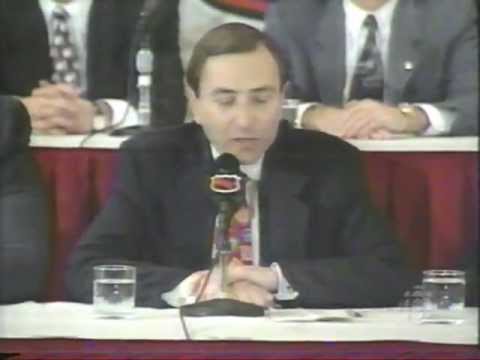
The NHL schedule for Saturday, October 1, 1994 was supposed to include games in 12 cities – including Montreal, where the Canadiens were meant to host the Boston Bruins. That game was supposed to air on CBC’s Hockey Night in Canada. Instead, 100 NHL players attended six hours of meetings with NHL officials and owners to negotiate a new collective bargaining agreement (CBA). Resulting from that, Commissioner Gary Bettman announced that the 1994-95 season would be postponed until at least October 15.
On Sunday, the NHL Players’ Association (NHLPA) ran an ad in 29 newspapers covering the 26 cities with NHL franchises. On behalf of the 700 NHLPA members, it stated:
“When we showed up to play last night, the doors were locked and the lights were out. Yesterday, the NHL slammed the door shut on 700 hockey players and millions of fans around the world. It is difficult to understand the logic behind this decision. . . . We have worked very hard to achieve a new agreement with the NHL. As you know, we played all last season, the playoffs, and this pre-season without a contract. We believe a lockout is not in the best interest of our game. We would much prefer to be playing the game we love before all of our fans. We appreciate your support for us and our great game. We are committed to the continued growth of hockey in North America and internationally. Unfortunately, the NHL’s decision to deprive the players and fans of the game does not show the same appreciation and commitment.”
According to Bettman, the season could not start without a new CBA. The former having expired September 15, 1993, the NHL operated for a full season and playoffs without an agreement. Although the players wanted to begin the 1994-95 season, Bettman felt that they were not “acting in good faith” during negotiations. Wayne Gretzky remarked, “It’s disappointing to me that one person has decided we’re not going to play the game. To have a guy who has only been in the game a year do this is very frustrating.” Similarly, Canadiens goalie Patrick Roy stated, “We all wanted to start the season. This is tough.”
It seemed to everyone on the outside that he and the owners were really aiming to implement a salary cap. Canadiens GM Serge Savard justified, “Guys compete with each other. There are always some teams that, at certain times, make much more money than others and then they try to buy a championship. We’re caught in a vicious circle.”
The players and their representatives did not see a quick end to the conflict. St. Louis Blues center Guy Carbonneau cautioned, “We’re really far apart. If they stick to their plan (to impose a salary cap), I don’t see any way in the world we can come to an agreement.” “We’re behind Bob and our committee 100 per cent. We’re really united,” said Tie Domie of the Winnipeg Jets before continuing, “It’s going to be a nasty, nasty war. It’s not going to be pretty.” Leading the charge, NHLPA executive director Bob Goodenow noted, “There are some real differences between us. I don’t think we should minimize them.”
In general, hockey fans looked very negatively on the whole situation. The Major League Baseball strike had already embittered sports fans. From the mouth of babes, Edmonton 13-year-old Neil Woodroffe said, “It will be a long time. It will be disappointing for the fans. The fans are mad, first because of baseball, now hockey.” Whereas, 17-year-old Chris Woodroffe added, “I don’t like it but I think it will be good for hockey. I don’t think the players should get all that money.” Fans also were less than pleased about missing out on Hockey Night in Canada. VP (of Molstar Communications Inc.) Ron Harrison apologized, “We’re like everyone else, a part of the ripple effect of what’s happening in hockey.”
The negotiations lasted long after October 15. With Bettman having set a deadline of January 16, 1995 in order to have a half season, the NHLPA agreed to the NHL’s offer on January 11. The main take away was that the NHL got to set an entry-level cap for the first three years, but the NHLPA avoided an overall salary cap and a luxury tax. Still, as Calgary Flames captain Joe Nieuwendyk summarized, “Nobody wins in this situation. We lost. They lost. The fans lost.” The resentment from this lockout and negotiations led to the entire 2004-05 season being canceled due to a lockout.
Over the three months the 1994-95 lockout lasted, 468 games were canceled. The truncated season only had 48 games per team, making it the shortest season in 53 years.
Additional Sources:
Brian McFarlane, Brian McFarlane’s History of Hockey (Champaign, Ill.: Sports Publishing Inc., c1997), 267-268.
Hockey Chronicle: Year-by-Year History of the National Hockey League (Lincolnwood, Ill.: Publications International, Ltd., 2006), 564-566.
“Forum Falls Silent,” Montreal Gazette, 2 Oct. 1994, pp. A1-A2.
Multiple articles, Montreal Gazette, 2 Oct. 1994, pp. D1-D3.
Ad, “Pro Hockey,” and “Hockey in cold storage,” Boston Globe, 2 Oct. 1994, pp. 53 and 58-59.
“Hockey hiatus annoys some fans,” and “NHL loses opening night to lockout,” Edmonton Journal, 2 Oct. 1994, pp. B2 and E1.
“The NHL Show Does Not Go On,” Los Angeles Times, 2 Oct. 1994, p. C2. “Hockey,” Tampa Bay Times, 2 Oct. 1994, pp. 1C and 9C.
“Little big man Bettman loses feather in his cap,” and “Players meet, but not on ice,” New York Daily News, 2 Oct. 1994, pp. 50-51, 60.
The Tampa Bay Lightning were the best regular season team last season, but they failed to get past the Columbus Blue Jackets in the first round of the postseason. The reason for the early postseason exit was overconfidence by the players. It looked as though the team thought they would be able to roll over the Blue Jackets, but that didn’t happen because the Blue Jackets just outplayed the Lightning.
The Lightning didn’t have many holes to fill in the offseason because of the solid roster and lack of cap space. The team traded Ryan Callahan and J.T. Miller to clear some cap space. The Bolts’ management team re-signed key restricted free agents, while adding some cheap veteran help. Kevin Shattenkirk was bought out by the New York Rangers and signed a cap-friendly deal with the Lightning. The two big deals of the summer were getting Brayden Point under contract for the season and extending goaltender Andrei Vasilevskiy into the future.
Here are five bold predictions for the Lightning for the 2019-20 season:
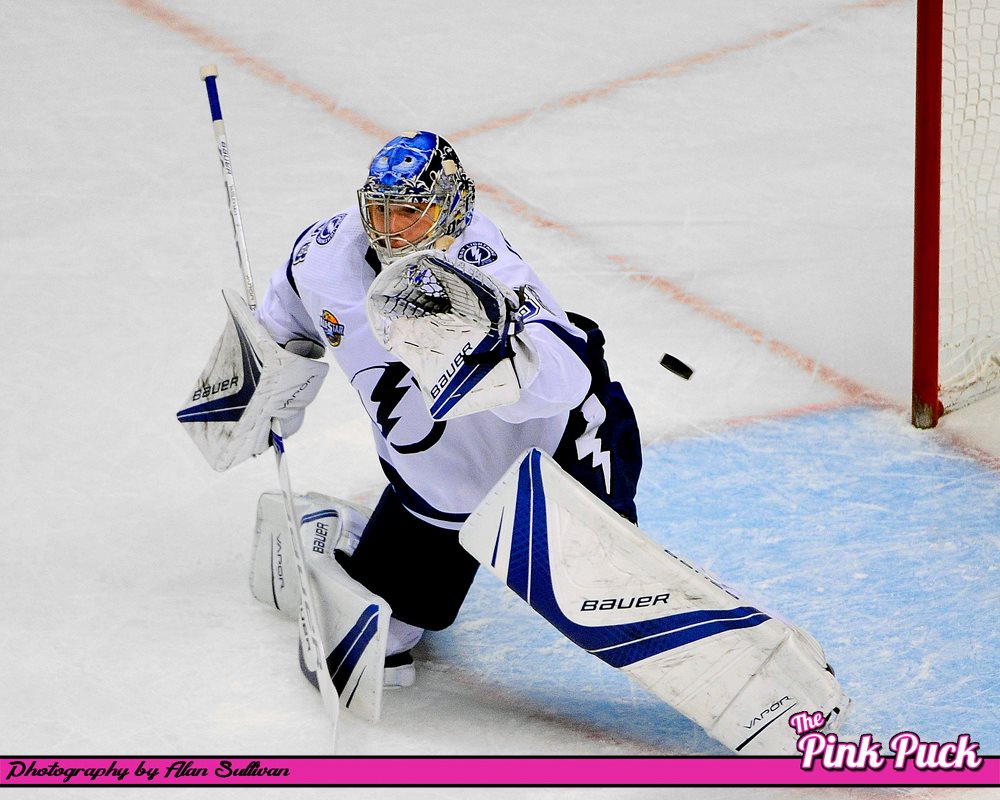
1) Andrei Vasilevskiy Struggles
In the offseason, the Lightning signed goaltender Andrei Vasilevskiy to a new eight-year contract worth $76 million. The contract comes with a hefty $9.5 million cap hit per season. The new contract won’t kick in until the 2020-21 season since the goalie was already under contract through the 2019-20 season. Vasilevskiy will have high expectations on him because of the size of his new contract. The Lightning could have also made the move now because of the lack of goalie depth in the organization.
If Vasilevskiy folds under pressure this season, he won’t play as many games. The fact that he will already play fewer games since the Lightning signed Curtis McElhinney in the offseason is going to affect his game. Vasilevskiy likes to see a lot of action and pucks on net during the course of a game. The more action Vasilevskiy sees, the better that he is during the course of a game and season. Vasilevskiy’s numbers will take a dive because of the lack of action during the season.
2) Kevin Shattenkirk Proves His Worth
The Bolts’ blue line is crowded with eight defensemen currently on the roster after the team waived Luke Schenn. Shattenkirk was bought out in the offseason so he has a lot to prove to himself and other teams around the League that he can still play. He will be playing with a chip on his shoulder and looking for a new contract starting in the 2020-21 season.
Shattenkirk will work his way into regular minutes on the bottom pair this season. The defenseman will play a solid game in his own zone and make smart plays with the puck. Shattenkirk isn’t the most offensively gifted defenseman, but he does have a solid point shot. If he can get his point shot through with traffic in front of the goalie then he will get some points. Shattenkirk won’t only be playing for a shot at another Stanley Cup, but a chance to prove that he can still play the game that he loves.
3) Mikhail Sergachev Breaks Out
I feel like I’ve been saying this for the past few seasons, but it just never happens with Mikhail Sergachev. This season he’ll be playing with a lot of veterans, and could be on the third pairing. If he is on the third pairing, it could take a lot of pressure off of him to produce this season. He has the offensive ability to get some points and they will come this season. Sergachev is only 21 years old so he has time to develop into an all-around defenseman.
If Sergachev gets paired with a defensive-minded defenseman then he could have more offensive freedom, and just play his game. Sergachev can skate and move the puck up the ice. He will eliminate some of those unnecessary turnovers in his own zone and neutral zone as the season goes on. Sergachev reads the play well in both zones so that will help him get some points and find the open man. The defenseman will be smarter with the puck and not as aggressive without it.
4) Yanni Gourde Scores 35 Goals
Yanni Gourde hit a bit of a sophomore slump last season as his numbers took a dip. In 80 games, he had 22 goals, 26 points and 48 points. He had three less goals, 13 less assists and 16 less points than his rookie season. His ice time also took a little bit of a dip, but he will rebound in his third full season. The 27-year-old has the tools to get 35 goals this season and at times he could be playing with elite talent like Nikita Kucherov, Steven Stamkos or even Tyler Johnson.
Gourde can be feisty and likes to initiate contact so he can be in on the forecheck and win some board battles. Another way he can get to 35 goals is by standing in front of the goalie looking for deflections or rebound chances. The biggest reason that Gourde will be able to get 35 goals this season is his speed. He can carry the puck into the zone making the defender back up and create his own space. The forward is versatile so he can be moved up and down the lineup depending on injuries and he will get some power play time. He has good hockey sense so that will help him get to 35 goals this season too.
5) Early Postseason Exit
The Lightning will suffer yet another early playoff exit this season. Andrei Vasilevskiy won’t get as much work in during the season since the team has a reliable back up in Curtis McElhinney. Vasilevskiy likes to see a lot of action and will not be sharp because of the decrease in game action. The goalie will let in soft goals and will be slow getting to pucks that he normally would be able to get. The Lightning are going to make mistakes that will cost them goals this season too.
The Lightning won’t get as much scoring depth and will have to rely on the top line to produce. Teams will try to follow the Blue Jackets’ model from the postseason and just outwork them to wear the Bolts down. The Lightning will be a hungrier team come postseason this year, but it just won’t be enough for the team to make it out of the second round.
To start the 2007-08 season, the NHL’s two southern California teams crossed the entire continent and an ocean (something like eight time zones) to play their first two games in London, England. Game 1 took place on September 29, and Game 2 followed the very next day, September 30, 2007. The Premiere Games series marked the first time the NHL played regular-season games in Europe.
The idea for London’s O2 Arena to host the NHL games was pushed forward by Tim Leiweke, CEO of AEG (the Kings’ parent company) and the arena’s operator. Because of his connection to the Los Angeles Kings, slating them to participate was easy. Finding a willing opponent was not, so he was thankful to GM Brian Burke of the Stanley-Cup-champion Anaheim Ducks. “I hope there’s more games like this, and if we’re asked to participate, we will.” Leiweke also assured that in future, “It doesn’t necessarily have to involve the Southern California teams. I think now the league, hopefully, will play a greater role in working at going to other teams.”
After all, Leiweke’s prime purpose was to encourage a stronger NHL presence in Europe. “In a day and age when some think of only their team, hopefully we’re going to encourage everyone that the only way we can grow this sport is if we do it all together and we’re all prepared to make some sacrifices in the short term for the good of the game in the long term.”
O2 Arena mostly worked out for the NHL. Ducks Coach Randy Carlyle praised, “The facility was first-class. And the ice improvement, from the first day we skated on it, I would have to say it was 200% better.” The only issue seemed to be with the lights on the night of the opening game. After a shaky “Star Spangled Banner” and rousing “God Save the Queen,” the house lights failed to brighten. The announcement made stated, “Our sincere apologies, there has been a failure of the lighting system that will take five minutes to repair.” The teams returned to their locker rooms, and Kings Coach Marc Crawford pondered, “I think maybe the delay, in some ways, may have helped us.” The delay only lasted 16 minutes before the game began.
The two games ended up having a few things in common. For one, the score was reversed with the Kings (as the “home” team) winning 4-1 the first night and the Ducks (as the “home” team) nabbing a 4-1 victory the second. Kings winger Michael Cammalleri scored two power-play goals on Saturday and the only Kings’ goal on Sunday. He deadpanned, “I love London.” The Ducks’ lead scorer was Corey Perry with two goals and an assist in the second game. His success was credited to having been repaired with center Ryan Getzlaf after splitting them for Game 1 proved ineffective. Getzlaf joked, “I lost him for only one game. I couldn’t get rid of him. Things were clicking. It was great to be out there handling that puck a little more.”
Another thing in common was that both wins could be laid at the feet of goalies making their NHL debuts. On Saturday, 19-year-old Jonathan Bernier (born two days before the Kings acquired Wayne Gretzky) opened for the Kings. The 16-minute delay did not seem to phase him, nor did the pressure of his first NHL game. Bernier explained, “It’s always the same game. I felt great in pre-season games and I just tried to do the same things.” He made 26 saves that night. Kings captain Rob Blake was impressed saying, “After they got that goal in the third he smothered two or three pucks right after that and you could see our team calm down. That’s what great goaltenders do.” Kings goaltending coach Bill Ranford commented, “He just relishes the opportunity to go out there and play. That’s always been his approach and I don’t think he’s going to change that.” For the following game, the Kings switched to give Jason LaBarbera a chance. Coach Crawford said, “We really like Jason too.” Plus, he wanted to “make sure we keep as fresh a lineup as possible.”
At the other end of the rink, for Sunday’s game, the Ducks brought in 25-year old goalie Jonas Hiller. It was his first NHL start, having played the previous season in Davos, Switzerland. He made 22 saves. Ducks captain Chris Pronger summarized the results, “I think we learned a lot about ourselves today, rebounding from that effort we had yesterday, the bad mistakes. We kind of took over the game today, and to be able to rebound the way we did shows a lot about this team.”
Interestingly, the teams had not been that thrilled about going overseas to start the season. Getzlaf remarked, “We had fun. Once we go over here it was OK. I think everyone was dreading it a little bit at the start when we heard about it, but as time progressed, we enjoyed ourselves and came out with a split.” His captain, Pronger, admitted, “It was a good experience, but I think the sentiment I had a couple of days ago is probably the same. It’s a long way to go for regular-season games and even playoffs. Figuring out how it would work logistically is above and beyond my pay grade and my brain power. Leave it to the smarter guys to figure that out, if that is, indeed, what they want to do.” Their coach weighed in saying, “I think the fans enjoyed both games from the standpoint of one thing: They didn’t really have a side to pick in this one.”
The fans that showed up for the games seemed to fascinate the teams and their staffs. They came from all over Europe wearing their home club shirts as well as NHL jerseys. The Kings coach noted, “Walking through the subway you’re hearing a lot of different languages. You’re seeing a lot of people wearing club sweaters from all over Europe. And that was unique for sure. And definitely I think everybody took notice of it at some point during the weekend.” Perhaps unsurprisingly, these fans were most roused by the fights (in both games) between the Kings’ Scott Thornton and the Ducks’ George Parros.
After the split start to the season, the Ducks had a much more successful finish than the Kings. Anaheim’s 102 points placed them second in the Pacific Division and fifth overall, though they did lose the quarter-finals during playoffs. Los Angeles only managed 71 points to fall last in their division and second-to-last in the league.
Additional Sources:
Helene Elliott, “Super saver is ticket on Kings’ trip to London,” Los Angeles Times, 30 Sept. 2007, pp. D1 and D6.
Helene Elliott and Chuck Culpepper, “Leiweke sees more continental drift,” Los Angeles Times, 30 Sept. 2007, p. D6.
Chuck Culpepper, “Kings don’t let Ducks up for air in London,” Los Angeles Times, 30 Sept. 2007, p. D6.
Helene Elliott, “Ducks’ Perry, Getzlaf together again,” Los Angeles Times, 1 Oct. 2007, pp. D1 and D4.
Helene Elliott and Chuck Culpepper, “Pronger isn’t a fan of games in Europe,” Los Angeles Times, 1 Oct. 2007, p. D4.
Chuck Culpepper, “Ducks put on a jolly good show,” and “Fans in tune with London,” Los Angeles Times, 1 Oct. 2007, p. D4.
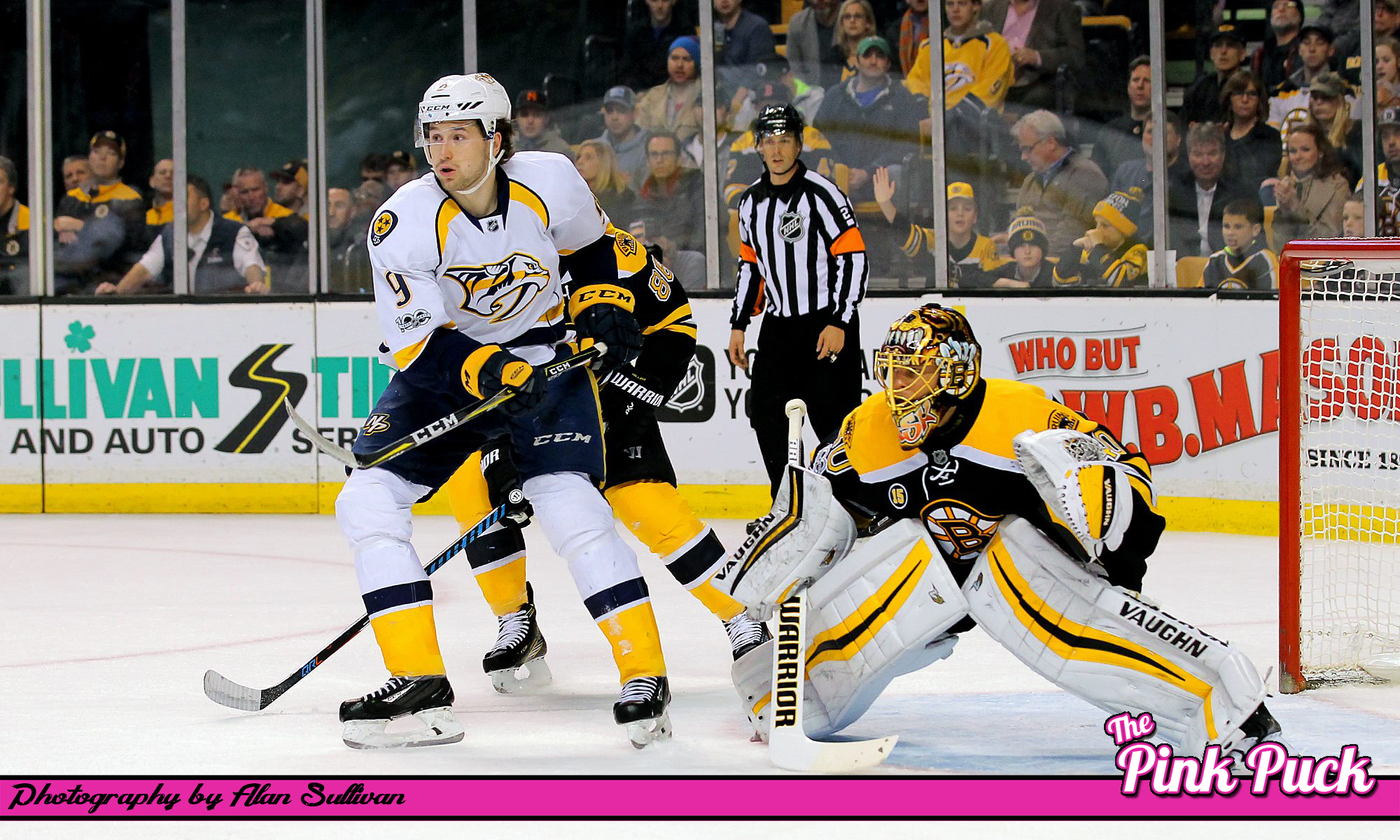
The Nashville Predators suffered an early exit in the postseason last spring. The center of the team’s problems was its power play woes. They were one of the worst teams while on the man advantage last season, which doesn’t make sense since they have talented players on the power play units. Another problem last season was injuries, which kept key players out of the lineup for a while. There wasn’t too much production from the bottom nine.
The Predators traded defenseman P.K. Subban in the offseason to get some cap space so they could go after free agent Matt Duchene. Another reason for the mediocre season was because of the team’s road woes in the beginning of the season, but they eventually turned that around. It was a down year for Kyle Turris and he looks to bounce back this season. The team mainly relied on goaltending, defense and the top line to keep in the playoff hunt.
1) No Postseason
The Predators will fail to make the postseason this year after an early exit last season. Yes, the team went out and got Matt Duchene in free agency, but will he really be enough for this team to get out of a much improved Central Division? The blue line won’t be a problem for the Predators this season because they probably have one of the best, if not the best, defense core in the NHL. They lost Subban in a trade over the summer, but the top four guys are solid, all around defenseman.
The two reasons for not making the playoffs this season will be depth scoring and goaltending. The Predators offseason move made them better on the top two lines, but I’m still a little worried about the depth scoring of this team. The depth was an area where the team struggled last season led by Kyle Turris. Pekka Rinne is getting older and he can have his struggles at times, so will Juuse Saros be ready to take over the net and be the number one goalie? Saros played well at times last season, but if called upon this season, will he be able to do it consistently?
2) Juuse Saros Takes Over the Crease
Rinne is getting older and with age comes a decline. Rinne was 30-19-4 in 56 games played last season. He had a 2.42 goals against average and .918 save percentage. At times, he didn’t look good in net at all and was pulled in a few games. Rinne was the better of the two goalies last season, but his numbers took a dip from the previous season.
Saros’ numbers also went the wrong way, with his save percentage taking a dip and his goals against average going up. In Saros’ defense, he did play in five more games last season than the previous season. The 31 games played were a career high for him. In 31 games, he went 17-10-2 with a .915 save percentage and a 2.62 goals against average. Rinne may not have what it takes this season and Saros will get an opportunity to take over the crease, which he will do because he will make the saves that need to be made.
3) Matt Duchene Dominates
It was known that Duchene was going to test free agency waters come the summer, and he eventually chose the Predators. Duchene signed a new eight-year, $56 million contract with a cap hit of $8 million per season. The forward is a welcome addition to a team that really needed to bring in a solid first or second line player who could produce. Duchene will bring speed and his playmaking ability to the team, and that will help him get over 90 points this season.
His versatility should help him get even more minutes and opportunities when injuries arise since he can play either center or the wing. The forward is not going to have to do too much on this team because they are so talented in the top six. He will give the team some flexibility with the lines and he may even get to play some games with Filip Forsberg, Viktor Arvidsson or Ryan Johansen. He will be a huge boost to the Predators’ power play, since he can set up teammates and score some goals in front.
4) Kyle Turris Turns It On
Turris only played in 55 games last season for the Predators. In those 55 games, he had seven goals, 16 assists and 23 total points. It was one of his worst overall seasons in a while. It was just a struggle for him last season, and it didn’t help that the power play wasn’t effective. The lines were juggled at time because of injuries or just players struggling, and Turris just couldn’t seem to get it going even if he was playing a decent game.
Turris is one of those depth scoring players who needs to have a big bounce back for the Predators this season. The center could potentially see some time with Duchene since he can play the wing. The power play will be more effective this year with the addition of Duchene and the players won’t overpass, but take the shot when open. His skating ability and decent offensive zone instincts should get him some points this year. Turris will bounce back in a big way by having 50 or more points on the season.
5.) Road Woes Return
The Predators had some road woes early last season, but turned them around to finish with a 22-15-4 road record. The Predators went winless in 11 straight road games from Nov. 12, 2018 to Jan. 4, 2019. The team went 0-8-3 and only wound up with three points out of a possible 22. The main problem was they were getting outscored because they were shorthanded due to injuries. The goaltending also wasn’t at its best during this stretch and it cost them some games.
The road woes will be back to haunt the team yet again this season. The team plays most of its schedule at home in October, which should be good for them. They can rack up the points and try to keep pace in the Central Division. Once the Predators start playing some games on the road, they face some good teams like the Colorado Avalanche and New York Rangers. The power play struggles will continue on the road as will the poor goaltending. It has been a pattern of Rinne to play well at home and not so good on the road the past few seasons.
The Dallas Stars are coming off of a second round playoff loss, but expectations are pretty high for this team. The Stars were one of the better defensive teams last season, but that was mainly due to Ben Bishop having a great season in goal. There were depth additions in the offseason that made the team even better. The Stars landed some big name free agents, and locked up its own restricted free agents this past summer.
The management of this organization knew this team needed some top nine talent on this roster and they landed some big name players. Joe Pavelski left the San Jose Sharks and decided to join the Stars in free agency. Corey Perry was bought out by the Anaheim Ducks and brought in on a very cheap one year deal. The Stars locked up young defenseman Esa Lindell for the next six years after he rounded out his game in the postseason. Roope Hintz really shone in the postseason last year, while Miro Heiskanen was impressive in his rookie season.
Here are five improbable predictions for the Stars upcoming season.
1) Roope Hintz Breaks Out in a Big Way
In 58 games played last season, Hintz had nine goals, 13 assists and 22 points. Of his nine goals, three were on the power play and three were game winning goals. Hintz really found his game during the course of the playoffs last season. Yes, he contributed during the regular season, but he was a difference maker for the Stars in the postseason. In 13 postseason, Hintz scored five goals, three assists and had eight points.
The one part of Hintz’s game that was evident all season was the speed at which he plays the game. He brings speed to whichever line he is on and that is going to be a big factor in him really breaking out this season. He will score 25 goals, have 30 assists and total 55 points. He may be able to produce more than 55 points depending on which line he is on this season. If he is in the top six then there is a definite possibility of him scoring more than 55 points, since there are players with a ton of skill on those two lines. If Hintz uses his speed and makes smart decisions with the puck, he will rack up the points this season.
2) Joe Pavelski is Stars’ Leading Scorer
These are my improbable predictions so I figured go big or go home with some of them including this one. Pavelski came to the Stars in free agency after 13 seasons with the San Jose Sharks. The forward is another veteran leader, who should fit into this lineup well. He can score and setup his teammates so he will be another weapon for the Stars in addition to Tyler Seguin, Jamie Benn and Alexander Radulov.
There are some big name players who can rack up points on the Stars’ roster including Seguin, Benn, Radulov and Klingberg among others. Pavelski will likely see top six minutes along with power play time, which will help him get some points. The forward could also see some time with the likes of Benn, Seguin or Radulov during the course of a game especially if the trio is struggling throughout a game. Another potential reason he could produce is his ability to play any forward position allowing him to be moved around in the lineup depending on injuries and individual players’ struggles.
3) Miro Heiskanen Hits 25 Goals
Heiskanen shined in his first season in the NHL and finished fourth in the Calder Trophy voting. The defenseman showed off his skating skills and his ability to move the puck. Sure, he made some mistakes last season, but he was only 19 years old. In 82 games, he had 12 goals, 21 assists and 33 points last season. Heiskanen struggled with production a bit in his first postseason as he had just two goals, two assists and four points in 13 games.
The defenseman can really move the puck, whether he makes the exit pass or skates it out of the defensive zone. He doesn’t let the pressure get to him too often in games and makes the right play. The two things that could hold him back are passing up his shot and not getting his shot through to the net. If he can manage to avoid these two things and get pucks on net then he has a really good shot at getting to 25 goals or more.
4) Esa Lindell is a Norris Trophy Finalist
Yes, I realize there is a defenseman named John Klingberg on the Stars roster, but this is another prediction where I decided to go big or go home. Lindell really came into his own last season and turned himself into a dependable two-way defenseman. He earned a new six-year contract worth $34.8 million this offseason. Lindell played mostly with Klingberg last season so that helped him evolve his all around game.
Lindell will be even better in his own end this season because he will have another year of NHL experience under his belt. He owns a big shot from the blue line so that will help him to get some points throughout the season especially if he can get the shot through with traffic in front of the net. In 82 games last season he had 11 goals, 21 assists and 32 points, which were all career highs. If he can be a little bit more consistent in games and from game-to-game, he will be a Norris Trophy Finalist next season.
5) Corey Perry Get 20 Goals
Perry is out indefinitely with a broken foot, but he shouldn’t miss too much time. He could be back on the ice by the second or third week in October. Perry was bought out by the Ducks in the offseason so he will be playing with a chip on his shoulder. If Perry can manage to find a way to get to the front of the net for deflections then he should get to the 20 goal mark. The Stars have some defensemen who can get the shot through to the net.
Perry is on the decline and getting older, but there is nothing like a player who is trying to play for his next contract. The veteran forward knows that this could be his last shot at sticking around in the NHL. I wouldn’t be surprised if he scored a majority of his goals this season in front of the net by getting rebounds or deflections. Perry should be playing with some other skilled players so this will make it easier for him to get to 20 goals or more throughout the sesaon, if he can stay healthy.
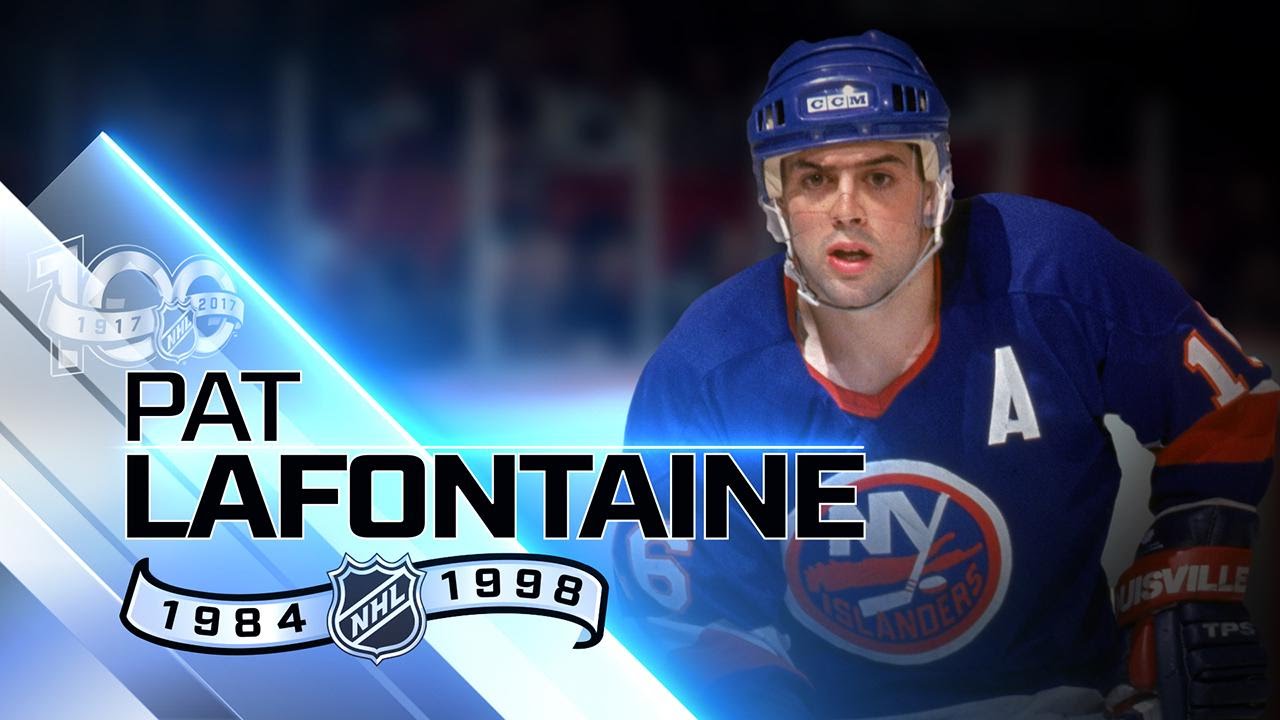
Though born and raised in Missouri and Michigan, center Pat LaFontaine was made for New York. With his trade to the New York Rangers on September 29, 1997, he became one of just five skaters to play for all three NHL teams in New York. Of them, he has been the only one to spend his entire career in that same state. LaFontaine joked, “I think I’m the only player in history who has been traded twice and hasn’t had to change his license plate.”
Thanks to some canny misdirection, the newly four-time Stanley Cup champion New York Islanders were able to draft LaFontaine 3rd overall in 1983. As Nashville Predators general manager David Poile later remarked, “It was the rich getting richer.” LaFontaine joined the Islanders after playing in the 1984 Winter Olympics at Sarajevo. Over his eight seasons with the Islanders, he became a premier scorer.
Due to a contract dispute, on October 25, 1991, the Islanders traded LaFontaine (along with Randy Hillier, Randy Wood, and a fourth-round draft pick) to the Buffalo Sabres. In return, they received Pierre Turgeon, Uwe Krupp, Benoit Hogue, and Dave McLlwain. LaFontaine summarized his time in Buffalo saying, “I stayed in New York State. I had some of my best career years there. … We had an amazing powerplay.” Indeed, during the 1992-93 season, he had a career high with 148 points, second only to Mario Lemieux. This was a record for the Sabres and for an American-born player for which he received the USA Hockey Distinguished Achievement Award. Having been made the Sabres’ captain back in 1992, he concluded, “I had six wonderful years there, and my two other children were born in Buffalo.”
Unafraid to push through tough opponents, LaFontaine’s career only stalled due to numerous injuries. A broken jaw made him miss 13 games in 1991, but that was nothing compared to what happened after he injured his right knee during the 1993 playoffs. He made it through a mere 16 games of the 1993-94 season before needing surgery, and then he was out for the remainder of the season and half of the next (already shortened by the lockout), missing about 90 games in all. His drive to get back to the game in 1995 earned him the Bill Masterton Trophy for perseverance and dedication. Things seemed to be looking up when he accrued 91 points during the 1995-96 season. Unluckily, on October 17, 1996, a hit by Pittsburgh Penguins defenseman Francois Leroux gave LaFontaine his fifth concussion in six years. Even worse, LaFontaine attempted to return too soon and developed post-concussion syndrome. He only managed to play 13 games that entire season.
Having been cleared by two pre-eminent neurologists that summer, LaFontaine felt ready to return. The Sabres’ medical team disagreed and would not clear him to play. Many speculated that they used this as an excuse to cut costs by not having to pay the remaining two years on his contract. Whatever the reason, LaFontaine’s desire to play led him to request a trade to the Rangers. He seemed to have chosen the New York City team to be closer to his wife’s family on Long Island. LaFontaine explained his insistence on playing saying, “Why come back? It’s a simple question for me. I still feel I have a lot to give. And, most important, I love this game and have a passion for this game and enjoy competing at this level.” Before the Rangers agreed to bring him aboard, they had him examined by their choice of neurosurgeon, who agreed that LaFontaine had sufficiently recovered and was not at high risk for another concussion.
The deal was made, and LaFontaine was traded by the Sabres to the Rangers in return for only a second-round draft pick and future considerations based on how much he would actually be able to play. His contract still would pay $4.8 million per season, which would perhaps limit the Rangers’ options if he was “significantly diminished” from his health issues. However, in the case of another concussion, insurance would pay all but $2.7 million of the contract. The New York Daily News thought the trade was “an absolute steal” no matter how much time LaFontaine actually played because they didn’t have to give up another proven player in return. However, the reporter warned that the Rangers should not rush him into full-time.
Rangers GM Neil Smith was hoping LaFontaine could help fill the gap left by Mark Messier’s departure as he was a captain and a center. LaFontaine would take Messier’s center position on the second line. Smith explained, “Mark is a totally different player than Pat and I think, no matter what I did other than getting Mark back, I couldn’t replace Mark except with Mark. But that’s not to say that we can’t have a good team with the current roster rather than a roster that included Mark. … We’re thrilled with the composition of this team right now.” He continued, “I think that Patty is a guy that puts dynamic speed into your lineup and gives your team an element of speed that we just don’t have, because Pat is one of the elite speed players in the league. He’s had terrific offensive output throughout his career. And my hope is that he’ll play at the same level as he played during that World Cup when he joins the Rangers.”
LaFontaine started off fairly smoothly with the Rangers. He later said, “In my last year, I was traded to the New York Rangers and got to play on Broadway and to see what it was like to be part of the New York Rangers’ organization, which was first class.” He scored 62 points (23G, 39A) in 67 games, and he tallied his 1,000th point that January before participating in the 1998 Winter Olympics at Nagano.
Then disaster struck on March 16, 1998, when a collision with teammate Mike Keane resulted in another concussion. This one turned out to be career-ending. He explained, “I always said if it got to the point where there was more than minimal risk I would stop playing, and it got to that point.” After seven months without playing another NHL game, on October 12, 1999, he officially retired at the age of 34. LaFontaine tried to count his blessings saying, “I was very fortunate in my career to play with three great organizations. I was traded twice and never changed my license plate and had the opportunity to raise our family locally and play in the great state of New York, which I still live in.”
With a career total of 1,013 points, LaFontaine remains eighth-highest scorer among American-born NHLers. However, he played fewer games (865) than anyone else in the top 10, making his career average of 1.171 points per game the all-time best for those born the U.S.
Upon retiring, LaFontaine has been known for his charity work, but he also served brief stints with each of his former New York state teams. For six weeks over the summer of 2006, he joined the Islanders as Senior Advisor to the Owner. He resigned to protest the firing of his former GM from the Rangers, Neil Smith, who had since switched to the Islanders. Beginning in 2010, LaFontaine became a commentator for a Rangers broadcast network. Finally, between November 2013 and March 2014, he served the Sabres as their President of Hockey Operations.
LaFontaine was inducted into both the Hockey Hall of Fame and the United States Hockey Hall of Fame in 2003. The following year, the Sabres inducted him into their Hall of Fame, and two years later, they retired his No. 16. Every year since 2001, the winner of the Rangers-Islanders season series wins the Pat LaFontaine Trophy while the loser contributes to his choice of charities.
Additional Sources:
Mike Commito, Hockey 365: Daily Stories from the Ice (Toronto: Dundurn, 2018), kindle edition.
Frank Brown, “Pat Trade Is,” New York Daily News, 30 Sept. 1997, p. 68.
John Dellapina, “On The Mark,” New York Daily News, 30 Sept. 1997, p. 69.





 Prev
Prev