The NHL confirmed rumors on Wednesday, September 10, and announced that the 2015 Bridgestone NHL Winter Classic will be played at Nationals Park on January 1 at 1 p.m. The game will be hosted by the Washington Capitals, who are set to face off against the Chicago Blackhawks. It is the second appearance in the Winter Classic for both teams. The Capitals were victorious over the Pittsburgh Penguins in the 2011 Winter Classic, while the Blackhawks fell to the Detroit Red Wings in 2009.
The official location confirmation comes almost exactly two years after Washington, D.C. was announced as the host of the 2015 game. At the time, proposed locations for the game included RFK Stadium, FedEx Field (home of the Washington Redskins), and even the National Mall. While the National Mall would have been a very unique location for a game, it was deemed to be too much of a logistical challenge to actually occur.
The NHL had remained mum for quite a while about the location of the game. Rumors of Nationals Park’s selection emerged on Saturday, September 6, with the Washington Postreporting that a deal had been set to use the stadium for the game. Nationals Park, which seats 41,546, was considered to be the “overwhelming favorite” to host the game.
The Capitals plan to unveil “throwback jerseys” for the game at an event later this month. It is unknown when tickets for the game will be available for purchase.
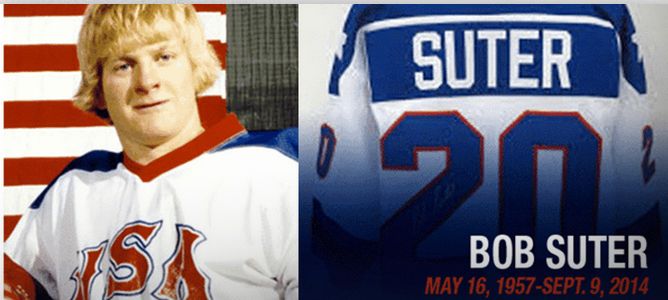
Though it has been almost 35 years since the fabled “Miracle on Ice” U.S. Olympic men’s hockey team did what many thought impossible in defeating the Russians at Lake Placid, the books, stories and Disney’s Miracle make it seem like just yesterday. So it was with a shock that the hockey community learned of the death of one of the defensemen, Bob Suter, who made it onto Herb Brooks’ team and who would stand on top of that podium with the rest of that amazing team. The 57-year-old Madison, Wisconsin native is the first of the team to pass away, though head coach Herb Brooks died in a car accident in 2003.
Reports are that Suter died of a major heart attack while at the Capital Ice Arena in Middleton, Wisconsin—a rink he owned—on Tuesday, September 9. He also served in the capacity of an amateur scout for the Minnesota Wild.
“We are very saddened by today’s news that Minnesota Wild Scout Bob Suter suddenly passed away. The Wild organization sends its condolences to the entire Suter family during this difficult time. Not only was Bob a great hockey ambassador, he was a terrific person off the ice who will be greatly missed.”
Hockey ambassador seems an appropriate moniker for Suter and his family. Bob’s son Ryan Suter—with Zach Parise—signed matching, massive, 13-year, $98-million contracts in the summer of 2012 before the new collective bargaining agreement put limits on such lengths. And Bob’s brother Gary played in the NHL for 17 years and also represented the United States in the Olympics at both the Nagano games in 1998 and again at the Salt Lake City games in 2002.
In The Boys of Winter by Wayne Coffey, Suter’s brother Gary described Bob’s attitude on the ice.
“He was an abrasive [player],” he said. “He always had people chasing him around the ice. He was the sort of guy you hated playing against and loved having him on your team.”
Coaching the Madison Capitals, a youth program that was started by Bob’s father, he continued to share his love of hockey and guide young players. While some of the Miracle team moved away from hockey, for Suter, it continued to fill his life. It somehow seems fitting that he was at the arena when he suffered the heart attack.
USA Hockey, the organization that continues to grow hockey in the United States and is responsible for the teams that represent the United States in international competition, also issued their own statement about the loss:
“It’s a tough day for our sport, having lost a great friend and ambassador of the game. Bob Suter will always be remembered for his role as a member of the 1980 Miracle on Ice Team that captivated our country and whose impact is impossible to measure. His legacy, however, is far beyond that as he dedicated his life to advancing hockey and helping young people achieve their dreams. Bob’s positive impact on our sport will be felt for generations to come. Our thoughts and prayers are with the Suter family at this difficult time.”
This is a terrible loss to his family. Hopefully the happiest of memories both on and off the ice will bring smiles to their lips when the tears sting their eyes.
On Wednesday, September 10, Ryan Suter–through the Minnesota Wild–issued the following statement:
“The sudden loss of my father has been difficult for myself and our family – my dad was my hero and he taught me about life, hockey and what was truly important – family. He will be missed greatly and his legacy and spirit will be with us every day. He lived with the motto “it’s all about the kids” and forever he will be remembered by this.
“My family and I also want to say thank you for the tremendous outpouring of support we have received from the hockey community around the world. It means a lot to us to know how much he was loved and will be missed.”
It’s routinely cited as one of the most memorable day of any hockey player’s life: draft day. Hockey players can get drafted into the National Hockey League at 18 years old. There is no requirement about being a year out of high school or completing some amount of college, like in the NBA or NFL.
But what happens if the players are not ready to join the NHL team that drafted them at just 18 years old? A select few taken in the first round will attempt to make the jump. However the rest of the draft picks from the seven rounds need more time to develop. What happens to them?
That’s where it gets a little more complicated. Every NHL team has an AHL affiliate that they use to develop players. In many cases, they also have established relationships with ECHL teams. What could be a better situation for a young player that needs that little something extra before making it to the NHL?
Unfortunately, it’s not that simple. Although a player can go straight to the NHL following the draft, the rules are cloudier when it comes to playing in the AHL. Per the AHL By-Laws, players must be 18 years old by September 15th of the season that they would start playing. However, players don’t often join the AHL before they are 20 years old.
There are a couple different reasons that players do not join the AHL right away. Most of these players are playing for a junior team somewhere, in Canada or the US, or are playing for a team in Europe or Russia. They might have good relationships with the coaching staff on those teams. If they cannot go straight to the NHL, staying with a coach that knows them can make sense. Those that know them are often the best to aid in their continued development.
If that were the only reason, it would be one thing. The players would be making the choices themselves with nothing stopping them from joining the AHL if they wanted to after being drafted. The choice would only come down to what each player, and those advising him, thought was best for development. It would be the player’s choice instead of being decided by the team he was with when he was drafted.
However, the decision to come to the AHL prior to turning 20 years old is not always one that belongs to the player. The exact rule governing when players can join the minor professional hockey leagues can be complicated and has different facets depending on where the player was playing when he was drafted.
The first agreement impacting players turning pro in the minor professional hockey leagues is the NHL-CHL agreement. The Canadian Hockey League, or CHL, is the organization that oversees the Ontario Hockey League (OHL), Western Hockey League (WHL), and Quebec Major Junior Hockey League (QMJHL). These are the three main junior leagues in Canada and are responsible for providing a large number of draft picks each year.
Understandably, the CHL wants to protect the competitive nature of their leagues and does not want their top talent leaving as soon as they get drafted. For that reason, the CHL and NHL reached an agreement.
Any player already playing for a team in the CHL when he is drafted will be ineligible to play for the minor professional leagues until he is 20 (by December 31st of that season) or has played four seasons in the CHL. For example, the Edmonton Oilers selected Darnell Nurse in the first round of the 2013 NHL Entry Draft from the Sault Ste Marie Greyhounds. He has played three seasons in the OHL so far and will not be 20 until February of 2015, making him ineligible to play in the AHL if he does not make Edmonton this season.
This is the rule for any player in the in the Canadian Hockey League. But some players that end up in the CHL do not have to follow these rules. If a player is with any team not in the CHL when he is drafted, these rules do not apply. Sometimes a player gets drafted and then decides to join one of the leagues in the CHL. What happens then?
The Washington Capitals selected Andre Burakovsky in the first round of the 2013 Draft. Playing in Sweden prior to being drafted, he was outside the rules of the CHL. After the draft, he did not make the Capitals and instead, made the jump to an OHL team. Since he was not in the CHL prior to his draft, he could decide to join the AHL for the 2014-15 season even though he will still be 19 years old and has only played one OHL season. This is true for any player from the United States, Europe, or Russia that follows the same path as Burakovsky.
Finally, players that go to the NCAA (in the US only, Canadian colleges are excluded) also play by their own rules. As long as they are 18 years old, they can join the AHL whenever they would like. The flip side to that is that the second they sign a contract they will be ineligible to return to the NCAA. They have then gained professional status.
This also only applies when players are looking to start a season with a team outside the NHL. Players from OHL, WHL, and QMJHL routinely join AHL teams after their seasons end for the remainder of the AHL team’s season. That is okay.
So, at the end of the day, are players that are in the CHL when they are drafted into the NHL at a disadvantage? If they feel like they have outgrown the competition in the CHL at 18 or 19 years old, but are not ready for the NHL, there is no option for them to move on. They are forced to stay with their team while other players make the jump sooner. Of course, many players are probably happy to stay with the juniors teams. But the choice should be theirs.
It would be one thing if these rules were in place for all drafted players and every player was on even footing. The way the rules are now, though, singles out players in the CHL for no other reason than that the league wants to protect the level of competiveness. That does not seem to be a good enough reason to give a certain group of players a different classification. Most CHL players participate in those leagues because they are Canadian and the CHL is seen as the best of the best. They should not be kept from joining professional hockey if that is what they want to do.
An inescapable craze struck the nation this off-season, more feel-good than Guardians of the Galaxy and catchier than the song “All About That Bass”. I am referring, of course, to the ALS Ice Bucket Challenge. We here at The Pink Puck not only nominated our readers, but we’re so dedicated to giving back that we have watched every single video of an NHL player doing the ice bucket challenge (yes, every single one), and fellow Pink Puck writer Mollyhall and I have teamed up to bring you the best of the best, cream of the crop challenges you can’t afford to miss.
Sam Gagner of the Arizona Coyotes
JH: I don’t even remember what I did for my 25th birthday, but I feel like it was exponentially less fun than this.
MS: Things I admire about Sam Gagner’s Ice Bucket Challenge:
1) his decision to wear what seems to be a light purple shirt paired with more aggressively purple shorts;
2) creative use of slo-mo, which would have done the director of 300 proud; and
3) his decision to use the word “nominate,” as if this is an honor that his friends have bestowed on him.
Things I do not admire: HOW DARE YOU WASTE A PERFECTLY GOOD CAKE.
JH: Here’s what I like about Sam Gagner’s ice bucket challenge – he understands what we want. He gets that we want to see someone get soaked as hilariously as possible, but he also understands his role, which is to wear a thin, light-colored t-shirt, because come on, that’s like half the fun.
Tim Gleason of the Carolina Hurricanes MS: Tim Gleason’s Ice Bucket Challenge reminds me of a dream I had once, where Ron Burgundy was using Elvis’s tub at Graceland, and when I said, “Ron Burgundy, you can’t be in here,” he stood up from the bubble-filled tub with bubbles covering all his delicate parts the way a mermaid’s hair does.
Tim Gleason’s Ice Bucket challenge also makes me wonder at what point during his bath Tim Gleason plans to open the champagne at his side and drink it, apparently, directly from the bottle.
JH: I feel like if Kanye West did the Ice Bucket Challenge, it would look a little like this, only Kanye West would be playing softly in the background.
Anton Khudolbin of the Carolina Hurricanes JH: If you watched Evgeni Malkin’s ice bucket challenge and were like “cute, but not Russian enough,” and then you watched Alexander Ovechkin’s where he’s in his underwear in the shower and were like “kind of strange, but not Russian enough,” my friends, do I have the ice bucket challenge for you.
MS: Who runs the costume department in Anton Khudobin’s life? That person needs a raise.
Other questions raised by this ALS Bucket Challenge video: what are the paddle and life vest for? Where is your boat? Wearing flippers and a life raft in your paddle boat suggests a real lack of faith in your boating ability. Anton Khudobin: have you ever been boating before? Are you sure you can do it alone? I’m not saying you can’t. I’m just asking if you’re sure.
JH: “Hello ladies, look at your man, now me, now back at your man, now back to me. Sadly, he is not me. But if he starts working out like a crazy person and dumping water on his head wearing tiny shorts, he could look like me. What’s this? It’s two tickets to that Blackhawks game you wanted. I’m on a wakeboard.” – Jonathan Toews, probably.
MS: Does anyone ever get the sense that the “Captain Serious” moniker, like, really messed with JayTayves head? Do you think he’ll spend the whole rest of his life shouting into the abyss, “I’M THE COOL DAD! I’M THE COOL DAD!!!!!!!!!!!”
JH: Is there such a thing as trying too hard at an Ice Bucket Challenge? I think we may have reached that point.
MS: “I want to make a video that will confuse you, emotionally. I want it to pump you up to fight ALS, but also for some reason make you very sad about the hardships of life. Must include adorable children playing a sport people love, so that their heart muscle will get a full workout. Make sure to zoom in on that one kid’s face, you know the one, with the SAD EYES. I want to incapacitate people for a few minutes, really make them realize just how terrible they are for not running up mountains in Newfoundland, carrying buckets of water to thirsty stray dogs, and teaching babies about teamwork and the value of always giving 100% by playing sports. Oh! And in the background let’s have a hopeful folk/rock tune from the MOST Canadian band we know, like maybe Great Big Sea? They’re pretty Canadian, right? Yeah, they’re pretty Canadian.” – leaked memo from Dan Cleary to his ALS Ice Bucket production team
JH: There are a bunch of Ice Bucket Challenges where zambonis were used, but Andrew Ference did it first. Andrew Ference was, like, the first guy to up the game and make people realize they had to do more than put some dinky ice cubes in a bucket. Andrew Ference expects excellence. He demands it. He will captain us all to greater Ice Bucket heights.
MS: All right, look. The truth of this is that Andrew Ference is always going to win every Good Guy award, ever. We can be bitter about this or we can accept it as part of life. Andrew Ference is a guerrilla-gardening hot dad who cares about the environment, LGBTQA rights, children, and probably a whole bunch of social causes that we’re all too self-involved to even KNOW about. You win, Ference. YOU ALWAYS WIN.
JH: I posted this video to my twitter, which my parents read, and it thoroughly impressed my mom. She brings it up pretty much every time we discuss the ice bucket challenge. “Who was the cute guy who sat under the ice truck?” She asks, proving that no matter what PK Subban does, there is a 100% chance that if you brought him home to your mom, she would like him.
MS: PK Subban challenged Drake. I mean? What else do you want from him? I know Drake was too busy still sitting in that chair from the Anaconda video, but PK Subban tried. That’s what counts. In the ALS Ice Bucket Challenge, as in literally everything else that PK Subban does, 100% effort was made.
Also, does anybody in the whole world love life as much as PK Subban? What’s the over/under on someone convincing PK Subban to make a life coach video series where he just looks right into your soul through the camera and says, “YOU’VE ONLY GOT ONE LIFE, SEELEY! LIVE IT!” I’m asking for a friend.
JH: RING RING RING RING RING RING, BANANA SUIT (doo doo doo doo doo doo doo).
But in all seriousness, why does Marc-Andre Fleury have a banana suit? At what point in his life did he go to the store, look at it, and go, “yes, I will definitely use this in my future”? Why don’t I live the kind of life where I need a banana suit?
MS: The true MVP of this video is the Fleurys’ adorable baby girl, who takes on look at the cold water her mom and that huge banana are dumping on their heads, and just goes, “Uh, no thank you.”
JH: Are you looking for a way to say “donate money to researching a cure for ALS” while also ostentatiously saying “as a hockey player I make more money than most twenty-somethings lie awake at night crying of and dreaming”? Then boy, does Christian Hanson have a way of doing the ice bucket challenge for you!
MS: Julia was fooled by this video, but my cat eyes were not. THOSE ARE ONE DOLLAR BILLS, CHRISTIAN HANSON. That’s probably, like, $30 in one dollar bills. That’s enough dollar bills for a chicken fajita and a couple large margaritas. I mean, every dollar counts when it comes to medical research; I’m just saying, this is a lot like the time my mother printed out a fake $100 over a stack of ones and put it in my Christmas stocking. “HOLY CRAP A THOUSAND DOLLARS!” I shouted, and my Mom said, “Ha, ha, sucker, that’s like enough for half a tank of gas and a sandwich. MERRY CHRISTMAS.”
JH: That was, dare I say it, ice cold of your mom.
JH: In fair Vancouver, where we lay our scene, a lonely Eddie Lack curls up to a Florida Panthers jersey (already a sign of deep anguish) and bellows sadly into the night for his former goalie partner, the other half of the “best friends” necklace he probably wears every day. “LUUUUUU,” he wails as it rains on his head like it is always raining in his heart, “I CHOOSE YOU. LU. LUUUUUUUU.” For never was there a tale of more woe than Eddie Lack and his Luongo.
MS: No, but seriously, how long did Eddie Lack wait after Lu got traded to Florida to buy that jersey? Did he have it before even Lu did?
JH: Sometimes, I worry about Paul Bissonette. What drives him, I wonder? What fuels his endless quest for attention-grabbing in the most superlative manner? Does he feel empty inside? Does he cry at night a la Britney Spears’ seminal hit “Lucky”? Can a man who helicopters up to a glacier in a banana hammock to have water dumped on his head ever truly be considered okay?
Which is not to say his video isn’t 10/10 the best NHL ice bucket challenge ever, I’m just saying I worry about the dude.
MS: Apparently this video only cost Paul Bissonette $175 to make, which is literally half of what I spend on a single new tire for my car last month. I guess there’s a new Lord of Bargain Shopping in town, so velcro up those orthopedic shoes and get ready, Nana, because he’s here for your crown.
JH: You know that feeling when you see your teachers outside of school in normal clothes? Especially if it’s a teacher you hate and suddenly they’re humanized in a distinctly uncomfortable way? I feel like that’s what happened to me when I watched this video.
MS: You know that feeling when you find out George Bush spends his free time making paintings of himself in the bath? That’s what I feel like happened to me when I watched this video.
JH: I guess, at the very least, we now know what it would look like if Voldemort did the Ice Bucket Challenge.
In an article on the life and death of Derek Boogaard, the New York Times said “Sometimes fights are spontaneous combustions, a punch thrown to avenge a perceived cheap shot. Others are premeditated affairs, to settle simmering disputes — whether from last period or last season. Some are intended to reverse the momentum of a lopsided game. Some are a restless player’s way of proving himself to his team.” Not to discount the audience, who react viscerally, like Romans at the Coliseum, screaming for blood. A fight can be the thing that keeps people watching, has them shouting and cheering and pounding at the glass because fights are noble and honourable and exciting.
Right now, it seems like the fights themselves are so deeply intertwined with the NHL and with hockey in general that they’re almost impossible to separate out, to comment on as anything but Part Of The Game. But when you look closer, at players like Derek Boogaard, or Steve Moore, then you have to realize that there is a problem in the game, and it starts with two men dropping the gloves.
Derek Boogaard was an enforcer. He was a player who would have never made the NHL if not for his size and ability to fight. In 277 games over five seasons in the NHL, he had sixteen points, and almost 600 penalty minutes, including almost seventy fights. He was widely considered the toughest player in the NHL, and was cited as a reason for the retirement of fellow enforcer, Georges Laraque.
However, with this reputation came injury. Multiple concussions as a result of fighting led to personality changes, painkiller addiction, and possibly the biggest drug scandal in the NHL.
Boogaard’s mother received a phone call after his death from the Bedford V.A. Medical Center in Massachusetts, wanting to autopsy her son’s brain. This autopsy found evidence of highly developed Chronic Traumatic Encephelopathy, or CTE. This is a kind of degeneration similar to Alzheimers, and has been found in more than twenty former NFL players, as well as ex-pro boxers. However, they found degeneration far more advanced in Boogaard’s brain than of men twice his age. This would definitely have led to early onset dementia, and other more extreme personality changes, like the ones he started to exhibit months before his death. His family and friends could only watch as he became withdrawn, moody, and completely unlike the man they knew. “His demeanor, his personality, it just left him,” John Scott, a Wild teammate, said. “He didn’t have a personality anymore. He just was kind of — a blank face.”
Though part of it was certainly because of the head trauma, Derek Boogaard had other demons to fight. He suffered severe painkiller addiction from at least early 2009 right up until his death in 2011, and after his death, it was found out that during the 2008-09 season, he received eleven conflicting prescriptions from eight different NHL doctors, including one doctor not even affiliated with his team at the time, the Minnesota Wild. Over the course of the season, Boogaard was prescribed 370 painkillers containing hydrocortone, and this wasn’t including the ones he bought illegally, in a bar in Minneapolis. At the start of the 2009 season, he missed the first five regular reason games because he was in rehab for his addiction, and his performance declined so much that season that by the end of it, the Wild were forced to attempt to trade him.
He was picked up by the Rangers, but leaving Minnesota didn’t help him with his addiction, or his declining mental state. An incident on the ice in Ottawa left him concussed, depressed and in a great deal of pain. His father visited him, and was shocked by how unrecognisable his son was in the haze of his post-concussion syndrome, and by the number of pill bottles in his son’s bathroom, despite the Rangers being fully aware of both his painkiller addiction and his declining health. All the Rangers were interested in was him being in good enough shape to play and, more importantly, fight. They pumped him with painkillers just like the Wild did, and it ultimately killed him. He was found by his brothers in his apartment, dead from an accidental overdose of alcohol mixed with oxycodone.
Possibly the scariest thing about the Derek Boogaard tragedy is that he is not the only player who has suffered or been killed because of his hockey career. This is not an isolated incident in the NHL, and hasn’t been for a long time. Earlier, I mentioned Rick Rypien and Wade Belak, who died of similar causes only months apart.
Another notable incident is the Moore/Bertuzzi incident, where Colorado rookie Steve Moore was punched in the back of the head by Vancouver‘s Todd Bertuzzi, and was left with a concussion and three fractured vertebrae in 2004. He hasn’t played since. Ten years later, he’s still suffering the effects.
Alvin Blomqvist didn’t even make it to the NHL before he was forced to retire because of concussions sustained by fighting. He’s twenty years old, and has to hang up his skates permanently. He talks about it in this heartbreaking letter to hockeysverige.se (letter written in Swedish, partially translated here)
One of the dangers of playing a contact sport is the possibility of injuries like concussions. However, there is a difference between a concussion from an accidental body check, and the concussions suffered by Boogaard, Moore and Blomqvist in unnecessary, often brutal, fights.
The controversy over whether or not fights should be removed from the game, or penalized more severely (perhaps similar to Olympic rules) is not one that I’m going to get into in this article, but you simply can’t deny that had these players been better protected, or given more support after their injuries, that perhaps things would have turned out far differently, and players like Derek Boogaard would still be alive, even if they weren’t playing in the NHL.
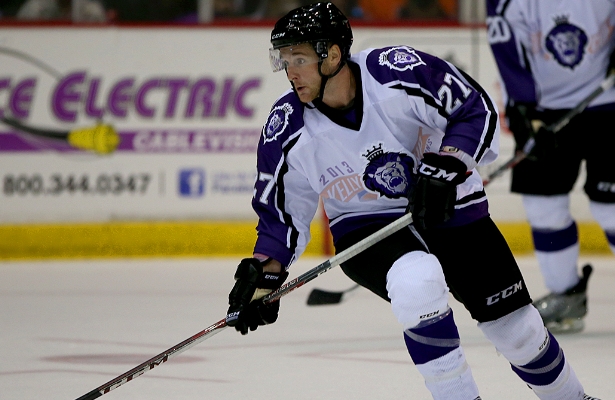
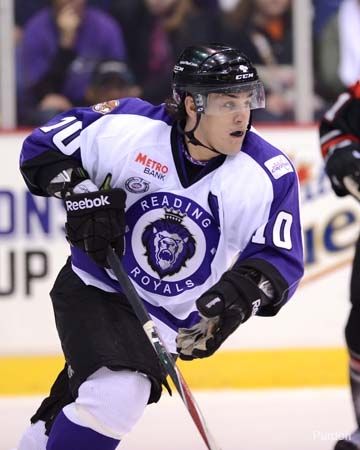
In just seven weeks, Reading Royals fans will be filing into the Santander Center (formerly the Sovereign Center) eager to start a new season with their new affiliations: the Philadelphia Flyers and the Lehigh Valley Phantoms. Fans will meet up with good friends they haven’t seen since last season and check out what has changed with both the team and the stadium.
They will notice a brand new scoreboard complete with large television screens on each side, a new color scheme of purple and orange, and, of course, some changes in the line-up. As usual they can expect to hear horns blaring, cowbells ringing, and Dave “Frenchy” Bauman announcing the game. When the Royals come out for their warm-up, the fans will get their first glimpse of the new players and their skills. One thing they may quickly notice is the size of the team. So far, all of the players on the roster are 5’11” and up which should make for an intimidating crew. Here is what the roster looks like so far:
Many fans will be pleased to see Olivier Labelle back on the roster. He has not been with the Royals since their 2011-2012 season, but he was a fan favorite during that time. Since that season, he has been playing with the Providence Bruins in the AHL and with Graz EC in Austria. Labelle is the most experienced player on the team with nine years pro experience between the ECHL and AHL. He has played 126 games in the AHL and 264 games in the ECHL. In the ECHL he has 113 goals and 100 assists for a total of 213 points, but he is best known for his gritty hard hitting style of play.
Ryan Cruthers is another key player and has seven years’ experience in the ECHL. He has been playing on and off with the Reading Royals since 2009 and has also won multiple awards including Offensive Player of the Year and the Fan’s Choice Award (three times). He is the All-Time Career Leader for the Royals with 71 goals, 152 assists, 223 points and 212 games played.
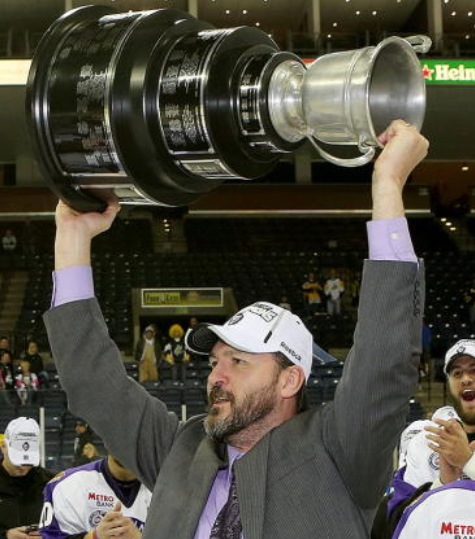
David Marshall was part of the team when the Royals won the Kelly Cup back in 2013. Like Labelle and Cruthers, he is experienced with a total of six years in the ECHL. Even though he has only played a total of eight games for the Reading Royals, he has racked up plenty of experience with both the Charlotte Checkers and the Utica Comets.
Unfortunately, the team will be losing last season’s captain Yannick Tifu who is moving to France to play for Les Ducs d’Angers of the Ligue Magnus. In the 2011-2012 season Tifu won the Team MVP Award and Fan’s Choice Award. In the 2012-2013 season he also won Team MVP, Team Ironman, and Fans’ Choice Award again. He has been with the Royals for three seasons and was one of the most energized and dedicated players on the ice.
The Royals can also expect to acquire some players from the Flyers and the Phantoms. The Flyers have invited 64 players to training camp, but only 23 can be on an NHL roster at any given time. Therefore, fans can expect some of these players to filter down through to the AHL to the ECHL. Six of these 64 players invited to camp are goaltenders. It is expected that the Flyers will assign two goaltenders to the Royals in hopes that they can develop their skills to NHL level. In the 2007-2008 season the Royals produced Jonathan Quick who moved up to the NHL with the Los Angeles Kings within one season and eventually went on to become a two time Stanley Cup champion, MVP, and Olympic goaltender for team USA.
One of the biggest obstacles the Royals will face this season is losing their key players to more frequent call-ups due to the localness of their new affiliates. Coach Larry Courville tells the Reading Eagle he is predicting and preparing for this possible difficulties that lie ahead. He states, “There are times in the year when coaches want to give up because it’s difficult. You don’t really have your team all the time. You’re constantly filtering guys in and tweaking your system to try to generate wins.” Fans shouldn’t worry about this complication too much though as Courville has been quite successful in rearranging players in previous seasons. “I enjoy that challenge,” he says “I always want to be successful. I want to win. I try to work a little harder than everybody else so I am successful.”
With all of this in mind, it seems like the Reading Royals will have an interesting year ahead of them as they try to adjust to their new affiliates. They already have several talented players on the roster and have a good opportunity to gain some more. If they are able to hold on to their key players they should have a good chance of making it to the playoffs, but only time will tell if the Royals can pull off another Kelly Cup win.
The change from the Phoenix Coyotes to the Arizona Coyotes was not the only offseason change for the desert team. The team name was also not the only name change, considering the arena was renamed to the Gila River Arena, after a 10 year run as Jobing.com Arena. Could this be the fresh start they need?
New faces, young and old, were acquired in the offseason to help accomplish the ultimate goal for the Coyotes. New Rookies such as Brendan Perlini could be just the rookie spirit that the changing team needs. Acquiring veterans like Sam Gagner and Joe Vitale gives the team depth and experience that any line can benefit from. Backup goalie Devan Dubnyk gives the teams’ Olympic goaltender a quality second man, possibly allowing for a break when needed. With the loss of many key players such as Radim Vrbata and Mike Ribeiro, the team has a lot of questionable spots to make up for.
These additions in cahoots with the players who have stayed put, like captain Shane Doan and Martin Hanzal gives you the physicality you need and offensive effectiveness coming from the blue line. Defensively, the Coyotes are contenders for some of the best in their division. With key pieces Keith Yandle and Oliver Ekman-Larsson, their defense excels. The last year, though, had a lacking defense. They allowed way too many goals, and left the goaltender to fend for himself. They left him exposed, causing the teams’ unfortunate demise, and the team getting knocked out of the wild card slot by a mere two points in the 2013-14 season.
So many factors go into the effectiveness of a team. Every year, a new team wins the Cup. Each year is a fresh new start for teams all around the league. Could the offseason changes for the Arizona Coyotes be what they need to be a round 4 playoff contender this season?
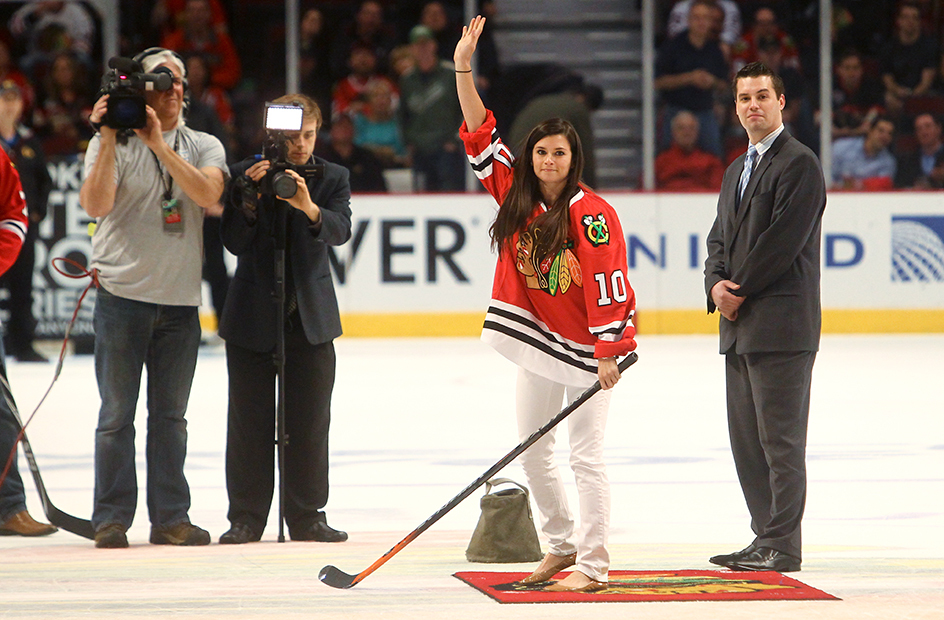
First thing’s first, the Blackhawks’ CEO John McDonough announced Aug. 13th that they’ll be more femme-focused this upcoming season, doing away with talented organist Frank Pellico’s rendition of “The Stripper” played only when a woman shoots the puck during intermission.
“We have to listen,” McDonough told the Chicago Sun-Times. “We have to be aware. We have to react when appropriate — not overreact, but react. We take all of this very seriously. We have had to take a look at every single element, every aspect of our operation, our hockey business from A to Z. I certainly have read the stories, and I understand the sensitive nature of all of that.”
“The Stripper,” (David Rose, instrumental) is a tune hockey fans will probably recognize from Ned Braden’s striptease scene here:
Slap Shot is hilarious. It’s a hockey lover’s comedic film gem. It’s also 37 years old and Rated R for sex, nudity, violence and gore, profanity, alcohol/drugs/smoking, and frightening or intense scenes. So, save for a few key moments, it isn’t 100 percent family-friendly.
That aside, the song wouldn’t be as big of a problem if it were played for all of the intermission’s Shoot-the-Puck participants. Instead, it has always been played for the woman, which doesn’t stick to Slap Shot, and doesn’t leave female fans feeling like they’re in on the joke.
Thus began the #BanTheStripper media campaign (not calling the participant a stripper, calling for a song-change) and the following response from the Blackhawks organization.
“I think you’ve heard the last of Frank Pellico playing ‘The Stripper,'” McDonough said.
That was a small part of three goals pushed by fans, though. Some have more likelihood for change than others.
The Blackhawks haven’t mentioned changing the uniforms of their Bud Light Ice Crew, which is another request and hot-button issue in arenas. (Personally, I’m comfortable with whatever the crew is comfortable wearing.)
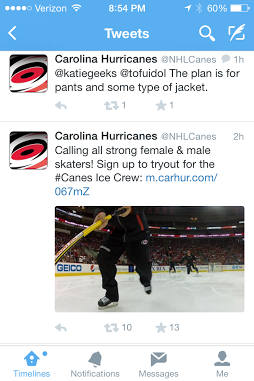
It seems the Carolina Hurricanes are taking a position to make male and female fans happy, at least when ice cleanup occurs. They’ve recruited a male and female crew and plan to have a pants and jacket uniform for members.
I’m ecstatic organizations are listening to women.
“As our franchise’s fan base has exploded, we’re hearing and we’re witnessing and we have to evolve with all of that, and we have to change and we have to address it,” McDonough said of the Blackhawks considering changes. “We hear the feedback. We respect it. We’re distilling it right now.
“We want to be respectful to everybody.”
That attitude isn’t passed on to their fans, though. Just check the comment sections from media posts regarding the “The Stripper” change, which range from calling the girls championing progress ugly and jealous to far worse.
A Tangled (World Wide) Web
I wrote for a short time for another blog. It wasn’t a good fit for me, though I did meet some other great writers.
What troubled me during that time was a post in one of our brainstorming forums was about etiquette in the locker room. Only, it wasn’t directed at all of the writers. It specifically addressed the female bloggers, as if they’d all suddenly become “fan-girls” and wouldn’t be able to conduct themselves around professional athletes. Giving them the benefit of the doubt, maybe they had a problem with a female writer in the past; but again, the proper recourse would be setting standards for all writers.
We’re not on the set of “Anchorman.” Female reporters have carried their notebooks and recorders into male-dominated fields for quite some time now. I, myself, have spent plenty of time at crime scenes, court rooms, and government offices. They aren’t always welcoming and comfortable places for women, but we’re there doing our jobs–jobs we’re qualified for. There’s no need for condescension.
As a Blackhawks fan, I’m part of a rapidly-growing fan base. My gripe here is more in the range of no longer getting cheap seats and less with broken axles on a bandwagon. I like my parades with millions of people and lots of confetti.
However, much bandwagon complaining revolves around a “Two Cups, No Girls!” mentality. “This is sports! We like our women dumb and scantily-clad!” (That’s the unofficial motto I picture, only with more spelling errors.)
Sorry, folks, but the wagon has seen a lady boom–with 38 percent of its base lacking the Y-chromosome, according to Crains Chicago Business.
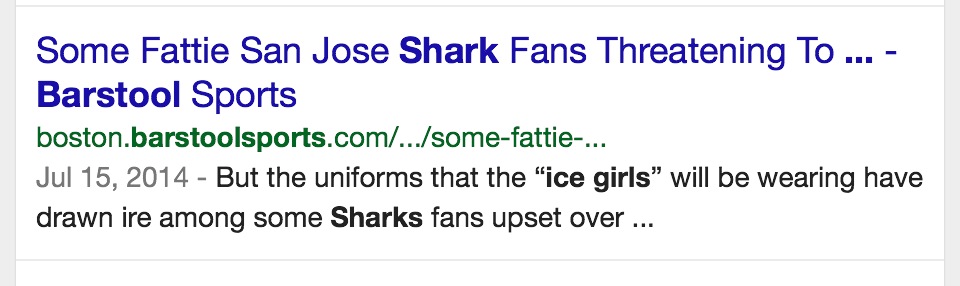
It’s not just Chicago, though. Take a spin on Barstool and try not to be sickened. They’re notorious for being offensive–and not all that accurate, but that’s another story.
Their material is nothing, if not consistent. Googling “Barstool” and “Fatties” showed a number of name-calling results for posts when writers would be bent-out-of-shape that anyone might fight their potential for eye-candy. (Barstool, bar-tools, let me do you a favor. Female fans are here to stay; writing like this–you just look like your keyboards are mightier than your, ahem, swords.)
Fantasy Sports and Video Games
ESPN recently launched espnW, with a “mission to serve women as fans and athletes.”
Under the mantra “one letter says a lot,” the site says espnW.com is providing “an engaging environment that offers total access to female athletes and the sports they play, takes fans inside the biggest events, and shares a unique point of view on the sports stories that matter most to women.”
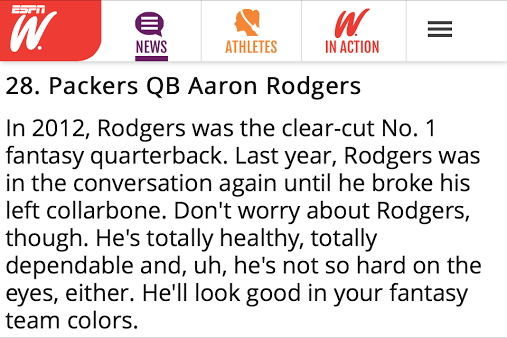
Just under “marriage material,” is “boyfriend material,” which comes with the explanation, “shows flashes of being elite, but no ring yet,” and includes players’ looks as part of their sell.
I’m all for cute puns. But, again with the condescension–I think a woman could handle basic Fantasy Football terminology. They’ve since added an editor’s note that they won’t be using their marriage material wording in the future.
Speaking of video games, since my expertise is limited to the aforementioned Nintendo classics, GongShow’s Saucer King on my phone and the occasional over-competitive Wii Tennis spree, I’ll mention someone more knowledgeable about the topic.
Anita Sarkeesian, a Canadian-American media critic and gaming blogger, who authors the video series Tropes vs. Women and video blog “Feminist Frequency” is an expert on how women are treated in gaming–often as sexy backdrops or objects to do awful things to.
Being a female sports fan, we’re often damned if we do, damned if we don’t.
To really “be a fan,” we should know everything about the team and be prepared to recite stats, but only when asked. Tell someone you’re a Blackhawks fan and be prepared to be asked to spell “Hjalmarsson” or list players signed prior to Jonathan Toews and Patrick Kane. For the love of all that is sacred on the ice, do not say “Patrick Sharp.” Yes, he has great stats, but he also has great hair, so you’ll be a Puck Bunny, or worse.
On the other hand, we should also sit there and look pretty.
Last season, I was stuck behind a group of men who seemingly were only at the game to drink beer and heckle Blues fans (don’t get me wrong, we all want to heckle Blues fans *wink*) at GAME SIX in the playoffs.
You know what I wanted to do at that game? I wanted to watch every single moment. I didn’t want to blink. It was my first in-person playoff game. I timed any restroom breaks so I wouldn’t miss a single play.
At one point, the officials signaled the delayed call of a penalty. We had the puck, so goaltender Corey Crawford skated to the bench for the man-advantage. The fans in front of me started screaming at Corey now, saying how dumb he was, etc. So, I leaned forward and quietly explained that once the other team touches the puck, the play is dead, so with Crawford skating off, we could throw another guy on the ice and try to score.
You’d have thought I said something foul about their mother.
Too sensitive?
Am I too sensitive? Are we all too sensitive? Maybe.
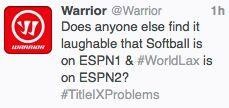
Years ago, when I played high school softball and we had to build our own fence and care for our own field while the boys got pristine facilities, I accepted that men’s athletics brought in more money and deserved better fields. When we bought our own tennis uniforms, I shrugged my shoulders. I didn’t understand Title IX enough then to be frustrated like I am now when I see a major sports brand like Warrior mock it.
But now, I’m an adult. I understand that I’m paying just as much as the guy next to me for my cable bills, my hockey sweaters that don’t come in as many players’ names (or shirts that simply cost more), and my seats in the arena. I want to enjoy the experience, too. The NHL can do things to improve that experience, according to a poll done by The Hockey News. I can be offended and not go to the game I love. Or, I can educate and try appeal for changes in areas that don’t impact the sanctity of the game.
Even if none of that mattered, a lot does matter about making women feel safe and welcome. Take a look at the comments of some of the news stories or blogs about any of the topics above. Try not to be offended. Take a look at the #yesallwomen campaign without your defensive cap on and see what life’s really like in our skirts, skinny jeans, and yes, uniforms.
We, as a society, are better than a lot of this. And awareness for sports organizations, brands, fellow fans, and role models (like those on the ice, who, not surprisingly, have done a pretty good job here while the worlds around them slip and slide) are just as good of a place to start as any.
The 2015 All Star Weekend will be an event to remember in Columbus, Ohio this January, bringing with it not only the biggest names in the NHL, their season-ticket-holding fans, and as many members of the press core that you can fit inside the Greater Columbus Convention Center, but also the 2015 NHL Fan Fair.
The spectacle, billed as “the official fan festival of the 2015 NHL All-Star festivities,” (try saying that tongue-twister three times fast) will feature everything from memorabilia and roaming mascots to trophy displays, special player appearances, and of course, The Actual Honest-To-God Stanley Cup. All these come with the price of admission, in addition to music, food, and a host of broadcast activities.
The 2015 NHL Fan Fair will be open to the public Friday through Sunday, January 23-25. Tickets purchased in advance will be $12 for adults and $10 for children between three and 12, seniors 65+, and college students and military personnel with a valid ID. Day-of tickets will be $16 and $12, respectively. Blue Jackets season ticket holders will have the opportunity to purchase exclusive tickets on Thursday, January 22.
Tickets can be purchased online at Ticketmaster.com and BlueJackets.com, and at the Big Lots Box Office at Nationwide Arena.
Last year Blake Clarke was highly touted. He was invited to play in the All American Prospects Game in Pittsburgh, with many other draft hopefuls including, Thatcher Demko (drafted 36th overall by Vancouver), Sonny Milano (drafted 16th overall by Columbus), Ryan Donato (56th overall pick by Boston) and Ryan MacInnis (43rd overall by Arizona) to name a few. He had a good showing in the game. And then he got injured. None of us in the media knew. Most still thought he was an “A” prospect.
Blake Clarke
Sometime during the AAP he tore the rotator cuff in his left shoulder and missed five to six weeks. He’s a left-handed shot so that was a complication as well. After returning, he talked about his timing being off. Not during the season but earlier this summer, when he was invited to Red Wings Developmental camp. He rehabbed the shoulder, got some injections and then returned to the North Bay Battalion, who later traded him to the Saginaw Spirit because he had just three points in twenty-one games. In Saginaw he had just nine points in thirty-three games and one playoff point in two games. A far cry from the fifty-one points the year before with six points in five postseason games. Then he sat through two days at the 2014 NHL Entry Level Draft and his name was never announced.
Luckily the Red Wings saw an opportunity and opened their doors to him. He did well in camp and the winger admitted he picked up some defensive tips. He excelled in the prospect game, scoring a goal for his team. In an interview on detroitredwings.com he talked about how the injuries did set him back and he had a little loss of confidence as well last season. When you’re just eighteen, this is a common occurrence.
At six foot one, 190 pounds, he has an NHL body with a booming slap shot. He’s worked hard to get the shot he has, although his family had some mixed feelings about it a short time ago.
“It’s something I work on. Something I’ve taken pride in. I’ve been shooting a couple hundred pucks a day since I was nine or ten years old,” he recited. “We have our dining room right behind the garage wall I shoot at. One day the puck went through the wall and broke some stuff in the china cabinet. After hundreds of shots it finally got through the dry wall. My dad was not happy. So we learned. We put the tarp on there now so that won’t happen anymore.”
Growing up near St. Louis he had some high profile friends including MacInnis, whose dad, Al, is a hockey legend.
“I’ve known Ryan since we were seven. I’ve been playing on the same team as him from seven or eight to thirteen. After that I left St. Louis to play in other places,” said Clarke. “We never played on the same line growing up.”
So he had a pedigree and then had to decide whether he’d play in the USHL or OHL.
“We looked at all of our options so I thought that was the best place to develop. I just looked at the OHL compared to the USHL and it’s a higher level of play,” Clarke said, mentioning the transition was easy since his parents were from Canada. “The league is a little better. You get to play against first round draft picks. It’s hard to get that in any other place.”
So we get back to the AAP game almost a year ago. Everything changed after that. At the time he told me, “Pretty much all of us will hopefully get taken in the draft.” That’s as confident as you can be without saying that you will definitively be drafted and most prospects won’t admit to that because they’re superstitious.”
So now, at eighteen, he’s in an interesting spot. He’s a free-agent, playing junior hockey in Michigan and getting a “try before they buy” look from the Red Wings. Right now he’s in camp with Saginaw and then he plays in the big Traverse City tournament followed by training camp as well. With a heavy wrist shot and a knack for going to the net I expect him to have a good tournament.
He’s actually landed in a pretty good situation since the Red Wings are in need of bolstering their farm system. If they play their cards right with Clarke, he may only be three years away from playing in the NHL. That’s his best case scenario. The worst is he doesn’t get signed and he has to have a solid season, hopefully enticing another organization to sign him after that.






 Prev
Prev