The Edmonton Oilers sent defenseman Justin Schultz to the Pittsburgh Penguins in exchange for a third round pick in the 2016 NHL Entry Draft. The Oilers will also retain half of Schultz’s remaining salary for the rest of the season.
Schultz is only 25 years old but has struggled in Edmonton. He has a good offensive game, but his defensive game still needs a lot of help. The Penguins are hoping that a change of scenery is good for the young defenseman. He’ll add speed to the Penguins’ blue line and will also add some offense. In 45 games played this season, he has three goals, seven assists, 10 points and is a -22 while averaging 20:08 of ice time per game. In 248 NHL games, Schultz has 28 goals, 73 assists, 101 points, is a -18 and an average 22:09 of ice time per game.
The defenseman can act as a fourth forward out on the ice at times. Schultz has really good offensive zone instincts, which is supported in his having 45 power play points in his career. He is a mobile defenseman that can skate his way out of trouble and he will put up the points in the offensive zone. Schultz is an inconsistent player especially on the defensive side of the ice. His defensive game needs help and that is somewhat reflected in his plus/minus stats, but that doesn’t tell the whole story since the Oilers haven’t had the best goaltending.
Schultz has his fill of turnovers during a game, but he also is on the ice a lot. He can play a lot of minutes, if needed, by the Penguins or he can be used as a third defensive pairing guy. The Penguins can even put him on the power play since he played on the man advantage with the Oilers. He’s going from a team that was in the bottom of the league to one that is right in the thick of the playoff hunt. The Penguins have a three-point lead over the Flyers and Devils for the final wild card spot. The annual deadline deal by the Penguins to help them down the stretch wasn’t a big one this year, but rather a depth move that didn’t cost them a lot.
Schultz is a restricted free agent at the end of the season. The Penguins can get a look at what he brings to the table the rest of the season, and decide on whether they’ll resign him or let him go in free agency.
The Edmonton Oilers were going to be a seller come deadline time since the team is near the bottom of the league once again this year.
The Oilers traded goaltender Anders Nilsson to the St. Louis Blues in exchange for goalie prospect, Niklas Lundstrom and a fifth round pick in the 2016 NHL Entry Draft. The Blues needed to go out and get some goaltending depth due to the injury to veteran goalie, Brian Elliott. Elliott has a lower body injury and will be out about four weeks. Nilsson has some NHL experience and is a restricted free agent at the end of the season, should they decide to resign him.
The last time that Nilsson saw game action was on February 7 against the New York Islanders where he allowed three goals on 10 shots. He has played in 26 games this season and has a record of 10-12-2 with a 3.14 goals against average and a .901 save percentage. Nilssson also has an assist. He has good size at 6’5″, 229 pounds and can cover a lot of the net. The goalie lets the puck hit him and he can recover pretty quick if he’s out of position. He is athletic and mobile, allowing him to get back into position if he has chosen to make an aggressive move.
Nilsson, however, gives up the occasional soft goal. He is also known to over commit on the play. In 49 games played in his NHL career, he is 19-21-4 with a 3.10 goals against average and a .900 save percentage. He has one shutout in his brief NHL career. The stats show that Nilsson has been a decent goalie at even strength throughout his career. He has faced 1131 shots and given up 97 goals for a .914 save percentage. Nilsson struggles on the penalty kill where he only has a career .839 save percentage.
The Oilers will get 23-year-old goalie prospect, Niklas Lundstrom back in return and will have yet another draft pick in the upcoming 2016 NHL Entry Draft. Lundstrom is 6’1″ and 194 pounds. He has split the season between the East Coast Hockey League (ECHL) and the American Hockey League (AHL). While in the ECHL, he played for the Elmira Jackals where he compiled an 8-3-0 record in 13 games played. Lundstrom has one shutout, a 2.92 goals against average and a .929 save percentage. While with the Chicago Wolves, the Blues’ AHL Affiliate, he played in four games and went 1-1-0. Lundstrom also had a 2.75 goals against average to go with a .901 save percentage.
The Toronto Maple Leafs continued their fire sale before the NHL Trade Deadline ends on Monday, February 29 at 3pm.
The latest victim was goaltender James Reimer, who along with Jeremy Morin, were sent to the San Jose Sharks in exchange for goaltender Alex Stalock, forward Ben Smith, and a conditional fourth round pick in the 2018 NHL Entry Draft. The Leafs called up goalie Garrett Sparks from its American Hockey League (AHL) affiliate, the Toronto Marlies, after the trade was complete. The Leafs still have a few more players that they could trade before the deadline.
Reimer had been with the Leafs organization since 2006 when they drafted him in the fourth round. He played in 32 games this year where he had an 11-12-7 record. In those 32 games, Reimer compiled a 2.49 goals against average to go with a .918 save percentage. He split the crease duties with Jonathan Bernier and also missed some time due to injury. The goalie is 1-4-1 in his last six games played with a 4.44 goals against average and a .828 save percentage, but the Leafs have been trading away players for a few weeks now, and had a lot of young kids on the team.
In 207 career games played, he has an 85-76-23 record with a .914 save percentage and a 2.83 goals against average. He has 11 shutouts in those 207 games as well. Reimer has seven games of playoff experience from the 2013 season when the Leafs lost to the Boston Bruins in the first round. He was 3-4 with a .923 save percentage and a 2.13 goals against. Reimer also has represented Canada twice during the World Championships.
The goalie is set to become a free agent at the end of the season so it is possible that he could resign with the Leafs in the offseason. The Sharks needed a backup goalie to help out Martin Jones, and they got a veteran goalie, who can contribute down the stretch in a playoff race. Reimer has good size and a good glove hand, but he can let in the bad goals from time to time.
Jeremy Morin is the other piece of the trade that will be going to the Sharks. He has played in the AHL all season with the Rockford Ice Hogs and Toronto Marlies. In 41 games, he has 11 goals, 17 assists, 28 points and is a +7. Morin has 82 games NHL experience with the Chicago Blackhawks and Columbus Blue Jackets. In those 82 games, he has 10 goals, 12 assists, 22 points and is a +8. The forward can play either right wing or left wing even though he is only an average skater.
The Sharks will send goalie Alex Stalock to the Leafs. Stalock is 28-years-old and has split his time between the San Jose Barracuda and the Sharks. In 13 games played with the Sharks, he is 3-5-0 with a 2.94 goals against average and a .884 save percentage. In two games with the Barracuda, Stalock was 2-0-0 with a 1.96 goals against average to go with a .930 save percentage. The Leafs will give Sparks a chance in net to see what he can do at the NHL level. Stalock is also an unrestricted free agent at the end of the season so the Leafs most likely won’t have him on the roster beyond this season.
Ben Smith will be going to Toronto along with Stalock. Smith has played in both the AHL and the NHL this season. In 14 games with the Barracuda, he has eight goals, two assists and ten points. He has zero points in the six games he played with the Sharks this year. In 181 NHL games played, he has 25 goals, 19 assists, 44 ppoints and has averaged 12:31 of ice time per game. Smith is a good skater that could be a two-way player in the NHL. He isn’t a physical force on the ice, but he also isn’t afraid to shoot the puck.
The Leafs will also receive a conditional fourth round pick in the 2018 NHL Entry Draft.
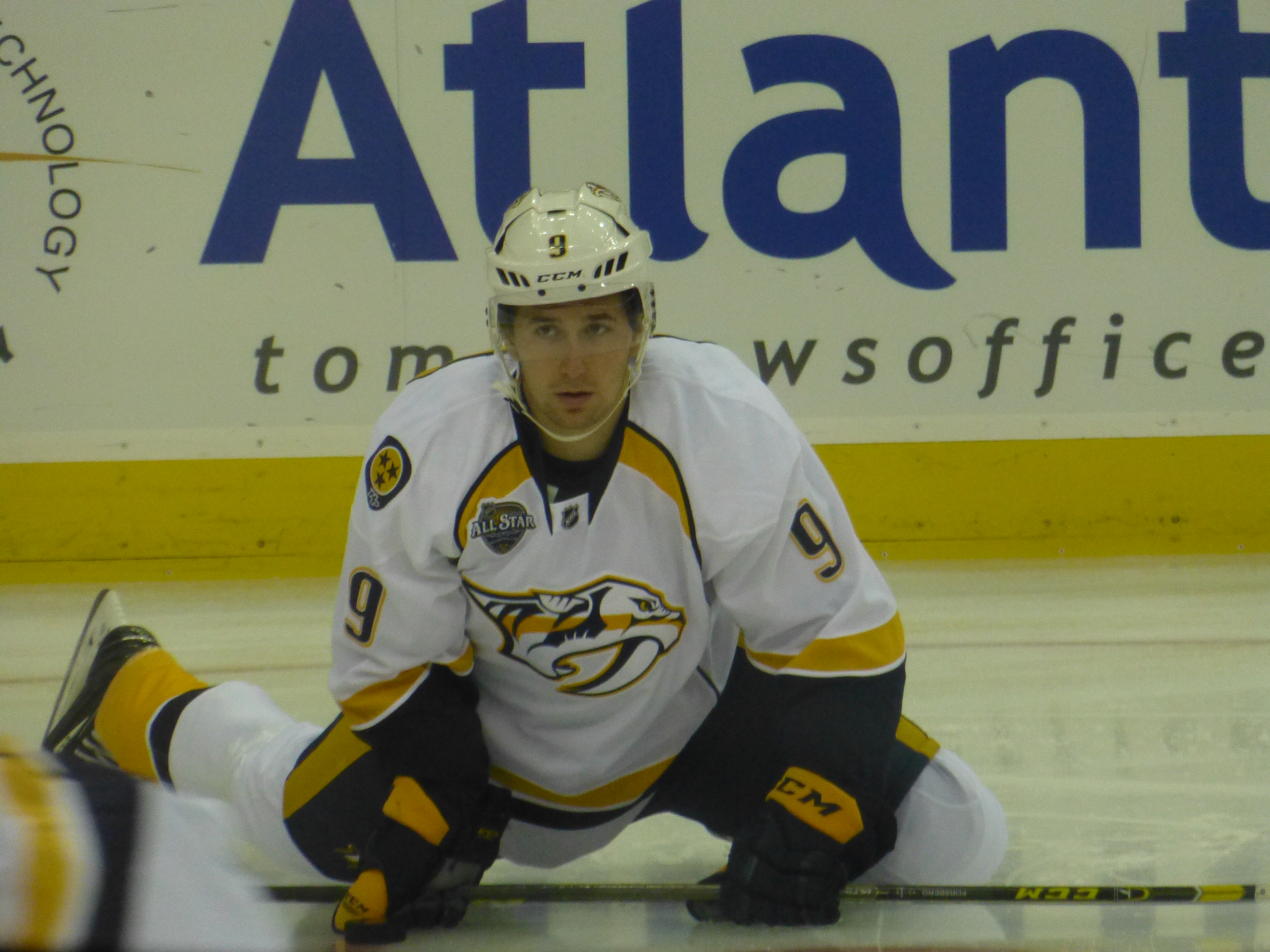
Over the past 18 years of the Nashville Predators existence, there have been plenty of bad trades or trades that looked good whose players fizzled out and many more others who were lost to free agency, etc. etc. (still miss you, Tomas Vokoun). But, none have looked as good in the short-term, long-term as the trade of the Preds’ Martin Erat & Michael Latta to the Capitals for Filip Forsberg. In certain circles of the internet where the Capitals fans congregate, even saying Erat’s name still causes fits and hisses 3 years after the fact (mainly Russian Machine Never Breakscomments section, but also other places) because the trade was so lop-sided for the Capitals fans that even the GM who wasn’t GM at the time of the trade apologized for it a year ago. Michael Latta has been doing pretty good with the Capitals as a member of their 4th line (so it’s not all doom & gloom) and RMNB recently did a Q&A with him and he sounds pretty happy.
Prince Filip, as he has been nicknamed, on the other hand had 26 goals, 37 assists and 63 assists in the 2014-2015 season (his first major season, as 2012-2014 he spent less than 20 games in Nashville and spent most of his time with the Milwaukee Admirals). He was also voted number four in the Calder Trophy. losing to Ekblad, Mark Stone and Gaudreau in that order, which is still pretty good company. This season, where he also went to his first NHL All-Star Game, he has 26 goals (a career high), 19 assists and 42 points with 20 or so games left in the Predators season. And he also lives on the same floor of the same apartment building with his other Predators Swedish teammates, Mattias Ekholm and Calle Jarnkrok.
On Tuesday, February 23, he had his first natural hat trick against Toronto (Preds won 3-2 in Toronto) and on Saturday, February 27, he had his second against the Blues (Preds won 5-0 at home, now only 6 points out of 3rd place in the Central Division, righting whatever was happening when they were losing in January). In his last 11 games, he’s had 12 goals.
The opening period of this first of the back-to-back games at Matthews Arena looked like it was going to be Huskies all the way, as first Zach Aston-Reese scored at 6:17, with assists from Nolan and John Stevens. Northeastern’s second came about three and a half minutes later from defenseman Eric Williams, with Aston-Reese and Nolan Stevens on the assists. Perhaps the Huskies felt they had some breathing room and could dial back their intensity, but about five minutes later Andrew Tegeler got his third of the season from Blaine Byron with the other assist going to Cam Brown. Just after the Black Bears killed a tripping penalty on Mark Hamilton, they turned and drove into Northeastern’s end and Will Merchant potted the tying goal with just 32 seconds remaining on the clock. Definitely not the way coaches like to see a game going.
As the second period got under way, it looked like the Huskies were struggling a bit with their confidence. Seven minutes were gone on the clock before they were able to register their first shot on goal for the middle frame. The Black Bears were caught with too many men on the ice at 6:46 putting Northeastern on the man advantage, but their passes weren’t as crisp as they had been in the first period, though it appeared that this was what they needed to kick back into high gear, getting a couple shots on net during that two minutes. At 12:56 Williams, who sat in the slot, took a nice feed from Nolan Stevens and got his second of the game, putting the Huskies back up by a goal. Just 58 seconds later, Patrick Schule got his second goal of the season from assists by Dylan Sikura and Adam Gaudette allowing the Huskies to regain their two-goal lead once again. The Black Bears had a couple of solid chances to try to cut that lead during a late period power play after Gaudette was whistled for goaltender interference with just 2:37 remaining in the period.
The third period’s start made it clear what had been discussed in the visitor’s dressing room. The Black Bears came out hard, dominating the period in shots. Once again the Huskies saw their two-goal lead cut in half, less than five minutes into the final frame. Cedric Lacroix picked up the rebound, just as Tegeler had done in the first, and tapped it in the open side of the net. With 15:24 remaining in regulation the Black Bears could smell opportunity and they brought their game to a new level.
They had slightly outshot the Huskies in the second, 11-7, but the third period, it is likely that Ryan Ruck felt more like a duck on the first day of hunting season rather than a Husky between the pipes. Ultimately Maine would pepper him with 15 shots, which didn’t include the eight blocked by those in red and white, the one that hit the pipe and the eight that were off target. That’s right, in that 20-minute period, the Black Bears got 32 shots off as opposed to the Huskies who had a total of nine (six on net, two blocked, and one off target). Though not named as a star of the game, Ruck stopped 34 of 37 shots to give his team their best chance to win. Eventually, after blocking a shot that left him limping, but determined to get the puck out of his end, he scored the empty netter from almost 200 feet away–ensuring a 5-3 victory for the Huskies.
Neither coach was happy after the game. For Maine’s “Red” Gendron, he expects much more from his team in the rematch on Saturday night—especially finishing chances. He also expects his defense to take away time and space from the Huskies. Coach Jim Madigan, despite his team getting the two points, wants to see the level of play he knows the Huskies are capable of and have played this season. He talked about the third period being the first time in the year that his team had been controlled by another team.
Saturday’s rematch at Matthews Arena promises to be an interesting game. If both teams make the changes their coaches want, it is likely to be more physical and much lower in scoring.
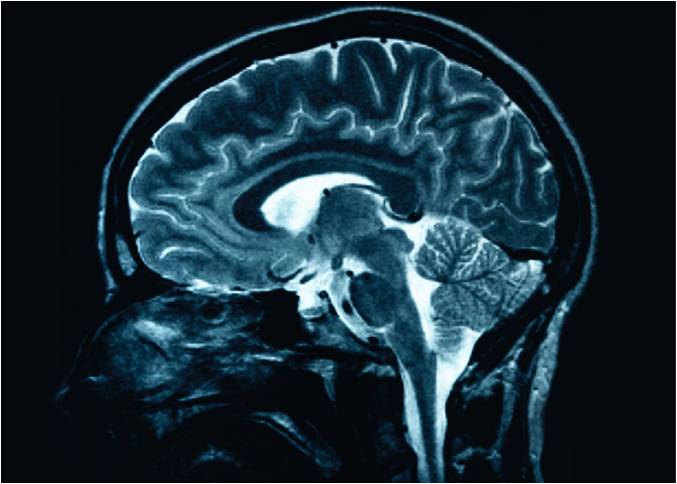
One simple online search for the word and an endless stream of pages flood the screen. As complicated as the structure of the brain itself, it seems as though there is no corner of the sports and healthcare world that concussions haven’t reached. From babies learning to crawl and bumping their heads, to professional athletes taking bone crunching hits, concussions have been center ice in the medical arena.
One role in particular has become a hot button topic each and every season amongst management, players, fans and medical professionals. Has fighting become the leading role to a lifetime of issues, and should it be removed from hockey?
Drafted 185th overall in the 1984 NHL Entry Draft by the Washington Capitals, former NHL enforcer, Jim Thomson lived a dream that many hockey players strive for. But behind the tough guy facade, Thomson was a player suffering through demons on a daily basis. Sleepless nights accompanied by drug and alcohol abuse and eventually depression became a familiar regime.
“I’m a very passive guy. I’ve never had a physical fight since I retired in 1995, its not like I walk around like this tough guy like I was in hockey. I hated fighting, I was a goal scorer that turned fighter and I hated it,” recalled Thomson. “I formed a drug addiction, depression and anxiety through this role, people don’t realize, I have to go into Chicago and fight Stu Grimson and Mike Peluso, I don’t sleep the night before, I have two bottles of wine and pop pills just to get through the fear. People don’t realize that. They show up to the game, waiting for Thomson and Grimson to line up against each other and they get their entertainment value – but prior to that I haven’t slept in two nights, because if I get knocked out, if I get my ass kicked, I’m going back to the minors. Was I worried about getting seriously injured? You never want to lose. I worried about losing and losing my job and that anxiety drove me nuts. I worked so hard to get to the NHL and now I’m one ass kicking away of my dream going away.”
Photo: Legendsofhockey.net
The dream persevered, but not without consequence. Repeated blows to the head over the course of a professional hockey career has left Thomson with the memories, but also the lingering effects of concussions he once sustained.
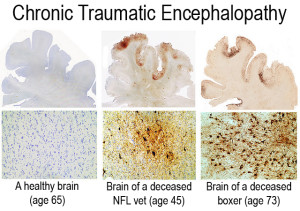
“Eight documented [concussions] and how many more than that, I will never know,” said Thomson. “I had 124 pro fights, I played a rough style of hockey, 10 years, 3 years junior, so how much damage did I incur in my brain, I don’t know. Do I think about CTE, do I think about these guys that committed suicide? I think a lot about that.”
Never one to shy away from a brawl, on the ice or apparently in retirement, in 2011, Thomson chose to take a stand against the position that he built a career on. Making the bold statement that fighting needed to be taken out of hockey — and he took a beating for it.
“Roughly 5 years-ago, I came out publicly and said they needed to take fighting out of hockey because its killing the enforcer,” said Thomson. “What I meant by that is that a lot of my friends that committed suicide or died through tragic heart attacks or whatever, within the last decade have all been enforcers.”
Current and former enforcers hated him. Don Cherry publicly ripped him apart on Coaches Corner during Hockey Night in Canada, calling Thomson, Chris Nylan and Stu Grimson “pukes, turncoats and hypocrites,” but Thomson stood tall.
“Stu and Chris never said a word, it was me, they got dragged in innocently. We asked Don Cherry to apologize the following week on Hockey Night in Canada, he refused so we threatened to sue him, at the end of the day he apologized,” remembered Thomson. “So five or six years ago I publicly came out with my opinion and took a beating from current enforcers and from a lot of people in hockey like “how dare you, you made a living at it.”
The landscape of the game has changed, fighting is down and the role of enforcer is a dying breed. Where there is camaraderie as is such in any team environment, a player will always step in to defend a teammate, consequences be damned. While the NHL has made a conscious effort to change the game, Thomson argues that changes could still be made.
“The NHL has done a really good job in setting in rules, the fighting is way down. The only other change they can make is what I’ve been voting for, is if you fight in other sports, you get ejected. In hockey, you’re allowed to fight 3 times before you’re ejected,” said Thomson. “Even though fighting is down and there are only a couple of enforcers left, if you fight, you should be ejected from the game like other sports. You can never take fighting out of society, because two people get mad, they’re going to fight, verbal fight, or sometimes physical. I think the NHL has done a really great job in the last 5-6 years of putting in rules to eliminate this barbaric behavior. I am happy with where it’s going, but I’d still like to see the last step made of, if you fight, you’re ejected.”
Will that change ever come? Only time will tell, but as the concussion issue continues to force itself to center ice, players and leagues will need to make some tough decisions.
“As we find out more about concussions, CTE and head blows, I would say its probably time to take knuckles off the brain,” said Thomson.
Fighting in hockey is not the only way in which professional athletes succumb to concussions. The very nature of many sports combined with the speed and impact of athlete-on-athlete plays a major role, as well. The issue at hand does not only affect athletes at the professional level, but begins with our youth populations. According to the Centers for Disease Control, more than 248,000 youth under the age of 18 visited hospital emergency departments in 2009 for concussions and other traumatic brain injuries related to sports and recreation.
On the collegiate level, between the 2009-2010 and 2013-2014 academic years, the overall sport related concussion rate was 4.47 per 10,000 athlete exposures, or about 10,560 sports related concussions annually (NCAA Injury Surveillance Program).
Unfortunately, ice hockey, both men’s and women’s, dominated the NCAA’s concussion list, ranking below wrestling and above football.
Located at the University of Toronto, the Canadian Concussion Centre is doing their best to advance concussion research. The centre features various researchers in a variety of fields, neuropathology, neuroradiology, neurology, neurosurgery, psychiatry, etc., who share a common desire in understanding concussion and the concussion spectrum of disorders, ranging from acute concussion to the more prevalently recognized, in terms of athletes, Chronic Traumatic Encephalopathy (CTE).
Part of the team, neurosurgeon Charles Tator, MD, PhD, FRCPS, has become dedicated to researching concussions and bringing awareness not only through the Canadian Concussion Centre, but also Parachute Canada, a comprehensive injury prevention organization.
“I devote a considerable amount of time to prevention,” said Dr. Tator, “and I think the rationale is that at the present time, we really don’t have good treatments for many of the concussion spectrum of disorders, so it makes prevention the only cure that we have.”
In the states, CTE is most often used when discussing football players while in Canada hockey skates to the forefront.
Photo: thestar.com
“There’s no doubt that hockey is a significant cause of concussions. Of all the collision sports in Canada, hockey is number one as a cause of concussions,” lamented Dr. Tator. “Football isn’t as popular in Canada as it is in the US. In Canada, hockey is number one for causing concussions, of course, virtually every sport can cause concussions. Some sports that seem very innocent, they can all end up causing concussions, so, its good to be comprehensive. Hockey not only causes the initial part of the spectrum of concussion disorders like acute concussion, it also now is known to be one of the causes of CTE.”
In terms of professional sports, hockey is a small world, when tragedy strikes, it is not just felt by immediate family, but throughout the hockey community. As former players continue to shockingly take their own lives, the idea of prevention again comes into play. With a growing list of some of the NHL’s most beloved heavyweights; Derek Boogard, Rick Rypien, Steve Montador and most recently Todd Ewen leaving a skate print in the history books and on many hearts, are concussions to blame for their final decisions?
“We have examined a total of 21 brains and all but four were football players, so we’ve examined the brains of four hockey players and the last one we examined was Todd Ewen and he did not have it [CTE],” said Dr. Tator. “Previously we announced the results of Steve Montador who played for several NHL teams — and he definitely had it.”
Repeated hits, whether it be fighting or basic play, are all mitigating factors in the continued concussion and CTE story. The question still remains, how can we help players in life, before they decide that death is the only option.
“This is an evolving picture — but still, the significant rate limiting step is that it can only be diagnosed with certainty at autopsy,” said Dr. Tator. “We are looking at other strategies–the whole range of strategies–including neurological examination, neuropsychological assessment, blood biomarkers, PET scanning, as means of diagnosing this in life – because once we can diagnose it in life, then we will be able to answer questions like how common is it? And more importantly we may be able to do something about it. We might be able to start treating these people.”
For anyone who has suffered a concussion, large or small, the effects can be life changing. Anxiety, depression, headaches, dizziness, moods changes, fatigue, and many more symptoms plague patients. One hit could change a persons life and that thought is terrifying. The effects are felt by those suffering and trickle down to those around them as well.
“How distressing it can be — its really gripping the number of people who are suffering from postconcussion syndrome,” commented Dr. Tator. “People have a lot of symptoms and suffer greatly from this condition and sometimes it lasts for several years and sometimes forever.”
Concussions occur at all skill and age levels in ice hockey, and have been reported to account for 2–14% of all hockey injuriesand 15–30% of all hockey head injuries. The large range of concussion incidence may be partially explained by the varied outcome measures used by researchers (i.e. athletic exposures vs. game hours vs. overall percentages). Unfortunately, the lack of a streamlined approach has made it difficult to draw conclusions and comparisons across studies.
And therein lies an issue, while the NHL has done its best at a comprehensive return-to-play protocol, it may just not be enough. Is it possible for a player to cheat the system? Maybe.
“The problem is that acute concussion is still a clinical diagnosis which means that it does require an experienced observer and it requires a compliant patient. If you don’t have both of those ingredients, the diagnosis can be hopeless,” said Dr. Tator. “So if the person doing the examination is not experienced its unreliable. If the person being examined wants to fudge it, or hide their symptoms which is often the case with teenagers who get concussions, then it’s very difficult to make the diagnosis. Obviously if someone is knocked out and they’re lying unconscious on the ice then its a concussion at least. But that only happens 5% of the time — so you really do need a compliant patient to make the diagnosis. We’re hoping that someday we’ll have more reliable tests for acute concussion, maybe even a blood test.”
A possible workaround to the compliancy issue, would be to have a second observer in the mix. While many youth or high school organizations may not have the funding for the additional protocol, collegiate and professional levels just might.
“We did look at the effect of a knowledgeable observer in a paper that we wrote a few years ago,” said Dr. Tator. “Where we found that in a junior hockey team, average age 18, that 25% of the team was concussed each season. That is a fairly reliable figure because we had trained knowledgeable observers at the rink making those determination – but if you don’t do that carefully, you can miss a lot of concussions.”
We know concussions happen, but how can society as a whole begin the protection process? Eliminating fighting, maybe. But changing the way we look at protection in sports could be the first piece to the evolving puzzle.
In December 2015, the National Football League (NFL), in conjunction with Under Armour, GE and the National Institute of Standards and Technology (NIST) announced their finalists for the Head Health Challenge III, an initiative that “seeks to stimulate the development of a range of materials that provide excellent energy absorbing and energy dissipating properties” (headhealthchallenge.com) in an effort to create new methods of protecting athletes from injury. But as a whole, the concept of the Head Health Challenge is so much more than that. The three sections of the challenge aim to bring awareness to the ever growing problem of injuries in athletes—the biggest and most concerning at present being that of concussions—and how to prevent them.
But the problem isn’t strictly confined to the 120-yard patch of turf, nor squarely on the NFL’s shoulders. The problem resonates throughout arenas and stadiums, in games played on turf and ice, across the world, but even finds itself within the boundaries of a picket fence where a friendly game is played among neighborhood children.
Based in an unassuming building in a small Maine town, Alba-Technic, LLC is quietly changing the game with their advanced shock absorbing polymers. Named one of the finalists in the Head Health Challenge III, the company is skating through a list of milestones, towards the final $500,000 prize, to be announced in the fall of 2016.
Honeycomb Material
In terms of injury mitigation the energy absorbing honeycomb structure of Alba-Technic’s EVO2™ material may be the start to reducing injuries in sports. Originally designed as a headband, named SMARTY®, to help in falls protection for the elderly, the patented material can be utilized in many other applications.
“The healthcare industry has a tremendous amount of data on the amounts of falls and impacts to the head,” said Alba-Technic Founder and CEO, Jim Ferguson. “The consequences of a fall in the elderly are very visible because it’s significant to the family and the people involved. Sports related head injuries have tended to be underestimated in the damage that they can produce. Fortunately this is changing, we now see an increase and need for very advanced protective materials to be incorporated into safety equipment for sports events.”
The need for a better standard of protection is obvious. With ten plus pieces of equipment, one look into a players hockey bag begs the question; what can this technology be applied to? The obvious answer, the helmet.
“It would take some careful reworking of the design, manufacturing, and testing to make sure the designs behave as conceived,” said Vincent Caccese, Professor of Mechanical Engineering at the University of Maine. “I envision the advantages of EVO2 would result in significant improvements over most current helmet designs and could help to reduce concussions. That stated, the best way to remove concussions in hockey to the most extent possible is to reduce or eliminate the hits that cause concussion in the first place. I know that USA hockey and the NHL have processes and rules in place to do so, however, impacts to the head will still happen.”
At the end of the day, concussions will still happen, but the consequences may not lay as heavy on the heart if parents and athletes themselves are continually fed all the facts. Sports have become an ingrained part of society, and calling for an eradication of them is unlikely — therefore, finding new advanced methods of protection may soon become the best form of prevention.
Disclaimer: In conjunction with her position at The Pink Puck, Winter Adams also serves as a private public relations contractor for Alba-Technic, LLC.
The NHL trade deadline is less than a week away and the Washington Capitals decided to add some depth on the blue line a little early.
The Capitals acquired defenseman Mike Weber from the Buffalo Sabres in exchange for a 2017 third round draft pick. The deal was able to happen in part because the Sabres agreed to retain half of Weber’s $1.67 million salary. The Sabres will retain $833,333 of Weber’s salary against their cap for the rest of the season. The Caps also move Jay Beagle to the long-term injury reserve to clear some more cap space. Once Beagle comes off the LTIR then the Capitals will have to make a corresponding move to get back under the cap.
The Sabres have 20 draft picks in the next two drafts alone. The team has 11 draft picks in the 2016 Draft, but could have more depending on what happens before the deadline. The Sabres have nine draft picks currently available to them in the 2017 draft.
This was a depth move by the Capitals in getting Weber, who will most likely serve as the sixth or seventh defenseman for the team heading down the stretch. The defenseman has one goal, four assists, five points and is a plus three in 35 games played this season. He has averaged 15:55 of ice time per game and has 36 blocked shots. Weber isn’t afraid to be a physical presence out on the ice with 73 hits this season. He ranked first among Sabres players in hits with 917 since the start of the 2007-08 season.
Weber is known to be a physical defender, who has good size and strength. The defenseman can be trusted in his own zone since he plays a fairly simple game. He will also drop the gloves in defense of a teammate, if needed. Weber can play either side of the ice, which is a bonus for any defender. He also will block shots and has 666 of them since the beginning of the 2007-08 season.
Barry Trotz and the Capitals shouldn’t expect Weber to pitch in much on the offensive side of the puck. His career high in goals is four, and the most points he has ever scored in a season has been 17. His career best scoring streak is only four games long. The defenseman will bring his A game almost every night. Weber will also bring some more veteran leadership to the team since he served as an alternate captain in two seasons while with the Sabres.
If the Capitals suffer any injuries on the backend they now have a veteran defenseman that can be inserted into the lineup down the stretch.
The Philadelphia Flyers are somehow still in the playoff hunt after an inconsistent month of February that isn’t over yet. The Flyers sit only five points back of the second wild card spot, which is currently occupied by the Pittsburgh Penguins.
Philadelphia has another important week of games coming up, which features the Carolina Hurricanes, Minnesota Wild and Arizona Coyotes. These three teams are also all in the playoff race and looking to get some points and inch closer to the playoffs. The Hurricanes are directly above the Flyers in the chase for the second wild card spot in the Eastern Conference. The Wild made a coaching change and are suddenly hot and on a four game winning streak, while the Coyotes have struggles to win games and are losing ground in the Western Conference playoff race. The Flyers just need to worry about playing their game and trying to get points to jump the teams in front of them in the wild card race.
The Flyers could get an important piece back in Sean Couturier, who has been out with a lower body injury, but will be without Claude Giroux, their leading scorer. The Flyers have won all three meeting against the Hurricanes this season, and the wins have all come during the overtime session. The team will need to be patient considering the Canes don’t give up a lot of shots per game so when the opportunity arises for Philadelphia to shoot the puck that’s what they need to do. The Hurricanes have a better penalty kill at home than the Flyers have a power play on the road, and with Giroux out, the Philadelphia power play could struggle even more. The Hurricanes need to keep an eye on Jake Voracek, who has two goals, five assists and seven points against them this season. Shayne Gostisbehere is another Flyers’ player that the Hurricanes will want to keep an eye on since he has two goals, two assists and four points against them this year.
The Wild will visit the Flyers on February 25, and will look to keep their playoff chances alive. The Wild made a coaching change on February 13 when John Torchetti took over for Mike Yeo, and haven’t looked back, winning all four games since Torchetti has taken over. The Flyers will need to play a smart hockey game against the Wild and not turn the puck over. The Orange and Black will also need to try and convert on their power play chances since the Wild is only killing off about 76% of the penalties taken while on the road. The Wild can put the puck in the back of the net so the Flyers will have to play a decent overall defensive game with the help of the forwards. If the game should go to overtime, the Wild have only won one game in the extra session, while the Flyers have won nine.
The Flyers will close out the week with the young Arizona Coyotes team in town for a Saturday matinee game. The Coyotes are still in the hunt for the second wild card spot in the Western Conference, but are fading. The Flyers will need to keep an eye on the young kids for the Coyotes especially Max Domi and Anthony Duclair, because they can skate and put up points. Philadelphia will also need to pay attention to Shane Doan, who leads Arizona with 22 goals on the season. The Orange and Black will need to get some rubber towards the opposing goalie since the Coyotes will give up some goals. The Flyers will need to convert on their power play chances, which they’ll have since Arizona is one of the most penalized teams in the NHL.
If the Flyers want to stay in the playoff hunt then they’ll need to stay focused on the opponent that they are playing, and not on the standings.
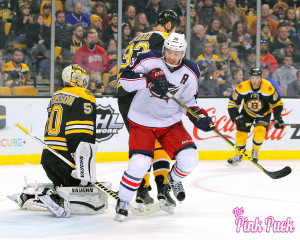
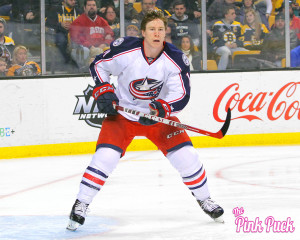
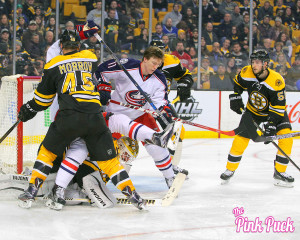
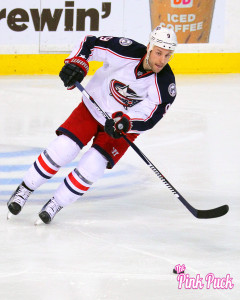
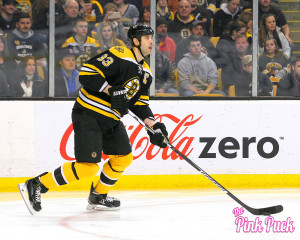
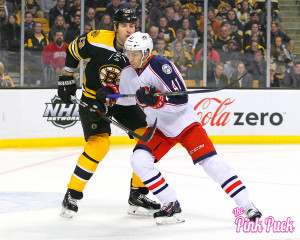
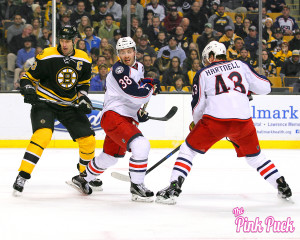
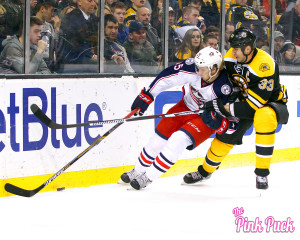
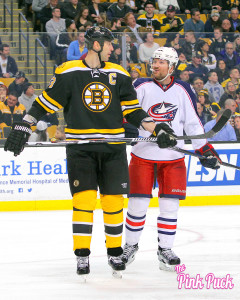
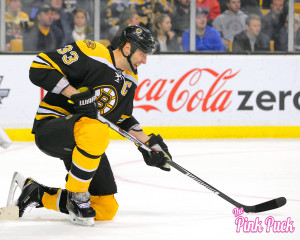
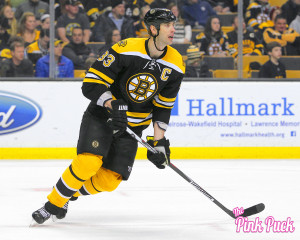
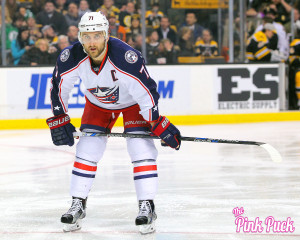
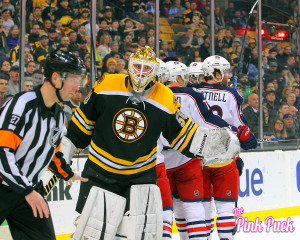
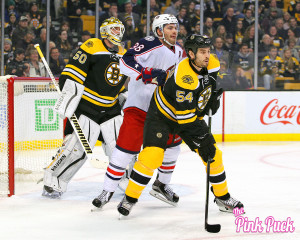
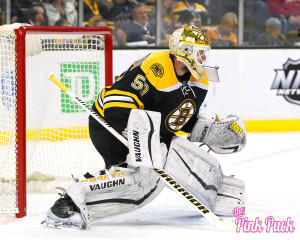
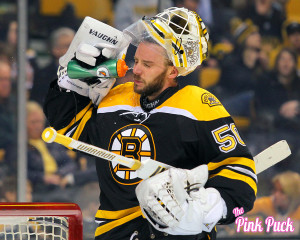
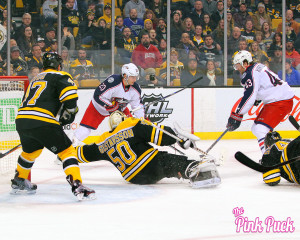
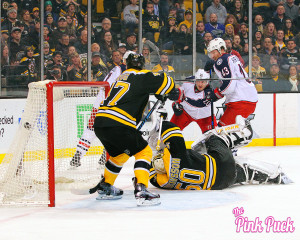
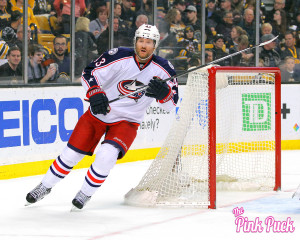
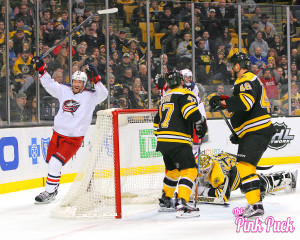
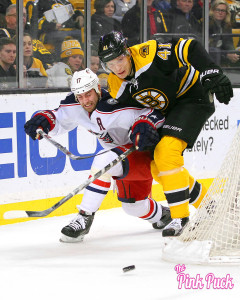
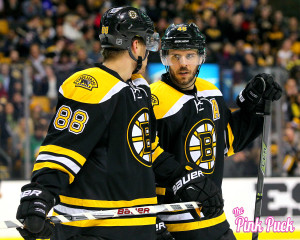
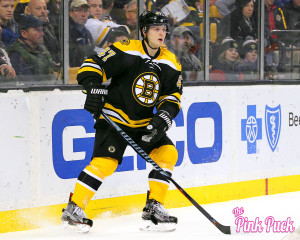
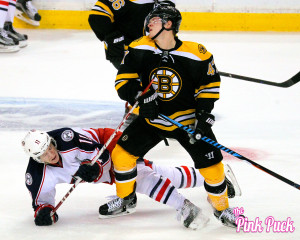
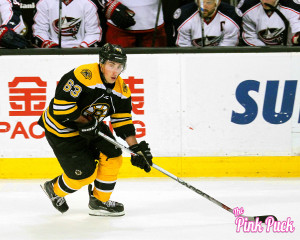
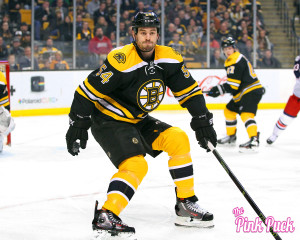
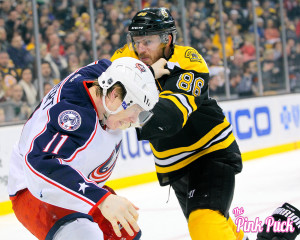
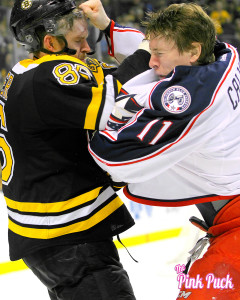
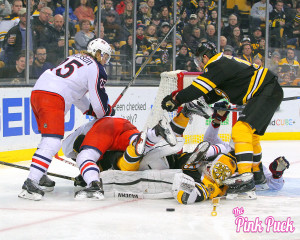
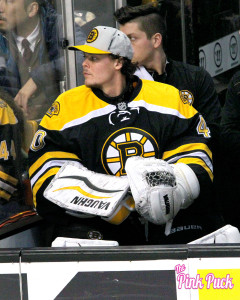
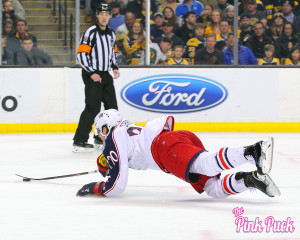
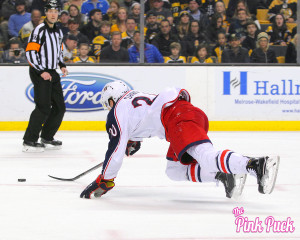
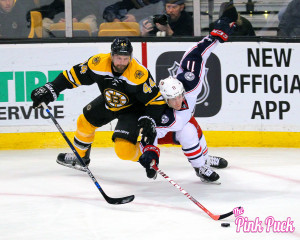
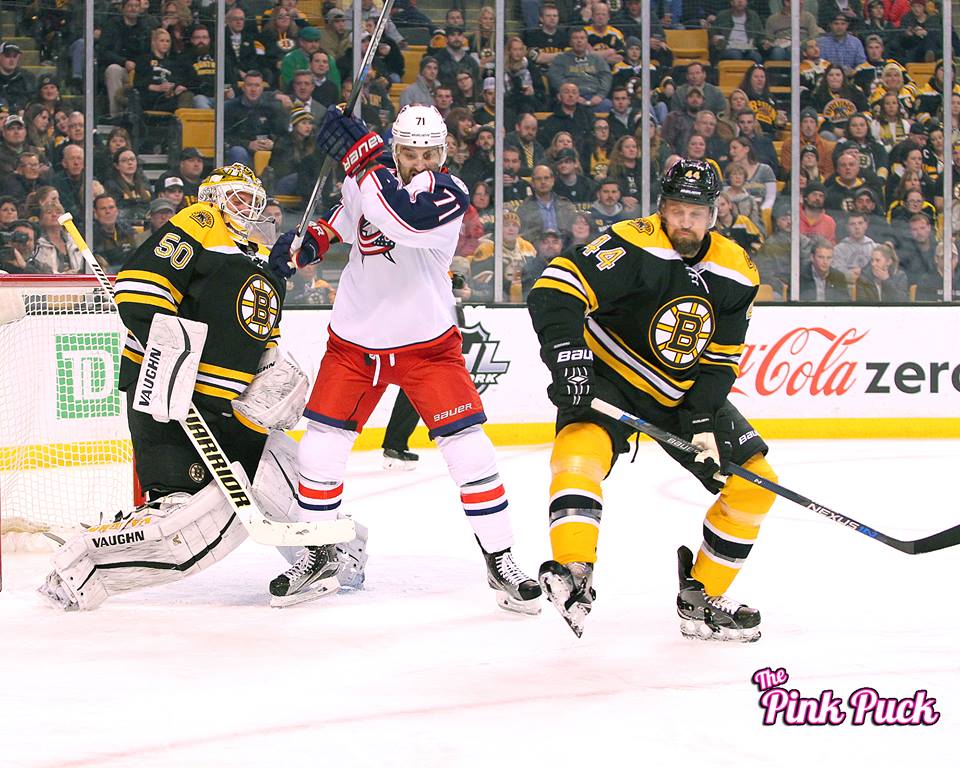
Stop me if you’ve heard this one before. The Boston Bruins were play a home game, this time against the Columbus Blue Jackets, who the Bs forced to an overtime game they won just six days ago. The Blue Jackets scored first, but the Bruins managed to go into the first intermission tied at one with only two less shots on goal than Columbus. Then they came out in the second and were outshot by the Blue Jackets 15-8 and gave up three goals while only getting one themselves.
As the middle frame came to an end the score was 4-2 and the shots on goal for the first 40 minutes were 27-18, both in favor of Columbus. Twitterverse was demanding a blow-up of the team by trade deadline. And the Bruins? Undoubtedly they weren’t pleased with their performance in that 20-minute frame. For Columbus, their entry into the Bruins zone seemed effortless, in part from their play and in part from the Bruins lack of defense.
“Yeah, we tried to get it in, you know, get a forecheck going and you know sometimes that bounces off some teams and you can make that play on the blue line,” Boone Jenner, who scored twice, described after the game. “But I thought for the most part our decisions, either if it’s getting it in or make a play entering the zone, I thought we did a good job at that.”
For the Bruins, things would still get worse in the third, but not right away.
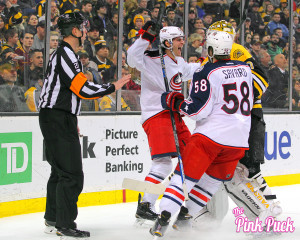
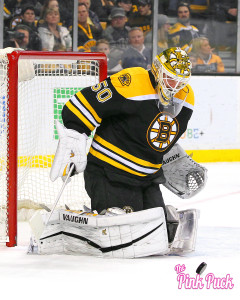
Just under three minutes into the final twenty, Matt Beleskey would get his second goal of the game and bring the Bruins within one of tying the game. Roughly twelve minutes later, at 14:29, Brandon Saad would get Columbus back up by a pair on a goal that Jonas Gustavsson couldn’t have stopped as a stick came flying at him. Head Coach Claude Julien used his Coach’s Challenge suggesting that the stick constituted goalie interference. The referees reviewed the play—with the big question being was the stick intentionally hurled at Gustavsson. The referees felt that it was the result of the Columbus player’s attempt to hit the puck himself, and ruled that it was a good goal.
Approximately a minute later as the Bergeron line was on the ice, the Bruins were whistled off sides and in frustration Brad Marchand sent the puck to the end boards. The referee signaled a penalty and Marchand headed to the box, assuming he was getting two minutes. Instead he was given a 10-minute misconduct and an early shower, since there was only 4:16 remaining in regulation.
After the game, Marchand’s answers to questions about this call were singular: No, Very, No. He wasn’t given an explanation for the call and was surprised by it. He also didn’t remember every having seen anyone get such a penalty before. Perhaps an explanation will come along, but regardless, it took the Bruins’ top goal scorer out of the game with them down two and under five minutes to go.
With Gustavsson pulled for the extra attacker, Loui Eriksson would get his second goal on the night, again bringing his team within one goal to tie, with 2:57 left in regulation, but the hope of the fans would be smashed 42 seconds later when Dylan Prout potted an empty netter again restoring the Blue Jackets’ two-goal lead.
The Bruins came into Monday night’s game with an impressive 20-7-3 record on the road and an unimpressive 12-14-3 home record. Home ice is supposed to be an advantage.
“I don’t know, but if I had the answer then obviously we would fix that,” Gustavsson said after the game. “If you are talking about tonight, I think we worked hard, we scored four goals, and for myself I have to find a way to make one more save. I felt like the puck wasn’t really bouncing our way tonight. I guess it’s about small details, we have it in this group, we show it especially on the road, but obviously we want to figure it out and be a strong home team.”
Gustavsson’s comments on working hard were not shared by Marchand.
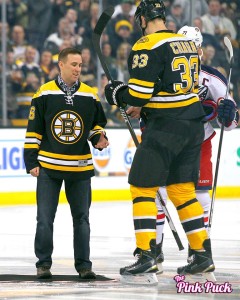
MBTA Transit Police Sgt. Richard “Dic” Donohue (Photo: Alan Sullivan)
“We never should have been in that position, so … bad game for us,” he responded with dejection.
The Bruins will be back at it on Wednesday night as they host the Pittsburgh Penguins, who have also struggled this season. Perhaps they can put their heads together and come up with the answer to the season-long perplexing question of their struggles on home ice.
The one positive on the night was that the Bruins honored First Responders. From the ceremonial puck drop with MBTA Transit Police Sergeant Richard “Dic” Donohue, who was injured while pursuing the Boston Marathon bombers, to the singing of the national anthem by the Boston Fire Department Acappella Quartet and even to the 8-Spoked military salute, the support from the fans was amazing. This was the first time the Bruins had honored First Responders and it was nice to see them being appreciated for all that they do, especially when it comes to putting themselves in harms way to save others. Hopefully the Bruins will make this an annual event.








 Prev
Prev