Two different NHL games on April 13, 1997 marked quasi-endings – of a playing career and place. Mario Lemieux finished his final regular-season game before retiring, but his retirement turned out to be temporary. In Hartford, the Whalers played their final game before relocating to North Carolina as the Hurricanes.
Lemieux
On April 5th, Lemiuex announced his plan to retire at the end of playoffs. In his letter to Pittsburgh Penguins fans he wrote, “After 12 seasons of indescribable emotion, I’ll be hanging up my skates this spring.” Lemieux scored his 50th goal of the season for the sixth time on April 11 (on a penalty shot against Florida’s John Vanbiesbrouck). In his final week with the Penguins, they twice faced the Boston Bruins, playing their final game at the FleetCenter there.
Before the start, the Bruins presented Lemieux with a seat from Boston Garden, where he scored his first ever NHL goal on October 11, 1984. With about three minutes remaining in the game, they played him a highlights video, and for a full five minutes, the crowd stood, cheered, and threw hats onto the ice. “That was pretty neat,” said Lemieux. “I didn’t know exactly what to do. I waved a couple of times, and the fans just kept going.” With 42 seconds left, fans sent him off chanting, “Mario, Mario.”
The captain provided two assists in his farewell. At 7:54 from the start, “while turning in the right circle, he put a blind, backhand pass on the stick of Ed Olcyk, who was unchecked at the left side of the crease and shoveled the puck past Bruins goalie Jim Carey.” Unfortunately, the Penguins allowed four goals that same period. In the second, at 5:40, Lemiuex assisted on Ron Francis’s power-play goal.
Lemieux skated out for his final shift with 31 seconds left to play, and he made his final shot with just 7 seconds to spare. He shrugged, “I felt I had a chance at the end but didn’t put anything on the puck. I was kind of pressured there.”
Despite having nearly twice the shots on goal, the Penguins lost 7-3. Coach Craig Patrick still said, “I think we have a good team and I think we’re playing pretty strong hockey right now.” However, this gave Pittsburgh a winless streak of 0-12-1 on the road, and they finished with their lowest point total (84) since 1989-90. It put them against the Philadelphia Flyers for the first round of playoffs, and as expected, they lost (4-1).
With this game, Lemieux increased his scoring streak to nine games. The two assists brought Lemieux up to 122 points for the 1996-97 season, giving him his sixth NHL scoring title. He averaged 2.005 points per game, making him the first to retire with over 2.
He had played 745 NHL games (613G, 881A, 1494P), and among other honors, he had three regular-season MVP award, two playoff MVP awards, and two Stanley Cup championships. “I feel pretty comfortable … with what I’ve accomplished throughout my career,” acknowledged Lemieux. “I just want to be remembered as somebody who was able to take a team that was the worst in the league and was able to bring a championship to Pittsburgh. I’m very proud that I accomplished that. And, hopefully, I’ll be remembered as a winner.”
The tributes to Lemieux poured in. Former GM Ed Johnston (who drafted Lemieux) commented, “You’re looking at a guy who can change your whole franchise and fill the building.” Former coach Scotty Bowman affirmed, “He’s the best player I’ve seen since I got into the league in ’67. I’ve always said he’s the most complete player I’ve seen because he can score, he can make plays, he’s got the reach and, when you need defense, he can provide it.” Owner Howard L. Baldwin gushed, “When I think of Mario, of course I think of his great gifts – his uncanny ability to see what none of us can see even though we have a far better view. But what I think of most of all is his extraordinary courage.”
That courage had to do with facing cancer and other health issues that partly led to the retirement. Baldwin noted, “Undoubtedly, the most heroic sporting achievement I have ever witnessed or have actually been a part of is Mario’s attitude and battle over Hodgkin’s disease.” Lemieux himself realized, “The moment I found out I had cancer really changed my life and changed my outlook on life. Before, hockey was No. 1 in my life, including over my family. [After,] I knew my health was No. 1 and my family was right up there. Hockey really took a backseat.” He wrote to the fans, “I can never forget your support during the tough times – the two back operations, the premature birth of my son, Austin, and, of course, my battle with Hodgkin’s disease. … The memories are golden, and they will live forever.”
Lemieux also pointed to the inability to play his game because of officials not calling interference-type penalties. “That was one of the reasons I left the game for the year. Because of the way the game was being played. That’s the biggest factor [for retiring now], I think.” Although he would not miss the referees or the “way the game’s being played,” he said he was “going to miss the guys the most.” Lemieux admitted, “I’ve always been a hockey player. Once it disappears, I’m sure it’s going to be very difficult emotionally. That’s something I’m going to have to cope with.”
At the time, Lemieux guaranteed he would not be coming back to hockey. “It’s time to do something else in my life.” Taking him at his word, the Hockey Hall of Fame rushed to induct him right then in 1997. But well, things change, and on December 27, 2000, Lemieux became the third to return to the NHL as an HHOF member. Unfortunately, his poor health continued, and he fully retired from playing on January 24, 2006.
Hartford
Since joining the NHL in 1979 through the merger with the WHA, the Whalers struggled. They had the smallest U.S. market (being too close to other big teams) and the smallest arena. By 1997, they had only won one NHL playoff series. When Peter Karmanos bought the team in 1994, he promised to keep them in Hartford until at least 1998. However, he wanted ticket sales to increase and to build a bigger arena. Although sales perked for the 1996-97 season, the Connecticut governor refused to use taxpayer money for the rink and Karmanos’s construction and leasing plans fell through. In March, he announced the impending move.
To make matters worse, the night before the April 13th game, Ottawa clinched the final playoff spot leaving the Whalers out. “I think we dealt with the adversity and then it came down to these last three games,” commented GM Jim Rutherford. “The fact that we couldn’t take that next step to be in the playoffs and win the games that we had to, I would summarize that as being a disappointment.” Their next opponent, the Tampa Bay Lightning, had also been eliminated, making the final game nothing but a funeral.
Defenseman Curtis Leschyshyn, who was also at Quebec for their final game in 1995, said, “It was pretty emotional. It was almost like a funeral, and for many it probably was.” Meanwhile, his teammate, top scorer Geoff Sanderson, remarked, “You know, it has been three weeks since we found out the team was moving, three weeks. But I don’t think anyone thought about the final day or the final game, what it would be like. It just hit everyone in the building. The fans were amazing.” Playing in his 499th game, having spent all nine of his season in Hartford, defenseman Adam Burt agreed, “But [the fans] came out in full force and, regardless of the score and not making the playoffs again they were still behind us. That made us all leave with a good taste in our mouths.”
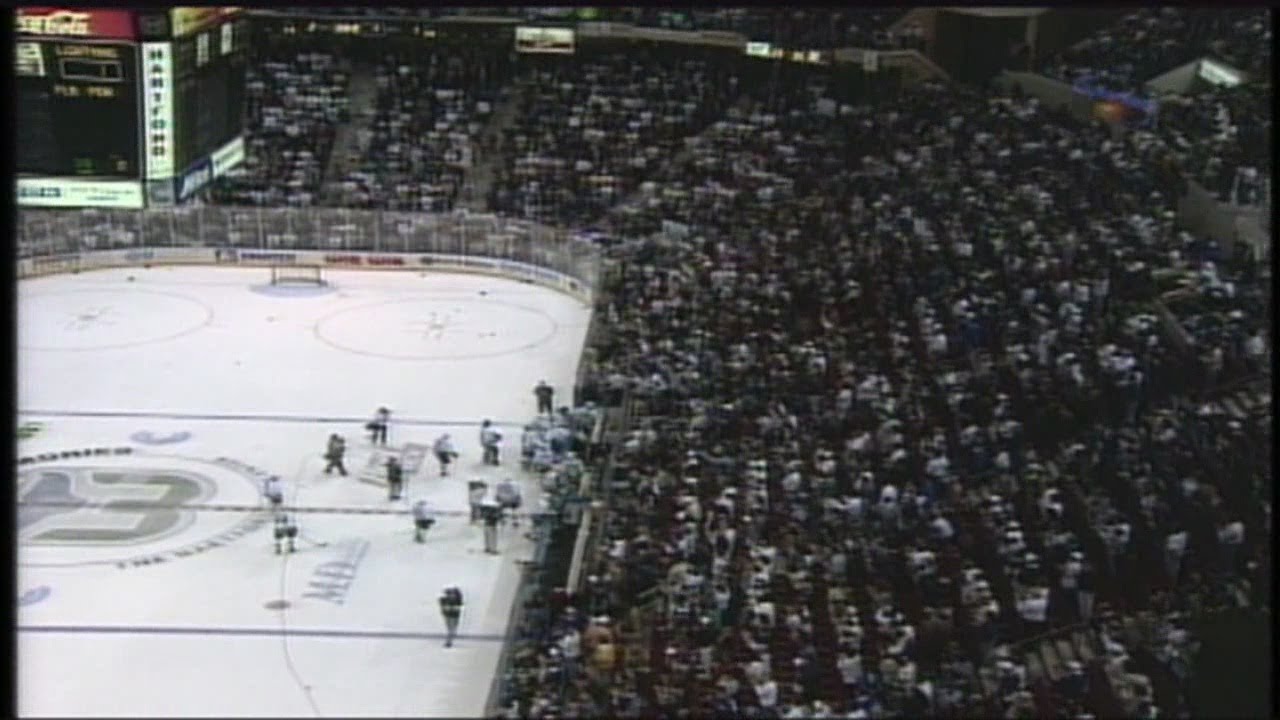
A capacity crowd of 15,635 came out to the Civic Center to say goodbye to their team. At 1:34 pm when Tony Harrington sang the anthem, he thanked fans and told them, “Just remember, it’s not over until the fat lady sings, and I’m not the fat lady.” The puck dropped at 1:37 pm to begin the 710th and final NHL game played at Hartford..
The Whalers took an early lead 2:30 into the game with Glen Wesley’s goal. The 1-0 lead held for a while. At 3:17 pm, the Zamboni made its final pass during a period break. Driver Don MacMillan felt lost. “Until I see them drive up the street I won’t say they’re gone. I’m one of the few who still thinks … maybe there’s a chance somewhere.”
Just 24 seconds after the final period started, Captain Kevin Dineen scored what ended up being the game-winner. He received a three-minute standing ovation. Less than three minutes later, Dino Ciccarelli sent in the final NHL goal on Hartford ice. Ciccarelli noted, “It’s pretty classy of the fans in here the way they reacted. For a visiting team coming into a game which didn’t mean anything, it was still kind of enjoyable to play this game because of the atmosphere.” At 3:48 pm, Courant reporter Michael Arace named the fans as the No. 1 star and goalie Sean Burke as No. 2. Officially, Dineen was made No. 1. He almost scored again in the final moments.
The announcement came at 3:52 pm, “One minute to play, in Hartford.” Then the final buzzer sounded about 4 pm, and the TV announcer noted, “The Whalers will go out winners.” The fans began an extended ovation to the team’s theme son, “Brass Bonanza.” The team huddled up then raised their stick and skated around the rink. They threw everything they could as memorabilia for the fans, and Dineen thanked them profusely. Nearly half an hour after the end, cheers echoed, “Let’s go Whalers!” After nearly an hour, the diehards were finally ushered out the door.
As goalie, Burke got 100th and final victory as a Whaler. “I’ll always remember the closeness we had with the fans here,” he said. “I’ll never forget that.” And just like that, it was over. “It’s one of those things that won’t hit home totally until I’m lining up to drop the puck in a different building,” mused veteran Burt. “What hits the hardest for me is leaving behind all the relationships and the friends you’ve made. The community has been terrific to my family and myself. The game is much deeper than just wins and losses.” According to Coach Paul Maurice, “The game was almost secondary to the moment that was the end of the Hartford Whalers. Actually, it wasn’t almost secondary – it was completely secondary.”
As the Zamboni made its final pass at nearly 7 pm, “The Whalers’ blue and green logo smears badly, almost beyond recognition.” They had finished their time in the NHL with a record of 552-740-177.
Adding fuel to the fire, Karmanos did not even attend the final game. He didn’t have a new place for the franchise yet, so he was traveling to scope out potential locations. Rutherford told the press, “I really don’t know where he is. I haven’t talked to him in a couple of days. He’s been on a tour [of prospective expansion NHL cities] and I don’t know where he was planning to be [Sunday].” It wasn’t until May 6th that Karmanos announced that the franchise would move to Raleigh, North Carolina, and he chose the name Carolina Hurricanes.
The move was so quick, Raleigh did not have a proper arena, so the Hurricanes had to spend their first two seasons a 90-minute drive away at the Greensboro Coliseum. In spite of the inauspicious beginnings, the Carolina Hurricanes won the Stanley Cup in 2006, less than a decade after the move.
Additional Sources:
Dave Molinari, “First faceoff: Flyers,” Pittsburgh Post-Gazette, 14 April 1997, pp. C1 and C3.
Mario Lemieux tribute edition, Pittsburgh Post-Gazette, 20 April 1997, section D.
“Near the end of it, Lemieux at a loss,” Hartford Courant, 14 April 1997, p. C7.
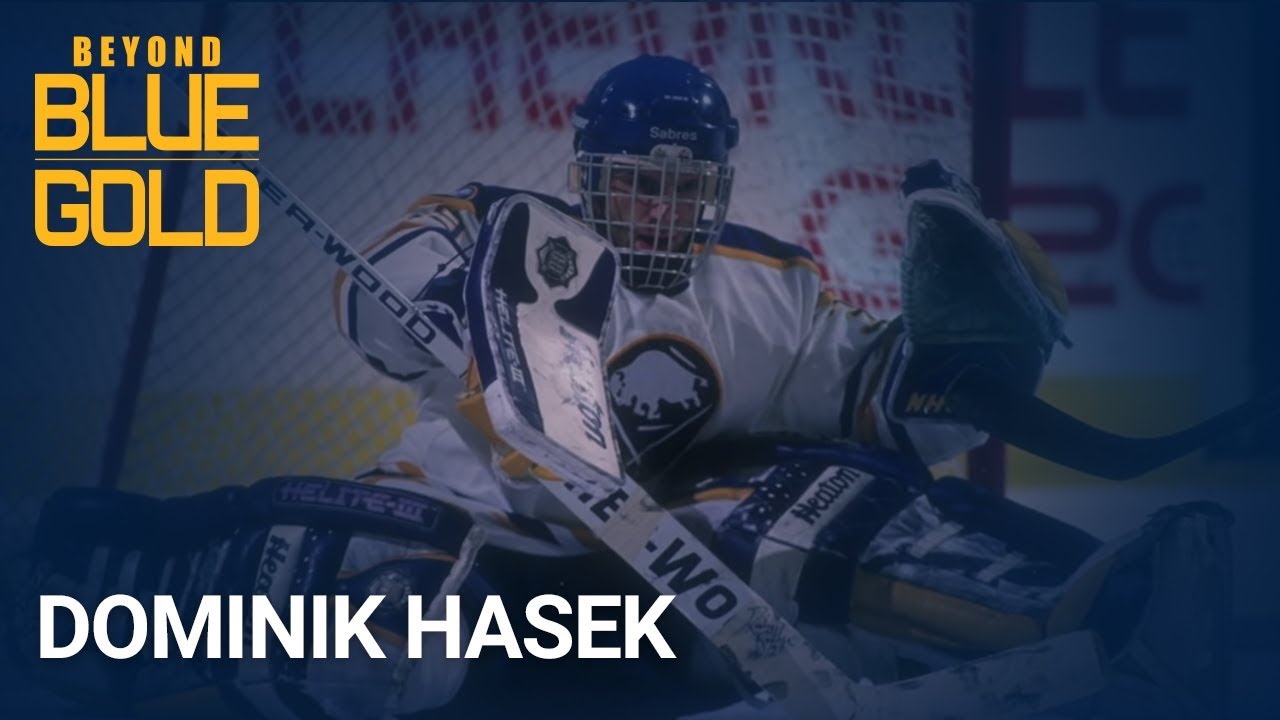
During the 1990s, the Buffalo Sabres depended on the brilliance of goalie Dominik Hasek. During that time, his regular season ended on April 12 in 1994 and 1997 (while the team had one last game afterward). Despite his skills, in both of those games, Hasek allowed one goal too many by their opponent. Neither of those performances stopped him from attaining big accomplishments. In 1994, Hasek had the lowest goals against average in 20 years, took home his first Vezina Trophy, and shared his first William M. Jennings Trophy. Three years later, Hasek again won the Vezina and became the first goalie in over 30 years to win the Hart Memorial Trophy.
Meanwhile, Buffalo’s losses gave their opponents more than just victory to cheer about. In 1994, the New York Rangers set a franchise record for points on the 54th anniversary of their last Stanley Cup championship. Then in 1997, the Ottawa Senators made it to the playoffs for the first time in their five-year history. A team by that name had not been in the playoffs since 1930.
1994
To the 18,200 gathered at Madison Square Garden, the Sabres seemed to have the 1994 game well in hand. Dale Hawerchuk and Donald Audette scored late in the first period to give them a 2-0 lead. For the first two thirds of the game, Hasek held off the Rangers blocking all their 23 shots on goal.
As New York’s Mark Messier explained, “We put an awful lot of pressure on him (Hasek) in the second period, and continued it in the third and finally did break through. The worst thing you can do, when you’re playing against a good goaltender, is try to make the perfect shot. We just wanted to throw lots of rubber on him, get in front of him and see what happens.”
Coming at Hasek hard, the Rangers sent 17 shots his way in the final period. Three of them got past him in under three minutes within the first five minutes of the third. Although the Sabres lost the game, Hasek finished with a higher save percentage (.925) than New York’s Mike Richter (.923).
Hasek ended the 1993-94 season with a record of 30-20-6 and a goals-against average of 1.95. That made him the first goalie in 20 years to drop below 2.00. The most recent was the 1973-74 season when Bernie Parent of the Philadelphia Flyers had an average of 1.87.
In the New York Daily News, Frank Brown wrote, “Hasek, a candidate for league MVP honors, smothers every loose puck he can reach – forcing faceoffs, causing pauses and destroying any semblance of flow.” Indeed, that season Hasek was voted as the NHL’s top goaltender as he and teammate Grant Fuhr had the fewest goals against. Hasek would receive the Vezina Trophy again the following year.
Going into the playoffs, his Sabres had been hoping to top the Montreal Canadiens in the Northeast Division of the Eastern Conference. They missed by one point, finishing with 95 points. While they had made playoffs, they lost to the New Jersey Devils in the first round (4-3).
Meanwhile, the Rangers’ victory over the Sabres gave Richter his eighth straight win to end with a record 42-12-5. The two points they earned that night gave them a total of 111 points, which set a franchise record. Their previous high was 109 points, which they reached in back-to-back seasons (1970-71 and 1971-72). Having tied their final game, the Rangers finished the 1993-94 season with 112 points. (They have only beat that record once, when they totaled 113 point during the 2014-15 season.) After winning the Atlantic Division, during playoffs they beat the Devils in the conference finals, and defeated the Vancouver Canucks as they broke a 54-year drought to win the Stanley Cup.
1997
Three years later, Hasek played his final game of the season at the Corel Centre for a capacity crowd of 18,500. The home team Ottawa Senators were desperate to make playoffs and had pushed hard to win their last three games to overtake the Hartford Whalers. Meanwhile, Buffalo had already clinched and were about to enter the playoffs as the No. 2 seed. This caused rumors that the NHL had forced the Sabres to play Hasek since playing his backup would essentially hand the playoff berth to the Senators. Both the NHL and the Sabres denied this, with the explanation that Buffalo already planned to have Steve Shields in the net for their final game.
For the game, “Hasek and [Ron] Tugnutt engaged in a battle of will through 55-plus minutes of playoff-atmosphere hockey,” reported the local press. “Both clubs launched effective counterattacks that kept Hasek and Tugnutt trading big saves,” 33 for Hasek and 17 for Tugnutt. Despite always claiming “I don’t get shutouts,” that night Tugnutt earned his third of the season and fifth of his NHL career. At the end, the Senators mobbed their goalie and did a victory lap. Tugnutt said, “This is as good as it gets.”
The only goal of the night was in Hasek’s net, although until that point “Hasek seemed impossible.” With only 4:01 remaining in the game, Ottawa’s first draft pick, Alexei Yashin, “broke up ice … fighting off an attempted trip” to pass to Steve Duchesne, who “snapped a shot low to the stick side.” According to the press, it was the “pass and shot that has become the signature of the 1996-97 Ottawa Senators.”
Hasek ended the 1996-97 season with a record of 37-20-10, a goals against average of 2.27, and a .930 save percentage. As Ken Warren wrote for the Ottawa Citizen, “Hasek isn’t any ordinary NHL goalie. He’s the major reason why the Sabres head into the playoffs as the second seed … He should become the first goaltender to win the Hart Trophy as the league’s MVP since Jacques Plante did it for Montreal in 1962.” Warren was spot on as Hasek did win the Hart, and while he was at it, he also snagged the Lester B. Pearson Award (as the most outstanding NHL player). He duplicated his victories the following season, becoming the only goalie to win the Hart twice. Hasek’s 1997 awards also started a string of four consecutive Vezina Trophy wins.
With their victory, Ottawa secured a playoff berth for the first time since the NHL gave them another franchise in 1992. Having scored the game-winner, Duchesne said, “This is the best thing, obviously, to make the playoffs for the first time. I’m just glad to be one of the guys who helped.” They had improved from 41 points the prior season to end the 1996-97 season with 77 points. As Captain Randy Cunneyworth commented, “We did it dramatically, you have to admit that, but it feels just great.” Their coach, Jacques Martin, noted, “We didn’t know how good we could be.”
Coincidentally, the Senators would face the Sabres in the first round. While Ottawa had finished third in the Northeast Division, Buffalo had led with 92 points. In anticipation, Tugnutt predicted, “It’s going to be a barnburner, and a real tough series. Obviously, I think it’s going to be low-scoring. It’s going to be very tight, but it’s going to be fun.” Indeed, the series went the full seven games, and he played in all of them with a .917 save percentage. Hasek only minded the net for three, maintaining a .926 save percentage. The Sabres squeaked out the extra victory but lost to the Flyers (4-1) in the semi-finals. Ottawa would make playoffs every season through 2007-08 (for 11 seasons total). They came closest to the Stanley Cup when they lost the Final in 2007.
Hasek remained with the Sabres until 2001. His career best was the 1998-99 season, when he had a save percentage of .937 and a 1.87 goals-against average.
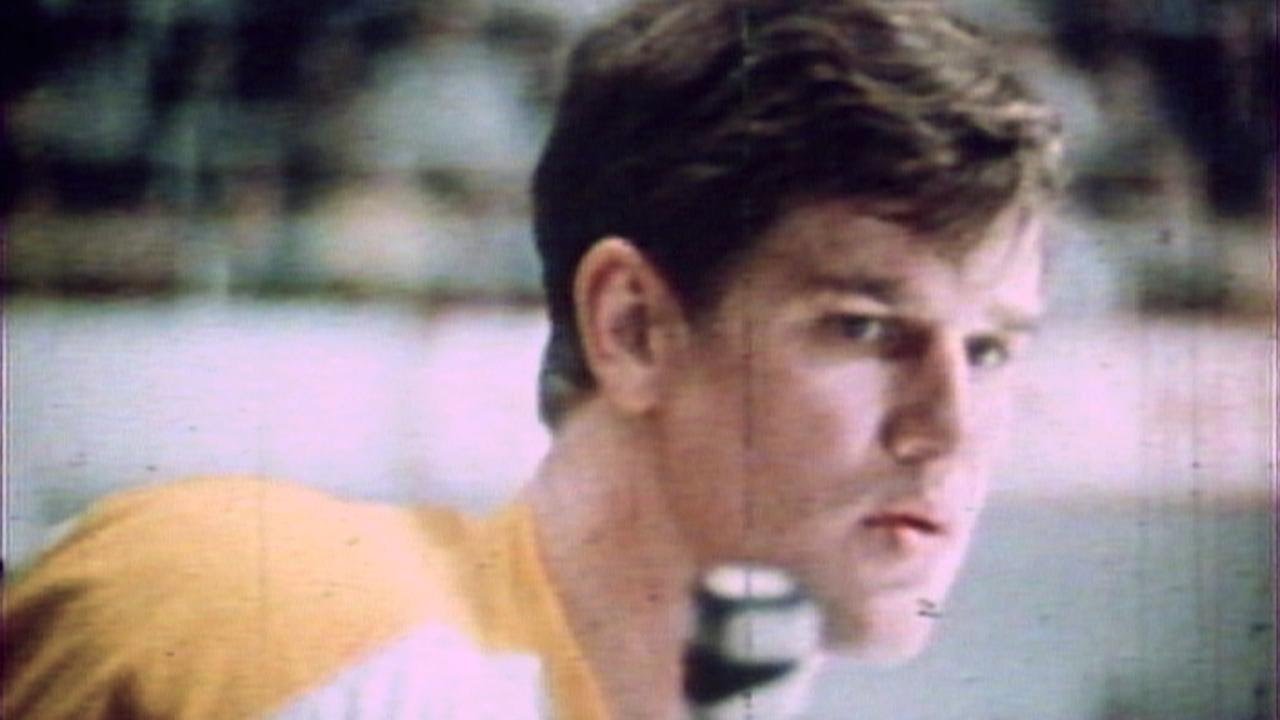
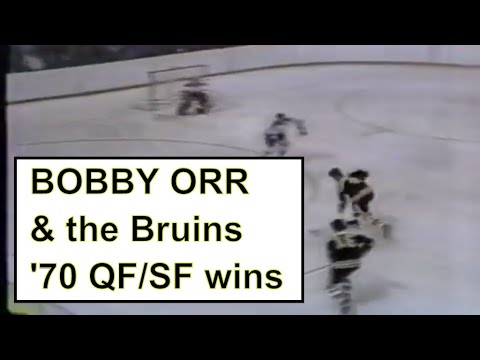
Bobby Orr is one of those names that even non-hockey fans know. He took the wind out of the sails of the St. Louis Blues in 1970 with his goal that is better known for the iconic photograph taken as he was “flying through the air.” He won the Norris Trophy eight times; the Art Ross Trophy twice; the Hart Memorial Trophy three consecutive years; and the Conn Smythe Trophy twice. He did all that in the span of 12 seasons in which only nine were full seasons. In all of that, there is an accomplishment that has been overshadowed.
In between their 1970 and 1972 Stanley Cup championships, the Boston Bruins were right back in the playoffs in 1971, though perhaps many forget about it because they were unable to get beyond the quarterfinals, falling to the Montreal Canadiens who won the series 4-3.
It was during Game 4, taking place in Montreal on April 11, 1971, that Bobby Orr did something that had never been accomplished since the NHL had begun to keep statistics.
The Bruins came into the game trailing 2-1 in the series.
They had split the first two games in Boston and had fallen to the Canadiens on
the road the night before. Fans of the Canadiens were convinced that their
beloved bleu blanc et rouge were going to take Game 4.
“But all those Montreal Canadien fans who were walking
around with their fists thrust skyward, yelping for Boston Bruin hides, predicting
a Canadien landslide in their best-of-seven National Hockey League
quarterfinal, could not convince me that Boston’s Tea Party was over. No sir,
there was too much hockey club, too much at stake for the Boston Bruins to be sold
down the river. And most of all there was a talented young soldier named Bobby
Orr involved in this fierce struggle, and as they say in propaganda country, he
had not yet begun to fight,” wrote Star-Phoenix columnist Bob Strumm.
What had the Canadiens fans so sure was their amazing comeback in Game 2 having been down 5-1 in Boston, only to win the game 7-5 then to take the lead in the series on home ice with their 3-1 win on April 10.
In Game 4, the Canadiens had a one-goal lead going into the
second period and then Bobby Orr scored. Up until 11:06 of the second, Canadiens
goaltender Ken Dryden was keeping the Bruins off the scoreboard.
“At that juncture, Dryden came out of his net to clear the
puck which had slipped off Orr’s stick, as he sped over the Montreal blue line.
Dryden slapped the puck, waist-high, towards the boards to his left,” reported
Jim Coleman of the Calgary Herald. “Orr who was speeding beside the
boards, swung his stick and he struck the puck in midair. It rocketed past
Dryden into the far corner of the net.”
At the end of the second period the Bruins were leading 2-1.
Orr notched his second goal of the game 37 seconds into the third period. Montreal
grabbed their second, and last, of the game from Yvan Cournoyer at 6:13. Fred
Stanfield gave the Bruins back their two-goal lead at 17:21 of the third. And Orr
wasn’t done yet. He got his third goal of the game with three seconds remaining
in regulation.
“Boston’s scoring feats have reached the stage where their
recountal verges on monotony. Orr is the only defenceman to score three goals
in a Stanley Cup game in the last 44 years. (The current Stanley Cup record
book doesn’t include statistics prior to 1927. Probably, Eddie Gerard or
Sprague Cleghorn scored three goals, or more, in some primeval shinny contest
but the record book does not mention such an historic performance),” wrote Coleman.
According to the NHL’s “This Date in Hockey History” page, Orr
is the first defenseman since 1922 to have a hat trick in the playoffs.
Regardless of which year it was, his accomplishment was impressive and knotted
up the series at two games apiece.
“This guy Orr, the 23-year-old phenomenon who takes the long-way home just for the drive, has to be the youngest president the SSC [Super Star Club] has ever had. And sometimes you have to wonder whether he gets tired of walking on water and changing water into wine,” continued Strumm.
In the end the Canadiens would move on in the playoffs, but
the Bruins forced them to play all seven games.
And as for Orr? He would continue to “walk on water.” He
holds the record for most hat tricks scored by a defenseman with nine.
After his retirement in November of 1978, he was inducted into the Hockey Hall of Fame in 1979—the three-year waiting period having been waived. And among all the hardware he collected, he is one of only two players to earn the Hart, Norris, Art Ross and Conn Smythe all in one season. The other is Alexander Ovechkin who did it in 2007-08.
Additional Sources:
Bob Strumm, “They Forgot About Orr,” Star-Phoenix (Saskatoon, Saskatchewan), Monday, April 12, 1971, p. 10.
Jim Coleman, Calgary Herald (Calgary, Alberta), Monday, April 12, 1971, p. 18.
The Chicago Black Hawks joined the National Hockey League in
1926, their first players the result of a purchase of the players of the
Portland Rosebuds, a team in the Western Hockey League that disbanded in 1926. They
made it to the playoffs in their first season but did not qualify the next two
years. During the 1929-30 season and the 1931-32 season they were knocked out
in the quarterfinals. They came close to getting the Stanley Cup in 1931, as
they went all the way to the Stanley Cup Final only to lose three games to two
to the Montreal Canadiens. After once again not qualifying in 1933, they were
back in the Stanley Cup Final in 1934.
In perhaps a bit of vindication, in 1934, the Black Hawks knocked out the Canadiens in the quarterfinals having beaten the Canadiens in total goals 4-3. Chicago then went on to eliminate the Montreal Maroons when they beat them with an impressive 6-2 total goals. During the Final, the Black Hawks stared across the ice at the Detroit Red Wings for a total of four games before a winner could be decided.
Game 4 took place in Chicago, with the Black Hawks leading the series 2-1. On April 10, the crowd of 16,500 fans watched a game where the first lines of both teams kept things busy, while the goaltenders at each end refused to allow anything in.
“The Western Canadian Black Hawks of Chicago, who struck the
playoffs in full stride and hardly faltered on the way to the top, had the old
Stanley Cup on display today. They won it last night by defeating Detroit Red
Wings 1-0 in 30 minutes and five seconds of overtime,” reported the Star-Phoenix.
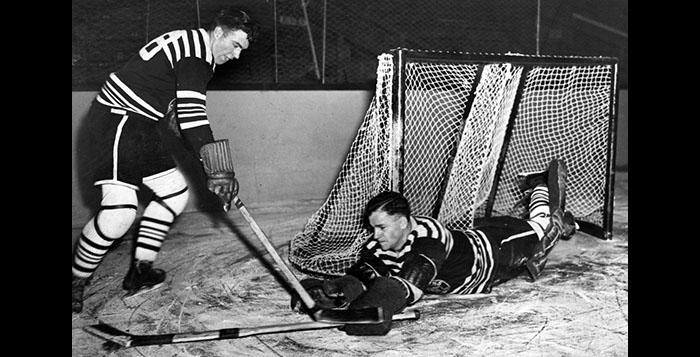
The Red Wings goaltender, Wilf Cude, gave his team every possible chance to take the win, kicking aside 53 shots. Meanwhile Black Hawks netminder Charlie Gardiner got the shutout, denying the 39 bids by Detroit.
“After more than 90 minutes of bitter, dogged hockey before a crowd of 16,500 spectatorS, [Mush] March, the littlest man on the ice, drove a waist-high shot into the net behind Wilf Cude, to give the Black Hawks a 1 to 0 victory over Detroit’s Red Wings, the old pewter cup and the world professional title,” printed The South Bend Tribune.
“The crowd cheered wildly for minutes on end, hailing Chicago’s
first Stanley Cup winners until President Frank Calder of the National Hockey
League presented the trophy itself to the Hawk owner, Major Frederic
McLaughlin,” continued the Star-Phoenix.
For Gardiner, it was his second shutout of the playoffs and
his fifth career shutout during the playoffs. It would also be his final NHL
game.
The Edinburgh, Scotland native who was born in 1904,
immigrated to Winnipeg, Manitoba with his family in 1911. He was an original
player to the Black Hawks and stood tall for them between the pipes for eight
seasons.
He’d experienced a tonsil infection during the 1932-33 season, and it was because of this infection that he would continue to have problems with his health the remainder of his NHL career. In fact, during the Hawks playoff round against the Maroons, though Gardiner got his other shutout, he did so in extreme pain and battling a 102-degree (Fahrenheit) temperature. Because of the pain and temperatures, during stoppages in play, Gardiner could often be seen sagging against the net.
“During his last season, Charlie dodged about laughing
between the posts, joking with the railbirds, as usual, but he was working
harder than ever before. He was rewarded by the finest performance in his
career, the Vezina Trophy awarded to the N.H.L.’s most valuable goalie, and the
goal position on the N.H.L. all-star team for the third time in four years,”
reported The Windsor Star.
Gardiner was experiencing much pain on Sunday, June 10th, and it was thought to be the result of his ongoing health issues. However on Wednesday, June 13, it was discovered he had a hemorrhage and he was taken to the hospital where he lay in a coma. He died leaving his wife of seven years, Myrtle, and a three-year-old son Bobby.
“Thousands of Winnipeg sport fans who had known Charlie from his amateur days, or in recent years at his summer-time trap-shooting, were saddened when the report of his death circulated in the city. One of the saddest was Wilf Cude, goalie who modelled his play on Gardiner’s and did so well he shared the starring honors in the 1934 Stanley Cup series, playing for Detroit Red Wings.”
“News of Chuck Gardiner’s untimely death comes as a great
shock to all the hockey family as it must to the thousands of hockey fans the
continent over who admired him much for his skill and more for his courage. No
matter how tough the going was Chuck was always a cheery soul and a real
inspiration to the team in front of him. During his years with the Chicago
Black Hawks I came to know him well and to appreciate the sterling qualities
which made up his character,” said NHL President Frank Calder.
Gardiner was a charter member of the Hockey Hall of Fame,
inducted in 1945.
Additional Resources:
“Blank Detroit Red Wings 1-0 in Overtime Battle,” Star-Phoenix (Saskatoon, Saskatchewan), Wednesday, April 11, 1934, p. 21.
“Hawks Capture Stanley Cup,” The South Bend Tribune (South Bend, Indiana), Wednesday, April 11, 1934, Section 2, p. 2.
“Goalie Chuck Gardiner Dies of Brain Hemorrhage,” The Windsor Star (Windsor, Ontario), Thursday, June 14, 1934, p. 27.
The world is currently filled with great uncertainty, people
watching and waiting to see just how much more the COVID-19 pandemic will do in
regard to those who get it and those who unfortunately will not survive.
While everyone is dealing with this crisis, it is safe to
say that uncertainty is most definitely not a friend to the professional hockey
player.
“That’s because we’re robots. Every day we go to the rink, we have a routine. We get up, we set our alarms. If it’s a practice day or a game day, we’re setting our alarm for a certain time. I think most guys probably have two alarms on their phone. And then you get up, go to the rink, have breakfast, stretch. We go to meetings, jump on the ice, get off the ice, eat lunch, and then our routine goes on from there. So, it’s just about re-establishing some sort of routine and just sticking with it,” Torey Krug told media on Tuesday via video teleconference.
Routine is essential to hockey players—perhaps even more so
than to you or I. As Krug described, they are used to doing a lot of things
while at the rink that goes well beyond the skating most people conjure up when
they think of practice.
For Krug though, the uncertainty currently reaches beyond just not having his robotic routine. Krug’s contract with the Boston Bruins is set to expire this summer. He becomes an unrestricted free agent on July 1st unless something happens between now and then. He indicated that though the players are in touch with each other and others of staff to date there has been no communication in regard to his contract.
“We haven’t had any talks since this thing has started. And I can’t speak for any other UFA that’s in a position like I am but in terms of my situation here in Boston, we haven’t continued any talks or made any progress in that regard,” Krug said.
Most players who are at the end of their contract at least have a bit of time to prepare, in that they know when the regular season will end and then if their team goes into the playoffs, there is still a normalcy to that. COVID-19 and the need to end things abruptly with, for the Bruins, still 12 games to play in the regular season, has possibly stripped Krug of that opportunity perhaps to savor those games. The Bruins were first in the league and as such were definitely moving on to the playoffs. Barring any major injury, he was expected to continue playing with the Bruins at least for a minimum of 16 to 19 more games.
Instead, with all the unknowns about if and when the season
may resume, and how that could be accomplished coupled with contract
negotiations—whenever they take place—Krug may have come to an end to his
career as a Boston Bruin.
“You know, there’s so many unknowns and you can only control
so much of that. And for me, personally, I really hope I did not play my last
game as a Boston Bruin. It’s been a place for me and my family to grow and my
love for the game and playing in front of these fans is, you know, it’s been
very special to me. I think if anything it’s made me wonder about this process
a little bit more. I was just in the moment and playing games to help my team
win and hopefully push us in the right direction to win a championship and now
with this season paused I’ve definitely wondered about what’s going to happen,”
Krug said.
I really hope I did not play my last game as a Boston Bruin. — Torey Krug
Indeed, the unknowns are many. In addition to if the season
resumes, there are still a lot of concerns about how that would be done. Where
would they play? Would fans be allowed to be there? Could the teams and staff
be kept safe both from COVID-19 but also from injuries to their bodies from the
break and perhaps not being in “fresh out of training camp” condition. Hockey
is a business, and with the loss of revenues, there is added confusion how the monetary
aspects will mix with all the rest of the unpredictabilities.
Krug in no way indicated that what he is going through is any more than what millions of people around the world are currently experiencing. Many of us balk at change, even change we know is coming. Hockey teams are more than a group of guys that wear the same sweater. Routine is sacred, as he expressed. But the connections between the players is almost physical. In the Bruins locker room words like “family” are used, but not used lightly. And like a sudden death in the family, Krug’s place with the Bruins could be gone and there was no time to prepare.
It’s true what they say—playoff hockey is a completely
different style of hockey. During the regular season there is a knowledge of
the months of hockey yet to be played, however, once the puck drops to start
the playoff rounds, it’s win or face going home.
For the Bruins master scorer Phil Esposito the thought of
not continuing to play keeps him up the night before the first game of the
first round of playoffs.
“It’s the first game of the Stanley Cup playoff that bugs me
a bit. I’m excited. This is six years in a row that I have been in the Stanley
Cup and I still get excited before the opening game. I try not to let it bother
me, but it does, I have trouble getting to sleep. I’m thinking about what we
have to do. I worry. If we don’t win, it could be over in less than a week. I
don’t want that to happen. Heck, four games and we could be back home in
Canada,” Esposito shared.
Esposito need not have worried this particular playoff run. And he most definitely didn’t need to worry about how things would go in the first game of the quarterfinals between the Boston Bruins and the New York Rangers on April 8, 1970.
Esposito got things going 3:51 into the opening period and then followed that up with his second of the night while on the power play at 9:32. The Rangers managed to snag one back with one minute remaining in the first from Jack Egars. As games went, the score of 2-1 in favor of the Bruins going into the first intermission was nothing to raise an eyebrow at.
However, the second period was all Boston as they beat down the New York Rangers by adding five goals in 10:21 of playing time which included two short-handed goals scored in just 44 seconds, a new NHL record. Bobby Orr got things started 4:56 into the second. While Don Marcotte sat for a tripping call Orr added his second of the game, the first short hander at 7:35. Derek Sanderson got himself in the goals’ column on the score sheet at 8:19 with the second shortie. Esposito apparently didn’t want to be left out of the fun. He popped a power play goal in at 11:44 and then went on to assist Wayne Cashman on his goal at 15:07 which was also assisted by Orr.
“As if the National Hockey League still wasn’t convinced
that Bobby Orr and Phil Esposito are its top scorers, the two Boston Bruins
marksmen Wednesday night combined for a total of seven points to set the pace
in their drive for the Stanley Cup.”
The third period saw the Bruins notch their eighth goal of the game. This time is was Fred Stanfield once again while Boston was on the power play at 2:20 of the final frame. Bob Nevin gave the Rangers a second goal with 4:29 remaining in regulation. When the buzzer sounded, the Bruins had outscored the Rangers 8-2.
Esposito’s hat trick and assist gave him four points while
Orr’s two goals and assist gave him three. Cashman had his goal and two assists
and Ken Hodge and John “Pie” McKenzie each had two assists. When it was all said
and done the Bruins had ten players with at least one point and netminder Gerry
Cheevers had stopped 36 of the 38 shots he saw from the Rangers.
The Rangers didn’t fare so well. True, they managed to get two goals, but starting goalie Ed Giacomin was replaced in the third period with Terry Sawchuk. Giacomin stopped just 19 of the 26 shots he saw in the first two periods, for an unimpressive .731 save percentage.
When the Bruins weren’t putting pucks in the net they were
skating and making sure they were finishing their checks. Skating and hitting were
two ingredients that head coach Harry Sinden said created their best playing.
“They skated better than they had since two weeks ago last night, the time they beat the Rangers in Madison Sqaure Garden. They hit better than they have hit since Teddy Green was injured. [Billy] Speer made sure of that,” wrote John Ahern of The Boston Globe.
It was just the first game of the run to the 1970 Stanley
Cup, but the Bruins made sure they hit the ice skating hard, and for Esposito
that meant it wouldn’t be over in four games. In fact, the Bruins had many more
games to look forward to during the Stanley Cup playoffs of 1970.
Additional Sources
Kevin Walsh, “Playoff hocley Espo-style … it’s a 24-hour proposition,” The Boston Globe (Boston, Massachusetts), Thursday, April 9, 1970, p. 21, 24.
John Ahern, “’Twas the Knight of the Speer,” The Boston Globe (Boston, Massachusetts), Thursday, April 9, 1970, p. 21, 24.
“Espo, Orr Shell-Shock Rangers; Favorites Advance,” The Calgary Herald (Calgary, Alberta) Thursday, April 9, 1970, p. 51.
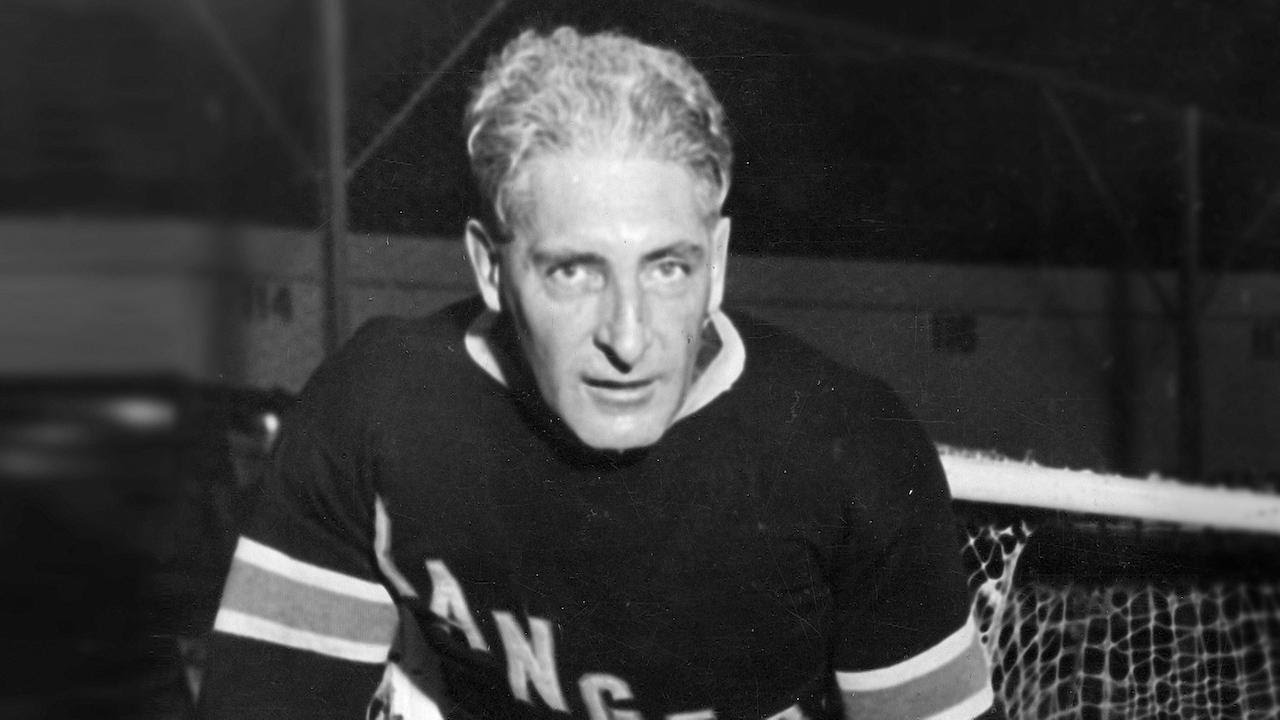
In today’s NHL, the teams have a starting goaltender and a backup goaltender and in most situations that is sufficient to get through a game. However, that was not always the case. And when the New York Rangers took on the Montreal Maroons in Game 2 of the Stanley Cup Final, they found themselves in a bit of a quandary when they lost their goaltender Lorne Chabot early in the second period.
During the game, played at the Forum, April 7th, Maroons player Nels Stewart, now in his third season with the Montreal club, put a shot on the Rangers netminder that actually caught Chabot in the left eye. This was a time when the goalies didn’t wear protective masks, and as a result of the shot, Chabot was not able to continue to play. In fact, he ended up being taken to the hospital.
Normally, during this period of having a single goaltender
on the team, the solution was to use a backup goaltender who was watching the
game from the stands. For this game it would have been Alex Connell from Ottawa.
The Maroons refused this request by the Rangers, and also denied them the use
of minor leaguer Hughie McCormick of the Canadian Professional league, also in
attendance.
“The Montreal team averred that there was too much at stake
to allow the opposing team the use of an outside goalie. They claimed that the
Rangers should have been equipped with a substitute goalie, pointing out that
the Maroons, themselves, had carried Flat Walsh as spare netminder for the past
two seasons,” reported The Winnipeg Tribune.
The Rangers were now faced with trying to find a goaltender
from within their Rangers club.
“Lester Patrick, exhorted by his players to fill the breach,
donned a uniform, strapped on the pads, set a black cap at a rakish angle over
his shock of grey hair and, for the first time in his long, distinguished
career in hockey, took up a post as a regular goalkeeper,” wrote The Gazette.
At the point that the 44-year-old Patrick was suited up and between the pipes, neither team had scored, and they would remain scoreless going into the second intermission. It was 30 seconds into the third period that saw the Rangers get the first goal of the game.
“Bill Cook put
Rangers in front, driving a vicious shot from outside the defence. [Clint]
Benedict saw it and stuck out his hand, but missed. The puck struck the
cross-bar and bounded down into the far corner of the net,” reported The
Gazette.
The Maroons tied things up off the stick of none other than
Stewart, with 5:40 remaining in regulation and the game remained knotted at the
end of the third period, forcing the teams to overtime. It took just a little
more than seven minutes, but the Rangers pulled out the win when Frank Boucher
managed to put the puck past Benedict.
This tied the series and cast a few doubts as to whether or not the Maroons were as sure of the Cup as had originally been anticipated.
“The rugged veteran [Patrick] has been playing major league hockey since 1904, but it was the first time in his long career that he has donned the pads as regular goalie in a scheduled game. He has played center, wing, and defence, and he also took a turn at rover in the days of seven-man hockey, but never before had he tried goal tending. As the score of last night’s game finally showed, Lester Patrick proved himself a goalie of no mean class, and even though his defence did give him super-human protection, he blocked many Maroon drives which were labelled goals,” wrote the Daily News.
One has to wonder if the Maroons were pondering how things
might have gone if they had just agreed to allow one of the two goalies in the
stands the opportunity to substitute.
“Patrick’s appearance evidently inspired his men to rise to
hockey heights. The entire team immediately turned into a well-nigh perfect
defensive machine, which tempered their brilliant defensive work with an
ever-dangerous offensive. They were fighting mad following the injury to
Chabot, and gave all they had to protect their heroic manager in net,” shared The
Winnipeg Tribune.
Patrick, who was 44 years and 99 days, still holds the record as the oldest goaltender in playoff history. And as for Chabot, he was finished for the series. To continue in the best-of-five set, the Rangers were given permission to use Joe Miller from the New York Americans.
Additional Sources:
“Lester Patrick Assists Rangers to Defeat Maroons,” The Winnipeg Tribune (Winnipeg, Manitoba), Monday, April 9, 1928, p. 12.
“Rangers Defeated Maroons but Lost Goalie for Series,” The Gazette (Montreal, Quebec), Monday, April 9, 1928, p. 16.
“Les Patrick’s First Game as Goalie Saves Rangers,” Daily News (New York, New York), Monday, April 9, 1928, p. 24.
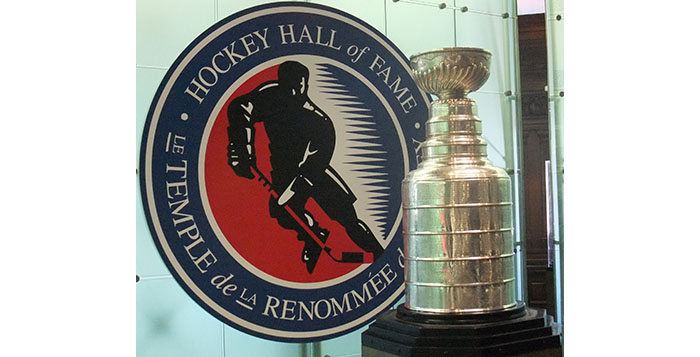
In today’s sport of hockey in North America, the National Hockey League is considered the penultimate achievement for a hockey player, and as a professional hockey player playing for the NHL, the Stanley Cup is the ultimate prize. In more recent years the regular season ends the first weekend in April and then the playoff season begins, culminating in the Stanley Cup Final in June. Pretty much everyone alive today has only seen the Stanley Cup hoisted by an NHL team, but such was not always the case.
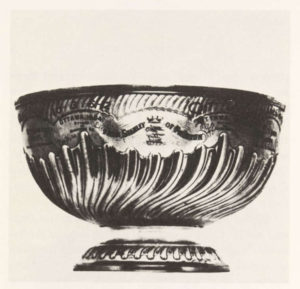
The original Stanley Cup was actually what is referred to as
a rose bowl, and Lord Stanley saw how he wanted the teams to play for it, even
into the future with his constitution, or rules, that his appointed Cup
trustees should follow. Of course, at the time of its inception, Lord Stanley
did not view any team outside of Canada as being a possible challenger for the Cup.
The first Cup was awarded in 1893 to the Montreal Hockey Club.
The trustees outlined a system by which the first-place team of another Canadian hockey association could “challenge” for the Cup. Unlike today’s playoff season, the Cup was awarded to the “team that wins the title of the previous Cup champion’s league.” However the first place team in another Canadian hockey association could then contact the trustees indicating their desire to challenge for the Cup. The first official Cup challenge came in 1895 from Queen’s University, who unfortunately fell to the Montreal Hockey Club (the previous year’s Stanley Cup Champion), however the Cup was awarded to the Montreal Victorias who had been the leading team in the Amateur Hockey Association of Canada that year. The following year saw the first challenge in which the Cup went to the challenger, the Winnipeg Victorias of the Manitoba Hockey League.
In 1922, with the addition of the Western Canada Hockey League, the National Hockey League (formed in 1917) and the Pacific Coast Hockey Association (formed in 1911) and the WCHL competed for the Cup. The two league champions faced each other, and winner of that competition had the right to challenge the third league’s champion in the final. In 1925 the WCHL and the PCHA merged to form the Western Hockey League.
The Victoria Cougars of the WHL, who were the Stanley Cup champions in 1925 took on the Montreal Maroons of the NHL in a best-of-five series to crown the new champion in 1926. What turned out to be the final game of that series was played on April 6, 1926.
The series had begun March 30, 1926 at the Montreal Forum, a
game played under NHL rules.
“Fresh from a brilliant triumph in winning the National
Hockey League title, the Montreal Maroons started a promising rush towards the
Stanley Cup and world’s professional hockey honors, when they blanked the
Victoria Cougars, 3-0 in the first game of the major series before a crowd of
10,250 at the Forum last night.”
During the second game, the Maroons had once again shutout the Cougars 3-0, despite playing under western rules. Going into the fourth game of the series, the Montreal Maroons carried a 2-1 lead in games won over the Victoria Cougars, having fallen in the third game 3-2. The fourth game, like the second, was to be played according to the WHL rules, and some weren’t sure that the Maroons could pull out a second win under those rules.
“It was a magnificent night for the loyal fans who have
supported the Maroons throughout their sensational climb to the peak of hockey
fame. They packed the rink for the fourth consecutive time to witness what proved
the deciding game of the cup series. They were treated to a fast display—even though
the game under western code appeared to many to lack the real, methodical and
inside hockey which characterizes the code prevailing in the National Hockey
League.”
For Maroons’ goaltender Clint Benedict, it was his third shutout in the series. Meanwhile, Nels Stewart, who scored both goals in the final game on April 6, had a total of six goals in the series (2 in Game 1, 1 in Game 2, 1 in Game 3, and 2 in Game 4) both starting out with two and ending with two.
For Stewart, in his first season as a professional hockey
player, it turned out that it wasn’t just his “calculating, crafty hockey,”
that proved invaluable to his two goals scored in the second period of the
fourth game, but a bit of superstitious
luck in his stick.
“After the Ottawa game a Maroon supporter claimed Nelson Stewart’s stick as a souvenir of the first N.H.L. title captured by the club. After the defeat Saturday night in the third cup game, Stewart telephoned the Maroon supporter and asked to have his pet stick returned for last night’s contest, stating that he was out to play the game of his career and that he would feel more at home with his ‘old trusty.’ The stick was turned over at the dressing room before the game. It was the means by which the ‘million dollar’ goals were scored. And after the game it was returned to the fan, who now has a souvenir to be doubly cherished.”
With the 2-0 shutout and the third winning game of the
series going to the Montreal Maroons, the Cup was claimed and taken back to
Montreal.
No one actually knew that this would be the end of an era. The WHL folded in 1926 and when it did the NHL picked up the best players of this western league, such that the Prairie Hockey League that replaced the WHL was not consider a major league. As a minor league, the result of not having an ability to get the best players, it was not allowed to challenge for the Cup.
With their win on April 6, 1926, the Montreal Maroons saw the last Stanley Cup playoff to feature a team that was not part of the National Hockey League. It wasn’t until 1947 though that the NHL would be granted control of the Cup by its trustee J. Cooper Smeaton. Among other things in the agreement with the NHL, the trustees agreed that for as long as the agreement is in place, that the NHL would have the authority in identifying the qualifications of a challenger and that the trustees would not accept any challengers other than those identified by the said qualifications dictated by the NHL.
Additional Sources:
“Montreal Blanked Victoria, 3-0, in First Cup Battle,” The Gazette (Montreal, Quebec), Wednesday, March 31, 1926, p. 18.
“Montreal Blancked Victoria, 3-0, in Second Cup Game,” The Gazette (Montreal, Quebec), Friday, April 2, 1926, p. 16.
“Montreal Cracked and Victoria Took Third Battle, 3-2,” The Gazette (Montreal, Quebec), Monday, April 5, 1926, p. 16.
“Fourth Cup Game Billed for Forum Tomorrow Night,” The Gazette (Montreal, Quebec), Monday, April 5, 1926, p. 16.
Andrew Podnieks, Lord Stanley’s Cup (Bolton, Ontario: Fenn Publishing Company Ltd., 2004), p. 3-4.
Who is the toughest goalie in NHL history? If you count in terms of minutes spent in the net, Martin Brodeur proved his mettle in multiple seasons. In back-to-back years, April 4th marked the setting of new records for the hardest working goalies. At the end of the 2002-03 season, Marc Denis eclipsed Brodeur’s record for the most minutes played. The very next season, on the same date, Brodeur took it back with a new high, and he did it as his team set the bar for fewest goals against (during a season with 80 games or more).
Brodeur and Denis had some parallel experiences. They were born about five years apart (in 1972 and 1977, respectively) and thus drafted with the same gap in years (Brodeur in 1990 and Denis in 1995). Interestingly, they were even drafted five selections apart, with Brodeur drafted 20th overall and Denis 25th. However, there were seven seasons between when Brodeur set the record for most minutes in one season and when Denis broke it. Back in 1995-96, the season after Denis’s draft, Brodeur spent 4,433:19 in net for the New Jersey Devils.
On April 4, 2003, Columbus’s Nationwide Arena hosted a crowd of 18,136 to see Denis in net for the Blue Jackets. His scorers led for the entire game after starting with a 3-0 lead. With only 40 seconds left in regulation, they tried to clear their zone and accidentally slammed Brendan Shanahan in the face with the puck. While he was down, the whistle went unheard over the roar of the crowd as the Blue Jackets scored on the Wings’ empty net. Naturally, the goal was disallowed. Then with just 11.2 seconds on the clock, Detroit’s Pavel Datsyuk “tapped a pass from Brett Hull into the net” to knot the score at 5-5. Goalie Manny Legace thanked his teammates, “It was awesome. The guys bailed me out of a huge, huge hole. We’re battling for the No. 1 spot, and I came out flat.”
The score remained tied through a scoreless overtime. Both Denis and Legace had faced 35 shots on goal and allowed five goals for a save percentage of .857. The 65-minute game gave Denis 4,451 minutes, topping Brodeur’s record by nearly 20 minutes. Denis commented, “’I cherish every moment of it, but I’d much rather be getting ready for the playoffs.” With 69 points (29-42-8-3), Columbus finished 28th out of 30 teams. After playing one last game on April 6, Denis finished the season with the new record for most minutes played during a single season, 4,510:55.
Brodeur went out the next season to reclaim his record and add a few more awards while he was at it. His final game of the season took place April 4 at East Rutherford’s Continental Arena for a crowd of 19,040. In a flip of the 2003 game, this time it was his team in the hole 3-0. As teammate John Madden remarked, “Basically, the game was summed up in the first 10 minutes and we weren’t able to battle back.” The Devils were not able to score on the Boston Bruins until Jamie Langenbrunner had a power-play goal at 11:53 of the third period.
Having faced 24 shots and allowing three, Brodeur ended his 58:59 minutes with a save percentage of .875. Like Denis the year before, Brodeur was disappointed with his team’s ranking. Although the Devils had made the playoffs, they had a chance at third place only to sink to sixth in the Eastern Conference. “It is a big deal,” he said. “We had a chance. It was in our hands and they [Bruins] really wanted it. Having home-ice advantage, there’s a lot to be said for it in the playoffs.” They finished ninth overall with 100 points (43-25-12-2).
For the 2003-04, Brodeur had a total of 4,554:33, which topped Denis’s record by over 40 minutes. That season still ranks fourth in terms of most minutes played. Unsurprisingly, Brodeur won the Vezina Trophy as top goalie. He also received (for the second year in a row) the William M. Jennings Trophy for having the fewest goals against.
New Jersey had only 164 goals scored against them that season. It remains the franchise’s lowest, and it beat the NHL record for fewest goals against during seasons that included 80 or more games. The previous record (165) had been set by the St. Louis Blues in 1999-2000. The Blues have also been the only team to beat the Devils’ record, when they only allowed 155 goals during the 2011-12 season. Out of seasons with 70 or more games, this still ranks 15th while the Devils’ 2003-04 season ranks 26th.
As for the record for most minutes played, Brodeur outdid himself in two other seasons. He holds the current record of 4,696:33 for the 2006-07 season. Denis’s 2002-03 season has slid to fifth. Brodeur has four seasons in the top six. While Denis’s career lasted for 349 games, Brodeur’s featured a whopping 1,266 for a total of 74,438:20 in minutes, both NHL goaltender records.
Additional Sources:
Nicholas J. Cotsonika, “Win, Lose, and Draw,” Detroit Free Press, 5 April 2003, pp. 1B and 4B.
For the penultimate Original-Six season, 1965-66, the final regular-season games were played on April 3rd. Two of the three games that night offered fans record-setting moments. The Toronto Maple Leafs tied the Red Wings at the Detroit Olympia when they became the first NHL team to use three goalies in one game. Meanwhile, at Boston Garden, Bobby Hull of the Chicago Blackhawks set a new scoring record with his 97th point. Because the Bruins won that game while the New York Rangers lost to the Montreal Canadiens, the Bruins broke their five-season streak as the NHL cellar-dwellers.
For the 13,909 at Boston Garden, the highlights came at the very beginning and the very end. Just one minute and one second into the game, “Hull intercepted a pass behind the net and slipped the puck to Stan Mikita, who was alone in front.” The Chicago Tribune continued, “The tricky center pushed it past Goalie Ed Johnston for his 30th goal of the season.”
The assist gave Hull 97 points, which broke a record and placed him first in the scoring race. The previous record of 96 points was set by Dickie Moore during the 1958-59 season. By that time, Hull previously had tallied 54 goals, which also set the record and made him the leading goal-scorer. Hull naturally earned the Art Ross Trophy as top scorer as well as the Hart Memorial Trophy as MVP.
The rest of the action mainly took place during the third period. Just 21 seconds into it, Chicago caught up. Boston did not let that stand and netted two goals within 30 seconds to win 4-2. As the game ended, they received word that the Rangers had lost to remain at 47 points, boosting the Bruins up to fifth place with 48 points. The fans gave a five-minute ovation in celebration of not landing in the cellar for a sixth-straight season.
Even with their loss, Chicago finished the season in second place (for the eighth time) with 82 points.
Meanwhile, over at Olympia, 14,103 fans watched Coach Punch Imlach manipulate the rule book to juggle all his goalies. The first period ended with the Leafs leading 2-0 after goalie Johnny Bower made ten saves. Despite being “flawless,” Imlach removed Bower on the grounds of illness and set him to work helping coach. According to Imlach, “Yeah, he said he was sick, but I asked him if he could stand up. He said he could and said all right, it might make you feel better anyway.”
In the second period, with Terry Sawchuk replacing Bower in net, the Leafs scored again. Sawchuk made seven saves but let Norm Ullman slip one past him with less than three minutes remaining. With his .875 save percentage, Imlach pulled him for “some twinges in a bad knee.”
For the final period, Imlach sent Bruce Gamble to the net. Unfortunately, the goaltender was “shaky … fighting the puck and losing it several times.” He allowed two goals in under a minute at about the midway mark. His nine saves left him with a save percentage of .818. Meanwhile, in the other net, Roger Crozier made up for the three he allowed at the beginning by making 30 saves and ending the game with a .909 save percentage. The Leafs’ experiment of using a goalie per period had left them to settle with a tie.
Toronto was the first team to use three goalies in a game because it was usually a “bit illegal unless there is an emergency.” Thus, Detroit complained of their irritation with Imlach “playing with” the code, but they “got nowhere.” Imlach bluntly remarked, “I declare it an emergency, that protects me with the rules.”
Their matchup made no difference to the standings. Toronto came in third with 79 points, and Detroit followed them in fourth with 74. The two Canadian teams would play each other in the semi-finals while the two Midwest teams would faceoff simultaneously. Montreal swept Toronto, and Detroit beat Chicago 4-2. In the Stanley Cup Final, Montreal won the championship.
Additional Sources:
“Hawks Lose Final; Hull Sets Record,” Chicago Tribune, 4 April 1966, section 3, pp. 1 and 4.
“Hull Breaks Point Record,” Detroit Free Press, 4 April 1966, p. 1D. Jack Berry, “Wings, Leafs Settle for Tie,” Detroit Free Press, 4 April 1966, pp. 1D and 4D.
Bob Pille, “Leafs Use 3-Goalie System,” Detroit Free Press, 4 April 1966, pp. 1D and 4D.


 Prev
Prev








.jpg)
