The biggest loser this offseason was the
Vancouver Canucks and GM Jim Benning. The Canucks managed to sign one unrestricted free agent and failed to clear some cap space by trading veteran players.
Vancouver will return a lot of familiar faces even with the loses of some key players. Benning added a few key pieces like defenseman
Erik Gudbranson and forward
Loui Eriksson, but he also lost some key players.
Dan Hamhuis signed elsewhere in free agency, while one of the young budding stars was traded to the Florida Panthers in the trade for Gudbranson.
The Canucks will have some options on the first two lines depending on which right winger Willie Desjardins wants to put with the
Henrik and
Daniel Sedin. The first option is newly acquired Eriksson, who would probably be a nice fit and can put the puck in the back of the net. The second option would the youngster,
Jake Virtanen, who had 13 points in 55 NHL games played last season. Vancouver will have five forwards under the age of 25, who are expected to make the next year’s roster. The three best forwards on the Canucks are 35 years of age and they are Daniel Sedin, Henrik Sedin and
Alex Burrows.
There is going to be a lot of pressure on the top line to put the puck in the net. The addition of Eriksson should help for the Canucks to score more goals since he did score 30 goals last season. Benning and the Canucks just didn’t do enough on the offensive side of things for an improvement in the standings next season. Vancouver could possibly have eight forwards who are over 25-years-old in the lineup next season.
Benning did improve the backend with the addition of Gudbranson, but gave up on 20-year-old
Jared McCann. Gudbranson is known to be a physical defenseman; whereas, Hamhuis can pitch in on the offensive side of the puck too. The backend is pretty much the same as last year’s that gave up 2.91 goals against per game. They have a 36-year-old veteran in net to go with a 26-year-old who hasn’t seen much action in the NHL.
Benning was also fined during the offseason for tampering with potential unrestricted free agents. It hasn’t been a good offseason for the Canucks and Jim Benning.
Honorable Mention: Colorado Avalanche
The
Colorado Avalanche get honorable mention for one reason only, which is that its head coach resigned about six weeks before training camp starts.
Patrick Roy decided to resign as the head coach and VP of Player Personnel after a tumultuous summer. There were trade rumors surrounding the Avalanche and its best players such as
Matt Duchene and
Tyson Barrie. General Manager Joe Sakic decided to keep those players and Roy decided to hand in his resignation.
Colorado will have to start the search for a new coach from scratch. They’ll have to figure out which candidates to interview, and who would be the best fit for this team now and heading into the future. The head coach will then have about a week of training camp to get his system implemented before starting preseason games. He will also have preseason, but the World Cup of Hockey runs for most of training camp and the preseason. The players that are participating in the World Cup of Hockey won’t have much time to grasp the new system.
It could be rocky start to the season for the Avalanche, but anything can happen during the regular season. The
Philadelphia Flyers brought in a new coach prior to last season and managed to have a run during the second half of the season to make the playoffs, so the playoffs could be in the picture for the Avalanche next season.
The NHL off-season started out with a bang, but has since fizzled. There were big splashes made by some general managers, while others just stood on the sidelines. There were two general managers that stood out above the rest with the offseason winding down.
Steve Yzerman of the Tampa Bay Lightning and David Poile of the Nashville Predators have made moves for their teams to succeed now and into the future. There is still work to be done especially by Yzerman, but these two have proven that they are willing to go all out to win. Poile and the Predators pulled off one of the biggest trades of the offseason by swapping big-name defensemen with the Montreal Canadiens, and resigning players to favorable contracts. Yzerman didn’t need to make the big trade since the Lightning have been in the Conference Finals in back-to-back seasons. He just needed to find a way to get his players to sign cap friendly contracts, whether they were unrestricted free agents or restricted free agents.
Yzerman found a way to keep his core players, and at the ever important cap friendly prices. J.T. Brown and Cedric Paquette were both signed to new two-year contracts to kick the summer off for Tampa Bay. On June 29, Steven Stamkos, the most coveted unrestricted free agent of the summer, signed an eight year deal with a cap hit of $8.5 million to stay with the Lightning and take some of the drama from day one of NHL free agency, which was to happen on July 1. The team announced the contract extensions of goaltender Andrei Vasilevskiy and defenseman Victor Hedman on July 1. Vasilveskiy signed a three year, $10.5 million extension, while Hedman is locked up for the next seven years with a cap hit of $7,875,000 million per season.
The work didn’t stop there for Yzerman, who still had some restricted free agents to get a deal done with before arbitration. On July 17, Tampa Bay announced that the team had resigned Alex Killorn to a seven year contract worth $31,150,000, a cap hit of only $4.45 million per season. Yzerman was then left with Vladislav Namestnikov, Nikita Kucherov and Nikita Nesterov to try to get a deal done with to avoid an arbitration hearing. Namestnikov signed a two year deal worth $3,875.000 to go with a cap hit of $1,973,500 per year. Yzerman also signed some depth players and some AHL players.
There are still two restricted free agents that Yzerman and the Lightning need to come to terms with before the season starts. Those two players are Kucherov and Nesterov. Kucherov has gotten better in every season that he has played with the Lightning. He seems to up his game when the playoffs roll around. He has scored clutch goals and has 41 points in 43 playoff games the past two seasons. Nesterov has been in and out of the Lightning lineup but is a good option as the team’s seventh defenseman, especially since the team like to play 11 forwards and seven defensemen at times.
Poile didn’t have as nearly as many players to resign as Yzerman, but he may have pulled off the trade of the offseason. If anyone was paying attention to social media on June 29, they would know that it was a crazy day in the hockey world, and the Predators were a part of it. The Predators had announced that they had received defenseman P.K. Subban from the Canadiens in exchange for defenseman Shea Weber. It had been rumored all offseason that the Canadiens would move Subban, and they finally made the move. The Predators already stacked blue line had just gotten even better with the addition of Subban.
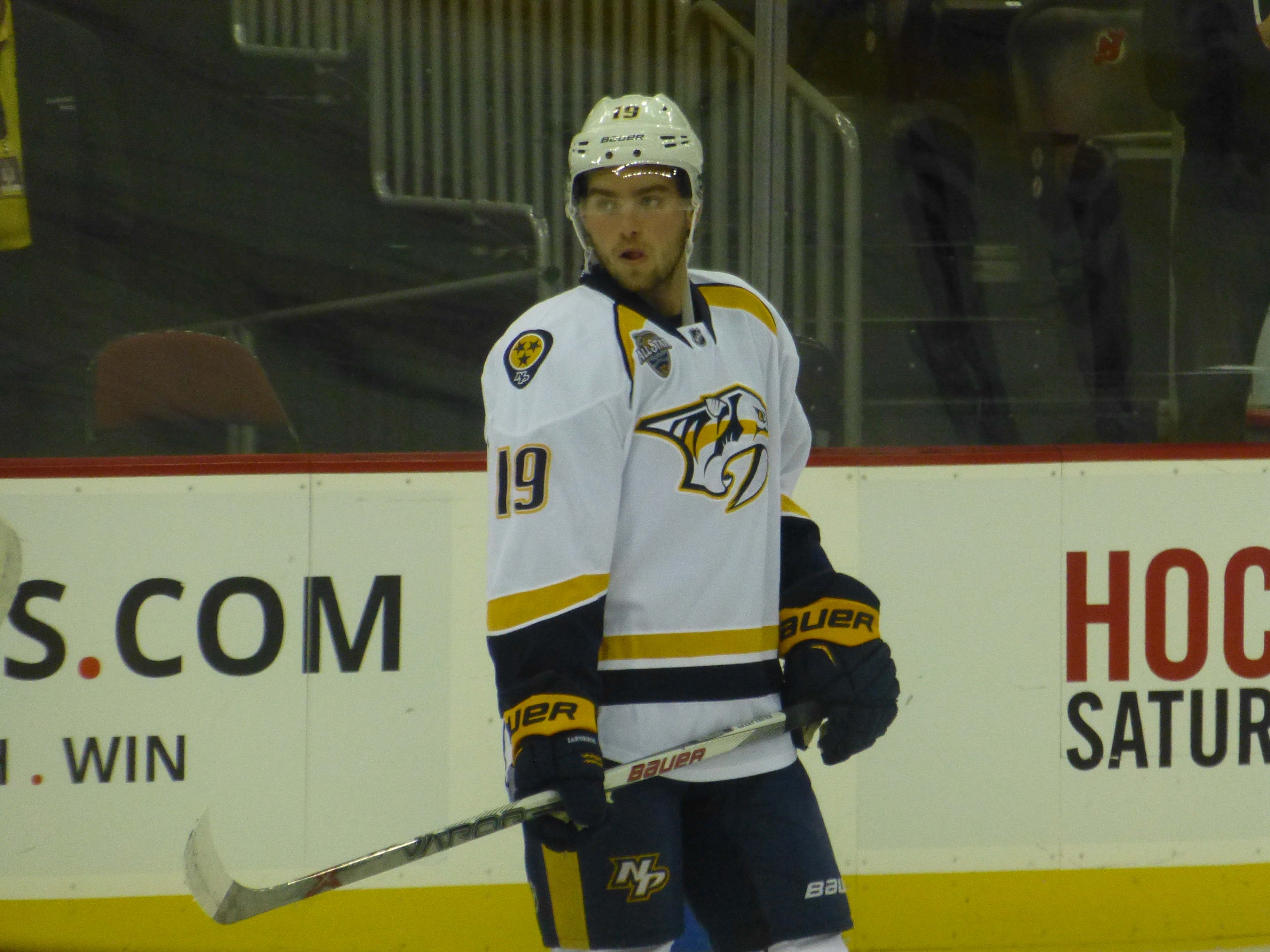
Two days prior to the Subban trade, Poile managed to sign restricted free agent. Filip Forsberg to a six-year, $36 million contract, which was another steal for him. The cap hit will only be $6 million for the length of the contract. The Predators decided to buyout Eric Nystrom and Barret Jackman, and those contracts will count towards the cap for the next two seasons. Poile signed defenseman Petter Granberg to a two year contract with a cap hit of $612,500 per season. Yannick Weber and Matt Carle were each brought in on one year deals for defensive depth, which every team needs. Poile also resigned center Calle Jarnkrok to a six year contract worth $12 million. The contract should be easy to move, if Jarnkrok doesn’t live up to expectations, with only a $2 million cap hit per season.
Yes, there were other general managers that made big moves, but these managed to improve their teams while keeping them mostly intact.
HONORABLE MENTION: Arizona Coyotes
The Arizona Coyotes and General Manager John Chayka had a good offseason. Chaka improved the blue line, added some veteran players to compliment the youngsters and landed some good free agents.
The first thing Chayka did was to acquire the rights to pending free agent defenseman Alex Goligoski. Goligoski signed with the Coyotes before free agency even started. The contract of forward Pavel Datsyuk was acquired in a trade with the Detroit Red Wings, just to help the Coyotes get above the salary cap floor. Datsyuk signed a contract to play in the KHL for the next couple of seasons. Jamie McGinn was signed as a free agent and will add another scoring option in the top six. Arizona also signed free agent forward Ryan White, who will add some grit and can chip in on the offensive side of the puck.
The biggest improvement for the Coyotes has been on the blue line with the additions of Goligoski, Luke Schenn and Jamie McBain. Chayka also resigned defensemen Kevin Connauton and Connor Murphy to new contracts. The Coyotes were bold and players this offseason and they should be a competitive team with a nice mix of youngsters and veterans.
Fact: It’s blueberry season in Maine. That means that everywhere you turn, there is a blueberry treat waiting to be eaten. Personally, my parents lake house is covered with blueberry bushes that are currently in all of their glory — we have more blueberries than we know what to do with, blueberry pie, blueberry jam, blueberry pancakes galore! But it’s these blueberry muffins that take the top honor amongst the masses. With their light and fluffy consistency, they pair perfectly with a cup of tea or coffee first thing in the morning, or as a snack throughout the day.
Ingredients
1/2 cup butter, melted
1 cup granulated sugar
2 eggs
1 1/2 teaspoons vanilla extract
2 tsp baking powder
1/4 tsp salt
2 cups flour
1/2 cup milk, I use coconut milk
2 1/2 cups fresh or frozen blueberries
Directions
- In a bowl, whisk together butter, sugar, vanilla and eggs
- Next, whisk in the baking powder and salt
- Whisk in flour, followed by the milk of your choice
- Once everything is whisked together into a batter, gently fold in your blueberries
- Line 18 muffin tins with paper liners and lightly spray with cooking spray
- Spoon batter into muffin tins and bake at 375 degrees for 15-20 minutes
Enjoy these muffins on their own, or with butter over the latest hockey news! Yum, yum, yum!
(Photo from left: Colby Athletics Director Tim Wheaton, Former Colby Hockey Coach Jack Kelley, current Colby Men’s Hockey Coach Blaise MacDonald and Pittsburgh Penguins Video Coach Andy Saucier)
When it comes down to the final buzzer, and hockey’s holy grail is hoisted high, all eyes are trained on the players. A roster full of now grizzly men, capturing the title that almost all hockey players hope to one day covet: Stanley Cup Champion. But as the cup travels from jersey to jersey, it’s the staff in suits and polo shirts that deserve a portion of the credit, the men and women who work tirelessly throughout the season to bring coaches and players stats, equipment, and video.
Perhaps one of the most underrated positions in an organization, an NHL video coach is a key piece to the puzzle of success. Working tirelessly to piece together requested video bytes and compilations of plays into a neat little package for viewing at practices, pre-game, postgame and every flight in between. It is often this faceless title to fans that allows star players to have the visual foresight for success game in and game out.
On a hot summer day in Waterville, Maine, a city approximately 15 minutes north of the state’s capital of Augusta, Waterville native Andy Saucier arrived at the Alfond Rink at Colby College with some pretty substantial hardware; Lord Stanley. For those unfamiliar with the name, Saucier has played a key role in the Pittsburgh Penguins organization since 2012 as their video coach. In addition to his time with the Penguins, Saucier is also working as a video coordinator for the U.S. Olympic Men’s Ice Hockey Team.
Though he played youth hockey at the Alfond Rink, his hockey ties run deeper. Saucier is the grandson of Colby hockey coaching legend, Jack Kelley and the nephew of Colby graduate Mark Kelley, the vice president of amateur scouting for the Chicago Blackhawks.
“My grandfather,” said Saucier. “He was in hockey for a very long time and he kind of instilled in us how hard it was to win this thing.”
A homecoming of sorts, there couldn’t have been a more appropriate place for Saucier to share the cup with the public.
“It’s great, I never really thought I’d be able to do it, [bring the cup to Waterville], growing up, I played youth hockey here and high school hockey,” said Saucier. “I never thought I would have the opportunity to be a part of a Stanley Cup winning team and to bring it back is super.”
No stranger to championships, Saucier has been part of not one, but four Beanpot crowns (2005, 2006, 2007, 2009) as a video coordinator for Boston University. In addition, a pair of Hockey East regular season (2006, 2009) and playoff (2006, 2009) titles, capped off by the 2009 NCAA championship.
 [Championship celebrations] “They’re all unique, the Beanpots at the time, that was the highest of the highs for me,” said Saucier. “I don’t think it gets any better than this though to be honest.”
The energy was abundant throughout not only the spectators, but the staff at the arena as well. However, it was current men’s hockey coach Blaise MacDonald that felt Stanley’s presence may have left a little extra luck for his team this upcoming season.
“I believe in karma, and this is really good karma,” said MacDonald.
“When you have a championship trophy in your building and there’s a good connection there with Coach Kelley and his grandson, I think we’re going to have a very good year. This will be the first year that we have all of our recruits here and we’ve got a very good team. I think this will serve as good inspiration as well to do everything we can to have hats and t-shirts and trophies thrown at us this March.”
For those unfamiliar, Colby College and the community that surrounds it, are a special bunch. A beautiful city, with a bustling youth hockey program, having Lord Stanley visit the area is not only memorable, but helps to encourage hockey dreams.
“It’s so wonderful for this community,” said MacDonald. “It really shows some of the young players the importance of following their passion for the game. Hockey brings out the best in people in that particular emotion of the game. Once it gets into your fiber, it’s really hard to get rid of it. In this area, we have so many young kids playing hockey, we want to continue to grow it. I think having the cup here will serve as a great opportunity for kids that want to continue to play hockey.”
Hundreds of eager hockey fans lined up for the chance to pose with the cup. For many across New England, it has been seen before, but for Maine fans, the cup will make a second appearance in the coming week. On Tuesday, August 9th, Pittsburgh Penguin and Biddeford, Maine native Brian Dumoulin will be honored with a short parade, beginning at 10:15 am and a public viewing from 10:30 am to 1 pm at the Biddeford Ice Arena. For fans in Boston, Penguins head coach, Mike Sullivan will have the Stanley Cup tomorrow at Boston College High School, with a public showing from 1 to 2:30 pm.
If the chance to see Stanley in person eludes you, there’s always next off-season. Remember, October is only a few puck drops away.
You may have heard a month ago that the Predators had a pretty insane blockbuster trade (with my favorite from On The Forecheck “An Ode To Shea Weber“) but this month some loose ends were tied up.
The Nashville Predators signed Matt Carle (née Tampa Bay twice, but really née the Flyers) for one-year, $700,000 on July 27th. Carle played for Predators head coach Peter Laviolette and Assistant Coach Kevin McCarthy from 2009 until 2012 as a Flyer and had almost instant chemistry with Chris Pronger, which was unfortunately short-lived due to Pronger’s injuries in Philly. Even though his on-ice time and scoring suffered in his last 4 years as a Lightning, the hope is that he’ll have a fresh start with Roman Josi, P.K Subban, Mattias Ekholm, Ryan Ellis, Yannick Weber (who will probably be who he’ll be lined up with, at least during training camp), and the rookies in Petter Granberg (who signed a 2-year deal on July 26th) and Anthony Bitetto. From the Predators website:
“It’s certainly a new chapter in my career, so I’m hoping that this will be an easy transition for myself and my family,” Carle said. “Even going back to the last time I was a free agent in 2012, Nashville was a place that was high on my radar. I’m really looking forward to getting into town, getting a fresh start and starting a new chapter in my career.”
Carle saw the most statistical success of his career while playing under Laviolette, hitting the 35-plus point mark for three consecutive seasons, including 40 points in 2010-11. With the interest in Nashville already present, a phone call with Laviolette may have sealed the deal.
“There’s a lot of familiarity there; he knows my game and I know what to expect from him as a coach,” Carle said. “He and I had a really good conversation before I made the decision to come there, and that made the decision much easier for me, knowing what my role would be and knowing what to expect going forward… I’ve had brief conversations with all three [Preds coaches] since I’ve made my decision, and I’m just really looking forward to getting there in September and getting going.”
Calle Jarnkrok re-signed on the same day with the Preds via a 6-year, $12 million deal. Jarnkork was set to have his arbitration meeting on August 4 and is coming off a 30 point season in 81 games (he only missed one game last season). He is also turning 25 in September. This is a very long and a very cheap deal that seems to show he doesn’t want to leave Nashville or his fellow Predator Swedish housemates.
Also in Very Important News:
The
Philadelphia Flyers and foward
Brayden Schenn have avoided arbitration and agreed to a four year contract. The contract is worth $20.5 million and has a $5.125 cap hit per season.
Schenn is entering his sixth season with the Flyers. He came to Philadelphia along with
Wayne Simmonds from the
Los Angeles Kings in the
Mike Richards trade. In 80 games played last season he had 26 goals, 33 assists, 59 points and five game-winning goals. The 26 goals, 33 assists and 59 points were all career highs for the forward. The five game-winning goals were tied for first on the team. His 26 goals were ranked second on the team and his 59 points were third on the team last year.
In 44 games played from January 1 to the end of the regular season,
Schenn had 44 points, which was tied for sixth among all
NHL players. Schenn isn’t afraid to throw his weight around since he had 187 hits on the year. He played on the Flyers’ first power play unit, where he was the slot presence, and contributed 11 goals while on the man advantage. He can play either on the top line with
Claude Giroux or on the second line with
Sean Couturier. Schenn plays better when he is on the wing than when he is at center.
He is one of 10 forwards 25 or younger with at least 18 goals and 40 points in each of the past three seasons, according to
hockeyreference.com.
In 345 games played with the Flyers, he has 84 goals, 107 assists, 191 points, 28 power play goals and 20 game-winning goals while averaging 16:03 of ice time per game. If he is needed at center because of injury then he need to improve on his faceoffs. He has a 44.5 face-off win percentage for his career with the Flyers.
Schenn was better at the center position last season while Sean Couturier was out during the regular season.
In 354 career games played,
Schenn has 84 goals, 109 assists, 193 points, and has averaged 15:56 of ice time per game. He was never really given a chance to play in Los Angeles, whom he was originally drafted by in 2009, which is why most of his career totals have come with the Flyers. In 24 playoff games, he has three goals, 11 assists, and 14 points while averaging 15:26 of ice time per game.
Schenn can either score or set up his teammates and he is verstatile since he can play all three forward postitions, if needed. The one down side of his game is that he can be inconsistent from game-to-game. If he wants to be a regular and get more ice time then he’ll need to have consistent effort and show up every game especially when the top players aren’t on their game.
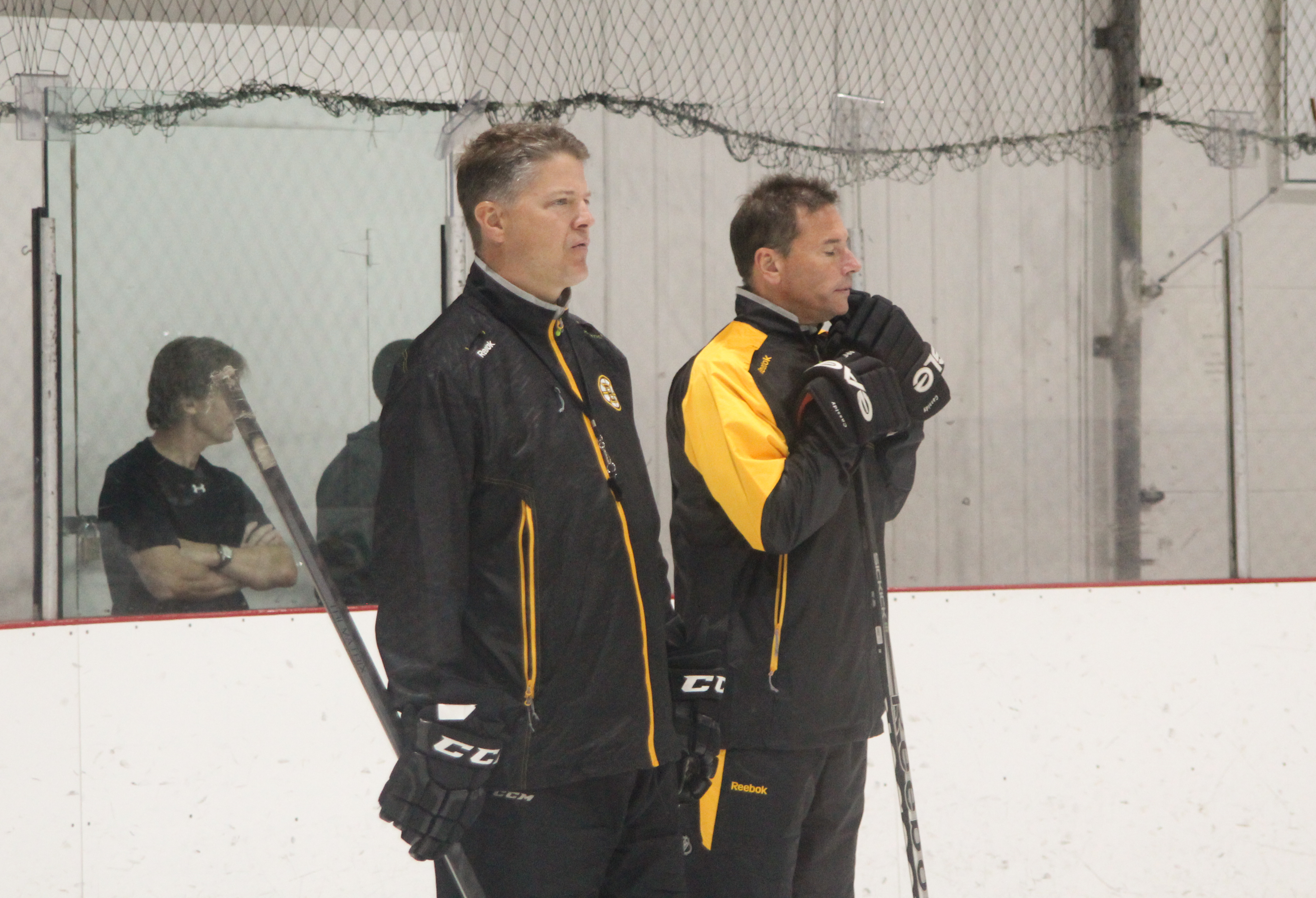
On Monday, the Boston Bruins General Manager, Don Sweeney, announced the appointment of Kevin Dean as the new head coach of the team’s AHL affiliate, the Providence Bruins. Dean’s appointment fills the spot vacated by Bruce Cassidy, who was recently hired as an assistant coach under Bruins head coach Claude Julien. It was not a huge surprise when the announcement came down, as many expected Dean to be given the position. He has served as an assistant coach under Cassidy since the 2010-11 season. This does not diminish the accomplishment for Dean, who has clearly shown Bruins’ management that he is the right man for the job.
The Madison, Wisconsin native was drafted by the New Jersey Devils during the 1987 Draft in the fifth round (86th overall). He went on to play four years for the University of New Hampshire before making the jump to the professional level in the AHL. The defenseman helped the Albany River Rats win the Calder Cup during the 1994-95 season. During his seven years in the NHL after playing for New Jersey, he was acquired during the expansion draft in 1999 by the Atlanta Thrashers. He went on to also play for the Dallas Stars and the Chicago Blackhawks. He retired in 2002.
As a coach, Dean spent four years as head coach of the ECHL Trenton Devils—owned and affiliated with the New Jersey Devils. He then went to Providence, where he has been since.
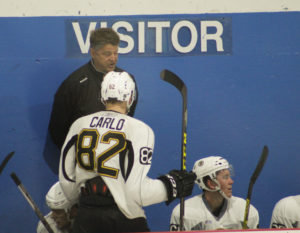
Kevin Dean chats with Brandon Carlo at camp
Dean’s defensive play and coaching certainly make him aware of where the Bruins club sits in defensemen in Providence. His involvement in this past week’s development camp, where he worked with the players during the on-ice sessions, he has already had a chance to see the newest of prospects, offering him a look at the players he will have coming up in the next few years.
“I’m very excited to [be working with the young defensemen]. I just got a taste of Robbie O’Gara and Brandon Carlo at the end of last year, young players like Linus Arnesson and Chris Casto, and then you’ve got Matt Grzelcyk coming into the fold this year,” Dean expressed. “All five or six of those players I just mentioned really have an asset that you can nail down. That to me is what makes a player exciting to work with is you can point to something in their game to get excited about, something in their game that can take them to the next level. Every one of those players has something.”
Given where the Bruins have ended up in the last two seasons—missing the playoffs completely, it’s important for them to grow. Much of that growth will come from those players in Providence Bruins. The fact that both the NHL and AHL clubs play the same system makes calling up a player to the NHL level much easier from an aspect of slotting him into the play. Dean’s past five years working with Cassidy helps to ensure a consistency between the players and the clubs.
“I think I mentioned that development was at the forefront of our decision making in this process and we felt that Kevin, you know, has worked very well with Bruce. I think the continuity there, understanding what the philosophies of our organization are, they align with what he believes in in trying to work with younger players, develop them, have all their games rounded to the point where they can play at any different role in the National Hockey League,” Sweeney stated.
Watching Dean on the ice this past week, it was clear that he enjoys the opportunity before him to guide these young players into their professional roles, but he also recognizes the patience that is necessary with many of them. It looks like the Providence Bruins will definitely be in good hands.
Guest Post By Alissa Frazier

Alissa Frazier of LissMS
{Hi! My name is Alissa and I am the founder of LissMS. I started LissMS originally as a personal blog back in the day after being diagnosed with Multiple Sclerosis, but now it has expanded into so much more than that. I work with people who are ready for a change in their current state of wellbeing, whether that is through fitness, nutrition or getting their mind in the right place (sometimes it can be all three!). I especially enjoy working with individuals who are diagnosed with chronic illness. I utilize a holistic approach in my work and give them tools to get exactly what they want out of life, which is to be feeling their best and thriving, when that has been such a challenge in the past.}
If you do a quick google search for ‘things never to eat’ you’ll get over 7 MILLION results. 7 MILLION! Let that sink in for a minute. That many people have weighed in on the topic about what YOU should (or shouldn’t) be eating. How crazy is that?? One says eat a banana when hungry, another says don’t come within 5 feet of a banana, or else! Seriously? I don’t need that obnoxiousness in my life, and neither do you.
Yes, sometimes meal plans can be great, and sometimes needed. Heck, I’ve needed them in the past! I’m not knocking the idea of structure and order, if that’s your jam. But I want you to like the idea of structure and order. I am busting the idea of abiding by ‘rules’ that are made up by Joe Shmo (like eat the banana), only to discover his cousin Jake Shmake a week later saying the exact opposite (like run from said banana) and then bouncing back and forth, until you have no idea what’s going on!
Sound familiar?
It totally did for me at one point in my life.
I was going from diet guru to diet guru hoping and praying they had THE ANSWER for me. But really, they just had a bunch of junk to talk about. Just because they all believed they had the one magic answer, we all did too. In reality, you know who has the magic answer for you? You probably guessed it. It’s you. In reality, there is no one magic answer. There is no one size fits all diet or way of eating. There are many answers that can give you many bits of information that help you decide how to continue.
So what about those answers, the tiny bits of information, where do they come from? Listening to and learning from your body in all sorts of situations. Someone may react to dairy where another does not. Someone may need more carbohydrates to sustain energy throughout the day and another needs less. This nutrition thing is a big game of trial and error, experimentation and being in tune with your body. These four categories of foods are a great place to start learning about yourself, your body and how it responds to the foods you eat. It’s also a great jumping off point for getting your mind in check too!
- Food that you don’t like. Why waste time on eating food that isn’t pleasing to your palate? Life is short, focus on eating foods that you actually enjoy eating and that make you feel good. This may seem like it is a small one, but in reality it’s a huge part of the puzzle. There’s a saying that I believe in wholeheartedly that goes something like ‘If you’re miserable eating the healthiest of foods, how healthy can it be?’ Yes, the nutritious value will still be there, but it won’t be nurturing to you and your mind. If you’re pushing (or punishing) yourself, and eating chicken and broccoli for lunch every day, and you HATE chicken and broccoli, STOP IT! There’s plenty of other healthy options that exist that TASTE good, and also FEEL good.
- Food that makes you lose control. Banana chips. That’s mine. I can’t have those in the house or else the entire container is gone. We all have those foods, the ones that are like Pringles, ‘once you pop you can’t stop’. Many times it’s the candy, chips, sugar filled things. Those actually do become addicting! First things first, think about what these foods are for you. Are they chips? chocolate? almond butter? Then, get them out of the house. Not necessarily forever, just not right now.
- Food that makes you feel gross. I’m not talking about the ate too much on Thanksgiving dinner gross, I’m talking about the “this food and your body do not get along” gross. This can pop up in a bunch of different ways, which is why it’s so hard to discover food sensitivities, but anything that makes your stomach hurt, feel bloated, your joints ache, gives you a headache, gives you brain fog or makes your skin break out, to name a few reactions. If any food gives you these or other negative symptoms, cut it out for a period of time, at least 30 days. Then reintroduce it, for a day, and see how you feel. Sometimes you’ll feel better, sometimes you won’t. For that process you need patience and honesty with yourself.
- Food that isn’t food. This is a big one that I personally believe in. Under this category falls all of the syrups, modified starches, artificial and “natural” flavorings and all those ingredients you can’t pronounce, among others. These are things added to your food. They are not helpful to your body at all, and, in fact, are harmful to it, as many of these ingredients are inflammatory. I believe that we should be eating food from reputable sources, preferably local ones that we know. Do we have to buy everything organic? No. Should we try for somethings? Sure, if possible. (Check out the Dirty Dozen and Clean 15 lists for more info here). If people gave up this category of food, the health of our country would skyrocket.
These are suggestions, let’s say guidelines. I’m not telling you to go out and switch to Paleo all of a sudden and totally ditch your current lifestyle. I’m saying think about these four ideas, and how the food you are eating makes you feel, before, during and after you eat it. That’s the first step to awareness, and possible change–listening to your body and all of the tiny bits of information it gives you.
If you’d like to connect with me more, my website is www.liss-ms.com, I’m on Instagram @liss.ms, Facebook/AlissaMS, Twitter @lissms1.
You can also sign up for my LissMS Community and get weekly emails from me about thriving at life http://bit.ly/LissMS
I’d love for you to say hi and to hear from you about if this resonated with you! Talk to you soon!
Much of the on-ice sessions this week at the Boston Bruins development camp have centered on improving—or in some instances teaching—skills that, when mastered, will give these prospects some added ammunition in their game bag. By perfecting their edges or learning how to stay up after hopping on one foot, a player could retain control of the puck and that may just mean a goal in a game situation.
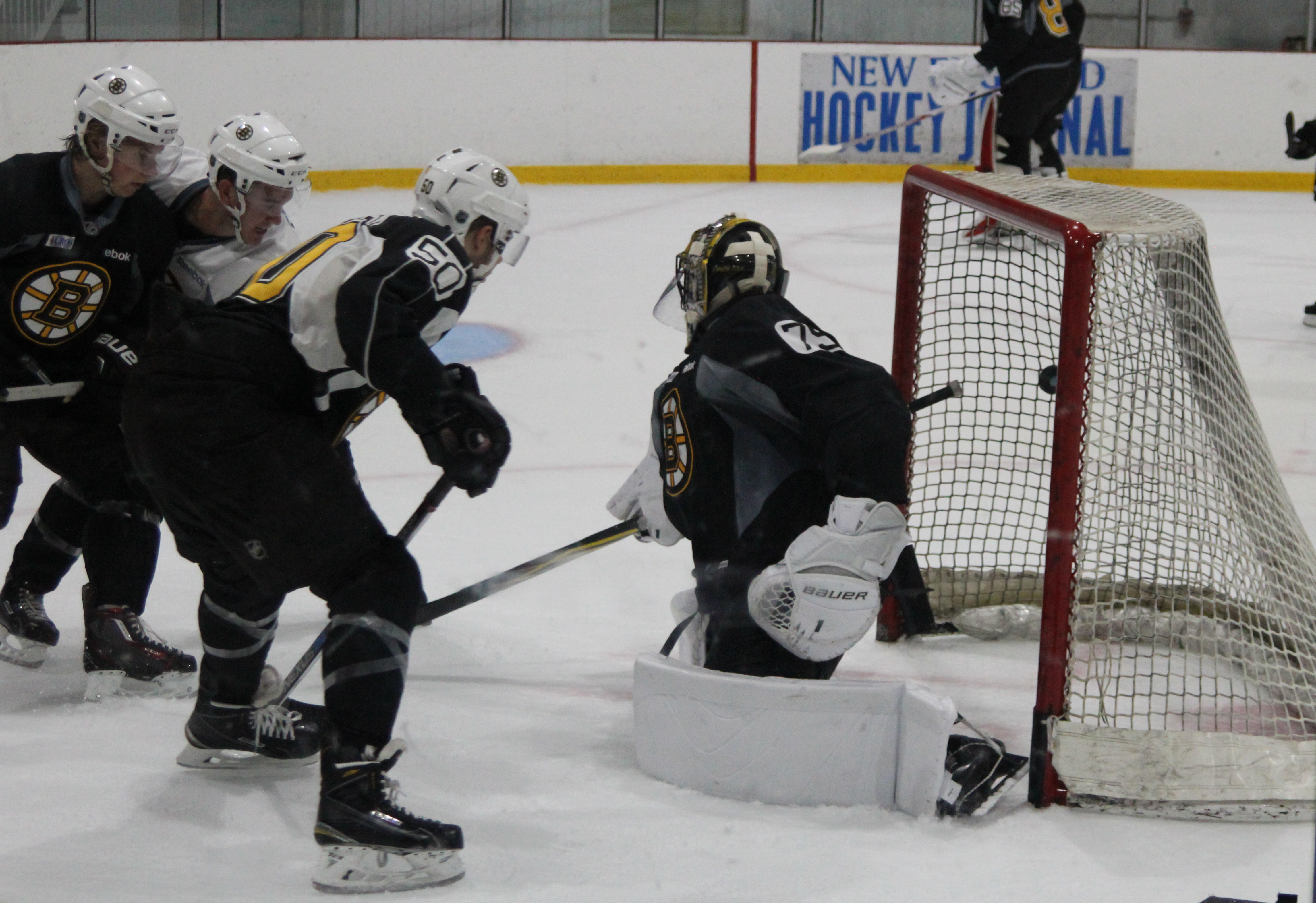
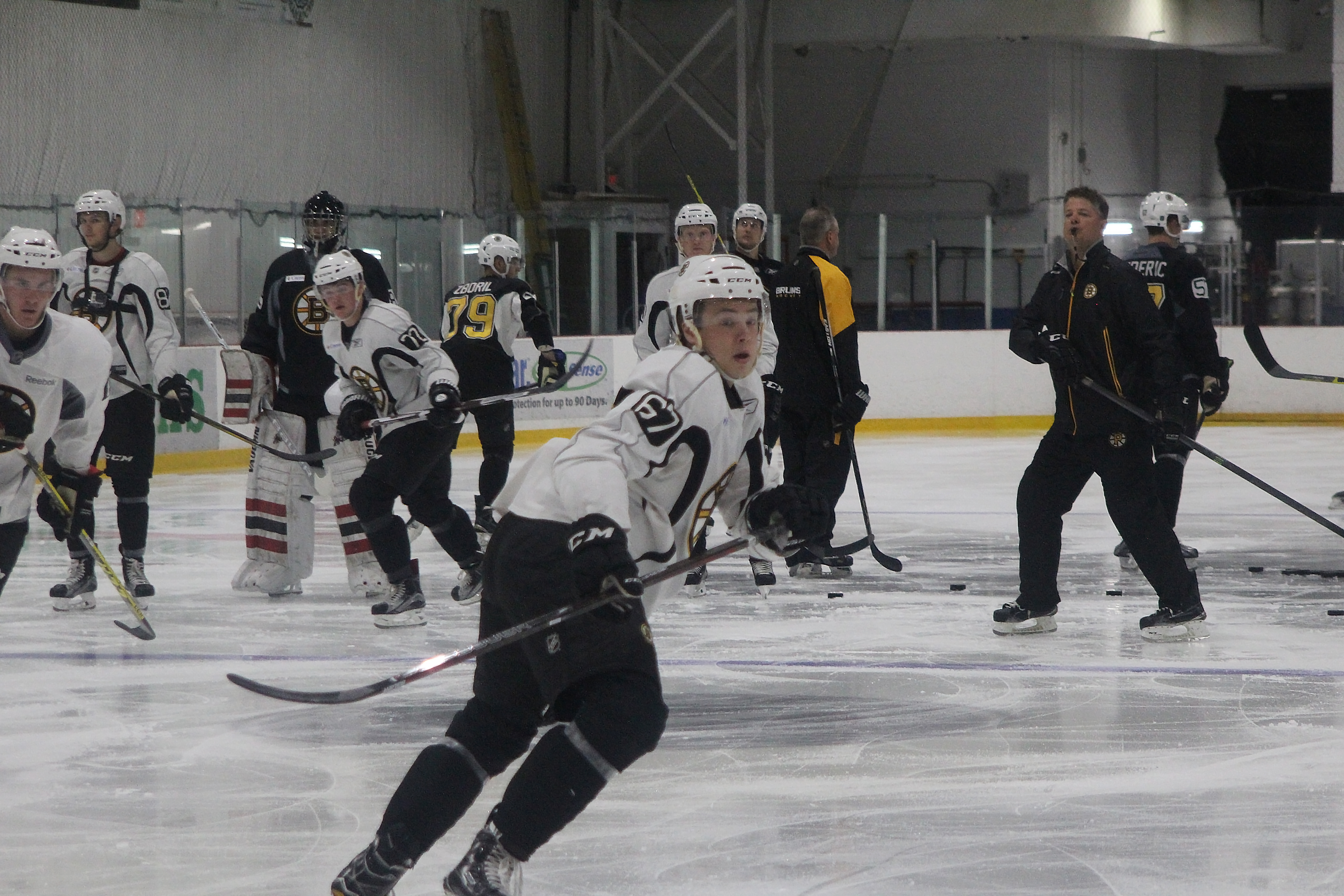
Each day as the players have come out onto the ice they have spent time manipulating their skating with long, exaggerated arcs to help them control their edges. This has often been followed by work with bumper pads, where they must skate around them or between them, working the puck and then usually shooting on one of the goalies.
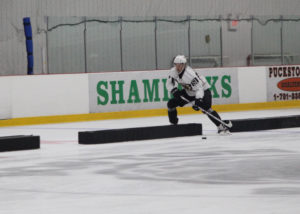
Anders Bjork
The bumper pads often require them to keep their legs a certain distance apart, or limit how far to the right or left they can go. Control of their skating means they are stronger on the ice, even if bumped by an opposing player. Using their stick with a single hand to maneuver the puck between the spaced out bumper pads not only strengthens their arm a bit, but offers a skill in puck control that they will find themselves using frequently should they make it to the NHL.
Perhaps what is so surprising about these drills is that for many of the players they are almost a foreign approach to the game. After all, when they are with their team during the season, the focus is on systems and how to limit the next opponent.
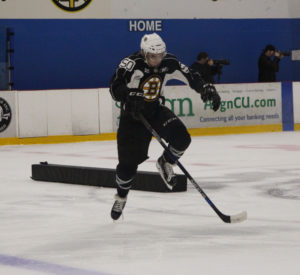
Jake DeBrusk
“Yeah, exactly like you said, I think the biggest thing is that you don’t do…don’t focus on the skills and skills practicing that much, you’re doing systems and things like that. You know you’re going as hard as you can. It’s one of those practices where if you fail, it’s actually okay. It means you’re trying your hardest,” said second-year prospect Jake DeBrusk. “You know, one of the things is that you can always work on your game and think about things—a little cross-over or stick handling. You know I like that part in my game. I love those kind of practices where you’re stick handling around… There’s lots of things that are working through your mind. I like doing those skills practices.”
Enjoying them as DeBrusk might, they certainly aren’t easy. It’s while skating with a wide, long bumper pad between the skates that quickly shows a player when he bring his legs together, as the bumper pad gets in the way and he finds himself sprawled on the ice. In the end that is a valuable teaching lesson though.
“It’s development camp so they are developing different skills that you are not used to doing, so it’s a little uncomfortable, but it’s actually good,” shared first-year prospect Trent Frederic. “[Hopping on one skate] is tough, but a good skill.”
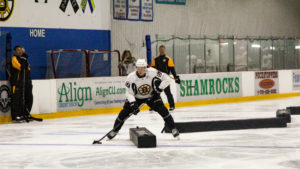
Charlie McAvoy
When it comes down to it, as DeBrusk pointed out, such drills are going to have mistakes in them, at least when the players are first introduced to them. However, those drills dont’ have to be limited to the days of development camp, at least that’s what one player believes.
“I think the coaches are putting lots of things in front of us that we need to get better at—lots of puck protection, positioning, puck battles on the walls and retrieving pucks on the walls, lots of things you need to do to be a pro in the NHL one day,” Jesse Gabrielle said candidly. “These are typically things that you wouldn’t work on but they are things you should work on. I plan to put lots of these drills in my off-season routine and become the best player that they want me to be and the kind of player they want in their organization.”
Such a commitment to progression is certainly something that the development camp staff is hoping to hear from lots of the players. It won’t stop the drills, but will prove that the message is being heard.
When it comes to the Boston Bruins, development camp is about a lot of things: nutrition, being a professional, understanding the organizational mindset, and some hockey in there as well.
Many of the prospects worry if they can’t make it for the entire camp; especially the first-timers, but the Bruins staff understand that education may keep a prospect from a day or two of camp. Sometimes even a lingering injury, or a recent recovery, may keep a prospect off the ice, but that doesn’t mean he can’t benefit from the other aspects of camp For Ryan Lindgren, whom the Bruins drafted in June, in the second round (49th overall), a class he had to attend prevented his arrival until late the first day of camp. And Mark Naclerio has a lower back injury that kept him off the ice on day two.
Prospects aren’t expected to be perfect at camp or to already know everything. On the ice, during the drills, the staff would rather see the players go at half speed and nail the skill, whether it be working on edges, puck control or a combination of things.

Kevin Dean
“Honestly, if they come here and they learn one thing to help them forward, that’s important. We’re throwing a lot at them: nutrition, workouts, stretching, not to mention the on-ice stuff.,” Providence Bruins coach, and development camp staffer, Kevin Dean said. “So if they take one thing from each area that’s going to help their game and for most of these kids it’s going to be a long process. It’s going to be more than just three months and the next season before they get called up, so that process is slow and steady and, you know, if they make incremental progress everyday, they should be in good shape.”
There is a reason most of the prospects will return to development camp each summer as they continue in college or Major Juniors—because it is about progression. The Bruins want to see a returning prospect improve in areas of their game or off-ice fitness. Last year, Jakub Zboril arrived at his first development camp a bit out of shape. He shared surprise at the level that was expected when talking to the media during camp. This year?
“Well [Zboril’s] in better shape for sure, in terms of his body fat and his body composition. You know he skates well. Just in practice, I’d like to see him a little more focused at times and dialed in but he’s awfully talented, he skates incredibly well. You can see when the game starts, even the little small ice games, he seems to make plays and be effective,” Dean offered. “For him, you know everyone has a little different part of their development, and for him it’s going to be probably as much as just being a good pro; learning to come to the rink and have that mind set ‘I’m going to get a little bit better today,’ and then his progress starts and I think with his talent level he’ll be pretty good.”
The Bruins will let the prospects know what parts of their game they need to work on, and what they expect the players to do between the end of this camp and the beginning of training camp. Most of the players will be honest and say that the criticism is important to their improvement.
For those who are at their third or fourth camp, or more, it’s also about leadership—understanding how the new guys feel and not only welcoming them but being vocal on the ice and encouraging off. Most of the returnees remember that feeling of their first camp.
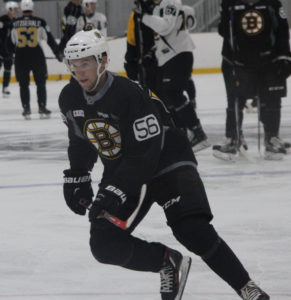
Matt Grzelcyk
“I just try to calm the nerves as much as possible. I remember my firsts few years, just being really nervous to step in the locker room,” said Matt Grzelcyk who is likely at his last development camp. “You’re not really familiar with all the staff and stuff so, just go up and try to introduce yourself to as many people as you can. I mean, they’re all great kids, that’s why they got picked by the Bruins in the first place, so it’s been a fun experience to go through.”
Even if the new prospects have heard about the way a team works their development camp, there is often no way to truly predict what will happen.
“You know, to be honest I didn’t really know what to expect. You know, I came in here and, you know, obviously I’d never been to development camp before and, you know, you hear a little bit from other people about what theirs was like here or other teams, even a little bit about what the Bruins was like,” shared first-timer Charlie McAvoy, whom the Bruins drafted this past June in the first round, 14th overall. “But, you know, it’s hard to really know until you get here and experience it, you know, first hand. And so far I’ve had a great time and it’s been a blast. It’s been a lot of fun to play hockey again, you know, from taking a good chunk of the summer off, but yeah, I’m having fun and it’s a great group of guys.”
For the Bruins management, it’s a chance to view the progress of their prospects. It’s an opportunity to watch them in drills and perhaps catch things when games aren’t on the line allowing that chance to correct problems.
Development camp is all this and so much more in Boston. Prospects experience community service opportunities. They will have a number of moments that foster team bonding, sometimes involving a visit at Fenway, home to the Boston Red Sox. The goal is to make the players comfortable with the organization but also for them to always know where they stand in their game and what they need to focus on in the coming months.
 Prev1...100101102...412Next
  Page 101 of 412